Cool shelters

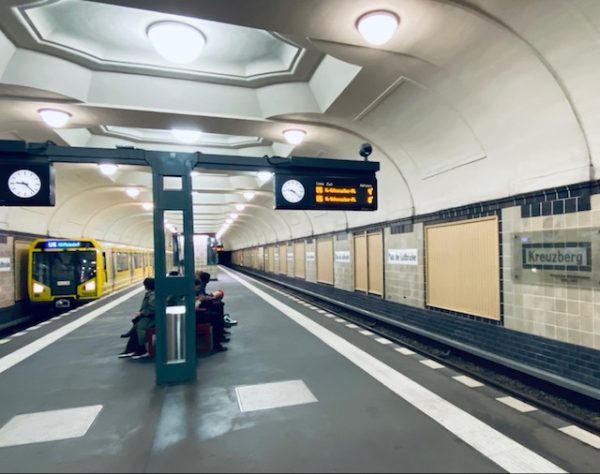
In many big cities the metro lines and particularly some of the stations can provide cool shelters during hot days. Reducing the speed of traffic reduces the airflow and heat of acceleration and braking. More home office work if employees have adequate cooling at home reduces emissions additionally. The historic Kreuzberg-Metro-Station, nowadays called “Platz der Luftbrücke” is big enough to accommodate many people who are in need of shelter for whatever purpose. Underground you do not even hear much from the busy traffic above. More efforts to brighten up the station could create an urban space which invites to rest in hot days rather than rush around the city. Climate change will ask us to come up with many innovative and unorthodox solutions as part of public health initiatives.
The next big challenge in medicine and public health seems to be the multiple long-term conditions. Many people do not suffer from just one medical condition, but several ones at the same time. Diabetes is one such condition which frequently comes along in combination with other conditions. The definition of Multiple long-term conditions comprises 2 and more conditions like cardiovascular, metabolic, respiratory or cancer, to name just a few of the more common ones. Our health and care systems are little prepared for adequate treatments as this involves a coordinated intervention and poly-pharmaceutical therapy. Changes in a single condition have repercussions in the condition and treatment. This makes adequate treatment a resourceful process with limited knowledge about the multiple interactions and intervening parameters. Add, for example, depression to any of the above mentioned conditions and the behavioral assumptions of correctly taking prescribed medication becomes a major issue for patients. The challenge for aging societies and societies with more people suffering from early onset of obesity and diabetes increases in the coming decades. There are several teams that address these challenges in research which gives hope to all those suffering already from Multiple long-term conditions.

War came to us

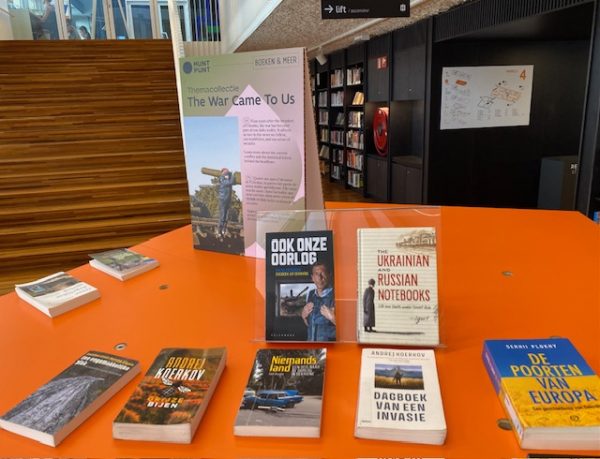
Ukrainian people had to make the horrific experience that « the war came to us ». Even if the Ukrainians were much better prepared than in 2014 with the illegal annexation of Crimea, the horrors of war to not seem to come to an end soon even in 2026. Putin’s war leading Russia into a miserable war experience has made other European nations face the rationale that war might come to them as well. Alliances are formed and reformed to be better prepared for escalations and more realistic threats as well. Huge budgets are vastes again for military purposes in view of a possible need for defense. CO2 emissions skyrocket at the same time, all due to Putin’s illusion of a greater Russian empire. We keep reading and learning our lessons from the brave Ukrainian defense.

Willingness to pay

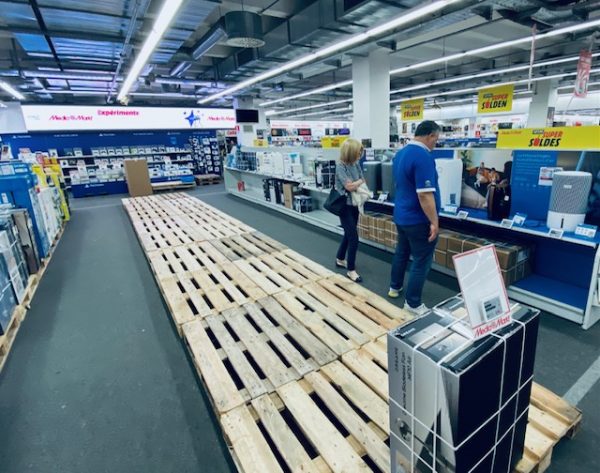
The willingness to pay for a product by consumers can be easy to predict. During the June 2026 heat wave in Europe, earlier and more intense than ever before, many people went to retailers offering cooling systems or fans with a determination to buy. However, the retailers who had stocks available found themselves depleted rapidly. The physical urge to find a solution to cool down a hot apartments has pushed the willingness to pay to new heights for such systems. A kind of market failure occurred as too many (short-sighted) consumers wanted to buy a quick fix for a serious personal health-related issue. The widely observed shortage of supply of air-conditioners and fans raised considerable frustrations on all sides, missed turnover and substantial profits for the retailers and lack of physical cooling in a suddenly “overheated” market.
The increased willingness to pay might be redirected to other “greener” solutions to the heating problem, but they often entail behavioral changes. This bi-directional relationship between willingness to pay and (lack of) readiness for behavioral changes is a fundamental principle of behavioral economics and sociology.

In Through Out

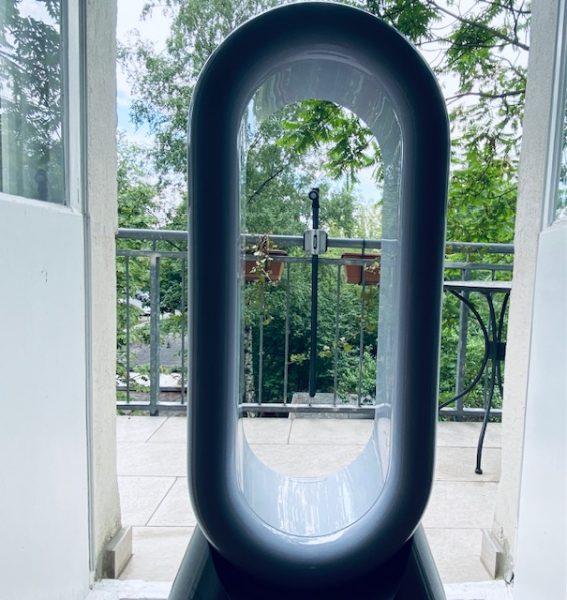
The easy logic “In Through Out” has multiple applications from nutrition, data processes and process engineering. An obvious experience for everyone is the cooling of an apartment during a meteorological heatwave. The energy loss known during winter times from a blow out of warm air through gaps in windows or doors reverses during summer to become a “blow in” of hot air from the surroundings of an apartment. The throughput, is the relevant measure to watch out for. This means the amount of air exchange during a minute of maximum or minimum airflow. It has a direct effect on temperatures and humidity levels. For cooling purposes, try to maximize the throughput at times when the temperature difference is the largest. Easy exercise, just a bit early in the morning. Mechanical, chemical or electrical devices may assist the amounts of throughput as well. Process engineering is for all of us and at all seasons.

Cooling-Heating Renovation

The public and scientific debate about the added value of investments in renovation of buildings has been ignited by the recent heat wave in Europe. Some renovations that were primarily concerned to safe energy in winter through better isolation of walls, doors and windows found themselves less well prepared with isolation against heat and sunlight. Hence, it makes sense to consider both topics, cooling and heating of buildings, jointly.
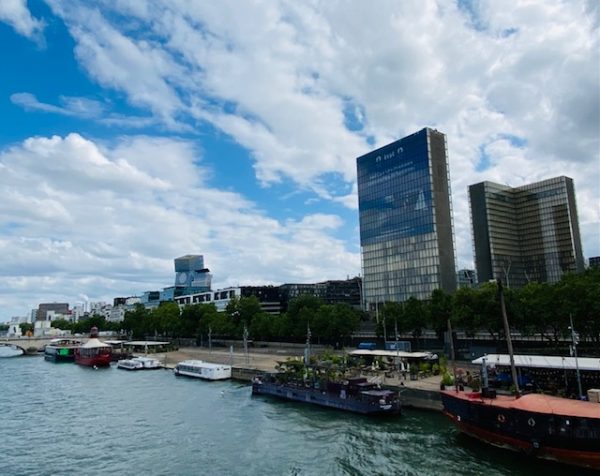
Reversible heat pumps can do this trick, if isolation has been installed or applied during renovation already. Additionally, materials used for isolation of buildings should show 2 measures for isolation: thermal conductivity and thermal resistance (R-value). Comparing both gives a fair idea about isolation quality in periods of heating and cooling needs. Albedo values are interesting as well as heat input during a sunny day is welcome in winter, but not during summer heat waves. The commonly used Energy Performance Certificate (EPC) for a building needs to be checked whether it is sensitive to excessive heat as well. (Image: BNF in Paris 2026)

Beware Albedo

At times of high radiation from the sun, we suffer from high “albedo” values surrounding us. Albedo is scaled between 0 (black) and 100 (white) and is a measure of the reflection of light. Dark surfaces have a low Albedo, which means they absorb a lot of light and store this energy in form of heating. On the contrary, white surfaces or reflector materials like mirrors absorb very little of light as they reflect the light and, therefore store very little of it as heat.
In housing or urban planning this is an important indicator to take into consideration when planning for summer heat reduction, for example. Inner cities with dense construction, lots of windows, which in most cases absorb rather than reflect sun light, Light absorption and storage during the day will contribute to heat urban environments and inner cities during summer nights. This might be comfortable during winter, but in hot summer days the high reflection value creates additional discomfort.
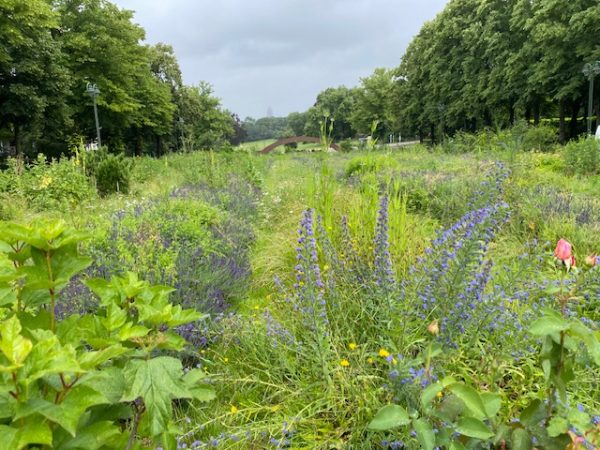
Greening of cities is a powerful answer as vegetation absorbs the sunlight, but does not store it in form of heat. The glaciers and huge snow fields have shielded us from the earth heating up too fast in the past. Unfortunately, the lack of knowledge about “albedo” has lead us to undervalue these shielding effects. Light absorption by the earth is an additional driver of climate change in form of global warming. (Image: Brussels, Forest, Park Duden Community Gardening 2026-5)

Climateflation

Central banks have started to deal with the impact of climate change or inflation, short “climateflation”. New and additional inflationary pressures originate in climate change and global warming and they necessitate a closer scrutiny. Heat waves, like 2026-6 in Europe, or earlier ones have created an upward pressure on prices. Loss of agricultural production can be severe due to weather extremes which occur more often and with greater intensity. Such extended hot and dry climates reduce the production of crops and spikes in prices that only reluctantly return to average levels shall cause price inflation (climateflation). These are the short term impacts.
The medium run impacts alter price relations and valuations of in sectors like housing and infrastructure. Badly isolated stocks of housing, schools or hospitals depreciate valuations and the heavy investments needed for isolation of roofs, walls and widows as well as heat pumps to produce cooling shall be in very high demand, which makes price increases more likely across the construction sector. As we expect new devices to be “AI-intelligent”, “mem-flation” will be pushed up as well. These factors can give a push to some economies which are producers of the products in high demand and able to expand production rapidly as well. Just importing higher numbers of air-conditioning systems from other countries shall worsen trade balances.
The major challenge, however, remains our inaction to stop global warming to avoid additional economic and human losses related to climateflation.

Gone Gliding

The seaside resorts offer additional experiences to people beyond swimming. Gliding on the water or in waves is an affordable exercise for everyone. It  just needs a small board and off you go. Falls are a usual part of the exercise. Beware of them if you have any prior conditions. For the 50+ generations some regular prior falling exercises are a must. Youth has the advantage of sufficient power per kg of body weight to afford repeated falls. Water and sand soften the falls. The gliding experience, however, is a great compensation for the risks taken. Not for everyone, but early experiences in or beyond schools give pupils a head start on how to balance out yourself in specific situations. Spectators and the experience to be under observation might influence your performance for the better or worse. Balance is a rather complex experience combining body and mind coordination for all ages. 

Rare instruments

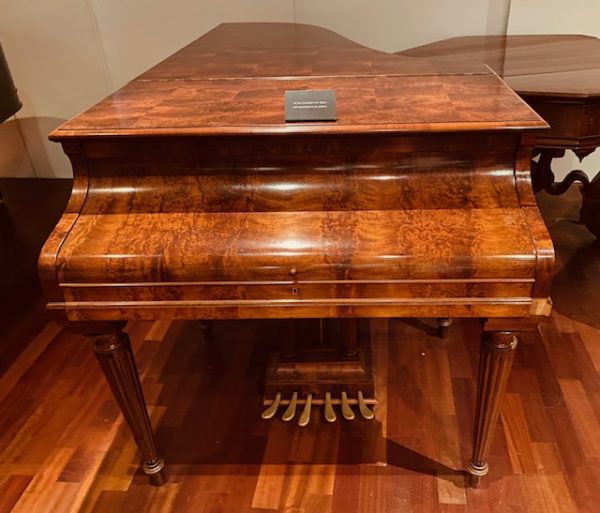
The museum of musical instruments in Brussels features many rare instruments. The collection of grand pianos is a bit hidden on the top floor of the splendid Old England building in the concert hall. The lack of explanations allows you to discover the collection yourself if you happen to be early for a concert for example. Varieties of special features for grand pianos, you might not even have dreamed about, are up there. It would just need a few demonstrations of the technical features to reach larger audiences for these marvelous pieces. The combination of grand piano and harpsichord features has not made it into many concert halls, but special appearances could find their audiences. Maintenance, however, is a costly issue, whiich might have to rely on devoted sponsors in the cultural treasures of rare instruments.