
Not many authors find decent ways to write about sad moments and the mastering of tears. Can we master tears? Should we even try to? For authors the question poses itself of a different kind. How do I write about emotions in which a person bursts in tears or sheds a single tear. 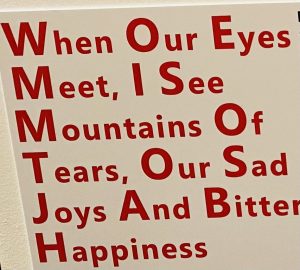 Even mastering tears or the delayed unmastered tears give rise to ample drama. Have you found a poet or author to whom you relate through the sorrows s/he expresses? Reading itself is a process of mastering tears due to the possibility to go through a wide spread of negative and positive emotions.
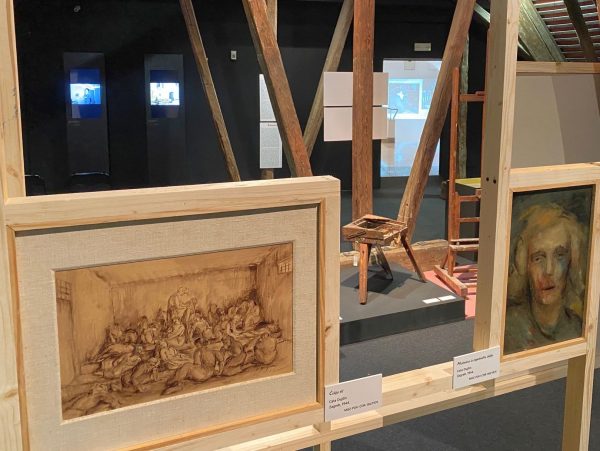
Towards the end of her life Cata Dujšin – Ribar wrote a poem that links to the imagery of the Norwegian poet Jon Fosse. Thanks to the exposition of her paintings and writing in the Zagreb City Museum Cata can become known to a wider audience. 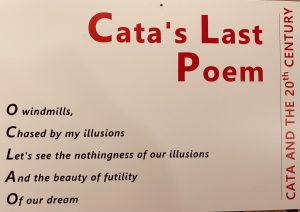 Hardly any traces in the internet of her writings in English make her even more of a local hero and an early female role model. The windmills are powered by the nothingness of our illusions. The beauty of futility is revealed in our dream. She puts it so much better. The biography and work of Cata Dujšin – Ribar summarises to some extent the whole history and misery of the 20th century beyond the Balkan region in a few words.
City Museums
Some city museums have a difficult time to present the richness of their historical heritage. Additionally, the question of city heritage maybe entangled with a process of nation building and citizenship altogether. The focus I advocate is on the evolution of democracy and the process of civilisation. The Zagreb City Museum on the top of the hill comes pretty close to such a perspective on history or historical perspective. Due to the recent efforts to excavate remains of the iron age underneath the more recent City Museum the historical line of Zagreb civilisation can be traced back even longer. The tumuli are worth a whole new section in the Museum. The process of civilisation with “burying cultures” are more than 2600-3000 years old in Zagreb. Democratisation as a process can also be studied with all its ups and downs over the history of the city and the Croation nation building. Capitals and city live play an important driving force in this process. Zagreb has experienced a bombing of the city centre as recently as 1991 (Banski Dvora) and again in 1995 (city of Zagreb) in the Croatian war of independence.
It is a real pleasure to walk through centuries of historical evolution beginning with the recent excavation of the iron age as well as the arts and crafts since the medieval times. Even passing the horrors of the 2nd world war through the eyes of the author and painter Cata Dujsin (image below from 1944) speak to us even today.
There is no linear process of civilisation which is improving over time. There have always been backlashes and there will be. It is even more important to be aware of the continuous risks to independence and democracy. The current setup of the Zagreb City Museum seems to focus on the Croatian population to remind them of their great heritage. With more English and foreign language subtitles and inscriptions the example of civilisation and democracy will be more accessible for even larger crowds of visitors. The online visit accessible in English is already an excellent appetiser.
The City Museum is moving from the internal Croatian function more and more to additional external function to offer learning experiences beyond the Croatian visitors in this tourist attraction that is internationalising in its work force at a rapid rate. 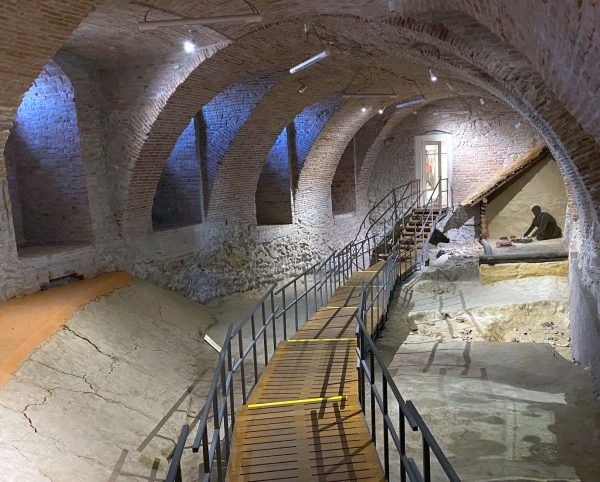
Selfie Museum
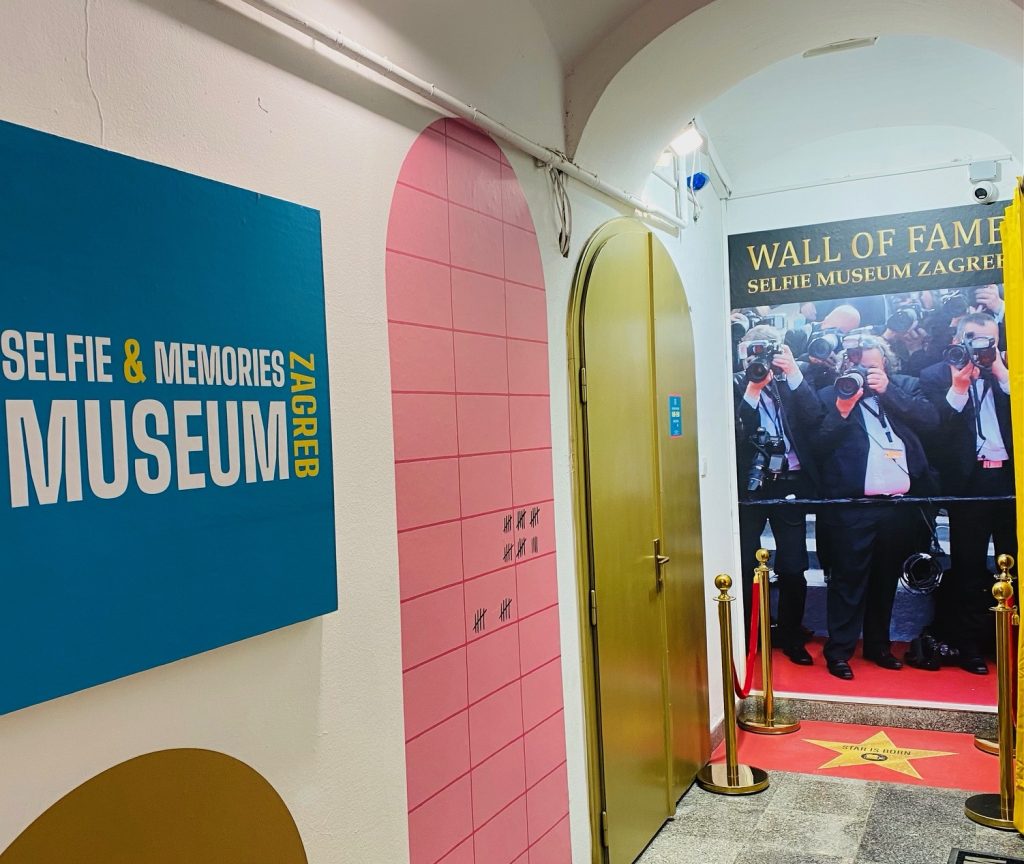
We have learned that games are not only played for fun. So-called serious games have found their way into health applications where we might learn while playing a game of how to integrate more walking into our life in the city. While walking after work I happened to pass the Selfie Museum in Zagreb. In fact despite carrying the name of museum it is more an assembly of scenarios in which you can realize many selfies in different settings that have been prepared for that purpose. Hence your production of photo shooting with yourself as the major character is facilitated and you no longer have to spend a lot of time on the setups. Call it a museum and you’ll have more visibility and visitors.
Styles of selfies have changed and shooting very short videos to post on tiktok is of course easy there. A real threat to huge and expensive cinema studios considering the enormous reach some of these selfies can reach. It is a bit like a theatre with multiple stages for everybody to use at moderate costs. Before long we shall come to realize the potential for many more interested in theatre to become actors and directors themselves. Democratize the world of theatre is the new social dimension here. Test yourself in another profession through playful interaction. Test and learn about other competencies. We are in the middle of the next wave of “gameification” previously reserved to people ready to accept higher risks of likely failure. The young can now take their parents to the museum and show off their culture and skills. Intergenerational learning has a new aspect as well. The sociology of the virtual has another phenomenon to evaluate.
Urban Living
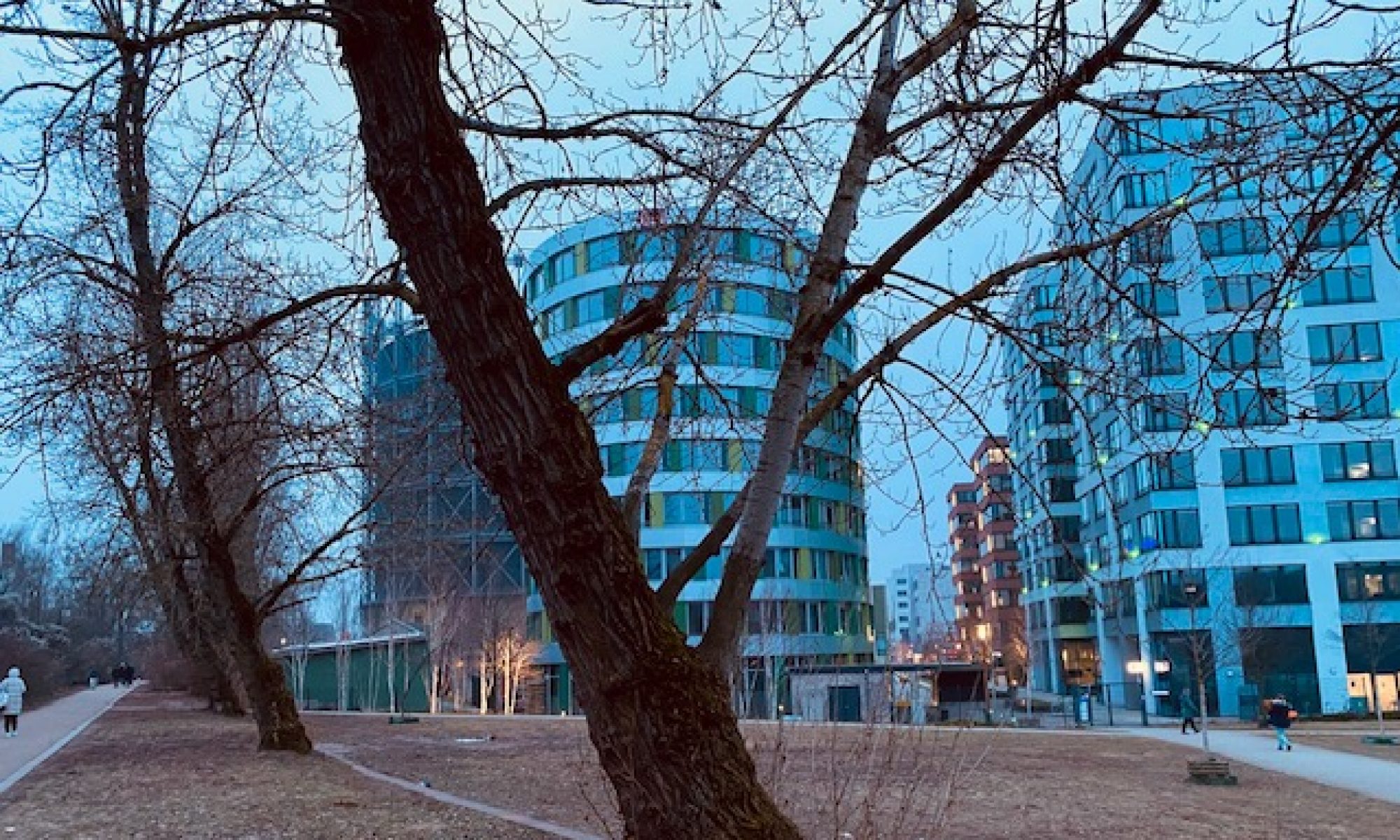
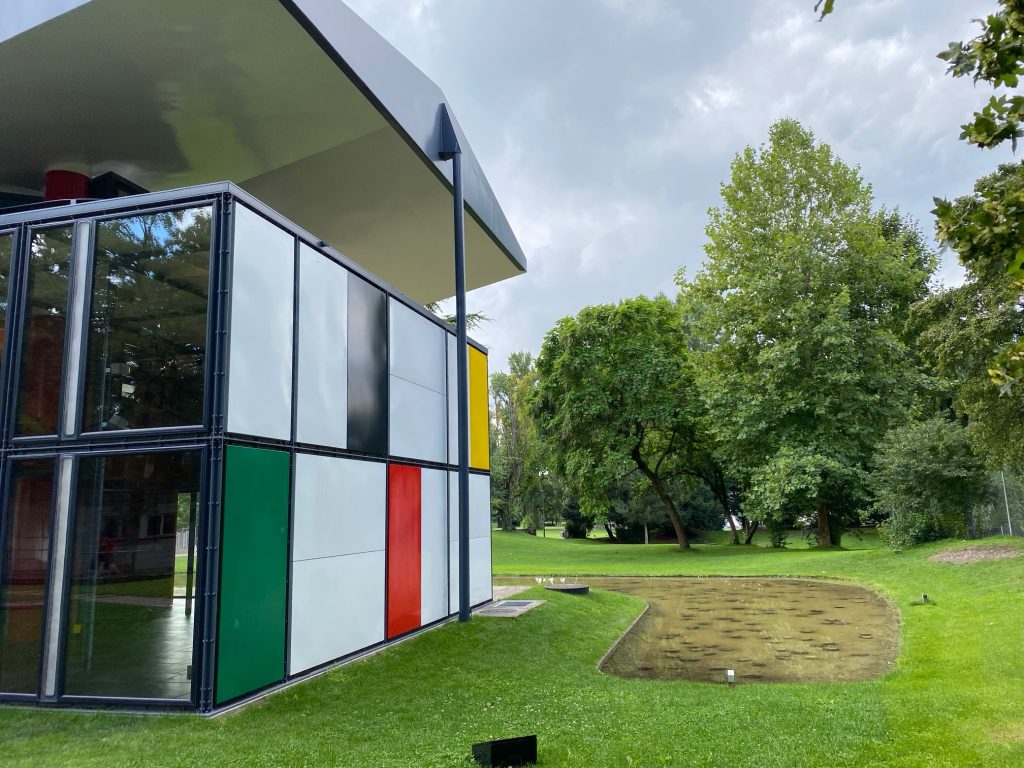
Each time I pass by the closed airport in the middle of Berlin I am amazed by the crazy idea to have built this and maintained throughout the 20th century. Paris is desperately trying to re-naturalize small areas and roads, while in Berlin there is now still the huge park to enjoy for all. Sports activities benefit the most. What an amazing asset in the neighborhoods for so many in need to walk, run or cycle a bit to keep their exercise level up throughout their life course. It has still a huge potential to activate people. It just needs a bit more organizations and volunteers to embrace the opportunities. Only in comparison to other cities you realize what an asset this is now. It will remain a challenge to preserve this centrally located treasure for the benefit of all. In Paris the deconstruction of concrete is taking shape and 300 new sites have been identified for re-naturalization, as reported in LeMonde. In Zurich green spaces in the center have been saved and renovated with a lot of money to allow more people to enjoy the benefits of a green environment near the city center. The house and park by architect Le Corbusier is a fine example of this. Image below. The garden around the house is publicly accessible. As air pollution is threatening more and more and heating in cities is a serious health threat we would really like to welcome more preservation and re-naturalization in inner cities.
Sectoral Change
The long-term view of sectoral change in France, for example, from 1800-2022 (Cagé and Piketty, 2023 p. 128) allows us to zoom out of our narrow focus of the last few years of economic change. The decline of agriculture is the most remarkable. The reduction of employment in industry and construction has been an ongoing trend as well. Banking, insurances, property and consulting have seen remarkable expansion over these years. Public services, security and legal affairs are still on a moderate rise. Other sectors like education, health, commerce and transport manage to grow equally.
The merit of the comprehensive volume by Cagé and Piketty (2023) is that it is thoroughly data driven and based on quite unique long data series. The data on structural change and just the employment trends depicted below refocus our attention on likely consequences of these changes.
For the 2 authors we should redirect our attention much more to the implications of these trends (like rising inequality) on political conflicts and power struggles. Democracies are at risk, if we continue to ignore these seminal changes of industrial structures and shifts in employment. The traditional strongholds of trade unions and progressive forces in the manufacturing and construction industries as well as in public transport seem to have unaccounted implications for our political systems as well. The volume by Cagé and Piketty (2023) will soon be available in English and reach broader audiences just-in-time for the European Parliament elections in June 2024. Particularly the spatial implications and how the neglect to take into account the fundamental differences between the rural development and structural change needs urgent reconsideration. After the time for reading and working with the data (LINK) is the time for action to preserve our European Dream of peace and social development. 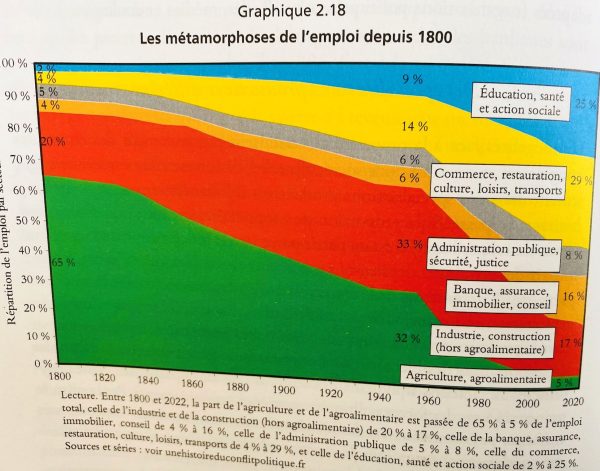
Arms trade
The sustainability of war depends a lot on the availability of arms. The Stockholm International Peace Research Institute (SIPRI) publishes regularly updated data on arms trade. The report ranks countries who are the most important exporters as well as importers of arms (from 2018-2022). The lists show for exporters that the U.S has been at the top of exporters with 40% of the global export share followed by Russia with 16%. France 11%, China 5.2, Germany 4.2 come next on the list. Taken together Italy, Spain and the U.K. reach another 10% jointly of global exports. South Korea and Israel come in with shares of 2.4 and 2.3 respectively. The top ten serve allies but also more broadly the world arms trade and race. New dynamics have started to come into force. The Russian aggression and war on Ukraine territory will have an impact to the extent that Russia is probably exporting less and shift to a more importing state.
Among the importing countries India is leading the ranking followed by Saudi Arabia and Qatar. More generally Asia and the Middle East were the most important buying countries. Importing arms might be interpreted as an indicator of perceived threat to a country. Long cycles of arms renewal may also drive statistics of arms trade, but new threats like cybersecurity and space technology have created new fields of potential attack and defence.
All in all, yet another rationale attributed to Clausewitz seems to play a role in driving the arms trade. “If you are perceived to be weak, an enemy will use this to attack”. Well, this also means that buying arms, producing or importing them, could deter a military aggression. That form of deterrence of aggression is known from the nuclear arms race as well. In the realm of conventional weapons, we have thought, it would no longer apply. We were mistaken in this respect. The dividend of peace has come to an end for many countries. The SIPRI report (2003, summary p.9) shows the continued rise on the global level of the arms trade. Why are we so scared of each other? Russia has reverted to imperial politics using conventional weapons. Containing such disrespect of internal law needs our full attention to avoid a spreading to other areas. The link of diplomacy and trade needs close scrutiny. 
Mating Birds
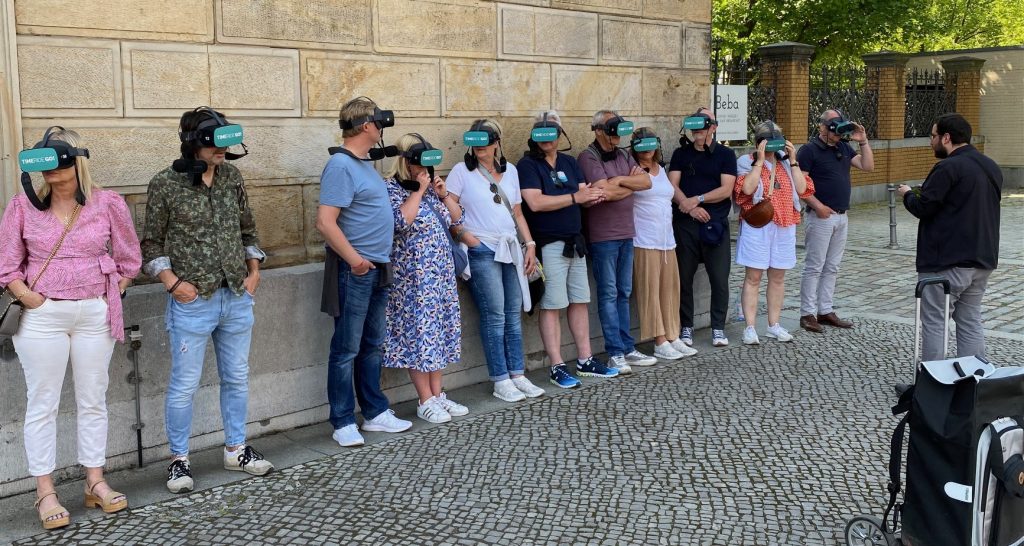
Mating birds have astonishing capabilities. Some songbirds can expand areas of their brains during the mating season. Apparently this helps to outperform other birds in singing contests. The expansion of the brain in the preparation for mating is not so much of an interesting phenomenon in view of the fact of subsequent decline of the capacity. Of course in human engineering the expansion might be useful and the hope to repair a damaged brain is worthwhile as well. In a few years we might know how to expand brain irrespective of brain functions. The naive hope that we might just sing more beautifully in preparation for mating is probably misplaced. While everyone is talking about AI new horizons for HI as human intelligence or hybrid forms become more feasible. Meanwhile we continue to focus on our preparation for mating songs. It seems to exercise parts of the brain with the best intentions in mind. Composers have created fantastic arias and singers impressed audiences across the globe with melodies in preparation of mating like the birds. Art is full of such extraordinary examples. Let’s keep up the preparation as long as the season lasts and before climate change kicks in more forcefully. The mating season might be prolonged a bit, it might be too hot or too wet to prepare for mating as well.
Preference
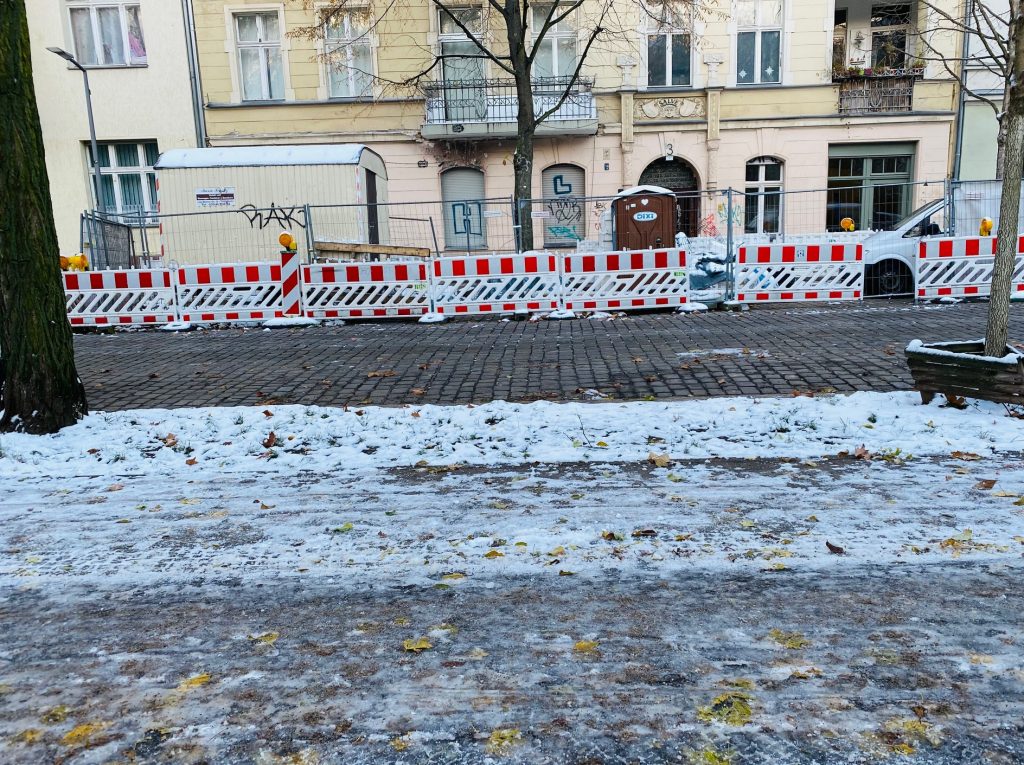
In societies it is not easy to derive collective preferences of citizens. Elections every 4 years tell sometimes nothing on specific issues which were not debated or of sufficient relevance at the time of the election. Dealing with snow and slippery sidewalks is hardly an issue at all. However, the preference to clear roads meticulously rather than bicycle and pedestrian paths in a dead end road reveals preferences for „s‘heilig Blechle“ the holy tin box (car) in many cities. Our orthopedic units in hospitals are crowded at such times and those costs are hardly attributed to the source of human negligence for fellow humans. We would expect that aging societies start to address such topics but little change has occurred so far. Hence we claim airbags for pedestrians and cyclists😂. Preferences probably have changed already but implementation is slow and faces strong opposition as well. It’s always easier to lock frail persons into their apartments at such snowy times. It feels a bit like corona where it was also easier to restrict mobility for pedestrians and children than to deal properly with the virus. Aggregation of preferences in societies remains a challenge and sociology has a lot to offer in this regard.
Energy Storage
News agent Reuters has published an analysis of the setback for short peak coverage of electricity by power plants fueled with gas. Conclusion: economically no longer viable. Investors draw back even from contracts already signed. What is the game changer technology here. Batteries that store energy just like the batteries of millions of cats that have a storage capacity to supply energy for a whole household for more than 2 days. Other giant batteries cost only half the price compared to 5 years ago equal to $150 per kwh. In five years solar energy doubled its share of energy production to now reach the same amount as energy provision by gas.
Reaching a critical turning point in energy generation, investors flock to the more profitable medium or long-term investment. Good news for the planet. Wind and the sun are all around us. We have only started to cover roof tops of office buildings, car parks and other shelters. Start thinking about your energy storage as of now and reserve a suitable space for it. Costs are coming down rapidly in a few years or maybe only a few months. 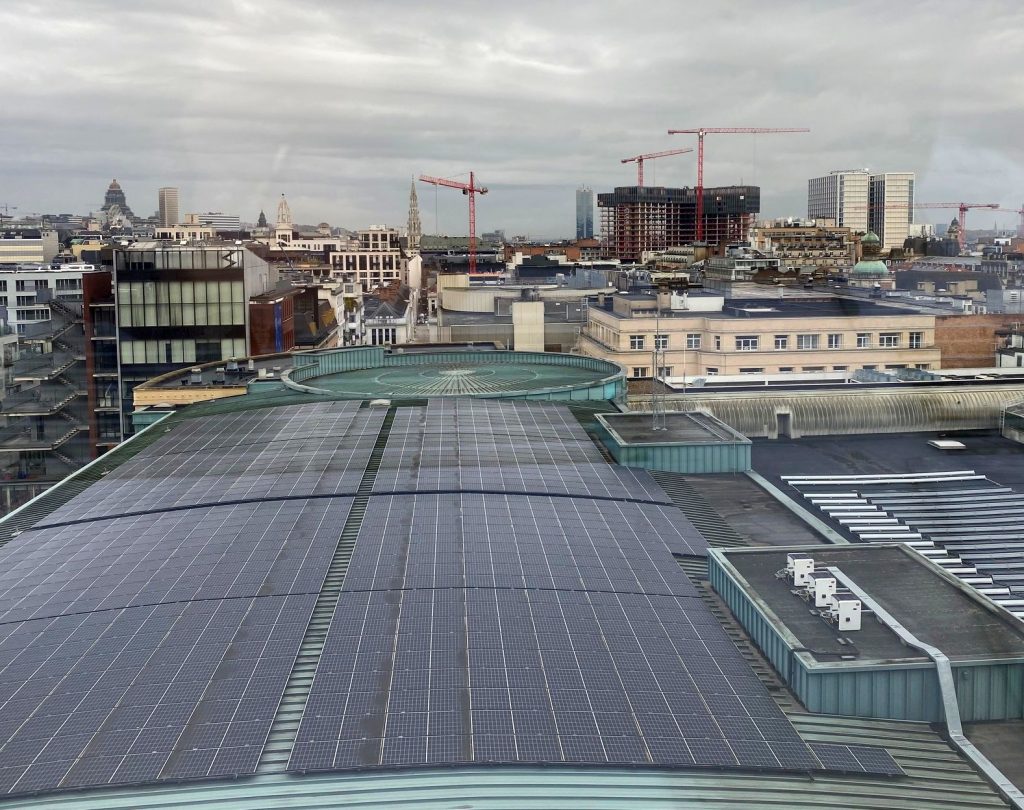
Mastodon
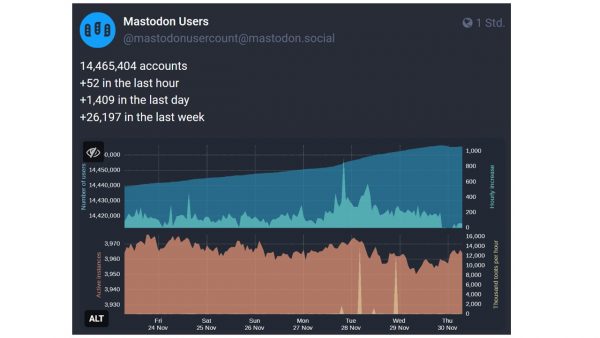
In the Post-Twitter-world there is room for other platforms to take over the information function and opinion exchange on an international level. Mastodon has made a good start to fill this gap. The number of registered users has surpassed the 10 million users by large. If the anger about the union-busting and Trump supporter Elon Musk increases further, more and more people will join Mastodon as users and content providers. Advertisers will follow where they can reach their appropriate audiences. If you sell seats on a spacecraft to the moon you will advertise on eXit-Twitter. If you care about responsible investment you advertise on elsewhere or on Mastodon, because that is where your audience will be. Ethically responsible advertisers started to make such moves already. The decentralised structure to potentially filter human rights violating hate messages will need to grow accordingly on this platform. This is a challenge for all platforms and involves costs. To better understand the idea behind Mastodon, think of a platform which connects many other local networks or platforms. Yes, it is a platform of platforms. Decentralised instances provide and can remove access to the local platform. Even whole sub-platforms might be shut out. This increases the potential to build a “caring platform”. Decentralised organisation often incurs higher costs than a central instance that decides and administers a one-size fits all solution. But it is worth a try.
An example makes is more clear, what are the advantages of such decentral organisation to achieve more shielded privacy. For example, a small local chess club targeting primarily youth can open its own server on mastodon and admit only its known members to the network. It is easy to control who gets access to your posts of solutions to riddles or innovative game and learning strategies. Access to other Mastodon instances is an additional option. For enterprises or larger organisations, it needs the communication department to talk to the IT-service to get such a structure on its way. A dedicated person needs to monitor what content gets posted and what kind of “traffic” is generated. But this can largely be automated. In case you know your members of the local platform it is much less likely to occur than on the eXit-Twitter or other centralised huge international platforms.
Many federated structures will find it useful and part of their social-DNA to join the FEDIVERSE. We shall have to wait for some more time to get the so-called social media platforms civilised. These are social investments and learning processes which deviate from the profit-maximising rationale of other platforms. (Image: screenshot from @mastodon-user on 2023-11-30).