There are many migrating species in nature. Birds form a large part of the them. This follows a kind of annual or seasonal pattern. Depending on the migration experience and dangers some, sometimes many don’t come back. This seems to describe the migration experience of the tweeting bird called twitter. Changing the name from Twitter to X, whereby X for maths-oriented people stands for a variable name that can be filled with any value. For the cinema industry X stands for x-rated adult only content and has rather obnoxious content. This might hold for web content as well.
Online through “https://netzpolitik.org/2023/x-odus-immer-mehr-medien-machen-schluss-mit-twitter/ the disastrous consequences of harsh human resource policies and lack of political sensitivity can be followed. Multiplying biased opinions of right-wing extremists, the platform has been highjacked and many tweeting birds leave or have left already.
Leaving is not easy though. People and enterprises have invested substantial amounts of money into tweeting and software developers have created specialised features to make it easy to spread press releases or info via these add-on services. I myself benefitted from services to show my tweets on my webpage or to easily publish info or links to the webpage. As of now, with migrating away most of these investments will be lost. It was smooth and easy, but now we start this all over again with other comparable platforms and assistance from developers. Mastodon and Bluesky are on the rise as alternative platforms and most likely we shall use both for some time just like Netzpolitik and many others. If already 1/3 of users intend to leave Twitter/X the impact of big advertisers leaving the platform has even more impact. After all they pay for reaching potentially millions of platform users, but now they reach only a steeply biased subset of previous users. Deleting the Twitter/X app saves you from other potential unwanted monitoring or tracking. Only the addresses on Mastodon for example are a bit longer like @mastodon.social@klausschoemann. Decentral monitoring of illicit undesirable content has advantages and disadvantages. We shall have to monitor this a bit ourselves and contribute more actively to save such platforms from bad weather or seasonal migration. 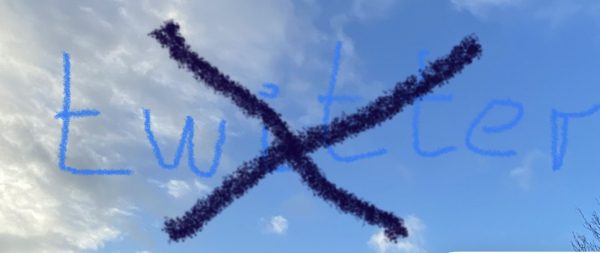
APP Circus
We are all keen to have as many APPs as possible on our Smartphones. Instead of collecting post stamps some of us collect APPs on our mobile devices as well as desktop computers. As with almost all so-called for free software, the APPs are not for free, we just pay with our personal information used for some usually not disclosed other purposes. On webpages we are used to at least confirm that we agree to the use. Alternatively, we should have the option to decline the use of transmitting personal information, user analytics or tracking. The organisation “Netzpolitik.org” has published a short overview article on the results of the research by Konrad Kollnig published in Internet Policy Review. The main message is: even 5 years after the adoption of the GDPR (General Data Protection Regulation) little has changed for the tracking and data collection in the world of APPs. Both Apple store IOS and Google Play Android are concerned.
In contrast to webpages APPs a vast majority of APPs, which we perhaps thought would provide tracking-free access to services, does in fact use “secretly” the tracking. Additionally, many APPs transmit personal information and credit card details even without encryption. A so-called middle man attack would “listen” to the transmission and potentially abuse the accessed information. The proof of the abuse of your financial details will be on the side of the consumer, completely ignorant of the potential threat from all sorts of APPs. This market is evolving with rapid speed and what used to be at the top in 2022 is no longer at the top in 2023.
Based on an online query for France on 2023-11-28 via www.appfigures.com the data reveal interesting market insights. Gaming is making a new push on the APP-market again. TIKTOK still remains fairly high up in the ranking. Conversion from free download to paid versions seems to work in several instances as well. It needs to be checked whether the paid versions do use less tracking and provide better overall security. A frugal use or regular checking whether you really need all those APPs you have currently installed on your device should reduce your very own cybersecurity risk. It seems like “Less can be more” – fewer APPS, more security – is also valid in this respect. 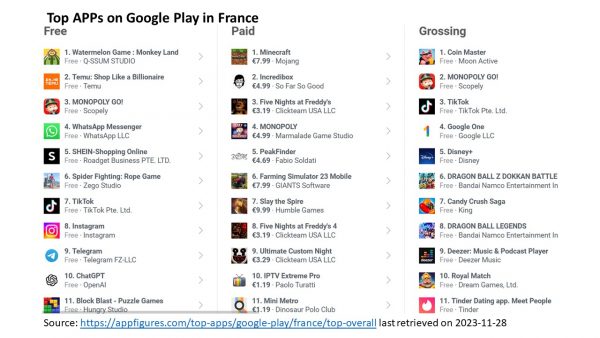
Over a generation the association with the word mail or AI has changed. Younger generations will automatically think of email as the obvious association with “you have got mail”. Asking people for their mail address, most people will respond immediately with their email account. That has certainly changed over the last 20 years. Email has become extraordinarily important for contacts, content and “crime”. The original set-up of mail servers were supposed to exchange data and information between trusted and trusting individuals. Nowadays we have become “anyone” on an email-list or part of a cascading email-chain. Pishing emails that try to lure us to potentially fake webpages to enter personal information is widespread. A whole new industry of cybersecurity has evolved in parallel with ever faster pingpong of new threats and costly remedies. Most critical remains the human factor to protect email and vital information from abuse. All training to better manage email should therefore begin with awareness building on the need to take cybersecurity seriously right from the beginning. It is not an issue to deal with towards the end of learning about it. Some general points have become common practice. Think carefully if you need to open the mail. Check whether there are external links in it. Do you really need this extra information? Be careful about the number of persons you forward or put in the copy field of your mail.
Unfortunately the simple mail transfer protocol (SMTP) makes it technically fairly easy to abuse email addresses and send an email from a domain name which you do not own. Same holds true for the content of emails. Originally only basic letters and numbers were allowed, no Umlaut etc. But then the “multipurpose internet mail extensions” (MIME) enabled more formats of attachments and illicit links and files within the email content.
In consequence it became necessary to scan emails en masse for malware and obnoxious content. Hence the quality of your email programs reveals itself with the amount of spam you still receive. Next come the email filters that sort your inbox for spam and other modern plagues like unwanted newsletters or notifications.
In consequence we sometimes wonder that we never received certain emails albeit the person sending it reiterated that the email was sent. Even checking your spam folder in the email program might not solve the issue because your receiving email server has been instructed not to accept emails from previously unknown mail servers. Not much you can do about this as an individual person, you mail server is just not on the so-called white list from which to accept incoming emails.
With a mail address from the big national or international companies you have little to worry about in this respect. Smaller companies or organizations might suddenly face a thorny issue if their i@xy.z address appears on a dubious list. You will end up sending but nobody receives your emails. It might take you quite some time to find out about it and even more to fix the issue. Hence the take home message is, have more than one email address registered on different mail servers to check that sending out and receiving emails works properly for you. Managing an own webpage with email service for members or employees is a nice service, but beware of the implications for cyber security as well.
Beer Temple
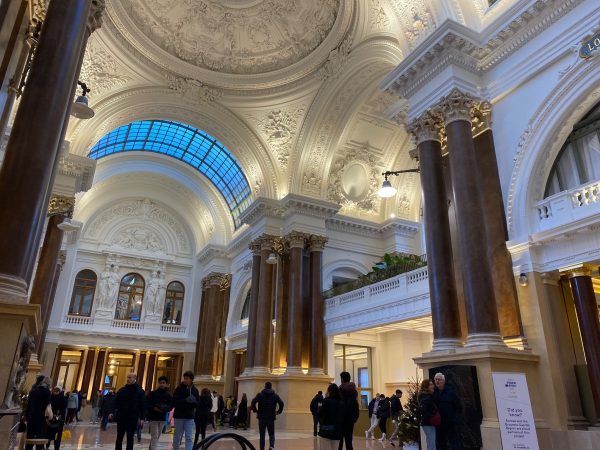
Brussels has recently opened a new attraction. A splendid temple-like building devoted to the unnamed God of beer-drinking. The renovation over several years of the centrally located “Bourse” has created a new popular attraction right in the centre of Brussels. From the outside the building reflects the classical temple architecture from Greek and Roman times. Although the building was for a long time the trading place of shares, obligation and currencies and thereby very closely linked to a country’s wealth and economic fate, it has found a new destination to represent the diverse and spirited culture of the people or peoples of Belgium through the lens of a beer glass. Of course, this is surrealism à la Magritte et al. (Museum and galleries within walking distance). The shifting fate after a financial crash to transform the “Stock Exchange” into a temple of surrealistic experiences is great idea and its realisation as popular move to transform the stock market into a temple to worship beer, beer drinking and conviviality a great idea. Without joking, the restaurant in the temple proposes good food that can be matched with a selection of 30+ kinds of Belgian beer (including 4 non-alcohol-containing beers).
Framing beer drinking culture differently from the image of beer and football hooligans is hard to achieve. Public images of beer drinking on television are all around us, anew every weekend. The Brussels stock exchange is a great place to reflect on shareholder versus stakeholder issues. Brussels has opted for a popular conversion of the building. Paris has gone for the upmarket more exclusive transformation of the previous stock exchange (Bourse commerciale) into a gallery of modern art from the private Pinault foundation.
The museum of beer in the upper ranks of the building in Brussels offers even tastings we were told. Well, beer drinking and stock trading (gambling) have both addictive potentials. Ruining yourself, the one or the other way, is equally disastrous not only for yourself but potentially others.
Know your limits is easier said than done. It is a behavioural phenomenon for individuals as well as regions or whole countries. With the apparent “Limits to Growth” for our planet or our ways to trade, even praying in the renewed beer temple is unlikely to solve the bitter-sweet issue. Perhaps discussions in the new Brussels temple will spur new coalitions and stimulate new ideas to overcome the locked-in political trading positions. Maybe the European Parliament should have a futuristic surreal session in the historic site. The only problem is, they would no longer want to return to their usual forum for debates. 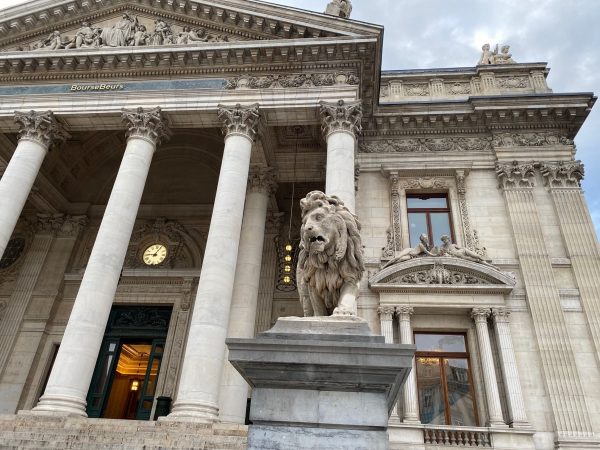
Concorde
„These were the days my friends, we thought they’d never end …“ And yet the Concorde served for decades as a massively polluting aircraft for those paying or had their flights paid be their enterprises to cross the Atlantic ocean. Yes it was the fastest way, but we learned that it didn’t really make sense. After a technical default with an explosion the entire craze got stopped. Now next to Orly airport the remainders of this undoubted design highlight is exposed. It serves more as a warning that not all technical innovations are viable as commercial or ecological innovations. The delta-design as aircraft is still the most common design children play around with as paper models. Wing designs have made progress to adapt the bent end on each wing. So should do our paper models of them. The Concorde is also a perfect example to learn from concerning the link between “Society and Technology”. Similar mistakes seem to occur still today. “When will we ever learn, when will we ever learn…”.

CO2 Footprint of Books
In view of the worldwide size of book publishing we should also keep an eye on the CO2 footprint of book publishing. The Italian association of publishers gave a brief overview of the likely CO2 footprint the printing of a book causes. Their best guess is at ½ a kilo of CO2 on average. For simplicity of calculation and assuming that an editors’ association is unlikely to overstate the amount, let us assume it is 1 Kg CO2 per book. The most CO2 is consumed not in the book production but in the transport of the items, machinery and personnel involved in producing, editing, selling etc. Of course, paper is recycled to a large amount. Certified sustainability of paper from trees has become a standard in most countries.
Nice twist to the issue: your own library at home has become a CO2 storage, if you keep them or lend them or pass them on to others. Reading can be a little bit addictive and buying books as well. Reading online or electronic books reduces your CO2 footprint. The best way to imagine the reduction of your CO2 footprint, however, is to buy or to borrow a book on travelling which replaces the actual journal by reading on the couch. Yes, being a couch potato is good for the planet, and if you want to buy a book, walk to the book shop or the library if possible. If you enjoyed flying previously shift over to buying books on planes, airports, clouds in images or stories that involve extensive travelling instead for the sake of your own CO2 footprint and future generations.
Even a book will need somehow wood as input, many alternative ways of leisure time or professional activities are worse in terms of CO2 footprint. Any e-book, e-journal or e-newspaper is even better for the planet, especially if we think of the millions of paper copies across the world that are printed but never sold. Knowing your market is crucial to reduce misallocation of ressources. E-books are so much easier to store as well using regenerative energy for the content servers around the world. 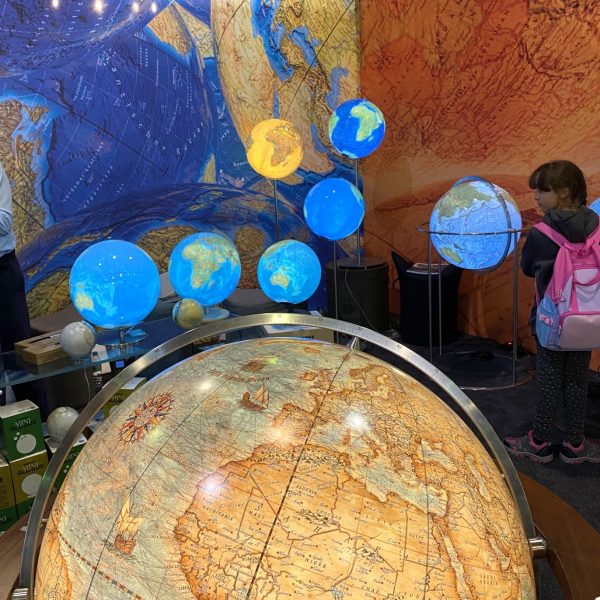
Civil Protection
A lot of important activities do not receive the attention they deserve. During a humanitarian crisis, Europe frequently acts with varying involvement of Member States. This holds true in droughts, inundations, earth quakes, civil wars or imperialist state conflicts. The extent and time of commitment are an additional and differentiating element. Coordination of such activities is important for those wanting to help and those asking or receiving assistance. Efforts, equipment and political support vary enormously as well. There is a need to approach this topic more strategically. The Union Civil Protection Knowledge Network (UCPKN) goes a long way to attempt to find a common language, data infrastructure and responses in this respect. It surely is important to go beyond the piecemeal approach of the past to be able to address emergencies in multiple kinds more effectively. It is, however, also in some instances a highly controversial issue as well. For each term in this old (Tschernobyl nuclear disaster) and still novel field (Fukushima) for joint activities, we have to come up with compromises of definitions.
For example, what constitutes an emergency? Does the climate crisis and disasters related to it already constitute an emergency now? Some say yes, we have to act now to avoid bigger floods and wild fires as of next year. Others, do not want to tackle the root causes, but rather focus on curing actual devastating effects of disasters.
We are back to a well-known topic of preventive rather than curative approaches. In the meantime, we are convinced that we have to commit more resources to both approaches: immediate relief and structural change to prevent an otherwise never-ending sequence of disasters in varying places.
Most important probably is the keeping of address books and fast digital networking facilities to react and communicate with the competent institutions and civil organisations. Beyond the involvement and linking of experts in the field, the larger public and volunteers make up for additional invaluable resources to act.
It is crucial to make it possible for decentral links between cities like in city partnerships to be involved. Building on existing human to human links motivates and mobilises huge additional resources. Of course, continuous training is a very important element in all those efforts. We should embrace it in the private and public sector, at school and in retirement even. (Image: Extrait de Peter Paul Rubens La chute des géants MRBAB, Brussels)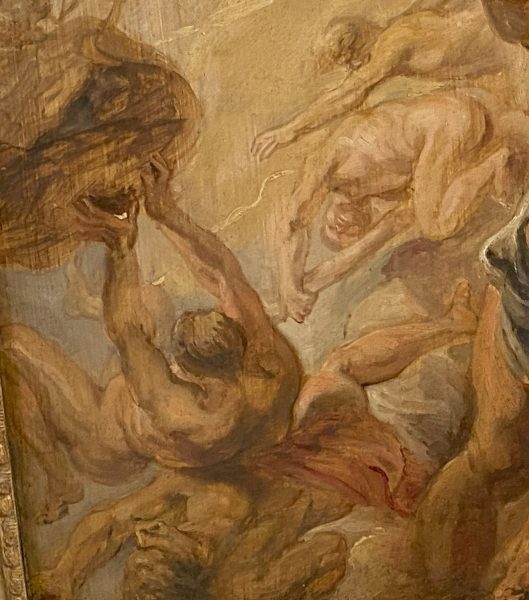
Meta-language
Some writers accomplish the formidable task to draft a text that encompasses more than one language. Samuel Beckett surely is one of them. Arnaud Beaujeu (2011) exposes the meta-language that Beckett creates through his reductionism and minimalist style. It is first a deconstruction of language or languages expressed in French and/or English at times. There is an underlying discourse dealing with the link and sometimes opposition, but always a relationship between at least these 2 languages. Beaujeu reveals 2 other languages: « the trivial and the spiritual ». The reductionism of Beckett leads to a conscious expression of the obvious, the trivial in conversations. This, however, he turns in the theatre piece “cette fois” (original “That Time”) into a ritual, spiritual version of 3 persons A, B, C in a prayer like liturgy. In taking out the sentence structure and obligations of grammar more generally the text becomes a rhythmic reading of words. Today we might say a Rap-version of a text.
The meta-language is the spiritual experience and another kind of access and questioning of memory, eventually even reconstructing a collective memory. Maybe the meta-language is the attempt to collectivise and internalize the dialogue that has turned into a trilogue.
It is out of the memory of persons or historical evolutions that Beckett builds his meta-language. Adorno (1974) put this in a relationship to Shakespeare’s dramatic work and the experience of the horrors of Nazi-Germany. Sarcastically put, the question to Adorno was not ” to be or not to be”, but “to die or to die”. Beckett travelled in Germany extensively in the year 1936 and faught in the 2nd World War with the French resistance.
„Paroles, musique, mémoire“ (Beaujeu, 2011) span a triangle which allows for a profound, albeit mostly empty space. Beckett offers a safety net to bridge the gap by way of reconstructing a language reduced to basics as well as meditative silence. The script lies in the meta-language and poetry is the more common access to this meta or essential level of our existence. Listening to the meta-language is like listening to polyphonic music. Some find it very disruptive, others a spiritual experience. Meta-language is all around us, like it or not. (Image: Französische Friedrichstadtkirche Berlin, Exhibition Princesses, 2023)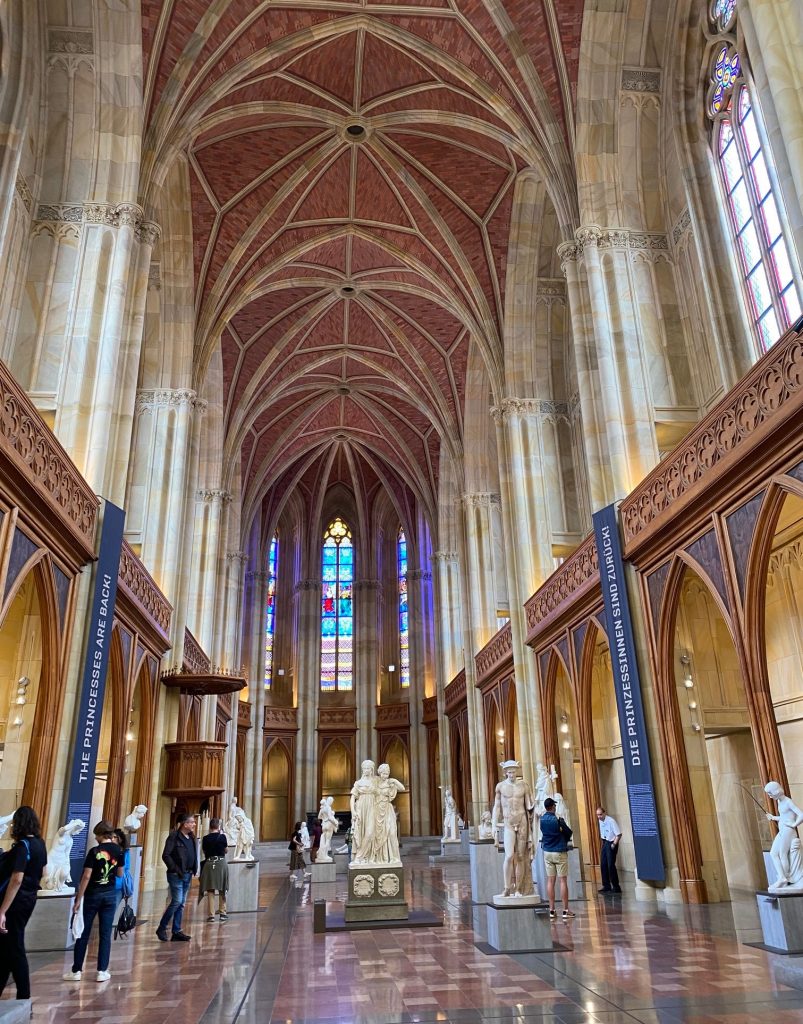
Sonnendank
Jeder kennt den Sonnengruß aus dem Yoga. Jetzt gibt es eine neue Variante des Sonnengrußes. Nach vielen anderen Bundesländern hat sich Berlin an seine Mieterinnen, Pächterinnen und Eigentümerinnen gewandt, damit sie sich an der Ernte der Sonnenenergie beteiligen. Mit € 500 wurden kleine Steckersolarkraftwerke gefördert, die jede/jeder beantragen konnte der den Hauptwohnsitz in Berlin hat. Interessant war die erweiterte Interpretation des Balkons. Es wurden Kleinanlagen für Balkon, Terrasse, Gartenzaun oder auch für die Gartenlaube in die Förderung einbezogen. Alles digital zu erledigen, bitte.
Die öffentliche Förderung wird wohl die 2-3 fache Summe an privaten Investitionen anreizen. Das kann dann schon ein Anfang sein. Die Aussicht auf mehr Balkon- und Laubenpieper, die Strom für den Eigenbedarf erzeugen, kann hoffentlich mehr Personen bewegen, derartige Investitionen rasch umzusetzen. Viele Beispiele zeigen die Wirtschaftlichkeit solcher kleiner Investitionen, aber einige Jahre des Betriebs sollten schon einkalkuliert werden. Viel hängt dabei von dem allgemeinen Strompreis ab. Seit der Aggression Russlands in der Ukraine wissen wir, dass es noch viele weitere Gründe für die Beteiligung an der Energiewende gibt. Mehr Energiesouveränität fängt im Kleinen an, eine dezentrale Erzeugung und Verbrauch vor Ort kann sogar eine Netzausfall oder Notfallreserve darstellen.
Zu dem morgendlichen Sonnengruß reiht sich dann bald der tägliche Sonnendank ein. Mit dem entsprechenden Messgerät lässt sich die Sonnenernte leicht in Zahlen fassen und wir hören es buchstäblich im Geldbeutel klingeln. So werden gleichzeitig Steuergelder mit einer Hebelwirkung durch zusätzliche private Investitionen sinnvoll eingesetzt. Ein Digitalisierungsschub der privaten Antragsstellenden, Betreibende der Anlagen und öffentlichen Stellen ist ein zusätzlich sinnvolles Nebenprodukt. Papierlose Verwaltung ist ein Megaprojekt. Jetzt danken wir aber erst einmal der Sonne als großzügigem, selbstlosen Energielieferanten. (Image: IBB Webseite 2023). 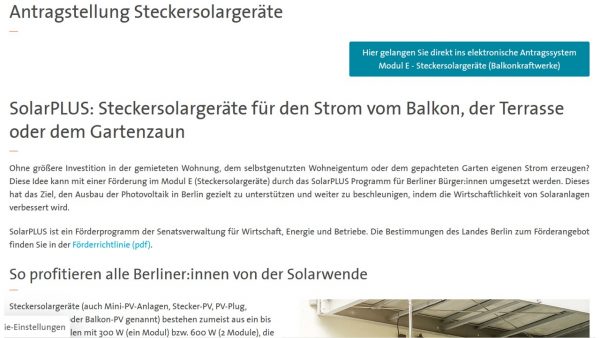
Ukraine Art
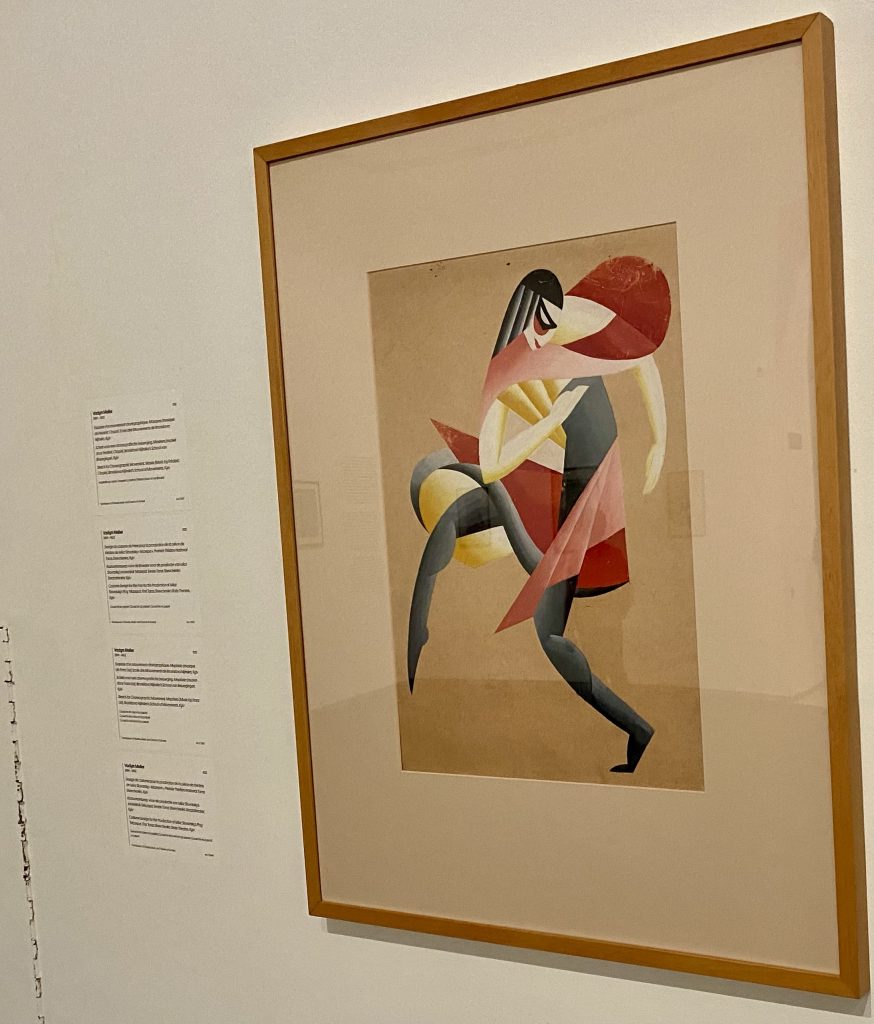
The touring exhibition of art works from Ukraine 1900-1930s is on show in Brussels at the Royal Museums of fine art Brussels in November December 2023. Before Ukraine became swallowed up in the Sowjetunion there was a very active independent artist world that had close links to all capitals in Western Europe. All art disciplines were covered. The paintings of Vadym Meller from 1919 (Aquarell on carton) show designs for a dance performance to the music of Chopin. The modern designs and vivid colors reflect the conscious reference to art movements across Europe. The inspiration from dance to painting is a recurrent theme in impressionistic paintings, abstract paintings and into our own time period. Ukrainian art from early on in the 20th century had a broad scope beyond the narrow focus on art controlled by the soviets. Well worth enlarging our vision to take into account these creative masterpieces from Eastern Europe as independent voices.