Nature as a concept

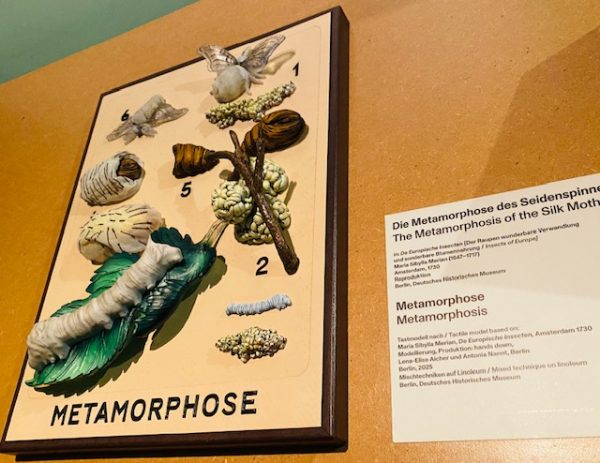
We all hold implicit or explicit concepts of nature in our minds. There are few countries that have “battled” over the course of history with changing and often “politicised” concepts of nature. The exhibition in the DHM “Deutsches Historisches Museum” on “Nature and German History, Faith – Biology – Power” is convincing with this cross-disciplinary approach to the subject. The chronological structure of the exhibition starts with Hildegard von Bingen’s vision of nature embedded into the huge diversity of plants with almost spiritual power. Admiration of plants and the animal world, however, became an economic resource just like gold and slavery during colonization, being followed by industrialization as the epitome of man’s power over nature. Counter movements have been on the rise in the 2nd half of the 20th century. Another power struggle over how and who defines the dominant concept of nature in the 21st century. As nuclear energy, bombs and waste redefined the long-term consequences of “treating” nature, the battles about the prevailing concept of nature intensify. The exhibition in Berlin 2026 is a fine example of a historical perspective on the relationship between society, nature and technology, where the concept of nature becomes a malleable concept between the other two players or systems. (Image: Metamorphosis of the silk moth, DHM 2026-5)

Security and Popularity

With webpages it is a bit like in the world of glamour. The more popular a webpage becomes, the more you have to invest in security features.
In a parallel webpage project, the choice has been to go for a popular name for the webpage and blog activities. After a year of sporadic blogging the site has become a regular target for hacking attempts by means of login attempts. This has led the administrator to previously allow only one single login attempt before banning login attempts from the same IP-address for several days. This does no longer allow a misspelling of the tricky password on your own behalf or the password-manager, if you happen to use one.
Security becomes a “sine qua non” condition for web-users as well as web-developers. We usually take only sufficiently care of this point, when it is “almost” to late. With 16.000+ login attempts over the time of about 1 year and 6 running locked-out IP-addresses, I almost gave up already on another domain with a more popular name. External backups become another necessity to prepare for the eventual failure to access own content and data bases.
Actually, I feel rather safe going out at night as a man in Europe, but the dangers of the global access to a web-page feels much less safe most of the time.

Magnifica humanitas

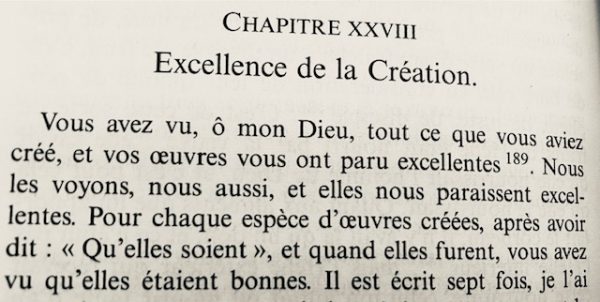
With the “Encyclical Letter” entitled “Magnifica humanitas”, Pope LeoXIV puts himself expressively into a long historical tradition of the catholic belief to be not only a religious leader, but also an institution that puts humanitarian values on the top of its agenda. As the catholic church is a globally active institution, which covers the whole life-course of individuals based on defined doctrines, the massive changes that are under way in the field of artificial intelligence asked for some guidelines to frame the church’s understanding of this relatively new “Deus ex machina” of the 21st century. In the Encyclical, there are several mentions with respect to comparable socio-economic developments of the past. In choosing the name of “Leo”, the Pope referred, from the earliest days of his Pontificat, to Leo XIII as a particularly important predecessor for himself. The latter has made his reputation in the Christian Church with the Encyclical “Rerum novarum”, which raised awareness to the risks to humanity with an industrialization and capitalism being pursued at all costs. “Res novae” of our time, which is AI and all its fields of applications have a potential to affect the course of humanity for decades to come. Leo XIV doesn’t condemn it as the devil in machine form, but puts emphasis on the potential of AI to assist us to enhance the “Common good”. This is the task of many, not of only a few, as he refers to in his Encyclical of 2026-5-15.
(Image: Extrait: Saint Augustin, Les Confessions, book 13, chapter 28).

Gone paddling

Similar to windsurfing, paddling has not only a physiological, but also an ecological impact. Rather than using external power the equipment requires a good sense of balance on the board and propulsion originates in your own muscles. The benefits are great for mind and body and sharing a board is the standard way of getting your regular exercise.
There are more and more stations near the sea or on lakes available in 2026-5, so that it has become a much more accessible form of exercise. Paddling is also an age-inclusive practice, since the “probability to fail“, with the pleasure of spontaneous diving, is spread relatively equal across ages. Learning curves, however, may differ substantially across generations depending on prior balancing experiences. The ecological bottleneck consists in the access to sufficiently clean water resources so that the healthy and fun exercise shall have positive long-term health effects. 

Gone reading

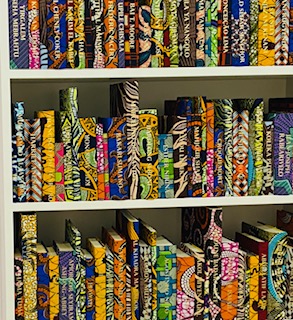
From time to time we should reflect on our scope of reading experiences. Over time, a certain bias for probably predominantly Western European or western parts of the world is likely. Therefore, it is an interesting experience to consciously choose authors from a broader geographical background.  The reading, which originates or takes its motivation from an exhibition, is a good start to broaden reading, particularly if images enliven the reading experience. The art work by Yinka Shonibare CBE on display in Berlin at the Palais Populaire manages to make this point in a colorful, compelling fashion.
It is difficult to assess what we have missed so far without having embarked on a longer reading journey. (Image: extract from Yinka Shonibare CBE, 2022, “The African Library Collection (Poets)”

Gone walking

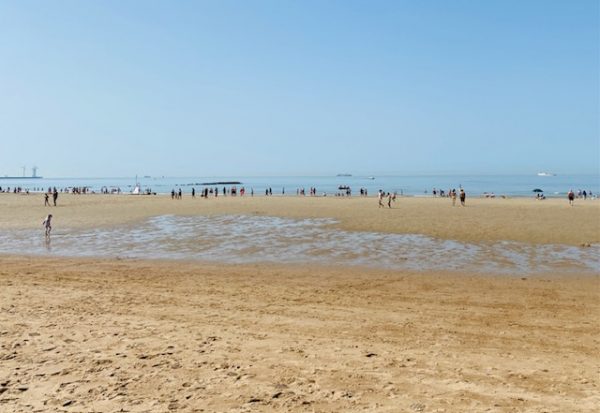
During busy weeks or travel times it can be difficult to keep your average healthy walking distance up to standards. Rather than traveling even longer distances to far away destinations, nearby areas might have to offer lots of options to get more exercise of any kind and particularly walking. The environment for walking plays an important role as well as for example walking on the beach distracts easily from the efforts involved. You don’t have to go fishing, but lots of activities will encourage you to further to explore soft forms of exercise. 

Hybrid art

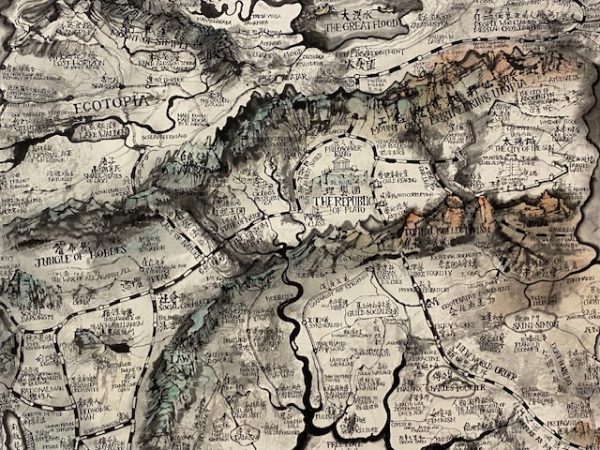
Bringing together 2 kinds of art makes hybrid art. Just as other fields of art have combined for example music with text to create the art form of songs as of the medieval ages, for example, the emancipation of another form of hybrid art is gaining prominence, text incorporated into or in cooperation with painting. The incorporation of text into paintings, sculptures or installations represents a drive to ise multiple channels of communication with an audience. Each might be sensitive to a specific word or sound, which creates an entry to gain attention or enlarge awareness for some cause. The “Palais Populaire” in Berlin displays the combination of the collection of the Deutsche Bank Art collection and the “Written Art Collection” to make this point with some forceful pieces of hybrid art focusing on text in art. (Image: Extract from “Map of utopia” by Qiu Zhijie, shown at “Seeing words, reading imagesSeeing words, reading images” at the Palais Populaire” in Berlin 2026-5). 

Latent social structure

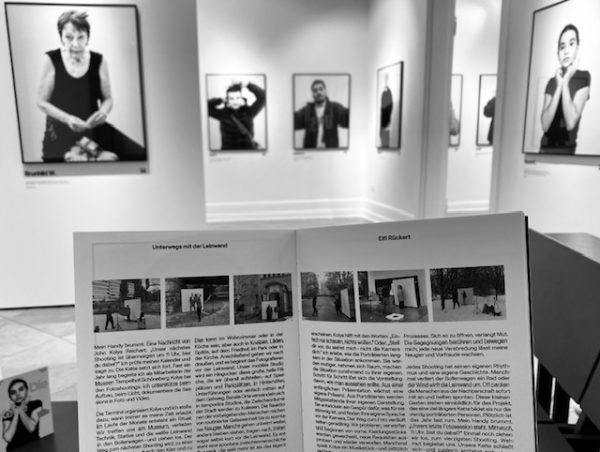
In empirical approaches to sociology we occasionally apply “latent variables analyses”. The aim is to uncover links between data that are not obvious in standard analyses of data. We are pretty convinced by evidence that age correlates with the probability of death. However, most tragedies are created around exceptional counter examples to this “rational expectation”. We also somehow have an intuition about the positive effect of social networks or the social fabric in a more general sense on living and survival. In some of those latent variable models we find evidence for an underlying factor without being able to properly name or frame it. Hence, as social scientists we continue to be interested in ways to make latent social structures more visible. With such an approach in mind I visited the exhibition by author and photographer “John Kolya Reichart” in the “Schöneberg Museum” entitled “Die Kette” (The Chain, 2026-5). The start of the chain is a familiar person in your neighborhood who leads you to the next person and so on. It is explicitly a non-random procedure, which complements proceedings of strictly random sample selection of survey methodologies. The sources for bias outcomes are multiple, however, an underlying or latent social fabric of a friendship and support mechanisms can be shown. Besides the b/w portraits and audios, giving a justification for the choice, the documentation of the process of production gives more insights into the risks and potentials of this form of insights into latent social structures.
(Image: Schoeneberg Museum, “Die Kette” by John Kolya Reichart)

Nothing changed

It reads like an entry into a personal diary. The poem “Darmstadt, 4. Januar” by Renate Schmidgall (2025, p. 24) reflects on the obsession with change. The sky shows traces of airplanes, which have passed some time ago. Trees age slowly, a pigeon sets off. “Nichts ist anders als gestern,” (Nothing is different from yesterday, then suddenly a poem finds again its space in me, …). Nothing changed, and yet, suddenly, all is different again. Motivation sets in and time appears rather short.
In “Donnerstag” (Thursday) Schmidgall (2026, p.30) notes a daily routine and the planning of today, even the day after tomorrow. Emptying her paper basket, she finds a quotation from Bruno Schulz she noted previously. “An allem schuld ist der schnelle Zerfall der Zeit.” (The fault of everything is the rapid dissolution of time).
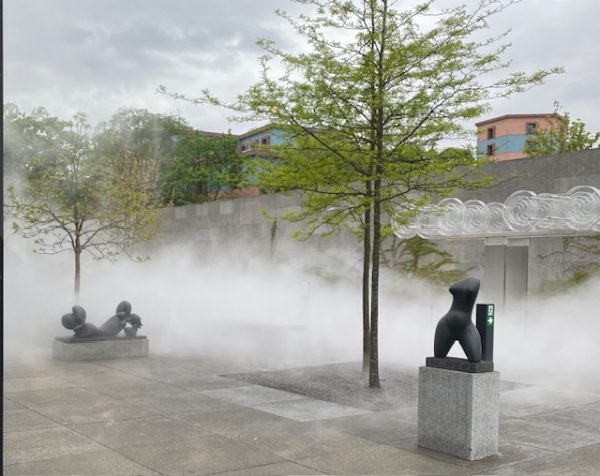
Time is portrait in these two poems as both a moment-specific personal experience as well as the short-cut description of a society-wide trend. Just, as if time was the driving force of change on both levels, even if we know it is not time in itself, but other forces are at work. “O tempora, o mores” as Cicero stated, appears to be still valid summary claim. (Image: Neue Nationalgalerie Front – WZB (Stirling architecture) in background, Fog installation in sculpture garden 2026-5).

Time in poetry

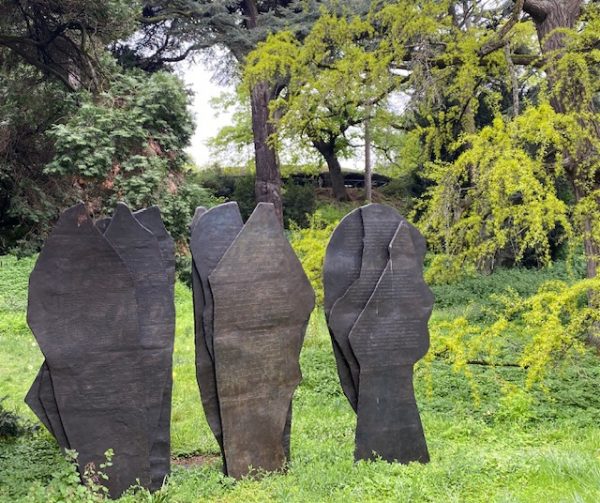
Some might argue poetry is all about time. It is a perfect way to “decelerate”. Reading pace, in most instances, slows down considerably. At least the first time reading is frequently a stop and go process. A few examples of poetry may hit personal trigger points. The random collection of poems I consulted in the “Lese lounge” in 2026-5 contained each the topic of time in one or the other form. Renate Schmidgall (2025) carries time indirectly in her title “Kein Verlass auf Uhren und Gestirne” (Don’t depend on clocks and stars, own translation). She creates new metaphors like “Am Kirchturm rostet die Zeit” (p. 12 On the church tower time rusts). This sentence precedes the sentence which became the book title. Time is also envisioned a bit like an onion in another metaphor “die Uhr schält rückwärts die Stunden“ (the clock peels backwards the hours). So much to gain with so little time spent with poetry.  (Image: Bronse in Jardin des Plantes, Paris, homage to Saint-John Perse 2026).