Set and Match

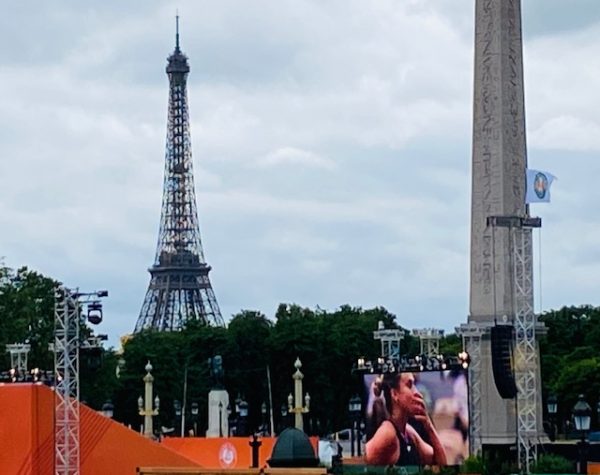
The organizers of big tennis tournaments like at Roland Garros in Paris have to reach ever bigger audiences to be able to cash out the prize money for the top players and their expenses. Besides the number of spectators on site, the prime income comes from television rights and sponsorships through advertising. Gambling on set and match is also a rising annex market, just like tourism linked to the event. For such purposes Paris offers screenings, similar to the Olympic Games 2024, in the centre of Paris. The park “Les Tuileries” offered to follow the tennis matches on big screens against the background of the Eiffel Tower (image below). Of course, the “rue de Rivoli” nearby offers additional pleasures or take home goodies for spectators, which add to the overall budget spent by an average tourist in Paris. For people interested in a walk in “Les Tuileries” and the plants ( Acanthus), trees (Linden) and flowers (roses) have to choose the other parts of the park. Big cities have the chance to offer a bit to everyone within relatively short walks. 
Press in the 1970s

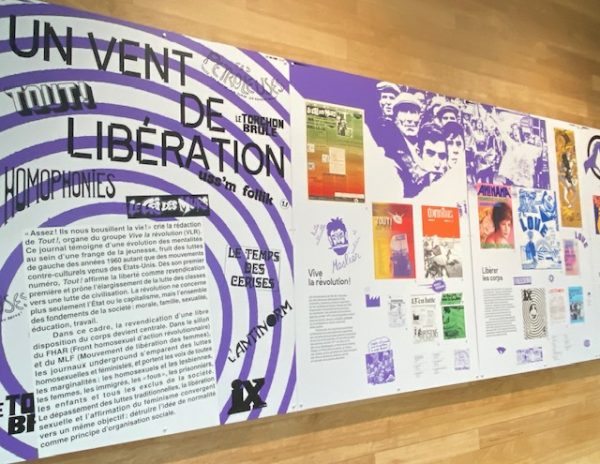
In the 70s there were many so-called underground or alternative papers printed. For people in bigger cities or in cities with universities, the 70s flourished with independent journalism which addressed small audiences. Each access to printing materials and paper allowed to go it alone for groups of society that did not feel they were adequately represented by established media. Some of these “underground” papers published texts that could be considered going against the dominant legal principles. Topics like feminism, birth control, abortion or more left wing political statements against private property had to fight to reach their audiences. The cold war period created another overarching threat to the representation of all opinions. Hence some groups we t underground to function as they wanted and how they interpreted the freedom of expression and being published. (Image: BNF Exhibition Underground 2026-6). 

Marilyn Monroe TM

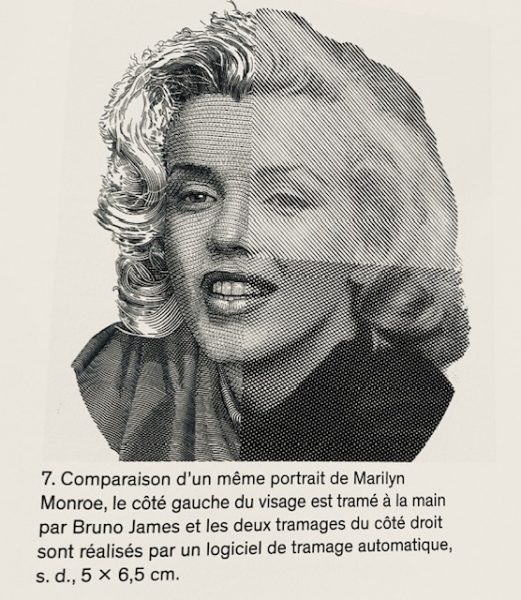
The image and probably even the person of Marilyn Monroe has become a trademark of its own. Since the choice to change her name and outlook to become or be created as the objectified trademark of Marilyn Monroe, the financial interests to gain money using every image, sound or video have reached above average returns. The profits mostly accrue to those owning the commercial rights. At the occasion of her 100th birthday, this continued rent seeking keeps spinning.
It has been well documented that the early death at just 36 years of age is linked to her exploitation or “commodification” as a trademark rather than a person able to cope with the overloaded imagery of herself. Bookshops, even in 2026-6, decorate their windows with books with her image on the cover as eye catcher. As with few other persons, Marilyn Monroe stands for an objectified person where the property rights of the image keep being exploited long after her tragic death. (Image: Marilyn Monroe, tramage by Bruno James BdF, left and algorithmic on the right. Transbordeur 2026).


Considerations about Space

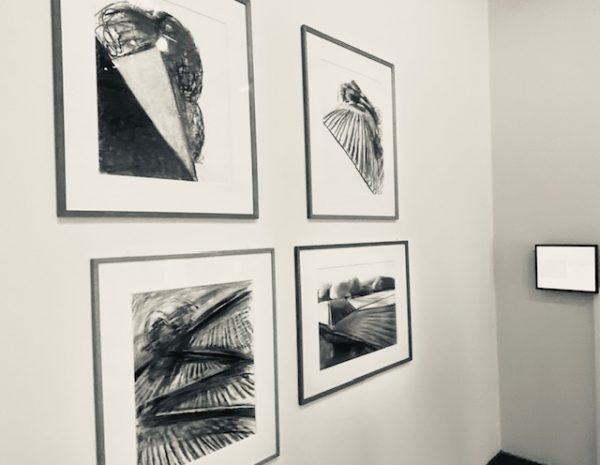
As is true for most architects, for example Le Corbusier, they are mostly remembered for their actual realizations (Scharoun, Mies van der Rohe), rather than the grand designs prepared for an architecture competition. Henri Gaudin has not only left concrete implementations of his ideas, but also several books on his perception and ideas about “concepts of space” (“Considérations  sur l’espace”), which comprises architectural ideas about “empty spaces“. Additional sources of inspiration were a relentless pursuit of drawing and designing what he saw, for example while travelling.  The BNF has received the extraordinary donation of the journals of Henri Gaudin, which allow to trace his continuous search for innovative representations of what creates a space, the impression of space and the relationship between spaces.
His travels with the TGV in France filled a complete “carnet” (booklet). Architecture is surely not about concrete. In the best cases there is a lot of research happening “backstage”, sometimes in small spontaneous sketches that can have a very lasting impact on many people’s perception of space later on. His own landscape drawings were an interesting inspiration for his architectural work as well. “Image: Landscape drawings by Henri Gaudin, BNF Paris 2026-6, Galérie des Donateurs).

Dronification

In a long row from californication, gentrification, desertification and electrification, not to mention quantification, juridification or enshittification,  we have arrived at “dronification” in the 2020s. Spurred by the extremely successful use of drones by the Ukrainian army to o bring to a halt the illegal invasion of Ukraine by Putin’s Russia,  conventional weapons like tanks and artillery lost out to the widespread use of drones. Few military observers, even experts of military equipment, thought prior to 2020 this would be possible. The lower costs involved, precision targeting and different skill sets needed for the orchestration of a drone based defense and attack, have made a strong case for the dronification of warfare.
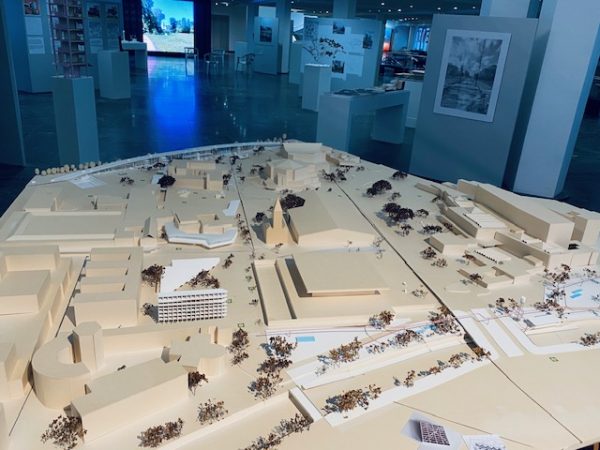
As with many innovations, there are dual-use potentials. In this case the civilian use of drones received a considerable push in technology and acceptance. Rescue robots or delivery of provisions to frontline positions are part of the “everything-drone-thinking” during war. The surveillance of frontiers and territory is applicable to agriculture, properties and urban planning. Droughts and other environmental impacts on a large scale can be monitored in a  timely fashion as well. 4D imaging becomes more feasible as well in many domains. The potential in architecture is vast as well. Public infrastructure and distribution of frequency ranges is a crucial precondition to ensure an  orderly coexistence of military, security and civilian use cases.
(Image: Exhibition: atelier le balto, Die Kunst des Gartens VI: FREI(B)AUM at Kulturforum Berlin 2026-1)

No mow May

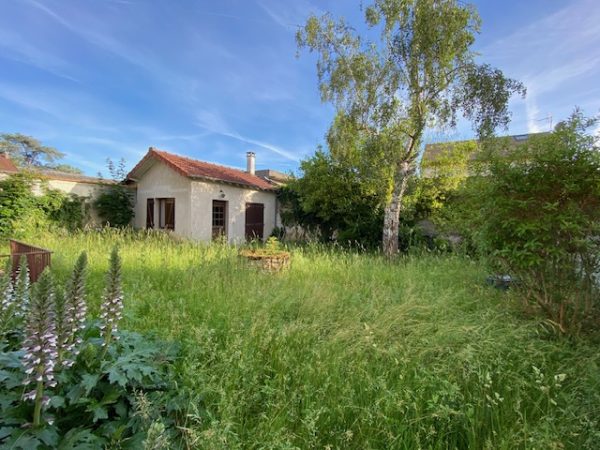
For the sake of biodiversity we have learned how important it is to allow our gardens to grow during the month of May. Lots of insects shall benefit from the larger diversity of our greens. Equally, it is the perfect time to “collect” “pollen” from lots of neighbors’ gardens and fields, which will eventually show up in another garden. It is a bit similar to sharing flowers and plants in your local environment.
We just have to be careful about invasive species that have been quite successful to “surf” on the “No mow May” gardening wave.
In May 2026 the effects of global warming have been particularly felt in France. “Meteo France” has reported the very warm French month of May in 2026. Similarly, for most parts of Germany, particularly in the South West, the average temperatures were well above the 2° target already (Deutscher Wetterdienst).
With quite some rain before, the climate throughout May 2026 has favored rapid growth and advances in the blooming of the whole vegetation. You might have seen gardens in your neighborhood that looked very different from previous years for those who tried a “No mow May” in 2026.

Dry January

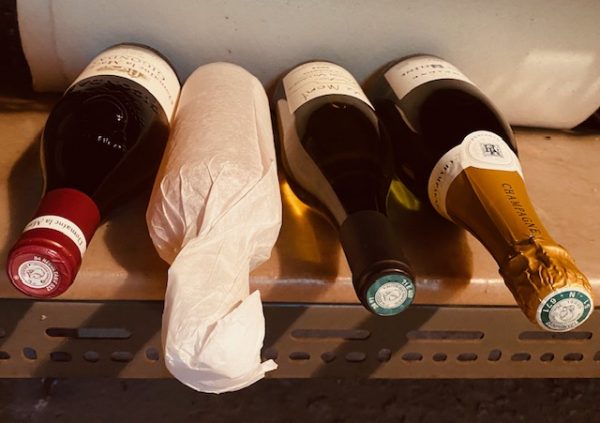
There is a health trend to pass a sober, “dry January” after the X-mas and New Year festivities. It seems to be rather popular, so that the French wineries have started a marketing campaign of a “French January“. We shall see what the battle of marketing campaigns means in the end for the health of our liver (Study Link). It might lead to changes in consumer behavior of the following kind. Take advantage of good price offers for French wine and champagne in January and drink it as of February.
For addicts of the “carneval season” this should not be too difficult, jointly with a couple of friends. Alternatively, you might not be bothered and continue a moderate consumption across seasons. Moderate consumption, however, is the tricky part of alcohol consumption. Medical guidelines (health of liver) have evolved recently to count each drop of alcohol into your total consumption in either fluid litres of pure alcohol or the equivalent measured in grams. 

Mammalian Aging

Mammals share a lot of similarities with respect to aging. The researchers Alexander Tyshkovskiy and Vadim N. Gladyshev et al. (2026) spearheaded multiple research to identify similarities across humans, macaques, rodents and mice. The outcome of this overarching study of mammalian aging and mortality is a set of biomarkers that can serve to predict time to death.
Why is this interesting? With the rise of the longevity interest in the 21st century, the need increases to use robust biomarkers that can assess any presumably miraculous innovation to smooth human aging or prolong the time to death. Steps towards “universal transcriptomic signatures” including CDKN1A and LGALS3 (compare across species), which proved to be important in mortality predictions based on the large UK Biodata.
It is the accumulation of damage, which drives  processes of aging . However, “inflammation, replicative senescence, metabolic inhibition and γ-irradiation” can be attenuated or occasionally even reversed. The aging of cellular components has been demonstrated using “modular-specific clocks”.
With these biological advances in the field of biomarkers, the BPS nexus (biology-psychology-society links) could receive more attention as well in order to enlarge the society-wide research into the causes of human aging.
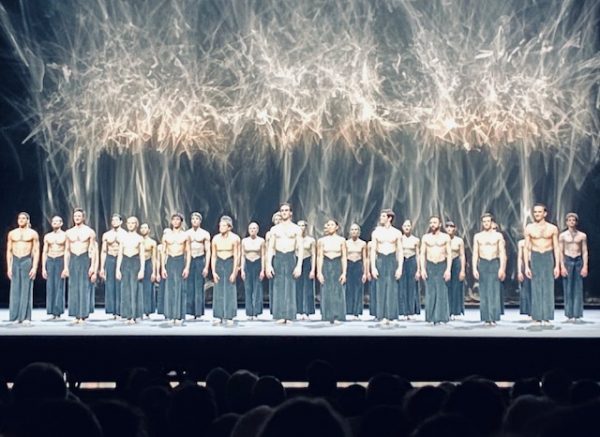
(Image: Staatsballett Berlin, Choreographie Crystal Pite, Gods and Dogs, Angels’ Atlas performed 2026-5, final applause)

Bicycle Garage

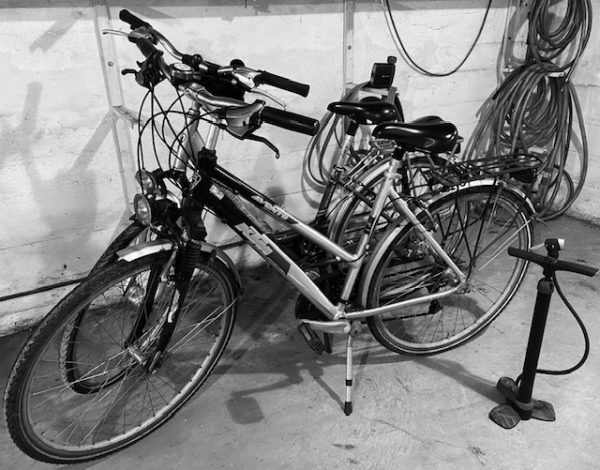
The 2020s are the years to explore sharing concepts. Beyond car sharing we have become used to share scooters and bicycles for intermodal transportation. The concepts are subject to continuous evaluation and the choice between free-floating versus fix point stations remains a hotly contested topic. Despite using either one of both sharing concepts, families and friends might practice their own sharing of modes of transportation. Whereas for cars the driving licenses and insurances might limit the sharing, for private bicycles there are no such restrictions.
A little bit of basic understanding and practice of repairs allows to share family-owned bicycles with little effort. Equipped with a GPS-tracker, even free floating might be an option in addition to theft protection. With less space taken up by cars in household garages, bicycles can occupy, at last, sufficient space including a little corner for maintenance and repairs.

History as Science

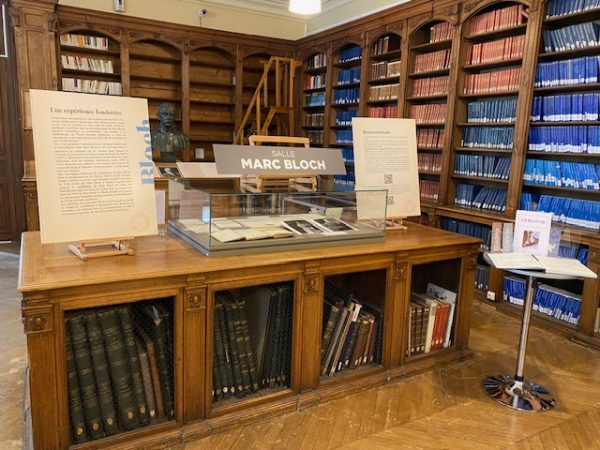
There are persons entering history and there is the science of history. Whereas the former persons may sometimes enter for very dubious reasons into history, responsible for killing people, the science of history draws on a whole lot of evidence, social, economic or demographic, to evaluate a person’s legacy or the merits of an epochal change. In the development of this scientific approach towards history, rather than a purely chronological, family structure or narrative-oriented approach, Marc Bloch has been a central figure. His research and exemplary own biography as student of history at the ENS in Paris, teacher and later Member of “La Résistance” is honored by an exhibition on his life and time at this formidable French institution of teacher training. In an exhibition in the ENS library you can even inspect a list of the books taken out by Marc Bloch as a student as well as his experiences as a student in London or Berlin before the 1st World War. A strictly science-based approach to history made him an influential historian and social scientist beyond his lifetime. (Image: Salle Marc Bloch at ENS Library Paris 2026-5)