Co-evolution process

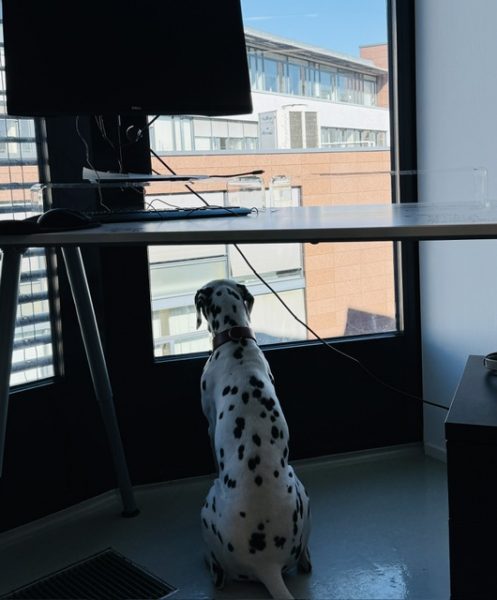
Humans look back on a long co-evolution process with viruses, bacteria, insects and animals. The focus on a solitary evolution of humans alone is already a challenge, although we know that the evolutionary process is much more complex. Within the co-evolution process of humans and animals, the co-evolution with the species of dogs has lead to interesting learning opportunities for both. Braeuer et al (2024) show that a dog’s cognitive capabilities to perceive human emotions beyond simple positive or negative emotions. As dogs seem to monitor their owners constantly, many of them are able to alert persons about health and/or emotional state. This is a learning process for dogs, but also for their human owners as their authentic emotional expressions are immediately recognized by their dog. A co-evolutionary approach offers a lot of benefits to all involved. 
Medication adherence

In the broad range of medico-pharmaceutical science the topic of medication adherence is an uncomfortable issue. In the ideal scenario people would adhere 100% to the prescription. In the real world of not-optimal behavior and circumstances, people deviate substantially from what is best for or even good for them. Even in the tax-based health system of Denmark with relatively easy access to medication, a long-term study revealed the difficulties encountered to adhere to essential medications for persons with Type 2 diabetes. Nielsen et al. (2026) analyzed a cohort of 80.000 persons who newly acquired Type 2 diabetes of which about 25% showed a low adherence to medication plans with hazard rate of 1,27 to suffer a cardiovascular event. High adherence persons did not suffer such an event in the following 220 days over the 10 years of observation. A sedentary lifestyle or obesity increase the risk of type 2 diabetes and beyond medical treatments additional behavioral challenges like medication adherence make it clear, we do not live in the best scenario to fight type 2 diabetes.

Fighting fires

In our homes and offices we are used to have electric, digital and chemical devices to assist us in fighting fires. Fires can have multiple origins ranging from faulty technical devices to human errors, behavior and volition. Some countries have terrible experiences with city fires engrained into their history. The scale of wild fires in forests in Europe, the USA, Australia or Canada have reached a new dimension. With global warming fires known in southern parts of Europe reach further north and become more intense. The fire near Fontainebleau (Forêt de Sénart, France) in 2018 destroyed 9000 hectares forest. In 2026 the fires near Bordeaux burned 10 times the size (Link). There were about 8 years to get prepared between the 2 large scale incidents. The technocrats’ answer usually is just limited to the immediate surroundings of the fire. Instead larger scale actions have to be prepared and enacted to prevent the next incidents. The technocrat’s answer is more technology like aircrafts and yet bigger aircrafts(still largely insufficient in 2026-7). Satellite and drone surveillance with infrared cameras additionally can go a long way, but the human factor remains a hard to fight beast in all such technical fire fighting scenarios. This setup seems to be somehow like a constant to take into account in all technological propositions.  

Cercis siliquastrum Jardin des plantes Paris, planted 1785.

Autonomous Agents

We all have seen more or less autonomous robots somewhere, maybe in a garden silently doing its job or doing more demanding tasks like in playing table tennis against a human. Even the evolution of polluting fireworks to swarms of little light-emitting drones designing figures on the sky have become quite popular. The AI-world is similarly advancing rapidly and proposes more and more “autonomous agents” to assist us. It seems crucial to distinguish the 2 Ds of autonomous agents: Degrees and Dimensions. As with job quality or job satisfaction, there are several sub-dimensions, which need to be considered when dealing, in a summarizing form, with such encompassing terms.
You might allow an agent to order missing food for a meal and pay for this autonomously. You might even be assisted in financial choices to a large degree, but you might not want an autonomous agent to make far reaching decisions concerning your health or partnership(s). Besides such dimensions, the degree of autonomous decision-making needs to be calibrated according to your (perhaps changing) preferences. Booking a table in a restaurant, with a single other person, might not just be a friendly, nice assistance, but it might get you into severe trouble. However, managing conference bookings, a family event or a birthday party might allow you to concentrate on other issues or specific details. Additionally, there are underlying and cross-cutting topics like trust, risks and security that enter the “2 Ds of autonomous agents”. A 2-dimensional matrix plotting levels across dimensions might work as a behavioral guideline in the development of autonomous agents. More dimensions may be added during the implementation.

Dry January

There is a health trend to pass a sober, “dry January” after the X-mas and New Year festivities. It seems to be rather popular, so that the French wineries have started a marketing campaign of a “French January“. We shall see what the battle of marketing campaigns means in the end for the health of our liver (Study Link). It might lead to changes in consumer behavior of the following kind. Take advantage of good price offers for French wine and champagne in January and drink it as of February.
For addicts of the “carneval season” this should not be too difficult, jointly with a couple of friends. Alternatively, you might not be bothered and continue a moderate consumption across seasons. Moderate consumption, however, is the tricky part of alcohol consumption. Medical guidelines (health of liver) have evolved recently to count each drop of alcohol into your total consumption in either fluid litres of pure alcohol or the equivalent measured in grams. 

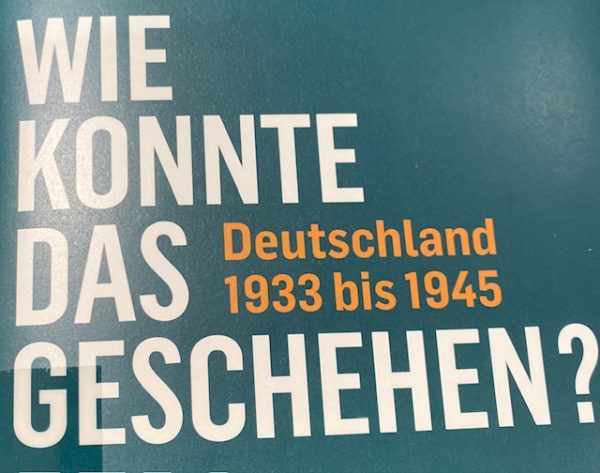
How could this have happened

The latest thorough reflection on how the Nazi-terror could have stopped or being prevented remains an important question in our time. The more we see countries descend into the authoritarian regime types, the more we have to know our lessons from previous historical experiences. Götz Aly made a great contribution to this literature. He points our attention to the collective euphoria the Nazis (NSDAP) managed to make people believe, by at the same time blaming others for the past crises. People just wanted to believe the fake narrative of a promising future (p. 175) for a society based on social exclusion. The pattern, unfortunately, seems to find its replication in other parts of the world nowadays. This is a very slippery road which often leads to disaster rather than relief. Easy or catchy answers are preferred by many people rather than the nuances of well-informed differentiated options. Patience in social development is a collective virtue, but often misunderstood as a form of conservatism, which is is something very different.

Foul-smelling dictatorship

The animal world is full of interesting strategies of how to turn over a foul-smelling ruler or dictatorship. The ant queen of “lasius orientalis” infiltrates a colony of “lavius flavus” to spray the incumbent queen with a foul-smelling substance which turns the worker ants against their own queen and eventually kills the queen. This is a rather intelligent strategy to trick the defense system of rival colonies and prepare a takeover of a whole colony to install your own reign.
This may constitute a stark warning for democracies just as much as a threat to persistent dictatorships. In the age of the not so social media there is a lot of foul-smells produced. Beware of the risks to democracy as open societies are much easier to infiltrate than closed societies or dictatorships. (Link)

Memory design

The progress in the field of genetic editing and design is astonishing. The research group of Johannes Graeff tested the “behavioral consequences of epigenetically editing the Arc promoter within engram cells”. Plasticity is a key feature of memory formation and the experimental evidence shows that this plasticity can also be interrupted. Moreover, the scientists were able to demonstrate a reversibility of retention or un unlearning of manifestations in memory of mice. The bidirectional reversibility of memory expression has potentially therapeutic value for traumatized humans eventually. However, if memory becomes part of a design feature of human species, the risks involved are just as important as the potentials. In totalitarian political systems techniques of “memory design” might be able to adapt such influences on memory, which used to be called brainwashing. Ethics commissions could get ready already to define safeguarding of human memory.  (Image: The fountain of Bacchus, Museum of Paris, 18th century wine merchant entry)


Less but better

There are many examples where a new mantra for the 21st century emerges from recent scientific evidence: “Less, but better” (Lbb). In studies of nutrition and human dietary requirements, the importance to eat less has been demonstrated on a regular basis. And this is even more important than to do more exercise if weight loss is the target or the attempt to explain obesity across the globe (McGrosky et al. 2025). The case for eating less is strong. Eating better refers to the need to avoid unhealthy, toxic or cancerous food or the way to prepare food. “Less but better” could become the new mantra or “categorical imperative” if you like it more philosophical in tone. We, the people gain, and the planet will gain as well. It is an easy win-win case, albeit with some behavioral implications.

Ultimate Step

Reports in the New York Times, The Guardian and Le Monde in recent weeks have brought to our attention that there are shocking ultimate steps undertaken by several employees of public services. In the case of the British post office a decade long inquiry has uncovered that 13 suicides of employees occurred after they had falsely been accused of fraud. A long time ago in France Telecom a series of suicides was also attributed to a harsh personnel policy. The Office of Public Finances (DGFiP) is confronted with a series of suicides in 20025 of 12 employees who apparently made the ultimate step to put an end to their life. Not all is to be blamed on the enterprises or public services concerned, however, they failed or omitted attempts to prevent the ultimate steps. Initiatives like peer listeners as anonymous contact points or access to psychological counseling are necessary parts of a responsible human resource practice, even if it might not be a sufficient condition to avoid the ultimate step in some instances. In many cases employees go far beyond their mental capacities in terms of commitment to their work, they should not be left alone in case of severe consequences.
Burn-out, for example, needs to be tackled as part of the responsibility of enterprises and public services alike. It is highly unfair to put the costs of psychological consequences on the shoulders of families and the state. Investigations into toxic leadership styles and the current revival of “workaholic” work ethos will have serious negative consequences for families and society as whole again.