Reading confidence

Competence and confidence in reading skills are closely related. The exact nature of the relationship remains a bit of a puzzle. Educational psychology stresses the importance of self-concept and self-efficacy for attitudes towards learning in general, but evidence on relationships related to the progress of reading competence over longer periods is scarce. The might be virtuous and vicious circles of competence and confidence at work. At the Frankfurt Book Fair 2026 many publishers presented established manuals on acquisition of reading skills. However, pre-school, primary school teachers as well as parents struggle to support early learners.
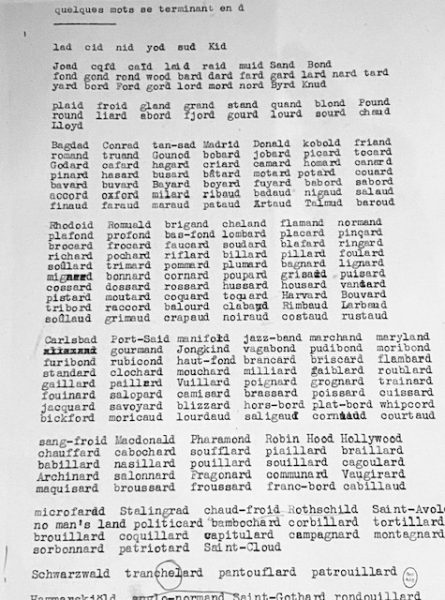
The “Lauter Verlag” presented a stimulating approach which tries to set children on a virtuous reading acquisition track. It start with very short 2, then 3, then 4 … letter words in German to reach the level to read whole sentences. Children build confidence with each step and they are encouraged to quickly reach a more challenging higher level. About time to test the interrelationship of competence and confidence in more detail to reach all learners of languages with innovative approaches. Even the much acclaimed French author Georges Perec kept lists of 3,4,5,6,7,8 letter words to build some of his famous poems.
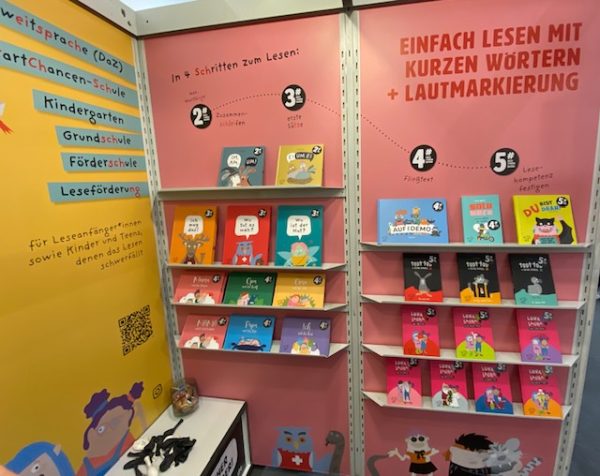
Frankfurt Book Fair 2026 Lauter Verlag

Game of letters

For most children reading and writing are too serious to be considered a game. And yet, learning is so much more fun if such competencies are acquired or at least accompanied through a game-like approach. School grades and PISA tests have taken out the fun part of learning of the most basic competencies. The fun in learning and experimenting is likely to increase the time spent learning, its efficiency and the return to learning. Georges Perec explored so many different ways to play around with words and letters to find his own most suitable style how letters assembled into words may serve his evolving purposes. The exhibition and accompanying material at the BNF on Georges Perec could spur a renewed interest in such games of letters and with letters for the young and old. (Image: BNF exhibition on Georges Perec, Words ending with letter d 2026-10).

Books for children

On the international level the book market of books for children is doing alright (Info Frankfurt book fair 2026). Whereas the turnover for school books is shrinking, children’s books have achieved increasing turnover in 2025 again. The market has diversified and merchandising related to books for children has substantially increased. Figures about this trend, however, are hard to come by. Based on TV-characters, books may also sell as a kind of merchandising product for the time offline. Talking about books is an educational opportunity which is still underexploited. Popular among children with their parents or as part of reading aloud, the real multiplier of reading interest is the talking about books among children themselves. Imagination is sparked and there is a great chance that reading will continue. 

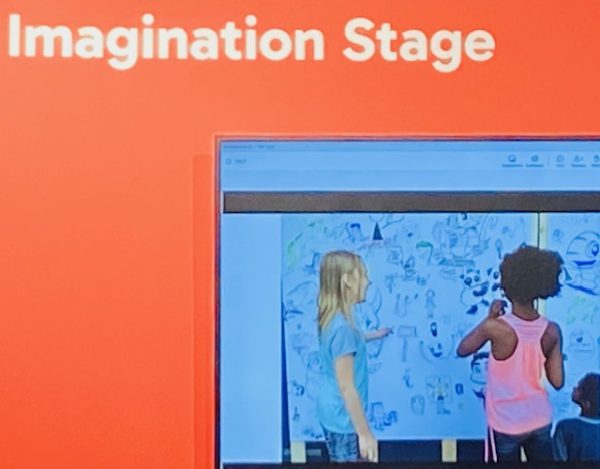
Presentation at Frankfurt book fair Imagination stage 2026

École buissonnière

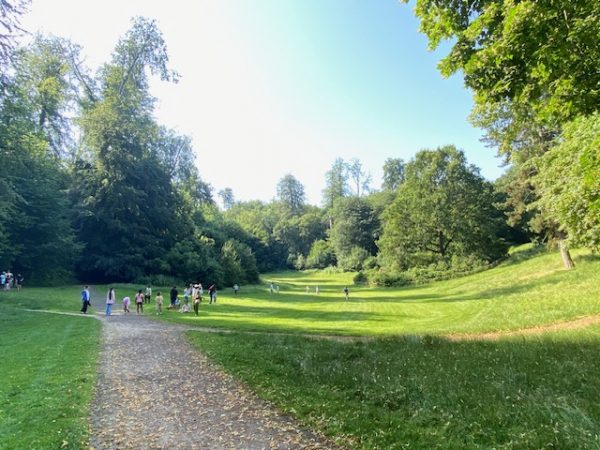
In 2026 the “École buissonnière“, the outdoor schooling has become a viable alternative to the schools that are overly hot during summer. But far beyond being an alternative out of necessity, schools as well as kindergardens adopt a form of schooling close to and in nature. It can be so much more than a simple interlude or excursion. Learning from nature is a precursor of bionics as well as compassion. After all nature offers ample examples of diversity and coping mechanisms. It is an option not only for learning purposes restricted to the young, but it is underexploited in continuous learning and lifewide experiences as well. There have been abuses also in history, most notably by Nazis in Germany for purposes of indoctrination. The learning opportunities to encourage a critical perspective of our modern, technology- and screen-dominated learning and life, are huge. They just need experienced guidance on the way of discovery, comparisons and collective experiences. Children open up and have fun, the more the pressure of classrooms is alleviated.  Learning about the importance of biodiversity from different angles is a very human value and includes our responsibility for other species.

Autonomy in Behavior

The learning capacity of humans sets them on a path to acquire and extend their autonomy in behavior. At birth, physical and emotional dependence is highest. Soon learning to handle different nutrition sources and emotional stress allows to gain more autonomy in each of these components of autonomy. Throughout later childhood and adolescence we develop various additional domains as well as degrees of autonomy.
Role-playing, enhanced motor control and interaction with others define and redefine continuously the potentials and limits of autonomous behavior. Social norms start to play an even more important role as of adulthood, just consider financial autonomy as one of the dimensions. The most distinguishing factor from robots or animals until 2026 has been the human ability to form its own autonomous judgment, where value systems and legal norms co-determine or set limits to our autonomy or behavior. Some results from neuroscience have demonstrated that our readiness to act is prefigured in our brain and additional “intelligent” mechanisms are needed to suppress or guide the otherwise autonomous, spontaneous action or reaction.
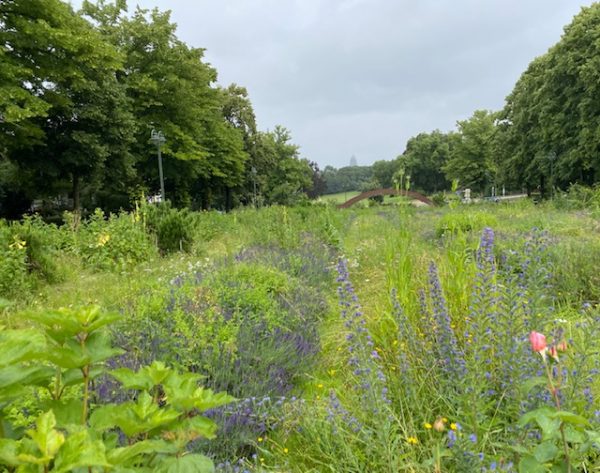
Our “free will” might not be as free as we wish it to be. Similarly our autonomy in behavior or decision-making might not be as autonomous as we tend to believe. (Image: Social cooperative gardening project, Brussels 2026-6)

Autonomous Robot

We have been used to computers beating the average chess player and even the best players. In 2026-4 the journal “Nature” published the documentation of an autonomous robot (Ace) winning the occasional game against top-level Japanese table tennis players. Peter Dürr et al. (2026) described the robotics challenge as constructing a robot that can match the human capability and reaction time of “fast, precise and adversarial interactions near obstacles”. The high speed perception of movement is coupled with event-based vision and builds on AI-algorithms like reinforcement learning. The step ahead is remarkable.
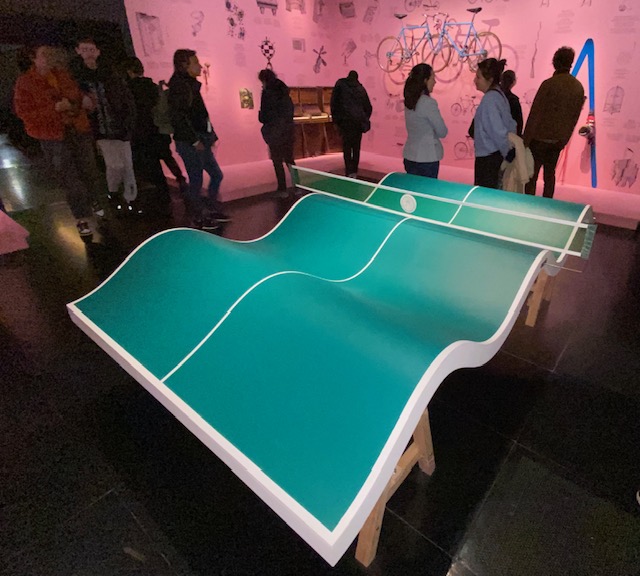
About 50 years ago, as coach in table tennis we used a machine or robot throwing balls towards us which moved from left to right in timed routine, for example. These simple robots we used to train humans. Now the robot is reactive and even interactive, learning from strategies and tactical moves. Technology can outperform us in most singular tasks in 2026. The combination of several of these skills is still quite unique to humans, but the clock is ticking for human singularity in technical matters. What was considered a “false good idea” in the Paris exhibition “Flops” at the Musée Arts et Metiers (see image below), might be an interesting response to challenge the new generation of autonomous robots.

Digital Environment

We get accustomed to our digital environment through the routine use of applications without even thinking about it. Over years of just using only one browser or office package, we forgot to make conscious choices in companies and our private computers. However, digital sovereignty asks us to take back our control of these computer systems before they take control of us. The AI-boom will make a lot of things easier for us, without knowing much about the technology behind them. Just talking to your smartphone you will be able to achieve many tasks or searches without many of the other steps that were necessary before. The knowledge to command a typewriter or keyboard will be more and more obsolete unless you really need to change something profound on your computer, like the operating system or an expensive office program. Keep exercising yourself with alternative and new software and you’ll stay the master of your digital environment. 

Multilingual aging

Some myths, for example about the effects of multilingual competencies on brain health, continue to hunt people. The proponents of a monolingual world are widespread and have in some countries fatal historical heritage. The study by researchers  (Amoruso et al. 2025) use data from 86.000 persons in Europe  (SHARE Database, waves 1-9) from several countries. They show the better aging of brains for bilingual persons and even more so for persons practicing multilingual 2+ languages. The “domain-independent protective effect of multilingualism” for healthy brain aging is very robust and works after statistical accounting for other potentially intervening factors like socioeconomic or institutional factors. Some known stressors like migration, however, which operate often as psychosocial stressor, can have similar negative effects just as alcohol consumption and sleep disruption. Multilingualism and the correlate of multiculturalism keep a brain “on its toes” and contribute significantly to our healthy brains.  

Health data

2025 will be a crucial year for health data across the EU. Germany introduced the electronic patient card, which can store basic information to then access data in the health insurance cloud for medical doctors, hospitals and other related health services. Potentially this is a great step ahead as some tests do not have to be repeated if they had been completed recently before already.

In pseudomised form, research may draw samples from such databases to enhance our science based understanding of disease. The evaluation of public health interventions becomes easier and medium and long term efficiency of measures can be assessed in many instances.
The Belgian research using health data has met to discuss the potential and limitations to link health data to other data sources to allow more complete and more complex analyses of health and disease processes. Another extensive data source sits on our smartphone. Collection of steps walked, sleep patterns or heart beats give valuable insights into a person’s own contribution and care about personal health. Although data are frequently incomplete, researchers are used to estimate missing data on the basis of existing or comparable person’s data. The basis for improving health for all are quite promising, data handling and linking them will be a challenge to the competence of all stakeholders and everyone involved in better health. It will be stressful before it becomes a routine.

Aging Politicians

The process of aging is usually a process which is progressing slowly. For politicians this process seems to run in fast forward. The churning of people through careers as politicians is quite unpredictable despite the fact that a career track through youth organizations of political parties or non-governmental organizations is a fairly good predictor of prospects of a career within this party. As the political culture has become even more rough through the comments and criticism of official media and social media, the expectations to be available for comment and debate are almost instantaneous.
Burn-out and frustration are a more frequent occurrence. As such this is not surprising, but the young age of these occurrences are real concern. The profession of politicians bears many risks and even threats to their lives. Democracies rely heavily on politicians who master complex subjects and can communicate effectively about these topics.
Aging societies can no longer just claim that politicians should reflect the age structure of society. It remains a challenge to train and support young people for jobs in politics. It is also an issue to prepare for a sustainable career in politics and keep motivation high to go the extra mile in the interest of society as a whole.
(Image: Extract of Adolphe Menzel, Das Ballsouper, 1878, SPK Berlin)