

During the time before the “Zeitenwende” it was easy to visit the home of the composer Pyotr Ilyich Tchaikovsky in St. Petersburg. Therefore, we refer to our memory of the visit and the already 10 years ago restrained liking and appreciation of the Russian officials for the aristocratic composer, even accused to not be sufficiently Russian in his music compared other Russian composers. The composer had diverse love affairs, which were also not conform to official doctrines. The world wide success of his compositions, mostly known for his ballet music, remains popular in the 21st century. Similar to Beethoven, the biography by Malte Korff (Tschaikowsky, in German), highlights the final symphony as his masterpiece. The seems to be a reason to study “the last works” of composers specifically. The mature compositions appear to reflect on previous work and build or comment on previous work. The 6. symphony “Pathétique” was completed in his last year of his life, only at age 53. The final IV-th piece of it is entitled “Adagio lamentoso” and ends in very calm tempo and almost silence like a withering away heart beat. To my surprise I found a similarly very quiet ending in one of his early piano composition when he was only 28 years old “Romance Opus 5, Andante cantabile”. This early piece also ended “più lento” and from pp to ppp. (compare extract of image of notes below). 
Beethoven Home
The home of Beethoven in Bonn is nicely preserved and full of objects related to his life and his creative work. For the musician and composer musical instruments have accompanied him throughout his life. The visit of his home of birth offers a chance to dive into the extraordinary accomplishments of this great figure of the late 18th and early 19th century. His 9th symphony is strong as ever and the European anthem has just more than 200 years since the first performance now. The visit of the museum is still the highlight of Bonn and the App of the Beethoven House offers unique insights into and listening of his manifold compositions. Handwritten notes and a pocketbook of preparations for the symphony demonstrate the all encompassing nature of music for Beethoven. From romantic letters to the romantic music pieces, the museum has it all. Even it is a rather tiny house from the outside the inner life is as huge as it can be. It is advisable to take at least half a day for the visit much more than you would usually take for visit of a museum. The link between the biographical information and listening to linked musical pieces with a chronological context are a unique experience. This spurs the interest to listen or listen again to some of the romantic masterpieces. The App is great also to listen directly to some of the music.

Private Intimacy
Intimacy has been reserved for private affairs for centuries. Although in the medieval ages formally the right of so-called noble men could be very far-reaching into intimacy of families when the permission to marry was quite restrictive. The private intimacy is the central theme of the Paris exhibition at MAD (Link) « Private Lives ». The organization into 14 almost private rooms around a larger center piece on design leads us through the major topics of intimacy. Maybe as a surprise to some, the exhibition starts with the major actors of change related to privacy and intimacy, i. e. women. Opening up enclosures gave women more room for intimacy and at the same time it made intimacy a conscious choice and decision. “A room of one’s own” is an important step in personal development of children particularly with respect to one’s intimate life. Restrooms are another issue of intimacy, just consider recent adaptations tor m/f/d people. A whole set of accessories are on display which previously were intimate products or even secrets prepared for public viewing. Of course odors are part of the experience with a test space of noble perfumes. The various manifestations of sexuality has brought about a growing number of pleasure objects, which might also be criticized as a growing commodification of intimacy as well. The connected bedroom and the risk of surveillance are raised to warn on overexposure on social networks. Intimacy in prisons or community shelters closes the exhibition before the final highlight the room on “conversations with oneself”. A whole literary form of keeping an intimate journal has arisen from the conversations not intended to be shared with others, at least not during one’s lifetime. After a person’s death for some persons of public interest even their private intimate journals will be published shifting the balance between the private and public parts of intimacy. (Image below from exhibition, photo bottom left, Matisse painting on wall while in bed in old age).

Intimate change
Society changes and with it so does intimacy. The major changes pass through the behavioral changes of persons and sooner or later the whole society adopts such changes as the new normal. Trends of individualization have moved over centuries as the exhibition in the Museum of decorative art (MAD) in Paris demonstrates. At the same time the changed individual approaches to intimacy have become more widely spread quickly over time. Social media have accelerated such new trends again. Social class is yet another intervening variable in this context which created different speeds of adjustment as well as sustaining differences in kind.
Religious beliefs and practices have made claims about how individuals should handle intimate relationships and affairs. Legal issues are defined by each society to guide moral practices as well. Hence, the sociology of intimacy is a huge topic and comparing societies an interesting topic. The development of intimacy over a person’s life course, however, is given little attention due to a lack of adequate longitudinal data. From the exhibition we are encouraged to think about the relationship of hygiene and intimacy. Bathrooms accompany us throughout our lives and privacy was originally a bourgeois concept. Over the life course we move from dependency to independence and maybe dependency again in very old age. The images (below) from the MAD exhibition range from basics of bath tubs to a painting of Edgar Degas in the background. Instagramer or YouTuber share lots of images and stylized arrangements of bathrooms on social media. It seems that intimacy is moving further into the public domain.

Berlin Mind
For a long time now, I have been asking myself the question: What is like to be in a „Berlin state of mind“. The exhibition of the 2 photographers of the Berlin Landesarchiv as part of the Berlin activities of the EMOP contributed to understanding and more precise description of the „Berlin state of mind“. As we shall celebrate in 2025 the 80th anniversary of the liberation of Europe, Germany and Berlin from Nazi rule and terror, we have seen endless reconstruction and reshaping of the city. The ever growing need for housing and space-grabbing office buildings bring about a permanent feeling of change, of becoming, of under construction. The years of the separated city as well as the building and taking down of the Berlin wall created many new opportunities for developers of the city and its structure of quarters, arrondisements or „Bezirke“ and „Kieze“ within the districts.
Due to the continuous urban renewal also of basic infrastructure Berliners have the impression that there is construction work all around us all the time. With the abundant construction works come the construction fences. They too have changed. Some fences show digital prints of virtual worlds of the Berlin living in some future time. However, the promises often mask the reality that fences will be replaced by concrete walls and inaccessible buildings for most people of the neighborhood as gated business space or city blocks grab the space to form and reform the metropolitan landscape. The construction fences themselves become the contested areas where different strata of society interact or intersect. The „Berlin state of mind“ is one of becoming. Longing to become something else, something aware of the overwhelming historical duties, but still rising from the ashes. The experience to see a wall come down between cold war enemies liberates a belief that we can overcome frontiers. However, this in-between state of mind has brought us multiple fences of all sorts. Construction fences are only the most visible ones that surround the many spaces under construction. In the imagery of Berliners and visitors beyond the wall, fences are continuously on our minds in the „Berlin state of mind“. 
Existence as Eggsistence
Artists have their own ways of hallucinating. They don’t need an AI to generate ideas beyond the normal, even allowing for 2 standard deviations off the usual. As a result of the thorny question about your existence, Ram Katzir came up with the impressive statement about his „eggsistence“ being subjected to a squeezed experience. Ever increasing shares of the labor force would subscribe to this statement about the modern workplace. Each turn of the screw risks to crack up the egg‘s shell. Rather focus on the egg, try to get a grip on the screw. There are thousands if not millions who crack up under the excessive pressure of economic and political circumstances. The new platforms of food, grocery and parcel delivery at home have become the latest example of AI-assisted and algorithmicly managed screws. What is driving your eggsistence. It is about time to ask fundamental questions again. (Image: Eggsistence, by Ram Katzir 2021 in Brussels, Galilas Collection Belgium) 
Politician Cycles
In a bookstore which sells books in English or American language we find lots of biographies or autobiographies of politicians. As a politician you don’t even have to be out of politics when your biographical account or your own view is published, let alone be written. Publishers seem to hunt politicians who made headlines, no matter good or bad. Outside the EU you can always sell biographies at half price, if the volumes sit for too long on the precious shelves of bookstores. Most of the biographies are found in the history section of shops or libraries, however some show off in sections like politics (if not dead for too long) or in the business and management sections. Leadership is a big issue in the latter disciplines, but the psychological or sociological literature starts to meddle with the received wisdom of how single person leadership is in fact facilitated with the many great people around the sometimes outstanding single person. Maybe the focus on a single person is an easily understood and simplifying concept of leadership. In the case of Obama (2x) two single historical accounts complement the one person focus. In 2025 Michelle Obama skipped the funeral of Jimmy Carter where she would have had to sit next to Donald Trump (according to the Daily Telegraph and probably endure small talk). Politics appears to move in circles and politicians might find themselves encircled. 
Health data
2025 will be a crucial year for health data across the EU. Germany introduced the electronic patient card, which can store basic information to then access data in the health insurance cloud for medical doctors, hospitals and other related health services. Potentially this is a great step ahead as some tests do not have to be repeated if they had been completed recently before already.
In pseudomised form, research may draw samples from such databases to enhance our science based understanding of disease. The evaluation of public health interventions becomes easier and medium and long term efficiency of measures can be assessed in many instances.
The Belgian research using health data has met to discuss the potential and limitations to link health data to other data sources to allow more complete and more complex analyses of health and disease processes. Another extensive data source sits on our smartphone. Collection of steps walked, sleep patterns or heart beats give valuable insights into a person’s own contribution and care about personal health. Although data are frequently incomplete, researchers are used to estimate missing data on the basis of existing or comparable person’s data. The basis for improving health for all are quite promising, data handling and linking them will be a challenge to the competence of all stakeholders and everyone involved in better health. It will be stressful before it becomes a routine. 
Sexual harassment
Under the broader topic of violence against women, we count gender-based harassment at work. The recent report of a survey based on more than 100.000 persons in the European Union in 2021 shows the shocking amount of violence in the last 12 months as well as violence experienced over a lifetime. (Source Eurostat Link to pdf report) These data have to be interpreted with care since it is a well known statistical phenomenon that in some countries such misbehavior is reported and talked about more easily and openly than in other countries. Therefore, the countries with the highest figures, for example in Nordic countries, there it is safe to talk about the issue (Nordic paradox), whereas in other countries violence against women and sexual harassment at work are still much less talked about and addressed in public. Italy even deviated from the joint EU data collection.
It is important to address the topic in the media and lift the cover-up attempts in many societies. This is a process over time, but it is important to continuously raise awareness about the problem. We have made a lot of progress on more equal treatment of women in recent years in most European societies. However, the is need for a “zero tolerance” of violence against women and the sexual harassment at work, which prevents women to take equal shares across all professions. Monitoring the process is an important step, which is necessary to target safety measures in a better way. Further details of the statistics are needed as well to address intersectionality as well. Young women tend to suffer more than older ones. Maybe the latter ones have learned to be more careful to avoid or evade critical situations. It is, however, men who have to reconsider their behaviour towards women at every age, at work as well as at home. 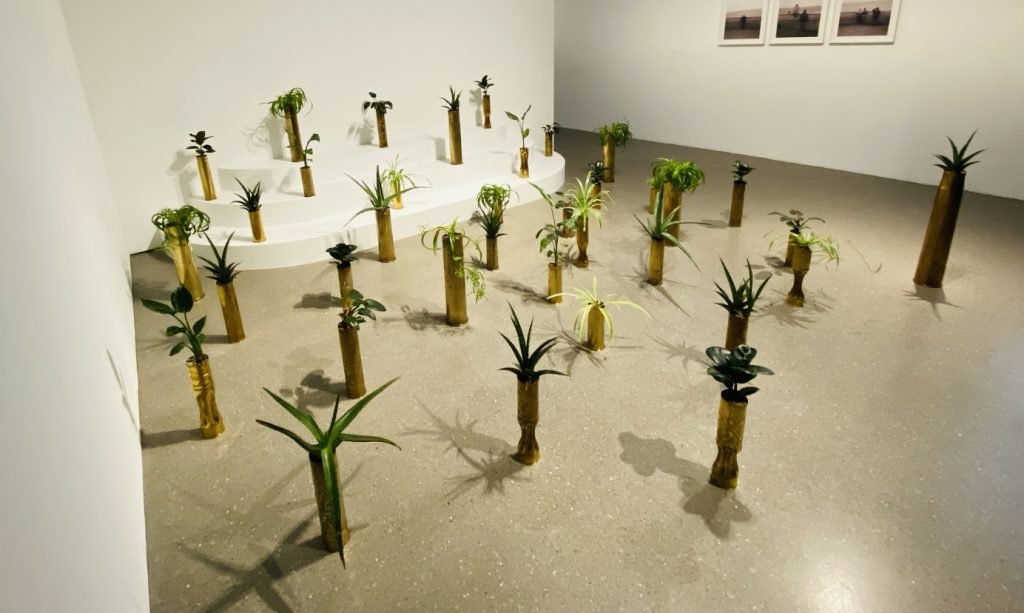
Bi-directional Sleep
For most of us bi-directional sleep is a question of sleeping on the left or right side, or on our back or front, head left or right. In immunology bi-directionality of sleep has another meaning. The immune system is linked to sleep in a bi-directional manner. Good sleep enhances the immune response of cells (direction 1) and infected blood cells for example send a signal to the brain to extend sleep. The study by Huynh et al. (2024) in Nature has demonstrated this bi-directional mechanism. It allowed mice who slept well after an imposed heart attack to recover in a better way than those whose sleep got interrupted during the experiment. The most natural response to a heart attack or acute coronary syndrome is more sleep. This is induced by an inflammatory reaction in the brain, which « orders » your body to increase deep sleep. 😴 Sleep is more than just rest, it may be part of healing. ❤️🩹 (people looking at Caspar David Friedrich „Infinite Landscapes“, exhibition Alte Nationalgalerie Berlin 2024)
