Tether thy liver

There are few of us who take our liver seriously. Yet, this big organ plays a central role in our body to regulate metabolism. The obesity pandemic in western countries increases health risks, just as excessive alcohol consumption increases risks of liver dysfunction. Additionally, viruses increase the risk of failure of this organ.
Each of these risks as well as any combination of one of the risks with another one have led to rising public health risks. Several studies since 2020 have highlighted these increased risks for populations in general. The risks, however, have an unequal spread across subgroups of society. A recent comment based on the research of the INSERM U955 team in “The Lancet Regional Health” by Brustia et al. “Liver-related mortality strikes hardest where deprivation is greatest.” Health inequities consist in the lack of income available to buy healthy food or in untreated alcohol addiction, both more common in poor people.
In order to tackle the inequity, the team of medical doctors call for a shift in awareness. Structural reasons like diagnostic delay, remoteness or health literacy are just as important as individual predilections like nutrition or lifestyles. Inequality in access to health and ability to afford a healthy lifestyle have become serious drivers of social inequality in the 21st century.

Inclusive images

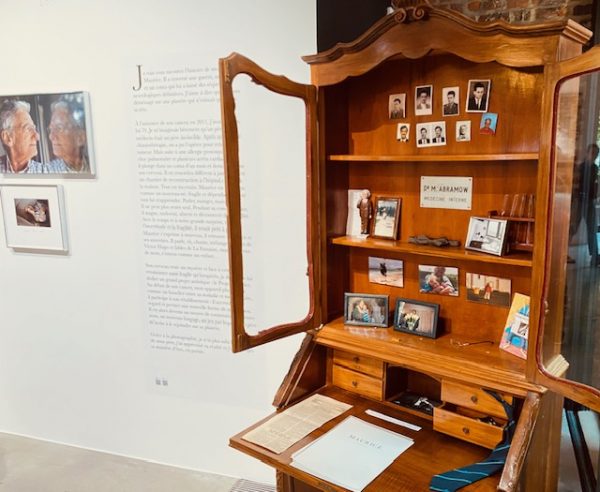
In the last 2 decades we can observe a strong concern among photographers to broaden the spectrum covered by images beyond well established imagery of non-binary gender. Diversity in imagery has taken a broader scope to extend, for example, the age range of people who are portrayed as central topic of exhibitions. The topic of mental diversity is more recent and needs a similar or even increased sensitivity to do justice to the whole spectrum of people. The photography of people with mental challenges necessitates a much more careful approach to the persons and complex personalities the photographer intends to portray. Trust and the development of trust of more vulnerable persons is a time sensitive process. The work by Charlotte Abramow “Maurice, Tristesse et rigolade” is a fine example of a photographer who portrayed over a long time of taking care of her father, previously a medical doctor, The years of the final stages of the life course of her father have been the subject over many years as the survivor of an extended medical coma had to struggle with the tough challenge of re-learning basic life skills again.
Abramow portrays her father as an actor of his “second life”, where the borders between reality, reconfigurations of his memories,   and “mise en scene” to co-produce the images. The images go far beyond the portrayal of aging and mental challenges as a deficit of persons. Yes, it is an integral part of these persons, but there is so much fun and positive emotions that derive from the intensive collaboration of actor, father and photographer that the images stick with us for a longer time. The presentation of props along with the photos creates an immersive installation, which strengthens the emotional bonding with the inclusive images of the later phase of the life course of Maurice.

Vacation time

According to statistics from INSEE about 20% of the French population reported in 2024 that they could not not go on vacation due to financial reasons. Another additional 20% did not go on vacation for other reasons based on another survey mentioning other reasons, like psychological or logistical issues as being of overriding importance.
Openness to new experiences is a well researched concept of psychology and vacations can be a challenging time for established convictions. Meeting people from other cultures particularly allows to reflect on one’s own values and behavior. Some people may just want to avoid being challenged or even potentially destabilized. Destination time and place involve choices and decision making often within families or with friends.
The topic of vacation is much like an evolutionary process. Towards the end or some time after the vacation time, there is” evaluation time” and the preparation of the next experience. 

Age of maturity

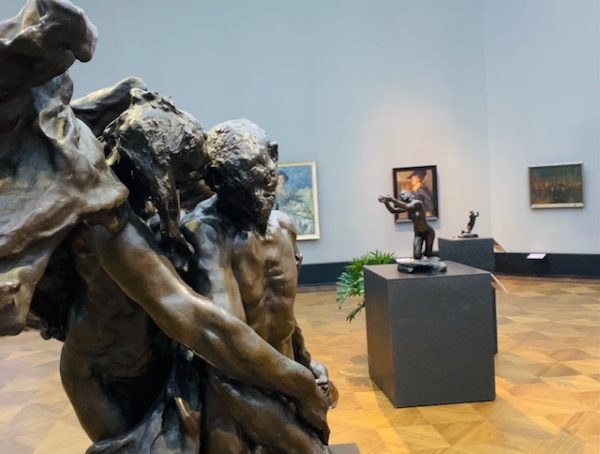
The bronze statue by Camille Claudel „L‘âge mûr“ is her most famous works. It is part of the exhibition Claudel & Hoetger in the “Alte Nationalgalerie“ in Berlin. Usually the statue is part of the permanent exhibition in the „Musée d‘Orsay“. With the depiction of different stages of the life course and somehow revealing the emotional trajectories of the persons the scene of human joy and tragedy becomes tangible beyond her personal fate. The scenario and arrangement in the Alte Nationalgalerie allows to focus on this particular work with an emphasis on the trajectory and the evolutionary path. A unique arrangement does better justice to the particular message of the artist than being surrounded by too many other works of art. (Image: extract of Camille Claudel‘s „L‘âge mûr“ in showroom Alte Nationalgalerie, 2025-8)

Zadkine museum

In the middle of Paris you will find a small former atelier of Zadkine. Transformed into a museum, the place is a cosy place to learn about sculpture and the different materials used. The preparations in form of designs or smaller trials with other materials are common practice to arrive at the sometimes monumental pieces. The visit of the permanent collection is even free of charge. A splendid experience in a surprising spot of silence next to buzzing city streets. Depicting musicians and musical instruments has been Zadkine’s shared passion with Valentine Prax. Great that he managed to reach the USA in time before the Nazi persecution could reach him. However, exile often means hardship as well. 

Genetic diversity

Part of genetic diversity is the apparent fact that some partnerships have only girls or only women as descendants. This is the message of a study published in Science Advances by Wang et al. on 2025-7-18. The commonly assumed binomial distribution where each event has an equal chance of occurrence at each new point in time does not necessarily hold for this particular events. Therefore, the search for a genetic explanation has been going on for some years. Therefore, there might be a potential for an epigenetic explanation as well, as environmental conditions might co-determine the expression of genes in both parents. The research will surely continue and the sex and gender diversity offers still a lot of surprises. A sociologist’s perspective would tend to focus on later gender attributes and choices rather than sex at birth. The bio-psycho-social research agenda remains wide open.  

Work time reduction

One of the major elements of social progress in the 20th century consisted in the reduction of work time. Reductions from 48 hours per week in the first half of the century were largely reduced to 40 hours per week or less in some industries with strong trade union representation. State regulations also pushed in this direction with positive implications for physical and mental health as well as wellbeing. Advances in longevity of employees may be attributable to this social progress agenda of the 20th century. In the 21st century we witness a new thrust of enterprises and employees striving to implement a 4 day work schedule by at the same time organizing a further reduction of work hours. The scientific evidence which is based on pre- and post trial assessments of workers satisfaction shows rather positive results (Fan, Schor, Kelly, Gu 2025). More studies are due to accompany this potential of further health and wellbeing effects of reduced work time and the reorganization of work time in enterprises. 

Work and Time

The link between work and time has been evolving as a major element of social progress over centuries. In what younger generations seem to take for granted, <40 hours week, paid time off-work. 4-5 days per week to name only the major ones, has been the result of huge struggles and hustles driven by employees and their trade unions to achieve such milestones. The current debate to get employees back into offices and/or to work longer hours again, is also in the end a debate about work and time. The advantage of working from home consists among other factors in saving a lot of valuable time and stress from commute to work. This unaccounted time to go to work has become a major health hazard even in an apparently comfortable company subsidized car or any other means of transportation. The traffic jams of so-called rush hours, when in fact everybody is slowed down, are a serious health hazard usually ignored by employers. However, these hours are a major part of the work-life-time balance of employees. In many negotiations and collective bargaining about working time this is the big elephant in the room rarely addressed.

AI Workday

Our workdays have seen considerable changes throughout the last few days. The home office boom has allowed employees to work for extended hours from home. The there is an abundant literature on the effects of home office work on well-being or the work-life balance. Productivity gains could be reaped by employers and a better work-life balance was a lasting advantage for employees.
The increased use of AI specific to some occupations has introduced a new form of added  productivity for some occupations or professions, AI as complementarity, whereas other occupations suffered a higher risk of being substituted by AI applications.
Based on time diary data, the study by Wei Jiang et al. (2025) reports that users of AI have longer work time and reduced leisure time. Competitive labor markets increase the pressure to put in even higher hours of work. Nerds, just like workaholics, are likely to be drawn into excessive hours of work with increased health risks. Enterprises and consumers appear to be gaining more than the employees, who are at a higher risk of loosing out on their work-life balance over time.

Draft Lottery

For decades the “intergenerational effects of the Vietnam draft on risky behaviors” has been overlooked. Deza and Mezza (2025) identified several changes in parenting styles (PS) due to existence of a draft lottery. PS like uninvolved, permissive, authoritarian become more frequent. Similarly, risky behaviors of their children like smoking, drinking and drug abuse tend to increase. According to this new evidence on an old strategy to recruit military personnel the effects are not only directly on the persons drafted, but have lasting consequences onthe next generation as well. This increased overall the burden of going as well as preparing for war in the societies concerned. In view of the Russian aggression on Ukraine territory the consequences for both countries are considerable and shall be transmitted to future generations as well. Even neighboring countries fear and feel the heat of recruitment for armed conflict.