Justice is a topic a bit like democracy. Most people deem it possible to simply state something is just or unjust, democratic or undemocratic, black or white. Rather than such a binary perspective it is often more helpful to take the pains to differentiate the many facets of each term and the complexity to categorize or to subsume a case under one or the other label.
Additionally, there is an evolutionary perspective on these topics. Individual cases evolve in form of trajectories. The binary view of justice or no justice might become more clear or more blurred. The exhibition of the “Topography of Terror” in Berlin offers a well established and documented view of the NS-terror during the years 1933-1945. The examples of horrific injustices throughout the exhibition are abundant. To perform justice is a much more difficult exercise and encounters lots of impediments.
In January 2024 Christl Wickert presented her extensive research in archives which she published in the Metropol Verlag 2022 under the title “Keine Gerechtigkeit. Die ungleiche Unterstützung des KZ-Überlebenden Fritz Bringmann und des SS-Mannes Walter Filsinger nach 1945”. (engl. title and image below). Christl Wickert follows the life courses of the young Fritz Bringmann, prisoner in KZ Sachsenhausen and Neuengamme as of 17 years of age, and the life course of the SS member as of 17 years of age and SS soldier Walter Filsinger. Their life courses crossed at the concentration camp Neuengamme near Hamburg and perhaps later again in Hamburg Bergedorf. Whereas Fritz Bringmann had to struggle to get compensation for his injuries during imprisonment, Walter Filsinger managed through multiple manipulations of documents and dubious support from administrators as well as medical doctors to obtain war victim benefits.
From life course research we know that early disadvantages are hard to compensate throughout the following decades. This juxtaposition of 2 cases localised in the neighbourhood of Hamburg demonstrates this with full force. Injustice at the early stage of the life course is not compensated but rather magnified through the handling of each case through the proceedings of “administrative justice” in the institution building in the first few decades of the Federal Republic of Germany. The “thick description” as a scientific method is a lesson in unfolding as well as later on unravelling injustice. 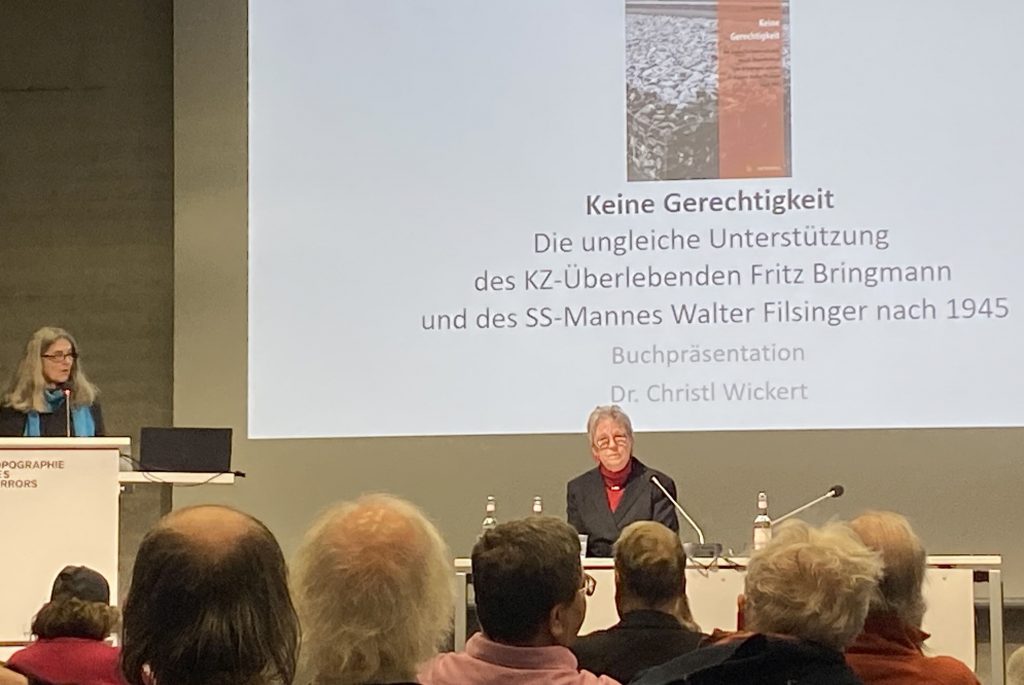
Richter
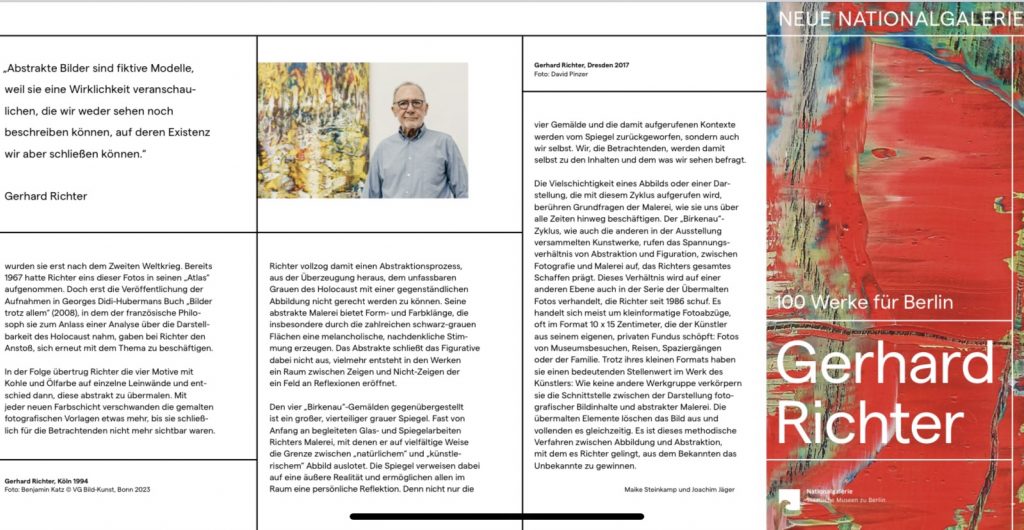
Gerhard Richter ist kein Richter. The painter Gerhard Richter is of cause not a judge. But somehow he is. In the representation of his 100 works for Berlin in the Neue Nationalgalerie he judges the horror beyond imagination of the Nazi concentration camps, reflects on the role of his own family in this and finds his own way to deal with it. Colors cover the black and white documentary fotos as if a new imaginary has to grow again to overcome the painful memories. He deals with the most difficult kind of confrontation with evil in an astonishing way. The horror as underlying fact remains present in our mind and at the same time we open up to light at the end of the tunnel and abundance of colors. Color is the way forward. Underneath, we tend to or like to forget about the many killing fields. Scratch a bit on the surface and you’ll find lots of unresolved issues again. All those fancy colors might just cover up the demons of the past and present. Maybe this is a grossly biased interpretation of his Auschwitz Buchenwald series of paintings, but only time will tell if we are successful in 2024+ to stem the tide of right wing extremism (again).
Memory Management
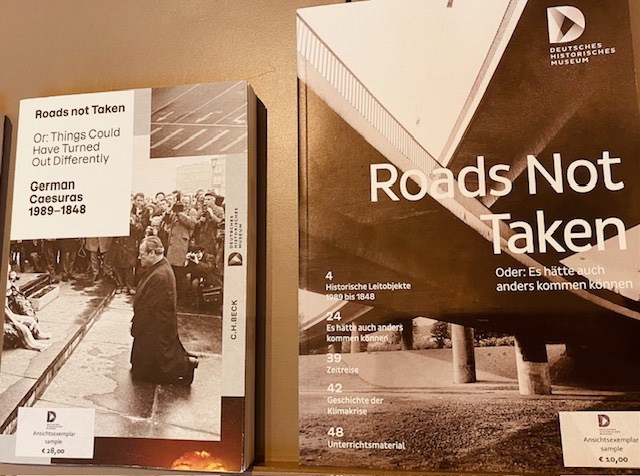
It seems a strange combination of words: memory management. In computing it has the function to allocate sufficient memory to specific tasks and has substantial implications for software performance (Yves Younan et al. 2010). It is also a security issue as what is stored somewhere might get accessed from other persons or programs with harmful intentions. Historians have a completely different approach to the issue. Individual as well as collective memories are frequently subject to memory management and manipulation. Therefore, it is necessary to critically deal with neglect and purposeful management of collective memories. In Germany we had numerous incidents of rectifying collective memories about the role of diplomats or the Wehrmacht during the Nazi period. Huge efforts were necessary to correct wrong representations of professions during and immediately after the 2WW. They are still necessary today. All children have to learn the concept of time, the past times and the concept of future. Periods after wars particularly generate a narrow focus on the present and the bare necessities of survival in societies. Dealing with and reworking the past and cherished memories is rarely attempted. It appears to be a paradox that without a coherent concept of the past the imagination about the potentials of the future are narrowed down. ‘Burned fingers’ cause additional restrictions. Literature for children and young adults has an important role to open up fictional spaces or laboratories for imagination. Freeing yourself from past restrictions while being aware of responsibilities due to the past allows a conscious way forward and human development. Sebastian Bernhardt (JuLit 3/2023) emphasised this and the Deutsches Historisches Museum had an exposition on this topic as well. Memory Management is a bit about the past but much more about the future. This is why we have to address it.
Finding Peace
In international conflicts it the task of diplomacy to find or negotiate peace agreements. Monitoring of the evolution and progress is part of the deal. For societies internally it is equally important to find peace again. Totalitarian regimes are characterized by terror and intimidation of its own citizens. This holds true today as much as in the past. Finding peace, however, necessitates to prosecute criminals and this irrespective of their previous or current status in society. The American authorities after the 2nd world war have held more than ten thousand prisoners due to their commanding functions in the NS-time. After 3 years of imprisonment and attempts of so-called re-education the evaluation of the results were of very modest success. Most prisoners would find excuses rather than admit to their participation in the killing machine of the Nazi throughout Europe and over more than a decade.
The study by Christa Horn (1992) “Die Internierungs- und Arbeitslager in Bayern 1945-1952” comes to the same sobering conclusion (p. 127 extract below). This bears the danger that the totalitarian ideology continues to have supporters and even the transmission to other generations might be attempted. This highlights the importance of reconciliation in the lengthy process of finding peace. It far from easy to resolve who is guilty and of what. The Americans started the process before handing over responsibility to the regional judicial system. More than 75 years after 1945 we still have to name and insist on the criminal behavior of the totalitarian regime with millions of party officials and even more followers. Finding peace is a protracted process if not a struggle that involves 3 and maybe 4 generations by now. 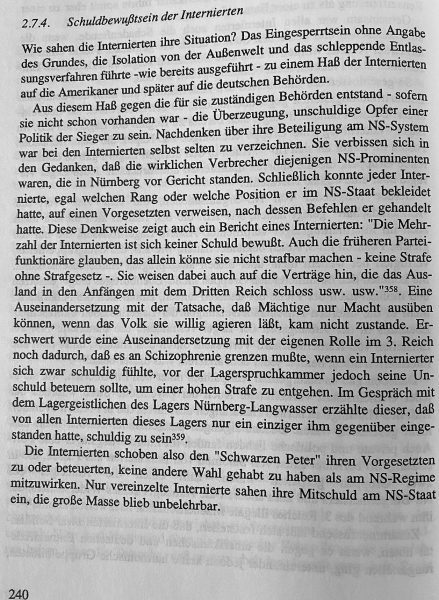
Winning Peace
Most analysts of international conflicts deal with winning or losing a war. At best they deal with short-term versus long-term versions of winning and losing. However, the question of how to win or achieve a lasting peace is rarely researched. Research on the 2nd World War reveal as soon as the turning point of the war was achieved the preparation of what will come after defeat. Organising humanitarian relief is part of warfare. The U.S. has set a good example of how to organise humanitarian aid as well as ensuring a lasting peace in Europe after the 2nd World War. Lots of books have been written on the Marshall Plan to get the economies in Europe (Western Europe) back to producing. Much less attention has been devoted to the important element of “de-nazification” of whole societies.
To win peace after the monstruous crimes of the Nazi-regime and the millions of followers and ruthless fighters was a challenge without precedents. The U.S. gave a good example of how to handle the process of winning peace in the regions under its military authority. In the following I shall refer to work published by Christa Horn (1992) “Die Internierungs- und Arbeitslager in Bayern 1945-1952”. The Allies had agreed upon to pursue war criminals. In April 1944 the Supreme Headquarters Allied Expeditionary Forces published the “Handbook for Military Government in Germany”. It was deemed important to detain “certain government and party officials and members of police and para-military formations” (p.17).
Common to demilitarisation efforts after a war, it is the primordial function to reduce the risks of a renewed uptake of guerilla-like attacks due to the amount of arms still widely available or hidden on the enemy’s territory. The document specified further that the continued presence of Nazis in government and other exposed positions “might be a threat to the security of the Allied Forces or an impediment to the attainment of the objectives of Military Government in Germany” (Arrest Categories Handbook, P.2). Denazification was a means to an end. The size of the task was, however, underestimated at several instances. For example, the organisation of the arrest and detention of more than 100.000 persons was a difficult task. After the end of fighting the transition to peace is not instantaneous. Hierarchical military and party structures had to be dismantled. The so-called “automatic arrest” issued on 13.4.1945 included all grades from the NSDAP down to the “Kreisleiter” or even “Ortgruppenleiter” as well as SS members and their “Helferinnen” (Horn, 1992 p.21). These arrests without judicial procedures came under critic as not-American in the U.S., but it took until 10.10.1948 to abandon this procedure. The literature on the issue refers more to the lack of adequate judicial procedures to handle such so many legal procedures with qualified persons as well as the difficulty to organise detention camps for more than a hundred thousand persons that should deserve to be prosecuted. Handing over to the national or regional judicial instances was, therefore, an important step. The risk to abandon the process of “denazification” was evident, but it was equally important to counter the expansion of the Russian-domination in Eastern Europe with the help of a strengthened Western Europe. Winning peace is a delicate balance of prosecution through the winners of the war and the subsequent prosecution of criminal actions through the indigenous population and its new institutional and judicial setup.
Social Sciences have a lot of solid insights to offer to win peace. With careful consideration they are helpful to learn from even for current international affairs and raging wars. Demilitarisation is only a small part of winning peace. Changing mind sets to internalise humanitarian values remains the biggest challenge and involves more than one generation. 
Kriegsenkel
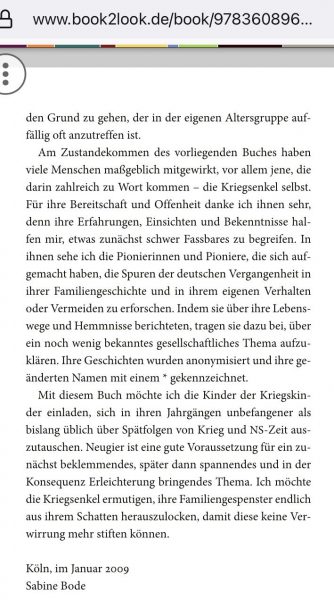
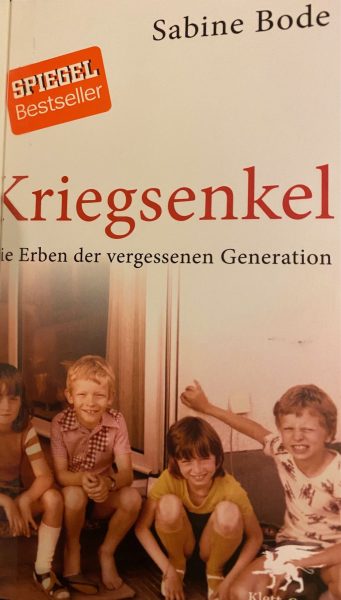
Bereits in 2009 folgte das Buch „Kriegsenkel – Die Erben der vergessenen Generation“ auf das Buch über die Kriegskinder 2004 von Sabine Bode. Im Vorwort zur 9. Auflage in 2014 wird deutlich wie sehr es weiterhin nötig ist, sich mit Familienlegenden und Familienbeziehungen zu befassen, wahrscheinlich auch wegen des lieben Familienfriedens willen. Selbst etwas überraschend berichtet Sabine Bode, dass so viele Kriegsenkel das Buch über die Kriegskinder gelesen und diskutiert haben. Es ginge dabei nicht um Schuldzuweisungen, sondern eher darum, sich über eigene Verunsicherungen, Unausgesprochenes und bisher Unbewusstes klar zu werden. Sabine Bode schreibt über die „Familiengespenster“ oder wie der Titel des ersten Kapitals heißt. „Gespenster aus der Vergangenheit“. Otfried Preussler mit seiner Mitläuferbiografie hat mit dem kleinen Gespenst versucht, eine positive Wendung für Familiengespenster, zumindest als Fiktion zu generieren. Der Versuch einer beispielhaften Immunisierung gegen NS-Versuchungen bringt dann sein etwas düsteres Buch Krabat.
Sabine Bode interviewte auch die Kriegsenkel und berichtet von einem bei vielen vorhandenen „verunsichertes Lebensgefühl“. (S.21). Sicherlich ist die sexuelle Revolution in den späten 60er und 70er Jahren viel daran beteiligt, dass die Kriegsenkel weniger und viele keine Kinder bekommen. Dennoch lässt sich nicht ausschließen, die Verunsicherung der Kriegsenkel hat ebenfalls zu dem Rückgang der Geburtenraten beigetragen. Das ist allerdings kein einfaches empirisches Unterfangen. Starke Rückgänge der Fertilität in Kriegsalliierten Nationen Japan und Italien weisen in eine vergleichbare Richtung, aber es lassen sich auch Gegenbeispiele aufführen. Verunsicherung der Identität der Eltern kann sich noch bei den Kindern als Orientierungslosigkeit äußern. Bode zitiert selbst (S.22) aus einem Theaterstück von Fehling über das Beziehungsgefälle zwischen Kriegskinder und Kriegsenkel. Die Enkelin gesteht darin etwas frustriert, Sorgen macht sich ihre Mutter gerne, „aber immer nur um sich selbst“. Anders als intrinsisches Mitgefühl eignet sich das Kriegskind lediglich die Missgeschicke der anderen an, sozusagen in der Relevanz für sie selbst. Weitere anekdotische Evidenz dazu weist auf einen hohen Wiedererkennungsgrad dieser Geschichte hin. „Risiken und Nebenwirkungen“ eben auch für die Kriegsenkel und Kriegsenkelinnen.
Kriegskinder
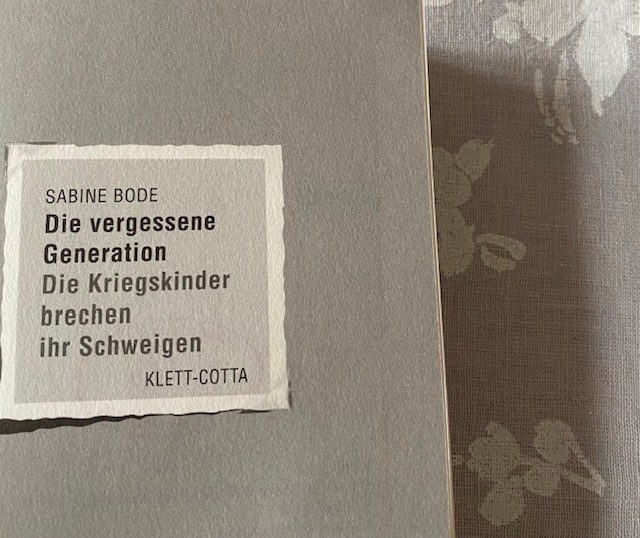
Sabine Bode hat bereits in 2004 eine ausführliche Beschreibung und Berichterstattung zu Interviews mit den Kriegskindern, den 1930-1945 geborenen, vorgelegt. Die meisten haben lange, lange geschwiegen doch es ist ihr damals gelungen, einige aufschlussreiche Gespräche zu führen. Diese lassen sich mit den sehr unterschiedlichen Schicksalen nachlesen. Die vergessene Generation als Titel könnte vielleicht sogar treffender heißen die vergessende Generation. Die Verdrängung von unangenehmen historischen Wahrheiten wurde zu einem Dogma erhoben. Sabine Bode schreibt bereits in der Einführung: „Nun ist ja bekannt, dass Kinder auch extreme Lebensumstände hinnehmen, wie sie sind. … bis es mit den Normen der Aussenwelt in Kontakt kommt.“ (S.17). Erstaunlich aus heutiger Sicht ist laut Bode auch das Festhalten an „eigentlich unpassenden Gefühlen“ auch viele Jahre sogar Jahrzehnten danach noch als normal fanden und einige noch finden.
Sehr treffend formuliert es Sabine Bode, dass es weiterhin eine äußerst beunruhigende Angelegenheit ist, über die Erfahrungen zu sprechen. „Die Antworten liegen unter der Last von Schuld und Scham begraben, als Folge der Naziverbrechen, des Holocaust.“ Oft wird eine quasi Normalität berichtet, die jedoch in keinster Weise als solche von späteren Generationen so gesehen wird. Dieser Diskrepanz sollte sich mehr Aufklärung und Literatur widmen. Philip Sand hat dazu eine gute Abhandlung verfasst, die auch die Erlebnisse der Kriegskinder einschließt. Das laute Schweigen von Millionen von Kriegskindern bis hin zum Verdrängen und Beschönigen des Verhaltens ihrer Eltern vor und während der Kriegsjahre befremdet nachwachsende Generationen. Gerade das häufigere Verbreiten von menschenverachtenden Naziparolen im 21. Jahrhundert verlangt eine entschiedenere Aufarbeitung der Verbrechen und wie es dazu kommen konnte. Schließlich wurden aus vielen dieser Kriegskinder dann die Nachkriegseltern wurden.
Teaching Ethics
Ethics is frequently taught by referring to reference cases, moral dilemmas and readings on the evolution of the discipline as some ethical issues arise due to technological innovations. Some fundamental ethical principles pertain to professional standards or so-called codes of conduct. This is also part of the sociology of professions which includes the societal and political role professions and professionals. The medical profession has been subject to ample research already. And yet it is important to notice that there is a renewed effort to include into the teaching of ethics “The hard truths about medicine and the Holocaust”. (AMA J Ethics. 2021;23(1): E59-63. doi: 10.1001/amajethics.2021.59). Eugenics were practices well before WWII. “Legal coercive sterilization, which progressed to the notorious “euthanasia” (medically sanctioned murder) program” (p.59) were the beginning. Medical doctors were not reluctant to implement the Nazi medical doctrines. “Most joined eagerly, earlier, and in much greater numbers than other professionals” (Chelouche, 2021; Kater MH, 1989). Physicians made the horrors of Nazi ethics efficient in its implementation. Nazi physicians had a strict ethical code which priorities obedience to the state rather than to the individual.
Research and experiments conducted by medical doctors during Nazi rule is analysed by Weindling (2015). In summary he states “Nazi experiments were accepted forms of science at the time, conducted not only in concentration camps but also in hospitals and clinics across Germany”. This concise overview of recent research by Tessa Chelouche in this field is not only important to teaching ethics in the medical and care professions, but it is of high relevance to much broader audiences and many more professions like judges. Only the awareness and guarding against a renewed failure to respect human values and human rights of the individual allow us to advance humanity. Decentralisation of power, checks and balances, professions following widely accepted principles rather than authoritarian rules can avoid another failure. Teaching about this is a “conditio sine qua non” and not a nice to have part of the curriculum in schools as well as professional colleges. 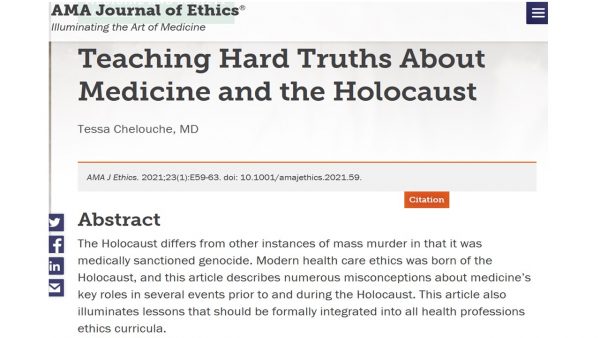
Weinpropaganda
Staatspropaganda kann viele Wege gehen. Die von Christof Krieger ausführlich beschriebene Propaganda mittels Wein, für das nationalsozialistische Regime Werbung zu betreiben, ist ein gelungenes Beispiel für eine bisher wenig beleuchtete Propaganda. Im Sinne einer populären Strategie, Wein für die Massen zu produzieren, konnte die günstigem Wetter geschuldete Überproduktion bei Abnahmegarantie zu Festpreisen in den ersten Jahren der Nazidiktatur dem Volk, das als Luxus geltende Weinsaufen, nahegebracht werden. Ansonsten wäre eben Industriealkohol entstanden. Wir kennen die Thematik aus der EU-Agrarpolitik. Die von den Nazis organisierten Weinpatenschaften bestehen vielfach als „Städtepartnerschaften“ fort. So war beispielsweise das reiche Düsseldorf mit dem kleinen Winzerdorf Graach bei Bernkastel-Kues verbunden. In Berlin finden sich eine ganze Reihe von Plätzen und Straßen, die nach kleinen Weinorten benannt sind inklusive der alljährlichen stattfindenden Weinfeste.
Die Veröffentlichung der Dissertation im Rhein-Mosel-Verlag ist vorerst vergriffen, aber sicherlich bald wieder erhältlich. Das Interesse an diesen Verbindungen ist groß, da damit viele Familiengeschichten eventuell neu aufgearbeitet werden müssen. Plötzliche große Nachfrage schaffte Begünstigte und neue Abhängigkeiten. Wie sich später herausstellen sollte, führte das politische Eingreifen in den Markt zu erheblichen Verstrickungen. Also einfach nur Saufen ist auch nicht mehr wie früher, war es eigentlich nie. Bier saufen für die lokale Landwirtschaft ist ja auch nicht wirklich nachhaltig. 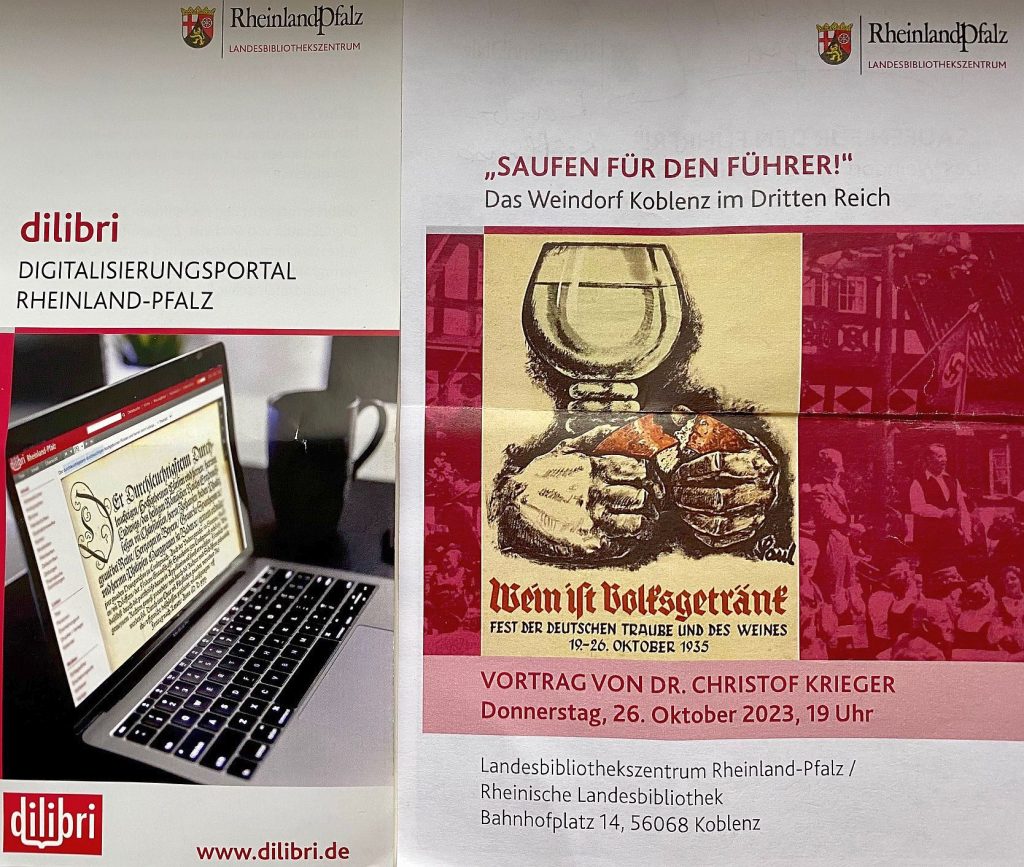
Nachkriegseltern
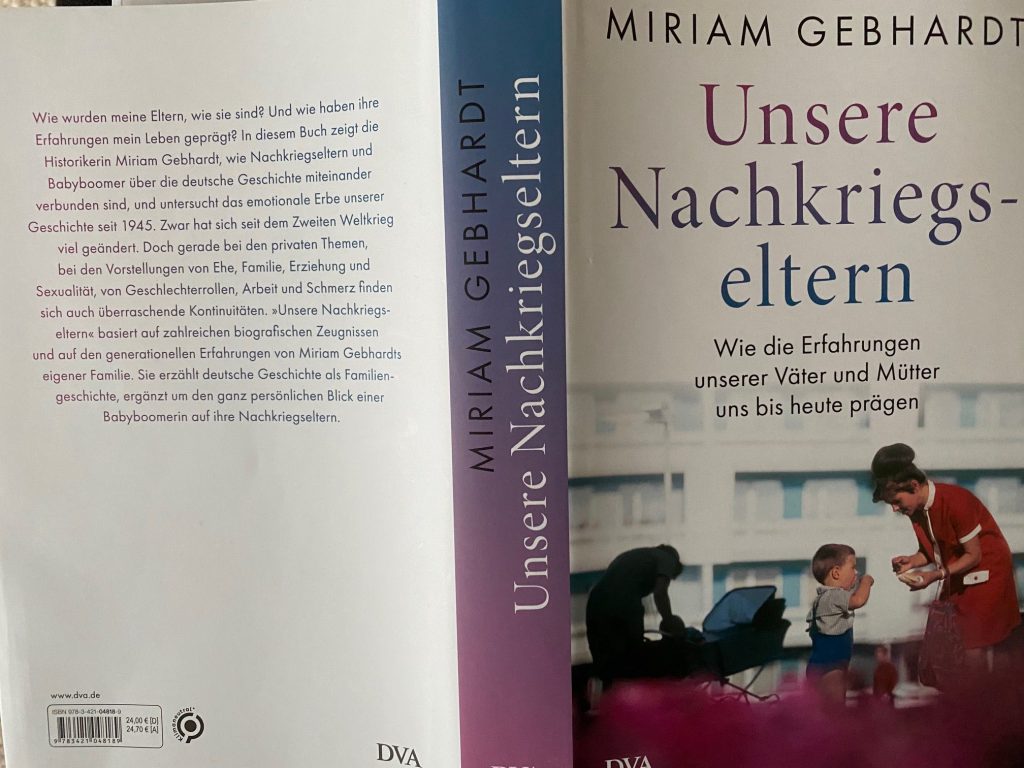
Die Recherchen zu den Nachkriegseltern von Miriam Gebhardt haben eine persönliche und geschichtsschreibende Funktion. Die Zusammenfassung der Erfahrungen der Nachkriegseltern aus Biografien und Tagebüchern aus dem Literaturarchiv Marbach haben ein interessantes Psychogramm einer Generation von Eltern entstehen lassen, die sich meistens überhaupt nicht der Prägung durch die menschenverachtende, nationalsozialistische Ideologie bewusst waren und viele immer noch auch sind. Gut recherchiert und mit zahlreichen Originalquellen unterlegt beschreibt sie die Schweigsamkeit und Fokussierung auf wirtschaftlichen Erfolg dieser Generation von Eltern. Familienorientierung und Fixierung auf beruflichen Erfolg war gepaart mit traditionellen Rollenbildern von Frauen in sekundären Funktionen.
Spannend sind darüber hinaus die Anspielungen, wie die Erfahrungen unserer Väter und Mütter uns, die Babyboomer, bis heute prägen. Statusdenken überall, oben und unten in den Hierarchien klar bestimmt. Das christlich-konservative Menschenbild prägt vielfach neben den Eltern eben noch die Kindergeneration der Nachkriegseltern.
Wichtig bleibt es daher, sich dieser überkommenen pädagogischen Methoden bewusst zu werden, damit es keinen Automatismus des Weitertragens geben wird. Die Angst der Nachkriegseltern, die Akten und Beweise der Gerichtsprozesse oder Entnazifizierung einzusehen oder anzuerkennen, bezeichnet den meist verdrängten Gewissenskonflikt dieser Generation der Nachkriegseltern. Auf den Seiten 64-67 wird die Auswirkung der Gewaltgeschichte Deutschlands in der ersten Hälfte des 20.-ten Jahrhunderts, auf die Fähigkeit mit Emotionen umzugehen, bezogen.
Empathielosigkeit und mangelnde Fähigkeit zum Gefühlsausdruck begründet die erstaunliche Sprachlosigkeit einer Generation, wenn es um die Verbrechen der Nazizeit geht. Als geradezu tragisch bezeichnet Gebhardt die Empathielosigkeit gegenüber den eigenen Kindern und oft noch den Enkelkindern. Wegducken, Verschweigen und Wegdrücken scheint weiterhin die Prämisse. Miriam Gebhardt gelingt es vielleicht, eine Gesprächsbasis zu legen, die die Generationen zum besseren Verständnis aufnehmen könnten. Wahrscheinlich werden sich darüber aber lediglich die Kinder und Enkelkinder der Nachkriegseltern austauschen und versuchen, mehr emotionale Wärme in die Familienstuben zu bringen. (DLF-Interview, BR-Video Interview)