To follow in someone’s footsteps, is a colloquial expression. But do we, or should we do this at all?
Of course, a lot depends on circumstances, and where those previous footsteps have led people. The expression can certainly not serve as a general rule as such. Keep your own objectives in mind, if you think about following in someone’s footsteps. Deviate from previous well- treaded paths where necessary as destinations, objectives or abbreviations may be possible at a later point in time. Just following footsteps might be the easiest way, but these steps might have been taken too many times before without leading to the better answers.
The learning capacity of humans sets them on a path to acquire and extend their autonomy in behavior. At birth, physical and emotional dependence is highest. Soon learning to handle different nutrition sources and emotional stress allows to gain more autonomy in each of these components of autonomy. Throughout later childhood and adolescence we develop various additional domains as well as degrees of autonomy.
Role-playing, enhanced motor control and interaction with others define and redefine continuously the potentials and limits of autonomous behavior. Social norms start to play an even more important role as of adulthood, just consider financial autonomy as one of the dimensions. The most distinguishing factor from robots or animals until 2026 has been the human ability to form its own autonomous judgment, where value systems and legal norms co-determine or set limits to our autonomy or behavior. Some results from neuroscience have demonstrated that our readiness to act is prefigured in our brain and additional “intelligent” mechanisms are needed to suppress or guide the otherwise autonomous, spontaneous action or reaction.
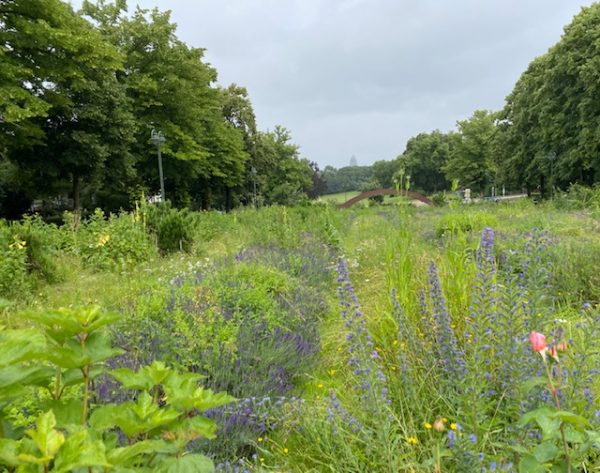
Our “free will” might not be as free as we wish it to be. Similarly our autonomy in behavior or decision-making might not be as autonomous as we tend to believe. (Image: Social cooperative gardening project, Brussels 2026-6)
In the original text of the Confessions by Saint Augustine there is an interesting testimony to his personal learning style. He hated learning Ancient Greek as child, apparently mainly due to the strict teaching style, which obliged him to learn Greek and punishment for being less interested as a child (Book 1 Chapter 13). However, he explains the predilection for Latin in language and grammar in later childhood and adolescence through the encouraging teaching style. Saint Augustine has reflected on his own learning style, put it in words in order to answer primarily to himself on what made him learn. The rhetoric style, which he applied rather consistently throughout his confessions, is build around the continuous questioning of his own past behavior and convictions. This is a kind of internalised conversation, which in the Greek tradition, was centered around dialogues with other persons as in the Socratic dialogues. The questions beyond the rhetoric style are also the beginning of a learning process even if the outcome might be open and in modern times a lot of new answers have been contributed through scientific methods and continuous discourse. Multilingualism was already a practice more than 2000 years ago for the young Augustine of Hippo.
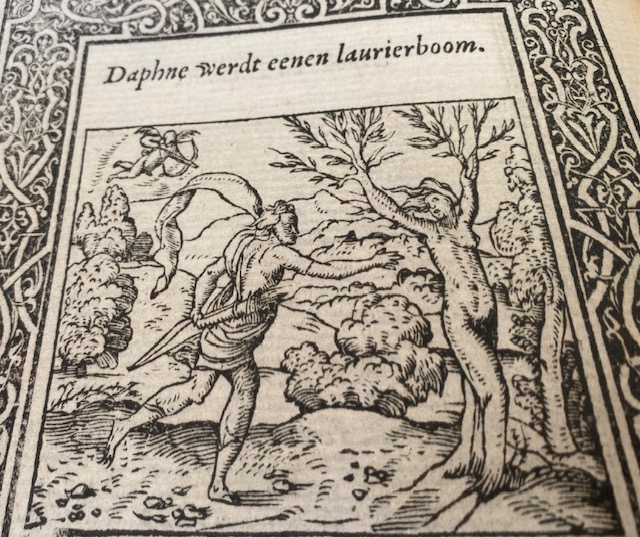
In the antique writings of Ovid “Metamorphosis” there is an extensive description and mystery about the metamorphosis of several characters. The narrative about various forms of metamorphosis has influenced our perception of change as having a mystic component. The arts before the enlightenment have drawn lots of sceneries of metamorphoses across the centuries. Maybe in form of sculpture this narrative has continued to be present even into the 20th century. The exhibition at the Rijksmuseum in Amsterdam and the essays in the catalog testify to this long shadow of Ovid’s original narrative. No need to mention Kafka as another adept of “Verwandlung” or Rodin, who reveals persons as semi-detached from stone. Wood and the return to ashes shows us the come and go of metamorphosis of human beings. Imagining mankind as a sequence of metamorphoses is a metaphysical as well as sociological perspective of our presence on our planet. (Image: Daphne transformed into a Laurel tree, Bernard Salomon, 1557).
Some myths, for example about the effects of multilingual competencies on brain health, continue to hunt people. The proponents of a monolingual world are widespread and have in some countries fatal historical heritage. The study by researchers (Amoruso et al. 2025) use data from 86.000 persons in Europe(SHARE Database, waves 1-9) from several countries. They show the better aging of brains for bilingual persons and even more so for persons practicing multilingual 2+ languages. The “domain-independent protective effect of multilingualism” for healthy brain aging is very robust and works after statistical accounting for other potentially intervening factors like socioeconomic or institutional factors. Some known stressors like migration, however, which operate often as psychosocial stressor, can have similar negative effects just as alcohol consumption and sleep disruption. Multilingualism and the correlate of multiculturalism keep a brain “on its toes” and contribute significantly to our healthy brains.
The “Revue des sciences humaines” (Demanze and Gleizes, Nr. 355, 2024 pp. 7-16) provides an interesting reflection on the widespread practice to find (new) ways to cut long stories or insights short. Short by itself, this introduction to a longer special issue on the topic “Faire court” stresses 4 elements of the contemporary impetus to cut it short:
(1) The creative process may be subject to condensation of content, similar to the process of a “reduction” in the culinary vocabulary. The speed of creativity, inspiration, freedom of expression are exemplified by the twitterization of and aphorisms in literature. Roland Barthes, in his analysis of the “haiku”, raises awareness to the different associations of the short text forms in different societies.
(2) The observed shortening of time spans of attention and the competition and economy of attention have raised the stakes for longer formats and explain to a large extent the success of shorts in the digital age.
(3) The short format works to increase the intensity of the literary experience.
(4) In deconstructing the associations of long formats as “monumental” versus short formats as ephemeral, the “cut it short“ tendency serves to “demonumentalize” the big shots of literature, science and the humanities. Well, about time to cut it short, “hic et nunc”, here and now!
The reading of Marc Aurel’s Meditations in its Book 1 offers first of all his acknowledgments of people who had a lasting impact on him or offered learnings to him. He presented these learnings or take-home lessons as we call this nowadays in a style of “positive psychology”. This means writes about the positive influences and which kinds of positive behaviors he saw in living examples of others and which he felt were particularly worthy of general consideration. In philosophical retrospect we might read the book 1 as a list of “categorical imperatives” which would make a decent life feasible for all. His acknowledgments start with 1 line on his grandfather (decency and mild temper), 2 lines on his biological father (integrity and manliness), 3 lines on his mother (piety, generosity, avoidance of wrongdoing and simplicity of living), but 4 lines on his tutor, even more on other advisers, 20+ on his adoptive father, which is more than on “the gods”.All these experiences impregnated him with a sense for a “ruler’s responsibility for the common good”. (p.8). The stoic virtue lies in the extensive list of positive contributions from others to make him the rather unique philosopher and emperor.
We used to create and use an artificial word to shorten explications in conversations. It is easy to understand for everyone nowadays to describe an online search as “I googled something” without further concerns about the sources used in answering a question. Apple just announced that its search engine Safari was used less than expected recently. The reason might be that more and more people search online by using AI tools or Apps that directly provide answers to their queries. ChatGTP and Perplexity are 2 AI-programs that might replace the other search engines we have gotten used to over the last decades. Particularly “how to …” queries offer reasonable instructions. In Perplexity you get an answer after you specified a little bit your query and, therefore, the answer is more likely to be right to the point offering text, images and sources. In ChatGPT you enter into a dialogue to further specify your query if unsatisfied with the first response. The judgement of an authoritative response is up to you if you want to follow up. The assistance of an AI-system cares less about the source but about the speed of response that it can provide. For sensitive questions or queries with less obvious or clear answers more interactions with the tools is necessary. The pricing and our willingness or ability to pay in cash rather than through the selling of our data for advertising will determine whether we shall “chat-it” or “plex-it” in future.
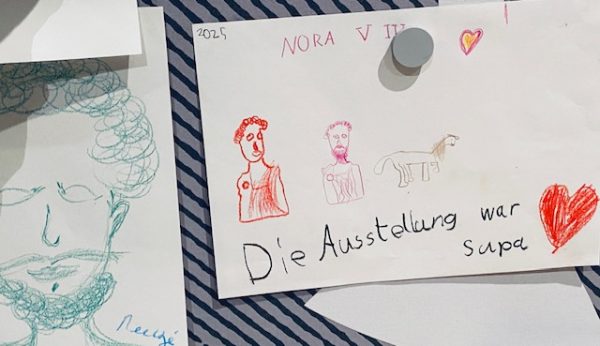
The period of the enlightenment is a historically defined time period of the late 17th and the whole 18th century. Although often associated only with Europe as its origin, the American contributions and influences have been far-reaching as well, just thinking of the “Declaration of Independence“. This historical period is, however, most interesting through the unrivalled contribution and pivotal point to the history of ideas. The exhibition and catalogue on the “Aufklärung – Enlightenment” by the German Historical Museum in Berlin exposes many of the historical editions of books that “made the enlightenment”. Philosophical writings and readings (Immanuel Kant: Kritik der …) of the period (especially in German) are tough even for native speakers of German, unlike reading of French (e.g. Jean-Jacques Rousseau) or English (e.g. John Locke) contributions to the enlightenment. Maybe this is already one of the reasons why in France the revolutionary ideas were put into practice through population-wide political movements.
The historical period of the enlightenment came to a close in the early 19th century (1806 another pivotal year). The English or French terms of enlightenment or lumière maybe be interpreted in a way that other historical periods like the medieval ages were periods of darkness, even later periods again did not live up to the idealist prerogatives of the evolution of humanity. The German term “Aufkärung” has its etymological roots more in the action associated with “to enlighten”. This hints at the continuing process of the ideas of the enlightenment in modern terms the process of individualisation, tolerance and autonomy.
There many valuable short interviews shown in the exhibition and Jürgen Habermas contributed a short closing statement to the catalogue of the exhibition on the unfinished project of the “Aufklärung” inviting us to continue also with the “Kritik der Aufklärung”. After all the enlightenment did not save us from repeated events like “Apokalyses“.
(Image: Émilie du Châtelet, below book on Newton Physics in DHM Enlightenment exhibition 2025).
Tools like artificial intelligence allow all sorts of transformations and depictions. The photo editing tools are widespread and particularly popular among the young users. My own transformative exercises, latest with www.bairbe.me, have yielded interesting insights, well worth an intergenerational playmate. For the guys there is the www.yobrick.com version for brick gamers.
The App “Canvas” allowed me to delve deeper into my own mind by giving instructions of how to create an image of the structure of the blog entries on this webpage. Of course, it is not (yet) a real AI-generated content map, but it is only a matter of time until such tools will exist. After all, this would be just an arranged and rearranged list of contents using the hyperlink structure of the texts as well.
For the time being, I derive my own structure of the blog entries by topics, categories and tags including the hyperlinks or internal referrals. Interlinkages are mostly stated explicitly. However, there are many implicit links, which are obvious to some, but not others. AI-systems could use occurrences of words, synonyms and antonyms . Colors in addition to bubble sizes and (in)direct lines may complement such mindmaps. This can help to reveal another, additional layer to connections between categories or tags. The Ai-generated image shown below was created with the APP Canvas as a first approximation and AI-augmented test version in form of abstract images).
Next steps on the way to understand human intelligence and, maybe, augment it with a next generation AI-system would use a colored-3D version of such a mindmap and use the chronological evolution of the blog posts in a kind of evolutionary animation. This should allow us to go beyond the usual psychological classification of fluid and crystallized intelligence. We might come to grips what it means to be “in a Paris state of mind” or when hallucinations become overwhelming.
Screenshot
We use Cookies only for technical performance!
This website uses cookies for the working of basic functionalities of the website.