Marc Aurel Book 8-9

In book 7 paragraph 38 the stoic wisdom is exemplified in the the the short phrase „If you have sharp sight, use it: but, as the poet says, add wise judgment“. Being sharp in your reasoning or data collection is only part of the human endeavor. A wise judgement is, however, an ambitious aim as judgments have different short term and long term consequences. Intergenerational considerations as for climate change ask for respect of other species, biodiversity and to take into account very long time horizons.  The quote from book 8 paragraph 5 appears very modern or post-modern in this context. „There can often be wrongs of omission as well as commission.“ (both citations from Penguin Classics edition) Not acting on behalf of future generations and disappearing species is the most crying omission of our time.

Marc Aurel Book 7

In paragraph 63 Marc Aurel refers to Plato as one of his sources: “No soul”, says Plato, “likes to be robbed of truth” ( and continues himself) “– and the same holds of justice, moderation, kindness, and all such virtues. Essential that you should keep this constantly in your mind: this will make you more gentle to all.” The remarkable reasoning is to transform the own generalized experience into a behavioural recommendation. It may be argued that Marc Aurel starts from a kind of Aristotelian empirical study of persons in different life domains to derive an empirical fact. Based on this he develops a more Plato inspired “idealistic picture of mankind”. He is very much preoccupied with the philosophical question, how is a good life for all possible. In a previous paragraph (55) he outlined his 3 guiding fundamentals: (1) “The main principles in a man’s constitution is the social; (2)… resistance to the promptings of the flesh, like impulses; (3) judgement unhurried and undeceived”.
With such a claim for a “rational constitution” of man, he puts himself into the footsteps of previous philosophers of the ancient Greek tradition and, therefore, his writing in Greek rather than Latin is also a homage to this philosophical heritage.
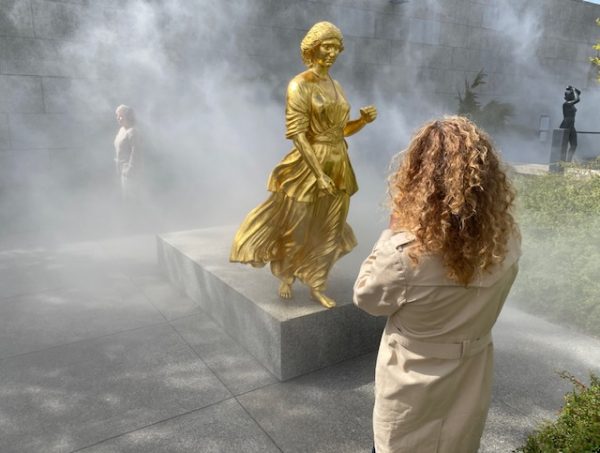
(Image: parts of Installation by Fujiko Nakaya in Neue Nationalgalerie Berlin 2025)

Marc Aurel Book 6

Some passages of Book 6 can be understood like quotes of much later works, even like writings of the enlightenment period. Take this one: “If someone can prove me wrong and show me my mistake in any thought or action, I shall gladly change. I seek the truth, which never harmed anyone: the harm is to persist in one’s own self-deception and ignorance.” (para 21 in Penguin Classics version, also in Greek original and French translation).
The same passage in historic English: “If anybody shall reprove me, and shall make it apparent unto me, that in any either opinion or action of mine I do err, I will most gladly retract. For it is the truth that I seek after, by which I am sure that never any man was hurt; and as sure, that he is hurt that continueth in any error, or ignorance whatsoever.” (Para XX in Gutenberg.org online reader).
Why is this already an enlightened vision of truth? In the search for truth, he is open to criticism or doubt by others (maybe even irrespective of societal standing) and, moreover, ready to change his conviction and action. Religious doctrines of the time and many centuries after his writings would not have accepted such a doubtful mind who might change due to (scientific) reasons. Long before “Cogito ergo sum” (René Descartes, (1637), I think, therefore I am, of the early enlightenment, Marc Aurel might be summarized in this paragraph as “Cogito, ergo dubio”, I think, therefore I doubt – and I may change accordingly.
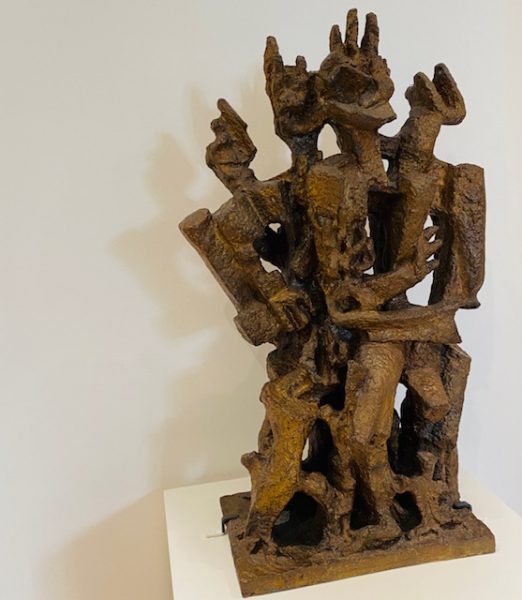
(Image: Ossip Zadkine, Forêt humaine, Musée Zadkine Paris)

Marc Aurel Book 2-5

There are several translations of Marc Aurel. In the Shakespeare English translation from the Greek original of the Meditations a passage (Book 5 paragraph XXIII) describes or idealises humans as a “reasonable and sociable creature, regulated and directed.” The same short quote of this paragraph in the English translation by Martin Hammond (Penguin Classics p.43) reads: “…my wish is to follow the nature of a rational and social being.” Of course, both translations are pretty similar at first glance, but the difference of “reasonable” versus “rational” and “sociable” versus social” mark very important differences that had and have different impacts throughout the following centuries up to today. As in many other instances going back to the original version in Greek (book link) might clarify the issue, however, the entry barrier is access to the bilingual version and use of an ancient Greek dictionary.
With almost 2000 years of advances in rational approaches and its tools like mathematics, the scope of the rational is huge and the behavioural turn in the social sciences demonstrates the limitations of human’s use of rationality (λογικός) in decision-making. Reasonable seems to come closer in today’s “post-enlightenment” world.
There is also quite a divergent connotation in the simply “sociable” (κοινωνικός) being or the “social” being, which has a wider scope attached to it. Hence, lets be aware of the implicit interpretations of translations. For a start the parallel reading of translation and original (Link) might enhance our understanding and spur even new translations and interpretations, which speak with the classic originals to today’s audiences (with or without AI).
A witty joinder of both previous translations is “And my will is the will of a reasonable and social being”. (Link Book V, paragraph 29 bottom).
From the Greek to French in book V (Link)  with an even broader understanding of the social as “la société universelle”.

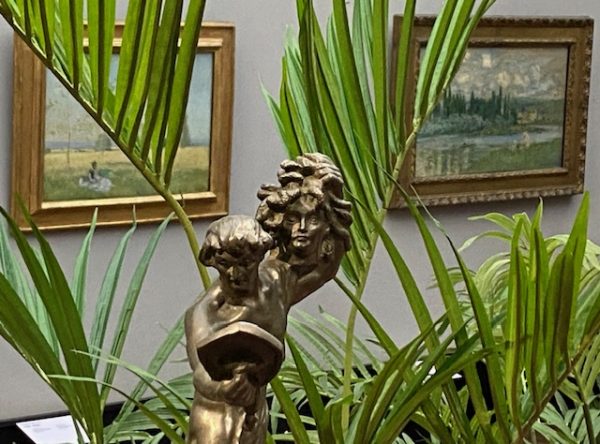
(Image: Camille Claudel 1905: “Persée et la Gorgone, Lucile Audouy collection Paris, exhibited in Berlin 2025, Alte Nationalgalerie)

Marc Aurel Book 1

The reading of Marc Aurel’s Meditations in its Book 1 offers first of all his acknowledgments of people who had a lasting impact on him or offered learnings to him. He presented these learnings or take-home lessons as we call this nowadays in a style of “positive psychology”. This means writes about the positive influences and which kinds of positive behaviors he saw in living examples of others and which he felt were particularly worthy of general consideration. In philosophical retrospect we might read the book 1 as a list of “categorical imperatives” which would make a decent life feasible for all. His acknowledgments start with 1 line on his grandfather (decency and mild temper), 2 lines on his biological father (integrity and manliness), 3 lines on his mother (piety, generosity, avoidance of wrongdoing and simplicity of living), but 4 lines on his tutor, even more on other advisers, 20+ on his adoptive father, which is more than on “the gods”.  All these experiences impregnated him with a sense for a “ruler’s responsibility for the common good”. (p.8). The stoic virtue lies in the extensive list of positive contributions from others to make him the rather unique philosopher and emperor.

Marc Aurel Philosopher

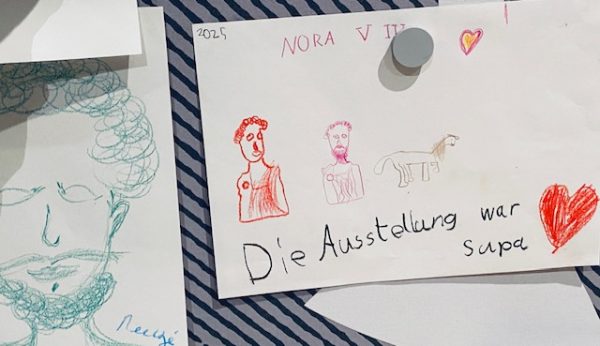
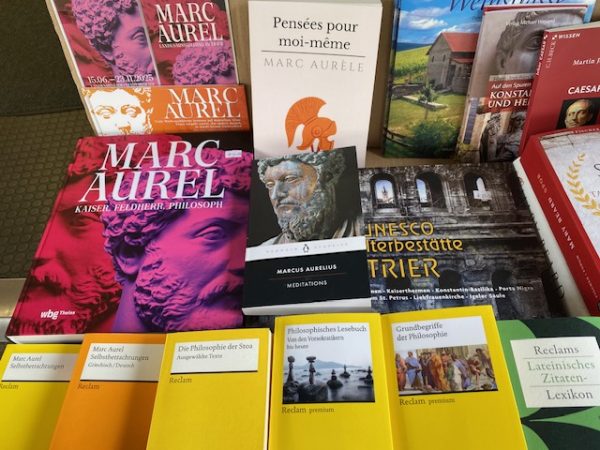
2025-9 marks an additional landmark in the achievements of the late Marc Aurel. In the Roman built city of Trier, 3 museums offer exhibitions on the life, ideas and imperial governance style of Marc Aurel. Libraries and bookshops around the city portray a wealth of books and studies by and about Marc Aurel as well in many languages (image below 2025-9). The stoic author and practitioner has served as an example of a leadership style which became for many subsequent leaders a hard-to-achieve precedent. The writing style of Marc Aurel in short paragraphs and aphorisms proved highly accessible, although his readership swell only after a Latin translation of his Greek original appeared in the 16th century. The title “Meditations” in English, “Pensées pou moi-même” in French or “Selbstbetrachtungen” in German demonstrate the difficulty to get to grips with the author’s intention and objectives in writing down these reflections on life, ethics, humanity and good governance. Through the use of Greek rather than Latin he puts himself in the line of Greek philosophers rather than the succession of Roman emperors. As the numbers of bad leaders still outnumber the good governance style advocated by Marc Aurel, these exhibitions in the Simeonstift, the Landesmuseum and the Stadtbibliothek are a perfect opportunity to demonstrate that good governance is something that can be studied and learned even in the distant Roman history.  

Photographe engagée

Marie-Laure de Decker is featured in the “Musée européenne de la photographie” (MEP) as a photographer committed to capture truth in situations of conflict. She started her career with documentary photos from the Vietnam war. Rather than searching for spectacular scenes, she succeeded in her attempt to capture the more emotional and, therefore, relatable moments for her various audiences. With a firm commitment to the human in her work, the photos by Marie-Laure de Decker reach a level of extraordinary sensitivity to what it means to stay human in violent situations and even military conflict. The portraits of politicians, workers, professions and famous actors applied the same approach. Rather than days or weeks Marie-Laure de Decker spent months or years in the regions of her documentary photo series ranging from Vietnam, South Africa throughout the apartheid regime, Pinochet years of dictatorship in Chile, the 2 parts of Yemen to a prolonged stay in Chad.

The exhibition in the MEP in Paris curated by Victoria Aresheva  raises awareness to the additional fact that photo journalism became an affordable profession only after specialized agencies were created that granted authorship rights to photographers, which ensured later use of their work in edited volumes as well as working for several newspapers or magazines. (Image: Marie-Laure de Decker, self-portraits, MEP Paris exhibits 2025-8). 

Less but better

There are many examples where a new mantra for the 21st century emerges from recent scientific evidence: “Less, but better” (Lbb). In studies of nutrition and human dietary requirements, the importance to eat less has been demonstrated on a regular basis. And this is even more important than to do more exercise if weight loss is the target or the attempt to explain obesity across the globe (McGrosky et al. 2025). The case for eating less is strong. Eating better refers to the need to avoid unhealthy, toxic or cancerous food or the way to prepare food. “Less but better” could become the new mantra or “categorical imperative” if you like it more philosophical in tone. We, the people gain, and the planet will gain as well. It is an easy win-win case, albeit with some behavioral implications.

Aufklärung Enlightenment

The period of the enlightenment is a historically defined time period of the late 17th and the whole 18th century. Although often associated only with Europe as its origin, the American contributions and influences have been far-reaching as well, just thinking of the “Declaration of Independence“. This historical period is, however, most interesting through the unrivalled contribution and pivotal point to the history of ideas. The exhibition and catalogue on the “Aufklärung – Enlightenment” by the German Historical Museum in Berlin exposes many of the historical editions of books that “made the enlightenment”. Philosophical writings and readings (Immanuel Kant: Kritik der …) of the period (especially in German) are tough even for native speakers of German, unlike reading of French (e.g. Jean-Jacques Rousseau) or English (e.g. John Locke) contributions to the enlightenment. Maybe this is already one of the reasons why in France the revolutionary ideas were put into practice through population-wide political movements.
The historical period of the enlightenment came to a close in the early 19th century (1806 another pivotal year). The English or French terms of enlightenment or lumière maybe be interpreted in a way that other historical periods like the medieval ages were periods of darkness, even later periods again did not live up to the idealist prerogatives of the evolution of humanity. The German term “Aufkärung” has its etymological roots more in the action associated with “to enlighten”. This hints at the continuing process of the ideas of the enlightenment in modern terms the process of individualisation, tolerance and autonomy.
There many valuable short interviews shown in the exhibition and Jürgen Habermas contributed a short closing statement to the catalogue of the exhibition on the unfinished project of the “Aufklärung” inviting us to continue also with the “Kritik der Aufklärung”. After all the enlightenment did not save us from repeated events like “Apokalyses“.
(Image: Émilie du Châtelet, below book on Newton Physics in DHM Enlightenment exhibition 2025).

Präludium Prélude

Learners of how to play the piano are likely to pass the composition of J. S. Bach entitled Präludium in German and Prélude in French. Maybe that influences the approach to the piece of music. The title sounds different in each language. It is interesting to follow the Präludium Prélude throughout the history of composition. The pianist Jan Lisiecki has just recorded and released a disc with Deutsche Grammophon following the historic evolution of this genre. The rather easy-going beginnings by Bach (see below for extract of first motive) have turned out to become rather complex preludes with subsequent composers. We may ask ourselves at this occasion: a prelude to what? Your own associations are welcome. In international politics we can observe strategic movements of countries and their military equipment as a prelude of war, but also of peace. Small aggressions may turn into wars. In philosophy Nietzsche praised the dawn (Morgenröte) and focused a lot on new beginnings. Composers might be the best forecasters of what is to come in the following years. Certainly the preludes have foreshadowed some of their later work. Nowadays, many LLMS in AI build on algorithms that predict what is the next word to write or task to do. Even in composition AI is moving ahead fast. Hence, we e are likely to study preludes much more for several reasons now.  

(Image: extract of first motive from J. S. Bach Präludium Nr 1)