
Scroll or stop

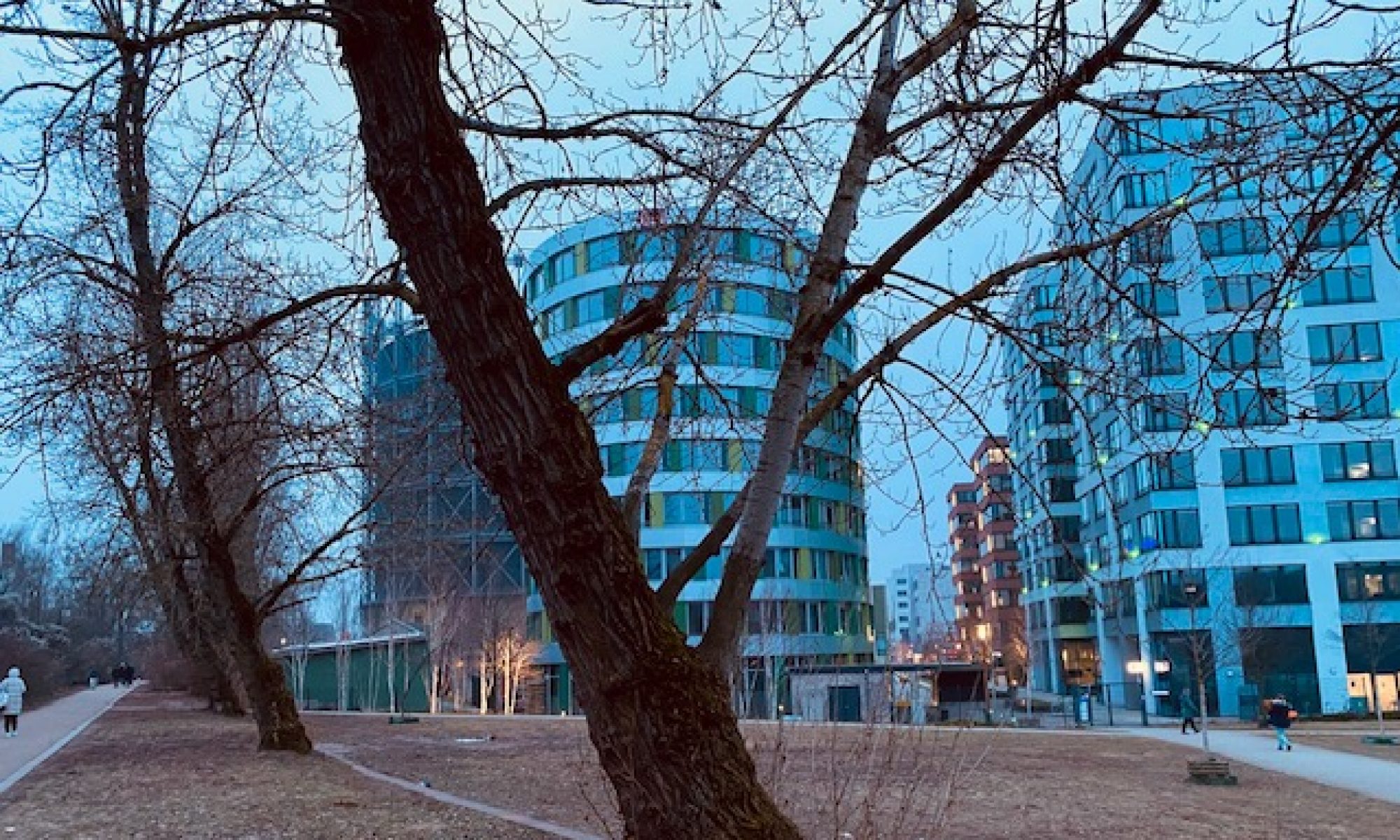
In 2026-10 the fundamental question is: to scroll or not to scroll? As we have moved into the individualistic society with omnipresence of the not-so-social media we keep scrolling through online content. Our attention habits are subject to so-called cliffhangers which aim to direct our attention on specific topics, surprising images or just steering us to more-of-the-same content. The social media ban for children fights against the addiction to endless scrolling. In most cases, what is good for children is also beneficial for adults. Hence, the “endless scrolling” (which I increased on this blog at several occasions, currently = 30 max entries) is from now on reduced to 10. After those 10 entries, you are invited to read more on one of those entries or use one-click proposed keywords or categories. The search of topics or names is another more specific entry into a social science perspective. Maybe, the invitation to scroll less, but stop more often and read or follow proposed links is a beginning to detox our online habits. 
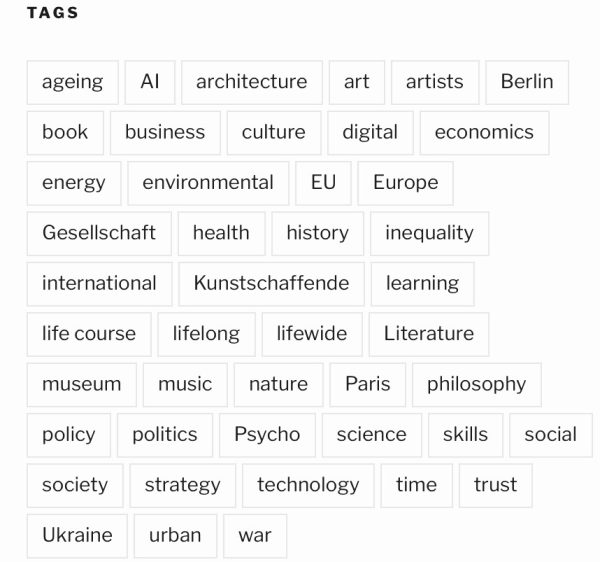
Tags on www.schoemann.org 2026-10
Screenshot

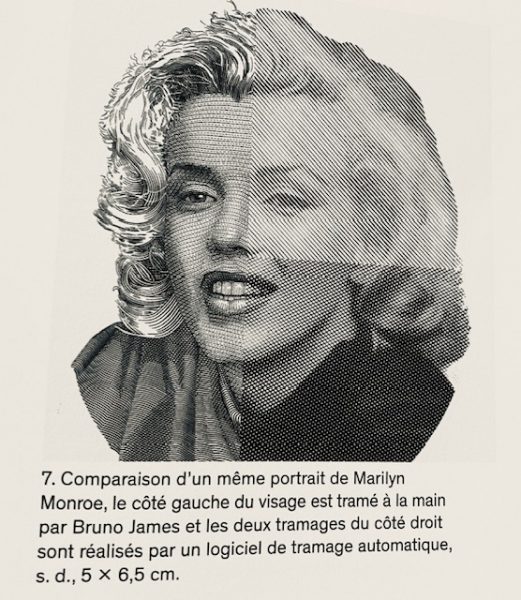
Marilyn Monroe TM

The image and probably even the person of Marilyn Monroe has become a trademark of its own. Since the choice to change her name and outlook to become or be created as the objectified trademark of Marilyn Monroe, the financial interests to gain money using every image, sound or video have reached above average returns. The profits mostly accrue to those owning the commercial rights. At the occasion of her 100th birthday, this continued rent seeking keeps spinning.
It has been well documented that the early death at just 36 years of age is linked to her exploitation or “commodification” as a trademark rather than a person able to cope with the overloaded imagery of herself. Bookshops, even in 2026-6, decorate their windows with books with her image on the cover as eye catcher. As with few other persons, Marilyn Monroe stands for an objectified person where the property rights of the image keep being exploited long after her tragic death. (Image: Marilyn Monroe, tramage by Bruno James BdF, left and algorithmic on the right. Transbordeur 2026).


Latent social structure

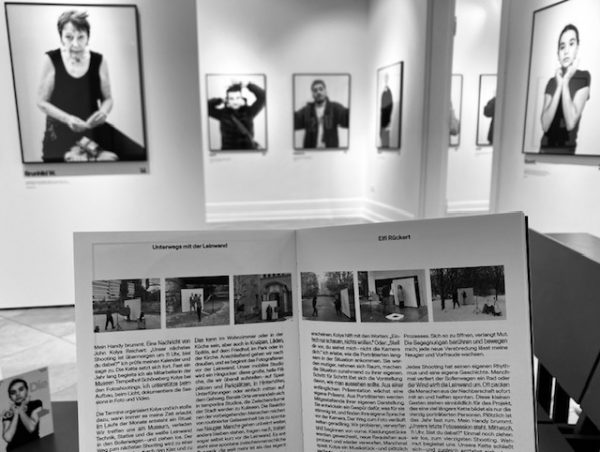
In empirical approaches to sociology we occasionally apply “latent variables analyses”. The aim is to uncover links between data that are not obvious in standard analyses of data. We are pretty convinced by evidence that age correlates with the probability of death. However, most tragedies are created around exceptional counter examples to this “rational expectation”. We also somehow have an intuition about the positive effect of social networks or the social fabric in a more general sense on living and survival. In some of those latent variable models we find evidence for an underlying factor without being able to properly name or frame it. Hence, as social scientists we continue to be interested in ways to make latent social structures more visible. With such an approach in mind I visited the exhibition by author and photographer “John Kolya Reichart” in the “Schöneberg Museum” entitled “Die Kette” (The Chain, 2026-5). The start of the chain is a familiar person in your neighborhood who leads you to the next person and so on. It is explicitly a non-random procedure, which complements proceedings of strictly random sample selection of survey methodologies. The sources for bias outcomes are multiple, however, an underlying or latent social fabric of a friendship and support mechanisms can be shown. Besides the b/w portraits and audios, giving a justification for the choice, the documentation of the process of production gives more insights into the risks and potentials of this form of insights into latent social structures.
(Image: Schoeneberg Museum, “Die Kette” by John Kolya Reichart)

Brancusi polyartist

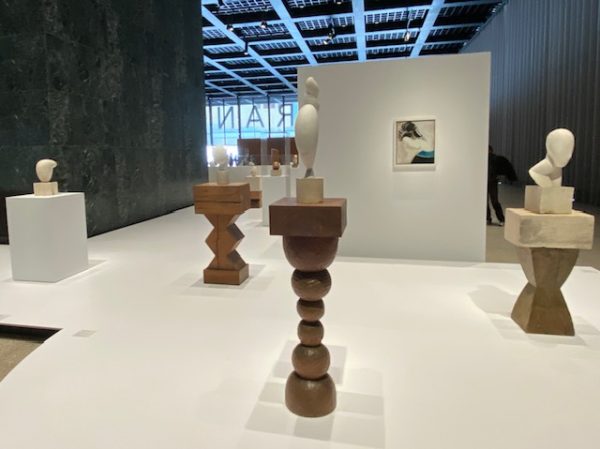
The joint exhibition by the “Neue Nationalgalerie” Berlin and the “Centre Pompidou” Paris has the simple title “Brancusi”. The name of the artist Brancusi stands for a very singular approach to take sculpture into the 20th century by way of abstraction. Brancusi used all sorts of materials like lime stone, bronze, wood and marble. Additionally, he was very conscious of the fact that especially for sculptures the “mise en scène” plays a vital role. Brancusi excelled in this in a rather unique way, mostly by confronting different materials with each other. Sculptures, for him, were architecture in miniature. Such a polyartist approach to sculpture pushed him to use photography and video to not only promote his own work, but to exploit these relatively new techniques to enhance the effect of his sculptures.
Maybe it took almost 100 years that by means of the “not-so-social media” not-instant, anytube and tikytok, this “modus operandi” would capture a whole generation of youth to follow in his footsteps without knowing it. The polyartist Brancusi is a unique milestone, not only using lime stone, on the trajectory of sculpture beyond the early 20th century. The links to other innovative artists chosing abstraction, Picasso or Modigliani, as well as musicians like Eric Satie, reflect the importance of social networks for mutual encouragement when treading new paths in art.

Inclusive images

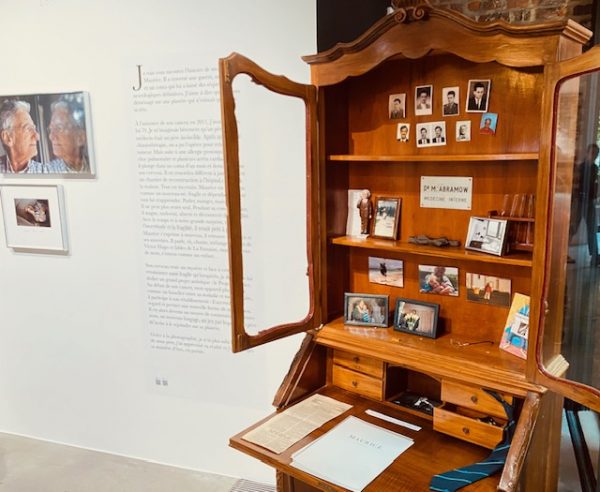
In the last 2 decades we can observe a strong concern among photographers to broaden the spectrum covered by images beyond well established imagery of non-binary gender. Diversity in imagery has taken a broader scope to extend, for example, the age range of people who are portrayed as central topic of exhibitions. The topic of mental diversity is more recent and needs a similar or even increased sensitivity to do justice to the whole spectrum of people. The photography of people with mental challenges necessitates a much more careful approach to the persons and complex personalities the photographer intends to portray. Trust and the development of trust of more vulnerable persons is a time sensitive process. The work by Charlotte Abramow “Maurice, Tristesse et rigolade” is a fine example of a photographer who portrayed over a long time of taking care of her father, previously a medical doctor, The years of the final stages of the life course of her father have been the subject over many years as the survivor of an extended medical coma had to struggle with the tough challenge of re-learning basic life skills again.
Abramow portrays her father as an actor of his “second life”, where the borders between reality, reconfigurations of his memories,   and “mise en scene” to co-produce the images. The images go far beyond the portrayal of aging and mental challenges as a deficit of persons. Yes, it is an integral part of these persons, but there is so much fun and positive emotions that derive from the intensive collaboration of actor, father and photographer that the images stick with us for a longer time. The presentation of props along with the photos creates an immersive installation, which strengthens the emotional bonding with the inclusive images of the later phase of the life course of Maurice.

Ethics in Photography

Yes, you read this correctly. This entry is about the ethics in photography, not about the much more popular discussion about the aesthetics in photography, which fills thousands of books on fashion, architecture, minerals, flowers, animals, landscapes and … you name it. Sensationalism works in photography. The more spectacular an image, the more likes you’ll get in any media, social or so-called social as well as traditional ones. Sex and crime are popular subjects, better framed as objects, as well. The basic idea of what constitutes unethical imagery or photography is broadly defined by the principle of exclusion, i.e. what is not ethical in photography. Let’s add to this inventory the conditions of production: exploitation of the subjects, be they persons or animals or even authorship like violations of intellectual property rights by AI.
Regulations and legal frameworks clarify many of those issues, enforcement of these rules are yet another element related to the ethics in photography. Global warming and the loss of biodiversity has made us aware that the respect of natural resources is also an aspect in the ethics in photography. Travelling long distances by plane just to get a few shots in the Himalaya region, if there have been thousands of (better?) images produced, printed, distributed before, is not sustainable for our planet as a whole. Invading protected areas, like natural bio-reservoirs, to take a few shots especially of rare plants and flowers maybe nice to look at, but the longer-term consequences add up to a loss of biodiversity for us all, in particular for later generations.
These considerations are different from “aniconism”, because they originate in a humanist foundation of ethics not concerned with any depiction or idolatry of images. The historical roots of any ethics in photography have long shadow into today’s practice of photography as well.
(Image: The framing of ethics of photography with reference to John Cage “Silence“)

Sink / Rise

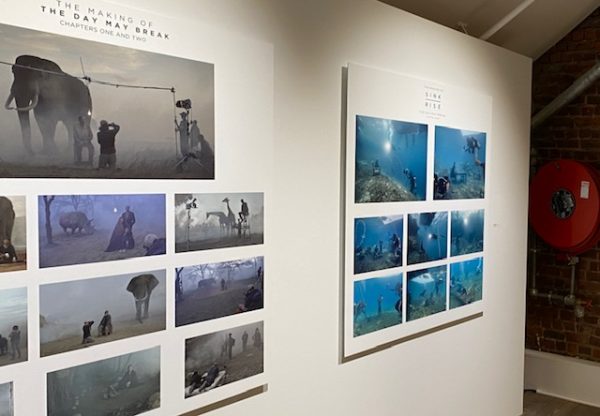
Nick Brandt presented his engaged photographic projects “The day may break” in Brussels at the Hangar Gallery space in Brussels (2025-9-21). The photographic work spans the globe to document and tell the story of a an endangered planet. The environmental and social fabric is at risk of an unprecented scale in the 21st century. Rather than producing hours of documentation, Nick Brandt focuses on images that stick. His “mise en scene” is meant to haunt us. And it succeeds in it. In the best sense of a tradition of a “photographe engagé” he intends to convey messages, even whole narratives to us about and from people in remote places, who are endangered through our inaction or paralysis in front of the challenges posed by global warming and climate change as well as the social and societal consequences.
We can save people from drowning in floods and rising sea levels. The chapter Sink / Rise of this project was produced with people from the Fiji islands who participated in the futuristic scenario of a sunk island. Without accusations, these people question us. Why? How? What for? Where to? – without speaking a word. They spend time in on a sunk island, surrounded, submerged by beautiful, but morbid, turquoise water and the graveyard-like remainders of a broken coral reef. These are photographs not of these people, but about them, about their likely fate, and (very important) produced with them as empowered actors. May they have a chance to rise like a phoenix from the ashes from these photos.
The documentation on the “Making of …” (image below) as part of the same exhibition allows transparency and additional insights into the artist’s work and proceedings.
(Image: Hangar Gallery, Brussels 2025-9-21, On the making of Sink / Rise by Nick Brandt)


Photographe engagée

Marie-Laure de Decker is featured in the “Musée européenne de la photographie” (MEP) as a photographer committed to capture truth in situations of conflict. She started her career with documentary photos from the Vietnam war. Rather than searching for spectacular scenes, she succeeded in her attempt to capture the more emotional and, therefore, relatable moments for her various audiences. With a firm commitment to the human in her work, the photos by Marie-Laure de Decker reach a level of extraordinary sensitivity to what it means to stay human in violent situations and even military conflict. The portraits of politicians, workers, professions and famous actors applied the same approach. Rather than days or weeks Marie-Laure de Decker spent months or years in the regions of her documentary photo series ranging from Vietnam, South Africa throughout the apartheid regime, Pinochet years of dictatorship in Chile, the 2 parts of Yemen to a prolonged stay in Chad.

The exhibition in the MEP in Paris curated by Victoria Aresheva  raises awareness to the additional fact that photo journalism became an affordable profession only after specialized agencies were created that granted authorship rights to photographers, which ensured later use of their work in edited volumes as well as working for several newspapers or magazines. (Image: Marie-Laure de Decker, self-portraits, MEP Paris exhibits 2025-8). 

Emotional history

The making of emotional memories of a city is an art in itself. Many cities have professional photographers who accompany all major events in a city over years. Paris has had the chance that artist photographers and film makers have contributed greatly to the emotional history of the city. Agnès Varda was such a formidable person whose images and movies moved people and allowed to share emotions about the city’s busy and diverse neighborhoods. The « Musée Histoire de Paris Carnavalet » combines an autobiographic perspective with the emotional depiction of live in Paris from the 1950s onwards into the late 20th century. (Image: Agnès Varda, 1950 self-portrait, MEP Paris). 

Femmes Photographers

Paris puts 2 women photographer into the spotlight. The MEP and the Musée historique de la Ville de Paris feature a gender perspective on photography. Both photographers have a common starting point in black and white photography.  Each moved on to develop their art into an additional direction later during their career. Marie-Laure de Decker shifted from the early camera technology from black and white images to color photography in the later stages of her career. Agnès Varda moved from her initial b/w photographic work on to the production of videos for cinema, mainly focused on life in Paris from the early 1960s onwards. An evolution over the professional life becomes evident for both through these retrospectives of their respective work. Technologies evolved and became more accessible for artists’ creative expression. Both moved on to adopt new techniques and challenges. Great personal learning experiences and models for today’s challenges.

(Image Marie-Laure de Decker, L’image comme engagement 2025-8 MEP Paris).