Of course, first of all the Olympic Games are about making a difference with respect to your opponent. However, there has been a thrive to achieve an equality of genders for more than 100 years as well. Women had to battle such a long time to achieve the right to participate in the Games in the same disciplines as men. For the first time in Paris2024 men and women are represented with the same amounts of athletes. Each gender is participating with 5.250 athletes and astonishing progress has been made to ensure that male and female athletes perform in the same or similar disciplines. Even if it took decades for women to run a marathon at the Olympics, the inclusion of a triathlon for women was already much more rapid.
This constitutes a real milestone in the progress towards equality in Olympics. Equal numbers of athletes is a quantitative form of inclusion, the qualitative level of inclusion remains to be accomplished. The qualitative dimension consists in the inclusion of women at equal footing in media reporting and sponsoring. On the organizational level of the IOC the organizing committee is still dominated by men and statistics on the accompanying teams of coaches, therapists and representatives a lot of progress still needs to be accomplished. Paris made already a huge difference and several exhibitions of the “cultural games” around the city during the Olympics 2024 make this point quite forcefully.
The sociology of the Olympic Games has a lot of topics. It is great to see the progress made in Paris on Olympic Equality, after all “égalité” figures prominently in the definition of modern France.
(Image: BNF 2024 exhibition “A History of Women in Sport” own translation) 
Chapelles Sportifs
In Paris the “Chapelle Notre Dame des Sportifs” was benedicted in 2023 in view of the Olympic Games 2024 in France. The catholic church is following the popular Olympics to call for “Holy Games” with subtitle “L’évangile c’est sport”. The chapel can be visited in the splendid church “La Madeleine” in the middle of Paris. You can buy candles with inscriptions like “the last ones, will come first (Mt 20,16)” or other citations from the bible. On Friday 2024-7-19 a special ceremony was held where you could jointly pray to win in your discipline or, of course, for other noble causes. The whole service was recorded with multiple cameras from a professional television team for a worldwide dissemination. It remains an open question, whether the church sponsors athletes as well or whether the athletes sponsor the church through their followers on social media. in any case it is a bigger media event accompanying the Olympic games in Paris.

Credit donations
“credit” stems from the original latin word “cedere”. In the 1st person you write “credo”, which means I believe. If said in a religious building or church you show with this pronunciation that you believe tbe narrative of the religious community. In the 3rd person “credit” stand for s/he/it believes. In the financial sense it is the receiver of money from your credit card who believes or trusts you that you made an honest payment. Now, banks take commissions from each of these exchanges of trust. You are credit worthy or not. In some churches you now make donations using your credit card to facilitate business. Credit card companies also charge you on your donation. Win win situation we call this. I keep asking myself, whether I still “believe in angles” or only business angles. (Image Église Notre Dame des Victoires Brussels 2024-7)

Sport Fashion
Sport is fashion and fashion is sport. Not only in the Euro 2024 the teams make a big fuzz about the design of their sportswear, but certainly the Olympic games in Paris 2024 will demonstrate the close links between the 2 worlds. We might say playing football is a bit like a fashion catwalk. Keep going right on target, despite obstacles, when thousands of people are watching your performance and potential failures very closely. Making a “bella figura” is a must in both spheres. There is also a strong tendency for “the winner takes all”, that s/he takes the trophy and the jackpot.
Both worlds are also big business in their own right. It is at least 100 years old that sport and fashion got married. The “Musée des arts décoratifs” in Paris had an excellent exhibition on the combination of sport and fashion (booklet link). According to the curators both spheres have always been interlaced. High-level performance and specialized fashion just made for a splendid combination. As the rich and wealthy had more than a penny or two to spend on their leisure activities the combination of sport and fashion soon became itself a big business, beside the visible beauty of the bodies, movements and dresses. Just watch the breakdance fashion as the latest addition to the repertoire of olympic disciplines. In a recent article in “Le Monde” (2024-7-11) the value of the market of sports including its fashionable merchandising is estimated to reach a turnover of € 500 billion in 2022.
The competition of sports has been turned into a competition of the best images and videos. Fashionable as well as functional clothing can assist in climbing the podium. In the Euro 2024 Football Final the teams equipped with Adidas (Spain) and with Nike (England) compete for the trophy. Changing equipment sponsorship from one to the other can raise substantial amounts for a team (€ 100 million/year for the German national team). Big business seems to take over sports and fashion after the century-old marriage of sport and fashion. Since then, they have jointly been on an extended honeymoon. (Image from www.emptyspacetm.com 2024-7)

Science Transparent
Every year there is only one special big event (Lange Nacht der Wissenschaften) to make science more transparent to the population at large. Mostly hidden behind impressive walls and buildings guarded by porters,
science is not as transparent for the large public as it would like to be. In general people are rather intimidated or feel quickly out of place if scientist start to “explain” in lengthy formats their topics, ideas, questions and intermediate solutions. Even if the distributed open science fair is running only from 5 p.m to midnight, there are lots of things to learn and look into.
The website lists 1500+ sessions, 230 are in English language. You have to be selective or spread your interest over several years. I chose to start with, maybe, the toughest choice the Weierstrass-Institute near the Naturkundemuseum. Several projects of applied mathematics and stochastic processes were exposed and explained in more or less transparent and/or understandable form to the audiences. The talk by Julian Kern “Why chance doesn’t happen by chance” had a nice interactive format with “Kahoot-quizzes” and gave a good introduction, why it is useful to understand, statistics and stochastic processes in fields from biology, physics to social phenomena. The White board replaced already the black board and chalk.
The open doors policy, at least one day per year, raises interests and awareness for topics few people would only think that they existed already. The volume “Mathematics and Society” (Wolfgang König ed. 2016) is something I shall follow up on eventually. There are lots of applications of mathematics to social phenomena (time seen from the perspective of generations for example, image below from talk), which we have a hard time to come to grips with without the aid of mathematicians. 
Killing me softly
The problem with pollution is, it is killing you softly from inside. It is almost impossible to escape air pollution as it is pervasive in cities, but also in the countryside where you do not expect it that much. This is the result of the study by Kuzma et al. (2024) published in “The Lancet Regional Health Europe”. Based on a data set of 8 million persons from Eastern Poland the effects of air pollution on myocardial infarction incidence was analysed. The use of the “European Union’s Earth Observation Programme” contributed data on air pollutants like PMs, BaP (benzo(a)pyrene), SO2 and NO2 concentrations. The multi-level data of 5 voivodeships, 101 counties, and 709 communities in Poland allows to differentiate the effects of damage to the heart tissue on cardiovascular disease. The other well-known factors are arterial hypertension, diabetes, obesity, chronic kidney disease, hyperlipidaemia, and smoking as most of us know already. The effects of BaP (benzo(a)pyrene) is shown for rural areas despite the lower observed traffic density in these areas. The killing occurs softly from within our bodies by just breathing in and out, and in and out continuously. The disease burden in these regions is observed with “recorded 63,154 hospitalizations and 5921 in-hospital deaths (9.4%) due to STEMI; and 76,543 hospitalizations and 4079 (5%) in-hospital deaths due to NSTEMI”. In short, the need to reduce air pollution further is an urgent demand that saves lives eventually.
(Image from public domain wikipedia or “do-it-yourself” here).

Photos Exhibit
Our usual expectation of an exhibition of photography is to look at photos at a wall. Sometimes there is more it. The Exhibition Space at the “Haus am Kleistpark” features Michael Schäfer who attempts to go a bit beyond these traditional forms. In the works of photo cubes on water surfaces “2021_57”, or a dice floating on the waves of oceans, the video representation of his photographs takes the assembled images beyond their flat 2D surface. However, the 2D representation is at the origin, then transformed into a 3D dice, which then is animated as a 4D format. Moving beyond the flat screen image takes photography into the 21st century.
His work “Les acteurs 1-26” from 2007 is shown at the entry hall of the exhibition. It shows pupils of a class at an elite school who deem themselves in leadership roles in the near future. Is it acting? Is it projection into a future role they are likely to take on. They represent stereotypes, of course, but some are pretty convincing in these roles already. Some others still seem to reflect on what they are doing there. Even acting these roles, they are aware of the meaning of social rank and class in society. Without having read the sociologist Bourdieu, all are aware of the fine, little elements of distinction as they have evolved over time. We could teach an interesting sociology class in this exhibition. 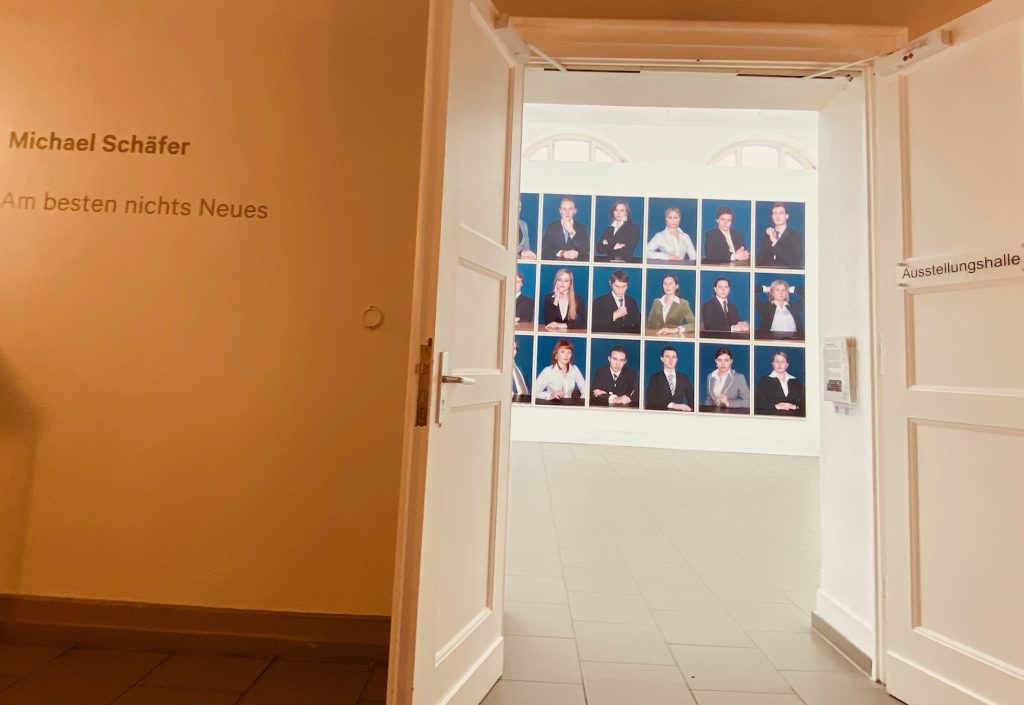
AI and S/he
There was hope that artificial intelligence (AI) would be a better version of us. Well, so far that seems to have failed. Let us take gender bias as a pervasive feature even in modern societies, let alone the societies in medieval or industrial age. AI tends to uphold gender biases and might even reinforce them. Why? A recent paper by Kotek, Dockum, Sun (2023) explains the sources for this bias in straightforward terms. AI is based on Large Language Models. These LLMs are trained using big detailed data sets. Through the training on true observed data like detailed data on occupation by gender as observed in the U.S. in 2023, the models tend to have a status quo bias.
This means they abstract from a dynamic evolution of occupations and the potential evolution of gender stereotypes over years. Even deriving growing or decreasing trends of gender dominance in a specific occupation the models have little ground for reasonable or adequate assessment of these trends. Just like thousands of social scientists before them. Projections into the future or assuming a legal obligation of equal representation of gender might still not be in line with human perception of such trends.
Representing women in equal shares among soldiers, 50% of men as secretaries in offices appears rather utopian in 2024, but any share in-between is probably arbitrary and differs widely between countries. Even bigger data sets may account for this in some future day. For the time being these models based on “true” data sets will have a bias towards the status quo, however unsatisfactory this might be.
Now let us just develop on this research finding. Gender bias is only one source of bias among many other forms of bias or discriminatory practices. Ethnicity, age or various abilities complicate the underlying “ground truth” (term used in paper) represented in occupation data sets. The authors identify 4 major shortcoming concerning gender bias in AI based on LLMs: (1) The pronouns s/he were picked even more often than in Bureau of Labor Statistics occupational gender representations; (2) female stereotypes were more amplified than male ones; (3) ambiguity of gender attribution was not flagged as an issue; (4) when found out to be inaccurate LLMs returned “authoritative” responses, which were “often inaccurate”.
These findings have the merit to provide a testing framework for gender bias of AI. Many other biases or potential biases have to be investigated in a similarly rigorous fashion before AI will give us an authoritarian answer, no I am free of any bias in responding to your request. Full stop. 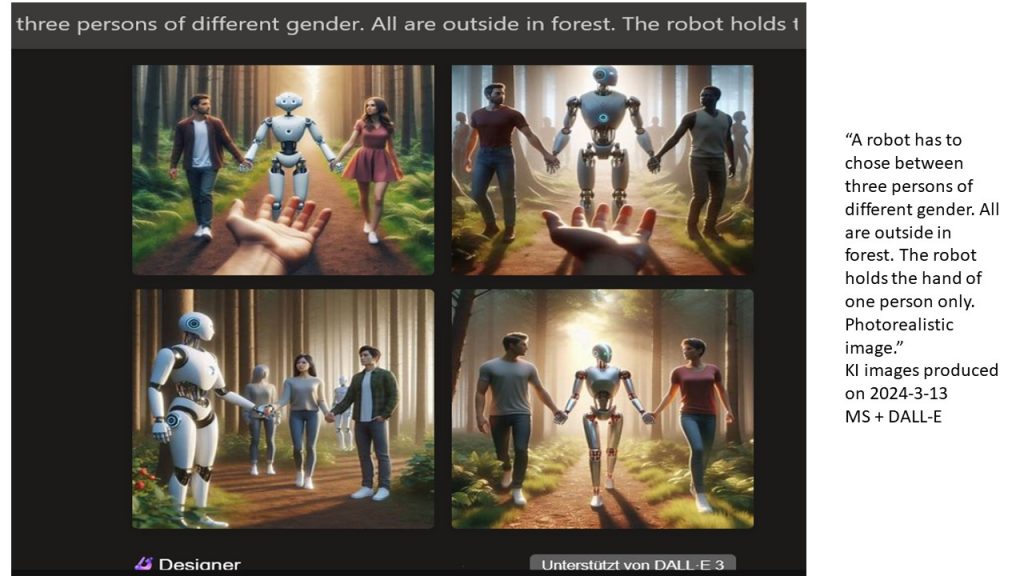
Symbol
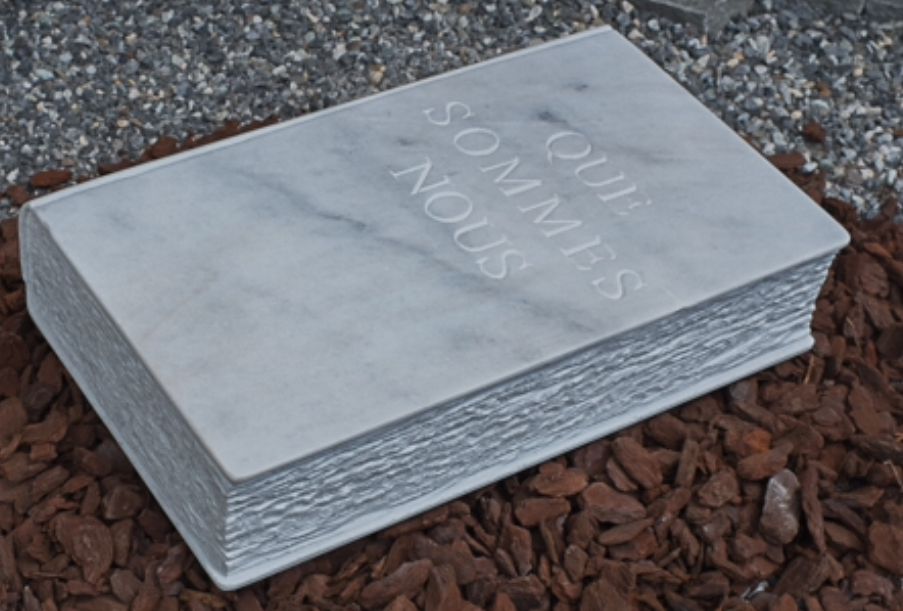
What is it that makes an object a symbol? Probably, it is the widely shared perception of the meaning of a symbol that turns an object into a symbol. The etymology of the word symbol refers back to the Greek word σύμβολον. The earliest philosophical refer back to the Greek philosopher Aristoteles who deals with symbols when he writes about interpretations. Written words have become powerful symbols in the ancient world. We still have them all around us today. The interpretations of the words as symbols, however, may change considerably over time. Some symbols keep their designation and significance over centuries. Maps are well known to contain lots of symbols for roads, railways, tunnels or height. We learn about these symbols and interpret them in a specific societal context. Science is making ample use of symbols, e.g. chemistry. Different cultures define and apply their own symbols. Colonialism has been a form to impose symbols upon other societies. Throughout history symbols of power have changed as well. Each of those topics is an interesting field of application in itself. Young generations create their own symbols to establish a specific cultural identity or subculture. Urban spaces have been invaded by graffiti that tend to spread symbols as messages or symbols for their own sake.
Sociology has taken up the challenge to identify “status symbols” of groups of society. Possession of gold and silver have long ago been symbols of being rich. Maybe, even today such easily visible symbols play a role in how a person’s role is perceived in societies. Not only for priests etc. dresses have been applied as a symbol. Modern fashion is full of symbols as well. Interpretation of the meaning or even no meaning is an act of becoming conscious of the world around you. From the seriousness of symbols, we have come to the playing around with symbols as expressions of ourselves.
No matter whether we use the word, like water, we all know the chemical symbol H20. An image or art work using the symbol in whatever form will be decoded by us accordingly. However, the meaning we attach to water depends on the environment as well as specific context we (or the artists) are using it in. Cross-cultural competences consist in the awareness that symbols grow out of contexts and need to be interpreted accordingly. It needs a lot of openness, willingness to learn about differences and careful consideration in our everyday world to handle symbols. Doing culture is doing symbols.(Image of art work by Anderegg, Andi taken in 2016)
Biographies
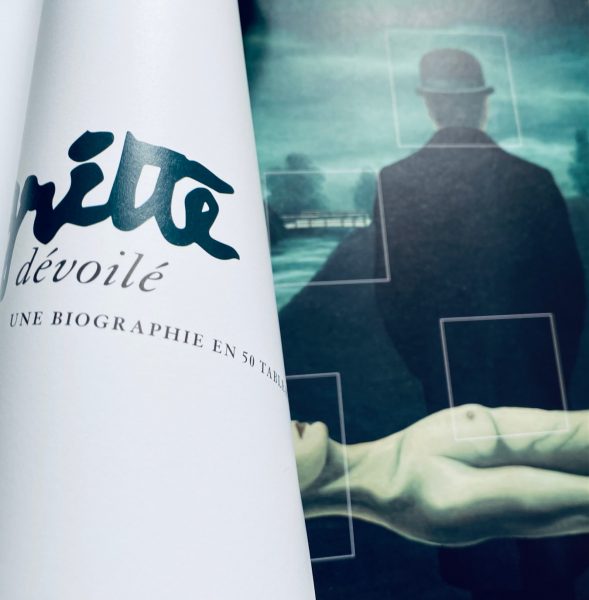
The biographies of painters, composers or artists in general can be reconstructed by use of their major works. The biography of René Magritte by Eric Rinckhout (2017) has chosen this way of a retrospective in images and explanatory texts. The biography is built around 50 major images starting with the first one by Magritte at the age of 28. “Les réveries du promeneur” (see below) deal with the confrontation of Magritte with death, suicide and the difficulty to find rational answers to all those questions of why this happens and what becomes of people who experience such a tragedy.
His own childhood was affected by such an event concerning his own mother who suffered from depression. Coping with the evolution of psychic illness over years and the absence of a supportive father have posed a steep challenge for the young person. Creation of art became a coping strategy as well as a relief for those who manage to eventually cross the bridge into their own life leaving behind the bad experiences. J.J. Rousseau was an influence on Magritte as well.
Finding your own destiny and your own style is a process. This process evolves over years. The chronological sequence of 50 images allows to follow the path taken. Thereby, it becomes possible to open up the personal learning and working trajectory of the artist. In retrospective perspective it seems often logical that one style or period of painting follows on from another one. However, in the forward living of the creative life many choices are heavily contingent on other circumstances. Influences of friends, exhibitions, reading, cinema, private or financial situations may determine the creative choices simultaneously or one at a time.
The chronological path of images writes a biography of a special kind. It allows to think in sequences just like in a sequence analysis as sociological methodology. Description, reconstruction, analysis, causality remain a challenge in our attempts to learn and understand more about biographies or the construction and reconstruction of life courses.