Water pleasures

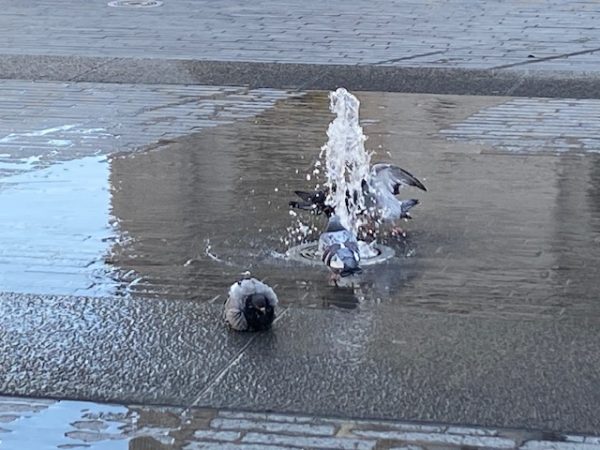
Maybe some of us associate water pleasures with the splendid fountains in the castle of Versailles (France). Our daily concerns, however, are much more about making cities more resilient and able to cope with water scarcity. According to a study by Krueger et al. (2025) the user perspective and behavioral challenges that go along with saving water by end users has been neglected for years. Water management in cities is part of the infrastructure package that has to be managed efficiently. Aging water distribution infrastructure is just as much a problem on the supply side of water as consumption has its (increasing) price on the users side. Rainwater capture, re-use and recycling are promising alternatives to simply providing more water. Pollution is, of course, another hazard that needs our attention. In the meantime we may think of water pleasures for all including the animal world.
Water in Parks

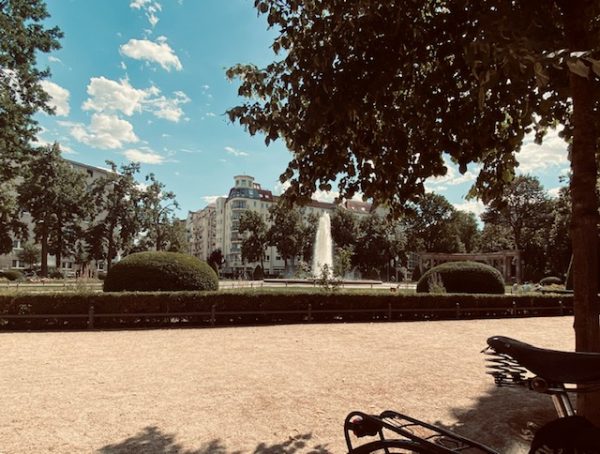
In 2026-7 and a 3rd hear wave approaching, the real luxury consists in water in inner cities. As a source of refreshment and cooling when temperatures rise, water provides a natural source to cool down nearby people, buildings as well as any trees. The wisdom of a hundred years ago appears again as a major solution as global warming progresses. Evaporation of water is cooling. Some simple facts deserve to be repeated over and over again as urban planning seems to have forgotten such simple physics. We have think about a lot of green and blue spots again in our cities to achieve the much needed cooling effects. (Image: Viktoria-Luise Platz, Berlin 2026-7)

All the lonely people

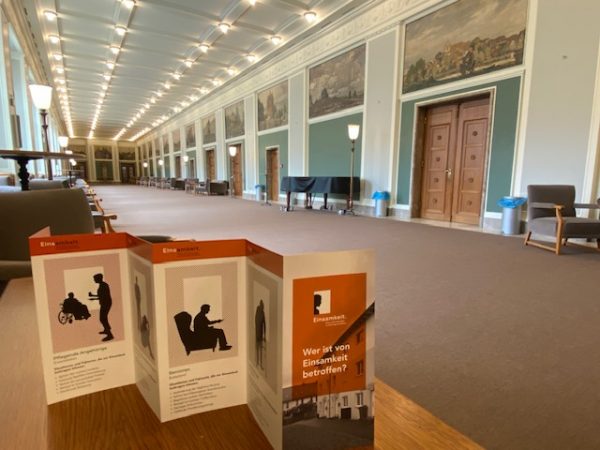
This line of a song by “The Beatles” dates back to 1966. “Ah, look at all the lonely people” is a kind of puzzled outcry to reckon with the loneliness even in busy and charitable places. 60 years later in 2026 we have whole ministries in some countries to deal with loneliness. It is not a niche problem. Tackling the problem needs to go beyond raising awareness. Loneliness occurs at all stages of the life course: children, adolescents, young adult, migrants, employees, single parents, care giving people, even within couples, seniors and very old persons. It is not restricted to urban or rural areas, but changes from one to another phase in a person’s life course carry the risk to encounter loneliness. It may well be only a temporary phase before new relationships can be established or previous contacts revived. There is a role to reach out to people who might be lonely for all of us. Public policies should be scrutinised on all levels whether they manage to break barriers or raise new ones for persons to feel lonely. In Berlin, the local level in each district is taking measures to facilitate informal meeting points open to all ages and walks of life. The “Wüstenrot foundation” sponsors many initiatives where public policies are short of funds. Projects enhance networks of people and organisations eager to assist “all these lonely people”, wherever they all come from.  (Image: Conference on loneliness at Berlin city hall Schöneberg 2026)

Cool shelters

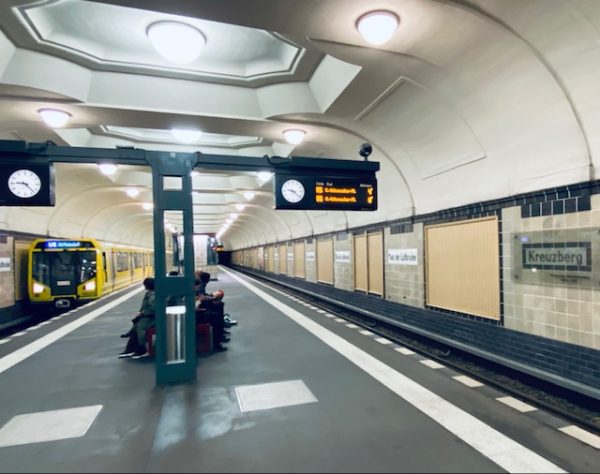
In many big cities the metro lines and particularly some of the stations can provide cool shelters during hot days. Reducing the speed of traffic reduces the airflow and heat of acceleration and braking. More home office work if employees have adequate cooling at home reduces emissions additionally. The historic Kreuzberg-Metro-Station, nowadays called “Platz der Luftbrücke” is big enough to accommodate many people who are in need of shelter for whatever purpose. Underground you do not even hear much from the busy traffic above. More efforts to brighten up the station could create an urban space which invites to rest in hot days rather than rush around the city. Climate change will ask us to come up with many innovative and unorthodox solutions as part of public health initiatives.

Beware Albedo

At times of high radiation from the sun, we suffer from high “albedo” values surrounding us. Albedo is scaled between 0 (black) and 100 (white) and is a measure of the reflection of light. Dark surfaces have a low Albedo, which means they absorb a lot of light and store this energy in form of heating. On the contrary, white surfaces or reflector materials like mirrors absorb very little of light as they reflect the light and, therefore store very little of it as heat.
In housing or urban planning this is an important indicator to take into consideration when planning for summer heat reduction, for example. Inner cities with dense construction, lots of windows, which in most cases absorb rather than reflect sun light, Light absorption and storage during the day will contribute to heat urban environments and inner cities during summer nights. This might be comfortable during winter, but in hot summer days the high reflection value creates additional discomfort.
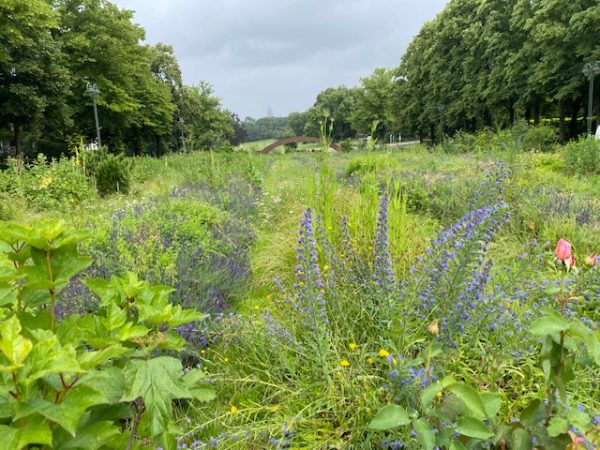
Greening of cities is a powerful answer as vegetation absorbs the sunlight, but does not store it in form of heat. The glaciers and huge snow fields have shielded us from the earth heating up too fast in the past. Unfortunately, the lack of knowledge about “albedo” has lead us to undervalue these shielding effects. Light absorption by the earth is an additional driver of climate change in form of global warming. (Image: Brussels, Forest, Park Duden Community Gardening 2026-5)

Gardening culture

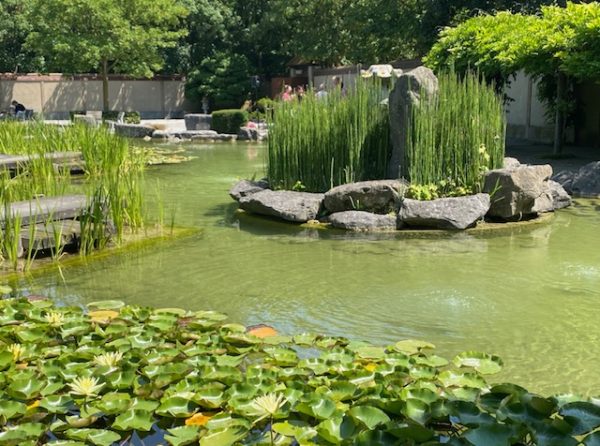
There is a specific set of skills attached to gardening culture. You do not have to travel continents to experience the pleasure of gardening from more than just your own culture. Beyond the tradition of the French garden “à la Le Nôtre”, the English garden including the short precisely trimmed lawn and blooming arrangements, the Japanese gardens have a wholistic approach, which pay attention to broader human experiences of nature. A garden is a kind of sanctuary. It resembles more an internal journey rather than a showing off to others. Walls serve to enhance privacy to be able to open-up again later to others rather than a symbol of distinction and exclusion from the less privileged. Small places suffice to give room to a Bonsai experience. The very busy seaside resorts and port of Ostend on the Belgian coast has reserved a small spot for inner peace in its Japanese garden. (Image: Japanese garden “Shin Kai Tei” in Ostend created by Takahashi Sawano) 

Autonomous regions

In political science, autonomous regions have a hybrid legal form. Autonomous regions are a part of nation state, but have rights of own administration beyond what other regions have. The status quo of an autonomous region is more defined by the historical evolution than current political controversies. The hybrid state as being part of a larger nation on the one hand, but giving the impression of enjoying more autonomous decision making. The actual test of autonomy is in day-to-day decisions, particularly those that have cultural or financial implications. In order to preserve an own language and folk traditions the status as autonomous region is quite helpful. Whereas an own television channel or decisions about school curricula were essential for autonomous regions, the access to the internet and, for example, AI-assisted translations have made the preservation of cultural autonomy a bit easier in the 21st century. In view of a pervasive globalization we witness at the same time an increasing local attachment of people. The “glocalism”, which combines global humanitarian values with a locally routed personal identity. This mechanism seems to be on the rise and continues to pose a threat to an outdated vision of a nation state. Beyond hybrid cars and hybrid war, we live more and more in hybrid nation states.

Waterfront Paris

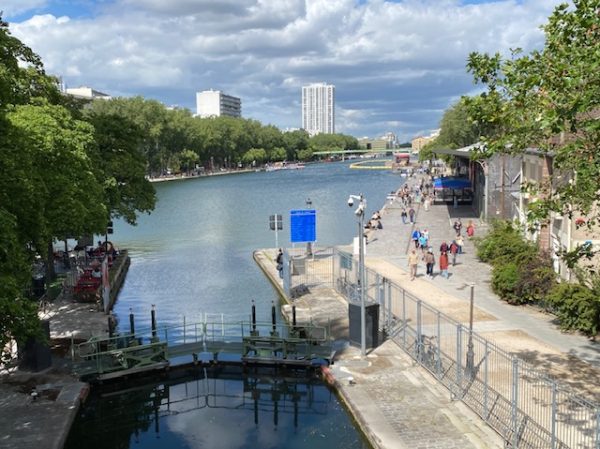
Most people enjoy the banks of the river “La Seine” in Paris. Ever since the Olympics in Paris 2024, the temptation to go swimming there or to do some other kind of water related activities, is high. Fewer people are aware of an other splendid location near the Gare de l’Est. The canal Saint Martin and the nearby end of the Canal de l’Ourcq ( image below) have much to offer for stressed people to take some time off and relax. From cinemas, cafés and bars you can choose your favorite to pass time with friends or family, alternatively just keep walking for miles to get your exercise as needed to sustain your body in good health and shape. The health impact of such cool and more humid areas has a high value to the benefit of all without forcing people to travel long distances for recreational activities or normalizing weight or heart rates. 


Set and Match

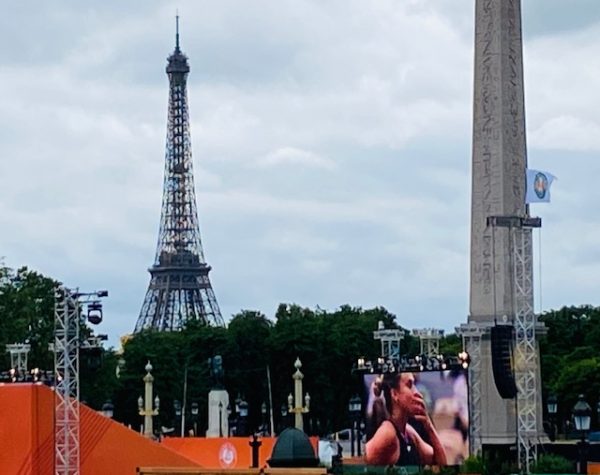
The organizers of big tennis tournaments like at Roland Garros in Paris have to reach ever bigger audiences to be able to cash out the prize money for the top players and their expenses. Besides the number of spectators on site, the prime income comes from television rights and sponsorships through advertising. Gambling on set and match is also a rising annex market, just like tourism linked to the event. For such purposes Paris offers screenings, similar to the Olympic Games 2024, in the centre of Paris. The park “Les Tuileries” offered to follow the tennis matches on big screens against the background of the Eiffel Tower (image below). Of course, the “rue de Rivoli” nearby offers additional pleasures or take home goodies for spectators, which add to the overall budget spent by an average tourist in Paris. For people interested in a walk in “Les Tuileries” and the plants ( Acanthus), trees (Linden) and flowers (roses) have to choose the other parts of the park. Big cities have the chance to offer a bit to everyone within relatively short walks. 

Bicycle Garage

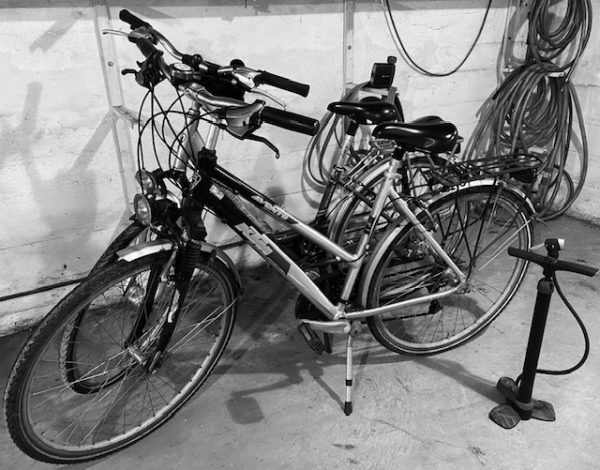
The 2020s are the years to explore sharing concepts. Beyond car sharing we have become used to share scooters and bicycles for intermodal transportation. The concepts are subject to continuous evaluation and the choice between free-floating versus fix point stations remains a hotly contested topic. Despite using either one of both sharing concepts, families and friends might practice their own sharing of modes of transportation. Whereas for cars the driving licenses and insurances might limit the sharing, for private bicycles there are no such restrictions.
A little bit of basic understanding and practice of repairs allows to share family-owned bicycles with little effort. Equipped with a GPS-tracker, even free floating might be an option in addition to theft protection. With less space taken up by cars in household garages, bicycles can occupy, at last, sufficient space including a little corner for maintenance and repairs.