Corbusier ZH

Realizations based on the theory of architecture by Le Corbusier are always worthy of visit. Passing through Zurich (CH) allows to discover another fine example of a villa he designed in the neighborhood of the old town. Within walking distance from the lake Zurich the spacious building allows just like the Paris example for an exhibition of art work within the villa. Horizontally stretched windows and a terrace on the roof make these villas look very modern. Rooftop bars and restaurants just stage a revival in inner cities as cool locations. Le Corbusier anticipated this long ago. Theories can have a long half value time of lasting.

The materials applied in the realizations were obviously less durable. This is the reason why the villa had been closed for renovations for many years. The reopening now shows the splendid views from inside out as well as from the outside. Colors are especially interesting in this example. Nothing is left to or build by chance. The Design language is spelled out in each detail down to door handles. An ongoing exhibition about the deterioration of materials and in some cases even toxic materials helps to understand the necessity to be aware of material science in construction. This makes visits even more informative. The confrontation of vision and sustainability becomes an additional topic also for the theory of architecture.

Le Corbusier Villa Zürich CH

Unwinding violence

A common metaphor to describe rising or erupting violence is the “spiral of violence”. In exerting violence by one person or group, the response of the other person or group is even more violent and, potentially, the response to the response makes use again of more violence. The spiralling up of violence is hard to stop or to reverse. Law as well as its enforcement has to play a major role in this process. However, if the police violence is involved as part of the spiralling process the process gets even more complicated. Beware of the beginnings of such a process.
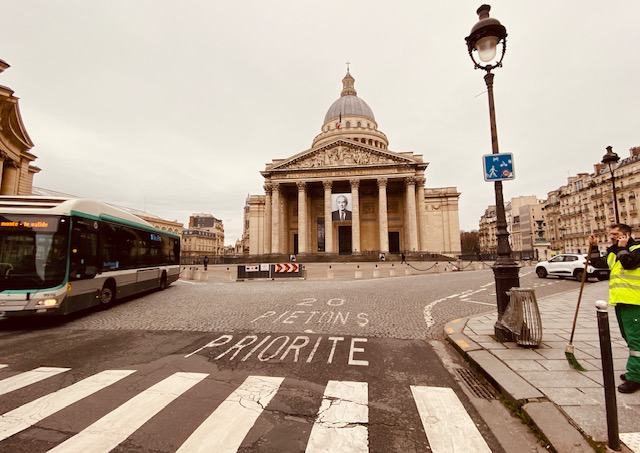
In France in July 2023 the debate about violence is wide open. Contributions to the debate in Le Monde deal with the discussion to claim equal treatment of violence from “fundamental ecologists” as well as extremist defendants of industrial agriculture (Stéphane Foucart). Both sides became more radical in their actions and threaten an escalation in case of governmental inaction. The “triangle of silence” is also a breeding spot with a potential for violent confrontations. Groups in society that have no voice in parliament or local governments frequently use violent actions to raise awareness to their concerns as politics and media tend to ignore “not so nice” images and reporting from areas with multiple disadvantages and social confrontations.
One of the proposed solutions by Marcel Marloie (published in LeMonde) proposes to rethink urban planning deviating from the path proposed originally by Le Corbusier. Instead of offering public parks that are cultivated (and policed) by the local government, entrust areas of collective gardening to the disadvantaged communities. The empowering role is, to master your own piece of happiness. The “bonheur à la Voltaire” is likely to increase attachment to your local and neighbouring community. Of course, this is not evolving without conflicts, but these are processes of accepting compromises and mediation rather than violent resolution of conflicts or aggression out of desperation.
Contrary to the belief that some big projects (Olympic games in Paris) should contribute to unite a nation(s), it might well lead to further segregation of persons who benefit from the games and those who are unable to enjoy some sort of participation in the event. Further gentrification of Paris is likely to be the result. Poorer or lower middle-class people will no longer be able to live in the renovated suburbs that have more public space being privatised and turned into for profit activities. The challenge is to build areas that enhance trust in people, trust in institutions and politics. Schools, associations, trade unions, political parties and social institutions have an important role to play in this respect. The way forward is with more communication and deliberation, not less, especially for and with the most distant groups of a societal consensus.

Architecture

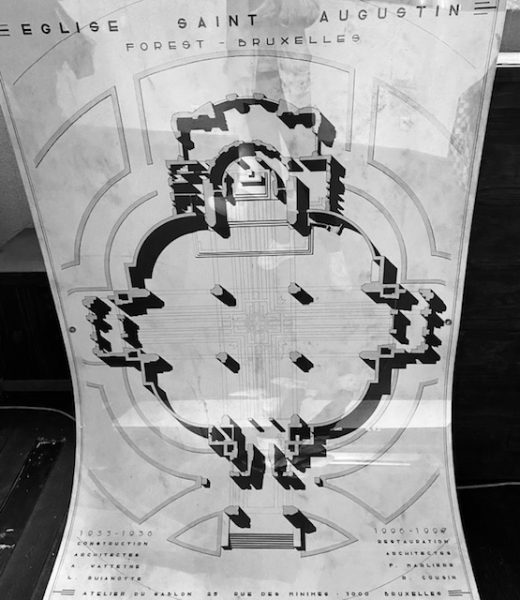
Architecture is all around us. However, we rarely consider the build environment as “conditioning” feature of our life. Architecture is contributing extensively to our perception of “social space” (Bourdieu). Inner cities, suburbs or spacious residential areas have diverse impacts on our perception of, for example, security, modernity, health or sanitary sensations. The corona-crisis has made it clear to most people that a healthy environment is a very essential part of our perception of comfort. Here the psycho-social perception of living and/or working space enters into the co-creation of housing people. Technology is a big driver of change in housing, urban spaces and rural imagination. In order to avoid corona infections a new culture of working from home for the masses become a health-driven imperative. Payment without contact, home delivery of meals, food, books, medicine have changed the living style of many people. Too little movement for our bodies has caused another silent pandemic of obesity. Enough reasons to rethink architecture from a sociological perspective on it. This probably starts with speaking of architecture as architectures. By this we mean to think of architecture from its social origins, functions, impacts and perceptions. Great historical examples of architects have implicitly or explicitly formulated a social theory of architecture or space as the basis of their “concrete” realisations. The sociology of professions of architects and the many construction-related professions needs empirical foundation beyond the cliché of socialisation as artist versus technician. Still recent forms of participatory democracy as part of urban and rural planning as well as realisations. Participatory individual or community housing are likely to stay with us. People want to get involved in co-creating their living and working space as their social environment. Architecture as social process and specific layer of the network society will be the new mantra. It has always been there, implicitly. Up to us to strengthen the social discourse on architecture.