
Composing Assisted

Before the existence of digital composition tools composers were assisted by “Kopisten”. These persons rewrote the original draft of a composition into a “proper” version of the original document. Musicology has a tough time to deal with deviations from the original. It needs to be clarified which is the final and authorized version. In some instances this is far from evident. Just as an example Robert Schumann made ample use of the assistance of Kopist Otto Hermann Klausnitz (cf Nr 6), sometimes for the preparation of the composition, the finalized versions or the explicit drafting of different voices. Klausnitz himself was a flautist in Leipzig (Gewandhausorchester) and a conductor in Duesseldorf. Overall the debate is still going on, whether the composer’s draft or in many instances the Kopist’s version of the composition (authorized or not) prevails. In the age of AI, which is highly influential in modern music, such questions will most likely be intrinsic to the process of composition as well. AI is influential in evening out rough edges. Anette Mueller (2010) has done a great job to make this work of “Kopisten” much more transparent and her concluding chapter is programmatically entitled “Komponist und Kopist- Aspekte einer produktiven Kooperation”. (Image Mueller, A 2010 p. 340).

Aussensicht Innensicht

Die Sicht vom Skulpturengarten der Neuen Nationalgalerie auf die laufende Ausstellung „Zerreissprobe…“ erlaubt einen tiefen historischen Einblick in die 1980er Jahre. Die Sammlung von Postern des Künstlers Klaus Staeck zeigen die bewegenden Themen der achtziger Jahre. Frauenrechte, Umweltschutz, Sicherheit sowie Medienwirtschaft. 40 Jahre später beschäftigen uns weiterhin, Lösungen für die plakatierten Themen zu finden. Images können Themen so zuspitzen, dass Anklagen daraus werden. Texte sind im Vergleich zu der Eindrücklichkeit der Bilder ein vergleichsweise stumpfes Schwert. Es ist aber gerade die Verbindung von Bild und Text, die Eindrücke verstärkt. „Meme“ Creators sind ein standard tool das die Kommerzialisierung und die Promotion weiter befördert haben. Kunstformen hatten diesen Trend bereits vorweggenommen.

EURO 2024

Before the EURO 2024, (European soccer championship) has even started, the host country Germany and the DFB- foundation for culture joined forces for a remarkable exhibition. In the “National Gallery of Contemporary Art” and next to the Berlin Hauptbahnhof a provocative video installation is mounted that uses the imagery of soccer (football) to portray the life and atmosphere associated with soccer. Injuries on the playing field, but even more so injuries caused by violent groups among the spectators create an emotionally charged representation before, during and after the match. The role of the umpire is central in the match and in the cultural project. Shattered dreams are part of the game for players as well as spectators. Visual impressions have contributed enormously to spectacular success of football on television. The masses of viewers has created a big business of television rights and merchandising products as well. The DFB Kulturstiftung undertakes great efforts to open up the discussion about soccer in a critical way through art projects. The entry into the installation resembles the entry of players through a tunnel into the huge stadium. The world of soccer has multiple links to physical and psychic violence. The installation “Winner” signed by Marianna Simnett challenges the media’s largely beautiful videos about the world of football. In the ocean of enthusiasm this exhibition is just a tiny grain of salt, adding spice to life.

Winner by Marianna Simnett 2024 Berlin

Schostakowitsch Revival

Je mehr Putin sich unablässig in seinem Angriffskrieg gegen die Ukraine und gegen seine eigenen Leute versteift, umso mehr werden die musikalischen Werke von Dmitri Schostakowitsch aktuell. Schostakowitsch hatte viel unter Stalin zu leiden. Sein Werk konnte kaum Gefallen bei der stalinistischen Führung finden, aber dennoch haben voele der Russen seine Werke geliebt. Insbesondere die sogenannte „Leningrader“ Symphonie, die das Volk einte vor den Radioempfängern, selbst mitten im Krieg gegen Nazi-Deutschland. Die Berliner Symphoniker haben diesem Werk eine neuere Ehre erwiesen mit einer Aufführung in Berlin 2024-5. Das Interview dazu mit dem Dirigenten Yannick Nézet-Séguin wurde geführt von Matthew Hunter, Bratschist der Berliner Philharmoniker. Es beschreibt diese eindrückliche Auswahl hervorragend. Die Berliner Philharmoniker haben eine lange Tradition, Werke von Schostakowitsch aufzuführen und einzuspielen. Die Digital Concerthall hat eine umfangreiche Sammlung mit Werken von Schostakowitsch. Oftmals etwas schwere Kost, aber durch das Ausspielen des ganzen dynamischen Spektrums von pp bis ff nie langweilig. Eine kleine Filmmusik „Volksfest“ (Sylvesterkonzert 2022) ist leicht beschwingt oder gar etwas beschwipst. Der musikalische Nachwuchs hat die Tiefe der Werke erkannt und gewinnt international anerkannte Preise mit Vorträgen von Werken Schostakowitschs. So geschehen zum Beispiel beim „Concours de la Reine Elisabeth in Brüssel 2024-5. Der Ukrainer Dmytro Udovychenko würdigte Schostakowitschs Leben und Werk inklusive des Existenzkampfes und gleichzeitig seine Heimat die Ukraine mit dem Belgischen Nationalorchester mitten in Europa. 

Example Audio Playlist on Spotify or Videos on DCH

Co-authorship Kafka

In science Co-authorship is a tricky issue. Therefore, many higher reputation journals list precisely who has contributed what to the paper. In the teaching and supervision of bachelor, master or doctoral dissertations it is imperative to scrutinize the original contributions of authors to the subject. There are huge differences between universities to the amount of innovation or originality that is required to award degrees or the publication of the research and results. Rüdiger Safranski published with Hanser 2024 an essay on Kafka which has 224 pages, but a 16 page long list of the sources of the copy-paste citations used from the orignal Kafka writings. By scientific co-authorship practice Kafka should claim co-authorship of the book and the costs of the „Process“ should be paid by the publishing house. However, I enjoyed the many links between comments and the originals next to each other. It is like a data analysis that sticks plausibly to the original data. AI still has a hard time to rival with these skills, although AI is catching up faster than many of us might believe or want to believe. From a social science perspective we might say the original work of maybe only 180 pages is inflated to make for a longer text of 240 pages. This justifies, probably, the publisher’s price (€26) and the marketing costs. On the other hand it becomes evident that Kafka has an enormous impact on writers and seems to take possession of them in an encompassing fashion. You move with him, but rarely beyond him. Tough lessons indeed from the publishing world.

Marketing bicycles

The marketing of bicycles has changed considerably over the course of history. Today’s narrative is more about the eco friendly impact of it. Historically the freedom aspect of free movement and emancipation of women was at the forefront. The collection of images in poster formats presented at the DTM in Berlin is impressive. The focus on women on bicycles is quite surprising for this early time around 1900. Few of the companies from the early days have survived until today. Bicycles are still fascinating children and adults today. The experience of a fragile equilibrium, your own strength and weakness in muscle power, cardiac or pulmonary strength is always challenging. It is you who is in control of speed and direction. This should be easy to sell to the masses, and it was and still is. “Bikenomics” is here to stay. Artists had the same impression and created a whole universe of promises for riders of bicycles. The long run health benefits were not even known at the time, but it was unthinkable that humans would spend most hours sitting in offices, cars and on their couches. The biking story needs to be retold to encourage people to take up the emancipating storyline again. Get on your bike again!

DTM Berlin 2024-6

Kafka Kafkaesque

The last 4 years in the life of Franz Kafka had been challenging due to his tuberculosis. Despite these challenges he realized additional, lesser known pieces of literature from 1920-1924 including a collection of aphorisms. The interpretation of these pieces is quite controversial and making your own judgement about these pieces should be left to each person. The most debated elements are his level of abstraction. Additional examples of animals enter into the arena. Mice received his attention in his last work. Whereas Josef was the name of principal characters before, Josefine was his last character. Continuation, discontinuity or dialect dialogue between the characters, up for interpretation and debate. The role of artists or writers in society was also a recurrent theme in his work and life. Great to have an easy access in the Leselounge at Stabi Potsdamer Straße as an extension of the exhibition of the family photographs in the Stabi Unter den Linden.

Portable Grundgesetz

Celebrating democracy in Germany is rare. We take it for granted that democracy persists, as most of us have not experienced it otherwise in Germany. This is grossly mistaken as the opinion polls show repeatedly in recent years. Therefore, it is welcome to find the “Portable Grundgesetz” at the “Demokratiefest” in Berlin and Bonn at the event to celebrate 75 years of democracy in West Germany and 35 years in East Germany.
The century-old tradition to produce miniature books has been revived and the miniature books have been widely distributed at the event. A side effect consists in the eco-friendliness of this version, which saves a lot of paper. It is fun also fun to turn pages rapidly and discover some paragraphs which we would not have read otherwise. “Daumenkino” is the German word for versions that contain many images. Maybe next time, an illustrated and/or animated version of the Grundgesetz could encourage youth to celebrate using the texts, §s and images to discover the fundamentals of our constitution.
325 years ago, Weigel the Elder has illustrated, edited and published such a tiny edition of the Bible. It is currently exposed in the treasure museum at the “Kulturwerk” in the “Stabi Ost” in Berlin. “Back to the Future”, lots of ideas we get by taking archives seriously. By chance inspiration is undervalued. Search algorithms have a hard time to replace this in an effective way so far.

Mangel Armut

Herta Müller hat bereits 2012 in „Das Chinesische Glasauge“ sehr treffend die Funktion von Mangel und Armut in Diktaturen beschrieben. Sowohl der ständige Mangel als auch die Armut dienen als Instrumente der Macht. Sie sind quasi die Fortsetzung von Ideologie zur Beherrschung der Massen. Zusammen bilden sie die Umgebung, den Kontext in dem dort gelebt wird. Die Herrschenden jedoch haben Privilegien, die sie von der Allgemeinheit absetzen. Diese knappe Beschreibung und Einleitung zur Kurzgeschichte haben eine große Portion Allgemeingültigkeit. In Mangel und Armut können kleine Vergünstigungen eine viel größere Wirkung entfachen. Sehnsüchte nach mehr werden nahezu zwingend hervorgebracht. Allein die Aussicht auf ein teilweises Stillen der Erwartungen oder nach mehr entfachen weiteres „höriges“ Verlangen. In Diktaturen werden die Personen, die unaufhörlich auf die Armut und den Mangel hinweisen meist geächtet oder sogar ins Exil gezwungen. Solche Störenfriede sind nicht gern gesehen. Das Russland unter Putin braucht Leute der herrschenden politischen Klasse zujubeln und bereitwillig in den Krieg ziehen oder an der Kriegsmaschinerie mitwirken. Wir sind mehr als eine Dekade weiter, aber diese Zusammenhänge bestehen ebenfalls weiter. Schmuck in der Mangelwirtschaft ist bereits eine Provokation. Das offene Tragen der Provokation kann im schlimmsten Fall das Leben kosten.
(Image: Herta Müller, 2023, Eine Fliege kommt durch einen halbern Wald, Carl Hanser Verlag, “Das Chinesische Glasauge”, S.50-61)

Freiheit aushalten

Frei von Zwang zu sein, ist eine tolle Erfahrung.
Frei zu sein, das zu tun, was man möchte ist die Fortsetzung des Gedankens.
Eine lange philosophische Tradition (freedom & democracy) lässt sich inetwa so kurz zusammenfassen. Negative Freiheit, also nicht irgendwelchen Zwängen zu unterliegen, frei von Religionszwang oder Zwang zur Arbeit, war über Jahrhunderte das überragende Ziel der Freiheits-, im Sinne von Befreiungsbewegungen.
Wir haben diese “passive” Vorstellung von Freiheit durch eine “aktive”, positive Form von Freiheit ergänzt. Die Freiheit etwas zu tun oder der aktiven Teilhabe an der Gesellschaft ist zu einem weiteren leitenden Gedanken des modernen Freiheitsbegriffs geworden. Entwicklungschancen von Kindern zeigen die Bedeutung der aktiven Gestaltung von Freiheit für die kindliche Entwicklung und die Bedeutung der Teilhabe an Gesellschaft auf. Alleine frei zu sein von Zwang führt noch nicht zu einer altersgerechten Entwicklung von Kindern. Positives Gestalten ist notwendig, damit Kinder ihre Potentiale über die Zeit Die Freiheit des Anderen selbst aushalten zu können, ist eine weitere notwendige Bedingung von Gesellschaft und unserem Freiheitsbegriff. Das fällt zuweilen recht schwer. Die Bienenzucht des einen kann dem Bienenstichallergiker buchstäblich zum Verhängnis werden. Wieviel freie Rede ja, aber Hassrede nein, müssen wir aushalten. Dürfen sich diese Konventionen über die Zeit hinweg verändern? Wenn ja, wie weit? Wir haben viel Gesprächsbedarf, um ständig unserer “kommunikatives Handeln” zu beraten und zu überprüfen.
In Zeiten von Wahlen und Wahlkämpfen ist das Schild “Freiheit aushalten, eine Aufforderung doch öfters mal hinzuhören selbst wenn uns vielfache Aussagen bereits als abwegig erscheinen.
Von “Ausfahrt freihalten” hin zu “Freiheit aushalten”.

Schinkel Winkel

Was wäre Berlin ohne Schinkel. Die Berlinerin sagt sogar, „in jedem Winkel steht ein Schinkel“. Das trifft das historische Berlin schon recht gut. Am Charlottenburger Schloss mit seinem schönen rechteckigen Parkanlagen, ganz nah, steht das sogenannte „Schinkel Palais“, genauer heißt es das Neuer Pavillon. Wenn Könige reisen ließen sie schon mal ganz gerne eine Kopie einer schönen Architektur in ihrem Park anfertigen. Das Vorbild eines italienischen Palazzos war hinreichend eindrucksvoll, um Schinkel mit einem Nachbau zu beauftragen. Viele rechte Winkel ließ der Schinkel mauern. Die verhältnismäßig kleinen Innenräume sind heute mit zeitgenössischen Bildern ausstaffiert. Da darf der Caspar David Friedrich natürlich nicht fehlen. 200 Jahre nach Beginn des Bauens am Schinkel Pavillon lässt sich noch recht gut sozusagen in die Epoche eintauchen. In einem etwas abgelegenen Winkel vom großen Schloss lässt sich somit die Zeitreise architektonisch Fortsetzen und mit weiteren Kunstgegenständen verknüpfen. Es ergibt sich so eine „dichte Beschreibung“ der Berlin prägenden Epoche.

Schinkel Pavillon 2024-5

Jury Competition

We can enjoy a lot of competitions in the field of the arts. In each of these competitions there is a different kind of rationale about how to judge the performances of candidates. The composition and competence of the members of the jury are of particular importance. We all tend to agree on this. However, the basic aim or direction of the competition needs to be defined or even redefined from time to time. Some perceive a competition useless if for example nobody takes notice of the results or the event. A good fight or drama within the jury helps to attract attention to it even if candidates suffer at times. The Belgian Music competition „Concour de la Reine Elisabeth“ has an annual major competition of young musicians competing for the beginning of a career as soloist. All phases of the competition are up for streaming so we all can watch and form our own opinions on the many candidates. It is not just the solo performance which counts but also the team performance with orchestra and the openness to new compositions in the realm of classical music. There is no vote of the public (yet?) like in the widely followed „European song contest“ but public acclaim does not leave a jury unmoved I believe. Tough work for jurors to single out small differences of fairly high standards to even enter the competition. The success of a jury has probably another evaluation criteria which consists in the follow up of candidates 5 or 10 years after the event or the awards. The making or destroying of careers as solo performers might hinge on very small differences on a single day. One competition with several prizes awarded is an encouraging way to promote musicians or other artists.

Concours de la Reine Elisabeth 2024 RTBF

Dietrich Gabin

In French cinema Jean Gabin is a much adored person. Equally, Marlene Dietrich had, probably an even more far reaching international career. Both were accomplished and successful actors long before the 2nd world war broke out. In the U.S both fell in love and had a long lasting romance together. Their war time activities and “engagement” in fighting Nazi-Germany were extraordinary. It meant that both took active roles to use their charisma to mobilize people and soldiers to fight for freedom.
Shortly after the war then, both made a last attempt to work together in a movie production, but it could not unite the couple again. The “Deutsche Kinemathek” displays currently a page from the Diary of the “Diva” to underscore to what extent “Dietrich” was depressed about the break-up of their longer lasting love affair. Some say Gabin was the only person who quit her, all (most?) other relationships were terminated by the Diva. The junctions of biographies are hard to predict. The circumstances of the 2nd world war and internalized civic obligations to fight for freedom and democracy were wholeheartedly shared by both, but eventually they grew apart nevertheless. Tough experiences even for the much adored persons on the forefront of the stages worldwide. There seem to be many instances of repetition of the same story not only in movies, but also in real life.
Image: Deutsche Kinemathek Museum 2024-5

Image History

The archives of the history of movies and/or television show to us the multiple ways how images capture our attention and memories. Visual narratives are an own category of our personal and collective memory. The wide range of visual experiences are a powerful way to influence. Not only the movies and stories matter, but the whole range of images associated with the cinema world. Poster collections, newspapers and today the so-called social media multiply the original images. The Deutsche Kinemathek allows a special, critical understanding of image history as Germany has been using and abusing images and movies in a very manipulating manner historically. The message is: do not take images for face value. The ways and techniques to manipulate images have been widely used and are all around us today. Whereas the mass media in previous decades have dominated the collective memories we have entered into an era with many more subcultures that evolve within their own bubble of images. An original attempt to cut 65 movies of German film history into less than 4 minutes is presented in the exhibition (Milkowski and Simbeni). It focuses on gestures and “les regards”, “Blicke”, how the actresses and actors seem to look at us. Eyes capture attention, and this as soon as we open our eyes as children. Our brain works as image recorder and our memory algorithms tend to favor image recognition while processing images continuously. We do not know much about our own image sorting algorithm or algorithms yet. Research on aging of the brain gives some hints. With declining short term memory the images stored in long term memory take the upper hand. This makes an understanding of the history of images even more important.

Attune Spheres

In Berlin it is easy to walk through the history of art to up-to-date contemporary art installations. Just walk from the Alte to the Neue and then to the Contemporary Nationalgalerie. With the installation and performance in the monumental Hamburger Bahnhof the artist Alexandra Pirici succeeds in an extraordinary way the combined impression of several art formats. I felt particularly attracted by the sound and resonance that the dancers achieved in the huge historical hall of the former train station. Embedded in a choreography that spans the whole hallway and the top of a sand dune, the ideas of „Attune“ bring in demonstrations of scientific experiments as well. We are reflecting on how structures, biological, physical or geologic processes coexist. It is another example of the intersection of biological, psychological and social phenomena. The links between science and art are more direct than what most people tend to believe. This encompassing experience catches all our senses and our mind. It is very likely that this intense experience in the museum space, which attunes our sensory perception of the artwork, sticks with us for longer than many other pieces of art. The 21st century will reveal an even more powerful language of art as it incorporates even more formats to grab our attention and imagination. The research of how patterns are formed is an important question for social scientists as well. All approaches to the subject are welcome and each one reveals our knowledge gaps despite remarkable progress. (Image: Hamburger Bahnhof, Berlin 2024-5-11, Alexandra Pirici)

Puccini Media

In honor of Giacomo Puccini the Media enterprise Bertelsmann features one of its treasures. In cooperation with the “Archivio Storico Ricordi” of Milano, Italy, 100 years of Puccini’s oeuvre is celebrated with this exhibition. Fans of Puccini’s operas will have to visit the archives but the interest of this small exhibition lies in the impressive success story of Puccini and his publisher (part of Bertelsmann). Continuous innovation and adaptation to new media, like disks, accompanied an extraordinary marketing campaign throughout the 100 years. Even today there are cycling tours around Puccini’s hometown for the modern eco friendly tourists. We learn a lot about how the media industry functioned in the 20th century. It was absolutely vital to fighting for the rights of authors, composers and rights to receive royalties for performances as well as for the publishing on media. The exhibition in “Unter den Linden 1” is just next door to the Staatsoper which also gave honor to Puccini’s “Madame Butterfly” in 2024. His uncompleted Opera Turandot closes the exhibition with his rough sketches of the final scene. Merchandising is not an invention of the 21st century, but almost a century old tradition. This exhibition is a great testimony for this. It remains an important effort to allow authors and composers to gain a comfortable living during their lifetime. The gains for humanity as a whole are enormous.

Bertelsmann, Berlin 2024 Puccini.

Infinite Landscapes

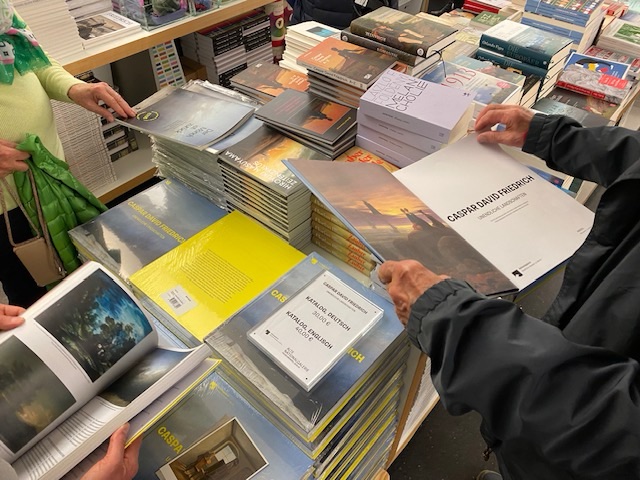
The “Alte Nationalgalerie” celebrates the 250th birthday of Caspar David Friedrich in Berlin. With a considerable effort to unite in one exhibition many paintings and drawings that stem from other collections of public and private origins. This particularly remarkable as a section of the exhibition is devoted to paintings that were intended originally to be seen next to each other (compare catalogue p. 233). Comparing 2 images from the same painter evolve into a narrative. This raises curiosity as in some instances the 2 paintings do not treat the same subject. Your very own interpretations and associations will make for an individual journey through the sheer endless spaces. The exhibition allows to grasp some of the many questions posed by the period of enlightenment not only in Germany. After “God is dead” what will happen? How is mankind defined? What is its relationship to nature? Are we just left alone or what comes after individualism? Even for painters, much like scientists, it is just as important to pose the right questions. Leaving the exhibition with more questions than answers will put you in the “Berlin state of mind” of 200 years ago. Greiswald, Dresden, Rügen and Copenhagen as well as nearby mountains were influential locations and landscapes for Caspar David Friedrich. Berlin 1906 „Jahrhundert Ausstellung“ made him famous again, despite decades of being forgotten. Yet another question to ponder and wonder about. An additional merit of the exhibition is the section on painting techniques and the use of his sketches and drawings for the preparation of the oil paintings. The final riddle to be solved is the price differential between the German and English version of the catalog in the bookshop next to the usual merchandising props.

Photos Exhibit

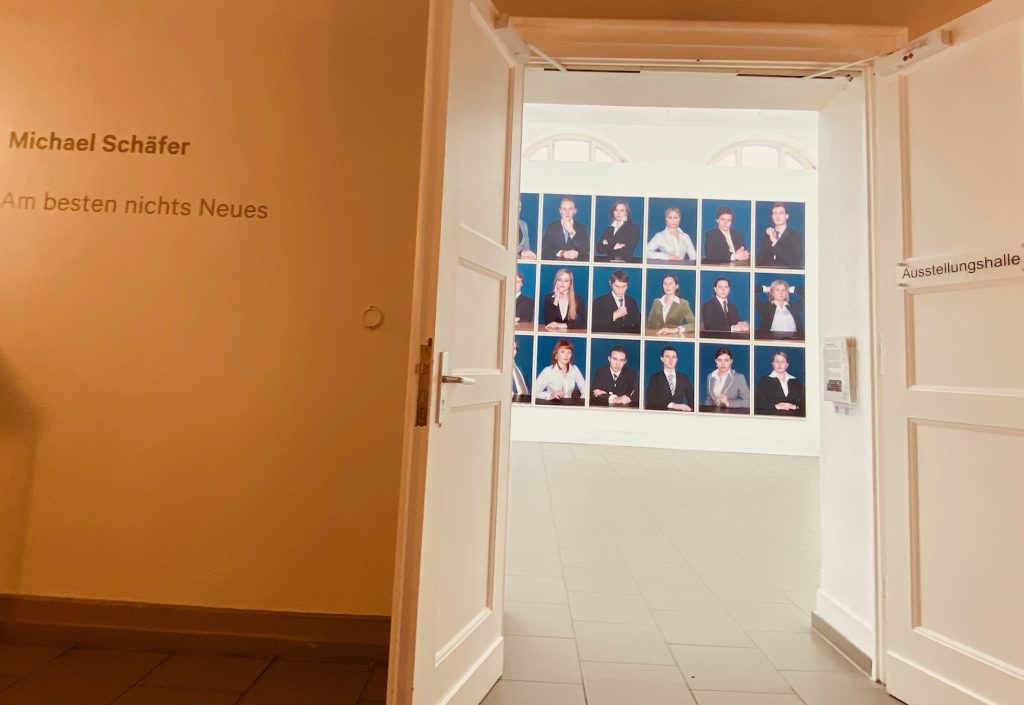
Our usual expectation of an exhibition of photography is to look at photos at a wall. Sometimes there is more it. The Exhibition Space at the “Haus am Kleistpark” features Michael Schäfer who attempts to go a bit beyond these traditional forms. In the works of photo cubes on water surfaces “2021_57”, or a dice floating on the waves of oceans, the video representation of his photographs takes the assembled images beyond their flat 2D surface. However, the 2D representation is at the origin, then transformed into a 3D dice, which then is animated as a 4D format. Moving beyond the flat screen image takes photography into the 21st century.
His work “Les acteurs 1-26” from 2007 is shown at the entry hall of the exhibition. It shows pupils of a class at an elite school who deem themselves in leadership roles in the near future. Is it acting? Is it projection into a future role they are likely to take on. They represent stereotypes, of course, but some are pretty convincing in these roles already. Some others still seem to reflect on what they are doing there. Even acting these roles, they are aware of the meaning of social rank and class in society. Without having read the sociologist Bourdieu, all are aware of the fine, little elements of distinction as they have evolved over time. We could teach an interesting sociology class in this exhibition.

Family Kafka

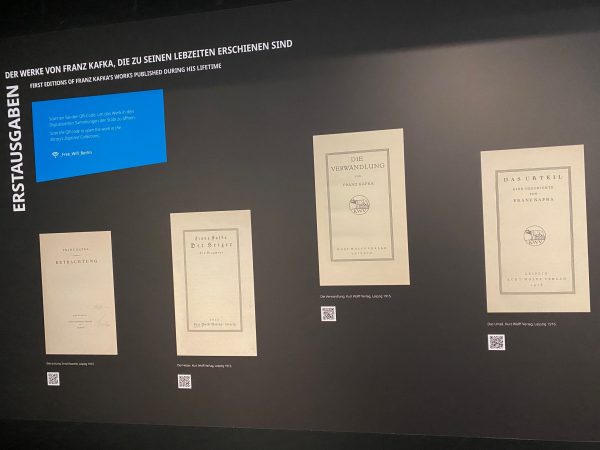
100 years after Franz Kafka’s death nearly all facets of his life and writings have been analyzed. The archives of the editor Wagenbach and the publishing house have now opened an exhibition at the “Stabi Ost” in Berlin adding a family picture book description of Kafka’s life (Curator Hans-Gerd Koch). This is of interest because Kafka himself had written an extensive letter to his father (Brief an den Vater) in which he tries to understand his intricate relationship with his father and other family members.
Nowadays, some people would try to analyze Kafka’s life through the parapsychological technique of family constellations. The far-reaching and pan-European family networks of the Kafka (father) and Löwy (mother) families were more than just an excellent source of inspiration. 2 younger brothers died in their first year. 3 younger sisters followed more traditional evolutionary patterns within families. The television series on Kafka’s life add to the understanding of his sources of inspiration and “parallel worlds” he created and lived in. The exceptional “fictionalization” of his own life and existence in the spirit of André Breton’s surrealism remains a milestone in the history of literature.
Kafka himself thought he was not really “instagrammable”at the time, but his image has reached and still reaches millions of people (Link to Picture archive). He himself would probably have defended the thesis that the most powerful images are within us. … and they are hard to escape from.
(Image from Exposition in Staatsbibliothek Berlin 2024-4, QR-code links to reading in originals!)

Opera Politics

We know that sports and international politics have ample links. This holds true for Opera performances, either due to the way they are presented or due to the content of the libretto. The opera Jeanne d’Arc (Giovanna  de Arco, Jungfrau von Orléans) by Guiseppe Verdi was composed in 1844 and had its Premiere at La Scala in Milano 1845. The libretto is based on the drama written by the playwriter Friedrich Schiller. Later in the 19th century musical pieces followed that dealt with the court judging Jeanne d’Arc. The opera by Verdi creates a strong female voice and character which outperforms men around her. Obviously, she was and remains for many a quasi-mythological heroine. In short, this constitutes great plots for drama and operas. This is centuries old despite the rare occasions of more recent performances of Jeanne d’Arc in form of Verdi’s opera or other forms.
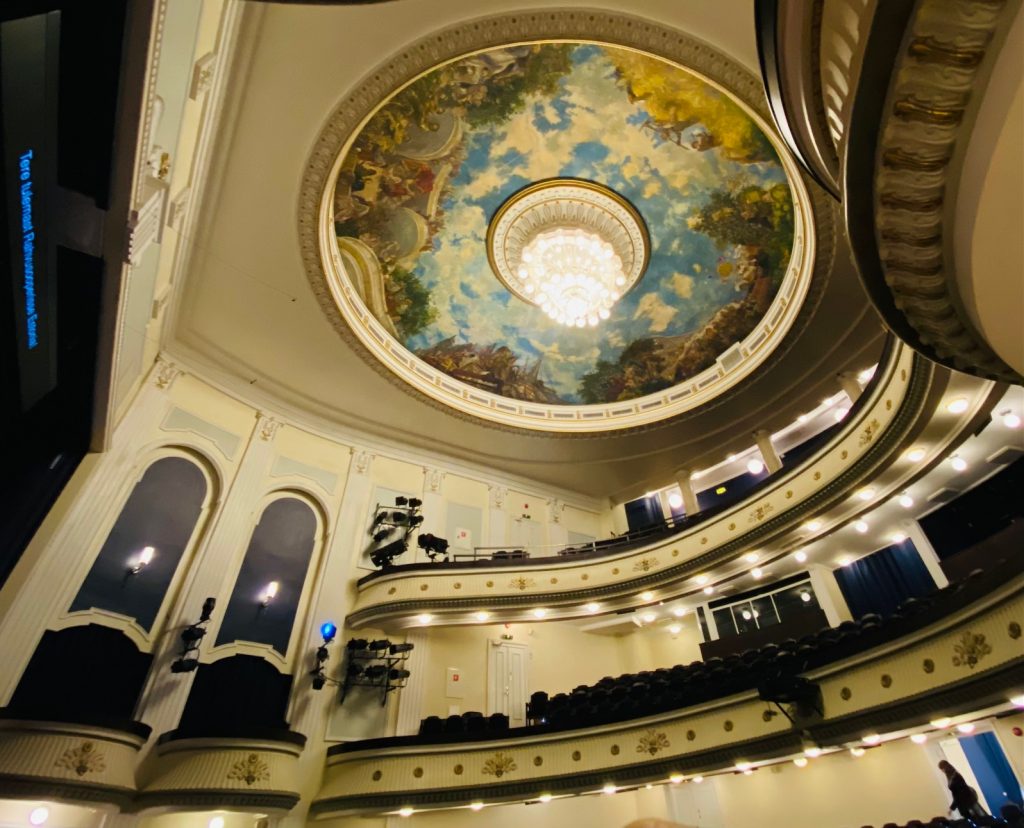
The Opera as arena of politics is currently tested in the Opera at Tallinn Estonia. Due to the aggression and occupation of Ukranian territory by Russia the plot of Jeanne d’Arc regained another European location of potential application. Ukraine pushed back the Russian invasion and struggles to win back its territory from the invaders. The performance of the Opera recreates an impressive Jeanne d’Arc in the person of Elena Brazhnyk who was trained at the National Tchaikovsky Music Academy of Ukraine. The evening inspired hope in many respects. Talents from Ukraine or trained in Ukraine reach out into to the world. Similarly, we have much reason to be inspired by courageous acts. Operas do politics. “Bravi”, as they say in Italian.
(Image: Opera Tallinn-Estonia2024-4-18)

Puppets Museum

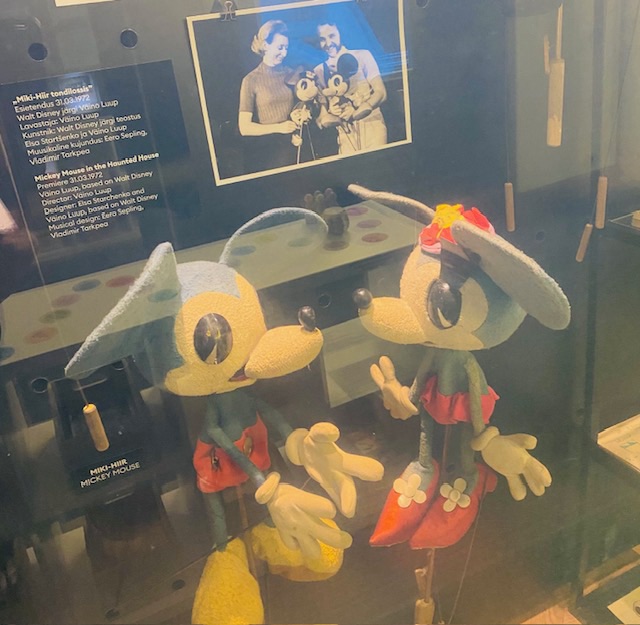
The puppet theatre is still a tiny part of the theatre world. The century old tradition has roots in all cultures across the globe. The Puppet Theatre Museum in Tallinn has a fine selection of puppets to perform theatre pieces from India, China, Indonesia and Europe. Storytelling is part of humanity and learning through narratives distinguishes us from other species. Religious traditions have appropriated these techniques just as modern performing arts. From the carnival tradition of using masks not only children adore playing with characters. The famous founder of the Estonian Puppet Theatre has his small monument outside the historic building in the old town, but a big puppet theatre with 400 seats. The adventures of Jules Verne have been played there just as most well known operas or children’s tales. Puppets comment on puppets (Mickey Mouse) just as they take on political debates. The forthcoming piece on the Ministry of Solutions sounds promising indeed. We envy the puppets that have a Ministry of Solutions rather than lots of ministries and ministers but no solutions.

Schachliteratur

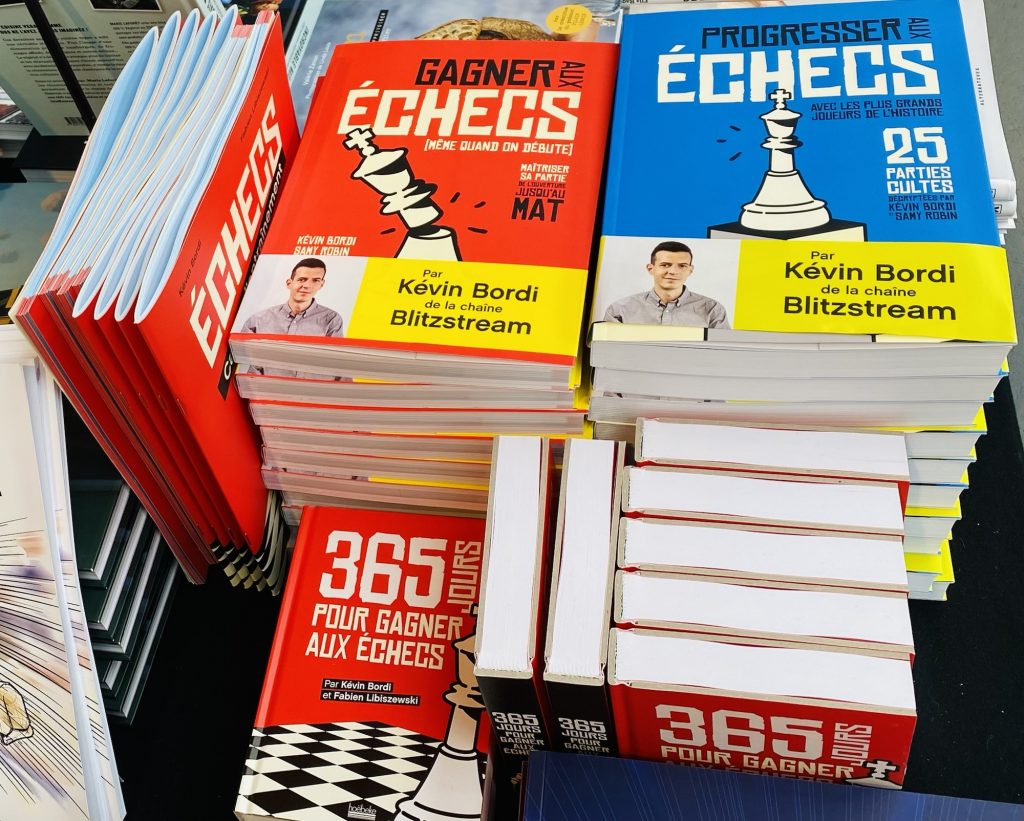
Es gibt sie noch, die Personen, die Schachbücher lesen und kaufen. In vielen Sprachen existiert die Niche der heimlichen Strategen. „Teaching old dogs new tricks“ oder ist es eher „teaching young dogs old tricks“. Das ist eine empirische Frage. Nicht nur Zeitungen für sogenannte BildungsbürgerInnen haben noch kleine Spalten zumeist mit Schachproblemen. Manchmal findet sich Schachspielen sogar als Schulfach. Lesestoff zum Schachspiel findet sich reichlich. Schach in der Literatur ist jedoch verschieden von der Schachliteratur, die sich mit Strategien und Tempi befasst.

Das Lesen von Schachliteratur mit Meisterpartien hervorragender Spielenden ist vergleichbar dem Lesen einer Partitur einer Symphonie oder Oper. Das Kino spielt sich dabei überwiegend im Kopf ab. Gelegentliche unvermittelte Gesten oder Ah-laute sollten den Spielenden ihrer Verzückung wegen entschuldigt werden. Vielleicht sollten die Schulen diese Kulturtechniken mehr vermitteln. Macron‘s Vorschlag Theaterspielen mehr in den Schulen zu vermitteln erscheint in diesem Vergleich als ein Entgegenkommen an die „Generation der sich ständig selbst inszenierenden“. Mehr Spielen ist aber schon mal ein wegweisender Vorschlag.

Schachbücher 2024

Theory Literature

There still is a lively debate at the margins of literature and the commerce around it about theories of literature. Even if the best of years of theories about literature have passed, in 2024 we see several revivals of theoretical perspectives on literature. Travelling in Europe we celebrate, for example, the 100 years of Belgian and international surrealism in Brussels. The French artist and theorist André Breton was preparing in his thoughts the art and literature of surrealist inspiration. Of course, we think of Magritte as one of the eminent figures of the painted surrealism. Franz Kafka, who died relatively young in 1924, was the author in the spirit of the surrealist movement. The powerful impact of literary theory and theory of art to form communities of practice have had lasting effects, which fascinates large audiences in 2024. Exhibitions across Europe reflect the importance of these art movements to understand European culture, inspirations and aspirations.
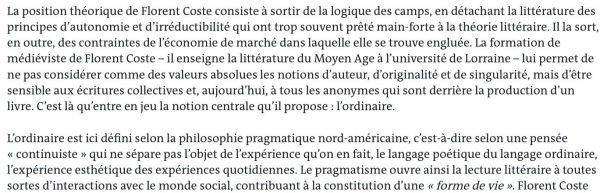
Not least through this revival of the surrealist artists in the broadest sense we are returning to a more theory-driven view of literature a bit like 100 years ago. I find it remarkable to read in “Le Monde Livre” of 2024-4-12 the article on “Défense de la théorie” by Tiphaine Smoyault (p.8 see quote below) with a comment on the book by Florent Coste on the usefulness of a theory of literature to understand the world around us. Reworking of language is the contemporary concern of literature: pluri-linguistic experiences, re-discovering oral performances, irony in language and digging into archives are the major strands of contemporary literature. Theory of literature reflects on the past and allows to synthesize the present. For some it also enables to project into the near future of what is going to be published. In any case the theory of literature provides orientation in a huge ocean of published oeuvres. Writing or painting with ideas ahead of your time has been a painful experience for most of these artists. Some artists or authors are lucky to become famous during their lifetime, but lots have struggled for years or never learned that their contributions advanced humanity for more than a hundred years.

Ne pas rire

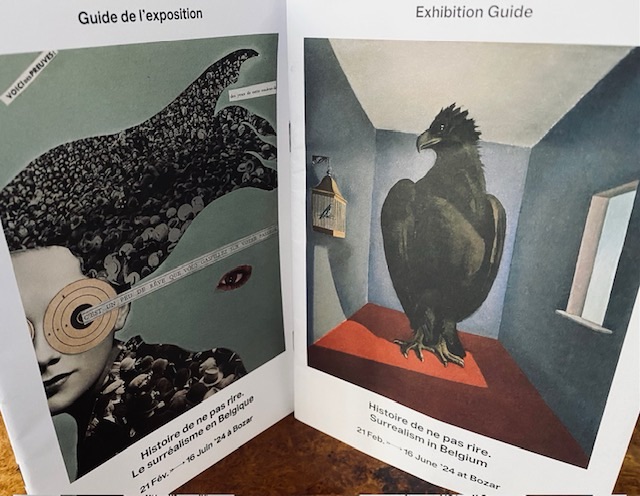
The exhibition of surrealism in Belgium at Bozar has the inviting title “Histoire de ne pas rire”. Even the booklet of the exhibition guide does not translate this into English assuming everybody has at least that much of interest in French and the willingness to learn about these 5 words that are a reference to the understanding of the surrealist art movement. You are explicitly invited to allow yourself to laugh when looking at the images. Reflection comes second. Caught by surprise and making new connections of seemingly unrelated images and words, that’s the essence of it. The comparison of the 2 versions of the exhibition guide teaches language and translations beyond the simple words. Sometimes it is best to not translate the text as in the title of the exhibition guide.

Heroines

In youth we are open for a wide range of influences. Heroines in children’s literature, picture book or cartoons look back on a long history as successful influencers. Creation, transmission and criticism of stereotypes are all part of the scientific reflection on heroines and heros. Nowadays, influencers have taken over picture books through the use of more compelling videos.
In the 1950s,1960s and 1970s picture books or cartoons dominated the influences before mass media like television became more absorbing, addictive and powerful influencers. Children’s books are passed on from one generation to next generation. The French-speaking world (and beyond BBC reference) has witnessed the success of the illustrated booklets of the young “Caroline” (Hachette) and “Martine” (Casterman) exploring the world. Parents passed on their collection to children and had their own parents read the stories to their grand children.
Well, that’s how intergenerational transmission of cultural heritage has worked for a long time. It describes the basic social mechanism. Nevertheless, new forms of influencing emerged with new technologies. Successful illustrated narratives like “Caroline” and “Martine“ were adapted as television series as well. In France you could chose your side of either explorations with Caroline and her group of animals or the adventures of Martine.
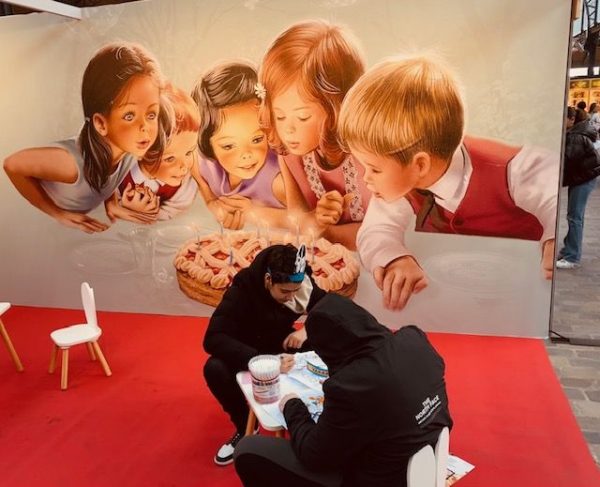
Ideally it would be an occasion for the families and friends to discuss pros and cons of each character and, thereby, become aware of what is a stereotype, at least at a later stage of the life course. Gender stereotypes have evolved and to observe 2 boys colouring Martine images in public (Brussels book fair 2024, image below) was a positive surprise. It almost felt like a real world experience of the AI-enabled Barbie explorations.

Surrealist 100

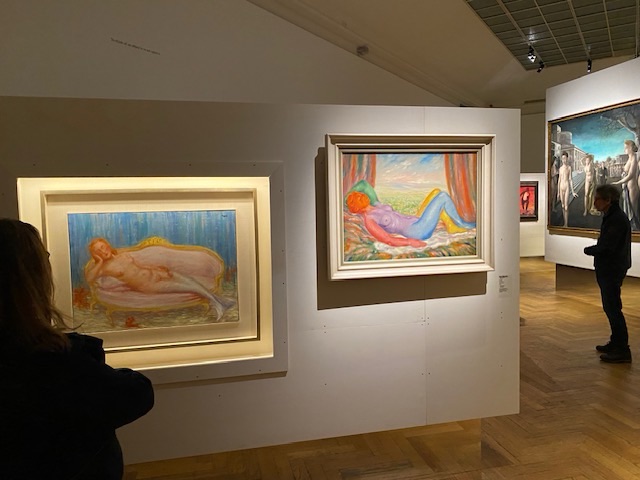
Belgium celebrates 100 years of surrealism with a special exhibition in Brussels at Bozar in 2024. The arts movement has much more to offer than just paintings from Magritte. Many other painters and intellectuals that were instrumental to create and perpetuate the movement are represented there. The French philosopher Breton as spiritus rector of the movement contributed innovative ideas and challenged the artists to do further and further on their journey to explore freedom of expression and freedom of association. The exhibition is centered around the surrealist idea to explore the association of words and images. This time the words are on the walls of the rooms and the images put up in the rooms as kind of obstacles on your journey. Keep challenging, keep questioning the sense of things and our imagination. The journey goes on and there are many artists who are still influenced by surrealism, for example Folon. The texts and images take you along on the journey into the surrealists’ world. If you want to challenge your own way to see things and the associative world, this is the place or catalog to refer to.

Bozar, 2024 100 years of surrealism

Cinema D

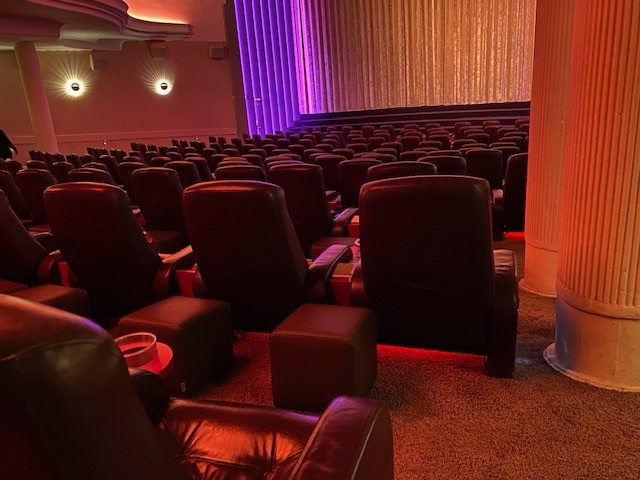
In terms of statistics cinemas are almost back to the pre Covid levels of spectators. The sector is worth in Germany close to 1 billion € in 2023. The price level has risen as well but many cinemas have upgraded their cinema experience as well in terms of comfort, audio and visual quality. Traditional houses provide chairs that compare well with home comfort and for a little more you can put up your feet as well after a long workday. Drinks and food may be served directly at your seats so the time to relax is guaranteed. However, this depends a lot on what type of movie you have chosen. The movie industry has adapted to modern technology and comfort. The turnover of a movie theatre is supported a lot by the consumption of beverages on site and they make huge efforts to prolong the visit beyond the screening of the movie. The competition for the time and money of the consumer is intense. The quality of the whole experience will determine the survival of the cinema. It is worth much more than a second best solution for rainy days or the cold season.

L’Albatros

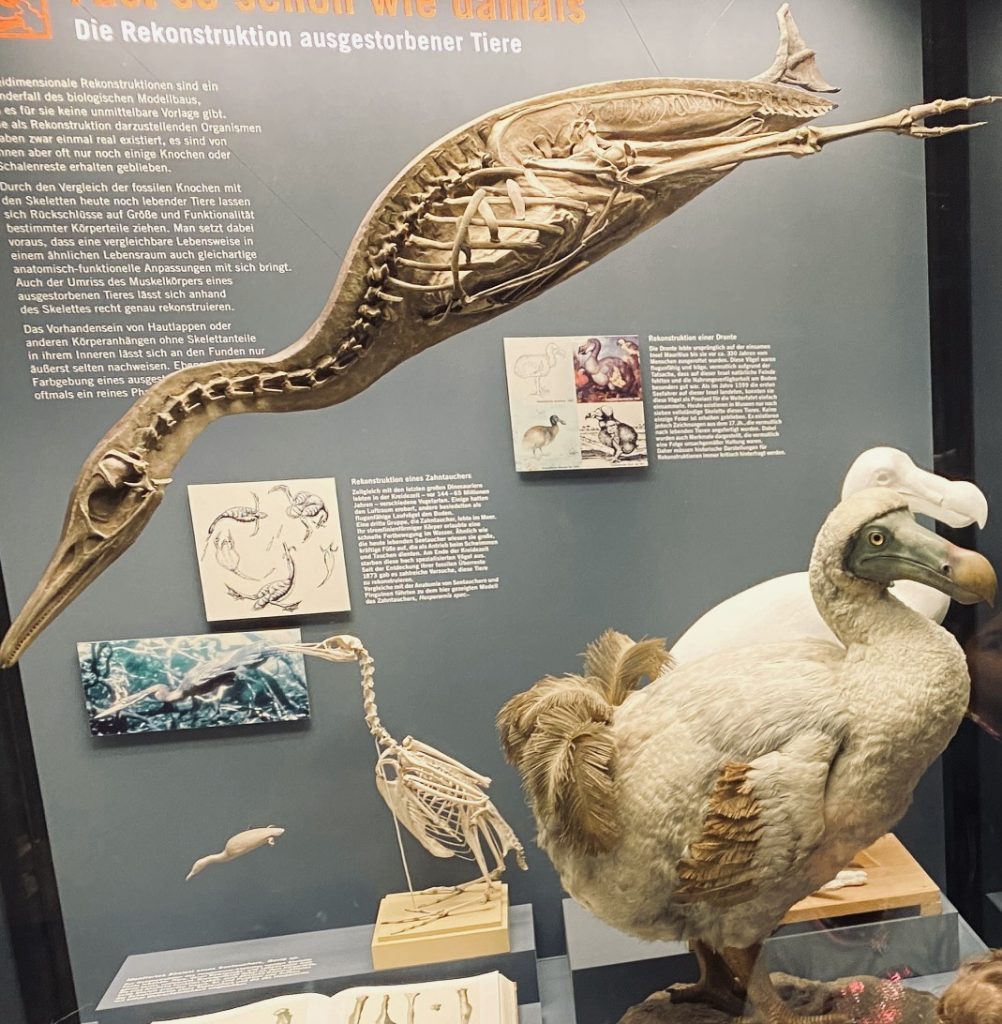
Charles Baudelaire has immortalized the albatross in his poem entitled “L’Albatros”. For me it appears like a poem about the beauty of the sea and sea life. The marvelous creatures that populate the sea and its surroundings sometimes seem strange to us. The albatross with its large wings unable to move properly on earth is one of these special animals. They are threatened by human beings in their very survival up to extinction even. A dedicated website to “Les fleurs du mal” with multiple English translations of the same poem may give us the impression that all those who translated the poem wanted to feel this little moment of sublimation like a poet just forgetting for a little while the weight of our earthly existence. The gospel tells us a similar story of life up in the air. It must be so much better to be free and not to be bound to restrictions of gravity. As gods would prefer to stay away from earth just somewhere up in space. The albatross and the sea keep teaching us lessons beyond their physical appearance. (Image bird “dodo” now extinct, model in Berlin Natural History Museum 2024)

Das Meer

Wir haben vielfältige Beziehungen zum Meer. Diese reichen von romantisch geprägten Gefühlen zum Meer, den Wellen und den Fischen bis zur wissenschaftlichen Befassung mit den Meeren, Mangroven und dem Klimawandel. 71% der Erdoberfläche besteht aus Meeren. Das sollte den Festlandbewohnenden eigentlich klar machen, wie wichtig Meere für unseren Planeten sind. „Ocean Literacy“ nennt die UNESCO das. Neben Lesen, Schreiben und Rechnen sollte die Literalität auf unsere Ozeane ausgedehnt werden bevor es zu spät ist. Verschmutzung der Meere passiert hauptsächlich im Verborgenen. Lediglich Beobachtung aus dem Weltraum kann die weitläufigen Routen der Verschmutzenden zumindest teilweise nachverfolgen. Vielleicht hilft die Rückkehr zu der romantischen Sicht auf die Meere eines „William Turner“ zu einer höheren Wertschätzung der Meere, dem Licht und den Wellen.
Die kleine Sammlung von Gedichten „Das Meer“, erschienen im Reclam Verlag, ist eine gute Reisebegleitung für Begeisterte des Meeres. Darin findet sich eine Vielzahl von renommierten Schreibenden, die ihre Faszination des Meeres zum Ausdruck bringen. Mein momentaner Favorit ist Wolfgang Borchert darin (S.41-42) „Muscheln, Muscheln“.
Muscheln, Muscheln, blank und bunt,
findet man als Kind.
…
Muscheln, Muscheln, bunt und blank,
fand man einst als Kind!

Sleeping BPS-SPB

Sleeping is a good example of the co-determination of the biological, psychological and societal spheres of life. The environment with the daily cycles of light and dark as well as the social norms of work and rest determine the circadian cycles of hormones. Shift work or otherwise disrupted sleep patterns depend on social norms like regulation of noise or light in cities. Healthy sleep patterns, therefore, depend to a large amount on regulation and implementation of those social norms. Birthday parties are tolerated, but much less the irregular partying in shared housing with lots of neighbours. Reducing social contacts during Covid-19 led to the changes in sleep patterns as well.
The psychological determinants of sleep go well beyond the world of dreams as theorized by Freud. Nowadays, we investigate all sorts of behavioural patterns that have an impact on sleeping like “bedtime technology use” of smartphones or the ability to switch off thinking of problems. Sleeping is a particular functional state of our mind. A lot of sorting of daily impressions into memory occurs during the different phases while sleeping. Persistent disrupted or impeded sleep is recognized as torture in severe cases. Stress at work or working overtime is also a major cause of sleep disorders.
The biological indicators used to investigate sleep have revealed a lot of links of sleep and the hormones of melatonin as well as cortisol. Testing has become more accessible and provides good indicators of how the biological clocks tick within our bodies.
However, we are only at the beginning of the analysis of more complex interactions of the multiple forms of interaction of the bio->psycho->social (BPS) as well as the social->psycho->bio (SPB) co-determination of sleeping. Scientific research is faced with a steep challenge as the direction of causality is not uniform except in very controlled experimental settings. Maybe the arts have coined and popularized a useful term in this respect. “I am in a New York state of mind”.
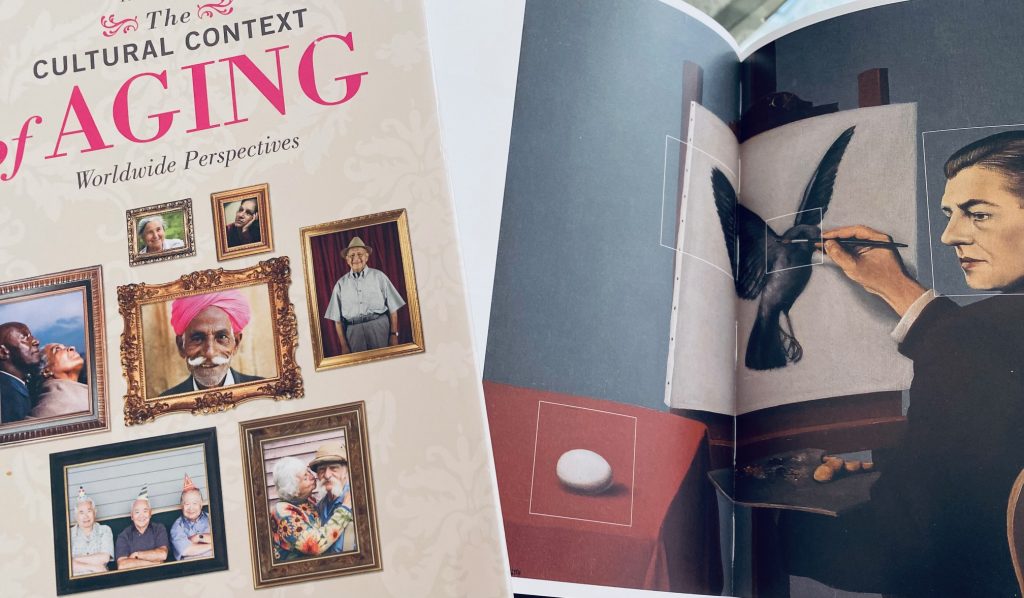
(Image: extrait of Magritte. La clairvoyance, 1936 and The cultural context of aging, Jay Sokolovsky)