Fuel fertilizer food

The state of world affairs can be summarized in relation to these 3 factors. Fuel, fertilizer and food are the subjects of the hotly debated or even contested resources. From a United Nations perspective the progress in human and economic development hinges on these 3 key issues. The logical order of the Fuel, fertilizer food triad starts with the costs of fuels or energy more generally and leads to the production and distribution of fertilizer across energythe world. This chain of supply determines the quantity of food available to feed the world. Russia‘s war on Ukraine territory has made this logical sequence obvious again. Millions of people were suffering due to the fuel, fertilizer and food shortages due to excessive price hikes. If we add speculatove rent seeking to this we have a scenario where the global South is suffering due to political contests and wars in the North including the Middle East. The current governance structure of the United Nations is largely unable to address this triad adequately. Fair processes of decision-making, control and implementation are crucial in this respect to ensure that all regions independent of economic spending power at sufficiently represented at the international negotiations about fundamental resources. Minimum levels of provision are necessary, even if not sufficient, conditions for our humanitarian responsibilities.  

Inclusive design

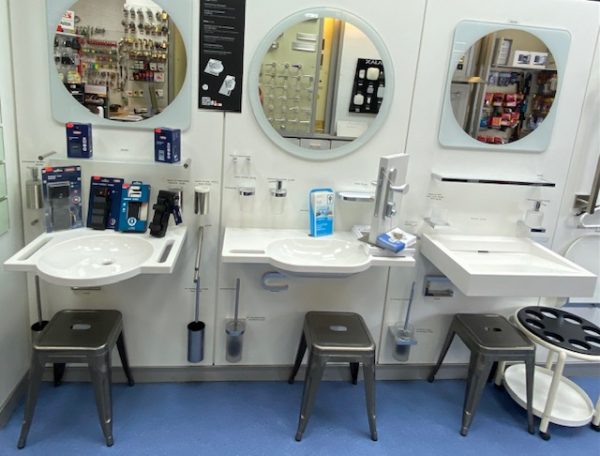
In aging societies inclusive design is not an option but a must have. This is neither a short term fix nor a renovation without costs. Adapting a home to a wheelchair use is an expert job as you have to think about issues you have not experienced yourself before in most cases. Door thresholds and openings, better have sliding doors as much as possible, have to be considered early. Bathroom adaptation in size and height, toilet space and lighting switches all should be planned ahead. There exists a DIN Norm 18040 which specifies measures precisely. In the age of AI-vibe coding some home appliances could be programmed to follow a person’s voice commands as well. For the time being in 2026-7 this is a nice to have option. but early installations of “intelligent digital devices” beyond a washing machine or microwave can get you quite far in the near future. Inclusive design could open doors and switch on lights simply by talking to your smartphone.

Sedentary society

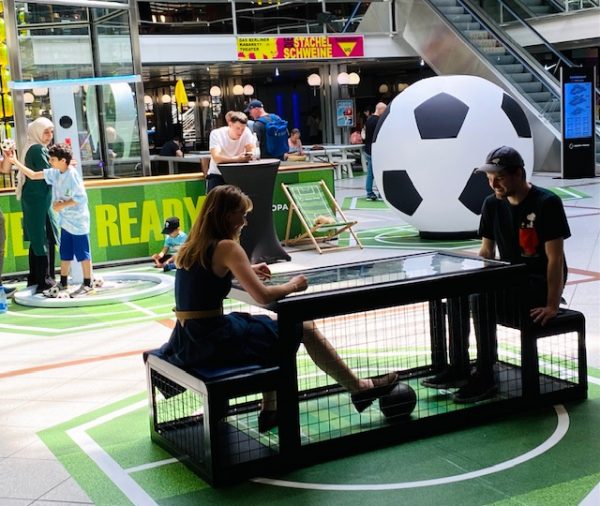
The football or soccer world cup, like other sports, used to be an event which mobilized people to become active as well. Many people, particularly the young, joined football teams and clubs or practiced in backyards. The sedentary society has managed to transform this in the 2020s into a seated activity (football soccer seated 2026). In order to capture attention and time spent in a shopping center, itself a good predictor of money spent, the FIFA world cup serves as a means to promote football at any costs. Sit and kick, that is the new lifestyle. You even have your hands free to do something else. Eat and drink, probably. Great, that the football-mania is over in 2026 for a while. Time to get real exercise.

Water pleasures

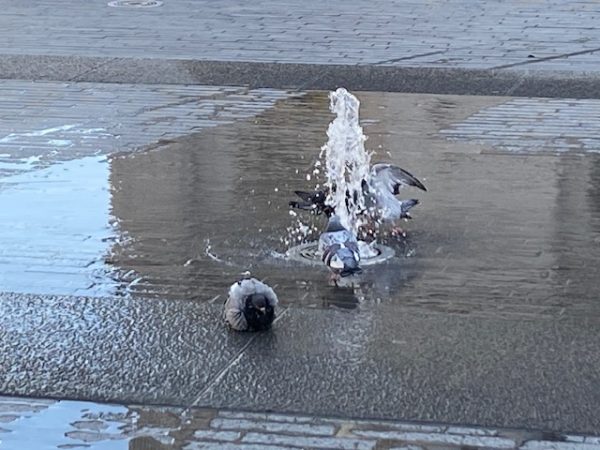
Maybe some of us associate water pleasures with the splendid fountains in the castle of Versailles (France). Our daily concerns, however, are much more about making cities more resilient and able to cope with water scarcity. According to a study by Krueger et al. (2025) the user perspective and behavioral challenges that go along with saving water by end users has been neglected for years. Water management in cities is part of the infrastructure package that has to be managed efficiently. Aging water distribution infrastructure is just as much a problem on the supply side of water as consumption has its (increasing) price on the users side. Rainwater capture, re-use and recycling are promising alternatives to simply providing more water. Pollution is, of course, another hazard that needs our attention. In the meantime we may think of water pleasures for all including the animal world.

Brussels relaxes

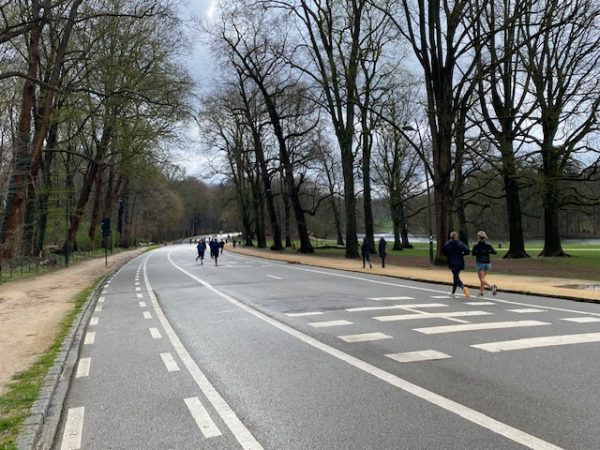
Especially during the weekends and the summer activities some roads can be blocked for other uses. The obese societies of the 21 century need to make room for more exercise wherever possible. Brussels has done so for more than 5 years already. The “Bois de la Cambre” offers an amazing space to all those seeking respite from the busy and warm urban surroundings (Image below). Children and families exercise all sorts of activities and sports. The closed roads are perfect for cycling and jogging as well as the learning of both. Levels of air pollution drop and the running sport is no health hazard as in inner cities. Each and everybody advances at her/his own rhythm (Video Weekend jogging in Bois de la Cambre on Road 2026) or just watches others passing by. Ways to relax in cities are manifold, in a matter of choice and commitment. Commit to relax and detox, at least on weekends. This can be quite a behavioral change with serious health benefits.

Water in Parks

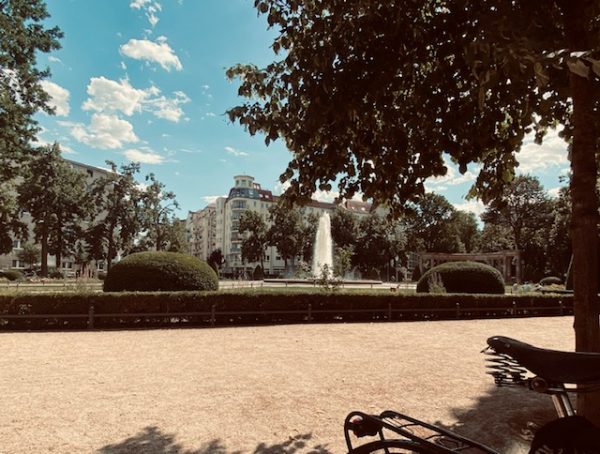
In 2026-7 and a 3rd hear wave approaching, the real luxury consists in water in inner cities. As a source of refreshment and cooling when temperatures rise, water provides a natural source to cool down nearby people, buildings as well as any trees. The wisdom of a hundred years ago appears again as a major solution as global warming progresses. Evaporation of water is cooling. Some simple facts deserve to be repeated over and over again as urban planning seems to have forgotten such simple physics. We have think about a lot of green and blue spots again in our cities to achieve the much needed cooling effects. (Image: Viktoria-Luise Platz, Berlin 2026-7)

All the lonely people

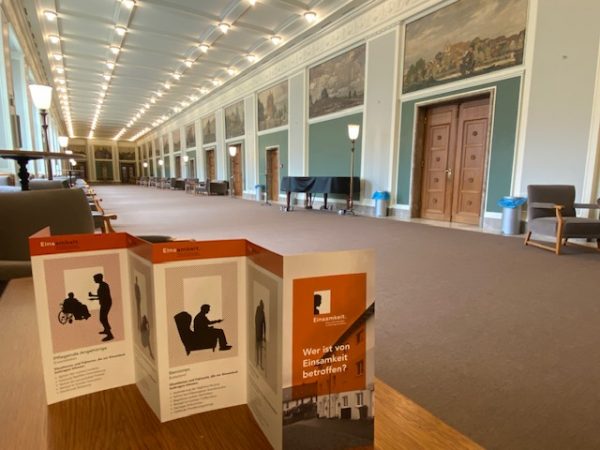
This line of a song by “The Beatles” dates back to 1966. “Ah, look at all the lonely people” is a kind of puzzled outcry to reckon with the loneliness even in busy and charitable places. 60 years later in 2026 we have whole ministries in some countries to deal with loneliness. It is not a niche problem. Tackling the problem needs to go beyond raising awareness. Loneliness occurs at all stages of the life course: children, adolescents, young adult, migrants, employees, single parents, care giving people, even within couples, seniors and very old persons. It is not restricted to urban or rural areas, but changes from one to another phase in a person’s life course carry the risk to encounter loneliness. It may well be only a temporary phase before new relationships can be established or previous contacts revived. There is a role to reach out to people who might be lonely for all of us. Public policies should be scrutinised on all levels whether they manage to break barriers or raise new ones for persons to feel lonely. In Berlin, the local level in each district is taking measures to facilitate informal meeting points open to all ages and walks of life. The “Wüstenrot foundation” sponsors many initiatives where public policies are short of funds. Projects enhance networks of people and organisations eager to assist “all these lonely people”, wherever they all come from.  (Image: Conference on loneliness at Berlin city hall Schöneberg 2026)

Cool shelters

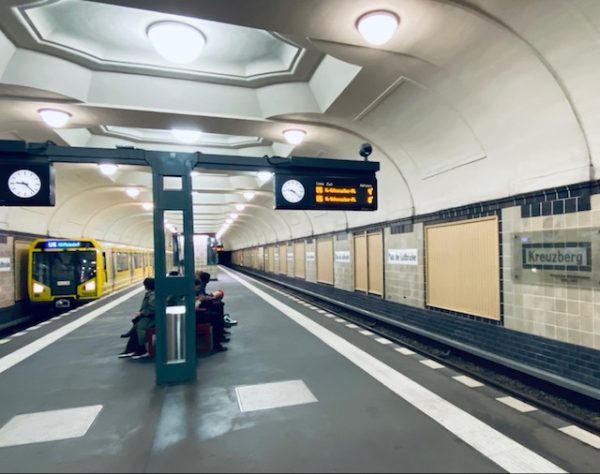
In many big cities the metro lines and particularly some of the stations can provide cool shelters during hot days. Reducing the speed of traffic reduces the airflow and heat of acceleration and braking. More home office work if employees have adequate cooling at home reduces emissions additionally. The historic Kreuzberg-Metro-Station, nowadays called “Platz der Luftbrücke” is big enough to accommodate many people who are in need of shelter for whatever purpose. Underground you do not even hear much from the busy traffic above. More efforts to brighten up the station could create an urban space which invites to rest in hot days rather than rush around the city. Climate change will ask us to come up with many innovative and unorthodox solutions as part of public health initiatives.

The next big challenge in medicine and public health seems to be the multiple long-term conditions. Many people do not suffer from just one medical condition, but several ones at the same time. Diabetes is one such condition which frequently comes along in combination with other conditions. The definition of Multiple long-term conditions comprises 2 and more conditions like cardiovascular, metabolic, respiratory or cancer, to name just a few of the more common ones. Our health and care systems are little prepared for adequate treatments as this involves a coordinated intervention and poly-pharmaceutical therapy. Changes in a single condition have repercussions in the condition and treatment. This makes adequate treatment a resourceful process with limited knowledge about the multiple interactions and intervening parameters. Add, for example, depression to any of the above mentioned conditions and the behavioral assumptions of correctly taking prescribed medication becomes a major issue for patients. The challenge for aging societies and societies with more people suffering from early onset of obesity and diabetes increases in the coming decades. There are several teams that address these challenges in research which gives hope to all those suffering already from Multiple long-term conditions.

Gone Gliding

The seaside resorts offer additional experiences to people beyond swimming. Gliding on the water or in waves is an affordable exercise for everyone. It  just needs a small board and off you go. Falls are a usual part of the exercise. Beware of them if you have any prior conditions. For the 50+ generations some regular prior falling exercises are a must. Youth has the advantage of sufficient power per kg of body weight to afford repeated falls. Water and sand soften the falls. The gliding experience, however, is a great compensation for the risks taken. Not for everyone, but early experiences in or beyond schools give pupils a head start on how to balance out yourself in specific situations. Spectators and the experience to be under observation might influence your performance for the better or worse. Balance is a rather complex experience combining body and mind coordination for all ages.