
Robot assistant

Adjustment processes on the labour market take their time. This means that care workers are in short supply in most countries of the OECD. Engineers as well. There are so many robots, care robots I mean, still to develop that the shortage of engineers give little hope that we shall have affordable solutions in this area for the next few years. The issue is mainly about integrating and enhancing already existing solutions. If you are a mechanical engineer you can put together motorised mechanical pieces, small motorised electric devices and, for example, small infrared emitting and receiving devises.
All this is child’s play these days (see image below). The assembling of a small Robot assistant that follows movements or can escape from a small labyrinth makes such simple structures transparent for learners and users. There is nothing magical about it, just adding together small pieces and the electronic devices to steer the movements. The learning tool from KOSMOS has been on the market for 5 years. It is a helpful device to explain basics through hands-on experience. The limits of robotics equally become more evident. Our own health and safety is concerned with larger devices cohabiting with us. A robot assistant can take on easy tasks like to follow me through my living space in old age carrying a mobile phone, keys or an emergency device. More sophisticated tasks need more sensors and AI to train the most needed and best routines. For many years this needs our input and our control as well as supervision of such devices. Most robots will operate as assistants with us in the driving seat or the boss.
This is yet another element of the “all electric society“. We are moving towards the use of more electronics assisting us from year to year.

Archi health

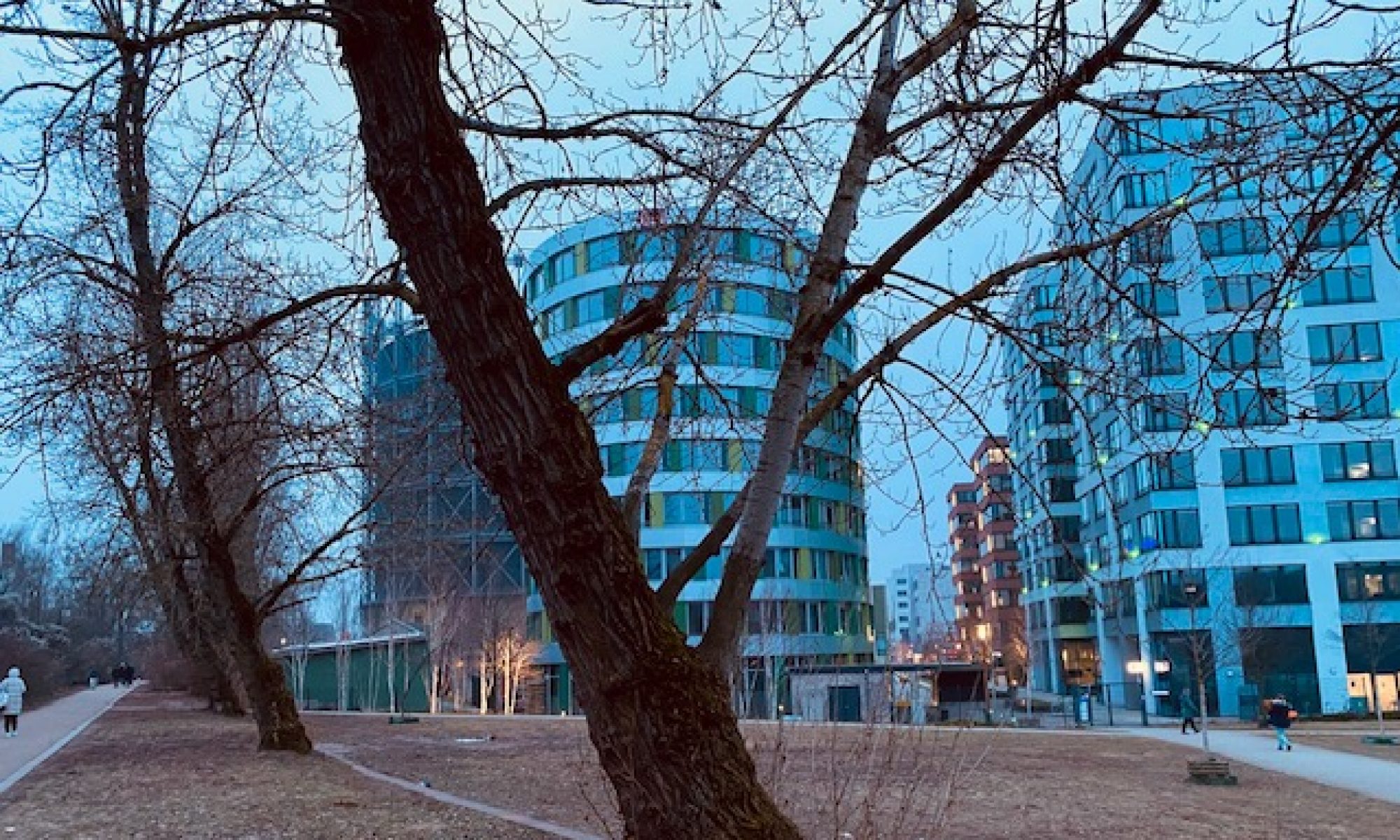
The links between architecture and human health are manifold. There are direct effects of healthy versus unhealthy materials in construction. For the purpose of making buildings fire proof or more resistant to heat asbestos had been used for decades which still causes health hazards nowadays in the removal of this cancerous material. Paint has to be chosen wisely as well as isolation materials. Indirect or second round effects of materials have to be considered additionally. Cement in construction uses a lot of energy in its production and has only been recycled since a few years in significant amounts. Room climate or even psychological effects of architecture have been considered to be important more seriously in recent years. A new discipline entitled “neuro-architecture” may be developed soon. Schools, sports facilities, hospitals or community centers benefit from healthy architecture. Cost benefit analyses which take into account long term effects and even recycling of materials shift the balance much in favor of health considerations also in architecture. “Fast and dirty” will be much more expensive than “slow and healthy”. Future generations will be thankful. (Image: Spreewald Primary school Berlin).

Health Systems

Comparing health systems across the EU can be complex at times. However, there seems to be a consensus that the Irish health system is an oddity within the European health systems. On the one hand Ireland is a rather wealthy country in terms of GDP, but the primary care system excludes a high percentage of people from access to it. The scientific journal “The Lancet Regional Health” published a paper and comment on this rather unique exception to the rule to offer a universal health care system to its citizens. The controversy is about the coverage of costs of a visit to a general practitioner. More and probably earlier visits to a GP reduce the (over)burdening of
hospitals later during the life course. Prevention helps a great deal to lower overall costs of a health system.
The roots of the Irish health system have been built upon “subsidiarity”, which means that the public support system should only step in, if the individuals or families are unable to cover costs by themselves. Poor households had to apply for a card giving them access to medical care free of charge. Building hospitals was the next challenge and local communities managed to raise funds in support of such additional structures. In 2025 it can be very costly to enlarge the coverage to a universal access to primary care and the challenge to attract sufficient numbers of general practitioners is a very European one. In this respect Ireland is just like any other European country again.
The question of how to best achieve a universal health care system remains an important one. Apparently, you can be rather “health poor” in an otherwise “economically rich” country.

Biased Results

The use of statistics in presenting results of research is common practice. Empirical studies are summarized using statistics and statistical methods based on samples of bigger populations are cost efficient. However, care needs to be exercised when interpreting results to guard against inappropriate conclusions derived from biased estimates. Since the topic has been highlighted and methods proposed to handle them, these methods were deemed worthy of a Nobel prize.  The basic problem of a bias due to a selective sample has been demonstrated by Stockwell et al. (2024). The authors investigate the old question, whether a little bit of alcohol consumption (per day) could be beneficial for our health. The statistical issue which needs careful examination is the construction of the control group against which the results are compared. Apparently many studies have biased control groups which included persons in the not drinking control group who had stopped drinking for bad health previously. Compared to those persons with other health conditions those drinking a little bit compared rather well. But of course such individuals should not be present in a control group. Of the control group is biased due to many persons with below average health the groups of interest consuming higher levels of alcohol do not perform so badly. Hence, interpretation of results from medical or social science studies has to consider carefully the actual or potential sources of bias. Not really a new results in statistics, but still not well known or understood by the public at large. Drug consumption as well as studies of this consumption could deserve the same sticker: handle with care. (Image: Extract from Tenier II David, Les fumeurs, also entitled Chanson à boire, 17th century, Paris Petit Palais).

Tariffs Trade Deficits

US Tariffs target the US trade deficits across the globe. For a start on the topic it is helpful to take a look at the data. The US bureau of census publishes this time series regularly. Currently, you can compare monthly or annual data across countries from 1985 to 2025. The worsening of the trade balance is obvious just looking into some examples like trade with the EU, China, Japan, South Korea or Switzerland. we might calculate some rough indicators of trade deficits of the US with countries by the size of the country, which would make Switzerland look really bad relative to many much more populous countries. This probably explains why Switzerland is threatened by higher tariffs than the EU. However, this hints towards the “hidden” agenda of tariffs on countries. The major targets are multinational companies that produce in countries outside the US and particularly in those with low corporate taxes, like Ireland and Switzerland. Importing products from such countries worsened the US trade balance over decades.

Another factor to study more precisely is the sectoral pattern driving the trade deficits with countries. Exports in for example health-related products have soared due to Covid-19 pandemic starting in 2019. Where did the US buy face masks, ventilators, medicines and pharmaceuticals?  These countries will now also be penalized by higher tariffs. The tariffs topic is a complex interconnected business issue, which is not solved by blunt measures. The real danger is that with each month trust in US will erode further. For decades this has been an underestimated currency of international business. Eroding trust is likely to be the major fallout of the tariff and trade deficit nexus. It takes decades to build, but can be destroyed within a few days or weeks. (Image: Mont des arts Brussels February 2024, celebration of surrealism).


Private Intimacy

Intimacy has been reserved for private affairs for centuries. Although in the medieval ages formally the right of so-called noble men could be very far-reaching into intimacy of families when the permission to marry was quite restrictive. The private intimacy is the central theme of the Paris exhibition at MAD (Link) « Private Lives ». The organization into 14 almost private rooms around a larger center piece on design leads us through the major topics of intimacy. Maybe as a surprise to some, the exhibition starts with the major actors of change related to privacy and intimacy, i. e. women. Opening up enclosures gave women more room for intimacy and at the same time it made intimacy a conscious choice and decision. “A room of one’s own” is an important step in personal development of children particularly with respect to one’s intimate life. Restrooms are another issue of intimacy, just consider recent adaptations tor m/f/d people. A whole set of accessories are on display which previously were intimate products or even secrets prepared for public viewing. Of course odors are part of the experience with a test space of noble perfumes. The various manifestations of sexuality has brought about a growing number of pleasure objects, which might also be criticized as a growing commodification of intimacy as well. The connected bedroom and the risk of surveillance are raised to warn on overexposure on social networks. Intimacy in prisons or community shelters closes the exhibition before the final highlight the room on “conversations with oneself”. A whole literary form of keeping an intimate journal has arisen from the conversations not intended to be shared with others, at least not during one’s lifetime. After a person’s death for some persons of public interest even their private intimate journals will be published shifting the balance between the private and public parts of intimacy. (Image below from exhibition, photo bottom left, Matisse painting on wall while in bed in old age). 

Intimate change

Society changes and with it so does intimacy. The major changes pass through the behavioral changes of persons and sooner or later the whole society adopts such changes as the new normal. Trends of individualization have moved over centuries as the exhibition in the Museum of decorative art (MAD) in Paris demonstrates. At the same time the changed individual approaches to intimacy have become more widely spread quickly over time. Social media have accelerated such new trends again. Social class is yet another intervening variable in this context which created different speeds of adjustment as well as sustaining differences in kind. 

Religious beliefs and practices have made claims about how individuals should handle intimate relationships and affairs. Legal issues are defined by each society to guide moral practices as well. Hence, the sociology of intimacy is a huge topic and comparing societies an interesting topic. The development of intimacy over a person’s life course, however, is given little attention due to a lack of adequate longitudinal data. From the exhibition we are encouraged to think about the relationship of hygiene and intimacy. Bathrooms accompany us throughout our lives and privacy was originally a bourgeois concept. Over the life course we move from dependency to independence and maybe dependency again in very old age. The images (below) from the MAD exhibition range from basics of bath tubs to a painting of Edgar Degas in the background. Instagramer or YouTuber share lots of images and stylized arrangements of bathrooms on social media. It seems that intimacy is moving further into the public domain. 

Guidelines Follow-up

The are many professional organisations which agree after thorough discussions on guidelines how to conduct professional services. As long as we have such guidelines, the adherence to the guidelines is an issue as well. This is part of a research program of organisational sociology, but there is a rather strange paradox in this field of compliance with guidelines. In the most highly educated professions like medical doctors, the rate of compliance to guidelines is below average. A study of 20+ years ago published in the JAMA Journal: Cabana et al. (1999) “Why Don’t Physicians Follow Clinical Practice Guidelines?” highlighted this paradox among medical doctors. The lack of awareness of existing or changed guidelines is one of the major reasons mentioned in this respect. Self-efficacy is also an issue, but mentioned less frequently for not following guidelines.
Besides a professional bias, related to the above average educational attainment of physicians, (believed) superior coping mechanisms compared to the average population might be at work. Mastering advanced technology might lead to a behavior that assumes to be able to handle higher risks as well.
For a profession that is used to confront issues of life and death on a regular basis some adherence to a very specific medical guideline might appear a negligible risk. However, maybe comparable to some cases among politicians or priests a logic: “rules or guidelines are for others to follow” rather than the physicians bear obvious risks to these persons themselves, but even to others in specific circumstances like the spreading of infectious diseases.
Drug or substance abuse has been evidenced before in relationship with specific professions or in historical time periods. We should take care to repeat similar studies (Cabana et al. (1999) every now and again.

Law and Legality

Some persons consider themselves to stand above the law or push all interpretations of regulations beyond usual understanding of it. Even after a person has been dealing with pharmaceuticals or drugs used also for doping purposes, the conviction of such a person may take several years if not decades. In France, Mr Bernard Sainz seems to be a good example of such a relentless case of practicing para-medical consultations to assist mainly cyclists in endeavors to win championships or professional status. Le Monde  and Cash investigation have raised awareness of the public for such dubious practices. The “French Federation du cyclisme” and medical doctors association fight a continued legal battle against this persons exercising illegally such doping assistance. 

With apparently 56 legal procedures in connection with this person, the legal system has to bear the majority of costs of such illegal practices.

The reach of such dubious practices might be extended if the systems beyond doping, but for assisted euthanasia cannot be controlled effectively. Hence, the precursor cases of positive stimuli like doping pose similar challenges to the legal system as “negative stimuli” weakening persons as assistance to die. The end of a life course is not only a medical issue. Society-wide debates need to take place in order to organize a large consensus on the implications more liberal practices shall entail. 

(Image: Palais de Justice, Paris 2025)

La défense Végétale

Greening a metal and concrete block and buildings is a big challenge. The logic of unrealistic growth and big business has left liabilities for future generations. More vegetation in inner cities is part of our responsibility towards future generations. Therefore, urban planning has started in Paris to get rid of concrete walls and floors.

Eventually the district might have a more human touch which attracts citizens and new businesses and services. The adaptation of the infrastructure to facilitate mobility with bicycles and secured pedestrian paths has started but will take a lot of time before people adopt again these more healthy modes of transport. The big boulevards reserved for polluting transport is no longer adequate in combination with residential living spaces.

It will take a change of a whole generation to accomplish such a fundamental change. The reduced demand for office space due to more employees choosing to work from home contributes to such a change as well. Many other cities go ahead with similar changes (Copenhagen, Berlin). In combination with the „All electric society“ there are fundamental changes at work which will make inner cities more attractive again. Ease of clean transportation and other infrastructure for urban lifestyles ensures that cities remain strong points of attraction. They keep pulling people from nearby and far away towards them, if we like it or not.