Multiple clocks

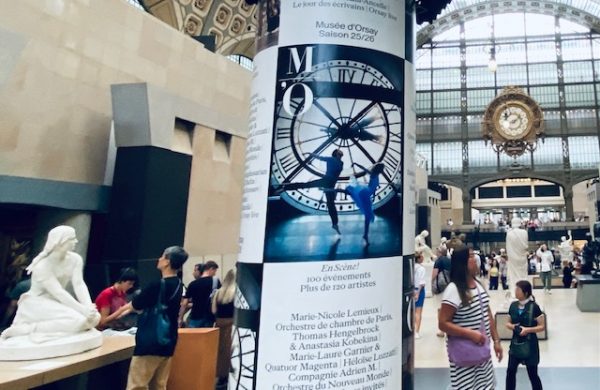
There is nothing more confusing that multiple clocks that are ticking away without being synchronized, which means, they ought to show the same time. A medical and social science perspective on multiple clocks, however, builds on the fact the different social processes run with different speed, i.e. multiple clocks are ticking in parallel but one may be more advanced than the other. The study of longevity has recently acknowledged that each human organ is aging at its own speed and if the time to failure is close for the liver, the time until problems of your heart might still be far off. Overall longevity is determined by the time to failure of a major organ, despite the fact that multiple clocks of organs are running in parallel.
The can be observed for social processes where, for example, the timing of unemployment or retirement might be dependent on a parallel process of a household dissolution causing a peak in stress. Overall life satisfaction, therefore, depends largely on multiple clocks that might be running in a synchronized or not-synchronized manner. Hence, we all live with multiple clocks ticking inside us and around us. The illusion is, to believe that time is just a single, unique measure.


Time as surprise

Sometimes, time comes as surprise. Time seems to run faster as we perceive it, or time might pass more slowly in actual terms than we perceive or think it does. What makes the difference? There is the objective measure of time with various types of clocks and watches versus the subjective or perceived lapse of time. The discrepancy between the two constitutes an interesting case for further study. Marketing strategies will try to make us believe that a specific kind of product will shorten or lengthen the difference between objective and subjective time. The entertainment industry works very hard on our perception of time relative to one or the other form of entertainment. The best result seems to be that objective time has been much longer than perceived time so that we “lost” our reference to time while being entertained. The so-called social media interaction is rather successful in this form of entertainment, infotainment or edutainment. The moments in life when time comes as a surprise might be great ones in our lives. Particular deviations between objective and subjective time make strong impressions on our memories, too. 

Time and Emotions

In psychology, time and emotions are a matter of milli- or even nanoseconds. Showing emotions, intrinsic ones or controlled ones is passing rapidly through our brain and, for example, facial muscles. Hence, time plays a role in how we react emotionally to an image or any event. The author Rüdiger Safranski starts his history of the concept of time with the emotional experience that time appears lengthy or tedious. In his view the emotional understanding of the concept of time is key to a better grasp of the philosophical roots of the concept of time. Starting with Greek philosophers, the Stoic tradition, Augustinus, the history of ideas is full of reflections on time, what it does to us, and how we best deal with the effects time has on us. In famous literature from Marcel Proust or Samuel Becket, we were reminded of the creative power of lengthy periods of time and the importance or futility to ask fundamental questions about time and our destiny. Beyond the rational thinking about time, the emotional experience of time makes up much of the spice of life. 

Time and money

In the English-speaking world, most people will be familiar with the expression “time is money”. In times of working for money as pay, rather than growing your own crops, we calculate hourly, monthly or yearly salaries. Time is a habitual point of reference in production systems and calculations of economic growth. Inflation and depreciation speak to value over time, just as investment and returns accrue over time. For comparisons of different investments the chosen horizon becomes a decisive factor. Of course, in the long run we are all dead, but in the meantime time matters a lot, doesn’t it? Take out a loan and you realize how much time will matter, suddenly. Now, let’s turn around the causality, Money is time or can be buy time with money? For many processes this seems to be the case. With money you can buy time off working, or pay somebody to do work instead of doing the work yourself. You can “win time” or gain more free time this way. However, towards the end of your life, money might no longer suffice to buy you time before death even with lots of disposable income or cash. From a philosophy of science perspective, we might even question the concept of time-linked causality altogether. The relationship between time and money gets even more interesting if. we take intergenerational considerations into account like inheritance and environmental heritage. … and “the times are a changing”.  

Time measures

We are so used to measure time in discrete ways such as hours, minutes and seconds that we hardly think of time as an uninterrupted continuous process. We say, time is ticking away and use the metronome way of signaling a rhythm as a felt discrete approximation of the continuous progression of time. The count of days, weeks, months, decades and years heightens our presumable, countable grip of time. We measure our heart in terms of beats per minute and evaluate the heart rhythm according to time stamps. We measure waves of the oceans in terms of how many seconds elapse between each wave. Of course speed is measured against discrete time, if we drive at 100 miles per hour or kilometers per seconds for rockets. However, time is continuous. 

Social time

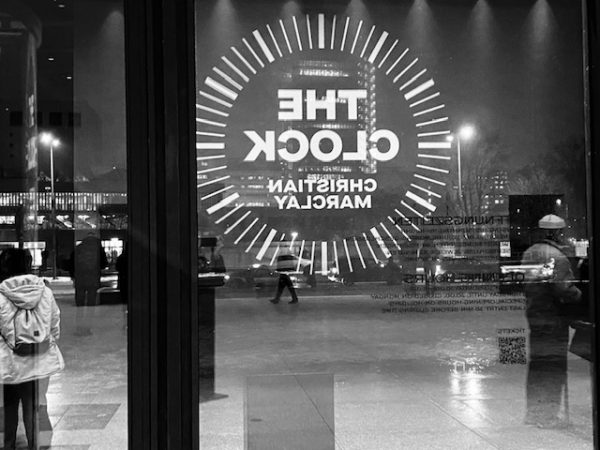
What does the „social“ have to do with time. Well, time is a perfect case of a social construction or a fundamentally social construct. The definition of time as „Greenwich mean time“ is nothing but a useful socio-political statement to synchronize time across the world, or previously an imperium. Points in time, as shown on a clock(s), can be helpful to synchronize human behavior. We might want to show up on the same point in time to start or end work. Of course there are thousands of ways in which such synchronization might go awfully wrong. This makes for splendid drama and movies have a long history to capture our attention on this matter. Social expectations, a social, psychological, and even a biological concept in extreme cases (Pavlov effect) make many of us to get a bit itchy, if time is getting short to meet other persons or an expected event is going to happen. A lot of social pressure is transmitted through the ticking away of time. The mechanism to internalize social patterns (for example prayer), via time and the clock, is quite powerful and has been used in movies throughout the history of the cinema. Even the individual endpoint in time is in almost all cases a shared social experience and turns into a kind of socially relevant time. (Take your time to watch The Clock by Christian Marclay).

Art Station

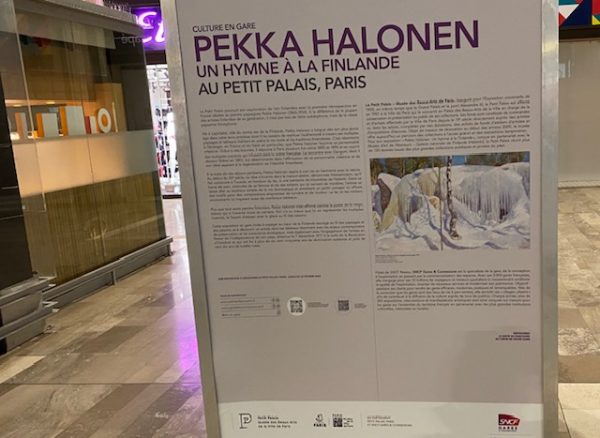
Mobility takes time. All people who travel frequently know the long waiting times at train stations. Be for commuting between places or long distance travel, we can hardly escape from the moments when time gets long and longer. The Paris train station Gare de l’Est has brought art in form of posters to the station as a kind of accessible micro-exhibition. The cooperation with the Petit Palais in Paris allows to give more people a taste or at least an appetizer to art work. Most people rush by, but some spend some minutes reading, inhaling exhaling, and continue to their destination or next date. In the battle for attention such initiatives like art in the station hold societies together. People with very different horizons cross each other for short moments in time.

Words versus Balls

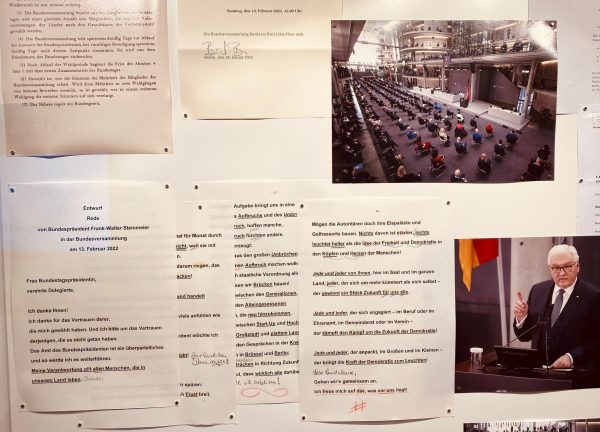
At the occasion of a visit to the “Deutsche Dom” in Berlin, which hosts the historical exhibition of the “Deutsche Bundestag”, I came across the memorable transcript of the speech by Bundespräsident Steinmeier (Image below), which he gave on 2022-2-13. The German President’s words come across as a forceful defense of freedom and democracy as a matter of mind and heart, and against the authoritarian leaders who keep constructing palaces of ice and golf resorts. (“Mögen die Autoritären doch ihre Eispaläste und Golfressorts bauen. Nichts davon ist stärker, nichts leuchtet heller als die Idee der Freiheit und Demokratie in den Köpfen und Herzen der Menschen!”, p.18). There is indeed an ongoing battle on which kind of diplomacy is more effective, words or playing golf together. Apparently the Finnish prime minister seems to be quite keen to play balls with President Trump on the golf course to ensure continued support of the 1000 km Russian Finnish border. Maybe, playing Ping Pong with the Chinese leadership might be more effective in balancing the trade books between Europe and China, just as much as golfing might do the trick with the current Trump administration. What’s your handicap in the golf and ping pong tournament of  international politics.

Futures for Amazonia

Diversity is the treasure of humanity. This was and remains a permanent challenge as thinking in multiple perspectives is taxing our minds. Simplicity can be a value in science or mathematical proofs, but cybernetics teach is also about the usefulness of a “requisite variety”. The exhibition Amazonia at the Quai Branly in Paris takes us on a journey through richness of the Amazonas, its people, biodiversity and landscapes. First of all the curators Varison and Baniwa manage to accompany us in opening up our minds to non-western concepts, which have for centuries been considered as less developed, but only from a western point of view or imagined sort of cultural superiority. Even nowadays the West seems to be convinced that for the liberation of, for example Venezuela, only a western power can achieve this. The 300 different indigenous peoples of Amazonia have lived through hundreds of years of threats to preserve their cultures. They have managed and they have inherited and still develop multiple ideas about “futures” of the Amazonas region. In just 100 days this exhibition has reached more than 100.000 visitors. Most of them will be convinced of a future and, yes, futures for Amazonia. 

Between micro and de-facto state

In political science we distinguish between small, micro-states and territories or regions that are defined as de-facto states. Björn Boman (2025) has put the wealthy states of Monaco, Lichtenstein and San Marino into the micro-states category. On the contrary, Abkhazia, South Ossetia, Donetsk and Luhansk fall under the label of de-facto states with more controlled access as well as under Russian influence using brutal force to control the zone of Russian influence. Due to its size Ukraine as a whole has been able to resist the Russian forces to be degraded to a de-facto state only. The military and technical ingenuity of a well educated workforce allowed the Ukraine leadership to not only counter the Russian invasion, but also to mobilize enormous support from western democracies in form of weapons, financial and humanitarian assistance including millions of refugees over the last 4 years. Size of territory has entered the equation or balance whether to belong to a the micro- or de-facto state category. In the new multipolar international political arena “the sovereign state” has become a more hybrid concept as well. Micro-states have handled the difference between full internal sovereignty and only partial external sovereignty already for years, the new multipolar international arena is being transformed rapidly in this direction. Choose your camp or align with a sufficient number of countries to form an internal and external sovereign area.