For those following the development in robotics we have been astonished by the progress of, for example, rescue robots. After an earthquake such robots could enter a building that is about to collapse and search the rooms for survivors. A recent article in “Foreign Affairs” by Michèle A. Flournoy has started its thinking about the use of AI in the military with a similar 20 year old example. A small drone flying through a building and inspecting the dangers of entering for persons or soldiers. Since then technology has advanced and the use of AI for automatic detection of dangers and “neutralising” it, is no longer science fiction. The wars of today are a testing ground for AI enhanced military strategies. It is about time that social scientists get involved as well.
Warfare left to robots and AI is unlikely to respect human values unless we implement such thoughts right from the be beginning into the new technology. An advanced comprehension of what algorithms do and what data they are trained on are crucial elements to watch out for. According to Flourney, AI will assist in planning as well as logistics of the military. Additionally, AI will allow a “better understanding of what its potential adversaries might be thinking”. Checking through hours of surveillance videos is also likely to be taken over by AI as the time consuming nature of the task binds a lot of staff, that may be put to work on other tasks. Training of people and the armed forces become a crucial part of any AI strategy. The chances to develop a “responsible AI” are high in the free world that cherishes human rights and democratic values. Raising curiosity about AI and an awareness of the dangers are two sides of the same coin or bullet. Both need to grow together.
(Image created by Dall-E Copilot Prompt: “5 Robots disguised as soldiers with dash cams on helmet encircle a small house where another robot is hiding” on 2024-4-23) 
Opera Politics
We know that sports and international politics have ample links. This holds true for Opera performances, either due to the way they are presented or due to the content of the libretto. The opera Jeanne d’Arc (Giovanna de Arco, Jungfrau von Orléans) by Guiseppe Verdi was composed in 1844 and had its Premiere at La Scala in Milano 1845. The libretto is based on the drama written by the playwriter Friedrich Schiller. Later in the 19th century musical pieces followed that dealt with the court judging Jeanne d’Arc. The opera by Verdi creates a strong female voice and character which outperforms men around her. Obviously, she was and remains for many a quasi-mythological heroine. In short, this constitutes great plots for drama and operas. This is centuries old despite the rare occasions of more recent performances of Jeanne d’Arc in form of Verdi’s opera or other forms.
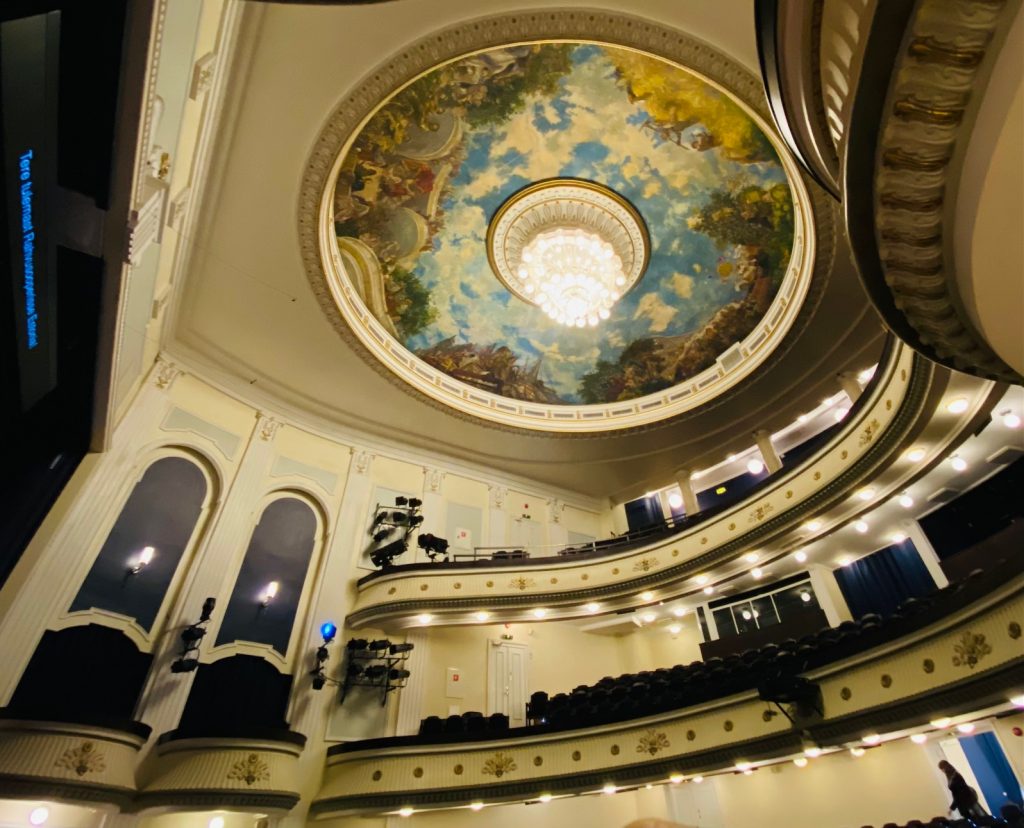
The Opera as arena of politics is currently tested in the Opera at Tallinn Estonia. Due to the aggression and occupation of Ukranian territory by Russia the plot of Jeanne d’Arc regained another European location of potential application. Ukraine pushed back the Russian invasion and struggles to win back its territory from the invaders. The performance of the Opera recreates an impressive Jeanne d’Arc in the person of Elena Brazhnyk who was trained at the National Tchaikovsky Music Academy of Ukraine. The evening inspired hope in many respects. Talents from Ukraine or trained in Ukraine reach out into to the world. Similarly, we have much reason to be inspired by courageous acts. Operas do politics. “Bravi”, as they say in Italian.
(Image: Opera Tallinn-Estonia2024-4-18)
Electricity
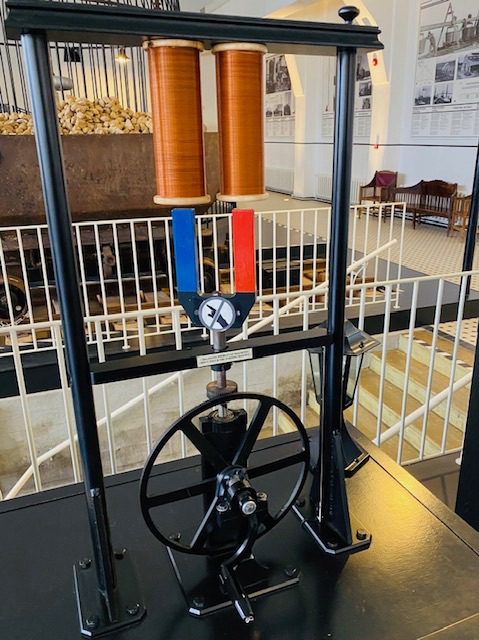
We all use electricity, not only daily but continuously. But do we really know or remember how it works? Surprisingly, we care very little about the energy provision or the physics behind it. Therefore, from time to time it is useful to dive into the details of generating electricity and thereby energy and how it arrives at our doorsteps or desks. In science museums you can literally walk through the history of power generation. A fine example is the Energy Discovery Centre in Tallinn, Estonia. Even for those you did all at school turning the handles of generators is a playful reminder of the basic principles of electric power generation. The efficient use of it, is a topic that needs to be covered as well. Searching the web for demonstration videos is fine as well, but the physical activity of moving induction coils and releasing sparks is difficult to rival. Opening up your mind for the physics of our lives yields a better grip on the challenges of electricity grids and local production of electricity. Are you already a prosumer? Combining electricity production and consumption in one household is surely a forward-looking strategy. Raising awareness for these topics concerns all generations. Take time for a power play, it is truly enlightening. For teaching professionals or want to be there are exciting programs out there, too. Just one suggestion for 2024 in Colorado, US.
Transparent Publishing
New technology pushes transparency of publishing, journalism and science to new levels. Through the hyperlink structure of texts it is easy to link back to the sources of a text. What used to be long lists of references at the end of a text or in footnotes has become directly accessible through weblinks. Only paywalls may or may not restrict the fast and easy access to original sources. In writing online, this is a major additional feature of publishing in the last few years. Some online journals allow this for quite some time now, but there are lots of printed versions that stick to the read and be stuck approach of publishing.
In teaching I have been an advocate of “read the original sources” as the basic source of inspiration for authors. The transparency of the thought process and the evidence provided in whatever form should be traceable. In publishing this transparency allows to exclude the copying of thoughts or unreflected referencing.
However, the task to check for the validity of weblinks and the updating is an additional task. 500+ blog entries with an average number of 2 weblinks per blog entry makes this a job of its own. Testing of 1000 weblinks is something you need a software or plugin which alerts you to “broken links”. The maintenance of a webpage, therefore, increases substantially as the content increases. Reorganisations of webpages make the follow-up of links sometimes quite hard. Projects like the general archives of the web and webpages are very important to ensure the transparency of publishing in the short, medium and long run. The archives of today look more like machine rooms than the splendid archives or libraries of the past and present. 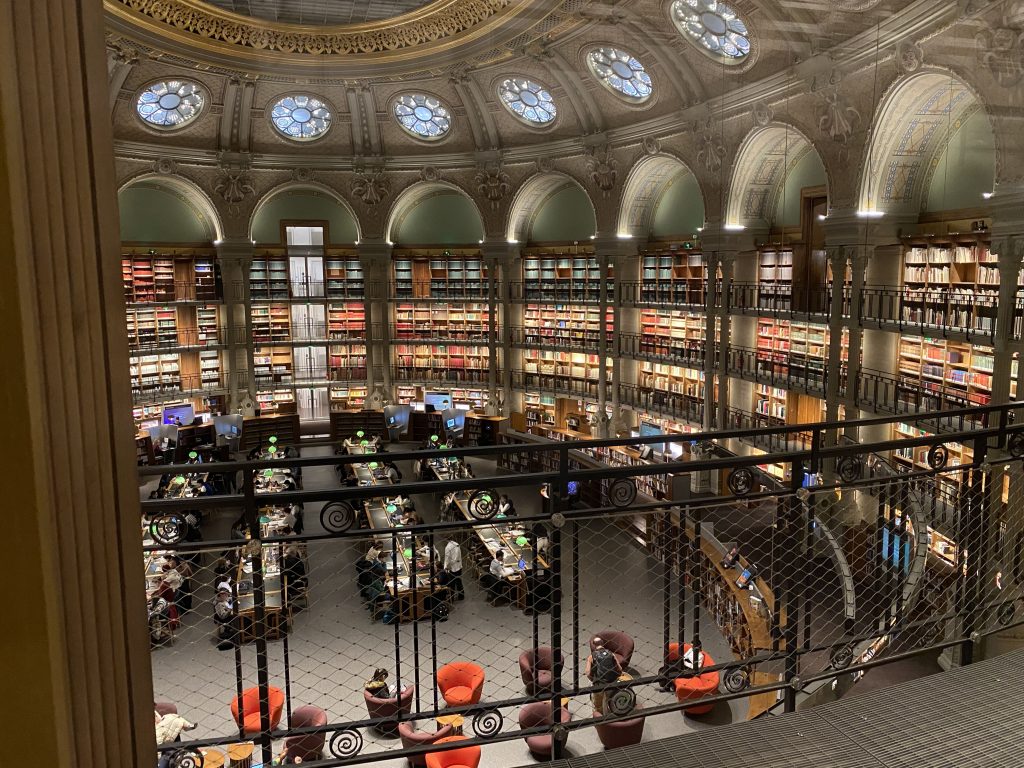
Citizens Gardens
There are multiple ways to link citizens to gardens. Most people would link citizens to the property of their own garden. This is more the perspective of people from the countryside. The aim of citizens who can afford it have a garden, many others wish to have one and all of them enjoy public garden spaces. An intermediate version of the public versus private property of citizens’ garden is the joint ownership of groups of like-minded people to work together in the shared property or rented garden space. The recreational and health effects are well documented, if care is exercised with utensils etc. Spring is the ideal time to join projects again as the results of a little bit of gardening will be visible and enjoyable for several months afterwards. Gardens are also meeting points for people of all walks of life as in the vicinity of the European Parliament in Brussels. The Citizens’ Garden has a different function to people gardening there. When you puzzled about Europe after a visit to the Parliament or the Museum of the History of Europe, then it is time for a stroll and relax in the garden nearby.
Alternatively, the Exhibition Centre of Tour & Taxis in Brussels not too far away from the North train station has an impressive indoor garden for the times of rough weather conditions. At the time of the book fair culture in the indoor garden made a splendid combination. There is a green version of Europe. It is like a small plant. It needs a lot of time and care to grow. 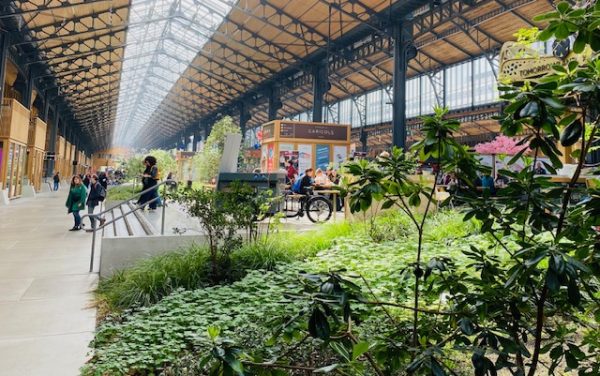
Causal Benefit Model
In the field of medicine we move more and more towards precision medicine. Previously, the term of personalized medicine was used which suggested to a certain degree that a personalization might be feasible. The budget constraints have forced us to change the term to avoid unrealistic, untenable promises. In the field of cardiology scientific advances advocate to shift from a risk-based model of treatment to a causal benefit model. (Kohli-Lynch et al. 2024 Link). Long-term benefits of a treatment are more promising, if the treatment addresses the causal mechanisms at work. It is wide spread practice to deal with general risk profiles as guidelines as the precision medicine based on a causal benefit model is far more laborious since to search the causal mechanism at work requires additional testing of hypotheses. This becomes immediately clear if genetic causes enter into consideration. Nevertheless, medical research advances more and more in this direction. Genetic testing has been shown to be useful in analyzing and treating issues like sudden cardiac arrest (in survivors). We are somehow aware that genetics may play a role here, but we shall need a lot of additional studies to make the causal benefit model a feasible option for widespread applications. Targeting research in this field will offer new avenues for precision medicine in the 2020s.

Series Evaluation
The monitoring of TV series is a serious science. The evaluation of so-called binch viewing has redrawn attention to the field of media studies again. We observe a bit across Europe, following the US experience, the change of TV productions into series that may run over several years. The successful format of a TV series draws advertising to the relatively constant audience. Most series have a particular age group as their target group. Viewing behavior determines time slots allocated. Each group has its own prime time. The publisher of books had their successes with similar series of for example children’s picture books or cartoons. Asterix, Martine and similar book series have basically applied the same “serial” mechanism before. Popular success creates its own dynamics. Therefore the evaluation of such serial productions should stay on our research agenda of the social sciences as well.
In a radio discussion “France Culture” has juxtaposed the 2 currents of series evaluation in a concise way. One current of assessment holds the view that rather than high versus low culture, the debate should take popular culture seriously. It augments the set of experiences as the characters in a TV series live through a kind of “experimental setting” each time anew. The variety of experiences is catching popular attention as they are beyond the scope of the spectator’s usual life settings and thereby a learning opportunity. This highlights the value of the content in the evaluation. This requires a thorough scrutiny of that content to evaluate an emancipatory value of viewing it (Sandra Lauglier, 2023).
An opposing view is defended by Bertrand Cochard (2024) with reference to the conflict about one’ use of free time available to us and how we spend it. His criticism takes issue with the amount of time “lost” by viewers of series. Time is not spent twice. The loss of time alone or side by side rather than spending it with other persons or physically active constitutes a major risk to the social fabric of society.The jury is still out on the issue. We likely see the start of a series of entries on this topic as well.
AI and languages
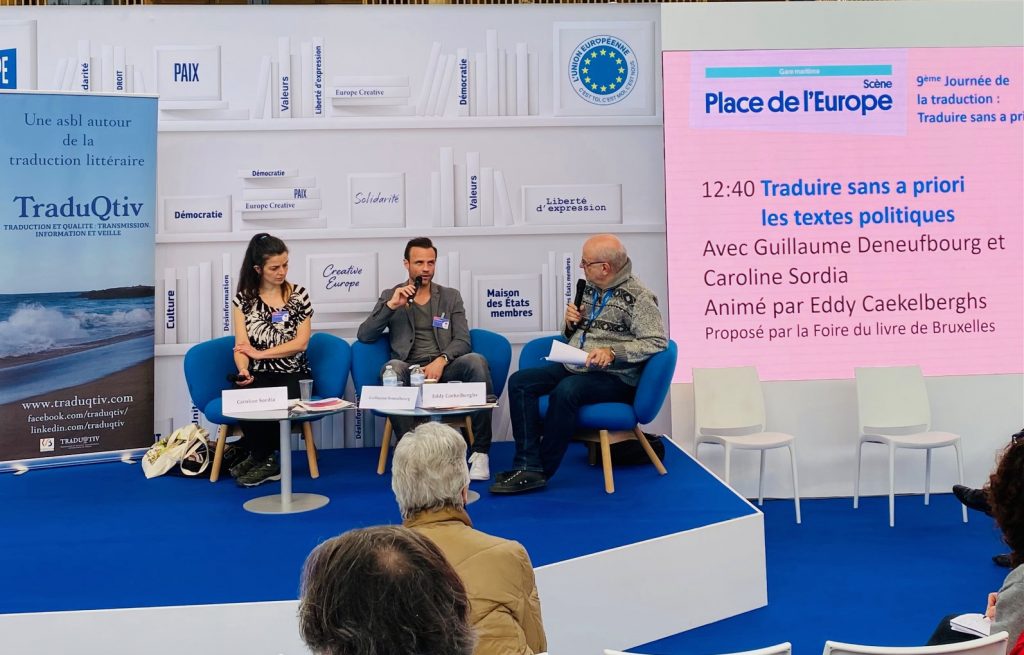
A big potential of AI is in the field of languages. Translations have been an expert domain and a pain for pupils at school. In professional settings translations are an expensive extra service for some or a good source of revenue. AI has shifted the translation game to a new level. In terms of speed of translating large amounts of written text AI is hard to beat. In terms of quality the battle of translaters against AI is still on. For chess players the battle against AI has been lost some years ago already. It remains an open question whether translators can still outperform AI or just adapt to using the technology themselves to improve both speed and quality of translations. The European Union with its many languages and commitment to cultural diversity can serve even more language communities with documents in their own language than before at marginally higher costs. A panel on the 9th day of translations at the „foire du livre de Bruxelles” 2024 expressed their reservations with regard to the use of AI in translation of political text or speech. Misunderstanding and misinterpretation will be the rule rather than the exception with potentially harmful consequences. Checking the correctness of translations is a permanent challenge for translators and can be very time consuming. There is room for an AI-assisted translation, but similar to other fields of application of AI, relying exclusively on AI bears high risks as well. We should not underestimate the creative part of translators to do full justice to a text or speech.
Fertility Growth
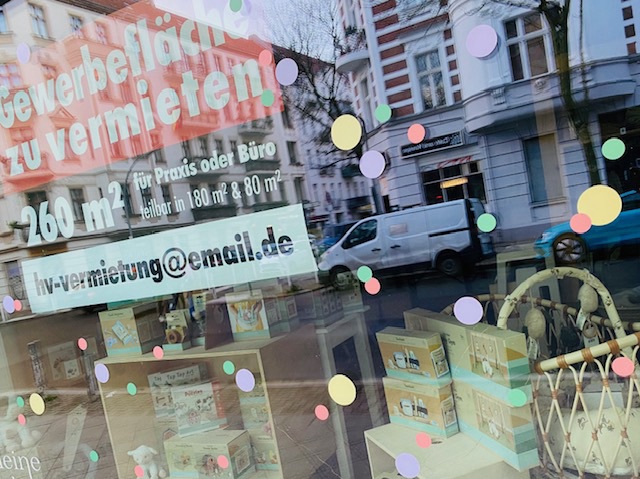
The first association of fertility and growth is likely the growing of fertility rates in a country or region. Only macro economists associate the growth or decline of fertility with the macroeconomic consequences of more or less economic growth. Countries with higher fertility rates in most cases have higher growth rates as parents spend more on food, clothes, mobility and education. Accommodations are changed, adapted and refurbished. Estimates of increased consumption per child by economists range from 500.000 to almost 1 million in the highest developed countries. Children are a country’s wealth, but they also cost a fortune in monetary terms. Good news for the economy if families keep spending independent of economic cycles. More children keeps dedicated shops running or even a whole sector of the economy. In recessions the downward pressure in this sector becomes an additional challenge not only for the families but with ripples-on effects for the whole economy and society. If you see shops closing which has sold furniture for children for the last 15 years then the realization of an economic downturn becomes also more real. Sometimes the parallels in the news of declining fertility and increases in pensions do not square well with the fitness for the future or the future orientation of a society. Democratic voting rights that give families more weight in elections could change this. It is not yet on the political agenda.
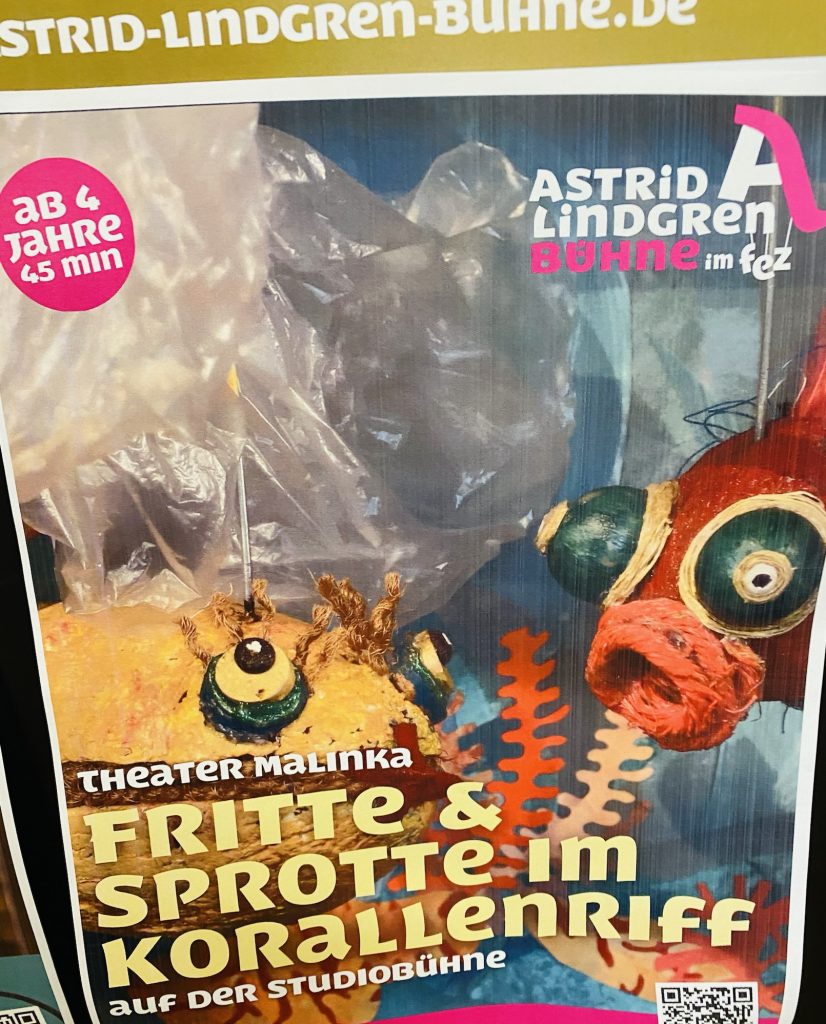
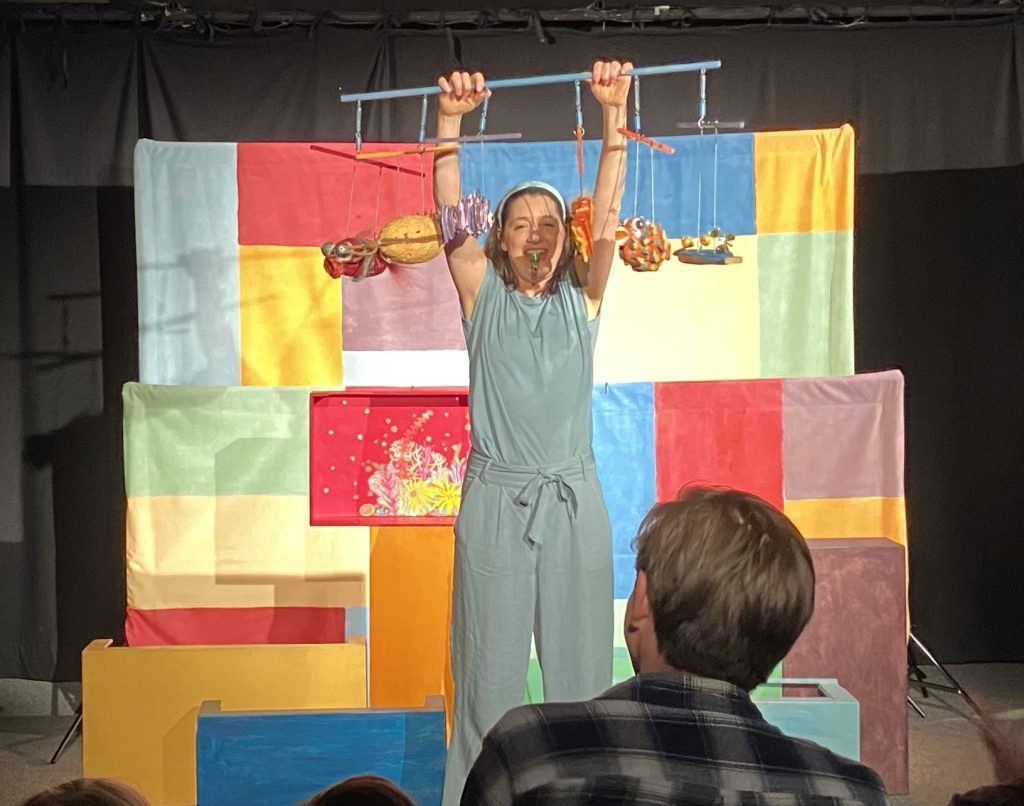
Korallenriff
Kinder verstehen direkt, dass es sich lohnt, Korallenriffe zu erhalten. Plastikmüll in den Meeren gefährdet die Korallenriffe und die bunte Vielfalt an Fischen, die darin leben. Ein kleines Theaterstück dazu von Kathrin Brunner begeistert Kinder, weil es sie erleben lässt, wie einfach Lösungen aussehen können. Den großen Leuten zeigen, wie traurig die Welt aussieht ohne die farbenfrohe Pracht der bunten Fische, wird sie schon zu Veränderungen bringen. Das Theaterstück und Buch dazu wurde am 16.3.2024 im FEZ in Berlin aufgeführt. Das Figurenspiel mit überleitendem Refrain, das vom Publikum gleichsam der Promenade in den „Bildern einer Ausstellung“ (Mussorgsky) mitgesungen haben, bildete jeweils eine gelungene emotionale Überleitung und Aufmerksamkeitspause. Wir wünschen uns noch viele kleine und große Besuchende für diese Aufführungen. Die Kinder werden es uns schon lehren, den blauen Planeten noch zu retten.