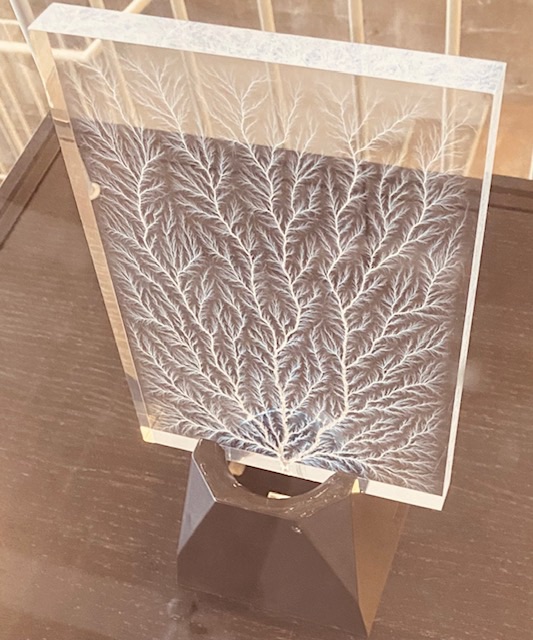
There exists a rather complicated relationship between law and nature. It is part of constitutional law to check whether nature figures at all in a state’s constitution as part of the fundamental legal principles. On a global scale the nations or people living in the closest relationship with nature most often do not have written constitutions. In the same vein, animals or biodiversity do not figure in most constitutional documents (nice project to substantiate this claim). The philosophy of law has line of literature devoted to “Naturrecht” which is more concerned with human beings and their differentiation than the millions of other species.
Administrative law is probably the domain with most of the legal judgements with relevance to nature or the environment as for example any larger scale construction is either land, water, air or biodiversity grabbing. Rights and limits need to be defined precisely. In this field the role of law as “appeasement” is widely applied. However, this is more complicated in cases when a whole population of an island in the ocean is threatened to disappear due to the rise of the sea level like in the case of the Torres Strait Islands, next to and part of Australia.
The UN Human Rights Committee (UN-HRCee) in Geneva has made a decision on the claim of these people to have rights that the nature of the islands as low-lying islands is threatened by disrespect of their fundamental rights of existence and survival. The claim has been received by the court, but the court deems that the threat to their culture and survival is not imminent. In practice, therefore, the sword of law is rather weak and time until the disaster is used as a right to continue the usual economic exploitation of earth as before despite the deferred consequences for the planet in a rather unequal way.
(Image by AI copilot designer 2024-6-2 “5 judges in red gowns sit in a flooded courtroom”, 2 propsitions) 
Kafka Kafkaesque
The last 4 years in the life of Franz Kafka had been challenging due to his tuberculosis. Despite these challenges he realized additional, lesser known pieces of literature from 1920-1924 including a collection of aphorisms. The interpretation of these pieces is quite controversial and making your own judgement about these pieces should be left to each person. The most debated elements are his level of abstraction. Additional examples of animals enter into the arena. Mice received his attention in his last work. Whereas Josef was the name of principal characters before, Josefine was his last character. Continuation, discontinuity or dialect dialogue between the characters, up for interpretation and debate. The role of artists or writers in society was also a recurrent theme in his work and life. Great to have an easy access in the Leselounge at Stabi Potsdamer Straße as an extension of the exhibition of the family photographs in the Stabi Unter den Linden.

Competence Nature
Nature can be approached without competence. Emotional attachment is fine. If we delve deeper into the issue, we realize that a lot of processes that have evolved over years or even centuries are hard to study. The learning about nature is manifold and many scientific disciplines deal with nature in the broad sense of the word.
Today the study of nature is scattered across so many disciplines that an overall view of the field seems hard to achieve. This creates a problem to teach a competence to deal with topics around nature. Water, air, species, soil, climate or reproduction are all topics in which we have to make far-reaching individual and collective choices. This requires adequate competences to allow judgments about opportunities and risks involved.
For more than 100 years now we have researched education systems and processes, but the competences to talk and explain basic processes in nature are still scarce. Classification systems are a static way to sort nature into categories. Processes of evolution and development have more or less human input.
We all gain if we keep an eye on education and learning processes that have been applied years ago. The field of the history of education provides clues about some forgotten approaches. Learning about nature and how to acquire competence in the field has been an issue in this field for at least 100 years. It is time to test some of these approaches again to see what went wrong in learning about nature. Man-made climate change is only at the end of a causal chain of things and people moving in the wrong direction. We probably have to press the reset button and start from scratch with the learning and the tracing of wrong decisions. Maybe, the start is the appreciation of a splendid bouquet of flowers. Want to know more? Try to grow and assemble them yourself. 

Mangel Armut
Herta Müller hat bereits 2012 in „Das Chinesische Glasauge“ sehr treffend die Funktion von Mangel und Armut in Diktaturen beschrieben. Sowohl der ständige Mangel als auch die Armut dienen als Instrumente der Macht. Sie sind quasi die Fortsetzung von Ideologie zur Beherrschung der Massen. Zusammen bilden sie die Umgebung, den Kontext in dem dort gelebt wird. Die Herrschenden jedoch haben Privilegien, die sie von der Allgemeinheit absetzen. Diese knappe Beschreibung und Einleitung zur Kurzgeschichte haben eine große Portion Allgemeingültigkeit. In Mangel und Armut können kleine Vergünstigungen eine viel größere Wirkung entfachen. Sehnsüchte nach mehr werden nahezu zwingend hervorgebracht. Allein die Aussicht auf ein teilweises Stillen der Erwartungen oder nach mehr entfachen weiteres „höriges“ Verlangen. In Diktaturen werden die Personen, die unaufhörlich auf die Armut und den Mangel hinweisen meist geächtet oder sogar ins Exil gezwungen. Solche Störenfriede sind nicht gern gesehen. Das Russland unter Putin braucht Leute der herrschenden politischen Klasse zujubeln und bereitwillig in den Krieg ziehen oder an der Kriegsmaschinerie mitwirken. Wir sind mehr als eine Dekade weiter, aber diese Zusammenhänge bestehen ebenfalls weiter. Schmuck in der Mangelwirtschaft ist bereits eine Provokation. Das offene Tragen der Provokation kann im schlimmsten Fall das Leben kosten.
(Image: Herta Müller, 2023, Eine Fliege kommt durch einen halbern Wald, Carl Hanser Verlag, “Das Chinesische Glasauge”, S.50-61) 
Democracy celebrates
With all the bad experiences of Nazi-Germany and the failure to defend democracy in Germany against its fascist enemies in the 1930s, it was a pleasure to celebrate democracy in Germany together with a huge crowd. 3 days of information and party around the major institutions of democracy Parliament, government, federal governments, constitutional court and all ministries joining in with pavilions in the parks nearby allowed a bottom up feeling of democracy. Visiting the chancellery as well as the parliament in a single day shows the openness of these institutions and the ease of access to our political system. People of all ages and all walks of life strolled around and enjoyed the day. Freedom to voice your opinion was easy and many took their time to do it. Civil society organizations were a natural part of the show. We seem prepared to stand up for our democratic values and principles. This will be tested in all the forthcoming elections.

Freiheit aushalten
Frei von Zwang zu sein, ist eine tolle Erfahrung.
Frei zu sein, das zu tun, was man möchte ist die Fortsetzung des Gedankens.
Eine lange philosophische Tradition (freedom & democracy) lässt sich inetwa so kurz zusammenfassen. Negative Freiheit, also nicht irgendwelchen Zwängen zu unterliegen, frei von Religionszwang oder Zwang zur Arbeit, war über Jahrhunderte das überragende Ziel der Freiheits-, im Sinne von Befreiungsbewegungen.
Wir haben diese “passive” Vorstellung von Freiheit durch eine “aktive”, positive Form von Freiheit ergänzt. Die Freiheit etwas zu tun oder der aktiven Teilhabe an der Gesellschaft ist zu einem weiteren leitenden Gedanken des modernen Freiheitsbegriffs geworden. Entwicklungschancen von Kindern zeigen die Bedeutung der aktiven Gestaltung von Freiheit für die kindliche Entwicklung und die Bedeutung der Teilhabe an Gesellschaft auf. Alleine frei zu sein von Zwang führt noch nicht zu einer altersgerechten Entwicklung von Kindern. Positives Gestalten ist notwendig, damit Kinder ihre Potentiale über die Zeit Die Freiheit des Anderen selbst aushalten zu können, ist eine weitere notwendige Bedingung von Gesellschaft und unserem Freiheitsbegriff. Das fällt zuweilen recht schwer. Die Bienenzucht des einen kann dem Bienenstichallergiker buchstäblich zum Verhängnis werden. Wieviel freie Rede ja, aber Hassrede nein, müssen wir aushalten. Dürfen sich diese Konventionen über die Zeit hinweg verändern? Wenn ja, wie weit? Wir haben viel Gesprächsbedarf, um ständig unserer “kommunikatives Handeln” zu beraten und zu überprüfen.
In Zeiten von Wahlen und Wahlkämpfen ist das Schild “Freiheit aushalten, eine Aufforderung doch öfters mal hinzuhören selbst wenn uns vielfache Aussagen bereits als abwegig erscheinen.
Von “Ausfahrt freihalten” hin zu “Freiheit aushalten”.

Deutsch Deutscher
In English grammer we use comparative adjectives to express that something or someone has changed or undergoing change. Germany might have become more German. The second usage is to make comparisons not only between two points in time, but between two statuses or of two artefacts more generally. The statement “Deutschland wird deutscher”, therefore, intends to describe an ongoing process or the transition process from one state to the other. This statement as such does not offer any explanation or definition of the original state, nor of the second point of reference. It might just describe the dynamics or the direction of the dynamics. In this example it deals with social dynamics. Germany in the 21st century is posing more questions about its identity and future directions than some time ago. The artist Katharina Sieverding has put up this reflection as a poster on walls to provoke discussions about the way to identify and deal with German identities in the early 1990s, shortly after re-unification of the 2 parts of Germany (Image below from “Nationalgalerie für Gegenwartskunst, Hamburger Bahnhof, Berlin” 2024-5).
30 years later we are scared by a ruthless right-wing extremist and brutal movement that takes to the streets and commits crimes.
It is no surprise that the Higher Administrative Court in Cologne has confirmed that the “BfV’s classification of the party AfD and of its youth organisation as a “Verdachtsfall” (subject of extended investigation to verify a suspicion) as well as the publicising of this classification to be lawful“.
It is a step ahead to become “deutscher” if we battle out such decisions in courts rather than by force on the streets, although this has failed once in German history already. The poster action by Katharina Sieverding is a reminder to monitor and deal with these topics continuously, albeit the knifes may be coming in closer than before. Being frightened is no option in order to defend democratic values. 
Attune Spheres
In Berlin it is easy to walk through the history of art to up-to-date contemporary art installations. Just walk from the Alte to the Neue and then to the Contemporary Nationalgalerie. With the installation and performance in the monumental Hamburger Bahnhof the artist Alexandra Pirici succeeds in an extraordinary way the combined impression of several art formats. I felt particularly attracted by the sound and resonance that the dancers achieved in the huge historical hall of the former train station. Embedded in a choreography that spans the whole hallway and the top of a sand dune, the ideas of „Attune“ bring in demonstrations of scientific experiments as well. We are reflecting on how structures, biological, physical or geologic processes coexist. It is another example of the intersection of biological, psychological and social phenomena. The links between science and art are more direct than what most people tend to believe. This encompassing experience catches all our senses and our mind. It is very likely that this intense experience in the museum space, which attunes our sensory perception of the artwork, sticks with us for longer than many other pieces of art. The 21st century will reveal an even more powerful language of art as it incorporates even more formats to grab our attention and imagination. The research of how patterns are formed is an important question for social scientists as well. All approaches to the subject are welcome and each one reveals our knowledge gaps despite remarkable progress. (Image: Hamburger Bahnhof, Berlin 2024-5-11, Alexandra Pirici) 
Silent Pandemic
There is a pandemic that is silently spreading across countries and continents. It only indirectly related to the Covid-19 pandemic. The medical journal “The Lancet Respiratory Health” (2024) has an editorial about the inequities of asthma as they develop over the life course. The development of asthma has pre-natal, genetic, environmental, life-style and socio-economic co-determinants. The study of respiratory disease, therefore, is a multi-factorial issue, which needs to disentangle the specific influences. Smoking as well as obesity have an impact on asthma, instantaneously or with delayed time effects of sometimes many years. Hence, it is important to take the whole life course into account, if we want to address the rising disease burden of asthma. Air pollution and heating-up of the planet are important drivers of the silent asthma pandemic across the globe. The social distribution of people working in “asthma- prone” work environments and/or living in highly polluted urban, suburban or rural areas near high frequency traffic is another latent factor causing huge costs to persons and society as a whole. Health inequity is growing over the life course. This is not easy to tackle as policy target as the onset of the disease has no single trigger, but rather a combination of influences that contribute in varying amounts to the evolution of respiratory diseases. (Image air pollution https://aqicn.org/map/germany/de/)

Science Politics
We tend to believe that science is independent of politics. Even if the individual scientist does research and studies free of immediate political influences, there are many ways in which politics has an impact on science. Sociologists refer to Max Weber as a prominent figure in the “Werturteilsstreit” that claimed the need for science to be conducted beyond political interference. Karl Popper is another reference in this respect who proposed the positive science approach which starts from theory, hypotheses and testing in the sense of identifying false statements, hypotheses and underlying theories. Modern science is also linked to publications of results. This has become an industry of its own and it is sometimes quite surprising to see the lengthy delays that scientific results get published. One example, Jackie G. Schneider and Julia Macdonald (2024) had to wait 3 years until their paper finally appeared in print in a scientific journal. This paper was received by the Journal in February 2021 and published only in 2024 in the 2nd issue of the journal but online in January 2023! Reports in Nature on difficulties of Indian, African and Chinese scientists to get their work done and published are alarming as well. Further regionalization and departmentalization work against the fundamental principles of independent science and scientists. It is a big issue of international cooperation as well.