Ein Bauer im Schachspiel kann spielentscheidend sein. Ist der Bauer erst einmal jenseits der gegnerischen Angriffs- und Verteidigungslinien am Ende des Schachbretts angekommen, kann er in die Figur seiner Wahl eingetauscht werden. Wir sollten den Bauer also nicht in seiner Bedeutung unterschätzen. Das trifft auch auf Fritz Bauer zu. Der hessische Generalstaatsanwalt Fritz Bauer, Mitbegründer der Zeitschrift Kritische Justiz, hat die deutsche Justiz in besonderem Maße herausgefordert. Durch seine Anklagen hat er viele der aus der NS-Zeit belasteten Richter angeklagt und entschieden an der Verfolgung und Verurteilung von Adolf Eichmann mitgewirkt.
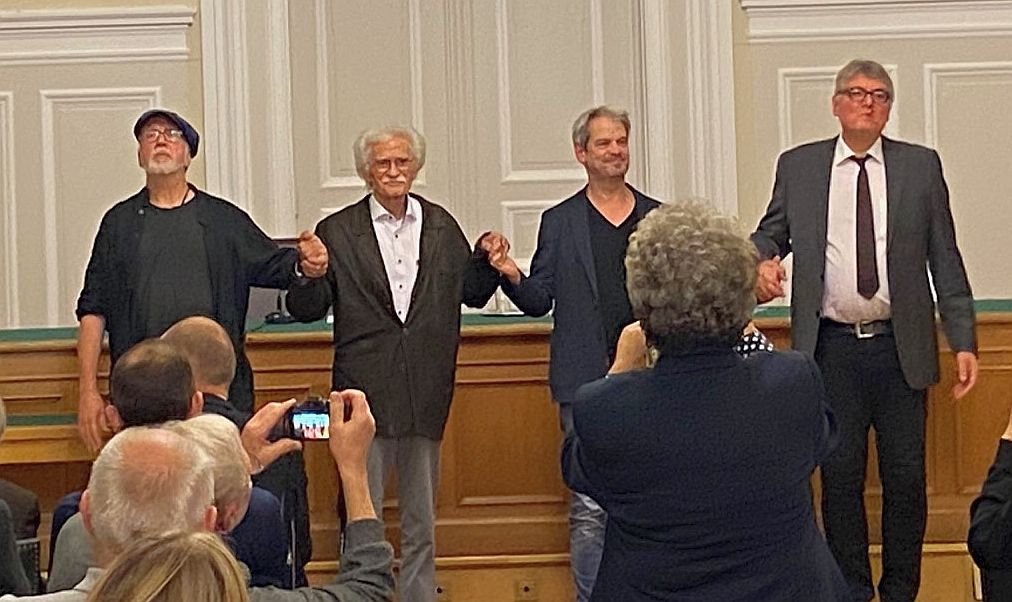
Dieter Schenk hat in seiner Dokumentation und einem fiktiven Interview eines Journalisten mit Fritz Bauer die Persönlichkeit anhand seiner Schriften und Interviews lebendig als Theaterstück inszeniert. Bereits 2x in Polen aufgeführt, hat die Deutsch-Polnische Gesellschaft Berlin e.V. zu ihrem 50. Jubiläum zusammen mit dem Bund ehrenamtlicher Richterinnen und Richter, Landesverband Brandenburg und Berlin dieses Werk im Oberverwaltungsgericht Berlin Brandenburg zur Aufführung gebracht. Frank-Walter Steinmeier hat die Arbeit von Fritz Bauer mit folgenden Worten gewürdigt: … vielmehr ging es Fritz Bauer darum, die Deutschen zu immunisieren, sie vor einem erneuten Rückfall in die Barbarei zu schützen.“ Das ist heute noch genauso wichtig wie in der Vergangenheit. Der historische Gerichtssaal des OVG BB in der Hardenbergstraße in Berlin bot dafür eine eindrucksvolle Kulisse. So voll war der Saal noch selten, betonte der Hausherr. Den Besuchenden 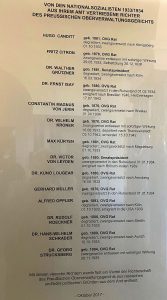 viel sicherlich auch die Gedenktafel mit den Namen der von den Nazis entlassenen Richter auf dem Weg zum Plenarsaal im Treppenhaus auf.
Eine stille Anklage richtete sich in dieser Veranstaltung eben auch in Richtung Polen, die Rechtsstaatlichkeit und unabhängige Richterinnen und Richter zu gewährleisten. Deutschland hat sich historisch viel Schuld aufgeladen, umso mehr Verantwortung haben wir jetzt, uns für diese wichtigen Grundrechtsprinzipien einzusetzen. Der Verein „Gegen Vergessen, Für Demokratie e.V.“ soll als Ko-Organisator unbedingt mitgenannt werden. Hans-Josef Schöneberger und Uwe Neumann als Schauspieler und Ian Melrose mit seinen Intermezzi auf der Gitarre haben eine tief beeindruckende Atmosphäre geschaffen. Es wurde klar, dass Recht, selbst Verwaltungsrecht viel mit Streitigkeiten verbunden ist. Die Befriedungsfunktion des Rechts wirkt oft erst über Generationen hinweg.
Ich wäre gespannt zu wissen, in welche Schachfigur sich Fritz Bauer am anderen Ende des Schachbretts hätte eintauschen lassen. Mein Tipp, vielleicht als Turm wichtige horizontale und vertikale Linien besetzen oder doch ein Springer, der nicht einfach zu berechnende Sprünge leisten kann. Von einigen seiner Verehrenden wird er auch als König gehandelt, der allerdings, wegen seiner Verwundbarkeit, oft anscheinend ohnmächtig im Zusammenspiel mit den anderen starken Figuren agierte. 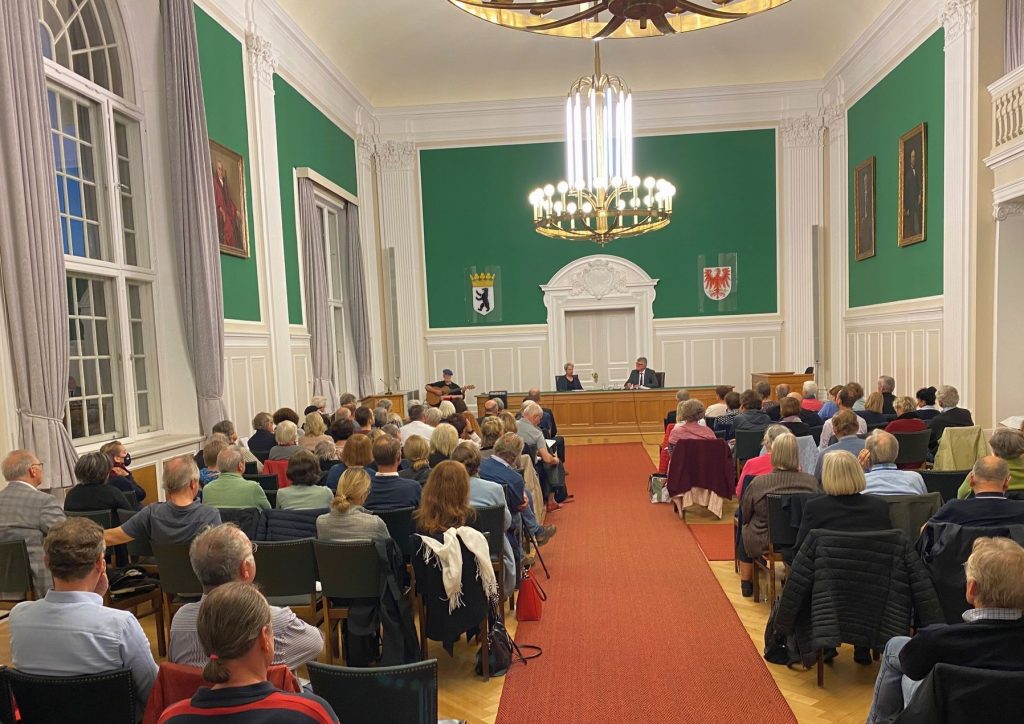
Frauen! Leben! Freiheit!
Das Schicksal von Jina Mahsa Amini ist vielen bekannt. Die Ermordung in der Haft hat weltweite Aufmerksamkeit auf das Schreckensregime im Iran geworfen. Im Oktober 2023 ist nun die Kämpferin für Freiheitsrechte im Iran Narges Mohammadi auch stellvertretend für die vielen inhaftierten und ermordeten Frauen mit dem Friedensnobelpreis gewürdigt worden. Sie hat bereits viele Jahre einer zehnjährigen Haftstrafe im Gefängnis verbracht und schwere Misshandlungen erfahren.
Das Buch mit dem deutschen Titel „Frauen! Leben! Freiheit!“ ist als Rowohlt Taschenbuch im September 2023 erschienen. Es dokumentiert ihren unablässigen Kampf für Frieden und Freiheit nach ihrer rechtswidrigen und willkürlichen Verhaftung. Bereits auf dem Kongress des Europäischen Gewerkschaftsbundes (EGB) im Mai 2023 hatte die Vorsitzende des DGB Yasmin Fahimi eine Resolution vorgebracht, die die Solidarität mit den Frauen im Iran nachdrücklich betonte. Missachtung grundlegender Menschenrechte wurde verurteilt und mit überragender Mehrheit vom EGB beschlossen (Kurzvideo). Darin war sich Europa und darüber hinaus die ganze zivilisierte Welt einig. Jetzt mit dem Friedensnobelpreis für Narges Mohammadi und der weiten Verfügbarkeit der Buchveröffentlichung dazu (siehe Bild unten) können die Interviews mit den Frauen in der Gefangenschaft des iranischen Regimes auf Deutsch gelesen werden. Hinschauen, Nachlesen, sich für die Freilassung einsetzen, das bleibt unsere Verantwortung.
Gewaltloser Widerstand ist Aufgabe der Freiheitsliebenden. Leben retten von denjenigen die Leben schenken. Die iranischen Frauen kämpfen mit friedlichen Mitteln gegen eine unermessliche Gewaltherrschaft und Unterdrückung. In bescheidenem Ausmaß können wir mit unserer Aufmerksamkeit und internationalen Anerkennung diesen Frieden- und Freiheitswillen unterstützen.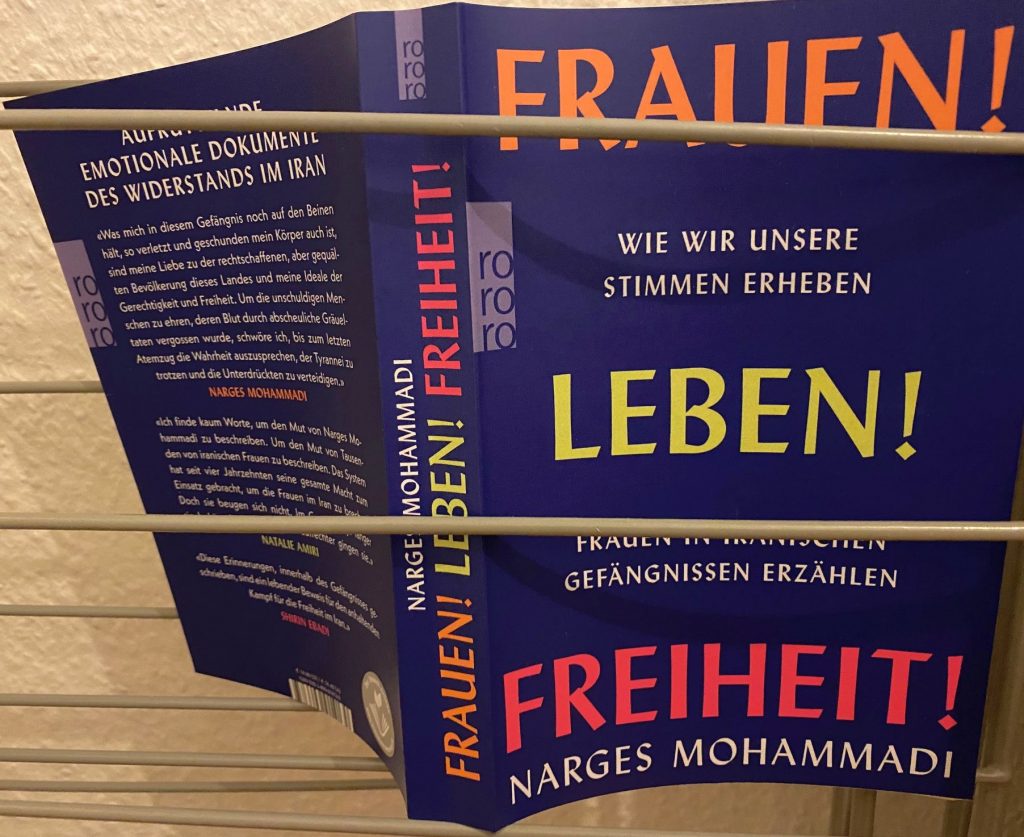
Nobel Literature2023
Jon Fosse has been awarded the Nobel prize for literature in 2023. Alfred Nobel donated the original funds out of his entrepreneurial empire build on the patents for dynamite. The explosives have ample use in peaceful times, but especially at times of war with noisy and destructive explosions. Experiments, with the tragic outcome killed together with 4 other victims his own brother. It did not stop him to pursue his entrepreneurial endeavour. In 2023 the Russian aggression continues to use explosives to kill innocent civilian victims. The sound of bombing continues to traumatise or destroy existences. The Nobel Prize for literature awarded to Jon Fosse does not bring those killed to live, but it is yet another reminder that silence or the absence of Alfred Nobel’s noise is invaluable. Norwegian Fjords and the water all around surely inspired Jon Fosse.
The scope of his writing ranging from theatre, prose to poetry and children’s books is comprehensive and impressive. This is probably all well known to many theatre-goers and readers beyond their mother tongue. For Germany there is an additional feature to the literary work of Fosse. Hinrich Schmidt-Henkel is the almost exclusive translator of the German language editions. This is already an impressive amount of work and long-term commitment to and from a translator as well as the publishing house Rowohlt. The Wikipedia entry for Hinrich Schmidt-Henkel shows the numerous works as translator of Jon Fosse as early as 2001 and still more to come. Additionally, Hinrich Schmidt-Henkel translates other classic authors from Norwegian into German in collaboration with the publishing house Guggolz located in Berlin-Schöneberg.
Besides the passion for translation Hinrich Schmidt-Henkel is active to defend the rights and salaries of translators. The threat to professional translation work by AI-programmes is imminent and just like authors and actors (not only in the USA) face continuing challenges for proper remuneration of their work. Being the German “voice” of Jon Fosse, it depends very much on specific contractual arrangements, whether a translator will also benefit not only from the popularity, but also in financial terms from the “windfall” profits reaped by authors and publishers. This constitutes probably a rather explosive issue, but worthy to be addressed eventually by the Nobel Committee. It is a “winner takes all” system just like with explosives, at least until next year’s awards. (Image Hinrich Schmidt-Henkel presenting Biermann in Staatsbibliothek Berlin 2023-9). 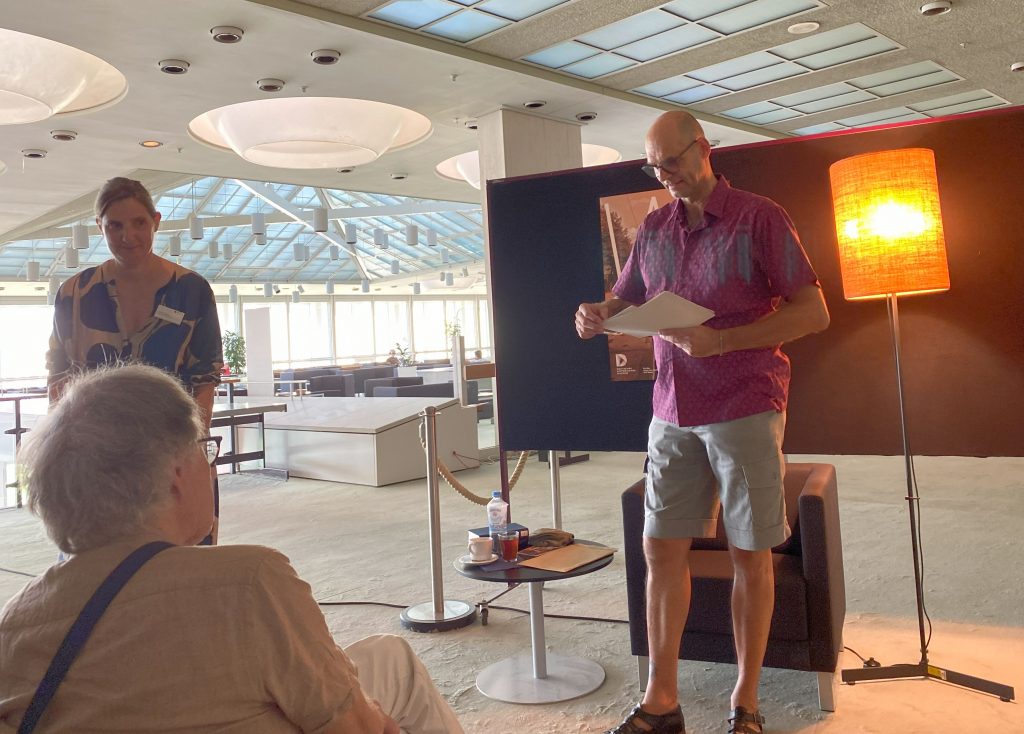
Digital Egal
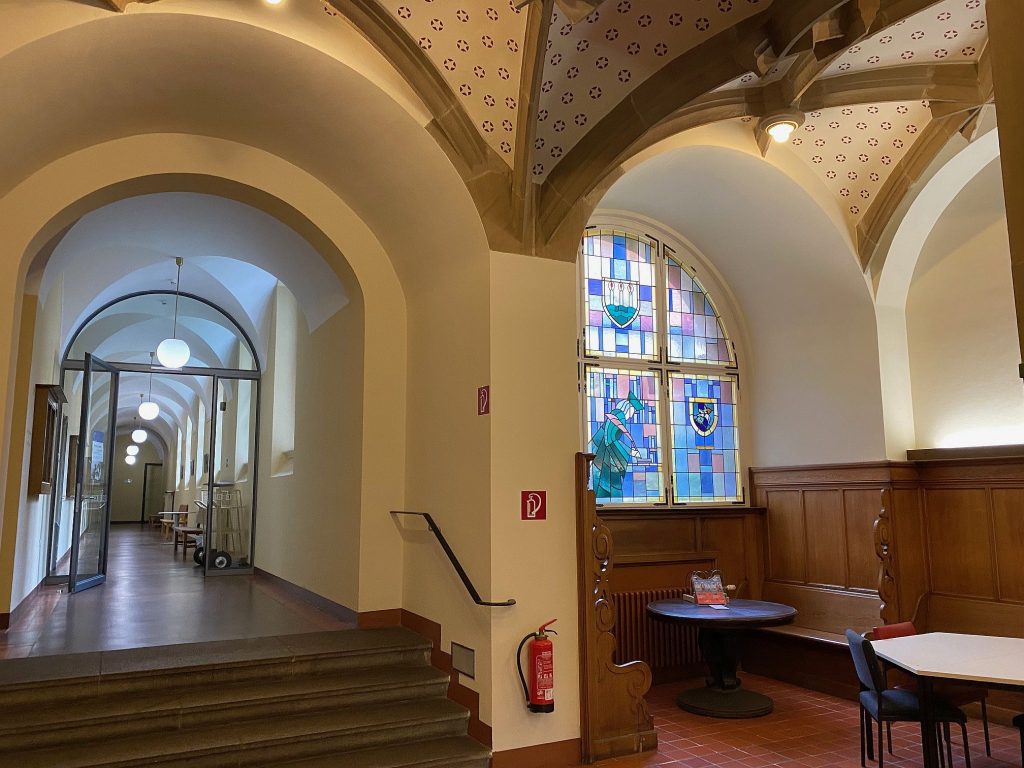
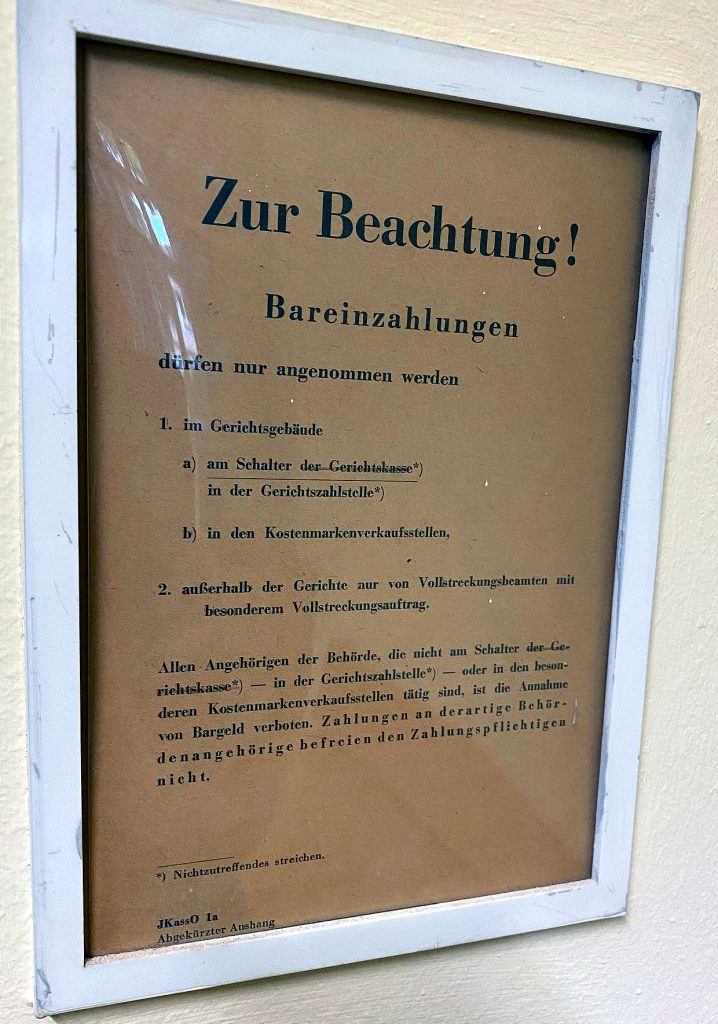
In den deutschen Amtsstuben geht es Ende 2023 oft noch erschreckend analog zu. Für einen Grundbuchauszug, beispielsweise, hatte ich das außerordentliche Vergnügen das Grundbuchamt am Amtsgericht in Berlin Ringstraße aufzusuchen. Sonst nimmt man sich ja nicht die Zeit, solche Sehenswürdigkeiten von innen zu besuchen. Die Überraschungen waren vielfältiger Art. 3 Personen Wachpersonal und Metalldetektor, wie bei der Flugabfertigung. Für den Auszug aus dem Grundbuch ist selbstverständlich eine Gebühr fällig, die nur bar entrichtet werden kann. Auf zur Zahlstelle, immerhin auf dem gleichen Flur. Die nächste Amtsstube hat zwar noch einen richtig historischen Tresor, aber die Erfassung der Zahlung läuft wohl noch auf alten Geräten. Vielleicht per relativ unsicherem WLAN verbunden. Das LAN-Kabel ist jedoch schon mitgeliefert, das dann irgendwann einmal eine sicherere Netzanbindung ermöglichen wird.
Über einen Dienstleister lässt sich der Verwaltungsakt auch online erledigen unter Herausgabe der Kreditkartendaten und sonstiger Daten (Cookies) samt Unterschrift per Maus (!). Das ganze für die doppelte Verwaltungsgebühr. Dank des 49 € Tickets wollte ich mir diesen Spaß jedoch live gönnen. Wahrscheinlich werde ich das nochmals mit den Enkelkindern so als lebendigen Museumsbesuch nachvollziehen. Wer weiß, wie lange das noch möglich sein wird. Das Personal trägt es mit Fassung und dem nötigen Humor.
Bisher kannte ich die Diskussion über die Digitalisierung der Verwaltungen mehr aus wissenschaftlichen und technischen Diskursen. Jetzt kann ich so richtig in das Jammern darüber einstimmen. Produktivitätsfortschritte lassen sich hier in ungeahntem Maße erzielen. Einer geht noch: Was ist das längste Wort in dem Amtsvorgang und wie viele Buchstaben hat es?
Gerichtskassenstemplerabdruck (auf der Quittung).

Aging Challenge
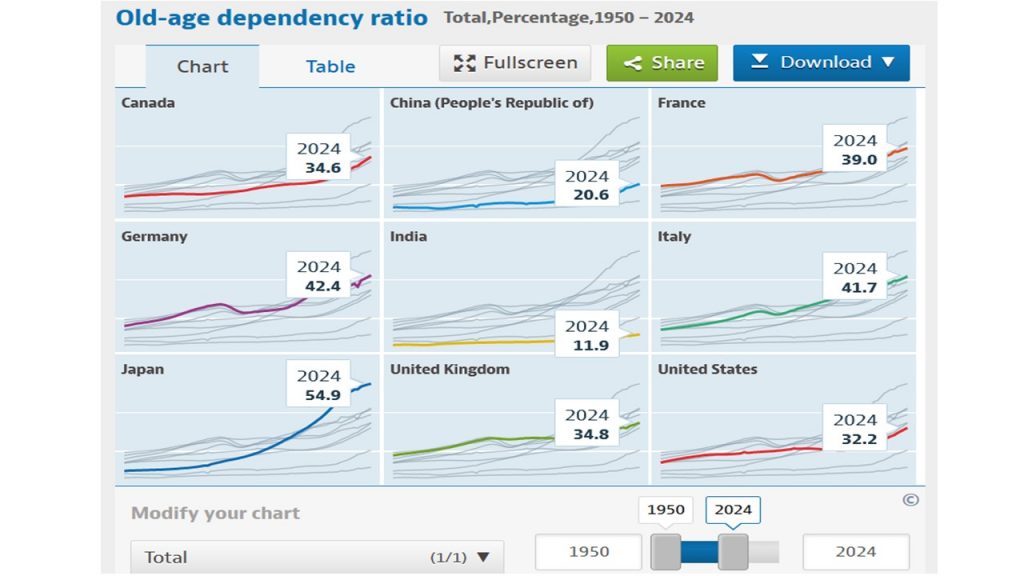
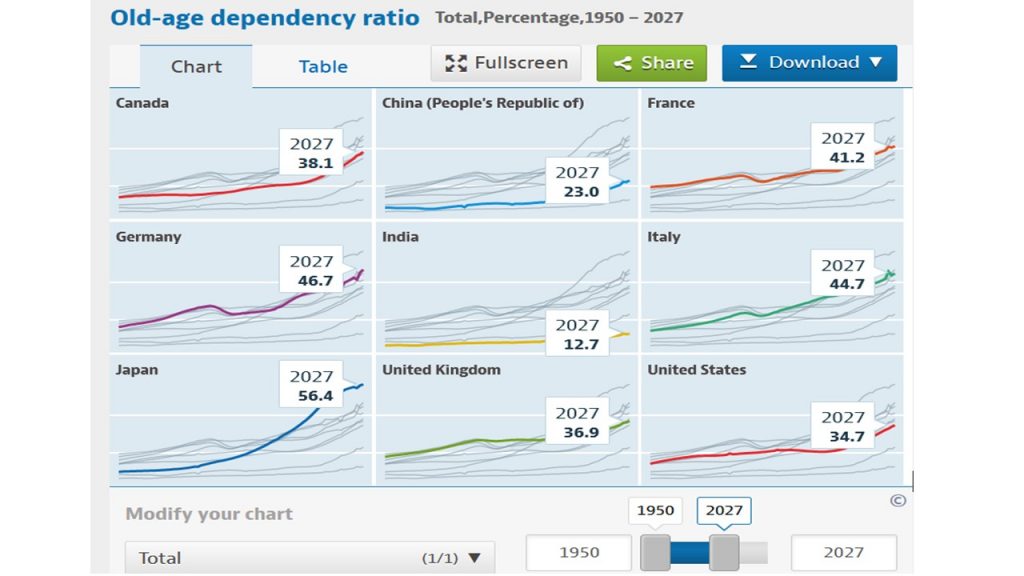
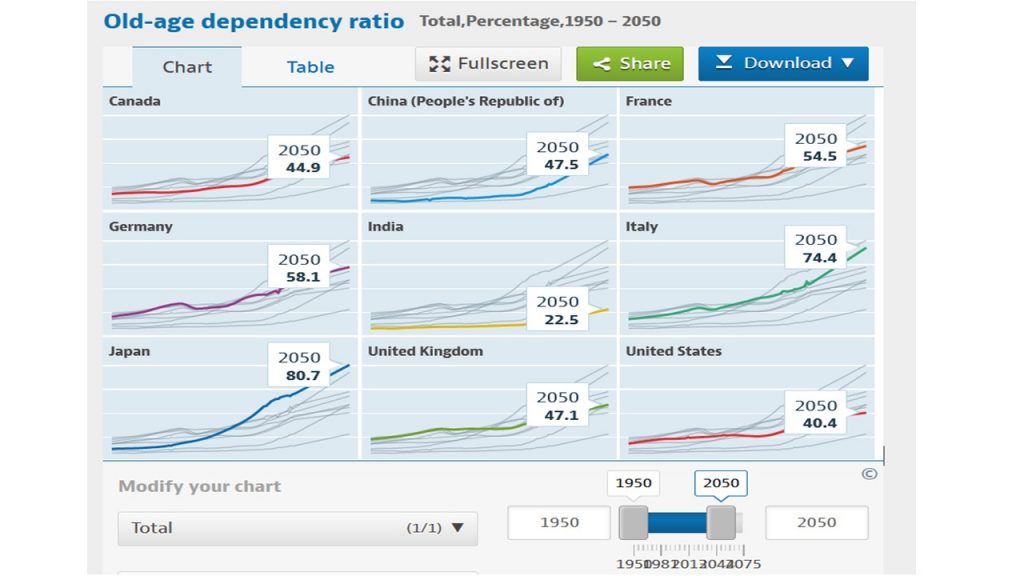
Several countries face an aging challenge now and in the near future. The OECD provides some basic data, figures and projections. All data to calculate the aging challenge are more subject to change than they used to. The Covid-19 rise in mortality rates has implications as the number of premature deaths of the elderly (65+) has risen even in the economically advanced countries. The so-called old-age dependency ratio is a widely used indicator to assess the charge or pressure on the working-age population (20 to 64) to finance those in retirement (65+). demographic ratio is defined as the number of individuals aged 65 and over per 100 people of working age defined as those at ages.
Major factors that have an impact on the ratio are mortality and fertility rates as well as migration, but also participation rates in employment for those younger than 20 or older than 65 years of age. Seminal shifts in participation of women in the labour force contribute also to reduce the old-age dependency ratio. An influx of about 1 million of refugees who have immediately a work permit like Ukrainians in Germany have a substantial impact as well. Life expectancy is expected to rise again after the years of reduction due to Covid-19. In 2024 and 2027 these ratios do not move too much. Extending the time horizon to 2050, when people born in 1985 would start to retire shows more reason for concern. Whereas in 2024 France, Germany and Italy are still fairly close to each other (2.4 percentage points), the gap starts to widen as of 2027 (5.5 percentage points). In 2050 Italy is projected to have an old-age dependency ratio of 74.4%, about 20 percentage points higher than France.
Okay, in the long-run we are all dead, says an economist joke, but changes to increase fertility or allowing more migrants in are not in sight for Italy. Therefore, the urge to react is increasing there. Younger generations might not be able or willing to foot the bill of high pension expenditure in Italy. Compared to Italy or even Japan the pressure on France is much less pressing, contrary to the national government’s opinion and policy initiatives to increase retirement age without parliamentary majority.
Source for projections and figures: OECD (2023), Old-age dependency ratio (indicator). doi: 10.1787/e0255c98-en (Accessed on 04 October 2023).
Avoidable Mortality
Mortality in many instances is avoidable. Estimates Mühlichen et al. (2023) for Germany are as high as 19% of all deaths in the years 2017 to 2019. For men the figure is as high as 24%, for women “only” 13%. The scientific interest in the concept of avoidable death originates in the interest to indirectly gauge the efficiency of health systems. In order to do this the authors estimated cause-deleted life tables in a fine graded regional fashion. Avoidable deaths are defined as deaths that occur before the age of 75 and are either classified as medically preventable or preventable through a different life style. The study applies a quasi-experimental design in comparing German speaking regions within Europe. This allows to measure the influence of health care systems on a general level within Germany, Austria, Switzerland and South Tirol in Italy. The study corrects for different age structures in these regions. For Germany avoidable deaths are substantially higher in the North than in the South. Additionally Eastern parts of Germany have higher avoidable deaths. Even the best performing regions in Germany have higher rates of avoidable mortality than Switzerland.
The differential to other countries health systems is worth a concern, because the expenditure in the German health system per 1000 population are among the highest in Europe (OECD 2021). Despite the high expenditure per head, avoidable mortality remains particularly high for German men and in the North and East of Germany. Lack of prevention of unhealthy life styles is most likely the decisive factor to explain the disappointing results. There might be another “unaccounted” risk factor that originates in the lack of sufficient preventative health care and environmental risks during the young age of the regional populations. 33 years of unification and a cut-off age of 75 mean that in East Germany the oldest people lived through 40 years of high pollution coal as primary heating system. Similar to Northern and Western Germany little concern and careless use of risky fertilizers might drive higher mortality decades after exposure. Life style patterns might additionally contribute, but are harder to assess in comparison. Research to clarify these differentials are just at the beginning. A valid conclusion remains: prevention is key, but it has many facets. 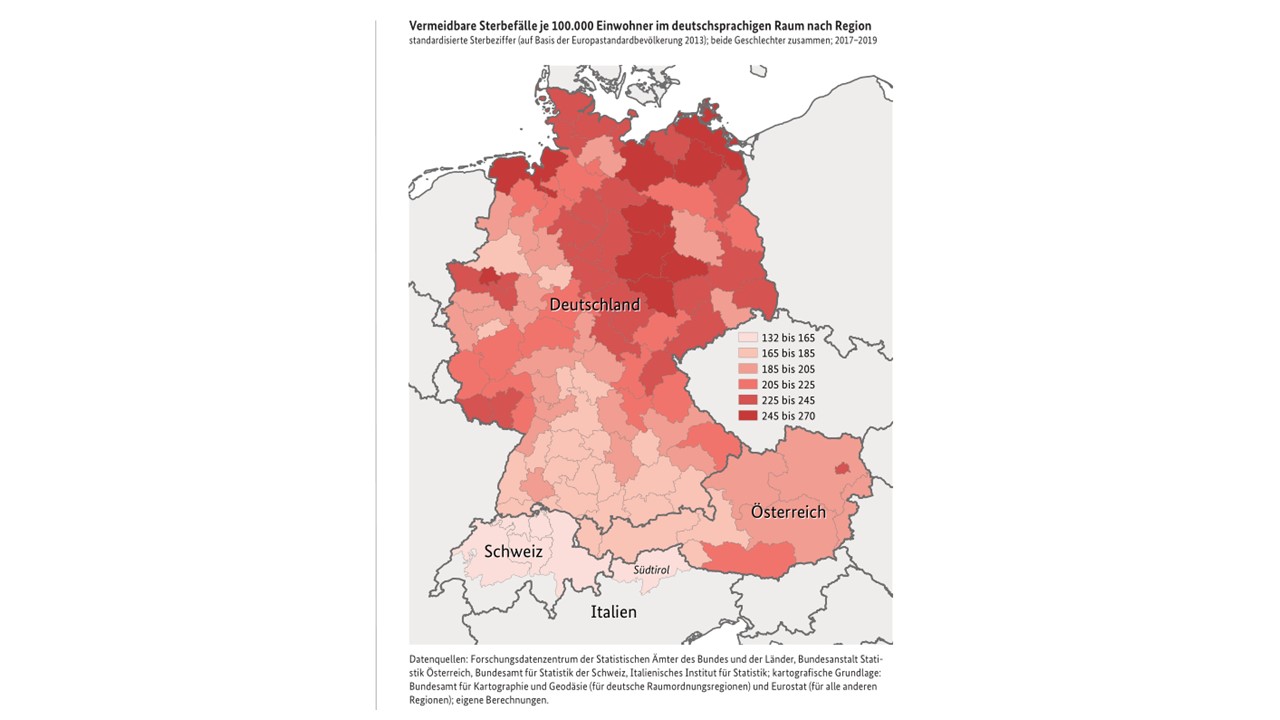
Nations Fail
Ever since Adam Smith wrote on the “Wealth of Nations” the topic concerns social scientists. The discourse around the wealth of nations has become even more fundamental these days. Beyond wealth calculated in economic terms we are convinced to add well-being of the population as well as the state of the environment into the accounting procedures like national accounts. But wait a second. Similar to the term wealth we have to widen our perspective in what is considered to be a nation. Shifting borders through wars (Russia aggression on Ukraine) or separatist tendencies of regions, (re-)unification of Germany or Korea (eventually) show that the nation is a concept in flux. Considering migrants from former colonies still as having residential rights in the colonising country shows, there is more to nations than a one size fits all nation concept.
Daron Acemoglu and James A. Robinson had published the book on “Why nations fail. The origins of power, prosperity and poverty” already in 2012. On the 3rd of October Germany celebrates its re-unification only because the Russian dominated German Democratic Republic (and the other Eastern European satellite states under Russian control) can be considered as a failed state. These Russian dominated states crushed private initiatives and build corrupt systems where party allegiance and hierarchical structures were overemphasised. Following Acemoglu and Robinson (chapter 10) the lack of diffusion of prosperity is likely to be the root cause. Even similar to the French revolution, which brought about tough measures of redistribution, the external threats to the post-revolution France demanded subscription of masses into armies to defend the young republic against aristocratic rulers in the surroundings. If monarchy in France is a failed state, the post-revolution France survives due to high identification with the republican idea. The Soviet dominated Ukraine is a failed state, but the Ukraine of today resists due to its willingness to defend its own republican ideals. To get virtuous circles of development started, inclusiveness across the board is necessary. Leave nobody behind, seems to be a shortcut summary. It is much easier said than done. Loosing younger generations in the sense that they no longer subscribe or feel part of an inclusive wealth of the nation is a highly dangerous path. Failed states have a history in failed inclusive social and economic practices. Democracies are at risks just as much as authoritarian nations. However, democracies have better institutional settings to address the lack of inclusion and in multiple ways.
When I celebrate the 3rd of October in the Federal Republic of Germany I celebrate (1) the accomplished failure of the GDR, its undemocratically elected elites, corrupt institutions and the failure of the thousands of willing collaborators of the Russia-backed regime; (2) the peaceful resistance movement, (3) the relatively short-lived humanitarian focus of the Russian leadership at the time to not send in the tanks and (4) the willingness of the FRG to support 20 million new citizens for many years to come (5) the allies of the FRG to accept the potential security threat of a strengthened Federal Republic of Germany, which might entail a shift in the balance of power in Europe.
And yet, even in 2023 we pose questions on what is the concept of failure, when authoritarian regime can still survive for sooo long and some still accomplish extensions. We keep questioning the sense of the term “nation” in modern times and across the globe. Too many wars are still fought in the name of a “nation” even if only a handful of military-supported leaders and single autocrats try to impose wars in the name of some rather vague or plainly mistaken claim of nationhood.
On the 3rd of October we celebrate that “nations can fail” opening a path into a more prosperous and inclusive society. Some nations fail, just because they were no nation in the first place. The GDR was such an artefact of international compromise as part of the overall “balance of power” and the Cold War. The result of this process gives so much hope to other divided nations (Korea) or nations under authoritarian oppressive rule. 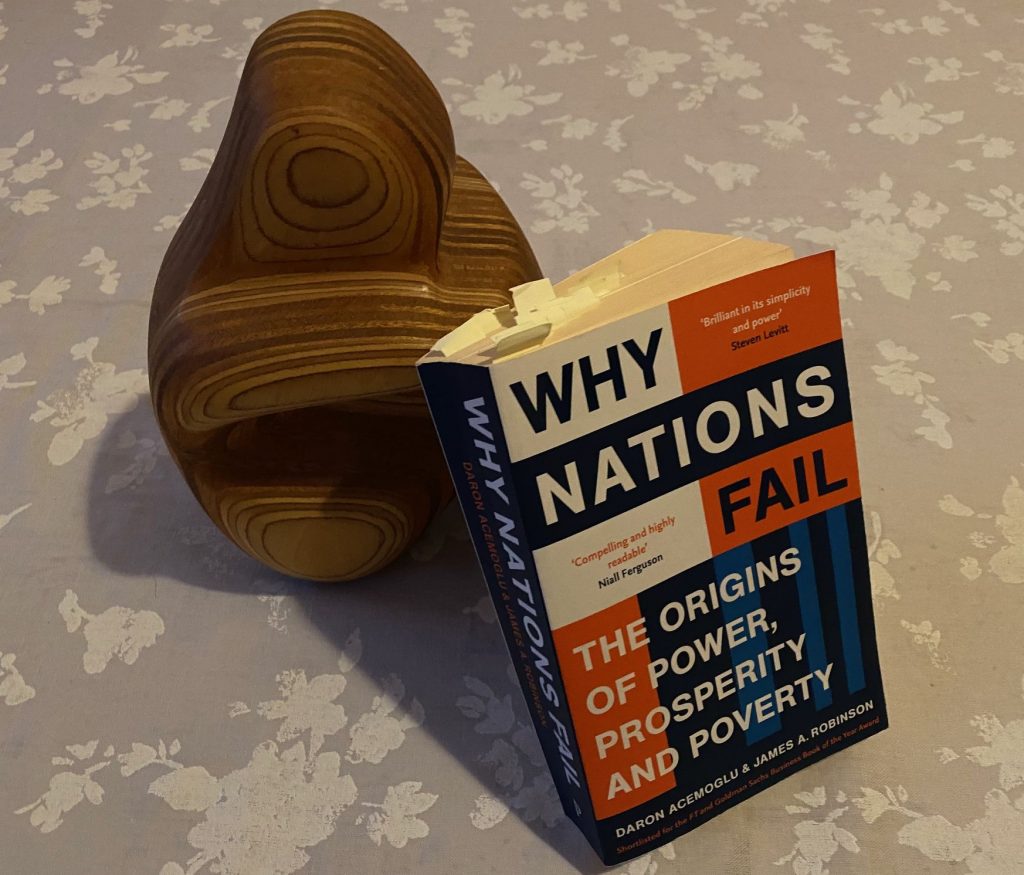
Komposition
Es ist eher selten geworden, dass sich große Häuser der Musik den Komponisten der Moderne widmen. Es sind wohl auch nicht viele Publikumsrenner dabei. Das liegt sicherlich zu großen Teilen an der mangelnden Bekanntheit der Werke moderner Komponierenden und ihrer Werke. Karlheinz Stockhausen bildet da keine Ausnahme mehr. Das Konzerthaus Berlin hat in seiner Reihe 2 x hören einen Abend einem Werk von Stockhausen gewidmet. „In Freundschaft“. Wichtig ist zu diesem Werk eine Einführung in die Kompositionstheorie von Stockhausen. Die serielle Komposition baut auf einer einfachen Struktur von Notengruppen auf. Christian Jost erläutert zusammen mit den Vortragenden in einzigartiger musikpädagogischer Weise die Komposition. Eine Information über Wikipedia vorab erleichtert den Zugang und lässt uns die Komposition vereinfacht nachvollziehen. Auf Youtube gibt es dann verschiedene Versionen für jeweils andere Soloinstrumente zu finden. Beispiel Klarinette hier. Die Basiselemente bestehen aus 1,3,2,5,8 Noten, also ein Gesamtthema von 19 Noten aus 5 seriellen Bestandteilen. Die Variationsmöglichkeiten bilden bereits eine vielfältige Auswahl plus den anderen Varianten wie Spiegelungen oder Transkriptionen auf höhere oder tiefere Tonlagen. Komponieren wird spielerisch und bleibt ein Klangerlebnis. Reinhören online lohnt sich zum Verständnis moderner Ansätze der Kompositionstechnik.

Schachnovellen
Eigentlich gibt es nur „die“ Schachnovelle von Stefan Zweig aus dem Jahr 1942. Heutzutage schon zu haben für 3 € (Reclam) als Reisebegleiter. Die Ausgabe ist gerade so groß wie ein Mobiltelefon. Darauf habe ich natürlich noch ein Schachprogramm mit unzähligen Rätseln und Partien, nur für den Fall eines Rückfalls. „Damenopfer“ sind im Schach eine elegante Art, die mächtigste eigene Spielfigur zu opfern, um einen strategischen Vorteil oder gar Schachmatt zu erreichen. Kurz gesagt, der König opfert seine Dame, damit er den anderen König überwältigen kann. Shakespeares Dramen klingen dabei an.
Aktuelle Literatur „Damenopfer von Steffen Kopetzky“ setzt ebenfalls auf diese Analogie. Aber zurück zu der Schachnovelle. Meine Lesart der Novelle, bei der aus dem kleinen Bauernjunge, der spätere Schachweltmeister geworden ist, bezieht sich auf die Menschheits- und Realitätsflucht des Schachspielens. Eintauchen in die Welt der Figuren und verbundener Fantasien bietet sich an. Neben Königen und Königinnen, stehen Türme von alten Ritterburgen, Pferde samt Reitenden als Teil von Reitturnieren, Läufer mit Kurz-, Langstrecken oder Marathondistanzen, sowie die Menge an Bauern, die für Nahrung sorgen, Deckung bieten und die Logistik bewältigen. Essentielle Arbeitende eben. Schon bei Verlust eines einzigen Bauers ist die Partie bei Fortgeschrittenen meistens schon verloren.
Das Eintauchen in die Parallelwelt des Schachspielens kann zu schizophrenen Verhaltensweisen führen. Ausblenden aller realen Vorgänge und Leben in mehreren möglichen gleichzeitig stattfindenden Parallelwelten als Varianten von Schachpartien verlangt mentale Stärke. Ab einem gewissen Niveau des Eintauchens in die Schachwelten, gleichsam von Schachnovellen, wird die Rückkehr in die real stattfindenden Vorgänge ebenfalls schwieriger. Spielsucht kann die Folge sein. „Gamer“ mit ihren virtuellen Welten und Abenteuern wissen sicherlich nur allzu gut, welche Gefahren dort lauern.
Stefan Zweig hat seine Schachpartie im realen Leben gegen den Nationalsozialismus verloren. Die gewählte Selbsttötung seinerseits war ein Königsopfer, das ein spielerisches Damenopfer in den Schatten stellt. Zu Recht steht die Schachnovelle oft auf dem Schulcurriculum, nicht nur da, wo Schachspielen Unterrichtsfach ist. 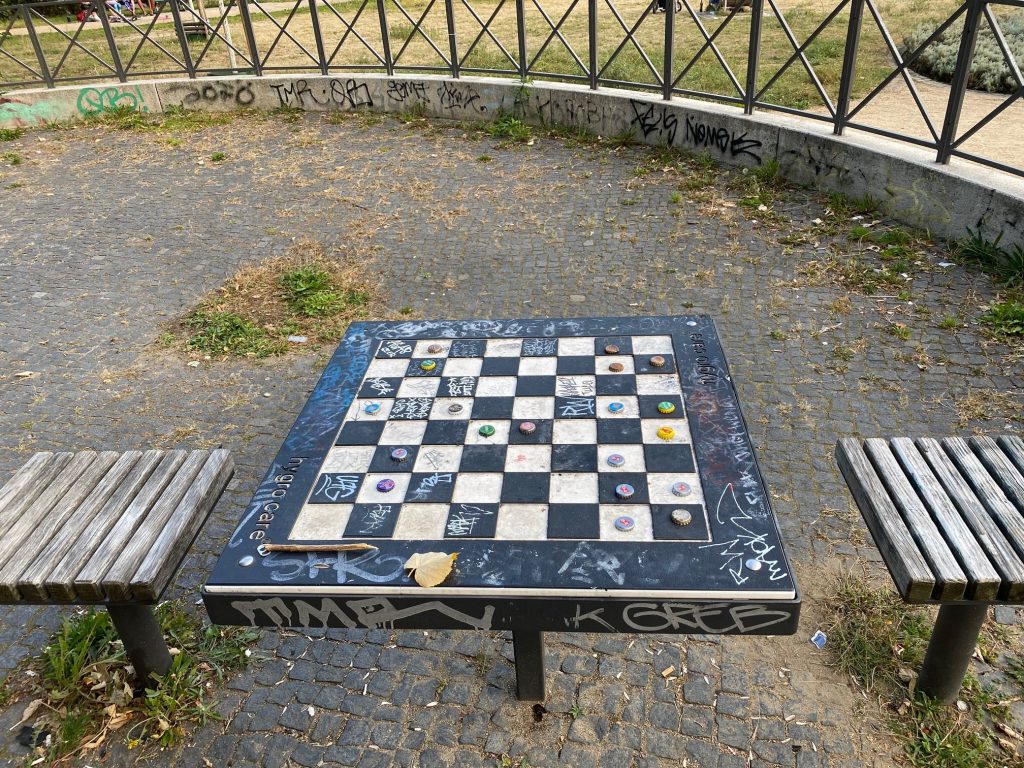
Marathon Prep
Most people, including many sociologists, believe preparation for a marathon is a rather lonely exercise. During hot summers you get up early and run alone across the streets in your neighbourhood or in a green area. Even on weekends you tend to put on your running gear at least once to chip in a few extra miles or once or twice before the marathon a longer distance test run of 20, 25 or 30 kilometers. Just for the sake of testing to withstand more pain, like in the real event. Running guides in form of books, apps reach “cult status”. In sociology we teach students about the social trends of individualisation ever since the book by Putnam “Bowling alone”, which depicted the new kind of lonesome person going alone to the bowling hall for exercise, as social life seems to evolve towards “individualised” leisure time and social life. Social capital seems to get lost on the way.
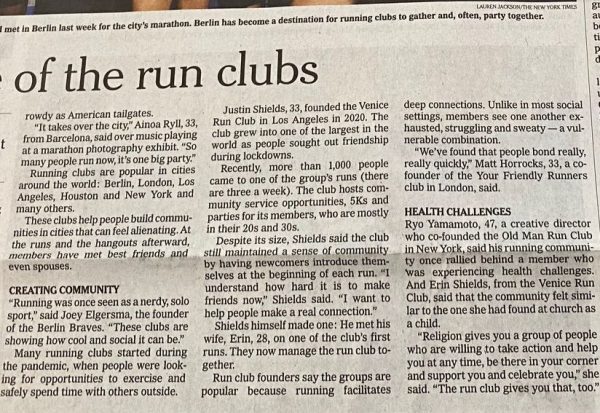
“The New York Times International” published an article and photo by Lauren Jackson on September, 27 (2023) page 17 in the sports section, which states the not so new phenomenon of “run clubs” (see extract on image below). These clubs bring runners from all walks of life together on a regular basis to train jointly and add a social function to the club as well. Just like previous sport clubs or socialising bowling groups did before, they meet and greet as well as party and celebrate together. Even travelling thousands of miles to distant events occurs in groups. Berlin seems to be a very attractive location for such clubs to go to. For some the sport stays in front of the activities, but for quite a few the social and party-like atmosphere is just as important. Even a local Berlin newspaper portrayed an older runner who stops in-between to have a small glass of alcohol-free beer on a terrace 2 steps from the official track with friends and family. Most people take their time record rather seriously, but the event is to enjoy community and celebration. Lauren Jackson even equates this to some forms of religious practice. I’s rather call this the other side of the same coin. Lone practice and meditation like running prepares a person to enjoy community (again). Extremes in both directions are part of the bell-shaped probability distribution of runners across the lonely-crowded spectrum of running experiences. The Marathon 42km 195m certainly has some historical even mystical connotation. While watching the finishing line at 42 km, just after the hypothetical run from Marathon to Athens in ancient Greece, you see many worn out persons, but also the many happy faces. After the run you meet your peers to exchange on stories and anecdotes around the track. Success and failure, just as in other team sports become a topic of conversation and shared experiences. These are community building events as wheel chairs and hand-driven bikes are part of the Berlin event as well as the in-line skaters the day before. In Berlin you get a feeling that running world records (women 2023, men 2022) can go hand in hand with the running fun for many. From “bowling alone” to “running together”. Sounds good to me.