Energy Storage

On a sunny and windy day, even in winter or spring, renewable energy is abundant. If demand is stable prices will drop. Prices will rise again as demand for energy picks up. Hence, this is an obvious case for trading opportunities. All you need is … energy storage. All so-called prosumers, short for producers and simultaneously consumers have a lot to gain if they are able to store energy when it’s abundant and cheap. Sell it when it is expensive or use it yourself if needed. Just keep an eye on the costs of energy storage. A stylish insulated carafe is a well known example of storing hot water for astonishingly long time. Insulation is key to store transformed electric energy here. Other options use kinetic energy like pumping water to a higher level and then generate electricity again when the water returns to the lower level. Of course, batteries are a simple way for energy storage as well. Costs seem to come down rapidly and less environmentally hazardous materials leave the laboratory almost every month. It is about time to consider this seriously. More and more cities have understood that energy storage can generate cash for them (Example Feuchtwangen) and appears to be a worthwhile investment for a local power generating community. For the time being my favorite energy storage is the insulated carafe. It is often the beginning of energizing conversations.
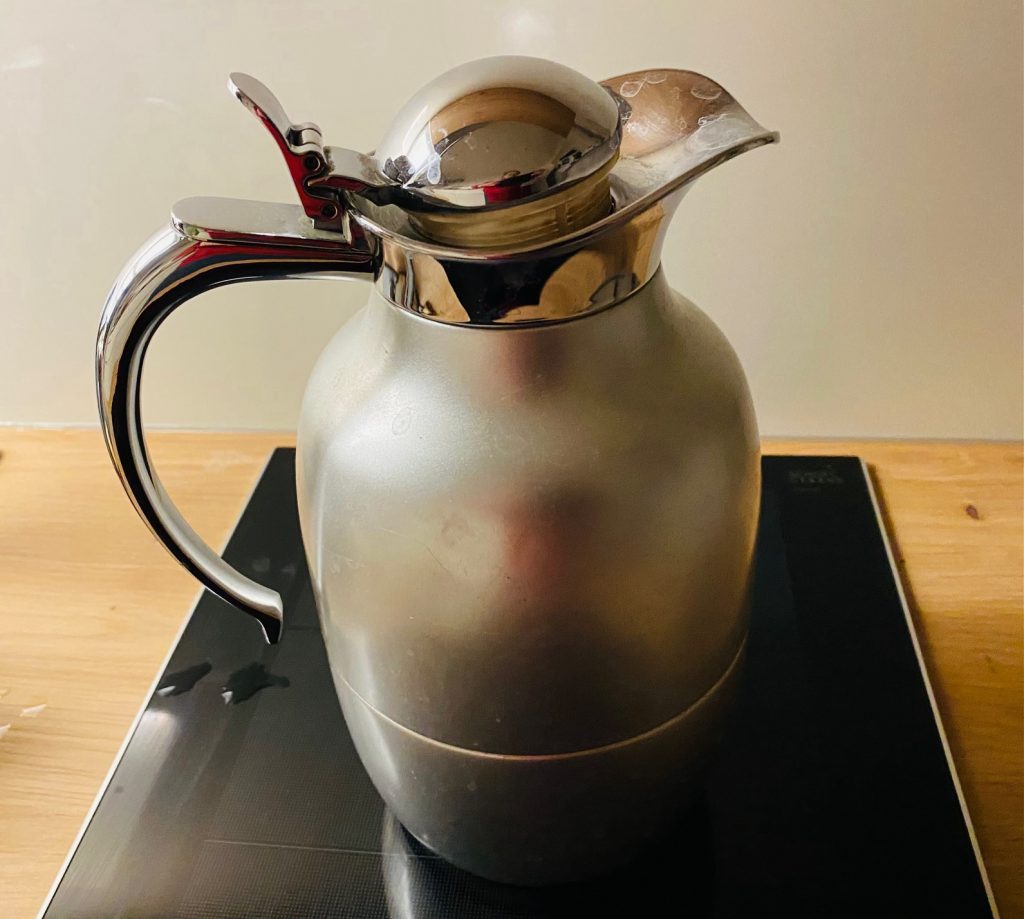
Old school energy storage

Nocturnes

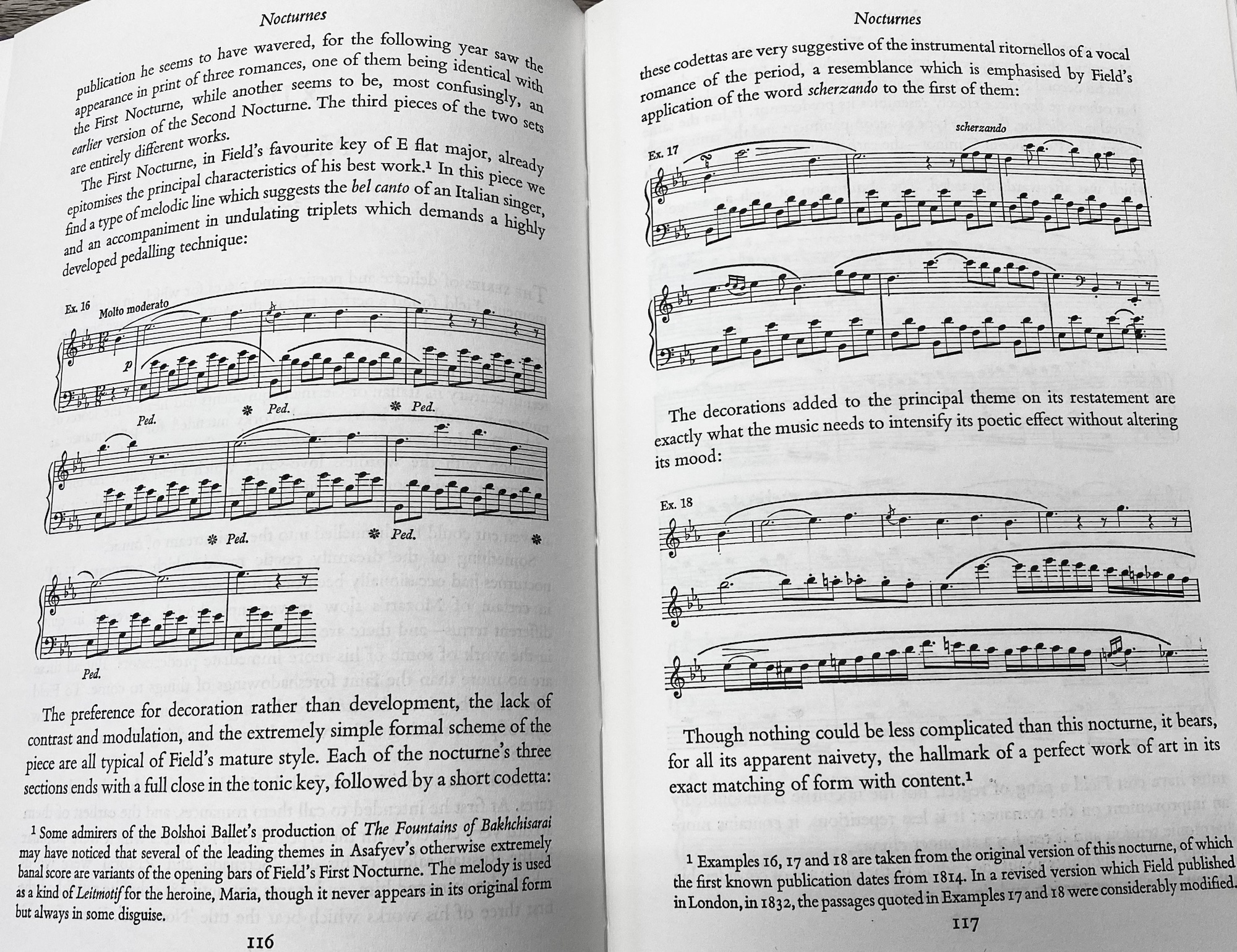
Contrary to some people’s belief “Nocturnes” is not only the denomination of the late opening of splendid shopping centres selling French fashion, but the name of music pieces. The origin of the Nocturnes as innovative form of composing is attributed to Irish born and bred John Field. The Polish born Frédérik Chopin developed the art form to perfection and he is the person who is also remembered for master pieces of this type of short romantic music pieces.
Mozart has left a famous piece entitled “Eine kleine Nachtmusik” and previous lesser known attempts of this kind were named Notturni, popular “Serenade” or “Pastoral”. All these Nocturnes shared the basic emotion, which we might call nowadays some kind of love-songs (Piggott, 1973, p.115). “Bel canto”, the tradition of emotional recitation of songs or arias, Paganini’s virtuous violine play were predecessors of the Nocturnes.
John Field published the first 3 pieces named “Nocturne” in 1814 and continued to produce new Nocturnes and revising former ones. These somehow more easy-going melodies or phrases often written in E or A flat major are technically less demanding for piano players than the later ones composed by Chopin, but their “charme” lies especially in their simplicity. Reducing complexity of sound rather than the virtuous effect seeking of a tune could attract large audiences. After the rebellion in France in 1830 and the foundation of independence of Belgium in the same year, so-called high culture had to address a lot widely differing emotions.
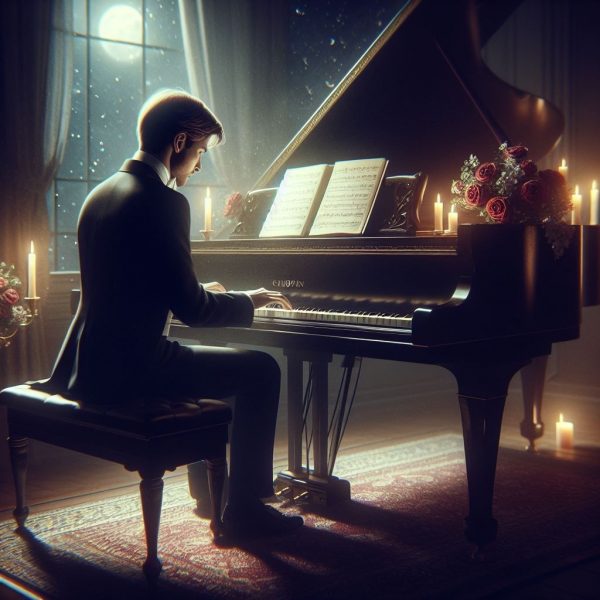
Maybe, in 2024 we are less surprised to rediscover the value of straightforward emotional tunes when even so-called high fashion shows in Paris return to more simplicity.(Image: KI Dall-E, Composer plays on grand piano Nocturnes by Chopin with romantic flair, photorealistic style on 2024-3-5).

Paris 1830s

The music life in Paris in the early 19th century, almost 200 years before now, was incredibly rich. In 1828 the young Flotow arrived in Paris to receive lessons. The pianists Liszt, Chopin, Fields and Czerny passed or lived for longer times in Paris. The innovation in this period of romantic music and operas saw also a fierce competition among those talents. It was no easy task to find your niche to thrive in composition or in both performing and composing.
The 1830s had a rich urban bourgeoisie, which animated and indulged in festive events of live music and social life. Friendships of Chopin and Sand are a testimony for this. Similarly, the young Flotow and Offenbach paired to find their place in the Paris music salons and society of that time. The biography of John Field, written by Patrick Piggott (1973, p.73-81) supports this density of musical experience. The period is also characterized by the fast industrialization and the rise of the global trade. The musical life found refuge in the romantic period and more and more artistic performances by musicians. Theatres, opera houses, concert halls and private salons were meeting points of the upper social class which practices networking in rather closed circles with rather rigid routines and admission at the time.
In architecture the Operas became meeting points and a matter of national pride with National Operas contributing even to national identities. The opulent “Palais Garnier” in Paris was started in 1861 to become an iconic place in the new Paris with the huge boulevards à la Haussmann. The wealthy citizens cultivated a new lifestyle of a networked upper class that had the leisure to participate in the masses of modernity. Cultural events of all kinds filled newspapers and specialized editions. There were inner and outer circles of influence in the economic, military, political and cultural spheres.
Recommendation letters were a real currency for entry in each of these circles. Some of these social practices, have still a lot of currency even in 2024. In short, in the 1830s Paris was the place to be. Compositions of that time still fill concert halls today and their music is abundant on the new music platforms and streaming as well.

L’échiquier

The game of chess has been subject of an ever increasing amount of literature. Not only historically the game, where two kings fight against each other, but the queens are the most powerful figures on the chessboard attracted a great deal of attention. We studied chess in books and watched live tournaments between the best players of the world. Most of this has successfully moved online and we have gotten used to losing against computers for almost all human beings some time ago. The internal federation of chess FIDE lists the top players male and female. The calendar of face to face events is still impressive. The federation operates somehow like a platform of players, as well as for players, to organize their lives as chess players. Anther kind of chess literature is the one that is constructed around the lives of chess players. Some characters get really absorbed into the mental or virtual world of the dialogue between 2 or more characters or players. The real world experience and the game on the board become intertwined or entangled. Losing or winning, to win or not to win, may unbalance whole personalities. Beyond the “Schachnovelle” von Stefan Zweig we have a new addition of fictional writing with autobiographical traits by Jean-Philippe Toussaint (2023) on our desks. « L’échiquier » is a story unfolding in 64 chapters just like the 8 x 8 spots on the chessboard. Of course, the story does not unfold in a linear fashion. It seems as if the players or opponents even change as the game unfolds. Maybe there are more than one game in action. Simultaneously as in some chess tournaments. Some games are blitz games taking just a few minutes, others go on beyond a lifetime. The experience of playing chess even against yourself has a psychological and sociological dimension. You can go round in circles for some or you are like “bowling alone” in the individualized society. About time to shed an additional light on the mystery of the chessboard. Self isolation with a chessboard was also a way of coping with the Covid pandemic. Some still suffer from long Covid and cures are not always easy to find.

L’échiquier, chessboard, Schachbrett

Folon Magritte

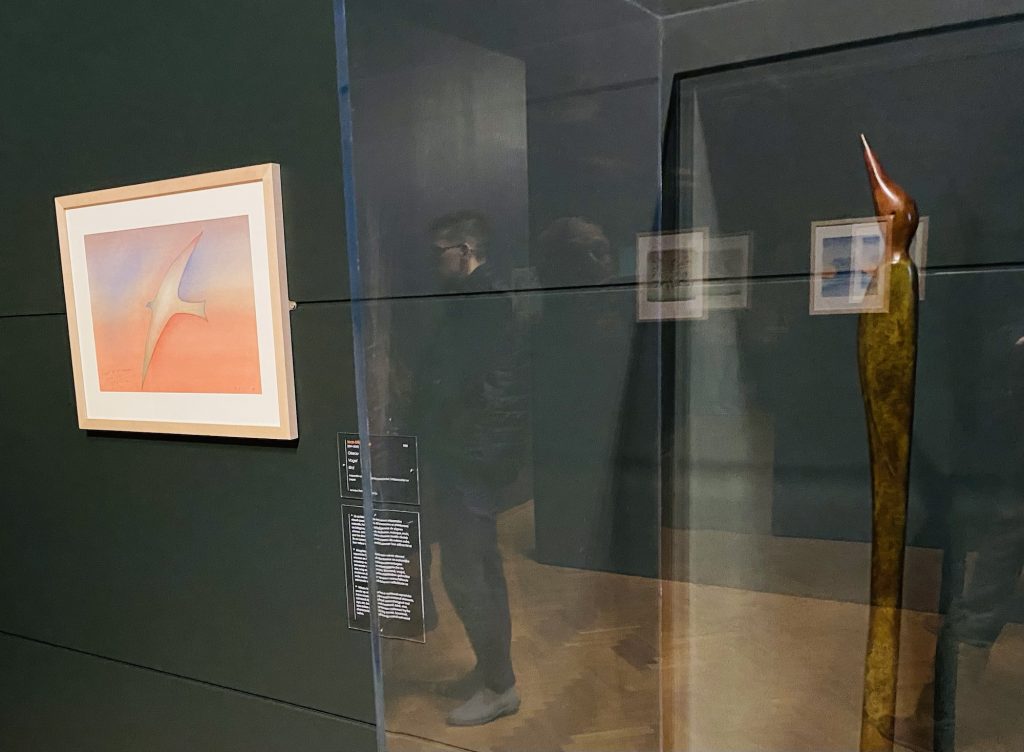
The exposition in Brussels on Folon and Magritte demonstrates the impact the latter had on the former artist. Both developed an iconic style of painting. Folon paintings apply pastel colors on paper. This style transforms images through the softened sometimes slightly blurred representations near a dream like realization. On the contrary in his sculptural work he uses hard materials to stimulate imagination and abstraction from reality. The side by side representations of Magritte and Folon is more a study in tracing influences and motifs across decades. The honor is just as much to Magritte as it is flattering Folon. Magritte had changed the life of Folon with his paintings and perspective on life beyond realism. Magritte‘s legacy lived on and Folon developed surrealism into a widely recognizable style with his paintings as well as sculptures. In walking around Brussels in 2024 you will inevitably come across some of the sculptures reflecting the work of Folon. The Folon foundation is continuing the pedagogical journey of the surrealist art movement well into today and tomorrow.

Folon Magritte Exposition Brussels MRBA 2024

Schubert Franz

Franz Schubert hatte ein kurzes Leben. Geboren in 1797 verstarb er bereits mit 31 Jahren. Seine Lieder werden nach wie vor viel gehört und aufgeführt. Mit 10 Jahren wurde er vom Hofkapellmeister Salieri in Wien bereits als Sängerknabe in die Hofkapelle aufgenommen, was gleichzeitig die Aufnahme ins Stadtkonvikt bedeutete. Seine Lieder wie „Der Lindenbaum“, „Die Forelle“ oder „Die Rose“ blieben lange Standards in den Musiksalons und Konzerthallen. Beeindruckend bleibt auch die Schaffenskraft des jungen Schuberts der in seinem „Liederjahr“ 150 Lieder komponierte. Seine Versuche eine Oper zu schreiben waren weniger erfolgreich. Das hat dann fast 200 Jahre gebraucht bis die Pariser Opéra Comique diesen Traum Schuberts erfüllt hat. Vielleicht hatte es etwas mit seinem Lehrmeister Salieri zu tun oder den hohen Ansprüchen der Wiener Klassik in der damaligen Zeit. Friedrich von Flotow hatte den Weg nach Paris gefunden und war sich der Bedeutung des ausdrucksstarken Librettos bewusst. Orchestrierung zur Verpackung der Lieder wird dabei bedeutsam. Flotow sollte das Oeuvre Schuberts bekannt gewesen sein. Erfolge mit eingängigen Melodien haben beide feiern können. Jeder auf seine Weise.

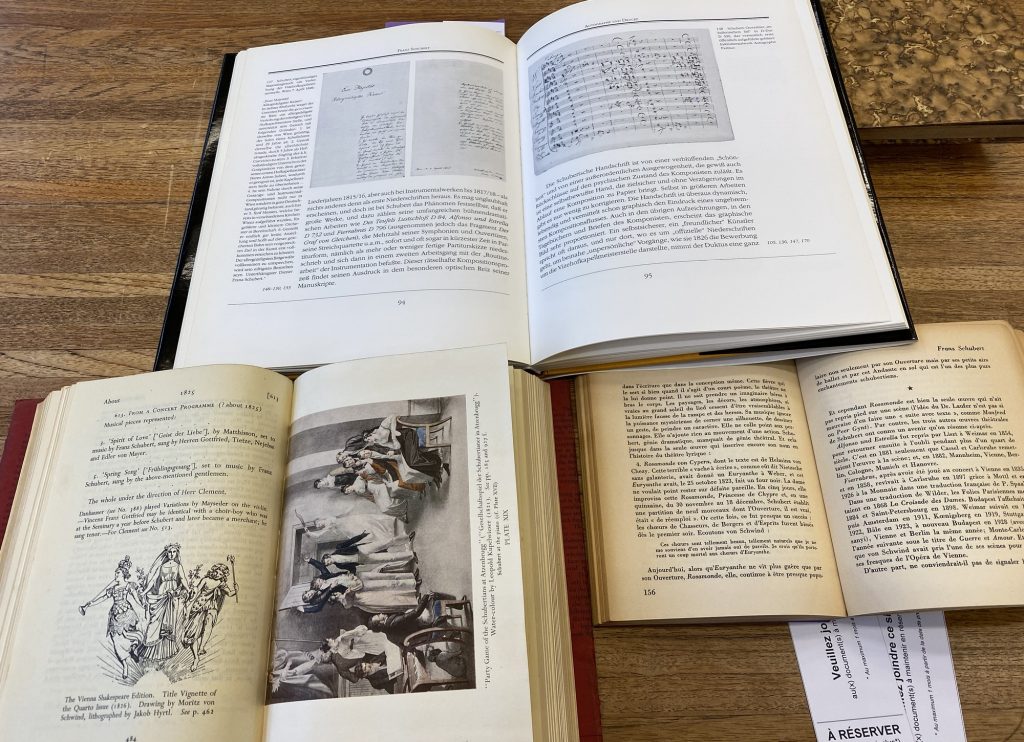
Schubert Sekundärliteratur

Flipbook

We all enjoy books that are real page turners. Nowadays, we still enjoy the virtual impression of turning pages when we read. Okay, that is a bit old school, I believe. For all those who prefer to hold a page turning book in their hands it is about time to try the e-versions of flipbooks. You may include the sound of turning a page just as in the real book format. Alternatively, you may listen to your favourite music on the same device.
For that reason the chronological blog entries are also available as Flipbooks.
It is still in test runs, so don’t hesitate to send me feedback at klaus(at)schoemann.org
The data base has grown rapidly. Take your time to scroll and read.
2024 January – February.
2023 September – December
2023 May – August
2023 January – April
Bigger screens allow for more comfortable reading, but make sure your eyes do not suffer too much. Adjust the light as low as possible for more relaxed reading. Print formats are evolving and so does the concept of a book or a reader. The content is the conceptual idea. The appropriate form for the content is a matter of an additional choice. Not only books have changed to electronic versions. Libraries are also adapting to the new forms of reading on screens and co-working. Flipbooks are a kind of hybrid version satisfying a readership in transition before endless scrolling will take over. The content is key and the rest is POSSE.

Personal Health

Most people would agree, health is a personal issue. From the onset of life, we have package of genes that predetermine a number of factors of our personal health. Epigenetics has taught us there are many factors to take into account additionally. Environmental factors have huge impacts as well. Improvements in the availability of medical devices in the hands of individuals as well as AI systems on portable devices like smartphones facilitate the monitoring of personal health. Several indicators of early-onset of illness can be retrieved from such devices. Dunn et al. (2024) show that prior to the onset of symptoms of Covid-19 or influenza portable devices can indicate the presence of infections through indicators of resting body temperature, heart rate/min, heart rate variability/millisecond or respiratory rate/min. Combined with the indicators of air quality, indoors as well as outdoors, the presence of allergens a much more personalized data set emerges which can easily be part of an AI-assisted diagnosis. More abundant personal health data and analytical power allows remote and digital health applications to inform patients, medical doctors and the public at large. Digital health technologies are only at the beginning to unfold their potential. Prevention becomes more feasible using such devices, medical professionals should be allowed to focus on interpretation of data and treatment rather than simple data gathering. Thinking about digital health technologies points in the direction of dealing with climate and environmental hazards as sickening causes more forcefully. Personal medicine and personal health are, after all, still heavily dependent on health and safety at work, commuting practices and all sorts of pollution. Personal health, however, is a good starting point to raise awareness of the potentials of digital health technologies to better our lives.
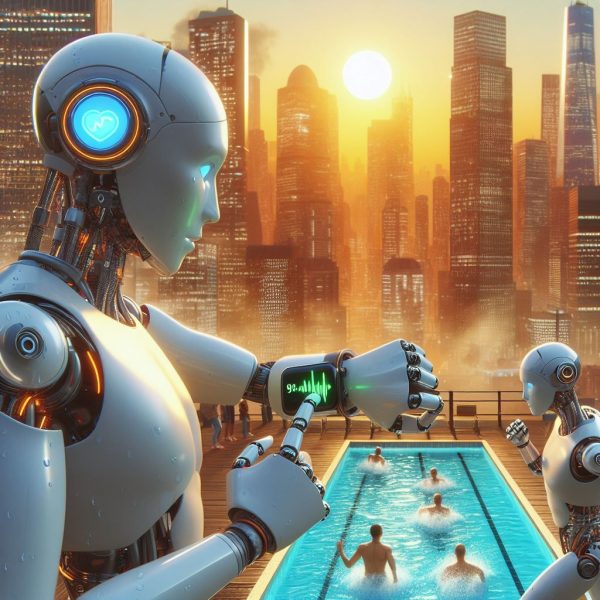
(Image: AI MS-Copilot: 2 robots run in a city. They sweat. The air is full of smog. 2 other robots rest near pool. All look at their wrist watch showing heart beats)

Error 444

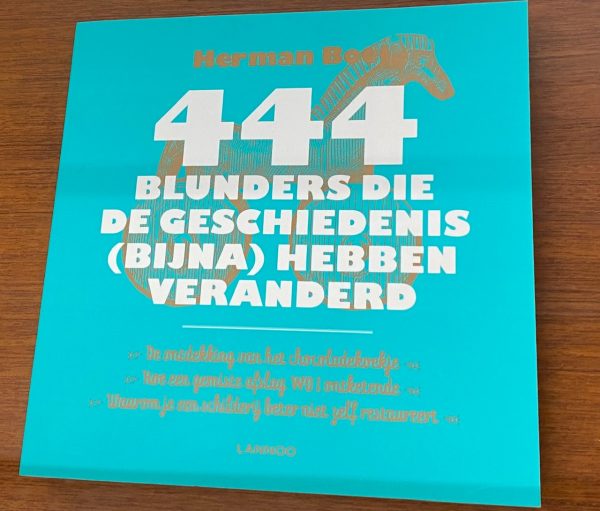
The error message 444 is a not so rare encounter while surfing on the web. The error code 444 stands for the message that from the side of the server the connection is closed without any additional message. The occurrence leaves you without further indication of what exactly went wrong in building a connection to a web service or website. You just simply get shut out and that’s it. It may be tough on you if concerns your online banking or other access to vital services delivered through the internet.
In organization science and social science there are many new studies dealing with the finding, dealing, coping or handling errors. It has become much more acceptable to deal openly with errors, blunders or failures. From an individual as well as organizational perspective the cultures that deal openly with these events seem to have a certain advantage to overcome the consequences of errors at all or faster than others.
In some biographies failures are part of the lessons learned throughout life. It is deemed important to acknowledge failures or paths not taken for better or worse. Organizations just like individuals seem to learn more intensively from their failures or omissions than from everything seemingly running smoothly. Learning curves are faster also for “machine learning” if you have access to a huge data set which contains ample data on failures rather than encountering failures after release. Hence, the compilation of errors is an important part or early stage of a learning process. Failed today? Fail again tomorrow. You’ll be really strong the days after although it might hurt.

AI Collusion

In most applications of AI there is one system of AI, for example a specialized service, that performs in isolation from other services. More powerful systems, however, allow for the combination of AI services. This may be useful in case of integrating services focusing on specialized sensors to gain a more complete impression of the performance of a system. As soon as two and more AI systems become integrated the risk of unwanted or illegal collusion may occur.
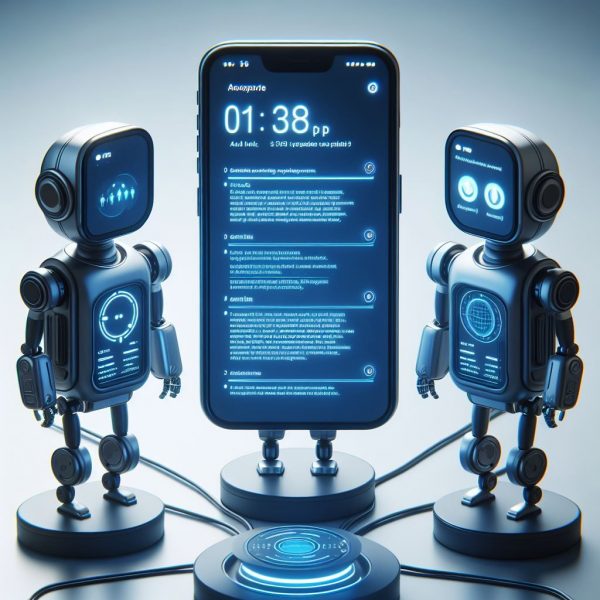
Collusion is defined in the realm of economic theory as the secret, undocumented, often illegal, restriction of competition originating from at least two otherwise rival competitors. In the realm of AI collusion has been defined by Motwani et al. (2024) as “teams of communicating generative AI agents solve joint tasks”. The cooperation of agents as well as the sharing of of previously exclusive information increase the risks of violation of rights of privacy or security. The AI related risks consist also in the dilution of responsibility. It becomes more difficult to identify the origin of fraudulent use of data like personal information or contacts. Just imagine using Alexa and Siri talking to each other to develop another integrated service as a simplified example.
The use of steganography techniques, i.e. the secret embedding of code into an AI system or image distribution, can protect authorship as well as open doors for fraudulent applications. The collusion of AI systems will blur legal borders and create multiple new issues to resolve in the construction and implementation of AI agents. New issues of trust in technologies will arise if no common standards and regulations will be defined. We seem to be just at the entry of the new brave world or 1984 in 2024.
(Image: KI MS-Copilot: Three smartphones in form of different robots stand upright on a desk in a circle. Each displays text on a computer image.)