
European Integration is slow and hard to come by. For others it is moving too fast (Brexit). Cultural diversity is a real asset of the EU. The economy or the economies are powerful on an international scale. Nevertheless, the diversity concerning the tolerance of fiscal deficits is still widely spread across the Member States of the EU (see image below). Some states seem to play it cool and run relatively high deficits compared to the EU averages. In OECD comparisons most of the above average fiscal deficits are closer to or even below OECD averages over time (link to pdf-file OECD, 2024). Within the EU differences in government expenditure as % of GDP or the indicator of Gross public debt according to the Maastricht Criteria range from 20% to 160% as percentage of GDP. This entails a different level of resilience to future crises. After we managed to leave the previous 3 crises (financial, Covid-19, energy) it is time to prepare for what might come next in terms of challenges. Preparing public deficits to be able to soften economic shocks is essential to be able to sustain yourself and support others. We seem to be a bit off-target to coordinate fiscal deficits across the Union. Eastern and Northern countries have suffienct scope to support expansionist fiscal policies, be it in the realm of a defence union or to address climate change. Southern Europe will find it more difficult to raise additional funds to prepare now for future challenges. Fiscal deficits might even be not only an economic phenomenon, but a cultural one as well. If we compare Japan with a deficit running at 240% with South Korea with 50% Asia is showing even larger diversity in terms of fiscal preparedness.
An economist’s stance on fiscal policy and fiscal union might depend much more on her/his region or country of origin than economists might want to believe.
Images: OECD Economic Surveys: Belgium 2024, OECD Publishing, Paris, https://doi.org/10.1787/c671124e-en. p.17. 
Indigo Waves
„Indigo“ is an almost mystical colour. Its deep blue nature refers to profoundness and in combination with oceans to a surprisingly still largely unexplored world of biodiversity. Additionally, in association with endlessly forthcoming and retreating waves, indigo reveals its many possible shades. Oceans separate or link continents and it is this feature of Oceans which is explored in the exposition “Indigo Waves and Other Stories” (Gropiusbau). Beyond our all to common focus on the transatlantic relationships, “Indigo Waves” explores the links between the African and Asian continents. Embarking on a new narrative for the Afrasian Sea, i.e. the Indian Ocean, we are taken to new horizons through the continuous challenge to our value systems, comprehension of art, poetry or culture more generally. The exposition, through multiple challenges, succeeds in displacing us into the context of other perspectives. Following Oscar Murillo, imagine to view the water roses from Claude Monet (Les Nymphéas) from below the surface. What do you expect? In Europe? Near a barrier reef in the Indian Ocean? Beauty is often not visible at first sight, yet it is co-determined by the currents that build and potentially destroy it (compare photo from exhibition below). The balance of social ecosystems is easily messed-up just like the beauty of ecosystems in nature. “Indigo Waves and other stories” tells us other versions of the colonial stories most of our history books told us for centuries. It is an eye-opening exposition, but probably not the way we expect. Following a poem towards the end of the exhibition by Tishani Doshi “Do not go out in the storm”, we are drawn into the ambiguity of our existence irrespective of the continent of origin. Jack Beng-Thi preserves a poem from Jean Joseph Rabearivelo in his artistic book creation and installation to bring to light “indigo waves”. “vos yeux clignotent dans l’azur, et je les appelle : étoiles. ” (Translated suggestion: “your eyes blink in the blue sky, and I call them: stars). 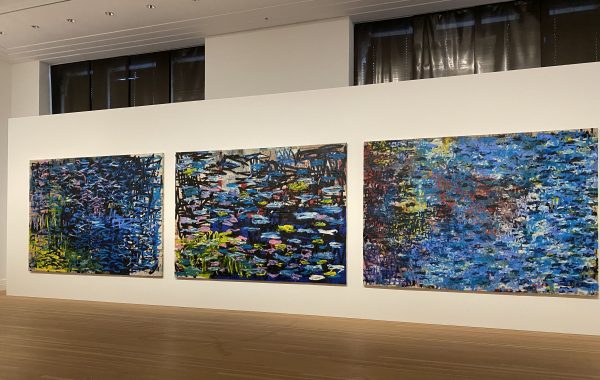
Ausblick 22
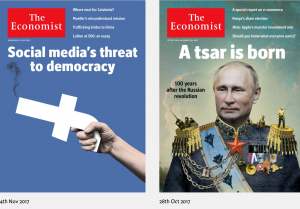
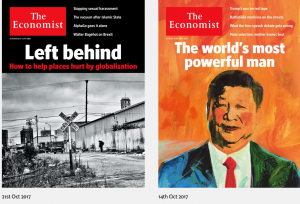
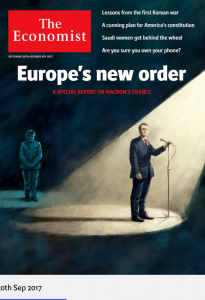
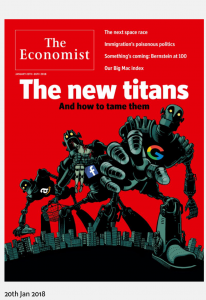
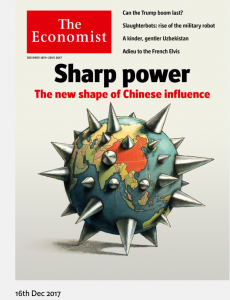
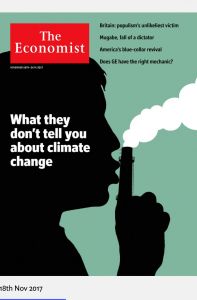
Vor dem Ausblick steht meist der Rückblick. Die Satireproduzierenden bereiten schon den Jahresrückblick vor. Da habe ich mir mal wieder die Frage gestellt, was bleibt von 2021. Beim Stöbern in Bibliotheken und Archiven dazu, hat mich die Sammlung von Zeitschriften des „Economist“ von vor 4 Jahren beeindruckt. Hat sich doch an den Fragen und Themen von vor 4 Jahren wenig geändert. Es war nicht nur 1 verlorenes Jahr, es waren gleich 4 davon. Aber langsam, was waren damals die Themen für Titelblätter? Und heute? Visual Social Science ist ja schon eine neue Forschungsrichtung und die Macht der Bilder ist beeindruckend. Eigentlich wussten wir, was auf uns zukommt. Das Image für Corona war auch schon mit China verbunden, nur eben als Stahlkugel statt als schleichendes Virus. Lügen über Klimawandel waren ebenfalls Thema der Presse. Noch Fragen? Nur bitte kein Weiterso!