
Commuters dissatisfaction

Commuting to work is only in few cases a choice. The stress associated with commuting is not negligible. Most employees report low satisfaction levels with commuting to jobs and subsequently this has a negative impact on overall satisfaction with one’s job. A study on urban China shows that employees on formal work contracts can often compensate with shorter weekly working time or higher earnings from work, but only partially. The negative impact of commuting on job satisfaction is rather sticky and substantially higher for employees on informally employed workers in urban China, who do not have resident permits in urban areas. With millions of workers commuting daily to work beyond China, the evidence suggests to take commuters’ dissatisfaction more seriously. Public transport infrastructure has to keep pace with more people working in urban areas, but willing to accept long commuting distances. If we add commuting time to working time, the long hours of work over years constitute a considerable health hazard.
Disaster tourism

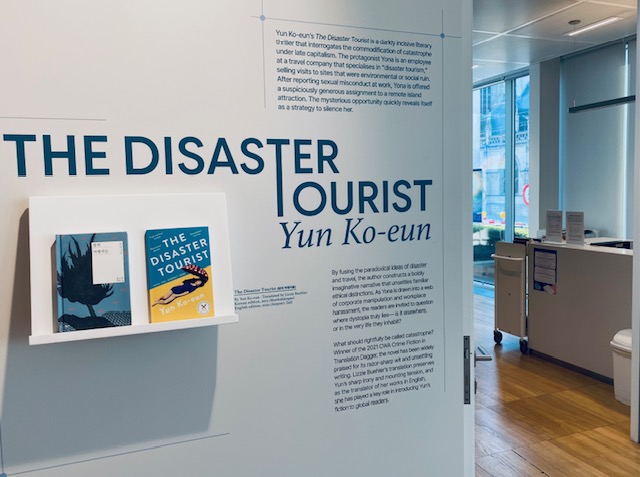
My personal background gave me lots of personal experience with almost annual next to a small river bed. Since I left the region for studies, the flooding has increased and several times have reached the scale of disasters. Therefore, I am very sensitive and have mixed feeling to the issue of disaster tourism. Such tourism is a nuisance at the time of the disaster, but cash through tourism helps the hard hit region and residents to overcome the losses faster. Would I travel to Tschernobyl or Fukushima for that reason? Probably not, but the intentional war disasters and crimes caused by Nazi-terror.  The Korean novelist Yun Ko-eun did not shun away from writing about a guide who takes tourists to places of environmental disasters until being sent involuntarily to such a site herself. This is not about the “K-Chicken belt”, a series of places with famous chicken dishes, nor about the potential consequences of repeated K-pop events of the famous BTS-boy group in Seoul in 2026. So glad to see that Korean youth has a chance to thrive under democratic rule. (Image: Exhibition in Korean cultural center Brussels 2026-3) 

Democracy in Nepal

Nepal has witnessed a peaceful revolution in which the young generation of Nepalis has “out-smarted” the previous rulers of Nepal. With close to a 2/3 majority of seats in parliament (Nepali Times), the RSP as the party of a somehow charismatic musician and performer has a 5 year mandate to tackle the many challenges to bring real change for Nepali people. The hopes are running high that corruption will be contained and enough jobs inside Nepal can be created for the young. The positive sign, that many Nepalis migrant workers who had left the country now return to Nepal, encourages further support by international donors and investors.
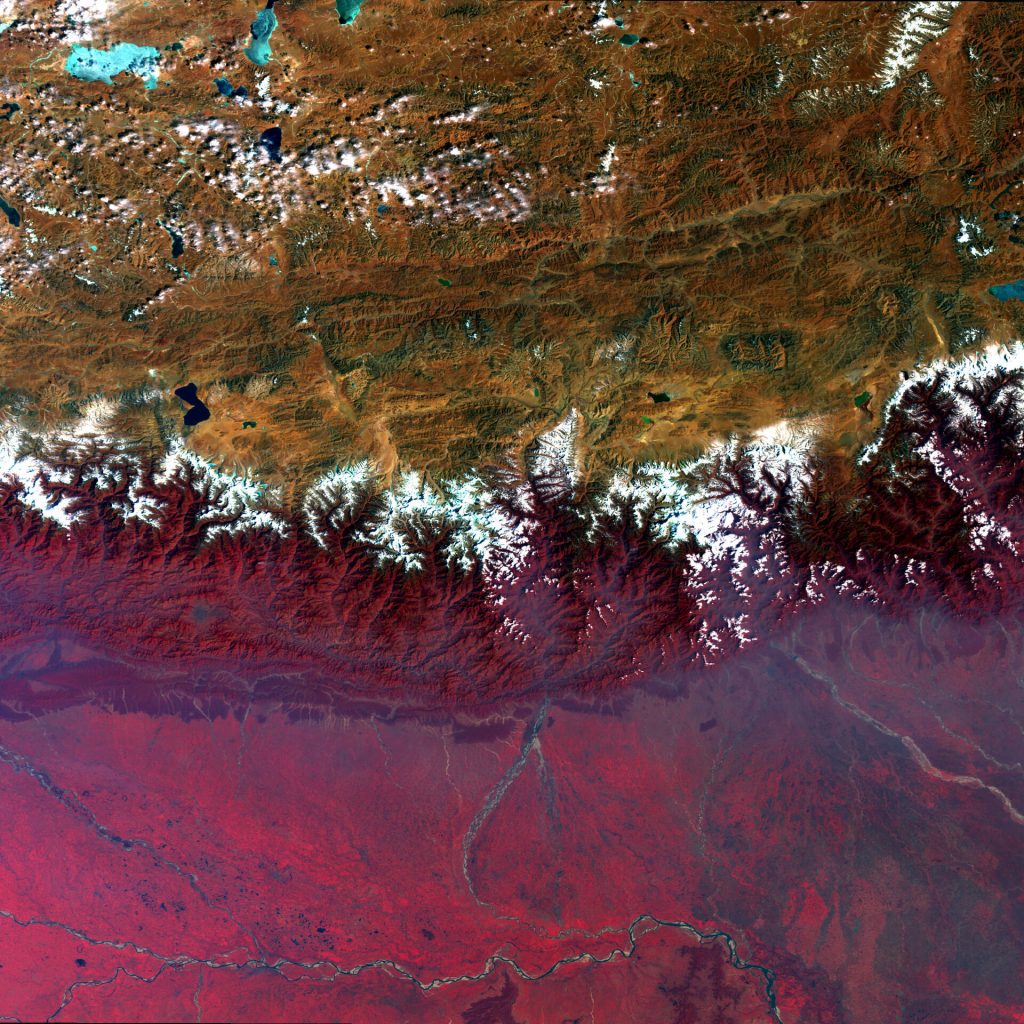
Running a democratic election in a country that comprises the Himalayan mountainous region is confronted with a particular challenge to make every vote count as communication with remote areas takes additional time and effort. Campaigning through social media can be more effective only if even remote areas have reliable access to the internet. Inter-generational assistance is often a precondition of timely access to information. The Himalayan region experiences already the effects of global warming as melting of glaciers. It is the youngest generation that will have to confront the consequences. Time to take government in their own hands, and beyond a one man show. (Image: ESA Himalayan Mountains, ESA Standard Licence) 

Korean Epilogue

The exhibition on the Korean Provisional Government closed with a stimulating epilogue. The call on visitors to spread the message of peace resembles religious practices. The long struggle for Korean independence and freedom for the people in South Korea leaves them wishing the same for all Korean people and beyond 75 years after the beginnings of the Korean War. From a German and Eastern European perspective this unaccomplished wish resonates a lot. The small stickers with messages from visitors propose short thought pieces like “South and North Korea shall be together” and “Peace starts with inner peace”. The wisdom in these statements lies in not giving up on ideals, however distant they may appear. There is always the possibility of small steps ahead.

Korean Independence

The independence of a country is sometimes a long struggle. At particular points in time, a window of opportunity may open up, which allows to change the course of history. In many cases the opportunity to gain independence has been prepared for several decades, at least from 1919 onwards to come to fruition only after the end of the Pacific war, shortly after the Nazi-regime was defeated. The long and relentless preparation of the Korean Provisional Government ensured that a consensual constitution was ready to be adopted and elections to be held. The resulting division of Korea into 2 parts (South and North), just like East and West Germany, is rather long lived on historical time scales. For that matter, the hope of a peaceful unification needs to be reiterated again and again. The informative exhibition of the Korean Cultural Center to Belgium and the EU highlights the continued “Dream of Peace” which continues even after more than 100 years.

Art from India

Indian music, art and performances have had a difficult time in traditional western cultures. Based on the historical collections and donations in the BNF, this WEIRD bias is challenged a bit. The focus on performances and art from India of centuries old traditions of high standards could have been a major source of inspiration to wider audiences already. The narrative language of for example dance as Bharatanatyam is a sophisticated ritual of expression. It appears to us like a spiritual performance which reaches our emotions much like our modern ways of expressing and performing. It seems amazing how the western world has omitted looking and listening to other continents. 

Of course, archers have played an important role in Indian culture as well. Such depictions have been common across cultures in previous times. These images can reflect the shared human heritage and this with a global perspective on art history. Flora Willson (2024 in Die Musikforschung) refers to this Indian cultural heritage in her book review and why Italian Opera never really became popular in India. 

(Image BNF, Paris Richelieu in Rotonde 2025).

Korean Uprisings

With the recent Korean uprising against the imposition of martial law the world has witnessed a successful defense of democratic rule in South Korea. International politics has quickly moved on to other areas of the world where people’s struggle to obtain or sustain the freedom to vote and the freedom of expression.
However, the Korean history of uprisings goes back a least as far as the beginning of the Cold War period with the separation in 2 Koreas. The 1980 uprising of student protests in South Korea was extinguished with brutal force and mass killings. Can literature heal the wounds of uprisings? Only the best of literature can. The Korean female author and poet Han Kang (Nobel laureate 2024) has accomplished this. In the novel 소년이 온다 “Human acts” (English title), “Celui qui revient” (French), ”Menschenwerk” (German) the Gwangju Uprising 1980 is the historic backdrop against which the loss of human dignity during dictatorships is narrated. Han Kang manages to depict the empathy of family members who are confronted with the brutality of the military forces. It is tough on readers as they become the witnesses of the violence described as such and the sorrow of the whole social environment of the victims.
The Nobel Prize for literature 2024 honors the “world literature” aspect of Han Kang’s writings over many years. Many prizes have been allocated for representative writers (80+ % were men) of a country. The different titles of professional translators chosen for this novel reveal the potential to link to very different national narratives and connections to national memory of uprisings. Translating literature from different cultures can be challenging as readers frequently want the narratives somehow to relate to their own “endured” experiences. World literature, just like world history, goes beyond this and takes the reader by the hand and broadens emotional and human horizons.
(Image: Gallery Lee Bouwens, Brussels, exposed Jungjin Lee Voice #02, Voice #26 in 2025, inkjet pigment prints, Jungjin Lee)

Korea relieved

On Saturday 14th of December 2024 the Parliament of Korea voted with 204 out of 300 votes, the required 2/3 majority of the parliament to dismiss the president. The declaration of martial law has been the most serious attack on democracy in Korea since its founding in 1987. It is the 3rd impeachment of a Korean president in this short time of democratic life cycle. After impeachment the constitutional court has to confirm the impeachment also with 6 out of 9 judges in favor of impeachment. In 2017 the judges confirmed the impeachment of a president due to corruption charges, but in 2004 another president was reinstated after illegal campaigning charges were retracted. Democratic procedures hinge on checks and balances in the constitutional set up of a state. Nominations, votes of confirmation of judges are important safeguards against illegal martial laws to restrict or even abandon democracy. Pressure from the street, the people at large, is another safety net of democracy. It should not be the last resort for democracy’s survival as it is likely to come at high costs of human lives.

Ballistic Missiles

Ballistic missiles have been studied as part of physics for centuries. The basic mechanics in gravitational fields like on earth are well known. Longer reach intercontinental ballistic missiles (ICBM) have been built by several countries for defensive or offensive purposes. China had demonstrated to master the science and technology of rockets since its latest launch of a ICBM in 1980. In 2024-9 China has demonstrated again, it is still capable to launch such missiles with long distance range (Japan Times 2024-9-25). This is both a technological task, but much more a geopolitical issue as a reminder to be taken seriously on the international political arena currently. Technological capabilities and capacities have regained geopolitical strategic importance as attempts to shift the global balance of power, which is undergoing multiple challenges or even changes. Flagging technological options is not only important to demonstrate own military strength, but to present a country as a potential strategic partner of global reach. Window dressing using weapons is much more oriented towards other countries (buyers of weapons mainly) than of relevance for Chinese society. Strategic alliances seek strategic partners. China is likely to receive more attention in the 21st century than before.
(Image: extrait de Gustave Courbet: La vague, 1870, Berlin SPK)

Patient Capital

There is something cultural about capital. Different cultures use different narratives when they commonly talk about capital. In Western capitalist societies it is common practice to cite “capital is a fugitive dear”, meaning that people who command sizeable amounts of capital tend to flee places once they become to agitated, especially by politicians. The Eastern narrative surrounding capital is more focused on “patient capital”. The newspaper “China Daily” has more than 6.000 entries referring to this term. On 2024-9-26 (p.9) the Japenese economist Kazuyuki Motohashi praised the Japanese economic system and its specific form of patient capitalism as based on” long-term, stable investment, which enables companies to achieve sustainable growth in the long run”. The Chinese economy suffers as Western capitalism from excessive focus on short-term profit seeking and this causes huge market flucturations shifting quickly from shortages to oversupply and back again. Short-term rent seeking is driving whole industries into fluctuations that are hard to attenuate through other economic (fiscal and monetary) as well as labour market policies (training, re-locations, internal migration).
It is interesting to witness that recently in Germany an example of a bank that had benefited from a patient capital approach of the German government for more than a decade (Commerzbank) is now prone to a bit of a hostile takeover from another bank probably more interested in the short-term rent-seeking. After all, banking and the varieties of capitalism approach highlight that at the very heart of economic rationale there remains a little bit of a cultural twist to understand what is happening in international economics and competition.(Image: Musée Rodin Paris 2024, Le Penseur”)