Premium for silence

People are willing to pay a premium on housing prices for a more silent environment. In the study Enrico Moretti & Harrison Wheeler (2025) estimate that the construction of a silencing wall near a noisy traffic junction or road will increase prices for every decibel of noise reduction by about 3%. Distances closer to the noise shields get higher increases and this mechanism works even up to 400 meters away from the isolation. The investment in decibel noise reductions (not statistical noise) meets a willingness to pay a premium on housing prices. Investment in positive environmental effects (silence) have an obvious marketable premium value. This is most likely just the obverse effect that noise nearby housing is penalized and part of the social mechanism of gentrification. Housing prices and rental costs are known to be powerful drivers of gentrification as well.

Bulimia Capitalism

Each time a wave and speculative bubble in the economy is building up or even bursting there are thousands of people who become drawn into chaos. Let us quickly review: Oil bubbles in the 70s, financial crisis and  subprime lending in housing markets, 1st internet bubble and the year 2000 bugs, AI excesses in 2025. These boom and bust cycles resemble the medical and psychological patterns of a bulimia nervosa. The overly optimistic outlook for AI companies’ future profits and shifts in the size of office space needed for companies announce bulimic behavior when at the same time vomiting by the same companies occurs with regard to investments in nuclear energy plants even in the sites like Fukushima in Japan or Three Mile Island in the USA. Bulimia Capitalism seems to be eating its own children. The upcoming year 2026 will be full of revelations in this respect. (Image: collection of about a hundred barbies exposed on a flea market in Brussels on 5 levels).

Robotics Hype 2026

Towards the end of 2025, it is common practice to look back on the last 12 months to summarize a year and to contribute to the “collective memory” of the year. From a “society and technology” perspective we shall not be surprised if such summaries will be full of images and praise of AI and robotics. However, large parts of the innovations that shall be declared to have marked 2025 were already around 10 years ago. It is just the timing for the new momentum and the creation of a hype around these technologies that is really remarkable (compare WSJ 2025-11-24 p 1-2 by Konrad Putzier).
It is true, playing around with robotics was reserved to universities, research institutes and some big players in industry. The public and financial markets showed little interest in these “nerdy” fields of applications. Although we were hardly able to compete with our chess computers, Watson solving math problems for us including the steps for us to follow. Video, image and textual support was provided by specialized applications already at high levels and in multilingual versions. In 2025 these techniques have enhanced with machine learning and neural network programming reaching higher speed and being able to use ever larger data sets as input.
But there are areas where the hype is coming to an end. How about all the artificial reality (AR), virtual reality (VR) applications? Many have seized to exist. Have you visited or invested in “Second Life” platforms? Opened a shop in the VR-world? Bitcoins have lost 7% of their value between 1.1.2025 and 24.11.2025 and they suffer still from high volatility rather than an uninterrupted rise.
War has fuelled the rise of shares in 2025 and “dual-use” technology benefits as well. AI has been driven by, and drives both trends.
In sum, it is much less the technological innovations in 2025 that are astonishing, but the political economy of how to orchestrate a sensational hype around the technologies.
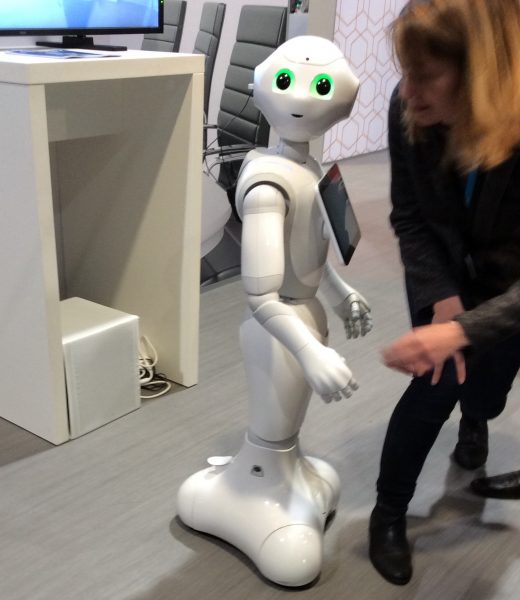
(Image Hannover Industry Fair 2016-3-14).

All electric again

The “all electric society” has been identified by Dan Wang and Arthur Kroeber (2025 p.48) as one of the underlying driving forces of “The real China Model”. Despite the heavy reliance and pollution caused by China’s use of coal, the large share of electricity  (30%) of energy use is unmatched by the rest of the world except Japan. Investment in electricity grids and innovative ways of mobility around electricity will allow China to buzz rather than steam ahead. Solar cells, batteries for electricity storage and innovative ways of distribution of electricity through AI enhanced “learning” devices will widen the gap between China and other countries that suffer from inefficient path dependency.
Taking the advent of the “All electric society” seriously will free resources through the focus on future-proof technologies. We should not be afraid of the sparks of a short-circuited “All electric society”, the environmental challenges ahead for all of us, particularly China, ask to shift to high voltage solutions urgently. 

Political Economy 2025

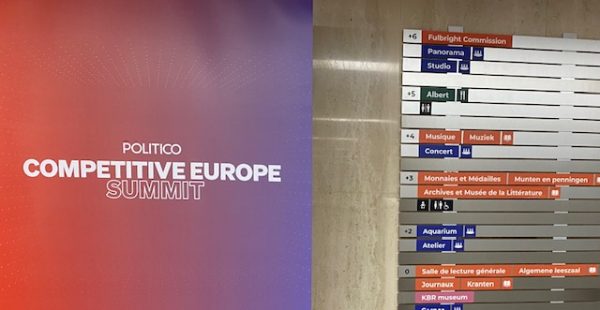
As the global markets have moved from an international economic system based on competition to a world of protectionism based on arbitrary tariffs and restrictions, it feels strange to spot banners in Brussels in 2025-10 entitled “Competitive Europe Summit”. Participants at the conference appear to be “barking up the wrong tree”. In industries, and even more so in most services, access to markets is the necessary condition to embark on competition. No access, no competition. Tariffs or taxes are created to stifle competition.
All this has multiple reasons. One reason is to create an equal playing field among countries. Previously, we thought exchange rates of currencies and eventually purchasing power parities would shift following changes in competitiveness. This mainstream economic thinking has been disrupted through Putin’s war on Ukraine territory. The MAGA political economy narrative has impacted the competition between countries as well, (1) with its rhetoric and (2) back and forth changes in tariffs. Competition with countries which do not respect basic principles of fairness in competition can no longer be confronted with a mantra of a “competitive Europe”.
A more unified Europe could deal with the “politico-economic” fact that the global economy is much less concerned with the idea of competitiveness than in the last few decades of the last millennium (70s, 80s, 90s). Powerplay between nations maybe regarded as a kind of competition for dominance, but a sole focus on economic competition is grossly misleading nowadays after 3 years of the Russian aggression, at least with a focus on the short and middle distance run.

AI earnings effects

In the first few years of wider adoption of AI in an economy, there is the expectation that this might lead to substantial productivity gains for enterprises which use it as well as for employees who are early adopters of the relatively new technology. The study by the Stanford Digital Economy Lab by  Chen, Chandar and Brynjolfsson (2025) showed that so far there are no significant earnings effects for employees. Based on millions of recent payroll data from US companies productivity gains have not trickled through to the paycheck in terms of monthly salaries. Participation of staff in a company’s overall turnover or profit might change this as time evolves. For civil servants the adoption of AI might mean increases in cases dealt with as some tasks can be executes faster than before with the use of AI.
The evidence points to employment effects of AI rather than earnings effects so far. A hypothesis is yet unresolved: senior employees using AI might employ fewer junior workers at entry positions, if these “hallucinating” young professionals can be replaced by hallucinating AI. In science the hallucination has sometimes lead to disruptive new approaches and findings. It is a tough choice to pick the young entrants with high productivity potential and eventually high remuneration for this in terms of labor earnings.

Ultimate Step

Reports in the New York Times, The Guardian and Le Monde in recent weeks have brought to our attention that there are shocking ultimate steps undertaken by several employees of public services. In the case of the British post office a decade long inquiry has uncovered that 13 suicides of employees occurred after they had falsely been accused of fraud. A long time ago in France Telecom a series of suicides was also attributed to a harsh personnel policy. The Office of Public Finances (DGFiP) is confronted with a series of suicides in 20025 of 12 employees who apparently made the ultimate step to put an end to their life. Not all is to be blamed on the enterprises or public services concerned, however, they failed or omitted attempts to prevent the ultimate steps. Initiatives like peer listeners as anonymous contact points or access to psychological counseling are necessary parts of a responsible human resource practice, even if it might not be a sufficient condition to avoid the ultimate step in some instances. In many cases employees go far beyond their mental capacities in terms of commitment to their work, they should not be left alone in case of severe consequences.
Burn-out, for example, needs to be tackled as part of the responsibility of enterprises and public services alike. It is highly unfair to put the costs of psychological consequences on the shoulders of families and the state. Investigations into toxic leadership styles and the current revival of “workaholic” work ethos will have serious negative consequences for families and society as whole again.

Learning by using

Is learning by using different from learning by doing? In an economic model to test the employment/unemployment impact of AI in the USA, Wang & Wong (2025) suggest an important impact of employees’ productivity due to learning by using AI. In terms of the traditional language of economics the employees who use AI in their work shall have comparative advantage to those who don’t.
In a model of job search in the economy there is the additional possibility, similarly to robots previously, that certain tasks maybe influenced by the, more or less, plausible threat of an employer to replace the employee by training an AI system to perform the tasks. The credibility and acceptability of such threats are likely to impact wage claims and unemployment risks. All these effects do not happen instantaneously, but evolve over time with varying speed. Hence, calculations of effects have high error margins. The resulting model yields oscillations of “labor productivity, wages and unemployment with multiple steady states in the long run”.
Learning by using seems to be a good description of what occurs at the micro level (the employee) and at the macro level of an economic sector or the economy as a whole. Society may guide the use cases of AI just as much as the business case to use AI, for example in the creative industries as infringements of copyrights may occur on a massive scale. However, learning by using is not free of risks to society at large. Just like allowing people to use automotive vehicles has lead and still leads to thousands of deaths annually, learning by using produces external costs. Overall, this is another case for a benefit/cost analysis for businesses, the economy and society.

Social promise

In the beginning and middle of the 2020s the social promise to younger generations has been broken. The latest figures from the USA reveal that 2 million students (WSJ 2025-6-25 A3) who have financed their studies and potential social mobility by taking out a substantial loan are very likely to default on their credits. This observation was less a surprise to labor market analysts as the stalling of student hiring in many countries has happened for several years now. The more surprising finding is that the Wall Street Journal 2025-6-25 has been reporting on this. Banks or universities who are highly exposed to this kind of risk will themselves become downgraded for their credit rating. Higher interests for universities means higher fees and higher student loans eventually. The social promise to reach higher status and earnings through higher education as the social promise of the meritocratic society becomes an illusion. Investors in student housing might also find the sector less juicy for them. Students and their parents were taken hostage by an excessive commercialization and commodification od education. Lifelong learning is a still a promising route to revitalize the social promise.

Home financing

For most people the biggest investment decision during their entire life course is the decision how to finance their home. The calculation of the costs of a bank loan over 10, 15 or 20 years to finance the acquisition of a home is a necessary part of basic financial literacy. The contract of monthly installments over years, considering economic uncertainties like inflation and interest rate payments, necessitates some basic knowledge of calculus and maybe the use of a spreadsheet to prepare payment plans with different scenarios. According to the Wall Street Journal of 2025-6-25 many home owners in southern states “slipped under water” in recent months in the USA. In short, buying a house when they are most expensive with a high interest loan and little down payment puts you at high risk if the prices for homes decline, for example like in a recession or stagnation. You can find yourself in the situation that the mortgage you have to pay suddenly exceeds the value of your home at actual prices. It is really important to be aware of the overall economic situation and risks of changes, like interest rate or inflation spikes due to a changing policy on tariffs. Reading and learning about financial risks should really enter into the school curriculum, but not left to maths classes as this will frighten off many students to take this topic seriously enough.