Competence Gardening

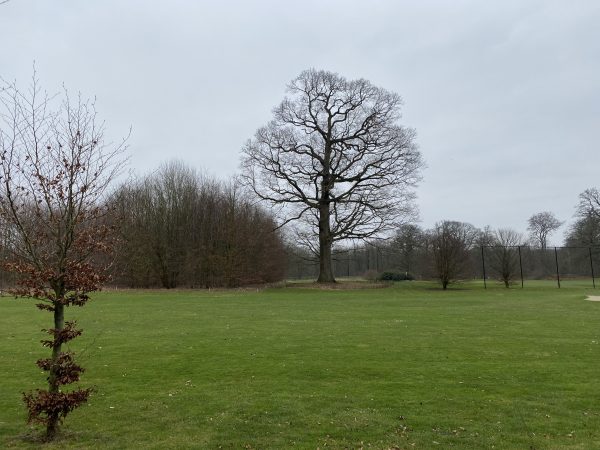
Primary Schools in Berlin have the possibility to participate in the “Gartenarbeitsschule”, the school with learning goal of gardening. It is an interesting option to go out into the real world and deal with nature, sustainability, consumption, climate and many other topics. Voltaire could complement the curriculum in philosophy with his biographical links to gardening. The access to the fields is easy next to one of the central train stations and a larger urban reforestation project as just one example of the 15 overall in Berlin in 2024. (Südkreuz, Südgelände). Hands-on experience of gardening can address multiple forms of problem-solving competencies. Beyond the use of AI, a major advantage is the possibility to train collaborative problem-solving. Beyond the multifactorial approach in determining what to plant, the organization of the implementation and individual contributions towards the realization, all these elements are learning goals. The scope of learning qualifies gardening for learning well beyond primary school as well. It is a nice example of lifelong and lifewide learning even a hundred years after their wider applications in Berlin.

Gardening School, Berlin 2024

L’Albatros

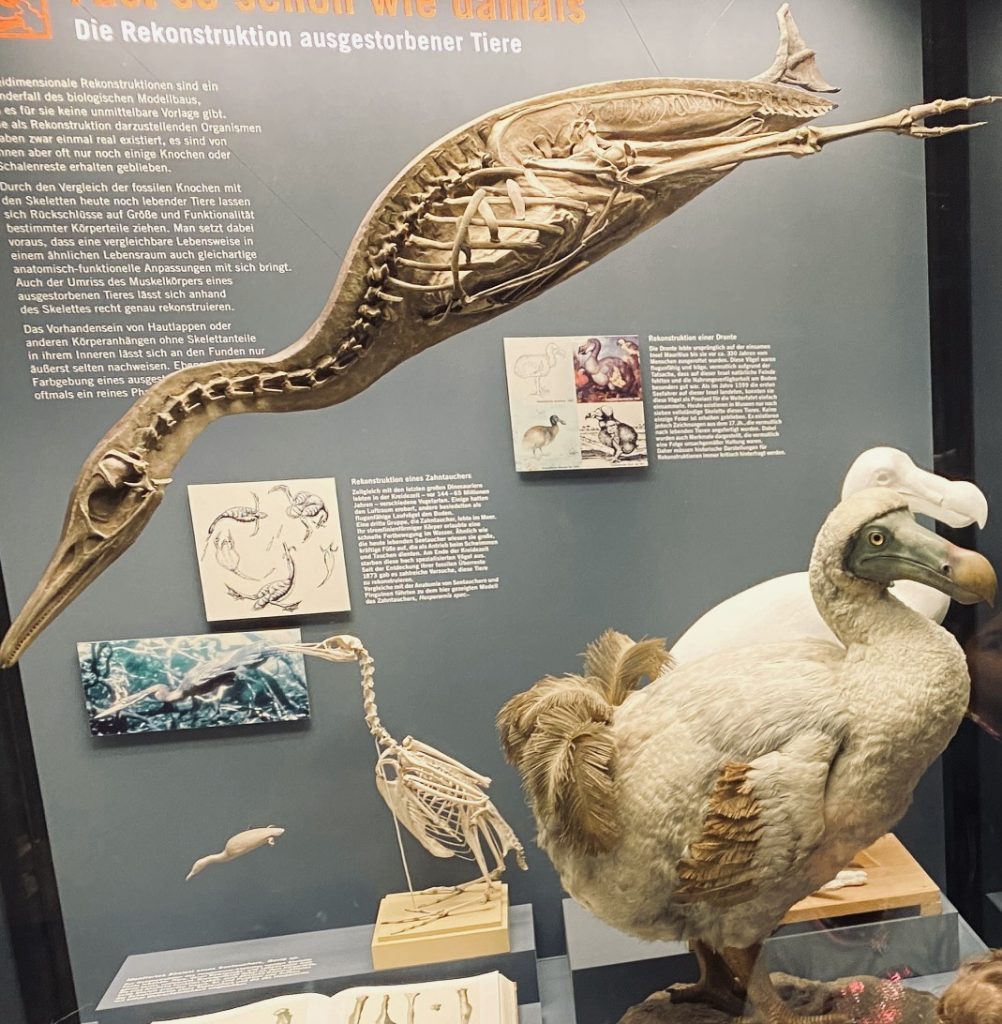
Charles Baudelaire has immortalized the albatross in his poem entitled “L’Albatros”. For me it appears like a poem about the beauty of the sea and sea life. The marvelous creatures that populate the sea and its surroundings sometimes seem strange to us. The albatross with its large wings unable to move properly on earth is one of these special animals. They are threatened by human beings in their very survival up to extinction even. A dedicated website to “Les fleurs du mal” with multiple English translations of the same poem may give us the impression that all those who translated the poem wanted to feel this little moment of sublimation like a poet just forgetting for a little while the weight of our earthly existence. The gospel tells us a similar story of life up in the air. It must be so much better to be free and not to be bound to restrictions of gravity. As gods would prefer to stay away from earth just somewhere up in space. The albatross and the sea keep teaching us lessons beyond their physical appearance. (Image bird “dodo” now extinct, model in Berlin Natural History Museum 2024)

Mehr vom Meer

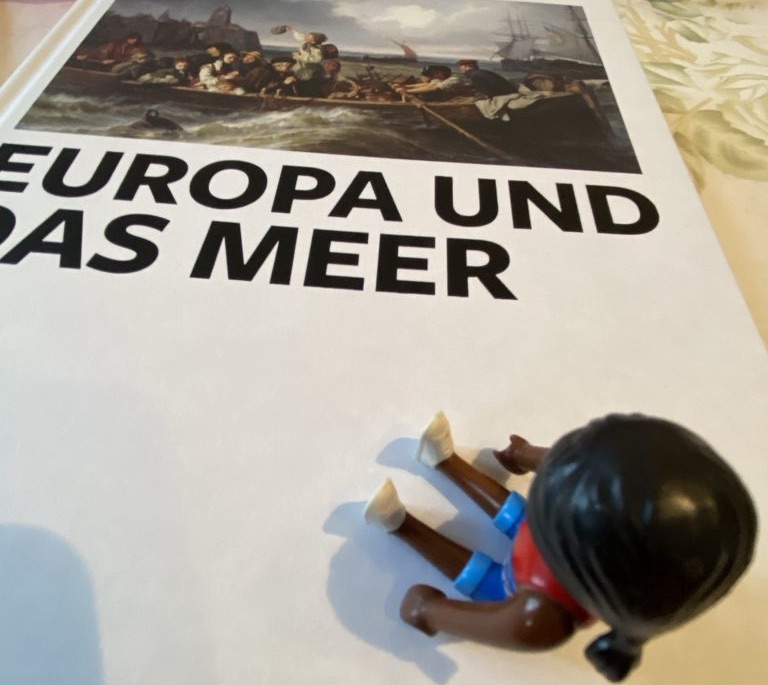
Wir sollten uns mehr um das Meer kümmern. Länder ohne Küsten finden meistens wenig Gründe, warum sie sich um das Meer bemühen sollten. Es ist doch so weit weg. Weit gefehlt. Erderwärmung erhöht die Meerestemperaturen und das wiederum beeinflusst massgeblich die Regenfälle im Inneren der Kontinente. Wir sitzen buchstäblich alle zusammen in einem Boot. Historisch betrachtet war das Meer mindestens seit der Antike Teil des machtpolitischen Kalküls der Beherrschung der Welt und der sie Bewohnenden. Wirtschaftliche Interessen waren ebenfalls Bestandteil der Erkundung und Eroberung des Meeresraums. Die Hansestädte in Europa bieten dazu noch heute gute Beispiele. Nach dem Sklavenhandel sind heute die Überseekabel und Rohstoffe des Meeres die begehrten Schätze des Meeres. Der Artenreichtum der Tiefsee wird erst seit kurzer Zeit intensiver erforscht. Externalisieren von Kosten des Umweltschutzes zu Lasten unserer Meere hat noch wenig Berücksichtigung in Wirtschaft und Gesellschaft gefunden. Tourismus- und Migrationsströme zum Meer, auf dem Meer und über das Meer stellen uns vor große Herausforderungen. Wir werden sicherlich mehr über das Meer reden müssen, und das ist keine Mär. Image aus „Europa und das Meer“ (DHM).

Disappeared

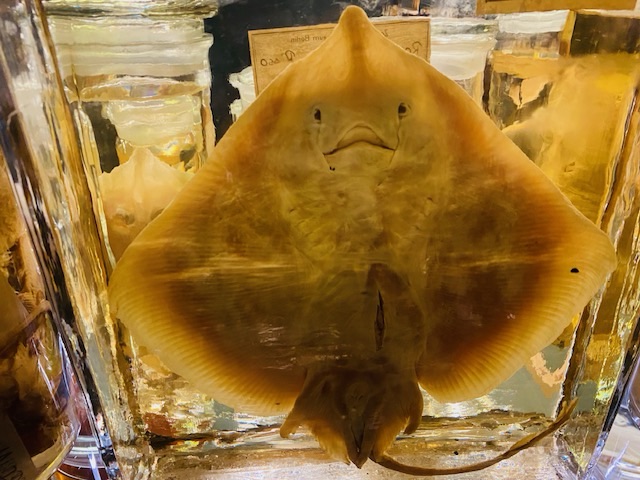
We talk a lot in abstract terms of the loss of biodiversity. In the Museums of Natural History, like the one in Berlin, we can follow the trajectory of extinction of species. The dinosaurs are for most children the greatest attraction. No surprise, they are the biggest ones we have had on our planet. But there is a huge collection of disappeared species represented in the museums which we admire as a lost treasure or species threatened with extinction. Evolution had also created this rather big bird-like creature of the “dodo”. It couldn’t fly anymore and was inhabiting the splendid island of Mauritius. Hungry colonists passing have most likely literally eaten up this rather defenseless animal. Many other extinct species can be admired now only in museums and children feel naturally attached to some species that seem to have human expressions. Panda bears and gorillas rank high on such a list, but also some fish, especially if they smile or look at you straight into your eyes. This should help us take biodiversity and biodegradation more seriously. Children feel intuitively attracted to animals as natural companions. Something we have lost as adults and most of do not even realize this as a deficiency. The Nobel price winning author frm Mauritius has published a collection of short stories „Avers“ which captures the spirit of the island and the loss of species. J.M.G.Le Clézio seems to look at us through the eyes of children or a disappeared species. Magic moments are an escape as well as reason for hope.

Natural History Museum Berlin 2024

Korallenriff

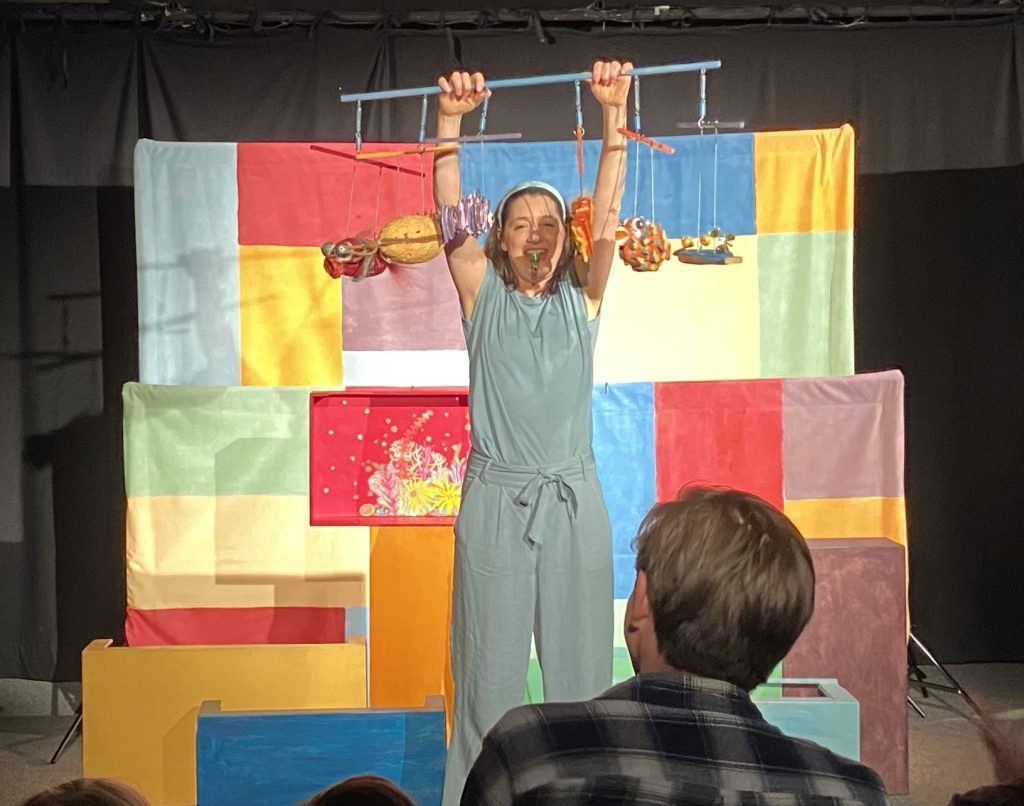
Kinder verstehen direkt, dass es sich lohnt, Korallenriffe zu erhalten. Plastikmüll in den Meeren gefährdet die Korallenriffe und die bunte Vielfalt an Fischen, die darin leben. Ein kleines Theaterstück dazu von Kathrin Brunner begeistert Kinder, weil es sie erleben lässt, wie einfach Lösungen aussehen können. Den großen Leuten zeigen, wie traurig die Welt aussieht ohne die farbenfrohe Pracht der bunten Fische, wird sie schon zu Veränderungen bringen. Das Theaterstück und Buch dazu wurde am 16.3.2024 im FEZ in Berlin aufgeführt. Das Figurenspiel mit überleitendem Refrain, das vom Publikum gleichsam der Promenade in den „Bildern einer Ausstellung“ (Mussorgsky) mitgesungen haben, bildete jeweils eine gelungene emotionale Überleitung und Aufmerksamkeitspause. Wir wünschen uns noch viele kleine und große Besuchende für diese Aufführungen. Die Kinder werden es uns schon lehren, den blauen Planeten noch zu retten.

Opportunity Costs

Skiing in winter is a pleasure that has become more elitist. The downhill skiing has always been an expensive sport, but affordable school holidays gave the sport a more accessible touch. The cheaper version of long distance skiing or skating on larger trails involves much more endurance. The report of the French Cour des Comptes in 2024 questions the sense of the huge investment that is still devoted to save the pleasure of the few. I
nstead of investment to the benefit of relatively few persons, these funds could put the money into a more sustainable, socially and ecological productive purpose. Installations could be used all year round rather than in the few weeks at best months with snow. It is remarkable that the court has highlighted this kind of opportunity costs of such installations. Instead of investing in soon to be obsolete infrastructure at lower altitudes like water reservoirs and water canons, this money could already start the eventually necessary transition process. Each € spent is not only lost for the transition, but might create additional environmental liabilities and damage.
From economists it is to be expected that they mention competition in their arguments. Not all stations of skiing will survive. Put more dramatically, in the process of closing skiing at lower and middle level altitude, competition intensifies between stations and of who can survive. Public funds should not be misused in this endeavour. Lobbying is strong and political incumbents tend to favour the merit and legacy of digging for the white gold. Changes of mind sets, investment narratives and decisions are tough. From much downhill skiing we might soon remember only the downward slope before the healthy aspects of climbing a slope takes the upper hand.

Gas Reduction

Gas consumption in the EU has been reduced by about 20% since the beginning of Russia’s war on Ukraine. This is a considerable accomplishment and has been sustained for 2 years now. The major element in this has been the reduction of gas consumption in industry, but also households have successfully managed to reduce heating of rooms and water with gas.
Diversification of provision with sizable increases in the provision by the U.S.A is another element in the beginning of a trajectory of gas reduction in Europe. Germany as a major consumer of this type of energy supply is also making strides in shifting consumption. This is my short summary of the report by IEEFA.org in 2024-1. All electric devices like heat pumps could speed up the gas reduction further according to the policy recommendation by IEEFA in 2024-2 reducing costs of living and CO2 emissions further.
Data from Eurostat allow to compare monthly data across Member States. The overall trend is a market decrease with differential patterns of refilling supply capacities. Big countries in the EU made and continue to make a real difference compared to previous years (see table below). The comparison of December and January figures across years reflect the months with high sensitivity of the public for heat and cold. Further reductions of gas consumption is feasible due to the mild winter months of 23/24 which allow to reduce heating costs for many households and offices. Good news for the planet and hopefully a move in the right direction to shift away from heating with gas.
Ideal City

Ideal City

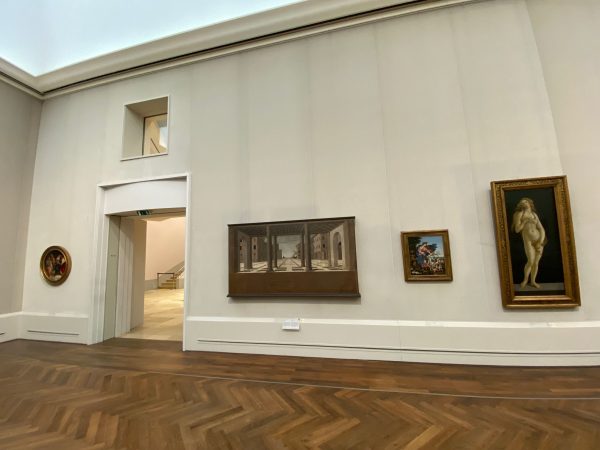
Even beyond humans the issue of what constitutes the ideal city is a matter of historical as well as experimental significance. Science has recently uncovered a city like organization of habitats in the Amazon region (Link Science.org). The organization of the Greek city states has been the model for the development of democratic ideation. The Roman imperialism has thrived through the splendor of its cities and city lifestyle. No surprise that this continues to be a constant concern for humanity.
Rapid urbanization continues in Africa and Asia. Europe also struggles to keep pace with infrastructure development in every growing cities. Whereas the ideal city in the early Italian Renaissance was imagined without trees, we witness a renewed interest to bring back nature-like environments and architecture back into cities. Combining the best of 2 worlds seems possible. Redesigning inner cities remains a continuous challenge. It is much more than thinking about bricks and mortar. It is mostly about how we want to live, work and communicate together. Therefore, it concerns all of us. Paintings help us along in our ideation about where and how we want to live together. The linear views of the Renaissance appear hardly convenient after the experience of the 20th century.
(Image Gemäldegalerie Berlin, 2024-1, Raum XVIII, Ident Nr. 1615 “Ideal city” from ca 1490 attributed to Francesco di Giogio Martini and next to well-known ideal “Venus” painting by Sandro Botticelli 1490).

Stock taking

From time to time it is necessary to take stock of production and to review the material that has accumulated. As I have been working in archives, official book depositories and libraries for years, it comes almost naturally to deal with questions of how to keep track of all that content. Digital solutions are excellent devices in this regard. I do not have to deal with digitalisation, a huge issue for all historic archives and many recent small museums as well. I have to deal with backups at regular instances. To be sure, each engineer will assure you, better make a backup of your backup … . Yes, I do this as well. Now the ultimate backup of digital work is ? Got it, a printed copy of your digital work. The best advice I received on this comes from a computer magazine “ct” gadget mug with imprint advocating “No backup, no mercy“. To facilitate my printed archive I start with monthly collections of blog entries (Link to pdf-file December 2023 ->Brainstorming 23-12). The simple conversion yields 63 pages, a printer friendly version 56. Hence the expected yearly volume (60*12) will be somewhere near 720 pages. That is for the archive only or in case my eyes do no longer support online reading on screens for too long.
Digital archives have, of course, many other advantages. It is possible to reassemble my collection of entries by subject through a more thorough editing. Specific edited volumes will surface from this, which I have in my mind but only careful long-term followers of the entries might see already. Political economy and sociology are obvious candidates. Public health, labour, the world of arts and music could constitute other edited volumes. Lots of branches grow out of the trunk of content.

Renewables

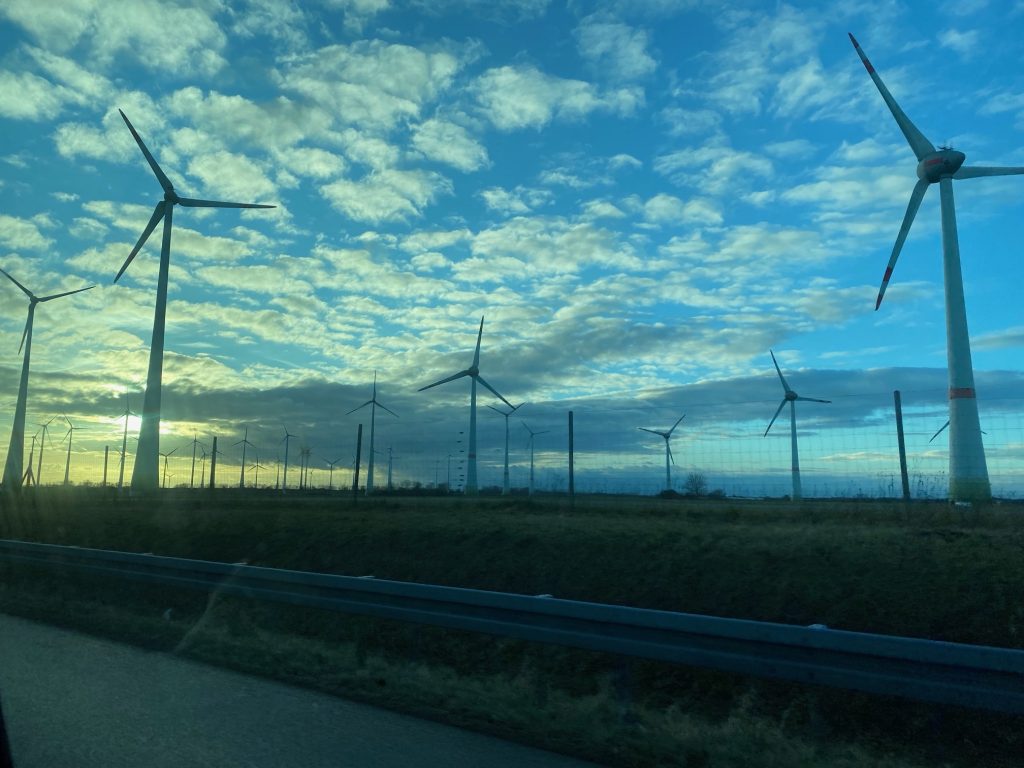
Renewable energy has reached for the 1sr time a share of more than 50% in Spain and Germany in 2023. This is an astonishing milestone in the energy transition of both countries. For Spain a report from Red Energy Espanola attributes the Spanish success story to the expansion of mainly wind energy (Link). The increase of renewable energy in Germany is due to a more rapid expansion of solar energy (Link). In any case a continued expansion of both forms of renewables allows to reduce the share of fossil fuel even more rapidly than previously estimated. Good news for the planet particularly to phase out energy from coal due to its highly polluting side effect. Countries with faster trajectories shall serve as examples that it is feasible to manage the energy transition also for large countries. Political instability might be a price worth paying considering the positive effects for future generations. Managing the transition in a just way which means to assist poorer households, ensures the respect of social policy targets at the same time. With this in mind the energy transition can be perceived by all as an opportunity rather than a threat to their welfare and wellbeing.