Flotow Kontroversen

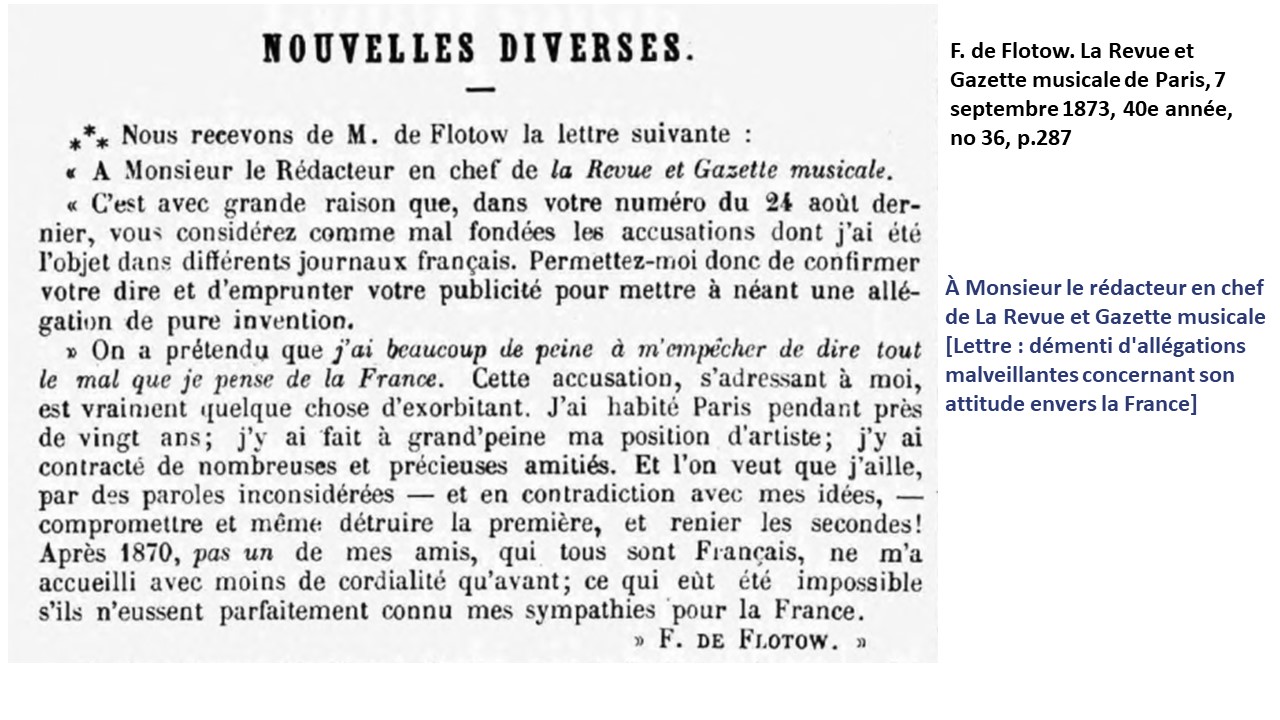
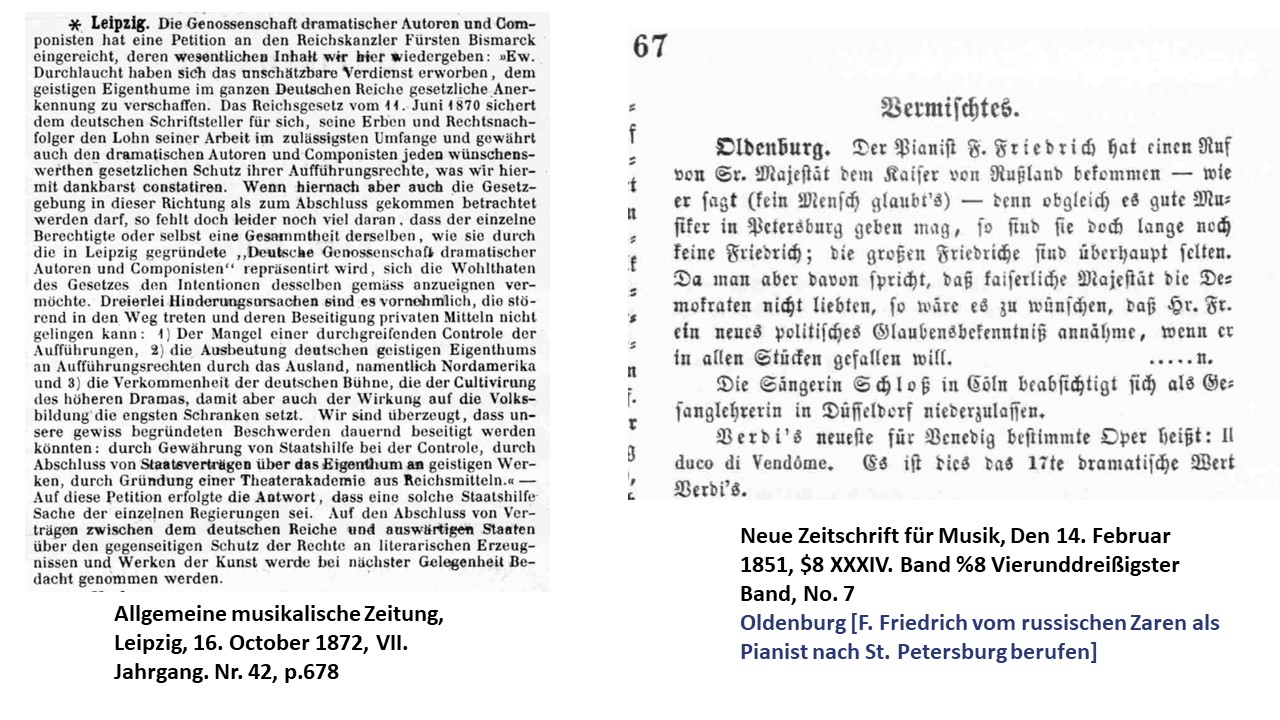
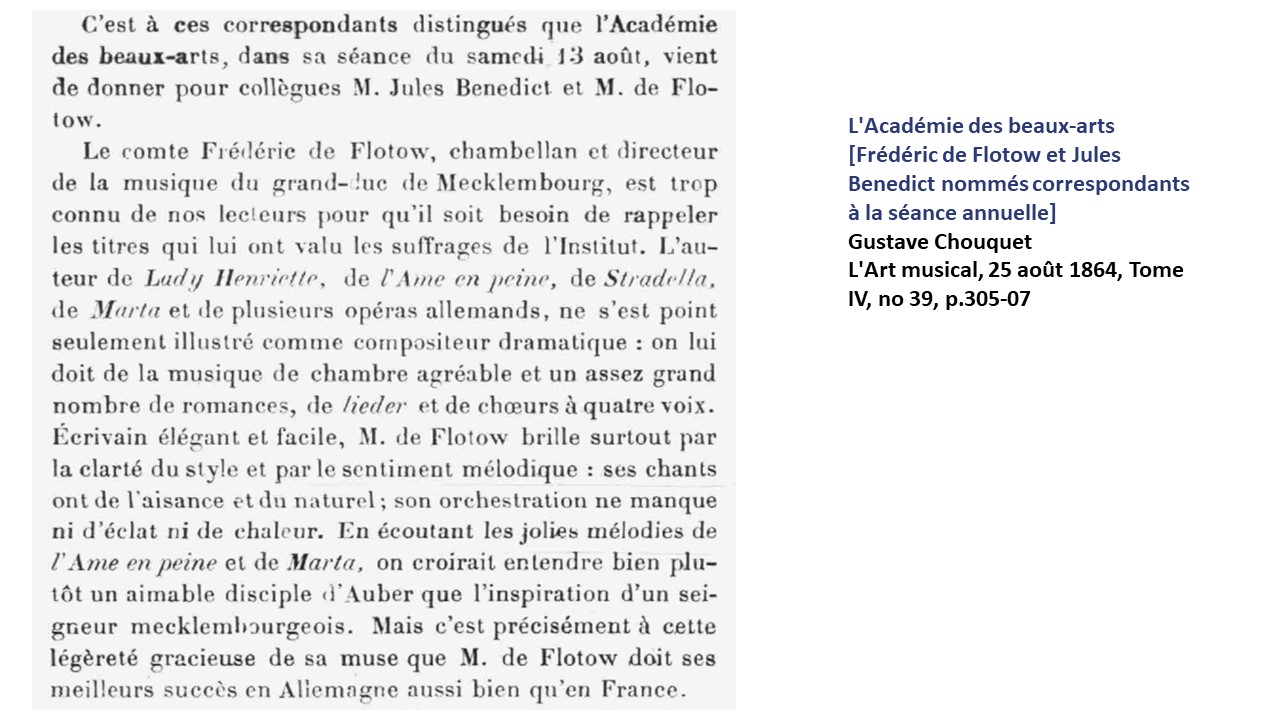
Während Flotows Lehrjahren in Paris ereigneten sich historische Ereignisse, wie zum Beispiel die Pariser Juli-Revolution 1830, Commune oder die 1848er Revolutionen in Paris und Deutschland. Später sollte der dt-frz. Krieg 1870 ein weiters einschneidendes Erlebnis darstellen. Über all diese historischen Verwerfungen hinweg sind Kunstschaffende ständig den nationalen Vereinnahmungen und Verwertungen ausgesetzt. Bei Flotow äußerst sich das in den Intrigen von unterschiedlichen Seiten, die gegen ihn gefahren werden. Von deutscher Seite mal als Demokrat verunglimpft (s.u.), wird er in Frankreich als frankreichfeindlich bezichtigt. Aktiv dagegenhalten, gehörte schon damals zum Geschäft im europäischen Raum. Mit dem Eintreten für Autorenrechte an Werken und deren Aufführungen schaffte er sich sicherlich nicht nur begeisterte Freunde in der Theaterwelt. Vergleichbar dem Disput über Patentrechte zu Hörnern, Trompeten und dem Saxophon, musste die Lebensgrundlage für viele Komponierende erst noch geschaffen werden. Eine Nominierung als Korrespondent der „Akadémie des Beaux-Arts“ ist da eine tolle Anerkennung. Die Probleme von höchst prekären Lebensverhältnissen von Kunstschaffenden im weitesten Sinne bleiben eine ständige Aufgabe und Herausforderung (Mäzene). Der kleine Fritz von Flotow hatte in seiner Kindheit mit genau diesen Einstellungen gegenüber dem oft brotlosen Beruf des Kunst– und/oder Musikschaffenden zu kämpfen. Als streitbarer Aristokrat mit demokratischen Zügen fiel er mitten in die soziale Zerrissenheit und politischen Wechselbäder des 19. Jahrhunderts.
Flotow Singelée

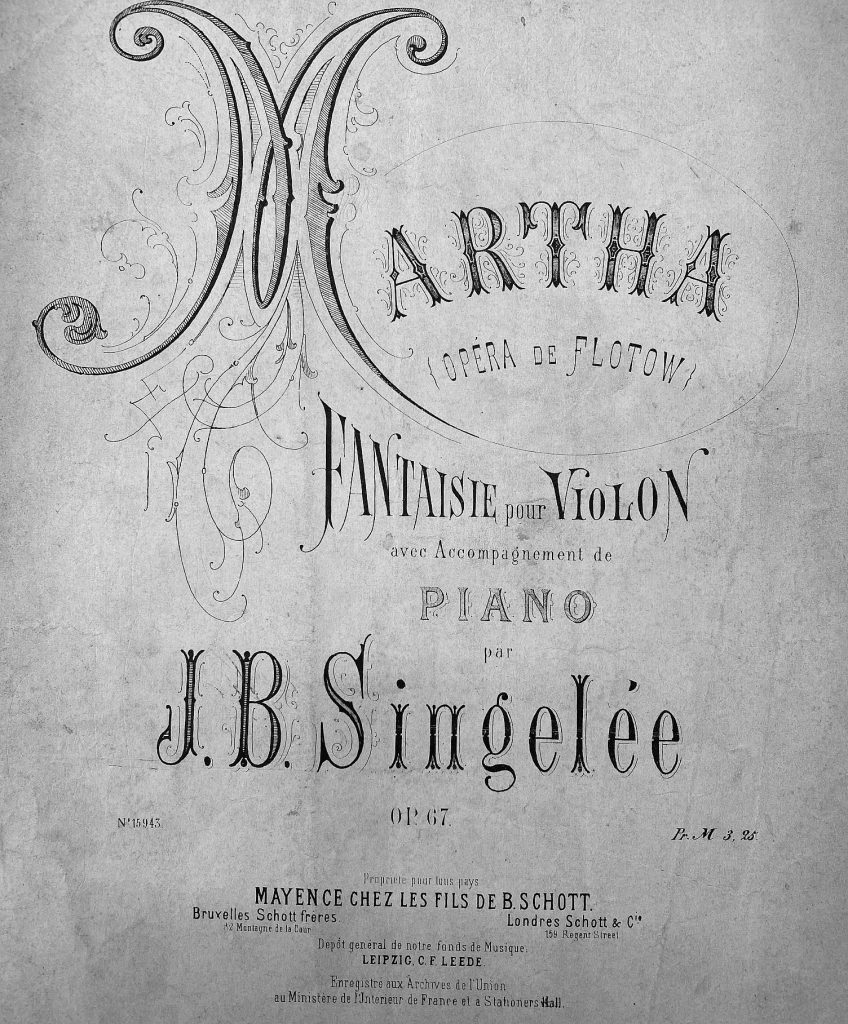
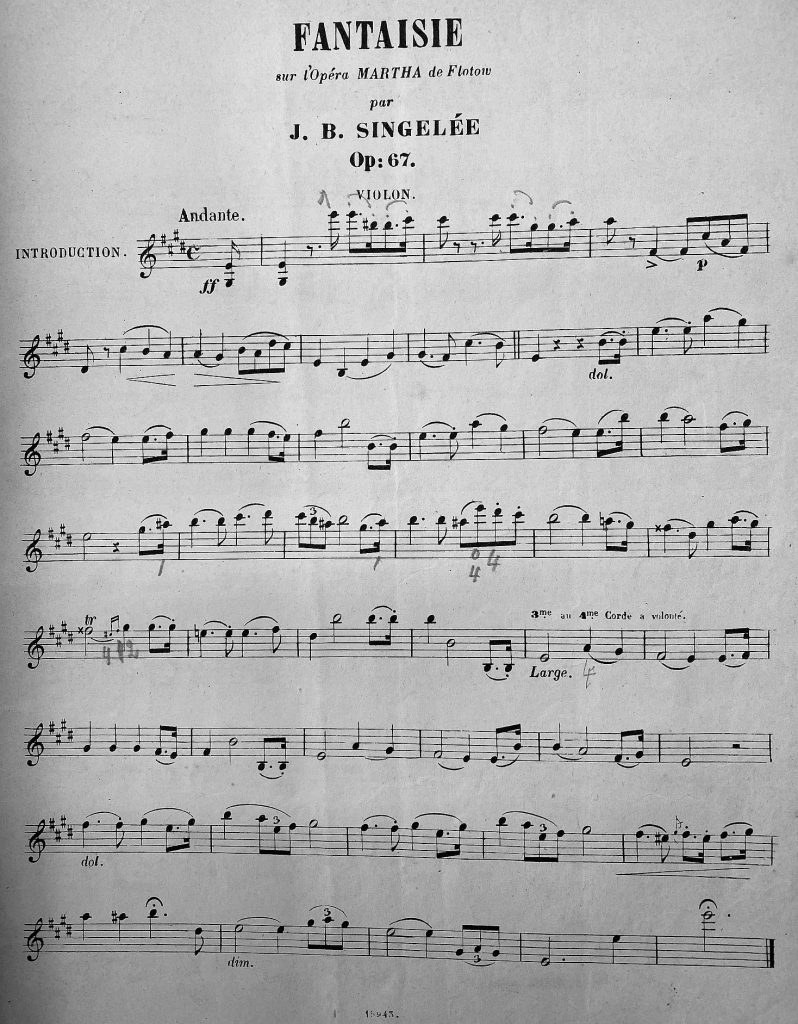
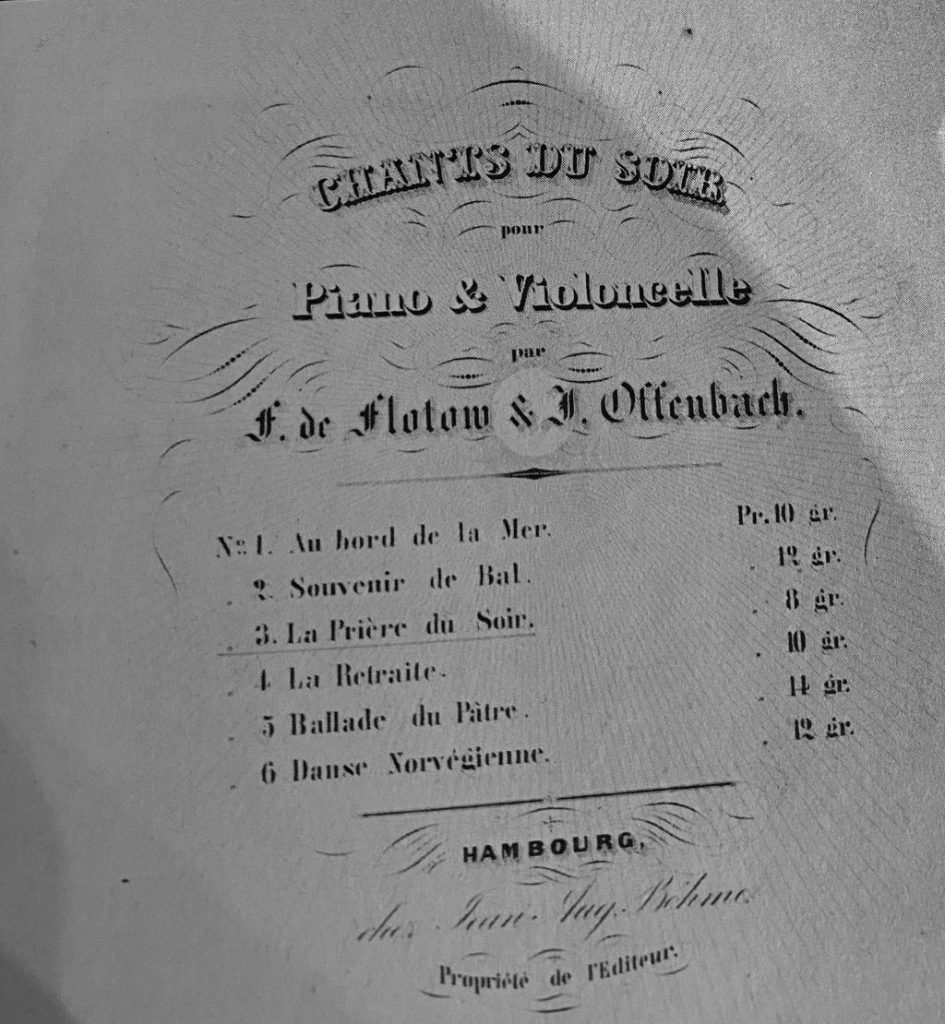
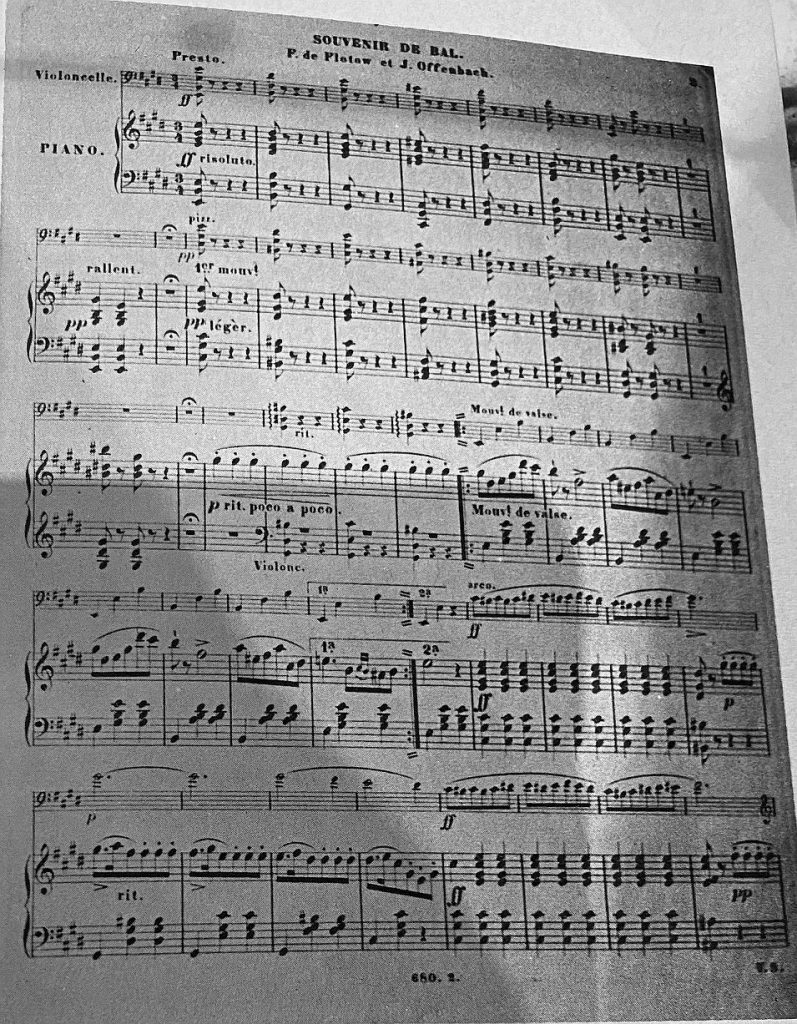
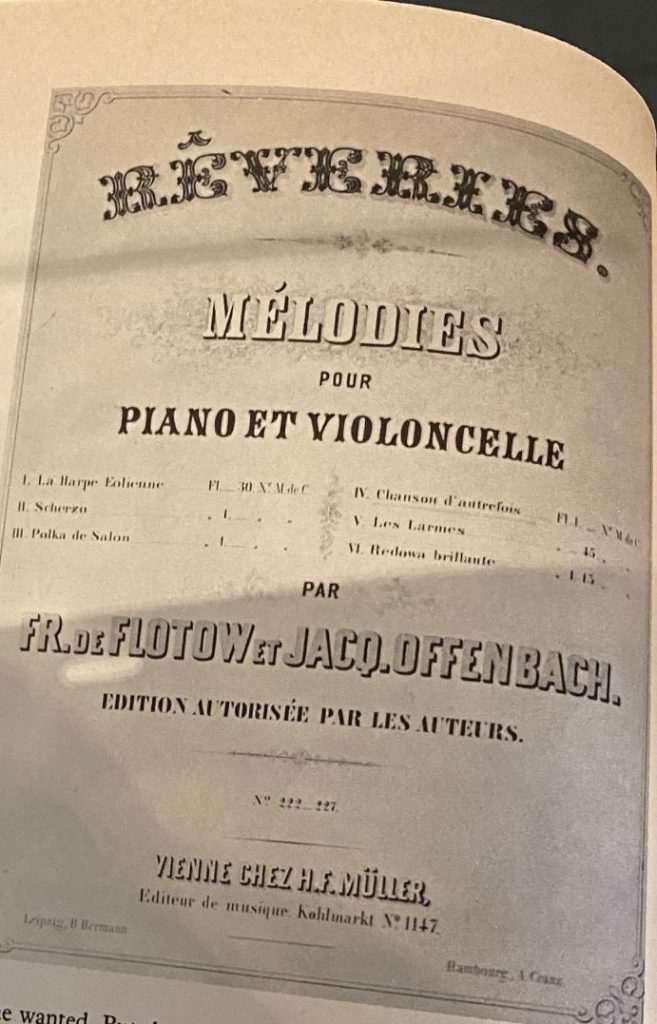
Frédéric de Flotow hatte sicherlich in Jean-Baptiste Singelée einen Fan. 2 seiner frühen Opern, Stradella und Martha, wurden mit Fantasien für Violine und Klavier von Singelée neu arrangiert. Der Geiger, Dirigent und Komponist Jean-Baptiste Singelée, geboren 1812 in Brüssel (damals noch zugehörig zu Frankreich) ist in Ostende 1875 verstorben. Eine spätere Würdigung im Kursaal in Ostende mit einem Konzert verdeutlicht die Wertschätzung über sein Wirken als Konzertmeister und Dirigent hinaus u.a. in Brüssel. Sein kompositorisches Werk ist beachtlich, auch wenn seine einzige Oper vielleicht nicht so viel Nachhaltigkeit erreicht hat, trotz des einprägsamen Titels: „Les dentelles de Bruxelles“. Uns interessieren hier seine Fantasien basierend auf Themen von Flotow, die als Drucke erhalten geblieben sind und in der „public domain“ einsehbar sind. Interessant ist auch die gemeinsame Zeit am „Conservatoire Royale de Musique à Bruxelles“ mit Alphonse Sax, der später die Patente auf die Instrumentenfamilie der Saxophone erlangte. Klassische Musik populär machen, war schon ein frühes Bestreben vieler Komponierenden und Musikschaffenden. Ganz nach dem Motto: „Ich mag keine Klassik, aber das gefällt mir“ werden so Personen erreicht, die sich ansonsten für ganz andere Musik und Rhythmen interessieren. Da hat der Fritz oder Frédéric de Flotow vielleicht noch mehr Chancen in der Unterhaltungsmusik. Mit Jacques Offenbach verband ihn eine Freundschaft, die “Co-creation” hervorgebracht hat. Beide verdienten sich wohl etwas Geld für den Lebensunterhalt in Paris in jungen Jahren.

Thucydides on War

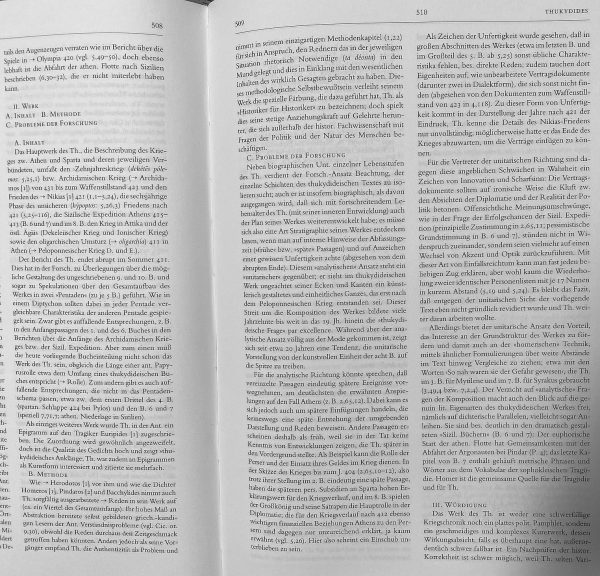
Thucydides (born around -460) has received a lot of fame for his “thick description” of the Peloponnesian War. He deserves continued praise even for inspiring statisticians. The account of events without emotions, but with lots of details, is often perceived as the beginning of historiography and history as science as well as empirical political science. The entry of “Thucydides” in the Encyclopedia of Social Measurement (2005, p.805) by P.A. Furia and A. Kohen cites the derivation of a causal or explanatory effect based on his historical account as a foundation of scientific approaches based on empirical data. “The growth of the power of Athens, and the alarm which this inspired in Lacedaemon (i.e. Sparta), made war inevitable” (Thucydides, I 23). The empirical assessment of the growth of power is subject to controversial accounts. Power may derive from population, wealth, industry, weapons, munition or general military capabilities or skills. The assessment would also need to consider relative rather than absolute strength of just a one-sided approach. Here we are in the middle of the Russian war on Ukraine from 24.2.2022 onwards. Statisticians discuss, whether it is just a single variable that has the overall explanatory power for the beginning of the war and what other intervening variables might be important to take into account to avoid a selection bias. Beyond this materialist explanation we might stress the importance of the sociological concept of “collective fear” (links to approximation through trust, xenophobia) of the strength of Athens as the underlying causation of the beginning of war. The ideation of perceived strength gives rise to the construction of many intervening processes (Coleman’s macro-micro-macro linkages), which make a simple causal attribution just to material strength an illusion or risky shortcut explanation. The Thucydidean Method (p.806) exemplifies much of the dilemma and spice of social science analyses. Scholars of diplomacy challenge the empiricist perspective in arguing that the breakdown of diplomatic discourse several decades before was at the beginning of the causal chain. Here again we can make links to the preparation of war by Russia through strategic diplomacy as well as the risks taken through a break-up of diplomatic channels of communication. The perceived strength of the opponent in war might play a decisive role at the beginning and at the end of war. The charisma of leaders, democratic decision-making and political alliances with neighbouring states, Sicily at the time of the Peloponnesian War, were further intervening processes. This is perhaps not all too different from today, if we consider the role of Belarus in the aggression of Russia against the Ukraine. In fact, Thucydides seemed to be convinced that under similar circumstances human behaviour would reproduce itself. Therefore, thick description of historical facts might still inform political leaders today and tomorrow.
(Reallexikon für Antike und Christentum, XV pp. 752,
Der neue Pauly, Enzyklopädie der Antike 12, pp.505 image below).

Ukraine Resilience

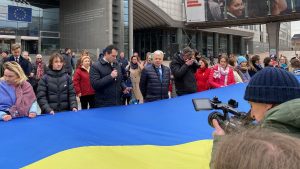
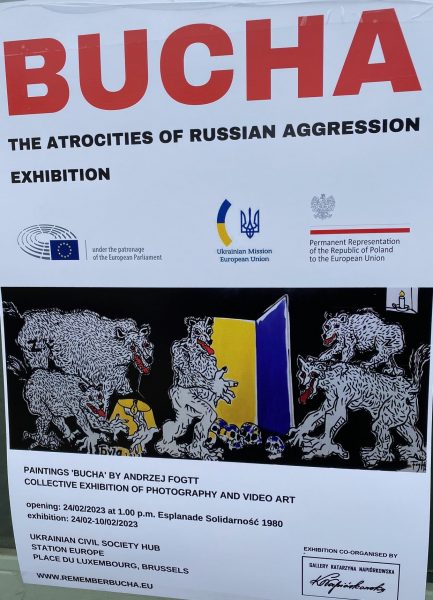
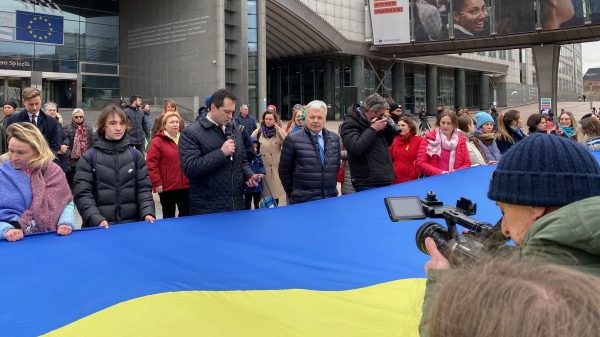
The opening of the exhibition on war crimes committed by Russian soldiers took place in front of the European Parliament today. The images frighten us as they reveal human atrocities. Destruction on a large scale with so many lifes lost will take a long time to overcome the grief. The images of the commemoration and the minute of silence show the solidarity of the whole of Europe with the Ukrainian people. The European Parliament has the patronage of the exhibition which is curated by Justyna Napiórkowskiej. Commissioner Reynders expressed the commitment of the EU to support the Ukraine 🇺🇦 in their capacity to fight back and the rebuilding of the country. Stand with Ukraine.

Dumky

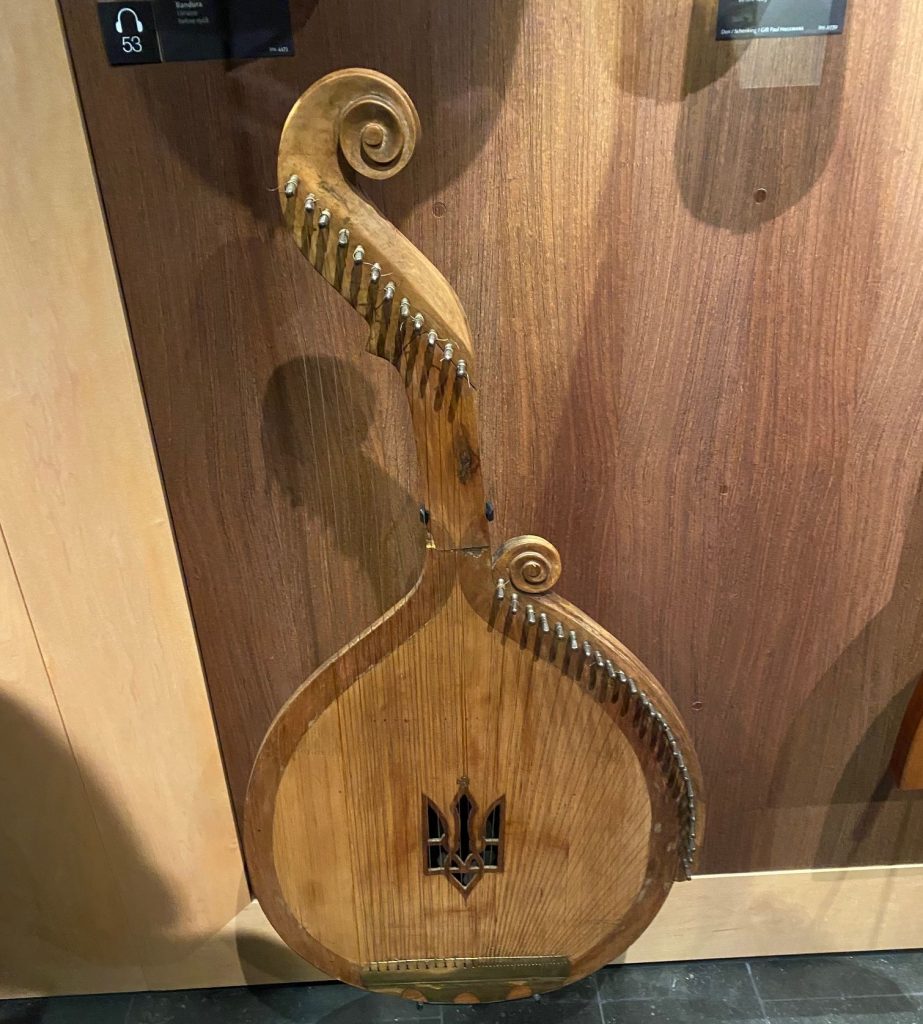
In cultural performances it is always interesting to refer back to titles given or attributed for example to music pieces. Dumky is the title of Antonin Dvořák’s 4. Klavier-Trio opus 90. In the late 19th century Antonin Dvořák found inspiration in the notion of Dumky. Rather than just composing a “Trauergesang with few joyful intermezzi” he creates a new form for this Trio containing, quite unusual, 6 parts. Dvořák plays around with structure and sharp swings from “piano to forte” parts, “moll to dur” intonations reflecting sorrow and joy in frequent and refreshing short sequences. It feels sometimes like fireworks, but at times the sorrow of soldiers and their families becomes evident as well. However, the music proves resilient. Knowing that Dumky is a Ukrainian word and notion, the choice of one of the masterpieces of Antonin Dvořák  close to the 24.2.2023, the day of the anniversary of the Russian attack on Ukraine is a commemoration of the sorrow caused by war and ways to overcome it. The “Concerts de Midi” of the Musée des Instruments de Musique” allowed us to travel through Ukraine a bit and experience the longing for better times. Joy will eventually prevail there again just listen to Dvořák’s version of the Dumky. Superb and effectful presentation of the work by the “Trio Impression” made for a memorable lunch break in the city centre of Brussels. The (virtual) visit of the Museum should be one of the attractions of visitors to Brussels as well, not just for the Art Nouveau architecture, but for the inclusive “global music” collection.

Aphorismen L

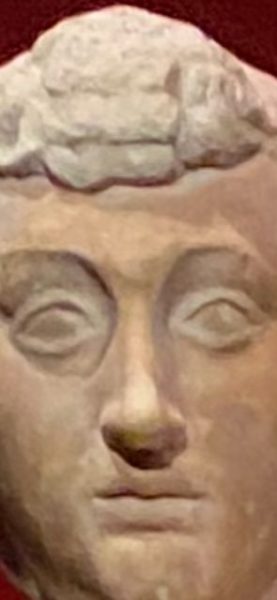
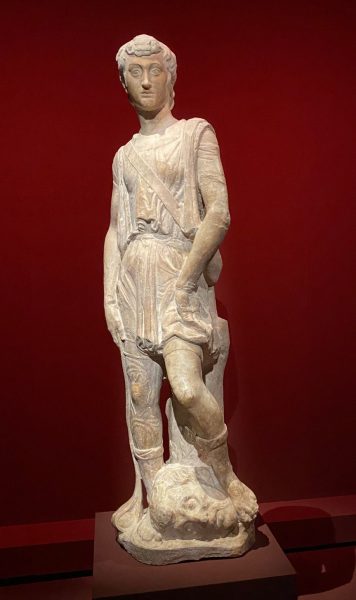
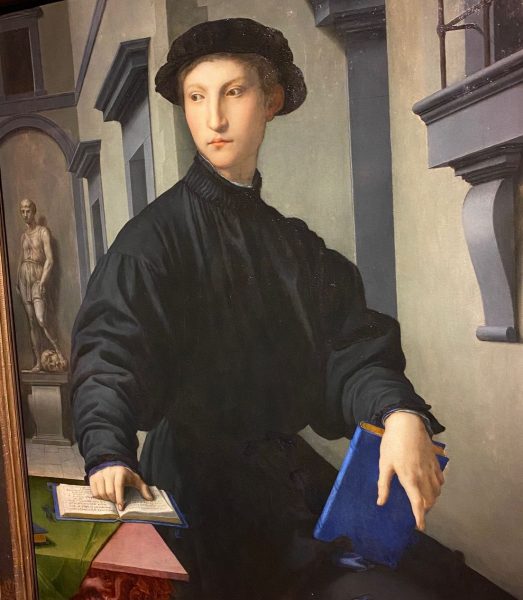
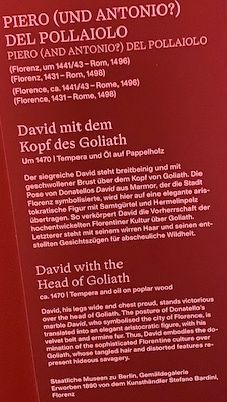
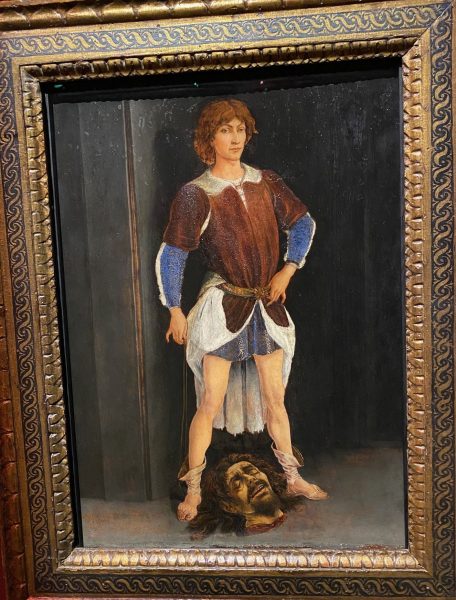
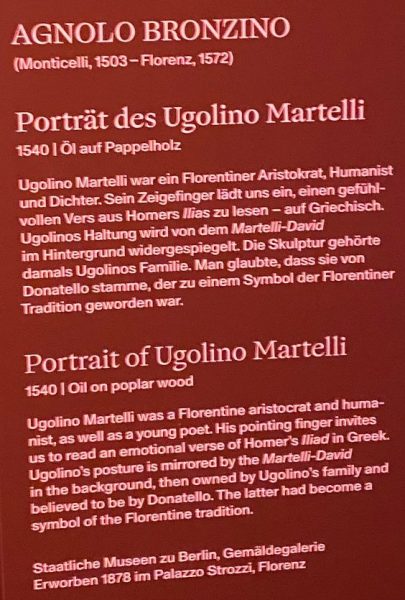
Lichtenberg hatte den späteren ausufernden Individualismus spekulativ in seinen Aphorismen vorweggenommen. Im ersten Band der Sudelbücher schrieb er bereits: „Je länger man Gesichter beobachtet, desto mehr wird man an den sogenannten nichtsbedeutenden Gesichtern Dinge wahrnehmen, die sie individuell machen.“ (1976, S.25). Unsere Fototechnik und soziale Medien haben eine wahre Revolution durch die Flut der allgegenwärtigen Fotos geschaffen. Was früher der Spiegel war, ist längst der schnelle morgendliche Blick in die Kamera des Handys geworden. Intelligente Spiegel wären also die durch Kamera aufgenommenen und direkt auf einen größeren Bildschirm übertragenen Bilder. Das Hautscannen auf Melanome oder checken von depressiven Phasen könnten eine frühzeitige Erkennung ermöglichen. Sollten wir das wollen? Aus derartigen Hinweisen lässt sich sozial invasiv Gefahren für den Einzelnen, die Einzelne ableiten, aber eben durch Bezug des Einzelfalls auf verallgemeinerungsfähige Vergleichsfotos. Gesichter länger anzusehen, das hat seine sozialen Grenzen. Mit Breughel durften wir das dann. Kindern wird früh erklärt Personen nicht anzustarren, dabei trainieren sie so, was das einzelne Gesicht so singulär macht, die Augen, Ohren, Mund, Zähne, Nase oder Schattierungen. Donatello, gepriesen als der Erfinder der Renaissance, spielte schon mit den Details der Gesichter. Mehr Mut zum längeren Hinsehen sollten wir aufbringen, auch beim Hinsehen auf einfache Charaktere, auf Armut statt Wegsehen. Oft ist David interessanter als Goliath. Die Rahmung des Bronzolino verstärkt geschickt eine zeitgenössische Analogie zum 24.2.2023.

Know how

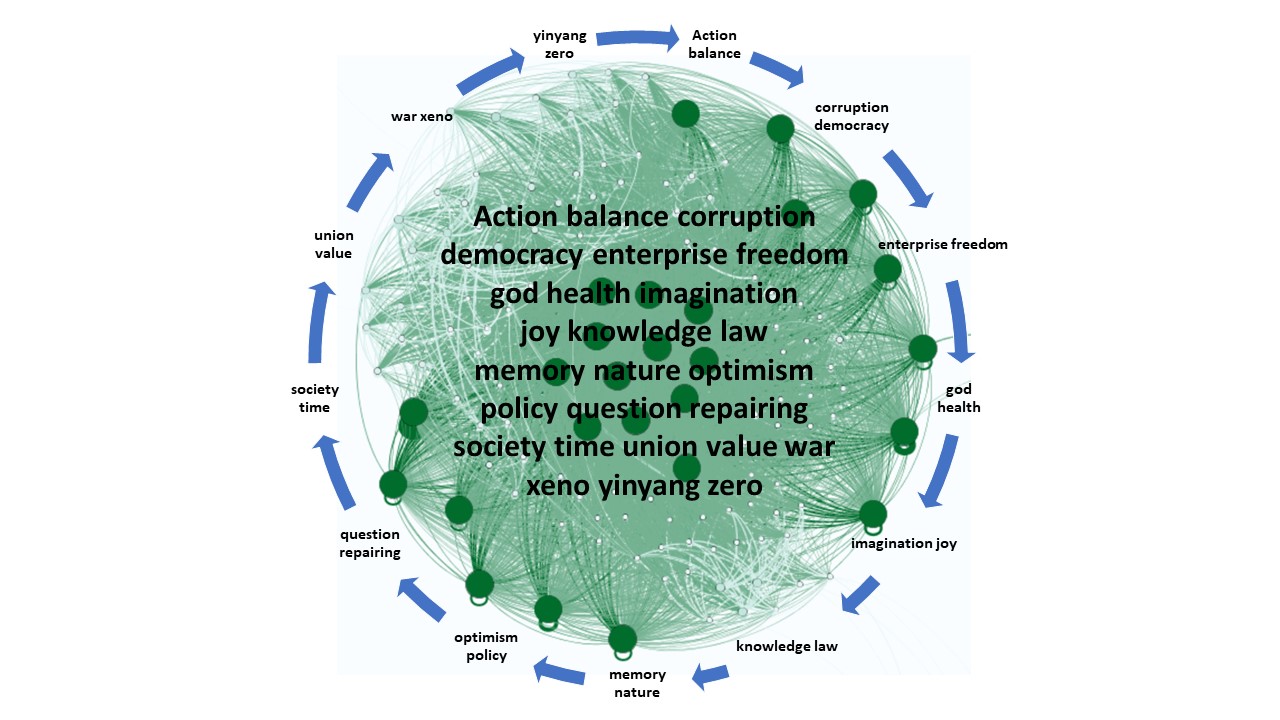
The construction of a knowledge graph is like an exercise in visual thinking or image thinking. A common method in design, visual thinking uses graphical tools to visualize ideas and develop the ideas on the basis of these visuals. So, let’s take our ABC of notions running from action … over nature … to zero. We place these notions in the core of the knowledge space and develop the satellite combined notions around the core. Visually this is easily reflected in the figure below. Content-wise a lot of thinking has to fill the combinations and check empirically this mind map of the knowledge space. Abundant complexity will let us search for digital tools to accomplish such tasks. On this webpage we find already a cloud of words that is empirically showing biggest the words with the most entries of the same key word. This shows us visually what this blog is mainly about. Europe and democracy appear fairly big. Additional analytical tools will clarify what are major or minor links to this pair of notions. “There’s something on my mind”, something which I might not even be aware of. Just an empirical question, should be easy to solve, eventually.

Flotow Europa

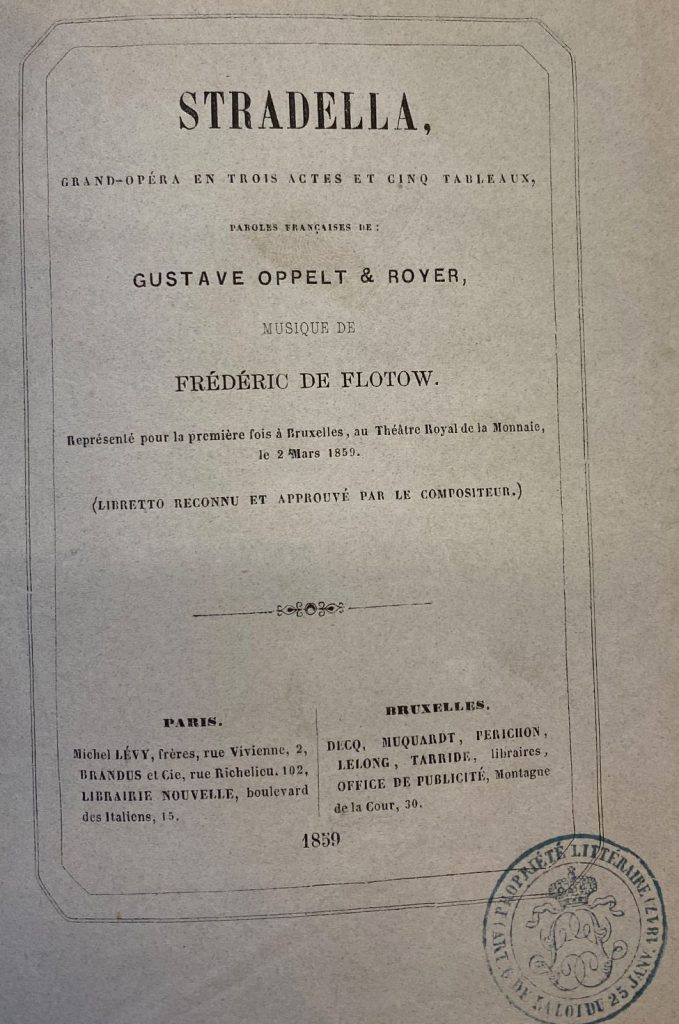
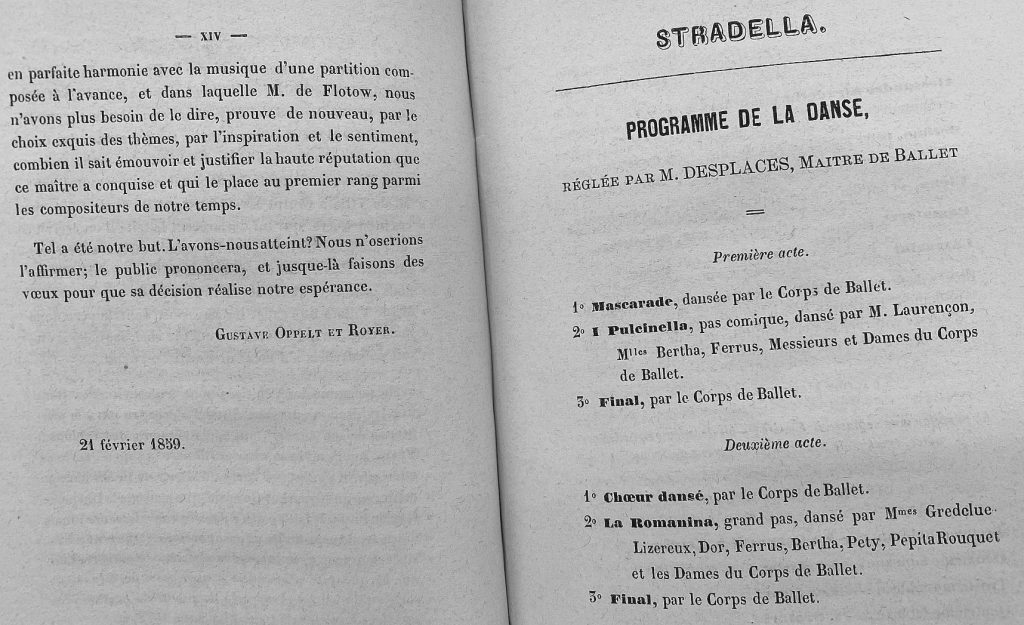
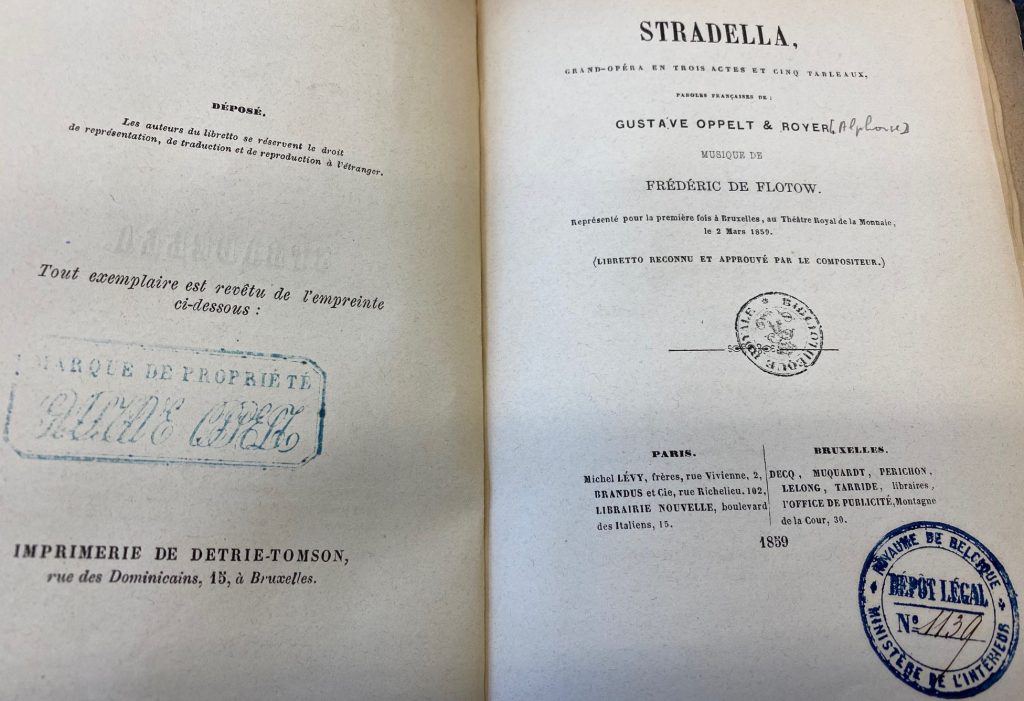
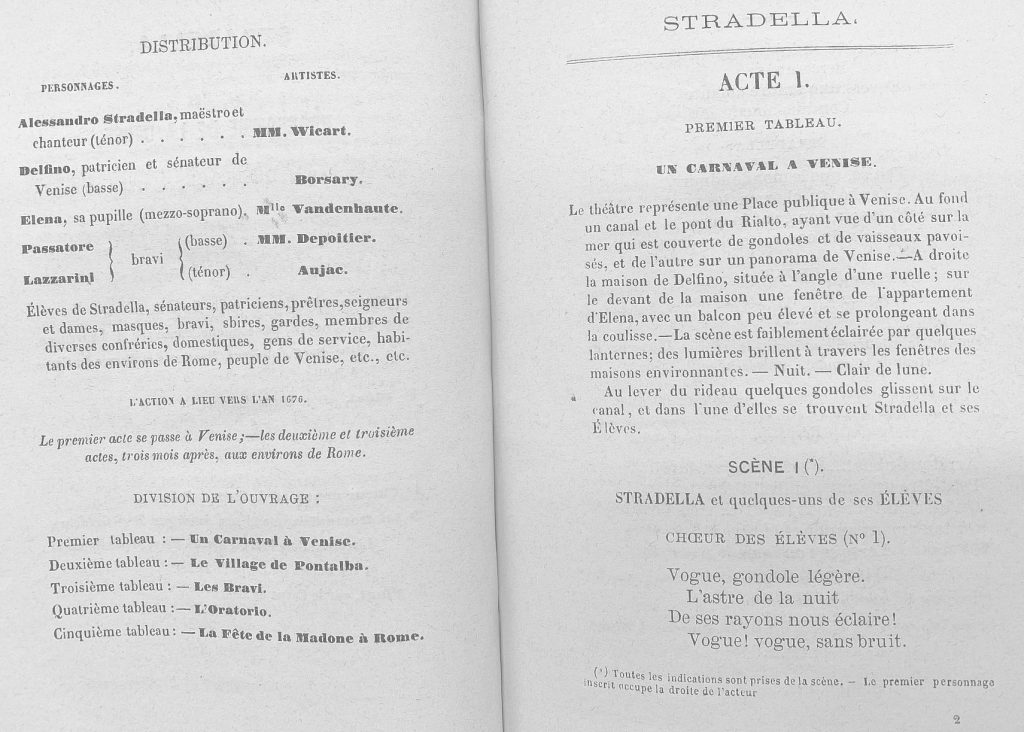
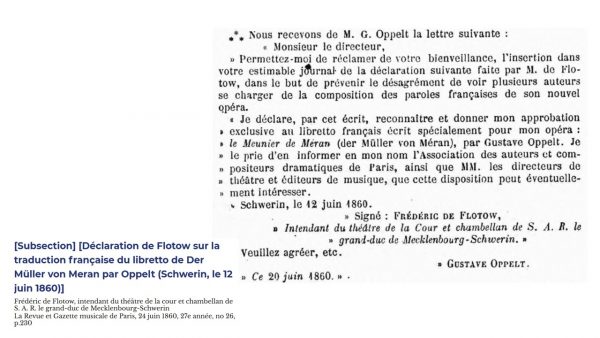
In der späteren Aufführungspraxis des Werks von „Fritz“ von Flotow, wie ihn seine Mutter in MeckPom nannte, sollte es für den in Frankreich ausgebildeten Jugendlichen einige Fallstricke zu überwinden geben. Bereits seine erste Oper „Alessandro Stradella“ hatte mit Produktpiraterie zu kämpfen. Der Übersetzer Gustave Oppelt (1844 Autor zu Stradella genannt BNF), mit Erwähnung auch von Alphonse Royer, hatten die Rechte des Librettos inne (Stempel des Dépôt Légal 1859 Nr 1139). Anlässlich der Erstaufführung in Brüssel am 2-3-1859 au Théâtre Royal de la Monnaie erschien das gedruckte Libretto versehen mit einem Echtheitsstempel. Bereits 1860 gab es dann Anlass, dass Gustave Oppelt mit der Unterstützung von „Frédéric de Flotow“ für seine Übersetzungsrechte kämpfen musste und dazu eine Notiz in der „La revue et gazette musicale de Paris“ veröffentlichen mussten. Autorenrechte waren und sind keine Selbstverständlichkeit. Die Lebensgrundlagen vieler Künstler, besonders der KünstlerInnen, auch heute, bleiben meistens prekär. Flotow war bereits beteiligt an Vereinen, die die Kompensation von AutorInnenrechten vertraten. Die „Dédicace“ an die königliche Hoheit  Madame la grande Duchesse Douairière Alexandrine de Mecklembourg-Schwerin, née princesse de Prusse (Link Stammbaum), versteht sich dabei wohl auch als Dank für die Berufung von Flotow als Intendant an das Theater von Schwerin, gleich neben dem schönen Schloss. Mäzene konnten wohl über Stellenbesetzungen KünstlerInnen ihr künstlerisches Arbeiten weiterhin ermöglichen. Flotow brauchte auch die Unterstützung, die ihn zu seinem Lebensende nach Darmstadt umziehen ließ.

Ukraine 360

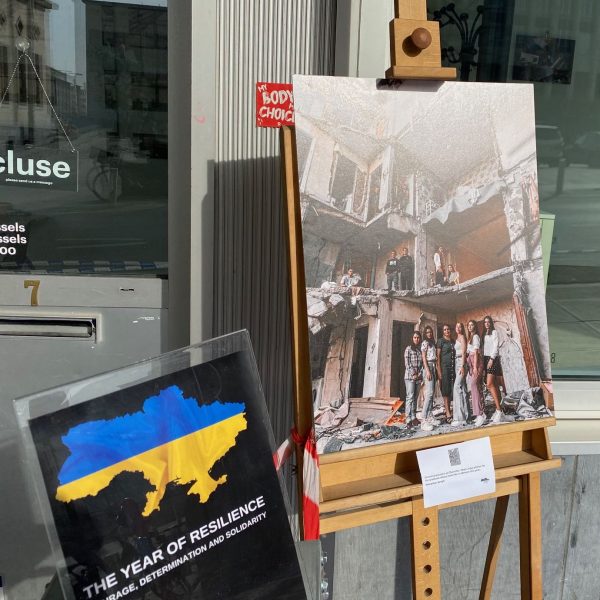
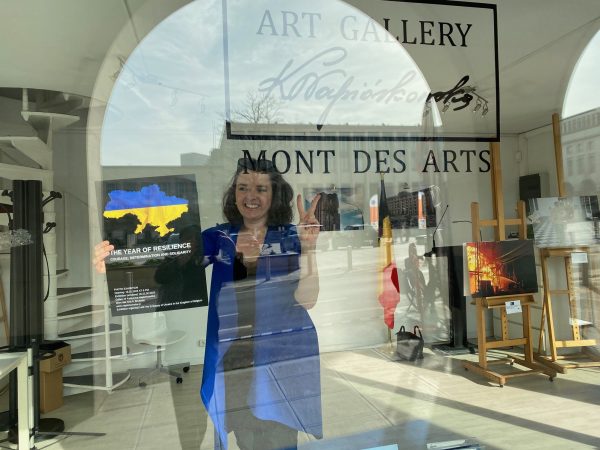
360 days of traumatising war of Russia in Ukraine. Yet, Ukrainians manage to stem the invasion this time for a year. My generation of baby boomers in Western Europe no longer knows the day to day horrors of war. A photo-realistic exhibition organised by Dr. Justyna Napiórkowsak together with the Ukrainian Embassy in Brussels brings to us more than images of destruction. The Exhibition builds on a transparent organisation. All day and night long you can feel and reflect in front of the gallery windows of what war means to people affected. Rather than passing over the daily horrific news, it is important to take in images that will last within you. Since the exhibitions excels in linking to strong own emotions, the images tell lasting stories. Communicating about war is difficult. This exposition at the “Mont des Arts 8” in Brussels, not far from the “Place des Martyres” is symbolic. Ukrainian artists are going to stay with us, showing us what “The year of resilience. courage, determination and solidarity” mean in the Europe of today. Ukrainian youth, like the whole population, demonstrates all of this in posing for their 2022 graduation photo (Stanyslav Senyk, 2022) actually within the ruins of their city. They seem to sing: “We shall build this city on rock and roll” again. Ukrainian culture is unique. Putin’s Russia is still living in the 50s state of mind. The Russian soldiers might soon have their 60s moment “make love, not war”. For persons with Russian roots in Eastern Europe it feels like what you believed or were told was a friend before is now turning around and you shooting at you including committing war crimes (Geneva convention) on you. The exposition is a “homage to Ukraine”, Ukraine’s resistance and resilience. Teaching us lessons, lessons we should like to learn fast for the survival of democracy and our way of life based on freedom not coercion. The sociology of war informs what the term “Zeitenwende” means. Look at it, rather than look away. As previous College Master at Jacobs University Bremen graduation ceremonies were very personal and emotional events meeting students, many with their families. Ukraine 3.0 will prevail eventually. Thanks, Justyna for putting images 360° and 360 days next to this optimistic message.