Affordable Art

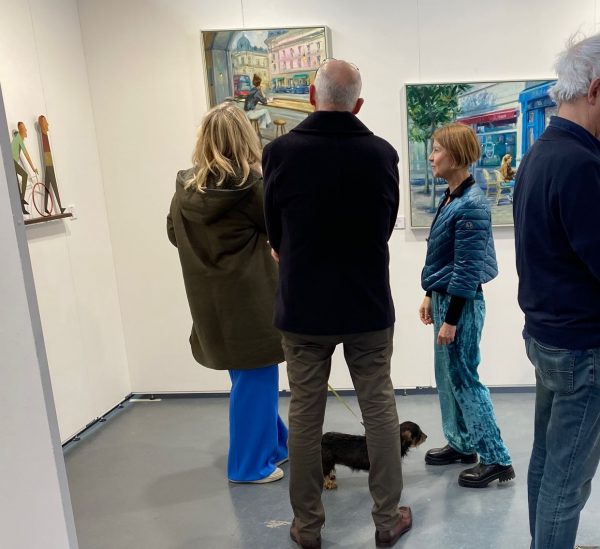
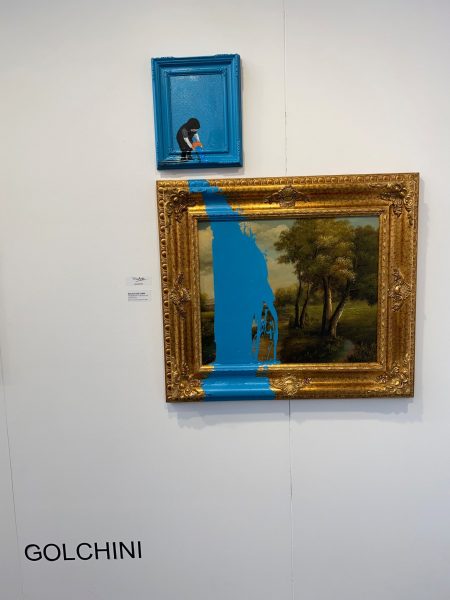
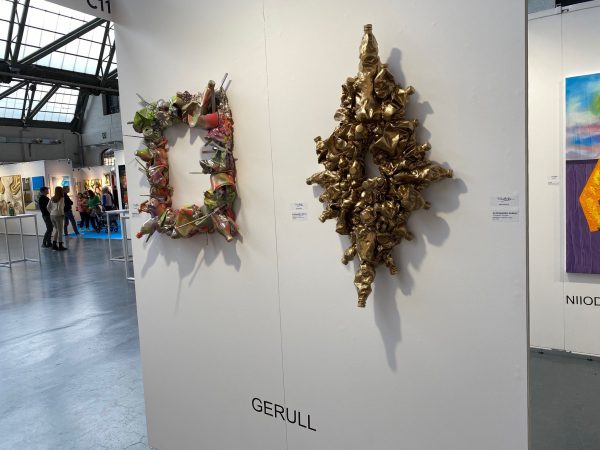
The affordable art fair in Brussels 2023 has different rules than other art fairs. First of all, well behaved dogs are allowed to visit. Underdogs might have a problem. The entry fee is an astonishing 20€, only 5€ less than “Brafa”. Inflation hits affordable art apparently more than the prestigious fair, at least at first impression. It remains questionable, whether artists represented as affordable art can actually afford to make a decent living from their art, now and at retirement. Taking into account the cost of rent, material and working time of artist, gallerist and transportation, art is frequently the art of minimalist approaches. The “garbage cycle N18” by Alessandro Gerull presented by WinArts challenges our habits of endless production of garbage by use of recycled material for making art. Not an entirely new idea, but still intriguing at affordable prices. Similarly, from the same gallery the work from Golsa Golchini invites us to “Remember to water the plants” as we might have asked somebody to help us out.
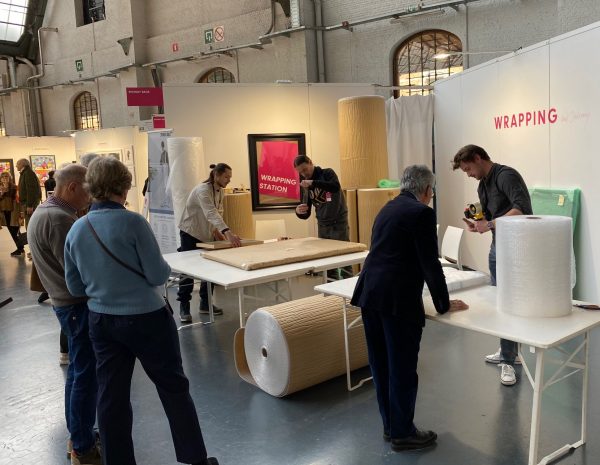
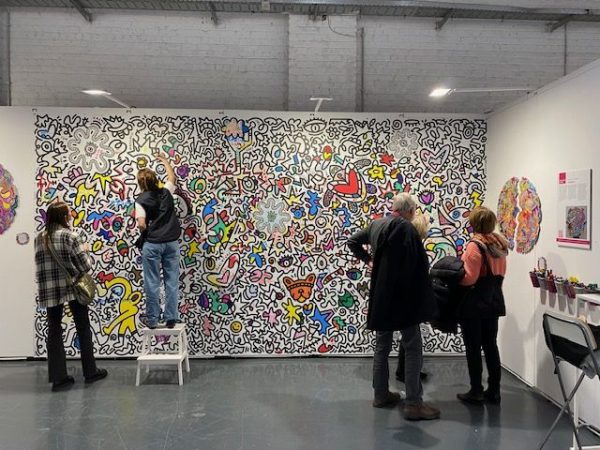
Re-use of material or innovation in photography are present at many places. Discovering new talents at affordable prices is a feasible feature of affordable art around the globe. The thresholds of entry are considerably lower than at Brafa. The surroundings of the old Tour & Taxis Logistics Centre in Brussels are an interesting excursion in modern renovation of old industrial sites as well. Not many skill-shortages in arts, except the more critical and provocative artists probably have still a hard time to find their way into galleries and art fairs. Other cities dare more daring art, be it affordable or not. The concept is a bit like coffee or “art to go”, quite many people walk away with a nice, little parcel in their hands. Even participatory art is represented, a kind of do-it-yourself, or finish it yourself drawing. It is fun to experience and to be part of affordable art of that kind to leave with some positive vibes (Roxehga). Enjoy!

Art Un-Fair

The Brussels Art Fair (Brafa 2023) with its long tradition is certainly a major highlight in the world of art in Brussels. In view of the languages spoken at the fair, mainly French and Dutch, some English with here and there a word in Spanish or German, the international reach is probably still not at the level of before the corona crisis.
The availability of established, internationally recognized art over many centuries on the art market is remarkable. Whereas before the crisis speculators bought art to shield their fortunes from a high inflation and/or politically instable period, nowadays it seems to me, that some art is returning to the market due to the need for liquidity of speculators or risks of confiscation in case of dubious previous acquisitions or ownerships. Renowned galleries, of course, provide impeccable certificates or information on them, a tricky business in itself. Anyway, the tour on the fair is a “parcour” through the history of art, mainly through the Western or European arts across centuries rather than decades. Most persons will find splendid examples according to their preferences of art ranging from paintings, sculpture, prints or other artefacts. Beyond the impressive individual art work, the arrangements and “mise en scene” of art is another learning experience at the fair. Whereas most public museums are happy to make accessible as much as they can of their collections and archives, the private art market has another objective. Effective and convincing presentation of the artefact is likely to “enrich” the value of art work as well as the seller and the dealer. Technology allows great lighting and some otherwise “sombre” artwork becomes a shiny little piece catching eyes, hearts and wallets. For some visitors it works probably the other way round.
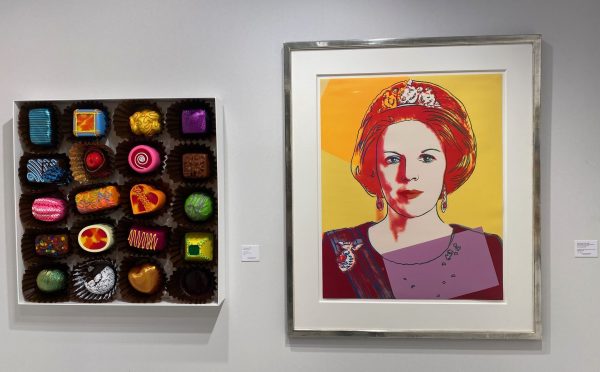
For persons overly stimulated by art, I recommend to close the actual or virtual visit with a look at the little bit cheeky artwork presenting Belgian chocolate next to royalty (Gallery Delaive, showing Peter Anton’s “Paradise Variety” next to Andy Warhal’s depiction of a Queen, see below or their Instagram presentation). A sublime moment to repeat the experience at home at moderate prices with your very own box of chocolates. At a price of 10€ each box you can enjoy roughly 2000 of them for the price of the art work. The question is: What is more healthy? Think about mental health as well. Alternative question: Art on a Fair is fair, unfair or fair traide?

Protest

In studying the 60s we still come up with a number of remarkable ideas. Not only concerts moved the masses but also new ideas flourished. Many subcultures developed specific forms of protest. To implement new ideas, new forms of protest were applied to advance civil rights, to overcome established routines and to raise awareness for inequalities and injustices. New forms of participatory democracy were tested and some reached public attention and/or approval. Burner (1996, p.162) even goes as far as defining freedom as “continuing exercise in decision-making” which hinges on the taking-in of all voices across society. The coming together of freedom and community constitutes the cross-roads of politics. Besides terrible effects of violent abuses, peaceful forms originated in Gandhi’s peaceful resistance in 1930. Martin Luther King and later Nelson Mandela reached historical milestones through peaceful forms of protest. In 1967 in Oakland, California, the form of “action protest” took place. The basis of protest was civil disobedience going beyond sit-ins as the civil rights movement had applied. “They involved blocking roads and entrances to buildings, peacefully inasmuch as the demonstrators used no force beyond the presence of their own bodies or other obstacles to passage.” (p.163). The new feature was, that protesting persons take the risk of being a victim of violence without a violent response from themselves. The intention is to “convert temporary antagonists into permanent friends”. Through the repercussions in mass media protesting persons can reach larger audiences and touch “uninvolved or possibly sympathetic bystanders” (p.163). Such new forms of participatory democracy, acting in the public arena, are stretching the idea of peaceful protest to its limit, where the freedom of others might be impinged. Participatory democracy, therefore, is a balancing act. Some recent forms of protest, in fact, have their origins in the 1960s or the year 1968 a focal point. They continue to be influential 55 years later in many countries and at all instances where basic freedoms or minority rights are violated or threatened.
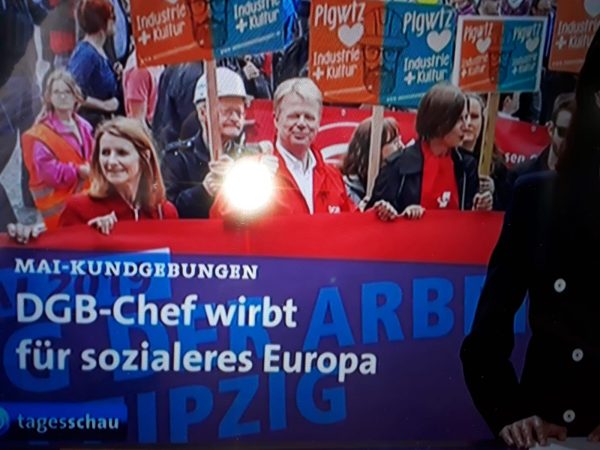
Protest has also moved online. Internet sites are not only used for simple communication, but they serve as port of entry to prepare and organise protest. High-jacking of company or political adverts in the public arena can be taken online as well. Challenges to conventional politics and media representation is enacted through webpages like www.adbusters.org or www.indymedia.org the latter page comprises a whole network of local activist groups. Brian D. Loader (2003, p.1320) has added activist approaches against particular corporations to the list of online protest forms. Through public shaming of brands these activists attempt to raise awareness of the public for abusive employment practices, cruelty towards animals, environmental disasters or fake information using online channels like social media, email-lists or chatgroups via mobile phone numbers. The funding of protesting persons is another relatively new form which ranges from crowd-funding initiatives through platforms as well as forms of corruptive practices applied by states or corporate interests. Protest against protest is online and offline the next round of activist forms of protest. Democracy, law and the police have to balance out these new forms of protest. Learning about the way democracy functions is a continuous task, some would say a continuous struggle. Evaluations of the short-term or long-term effectiveness of protests yields important insights about the functioning of democracies and autocratic regimes. New forms of protest need new forms of measuring impact as well.

Time3

The evolution of time is fascinating as research topic. Both in theoretical as well as empirical approaches. Beyond the precise measurement of time and the use of time in measuring working time, which intensified during the industrial revolution, we witness continued struggles over the length and the organisation of working time. The 30+X hours week working time could be reorganised into a 4-days week to improve work-life balances for millions of people. The effects are not only on employees directly concerned, but also on their families and/or households involved.
The changing perception of time (as being short of time) and its evolution over time needs huge surveys collected over time (known as “Time use studies”). Inequality over the life course remains an issue with a persistent gender bias. Unhealthy and excessive overtime work is still a problem, usually negated by upper ranks in hierarchies.
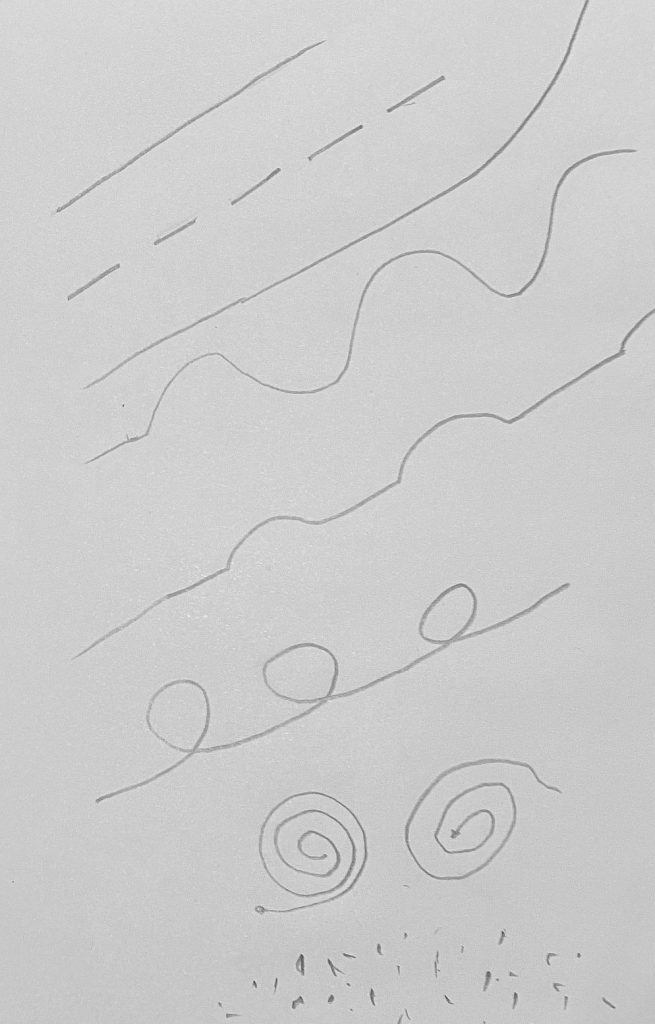
Let us start to imagine different concepts of time to maybe one day overcome the shortcomings of our current understanding and use of time. Usually, time is considered a linear concept, one day follows another day and so on. Time, depicted as an arrow or a horizontal axis in graphical representations, is helpful for most processes we observe. If our aim is to explain a social process which evolves over time, we could perceive time as running with different speed in, for example, urban and rural areas of the same country. The liberalisation of women or peace movements evolved or spread with different speed in different regions. The 60s became known for many women as the decade when the control of reproduction allowed different life styles. Concerning reproductive behaviour and divorce rates a break in series compared to previous periods is observable, reduction of reproduction and diffusion of divorce throughout societies. Instead of continuous time we might speak of discrete time, in for example decades like the 60s, 70s, 80s. In retrospect “social time” seems to have passed faster in one decade than the other. We might also imagine time as growing exponentially as time². Taking into account the slowing down and successive rise again of evolution over time, the time trend might look like a rising wave (time² + time³). In econometric models testing of such hypotheses is feasible, although it is more difficult to convince reviewers of an alternative theoretical model of time.
An investigation of trends of democratic behaviour over time would need to adjust for the potential and sometime measurable return of undemocratic practices for periods. A depiction of such “social time” of democracies as an upward rising line with periodic relapses is a plausible theoretical framework. Trajectories of inwards or outwards spiralling processes are already fairly complex trends for the process of democratisation as the phenomenon to explain or the modelling of a time trend to explain the level of democratisation reached so far. Challenges of time frames for independent and dependent variables in social processes might be questioned altogether to claim that time is a spurious occurrence of events much like a process of a so-called “Brownian motion” also named white noise. In fact, not being explicit about the concept of time applied in social analyses amounts to a severe neglect. Examples of such neglect are certainly all those cross-section studies, still pervasive practice, in social sciences or opinion polls. The linear concept of time, as a chronologically processing arrow of time, is a convention useful for synchronisation of action. However, this synchronisation is already debated more forcefully with more persons being unsatisfied with the use of synchronisation as a tool to regulate our “social time” and social processes. Time zones, summer and winter times challenge our day-to-day perception of everybody living at the same time, speed or intensity. Bedtime for me, wake-up call for others, or vice versa.

Photo

Photography has captured our imagination for years already.
It is now a daily activity of many people to “capture their experience”, if not even their existence in some photographed way. Susan Sontag (1977) coined the phrase that photography “feels like knowledge – and, therefore, like power”. You are in a relation to the world. Taking the photograph in my view is the Mephistopheles moment. You are in control of the object taken by the camera. Arranging the scenery, waiting for the perfect moment, expression, light or colours is like mastering a situation, an atmosphere, an emotion. Photographs have the power to work as a document. Editing has become easy and pervasive with digital tools. However, it was always present in the traditional technical parts of shooting and developing subsequently in the dark room.
“to be taken” on a photograph is more like the Faustian moment of realising that you are manipulated, or at risk of being made use of, for some purpose, unknown to you at that moment.
Beware, a photograph is always just an image of an image. The photographer is the intermediate person using a specific technology to transform his perception or vision of (her/his) reality into another image of it, creating some form of virtual reality.
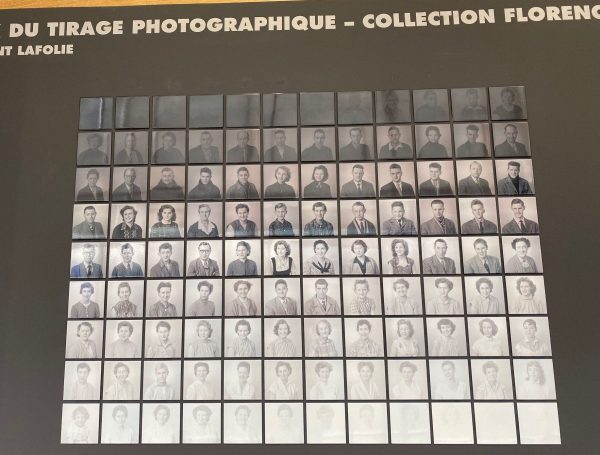
In addition to this twofold transformation, the third transformation is historically the technical development of the negative into the print (see below). Nowadays, this is the compression and editing into a specific format. Despite these transformations, a photograph is admitted in court cases as providing evidence of guilt or to identify an illicit act (excess of speed limit). Infringements on privacy are the rule rather than the exception. Who is that person sitting next to you, and at what time of the day?
I, personally, apply photographs often like note-taking for research to capture spontaneous ideas or associations, which await further interpretation or may serve (served) as inspiration.
Compared to photography, painting has been a more elite artistic practice for many years. Taking photographs has democratised the image-taking art forms. Instead of originals, many of us have collections of photos from museums around the world. We take “photos of photos” to reveal the world around us and reflect on values. The social construction of the world is directly visible through the process of taking, collecting and curating photographs. Construct your own world or the world will construct or deconstruct you instead.
Politicians (e.g. Angela Merkel), John F. Kennedy or historical figures, all had their defining moment condensed into one or several photographs, what have been famous paintings in art history before. Susan Sontag wrote 50 years ago: “… a photograph can be treated as a narrowly selective transparency”. The third transformation of developing and/editing, shown in the images below, explains what we might learn from this citation in a technical sense. Just as courts have to evaluate, whether a proof is admittable and contributing to finding the truth; viewing photographs is a balancing act between art and truth.
“Even when photographers are most concerned with mirroring reality, they are still haunted by tacit imperatives of taste and conscience.” (Sontag, p.6). Photographs document sequences of consumption. We should frame this as CO2 footprints in the 21st century. Restricting print to a few “best of” was and is necessary to reduce the dirty footprint of photography, particularly since photos have become a mass media as much as the preferred media of masses.
With photographs we certify our own certificates, for example in case of job applications or passports. We encounter “cosmopolitans accumulating photograph-trophies” in all instagram-able locations.
Taking photos is like a “friendly imitation of work” (p.9), you do something useful in documenting the images of a world in danger of being lost. We can give importance to otherwise forgotten realities, attach importance even immortality to something or someone of our choice. We make history through it or try to make it at least. “When we are afraid, we shoot. But when we are nostalgic, we take pictures.” (p.9) Sontag defines photographs as part of the repertoire of surrealism (p.77 ff), “to finding beautiful what other people found ugly or without interest and relevance …”). We are at risk to mistake photographs as reality and experience the original as “letdown” (p.147). The return to polaroid instant photography brings us back to a proclaimed authenticity of the orginal, unique moments, with supposed unfiltered not-edited images. The true moment of having had fun or joint experience without use of photoshop to add the missing member.
“I take photos, therefore I am”, has become the mantra of modern societies. We tend to ignore that we are taken on photos a million more times than we take some ourselves (video surveillance). It is a question of power in the end. Edit yourself or you become edited.
(Image: Prix du Tirage photographique BnF 2022 Laurent Lafolie, photo below).
Flotow Analyse

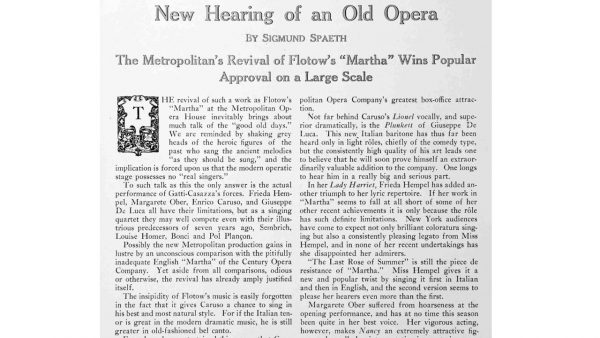
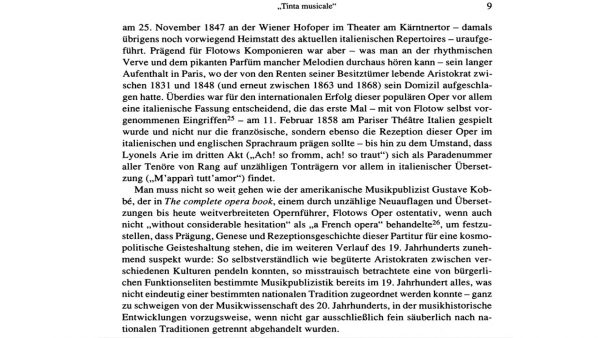
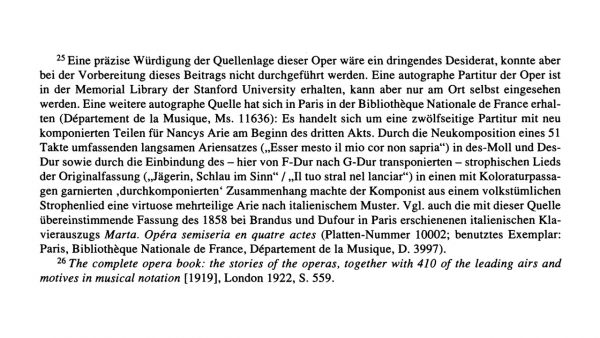
Interessant ist der Aufsatz über Flotows’ Martha, der vor einigen Jahren in einer musikwissenschaftlichen Zeitschrift erschienen ist. Anselm Gerhard ordnet die Oper unter Berücksichtigung des Werdegangs des Aristokraten Flotow dem französischen Stil der Oper zu. Das Schicksal des von Flotow war es wohl, mit seiner aristokratischen Herkunft aus Preußen, Deutschland, ein Uraufführung in Österreich, dann mit Bel Canto assoziert überwiegend auf italienisch aufgeführt zu werden (Metropolitan Opera 1914? mit Caruso), aber ein französisches Opernschema basierend auf einer irischen Volksmusik mit einer Story in England zu verbinden. Kosmopolitisch nennen wir das im 21.-ten Jahrhundert, nicht oder schwer nationalistisch verwertbar im 19. und 20.-ten Jahrhundert. Für die Handschriften ist es wohl am besten, gleich in die Bibliothèque nationale de France (BnF) zu fahren. Im Saal Richelieu ist das dazu passende kunstgeschichtliche Ambiente noch nachvollziehbar. Quelle:
Gerhard, A. (2004). „Tinta musicale“ Flotows „Martha“ und die Frage nach Möglichkeiten und Grenzen Musikalischer Analyse in Opern des 19. Jahrhunderts. Archiv für Musikwissenschaft, 61(1), 1–18.

Zigarre

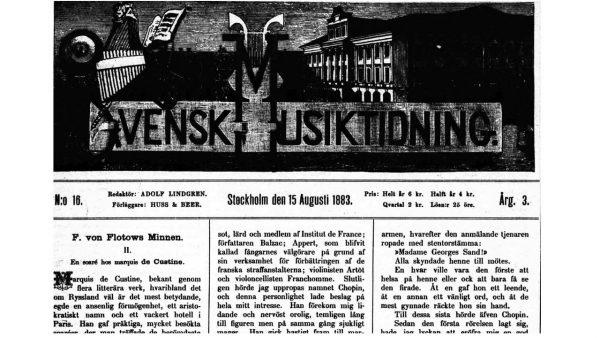
Die Zeiten, in denen Zigarrenrauchen Schlagzeilen machten, sind eigentlich lange vorüber. Heute wundern wir uns lediglich über die Sorglosigkeit der Personen bezüblich ihrer Gesundheit. Friedrich von Flotow hat die Szene im Salon de Marquis de Custine (Paris) in seinen Erinnerungen vorzüglich beschrieben. Die Schriftstellerin George Sand hat die Gemüter mit dieser Rauchszene nachhaltig inspiriert. Frédéric Chopin (1810-1849) hat an diesem Abend seiner (späteren) Mäzenin eine Ovation dargebracht. Flotow hatte sicherlich einen inspirierenden Abend verbracht. Seine unveröffentlicht gebliebenen Memoiren wurden von seiner 3. Frau publiziert. Ein Vorabdruck auf Schwedisch habe ich in der Svensk Musiktidning vom 15-8-1883 gefunden. Datiert ca 6 Monate nach seinem Tod, heute vor 140 Jahren, ist das eine Würdigung des Komponisten in Schweden und eine Anerkennung der Aufarbeitung und Verbreitung seines Werks durch seine Frau. Die Aristokraten und ihre Kreise waren Anregung für viele künstlerische Kreise. Das wohlhabende Bürgertum hat später diese Rolle übernommen. Heute brauchen wir zahlreiche öffentliche und private Stiftungen oder Crowd-Funding für diese Events und Inspirationen.
(Quelle: Flotow, Friedrich von. (1883). F. von Flotows minnen. II. En soaré hos marquis de Custine [Beskrivning av G. Sand (baronesse Dudevant) och Chopin]. Svensk musiktidning, 3(16), 121–122. )

Employment

Employment is back on top of the agenda. Not as we used to think, though. Previously unemployment had dominated societal concerns. Now it is the lack of persons seeking or available for employment. What has happened? The Covid-19 crisis has demonstrated the need of persons qualified to work in the health sector. From health care and urgency care, we are short of personnel in all these fields, everywhere. Then we discovered the role of essential services and the need to equip crucial infrastructures like ports, transport, shops, schools and ambulances with service persons resisting despite work overload. Larger cohorts leave employment to retire, some even early due to illness or burn-out. Additionally, war is back in Europe. Military personnel is in high demand again, drawing largely from younger cohorts. The need for conventional weapons. long thought to be oblivious, is forcefully back on the agenda.
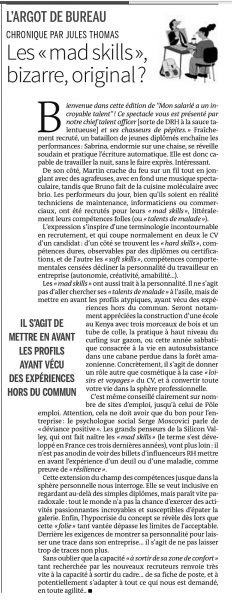
Growth potentials are everywhere. However, these pre-modern facts encounter a population in the western democracies that insists on new approaches to employment. Beyond hard and soft skills, recruiters seek atypical skills, competences and trajectories. A parachute jump from an airplane, cooking and dining experiences, caring spells, periods in self-employment, all are directly or indirectly relevant for employment and teamwork. So, what is your specialty? Collecting stamps? Surely you are able to spot tiny differences in images with specific content. Fake news and fake image detection or video surveillance is in high demand, just try an application and discover the employment potential of your MAD skills. Sounds crazy? No joke. Skill needs are everywhere, just give it a start again and again. Read a serious newspaper regularly (here LeMonde 19.1.2023) for inspiration.

Relation

Several inputs from logic will assist us to establish relations between 2 objects, 2 subjects or 1 subject and 1 object as in simple relationships to form sentences. The most obvious is A = B. The most common, depending on definitions, A is not equal to B, hence A >B or B>A. Medieval logic adds the consideration of consequences and suppositions to relationships. A determines or leads B. We might suppose that A is a precondition for B.  Logical arguments often attempt to explain. Mathematical proofs chose ways to deduce or induce, whether a statement is true or false. To reduce the number of lines to explain a theorem is a mathematical virtue, just like in a game of chess to find a check and mate in fewer moves.
Leibniz increased the repertoire considerably. In geometry objects are parallel or in the infinitesimal calculus they approach each other without ever reaching each other. With the art of combinations he describes a language than contains groups and elements. The binary revolution, to express numbers, letters, images in form of pixels as multiple assemblies of 0 and 1, has revolutionized our potentials. Beyond these determined relationships there are stochastic relationships, they happen more or less likely. The centre of logic relationships remains deductability = to deduce, consistency = to consist of and completeness = to complete (Encyclopedia Universalis 14, p.653). Time adds another dimension to our concern to exemplify relations. A pre-empts B, or B follows A in time, but not in respect of deterministic logic. Additionally, locations in space of 2 objects allows us to imagine additional abstract forms of relationships, artists play around with this continuously. Some artefacts have created fantastic new ways to challenge our learned ways to consider relations. Last but not least, sound has contributed to how we perceive relations. To superpose, transpose or dissociate relations leaves different emotions. Relations are all around us. They certainly link subject and object in a sentence in multiple ways, copying or imitating nature. For further reading: HERBERT HOCHBERG; KEVIN MULLIGAN. Relations and Predicates. Frankfurt: De Gruyter, 2004. ISBN 9783110326536. Disponível em: https://search-ebscohost-com.kbr.idm.oclc.org/login.aspx?direct=true&db=nlebk&AN=603683&site=ehost-live&scope=site. Acesso em: 23 jan. 2023.

Deconstruction

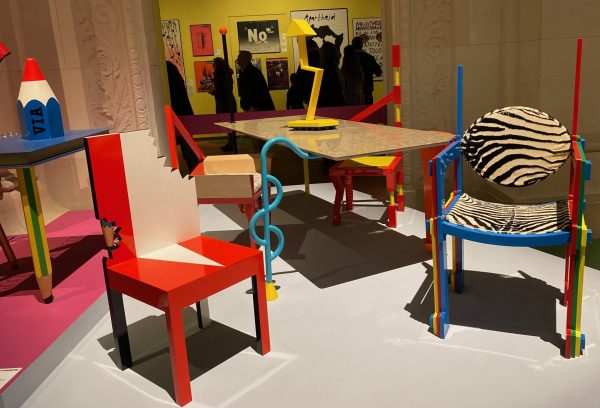
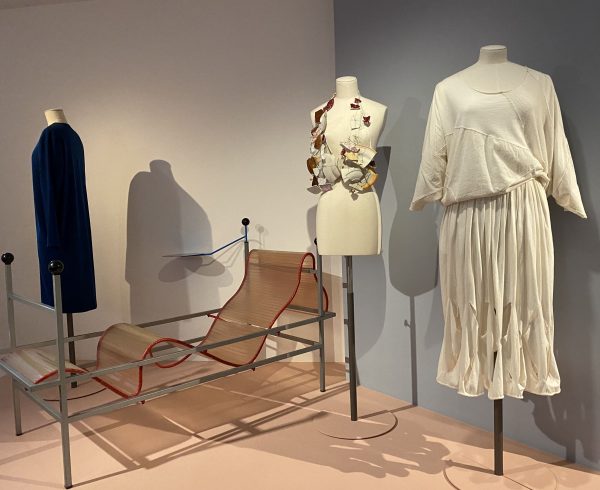
Deconstruction is a powerful tool or even method. Beyond imagineering, deconstruction in the literal sense means take to pieces. In most cases a physical object consists of several objects or parts. By deconstruction we attempt to understand the whole object as the sum of its parts. Before a new product or design is created, many scientists, engineers and artists start to deconstruct existing artefacts. Understanding how the object is assembled, for example, allows you to play around with pieces and maybe come up with an alternative way of constructing the object. The architecture of “deconstructivsm” has left us fantastic buildings. In furniture design there are also nice examples of deconstruction. Paris is a good place to study deconstruction (Explained), perhaps many still read Derrida there. It is a fruitful method beyond its engineering sense for example in law, literature or many other social science disciplines. If you are not mad yet, visit the MAD in Paris to see examples of deconstruction or construct your own deconstruction. Both have a dialectic relationship to each other anyway.