
Hybrid art

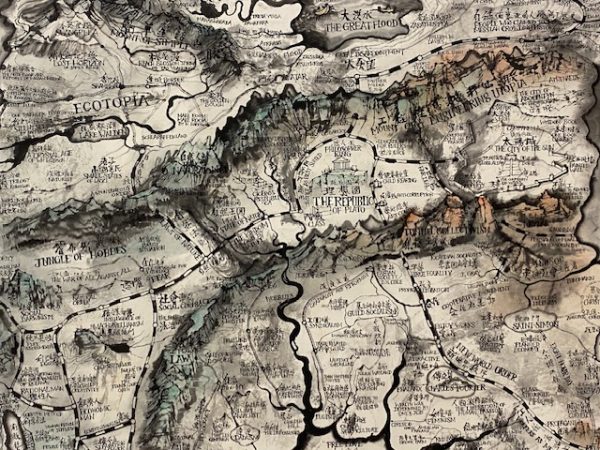
Bringing together 2 kinds of art makes hybrid art. Just as other fields of art have combined for example music with text to create the art form of songs as of the medieval ages, for example, the emancipation of another form of hybrid art is gaining prominence, text incorporated into or in cooperation with painting. The incorporation of text into paintings, sculptures or installations represents a drive to ise multiple channels of communication with an audience. Each might be sensitive to a specific word or sound, which creates an entry to gain attention or enlarge awareness for some cause. The “Palais Populaire” in Berlin displays the combination of the collection of the Deutsche Bank Art collection and the “Written Art Collection” to make this point with some forceful pieces of hybrid art focusing on text in art. (Image: Extract from “Map of utopia” by Qiu Zhijie, shown at “Seeing words, reading imagesSeeing words, reading images” at the Palais Populaire” in Berlin 2026-5). 
Valuable Donations

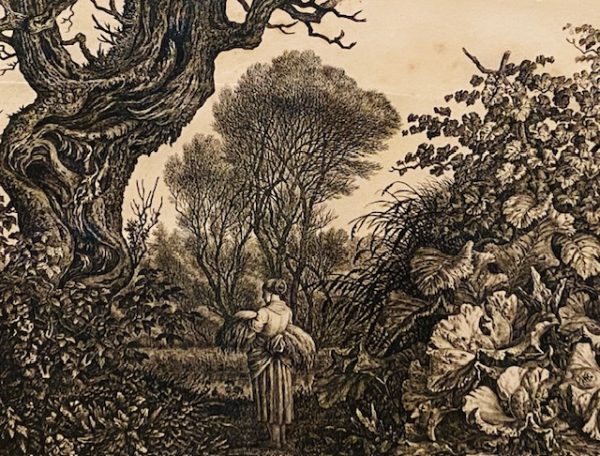
The of a donation to a national gallery is often a curse but may reveal only much later as a blessing. More galleries across the world give due credit to their generous donors. The collection of impressionist paintings by Caillebotte figures today very promising in the Musée d’Orsay in Paris. The fine collection by Chistoph Müller endowed to today‘s “Kupferstichkabinett” exposed in the Gemäldegalerie in Berlin has been on display in a small room. The „Kräuterblätter” (herbes on paper) by Kolbe 1815/1824 are fine pieces of etching with a focus on what might get lost in our biodiversity in coming years. Old trees were surely on his list (Oak trees 500+ years old). A collection of depictions of herbs and flowers a part of an ecological treasure which the generations after the painter and eventually the collector Christoph Müller began to value a lot. Some collectors are far ahead of their time by treasuring the past. (Image: Extract of „Kräuterblatt mit Schnitterin“ Kolbe 1815/24 Donation Christoph Müller shown in Gemäldegalerie Berlin 2026-5)

Portrait of or about

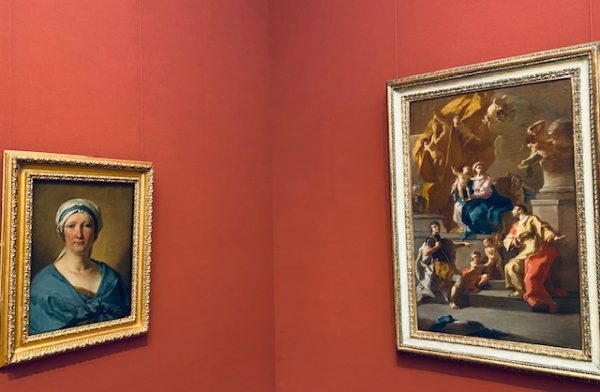
In some galleries or for curators of an exhibition, the crucial question is not only the overall message, but the best positioning of artworks in the available space. In many national galleries what hangs next to another piece is rarely seen as an opportunity for exploration and experimentation. A recent visit to the “Gemäldegalerie“ in Berlin allowed to explore the vicinity of 2 paintings, which are very different in appearance. The one (by Pierre Subleyras 1740) is just entitled “Portrait of a woman”, the other one next to it, “Virgin and Child Enthroned, with Angels and Two Saints, Domenico Mondo 1773). The former portrait has almost a modern touch to it as the beauty consists in the simplicity of the person depicted, whereas the latter painting portrays a rather empty message of splendor and power. The conscious confrontation of portraits or paintings with each other is the high art of curatorship. It is even more pointed than a guided tour of a gallery as the simultaneous rather than the sequential confrontation is the issue. 

Woman artist scandal

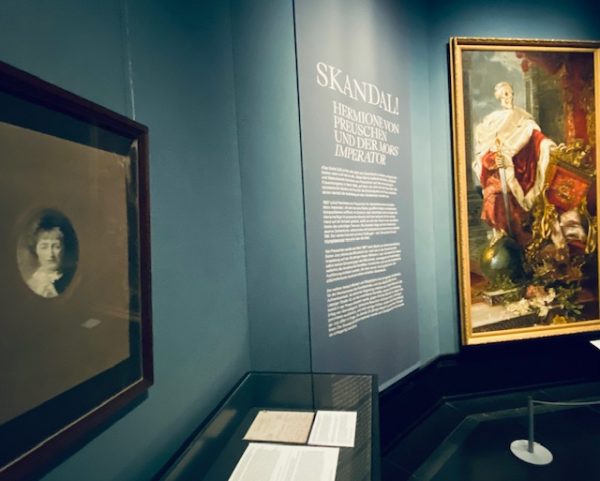
The painter Hermine Schmidt-von Preuschen, little known today, had to face strong forces in the established art community of her time. The skills and audacity she displayed at an early stage of her career as painter is epitomized in her work “Imperator Mors”. This painting dates back to 1887 and was rejected by the art academy in Berlin for their official exhibition. The woman artist was already at that time confident enough that her painting was of sufficient quality to deserve to be not only considered in the exhibition, but also to be seen by larger audiences. Similar to the refused painters of the impressionist movement, she decided to mount her own exhibition. The turnout to this proved to be quite a success according to the press cuttings presented as part of the exhibition in Berlin at the “Alte Nationalgalerie” 2026-5. Maybe it was the intended philosophical topic or message that killed the chances to be part of the art academy exhibition. “Imperator Mors” shows death or a skeleton to be the ultimate ruler of our fate. For all those who believe in some sort of life after death, this can be viewed as a “Scandal” in itself. The scandal created with such a depiction probably overshadowed the fact that the provocation came from a woman artist. Still very avantgarde for the end of the 19th century. (Image: Hermine Schmidt-von Preuschen and her painting Imperator Mors 1887)

Pictures at an exhibition

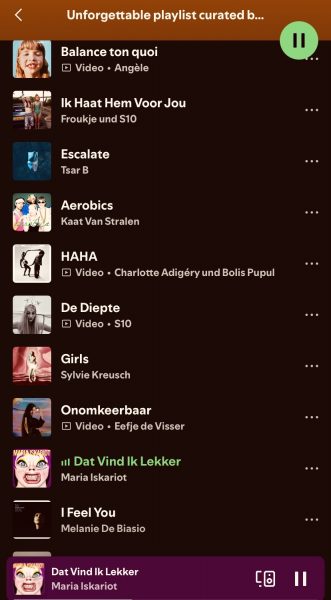
The playlist on Spotify, which accompanies the exhibition “Unforgettable” in Ghent, is an interesting extension of the unforgettable artists into today and tomorrow. You may be inclined to share your opinion in the way Maria Iskariot does it in “Dat find ik lekker” or more like Sophie Straat in “Dansen met de dood”. Anyway, women artists are coming front stage and this is great news despite all the backlashes we, unfortunately, witness in the 2020s. The curator of the playlist Murielle Scherre has managed to take us, a bit like the exuberant Modest Mussorgsky in his “Pictures at an exhibition”, beyond the marvelous exhibition rooms to a broad exploration of contemporary women artists’ world of imagination in music, visuals and songs. A great intergenerational accomplishment. 

Screenshot

Master AI

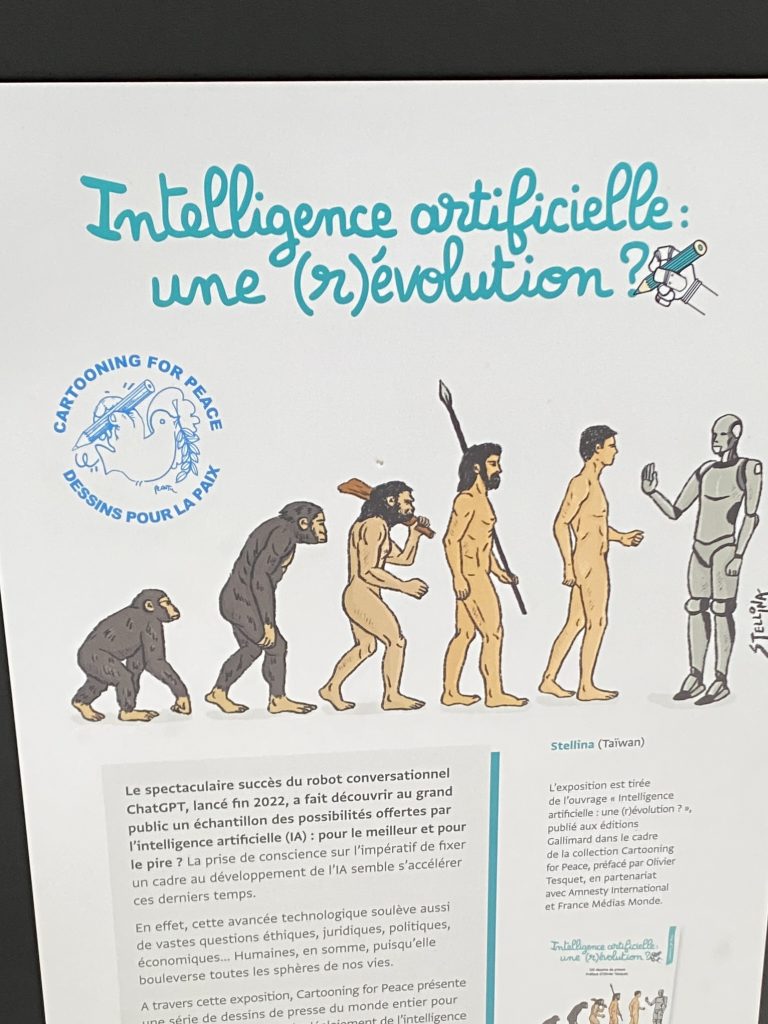
In 2025 the exhibition “Cartooning for Peace” at the BNF in Paris had already an exhibit authored by Stellina Chen from Taiwan, which summarized the evolution and projected the consequences of an all encompassing AI revolution (Image below taken at exhibition 2025 BNF). Currently we exercise ourselves in using various forms of AI or learn how to program them ourselves. It is our aim to master the new technology so it becomes a helpful tool. However, there are already many instances where it is no longer us mastering AI, but the AI has turned around the table and has started to master us. The applications of AI have entered our work tasks, tries and frequently succeeds in improvements of our routines and processes.
In private life a similar revolution is happening, when AI offers advice, which is hard not to follow and very convincing most of the time. Since getting involved in a conversion with AI tests your logic and debating competences, we find ourselves more and more in situations where AI is telling us what to do in the best of a convincing manner. After centuries of humanity to find freedom from oppression and the freedom to what we want ourselves, we seem to be ready to hand over control to AI. We are just like toddlers in this respect, willing or obliged to follow our master.

Silence revisited

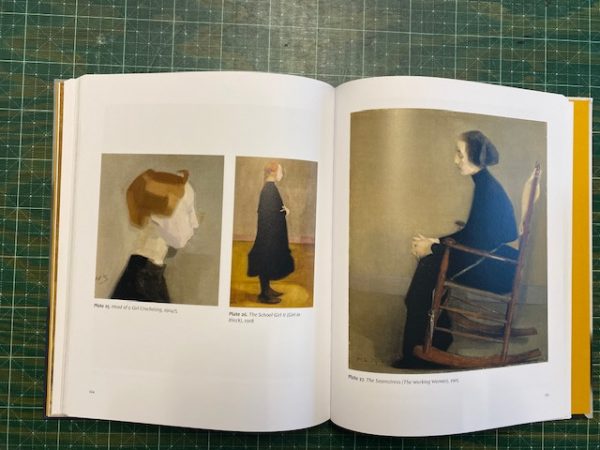
In most cultures, particularly western ones, we are less and less used to silence. Keeping silent for 1 hour is almost framed as an exercise of meditation. In the presence of other persons silence is often misinterpreted as not being interested or even intelligent enough to contribute to the conversation or discussion. Therefore, the title of the exhibition “Seeing silence”, which rediscovers and honors the paintings of Helen Schjerfbeck. Her Finish, Swedish speaking roots, with a broad European training in the arts, made her an accomplished painter in the impressionist’s tradition with a focus on painting portraits. The catalog from the exhibition (THE MET 2025) gives a great overview of her paintings when silence of her models tell stories. Portraits of women are particularly powerful examples of tranquility, and reading, but also uneasy silence in rocking chairs. The biographical sketch of Helen Schjerfbeck by Dita Amory sums up the vocation as “All I desire to do is paint” (p. 15). Towards the end of the 19th century and the 1st half of the 20th century this meant work in silence and she chose to work on silence as well.  (Image: catalog in library Brussels 2026-2) 

Gentileschi Gentileschi

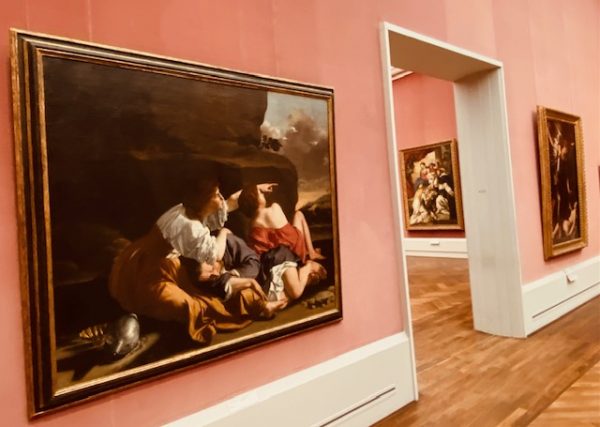
There are 2 Gentileschis that entered the history of art. Orazio the father and his daughter Artemisia. Orazio painted many scenarios based on the bible. The incestuous relationship between Lot and his daughters is difficult one to portray and to do justice to the moral concerns involved. Artemisia, similarly, did not shun away from difficult stories of the bible and added a personal twist to these stories in putting her face into the biblical depiction. The cruelty of the stories become more explicit this way and maybe also her deviant position to the biblical narrative. (Image: Orazio Gentileschi‘ (1622/23) „Lot with his daughters“ Gemäldegalerie Berlin)

Films of Stills

The exhibition of multimedia artist Nan Goldin at the Neue Nationalgalerie (New National Gallery) in Berlin presents a retrospective of her work using slideshows of stills including soundtracks (Image below). The topics and narratives range from autobiographical work on own traumatic experiences to works entitled „memory lost“. The sequences of stills are a form to deal with trauma through art like overcoming the suicide of a family member. Drug or sexual dependency enter the stills and it becomes clear that stillness is part of the coping mechanism she employs. It is hard to watch, sit still and endure the films of stills. However, there is a kind of therapeutic experience to be gained in coping with trauma through art. The installation in several tents increases the reclusive atmosphere and entering the still rooms invites is, somehow including a warning of what kind of chilling experience we are up to throughout the exhibition. The almost therapeutic experience needs to be handled with care and a visit with friends or family is highly recommended in my view. Community and communication are key to coping with these experiences and even still images contribute to building resilience.

History’s Weight

The artist Damien Deroubaix is currently exposed at the BNF.fr in its historic site Richelieu. Together with and next to some of the historic treasures of the BNF collections the unique exhibition allows to experience history’s weight on our current existence. The work of Deroubaix is following and pursuing historic art trajectories with a special historical and ethical consciousness. Techniques of art are insensitive to the moral compass of the painter in history. The collections of the BNF like all major European collections have to handle their colonial past and immoral depictions throughout history. Deroubaix accomplished to liberate techniques of art of their colonial linkages and imagination of emperors focusing on humanitarian values. War is horror, in the past and in the present. Genocide in Rwanda is war crime and dealing with the memories of people an honorable way to look forward conscious of the past. Hybrid forms of art allow multiple contextualizations of his work. In the Galerie Mansart and Pigott of the BNF the historical embedding enriches the art and vice versa. Art allows us to rise beyond the ashes mankind has and continues to inflict on us. (Images: extracts of Damien Deroubaix at BNF, Paris 2024)