Ukraine Chess

Strategies in Chess, sometimes, inform strategic behavior in wars. In chess there are clear definitions of 2 opponents and their material. Modern warfare has blurred both elements. Opposing parties build alliances and the material allowed or available is hotly debated as well. The war of Russia on Ukraine territory, nevertheless, resembles a variant of a chess game considering the different stages of the game. All starts with Russia choosing its opening attacks. A rather aggressive version of the opening is the King’s Gambit in which a fast attack tries to overwhelm the opponent. Ukraine, because of the surprise and lack of immediate support from neighboring countries, chose a careful defense trying to hold the lines amid a fast forward moving assault. A further restriction for Ukraine was to not use weapons from supporters on Russian territory. In chess this would mean your defense is not allowed to cross the middle line of the chessboard. For example the so-called Sicilian defense does exactly this for many moves of the opening. However, in the middle game this changes and the defense might prepare forceful attacks based on a solid defense. With 2 and 1/2 years into the war the opening has played out and we see middle game strategies take the upper hand. In chess this consist in attempts to gain material advantage, possession of strategically important positions and psychological stamina to mention a few. The middle game can drag out for a long time, especially if a balance of power persists. Even in an unbalanced situation peacemaking takes time as well. In any case, during the opening phase the “Sicilian” defense can handle a defense that is restricted to “own half” of the chessboard, but in the middle phase such a restriction is an even more severe impediment. Relaxing this imposed restriction by supporters opens up additional possibilities for the defense as well as counter strikes. (Image: Shredder Chess App White opens with Kings Gambit and Black answers with Sicilian defense)

International Geometry

Geometric forms sometimes serve to make international affairs more transparent or descriptive. The Weimar triangle is such a formula, which helps to show the links between states. In the journal “Le Monde” of 2024-9-13 an interview with Radoslaw Sikorski reflects the shifting side lengths and military weights within this triangle. The Polish Minister of foreign affairs points at the threats from Russia to violate the air space of Poland and the legitimacy of Poland and the Ukraine, of course, to defend its air space and territorial sovereignty. The guarantee of international law, however, is heavily dependent upon adequate international geometry beyond the Weimar triangle. The meeting with a representative of the Pentagon (US) enlarges the scope of the triangle.

Talking about the reach of missiles in defense is yet another exercise in geometry as this depends on starting and supposed, or reachable, end points. The use of GPS-signals in civilian and military applications is another example of how geometry is ruling our modern lives. Let’s embrace it, rather than shun away from the geometry behind it. (Image Exhibition room at Wiels Art Centre, Brussels 2023).

Sports International

Beyond the Olympic Games the practice of sport has been widely spread across cultures. The meeting of cultures through athletes is also a worldwide phenomenon. The “Musée du Quai Branly” offers an opportunity to delve into the different cultures of the world. With abundant water resources Oceania has developed boats that ensured survival, work, art and leisure. The image below is a fine piece of art which is exposed in the permanent exhibition of Oceania. Even a turtle appears to be rowing next to the others. Most other depictions or objects with reference to sports have fighting as a feature or refer to it. The Olympic games have similar historical depictions. Martial practices, sometimes also called martial arts, have been the source of decorations and special designs in all cultures. The ethnographic collections of this museum offer a glimpse into the rich cultural heritage of all continents. We have so much in common across continents that it is still hard to see mankind captured in many wars across the world. Paris 2024 Games with the “Musée du Quai Branly Jacques Chirac” give hope that sustainable development (70% of the museum is green space!) and peaceful living together is feasible with a focus on joint cultural heritage with enriching diversity.

Olympic Competences

The athletes who managed to participate in the Olympic Games dispose of a specific skill set beyond their more narrow sports discipline. The general competence is long-term planning and sticking to training schedules. These schedules involve multiple deadlines with well-defined training goals. Coaches accompany the athletes in this endeavor. The competence to listen to advice from one or more persons to achieve personal goals is an important factor of success as well. Rather than being a personality trait this can be acquired through learning experiences. Coaching helps to achieve targets short and long term. Endurance in mental and physical form are trainable and most Olympic athletes have spent many years to prepare for the singularity of the Olympics like in Paris 2024. The same holds true for the participants of the Paralympic games. Maybe the most important competence of high level athletes is to keep exercising, training and trying despite many backlashes and missing of goals. (Image: Extract from Gustave Caillebotte Le Plongeon, 1878, Musée Marmottan Monet, Paris).

UNESCO Art

The UNESCO building hosts fine examples of modern art. For example “L’homme qui marche” by Giacometti (Image 1 below, focus on shadow of the figure) is one of the treasures exposed next to the conference center. The statue is very fitting as introduction to the exhibition “Fit for Life” during the Olympics, although it has been there for many decades. Taken on a photograph from a specific angle, the marching man appears like a crucified person without the crucifix. Each athlete has a long march behind him or behind her to reach the landmark of participation in the Olympic games. The media attention puts the spotlight on the winning persons albeit the many splendid performances of all other athletes. The cultures of the games is to be found in the millions of people who are inspired by these outstanding performances to also try their best in whatever conditions are encountered locally.

The strive by each athlete to achieve the highest goals, possible or even impossible, is reflected in the big wall painting by Picasso, 1958,  which was especially commissioned by UNESCO as the new building was inaugurated in Paris. The title of Picasso’s painting is “The fall of Icarus”, an ancient narrative of mankind reaching for the sun, but ultimately failing. Let’s keep waling despite the risk of falling short of ideals. A reasonable vision for diplomacy as well.

Olympic UNESCO

The headquarters of UNESCO are in Paris. Therefore, it is no surprise that UNESCO joins the Olympic drive to bring home the message of the importance of sports for international understanding and the spreading of the message to advance human rights. The exhibition in summer 2024 honors the role of sport to overcome stereotypes and advances inclusiveness through joint practice of sports. Respect of ethnic and cultural diversity is a fundamental principle of sports and especially during the Olympic Games. The benefits of sports go beyond the physical competition between athletes. Team spirit is another necessary condition to excel in sports. The message of the Olympics goes beyond the tough competition and raises issues of solidarity within and between teams. The large number of countries that participate demonstrates that we all live on one planet and we have to take care of it. Many of the policies in the fields of education, science and culture can be easily explained through reference to sports. The exhibition “Fit for Life” at the headquarters manages to get this simple message across. Rather than endless documentation the exhibition makes a choice of the most relevant and accessible topics in each of the domains of competence of UNESCO. (Image UNESCO 2024, Paris)

Olympic Games 1924

100 years after the Olympic games were held in Paris, they will take place there again. Each time for the Olympic games new locations (Colombe) were built. For the 1924 games for example the first 50m swimming pool was built (Stade nautique des Tourelles, Porte des Lilas, Paris 20th), but a new one will host the 2024 competitions. However, the old pool will still serve in 2024 for the preparation of the competitions. The successors of Johnny Weissmuller (5 gold medals in swimming 1924) and star in many Hollywood films, the access to the stadium has become much more secured these days. In fact, security has turned into a crucial issue to host the “peaceful games”. In 1924 Germany was still not allowed to participate in the Olympic Games in Paris as the security of participants could not be guaranteed. Some competitions at the time turned rather violent as the example of the rugby competition, in which the converted American football team as rugby players had beaten the Fench rugby team.
The idea of alternative games has also been around for decades. There were already in the 1920s international competitions of worker associations (for example Frankfurt 1925) and the Olympic idea had to defend itself against the accusation of a Western countries’ domination. The set of disciplines in the competitions is always up for discussion and negotiations. We shall see interesting new additions in 2024, like break dance, to broaden the understanding of Olympic disciplines.
Even 100 years after Pierre de Coubertin steered the modern Olympic games, the idea is to bring more to the games than “Faster, higher, stronger”, notably to be together. To be together in a peaceful way remains the biggest challenge for humanity. The inclusive turn is, however, a challenge to host the games, particularly to host paralympic games in inner cities that have abundant barriers of access for impaired persons. Inclusiveness for many countries is another challenge that goes beyond the simple participation in the games, but consists in training facilities and equipment for many disciplines.
(Image: BNF Gallica)

Superstates reloaded

We live in an age of superstates. Such is the conclusion of Alasdair Roberts (2023). China(1.4), India (1.2), USA (0.33) and the EU (0.45) in billions of people jointly host about 40% of the world’s population (UN data). The Russian Federation with a population of 0.15, Japan 0.13 rank further behind, for example Pakistan 0.24 and Indonesia 0.27. Nothern, Eastern and Western Africa (0.25;0.46;0.42 respectively) have a huge unfulfilled potential that does not reach the impact it deserves.

These big and populated entities contrast with the increasing number of small states that have become new members of the United Nations. The institution of the United Nations, through its setup as an international rule based governance structure, has facilitated small states to seek voice and influence in the international arena of politics. The UN had 51 members in 1945 and has now a membership of 193 of all listed states of 237 on the globe. The increase in membership is due to many small states joining the UN after independence from big imperial powers. The international power relations, however, are only partially determined by population size but economic and military factors. The so-called superstates reach power through their power of direct and indirect “persuasion. Therefore the relationship between small and big states remains a delicate balance of power. Russia attempted to grab Ukraine and its population of 410 millions to remain in the league of superstates by population size and has suffered a hefty setback which further unsettles the disequilibrium of its male (68) and female (78) population with predominantly male soldiers’ lives lost.

Whereas we have seen the small states’ numbers on the rise in the last few decades, the expansion of superstates from Russia, China, India or Pakistan remain a threat to peace on the globe. The crystallization of a multi polar world order is on its way, but the stakes are high and unsettling in many respects. The fallout of war stalls the adaptation to climate change and increases the millions of starving people on the globe. the attempt to reach superstate status by already big states is probably the greatest danger we shall face for the coming years. Preparing for the instability of the world in transition to an increasing multi polar world order will dominate the political agenda of many intermediate powers as well as smaller states. (Image Globe Moscow 1994, displayed Stabi Berlin 2024)

Webpage Analytics

I do not collect data of detailed webpage analytics. Therefore, I thought I do not know anything and do not want to know anything about webpage visits of this webpage. However, the most basic information of how many times the webpage is visited per months is given by the hosting service of the webpage. The previous jump beyond 20.000 visits/month had the implication to move the security level of the webpage for me and all visitors to a higher level. Additional information of how many seconds an “internaut” is staying on the webpage tells, maybe a little bit about the interest in the content or image of a specific entry. Reaching 84.000 visitors/month was a surprise that asks for an explanation. Apparently, the most visited page is the blog entry on “geo-politics”. The longest time people stayed on a page or blog entry is a recent entry on “nutrition policy”.
Other statistics show that people who visited an entry on “find trust”, trusted in the webpage to click on many other entries or pages on “www.schoemann.org”.
I do not collect data or statistics on where visitors go after a visit. The hosting service, however, measures the so-called “jump-off” rate. This indicates the importance of the webpage as spring board to jump to other pages on the internet. It is usually = 1, just showing that you left somewhere. For some pages this reaches higher levels according to the number of links you offer on a blog entry, for example. It gives an indication whether you manage to lead on readers to explore the topic further. This is a usual evaluation question of lectures and seminars given at universities.
Last but not least, even without collecting any “real data” about visitors, it is part of the minimum information your browser transmits is the “operating system” used for access. Your smartphone provides the information on IOS, Android, Linux, or Windows versions used. These technical purposes remind me that there are still vast amounts of users of what we believe are outdated operating systems. Windows 7 and Windows 10 are still heavily in use across the globe. The hype around the latest operating system and smartphone is most likely only a phenomenon of the rich and wealthy in the rich parts of the western world. This reminds me to include images, which are small in data size to allow fast downloads in all parts of the world. We should embrace this as an important topic of geo-political relevance.

Mehr vom Meer

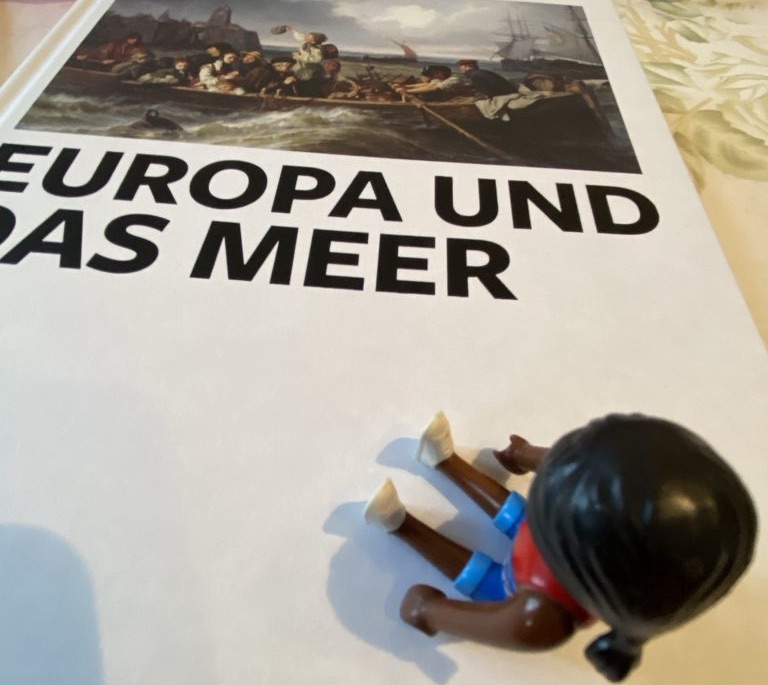
Wir sollten uns mehr um das Meer kümmern. Länder ohne Küsten finden meistens wenig Gründe, warum sie sich um das Meer bemühen sollten. Es ist doch so weit weg. Weit gefehlt. Erderwärmung erhöht die Meerestemperaturen und das wiederum beeinflusst massgeblich die Regenfälle im Inneren der Kontinente. Wir sitzen buchstäblich alle zusammen in einem Boot. Historisch betrachtet war das Meer mindestens seit der Antike Teil des machtpolitischen Kalküls der Beherrschung der Welt und der sie Bewohnenden. Wirtschaftliche Interessen waren ebenfalls Bestandteil der Erkundung und Eroberung des Meeresraums. Die Hansestädte in Europa bieten dazu noch heute gute Beispiele. Nach dem Sklavenhandel sind heute die Überseekabel und Rohstoffe des Meeres die begehrten Schätze des Meeres. Der Artenreichtum der Tiefsee wird erst seit kurzer Zeit intensiver erforscht. Externalisieren von Kosten des Umweltschutzes zu Lasten unserer Meere hat noch wenig Berücksichtigung in Wirtschaft und Gesellschaft gefunden. Tourismus- und Migrationsströme zum Meer, auf dem Meer und über das Meer stellen uns vor große Herausforderungen. Wir werden sicherlich mehr über das Meer reden müssen, und das ist keine Mär. Image aus „Europa und das Meer“ (DHM).