In the Post-Twitter-world there is room for other platforms to take over the information function and opinion exchange on an international level. Mastodon has made a good start to fill this gap. The number of registered users has surpassed the 10 million users by large. If the anger about the union-busting and Trump supporter Elon Musk increases further, more and more people will join Mastodon as users and content providers. Advertisers will follow where they can reach their appropriate audiences. If you sell seats on a spacecraft to the moon you will advertise on eXit-Twitter. If you care about responsible investment you advertise on elsewhere or on Mastodon, because that is where your audience will be. Ethically responsible advertisers started to make such moves already. The decentralised structure to potentially filter human rights violating hate messages will need to grow accordingly on this platform. This is a challenge for all platforms and involves costs. To better understand the idea behind Mastodon, think of a platform which connects many other local networks or platforms. Yes, it is a platform of platforms. Decentralised instances provide and can remove access to the local platform. Even whole sub-platforms might be shut out. This increases the potential to build a “caring platform”. Decentralised organisation often incurs higher costs than a central instance that decides and administers a one-size fits all solution. But it is worth a try.
An example makes is more clear, what are the advantages of such decentral organisation to achieve more shielded privacy. For example, a small local chess club targeting primarily youth can open its own server on mastodon and admit only its known members to the network. It is easy to control who gets access to your posts of solutions to riddles or innovative game and learning strategies. Access to other Mastodon instances is an additional option. For enterprises or larger organisations, it needs the communication department to talk to the IT-service to get such a structure on its way. A dedicated person needs to monitor what content gets posted and what kind of “traffic” is generated. But this can largely be automated. In case you know your members of the local platform it is much less likely to occur than on the eXit-Twitter or other centralised huge international platforms.
Many federated structures will find it useful and part of their social-DNA to join the FEDIVERSE. We shall have to wait for some more time to get the so-called social media platforms civilised. These are social investments and learning processes which deviate from the profit-maximising rationale of other platforms. (Image: screenshot from @mastodon-user on 2023-11-30). 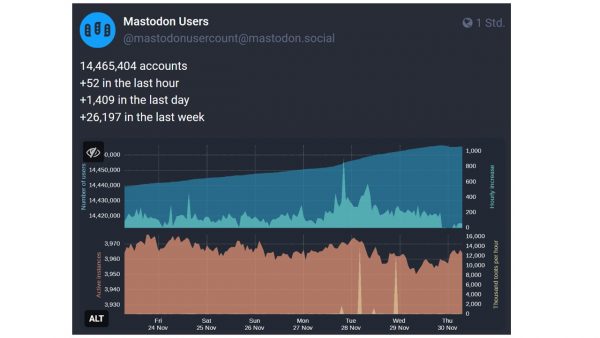
Geo-politics
In the middle of October 2023 we witness the unexpected and unwanted rise of the geo-political importance of the European Union. First, after the aggression of Russia to realise a huge land grab on Ukrainian territory, the European Union managed to define its new geo-political role in supporting the Ukrainian struggle of independence and freedom versus Russian oppression. This means continuous support of several forms: humanitarian, supporting infrastructure like energy and food supplies as well as military equipment for defensive purposes. Achieving our own strategic autonomy means decoupling from energy supply from Russia despite huge investments to build interdependence particularly by Germany or Finland. Additionally, strategic autonomy means relying on international partners that share our values and quest for sovereignty. Supply chains for production systems have to be re-organised to ensure independence even in military conflicts.
A new role has become evident also in the attack from Hamas on the state of Israel. Historic links and responsibilities to the creation of the state of Israel have led the European Union to make its voice heard in the Middle East to limit escalating confrontations.
These changes in the geo-political role of the European Union have far-reaching implications internally as well as in its external relations. Some have been spelt out by Luuk van Middelaar (2022, adviser to Herman van Rompuy) in his lectures “Le réveil géopolitique de l’Europe”. In the introduction he makes clear what are the 3 major elements of the geo-political wake-up for Europe: (1) power, (2) territory and (3) narrative. Europe has shunned away from its geo-political role as a powerful player. (1) Believing more in a peaceful role, a moderator, deviating from its colonial past, upholding the primary role of international law and justice, the European Union has been forced by external powers disrespecting these premises to enter into various international border conflicts as a power in its own right. (2) Questions of territory matter most, if they are challenged by powerful neighbours who are not inclined to respect international law. Even uncontrolled migration is part of this disrespect of territorial integrity. (3) Speaking in the name of a whole community of countries who share the same values, gives a convincing force to be able to overcome national particularities and predilections.
However, the European Union’s new geo-political role has to be carefully communicated not only to the outside world (it is in no way thought to be offensive), but also internally. For example, the budgetary implications of the geo-political role need to be communicated to the electorate and public opinion(s) in Europe. Do not forget to carefully prepare the whole population on this new role.
Donald Tusk held steady to counter claims from the PIS-leaders in Poland to reduce the geo-political role of the European Union. Many countries and people sharing our values are eager to see the European Union to accept this new geo-political role to defend human rights, internal law and justice. (Background reading: Middelaar, L. v. 2022. Le réveil géopolitique de l’Europe. Paris : Collège de France. doi :10.4000/books.cdf.12770 ). Image: Extrait LeMonde diplomatique 2019-11) for discussion. 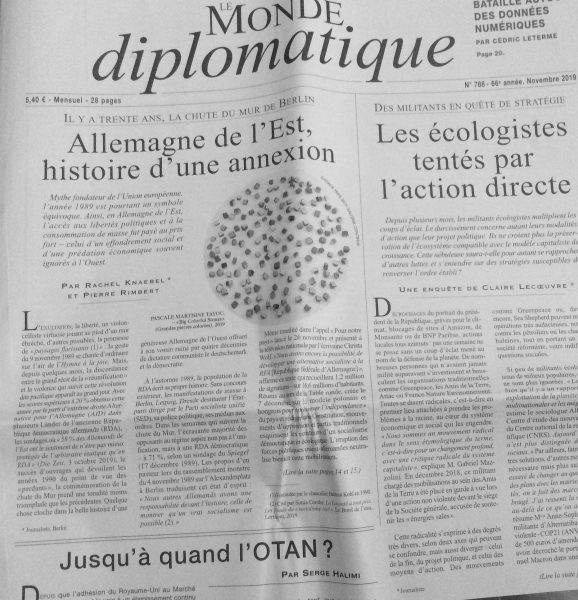
Instability
In political science the stability- instability paradox is much discussed (paper with game-theoretic analyses). The reliance on nuclear weapons, supposed to enhance stability in the world order, is rather driving the instability making conventional wars even more likely. Michael Beckley argues that containment of China’s expansionary policies is needed to avoid even more disastrous confrontations (Foreign Affairs, 2023 Nr.5).
Different from the German cold war doctrine “Wandel durch Annäherung” Beckley argues that commerce has not brought US and China closer together, but it is actually driving them further apart. After decades of trade imbalances with China the economic power of China can be felt as overwhelming. But there are multiple risks to its economic model and strategic interests to secure raw materials from across the world. Aging of China is another economic and social fallacy difficult to overcome with short-term measures.
We are about to witness another couple, triangular or more relationship to establish as “enduring rivals”. This may last for centuries rather than decades, although the French- German couple has managed quite successfully to turn such rivalry into an “entente” relationship of importance to the whole European continent. The shift in emphasis of US foreign policy is going to be significant. Containment with Russia has worked, so why should it not work with China as well. The likely answer is demographics again. The size of the internal market of China is sufficiently large to continue a splendid isolation after heavy one-sides trading is over. State control of the internet and social scoring of the population is also a powerful tool to suppress the formation of free will and independent opinions. After all, instability in external relations might even be used to ensure internal stability. Such strategies are common to all political systems. The stability- instability paradox is staying with us and this is rather stable even if the discussion changes continents. (Image: Comical battlefield Map 1854, by Berendsohn shown at Waterloo, Museum 2018) 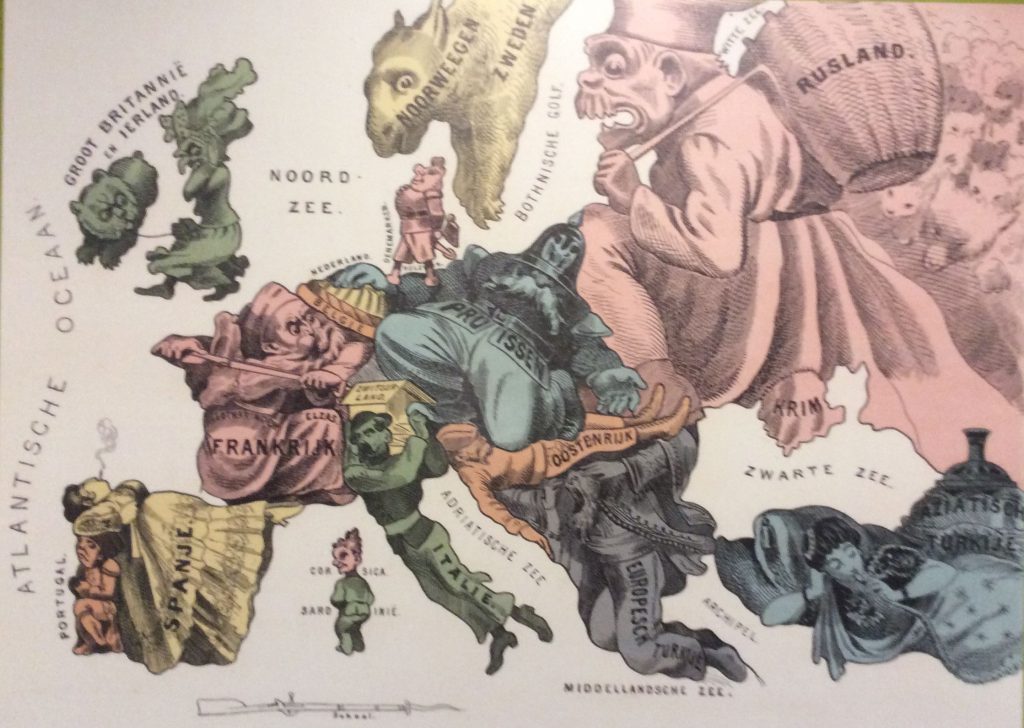
Corrupt-2
New scientific evidence on corruption and stereotypes about corruption reveals surprising behavioural responses. Social psychologist classified corruption as a behavioural trait of a person. The new evidence of a study that includes country-specific stereotypes into a corruption experiment shows there are always two sides to consider: the corrupted as well as the corrupting person. Both hold stereotypes about the likelihood another person (from a specific country background) is likely to accept a bribe.
Using a widely accepted index from Transparency International on corruption in countries the experiment uses real payouts to test the probability that a person from country X is trying to bribe a person from country Y. Rather than a personal trait, the study finds that many persons become “conditionally corrupt”. This describes the behaviour to offer a bribe to a person occurs more often if you believe the probability that the person accepts corruption is high. Dorrough, Köbis et al. (Link publication) is cited in “nautilus” explaining this by, quote, “when in Rome, do as the Romans do”. Additionally, the stereotypes on corruption prevalence leads people to act more on what they believe is common practice rather than what is the basic legal or ethical standard.
From behavioural ethics we know the urge of people to find justifications for their unethical behaviour to themselves or to others. This is called “justified ethicality”.
Following this rationale, it will be easier to accept a bribe, if the person originates from a high reputation of corruption. In order to correct for such bias due to stereotypes it is important to pursue corruption vigorously and, just as important, communicate a lot about this behavioural change so that stereotypes begin to change in the mindsets of other persons as well. There are many ways to Rome and some turn out to be quite long. 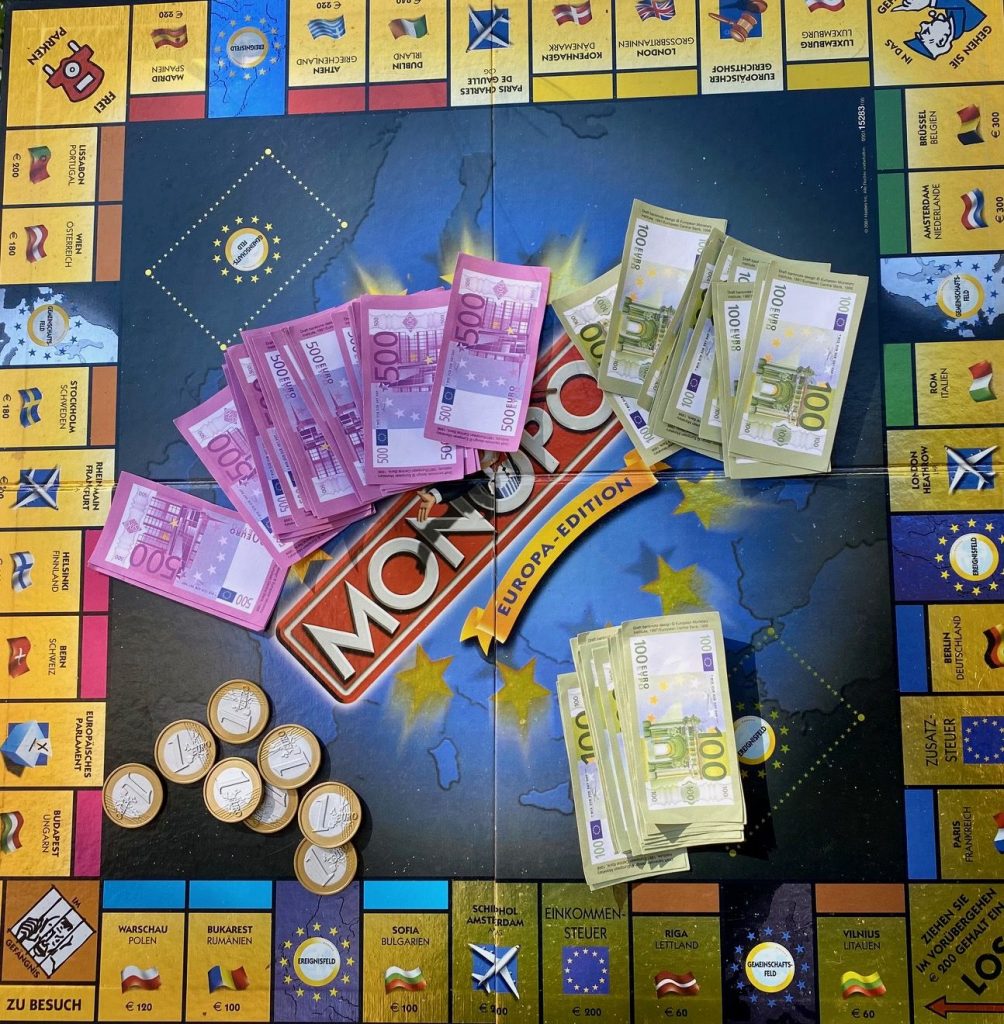
Europa Meer
Europa und das Meer, so lautet der Titel eines Buches und Katalogs zu einer Ausstellung des Deutschen Historischen Museums (DHM) aus dem Jahr 2018. In 2023 im August sind die Zeitungen voll mit Artikeln über Meererwärmung und die schwerwiegenden Folgen für Menschheit und Bio-diversität. Die Geschichte der Beziehung zwischen Europa und dem Meer ist leidvoll und euphorisch zugleich. Alljährlich zur Sommerszeit wird das Mittelmeer von Wellen mit Touristen überspült die „over-tourism“ erleiden müssen. Menschen sind oft eine in Massen, aber nicht in Maßen, auftretende Spezies. Das Meer spielt zusätzlich eine faszinierende, verheißungsvolle Anziehungskraft aus. Europa sieht sich zudem gerne noch als Dreh- und Angelpunkt der Weltgeschichte.
Der Ausstellungskatalog enthält lesenswerte Beiträge von der Antike übers Mittelalter bis in die Neuzeit. Die Thematisierung von Herrschafts- und Handelsräumen , Brückenschlagen und Grenzziehungen, Meer als Ressource bis hin zum Sehnsuchts- und Imaginationsort bieten eine originelle Herangehensweise. Schon 2018 enthielt der Katalog einen Beitrag zum Massengrab Mittelmeer sowie zum Sehnsuchtsort Hafenmetropole Odessa.
Migration in ferne Länder samt der Verheißung eines vermeintlich besseren Lebens sind so alt wie die Menschheit. Die Weite des Meeres suggeriert zusätzlich die Möglichkeit des Neuanfangs und Althergebrachtes, hinter sich zu lassen. Freiwillig oder gezwungen, das ist dabei oft die entscheidende, unterscheidende Frage.
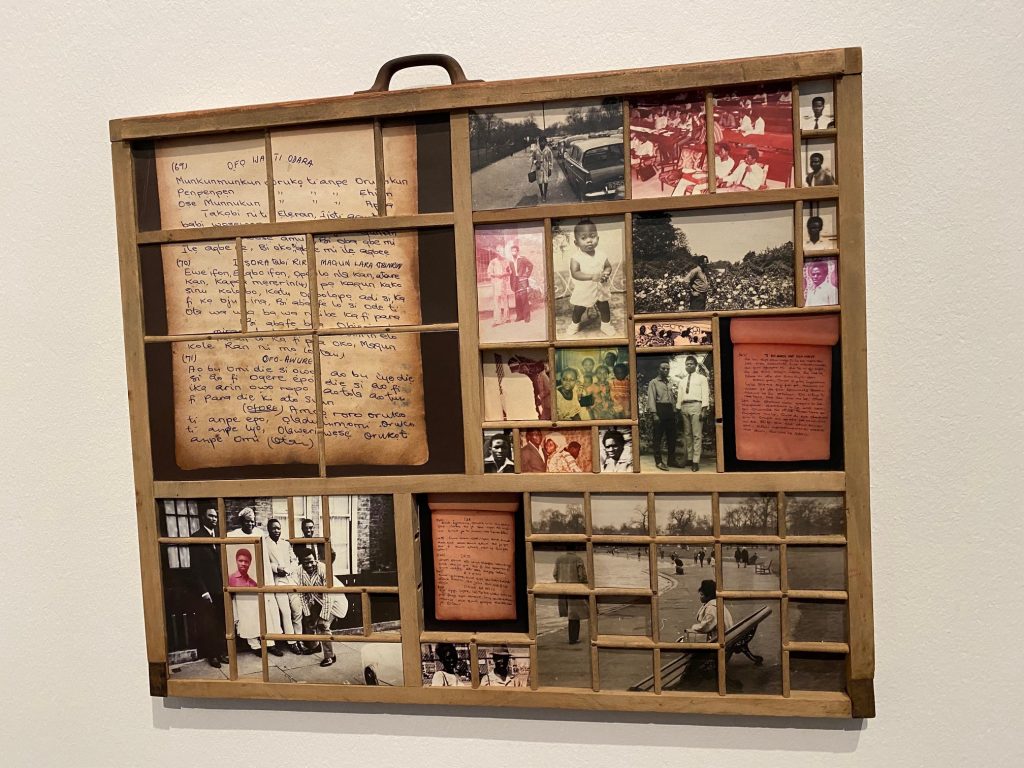
2023-8-24
Das Datum ist mit dem Gedenktag der Unabhängigkeitserklärung der Ukraine verbunden. Gerade die Aggressionen Russlands wollen diese Unabhängigkeit zurückdrehen. Das wird nur mit viel Kraft und Ausdauer gelingen können. 18 Monate im Krieg mit Russland war uns unvorstellbar. Wir werden unablässig unterstützen müssen, damit die Freiheit und Unabhängigkeit aller Teile der Ukraine wieder hergestellt werden kann.
Das Datum sorgt für zusätzliches Gedenken. Jetzt beginnt die Einleitung von durch Atomkraftwerke verunreinigtes Wasser in Fukushima. Das, was nie passieren sollte, hat sich doch als Tatsache bewiesen. Verunreinigtes Kühlwasser wird auf die Welt verteilt durch Einleitung in den Ozean. Private oder nationale Profite werden eingestrichen, aber die Kosten eines GAU (größter anzunehmender Unfall) werden auf die Weltgemeinschaft verteilt.
Ein Tag zuvor hat Indien, anders als Russland, seine Raumkapsel auf dem Mond ohne Bruchlandung aufgesetzt. Großmachtstatus verlangt auch überdurchschnittliches wissenschaftliches Engagement. Das lässt sich mit einer Mondmission sicherlich demonstrieren. Neue Demonstrationen von Unabhängigkeit durch große oder wirtschaftlich erstarkte Staaten werden eine multipolare Weltordnung befördern. Das passiert nicht von heute auf morgen. Es könnten sich vielfältigere Verhandlungsmöglichkeiten auf internationaler Ebene eröffnen. Noch mehr Geduld in der Diplomatie wird nötig sein. Gleichzeitig ergeben sich aber auch größere wirtschaftliche Druckmittel auf Staaten, die internationales Recht verletzen.
Diplomatin
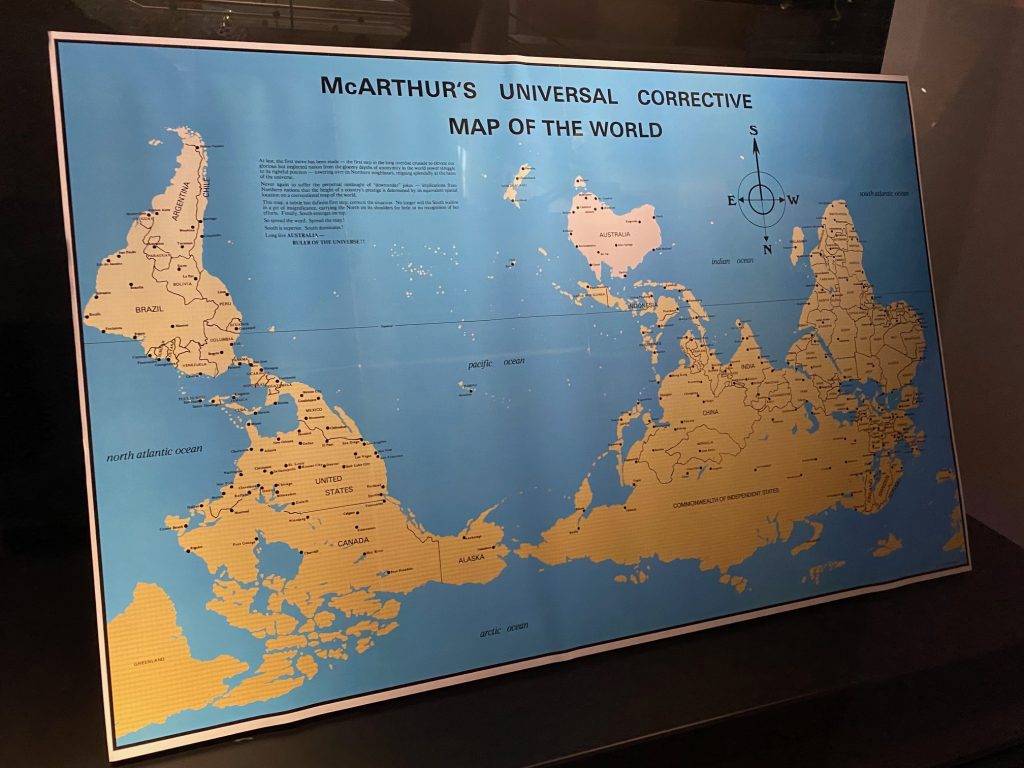
Der Roman von Lucy Fricke über Diplomatie und Diplomaten ergänzt in recht unterhaltsamer Weise die eher trockene und abstrakte Literatur zur internationalen Politik. Gute Bettlektüre für den politisch interessierten Menschen, der gerade im Urlaub ist. Diplomatie schläft nicht und macht wenig Urlaub. Urlauber dagegen machen den Diplomaten oft ganz schön zu schaffen. Die geduldigen Mittel und Wege der Diplomatie sind nun wirklich nicht jeder Frau oder Manns Sache. Wenn sich Emotionen einmischen wird die diplomatische Herausforderung zu einem nahezu unauflöslichen Konflikt. Diskretion und Verschwiegenheit sind elementar in diesem Beruf. Geduldsproben an der Tagesordnung, ständig und bei allen Dienstgeschäften. Ein nachvollziehbarer Einstieg in diese Berufswelt in Form eines Romans sollte Pflichtlektüre für alle sein, die sich diesem Berufsfeld oder der Aufgabe annehmen wollen. Gut, dass es eine Diplomatin beschreibt. Das gibt eine erfrischende neue Perspektive. Vielleicht auch Anregung über eine feministische Aussenpolitik nachzudenken.
Wenig beleuchtet werden die politischen Umstände, die nur als Staffagen für die Erzählungen herhalten müssen. Taksim Platz samt Wasserwerfer interessiert wohl nur am Rande. Das ist schade, weil es verpasste Gelegenheiten sind, Menschenrechtsverletzungen zumindest kurz anzusprechen. So kratzt die Erzählung nur an der Oberfläche von Personen und dem wirklichen Geschäft der Diplomatie. Aktion in den Vordergrund zustellen ist gut für die Story und Verfilmungen, aber der Kern der Diplomatie muss anders aussehen. Etwas Heimaturlaub konfrontiert die Diplomatin dann erneut mit der weitreichenden Gleichgültigkeit gegenüber der diplomatischen Arbeit. Leben organisieren und Aufräumen bleiben auch im Privatleben der Diplomatin eine Herausforderung der Work-life balance.

Hunger
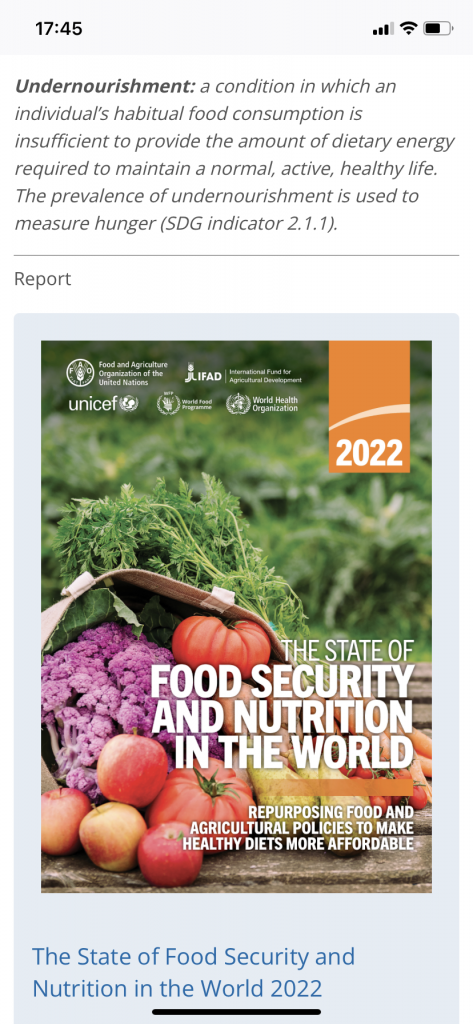
The UN strategic development goals (SDGs) list after the eradication of hunger as number 2 no hunger by the year 2030. Following the report of FAO, the UN 🇺🇳 organization in charge of nutrition in a larger sense, the world is moving further away from reaching this goal in the 4 last years. The Covid-19 pandemic had disrupted supply chains and caused higher prices for basic ingredients. The poorest countries were most vulnerable to such price increases when even in the rich world government deficits were rising sharply. Before sufficient relief arrived Russia’s war in Ukraine destroyed crops, interrupted again supply chains from Ukraine to many of the poorest nations. Energy prices are a substantial part in the production of fertilizers for agricultural products. Same story Russia disrupted the whole supply chains for food production at affordable prices for the poorest parts of the world. Additionally, Indian food production was lower due to the drought, Pakistan had extreme flooding. Both countries are important export nations for feeding the world. Continuing climate change is likely to put global food production under additional pressure. Price rises will hit the poorest again and again. Feeding animals with crops that could otherwise alleviate hunger in other parts of the world puts the rich world’s consumption patterns also into the spotlight. Fighting global hunger is largely a question of how wealthy nations deal with nutrition. The struggle to fight obesity and hunger under the joint concern of malnutrition unites all parts of the world. Time to act together on both topics.
Special 3
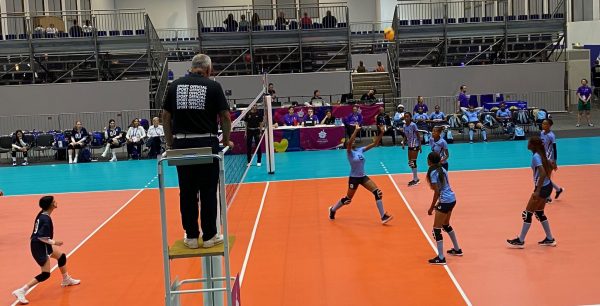
The special Olympics (SOWG) are competitive games just like other Olympic Games. The athletes compete with all it takes to win. Some with more success than others, as usual. The disciplines of Volleyball and Basketball give an advantage to mostly tall persons. Few exceptions are created by good team play. The warming-up exercises were already a challenge for the athletes preparing them very well for the match to come. Once in the game, all concentration is focused on the sport. Extraordinary athletes are no exception to the rule. There competition succeeds to get or to keep persons focused on the specific task.
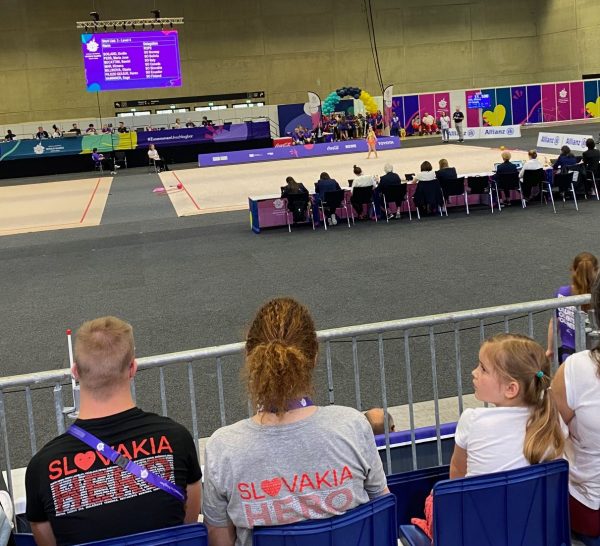
In rhythmic gymnastics the musical talent is asked to complement the physical effort. Gracious moves, difficult with a ball, ring or rope need to be coordinated to the rhythm of the music. Great to see the special athletes live up to the challenge, too. The roaring applause in the sports hall is surely encouraging them to continue on their athletic trajectory. The special athletes encourage everybody to keep exercising to make the most of our capabilities. Thanks for the lesson.
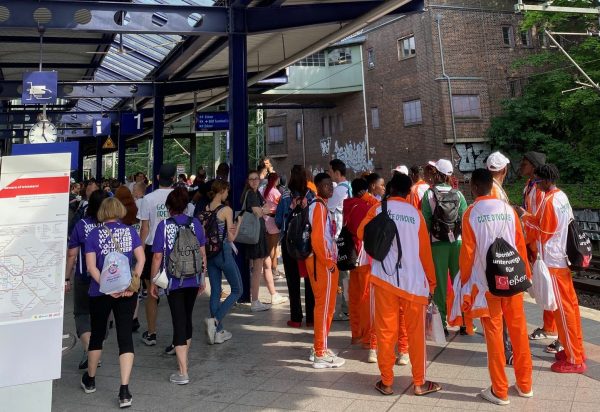
Additionally, in a hall next to the SOWG non-competitive games were presented as an accessible form of fun exercises that invite everybody to move and enjoy. Just being together and moving together is the basic form of happiness. Even having fun is exhausting after a long day and still lots to do in Berlin for all the teams on their way back to the hotels. sowg video
sowg video basket1.

Frau, Leben, Freiheit
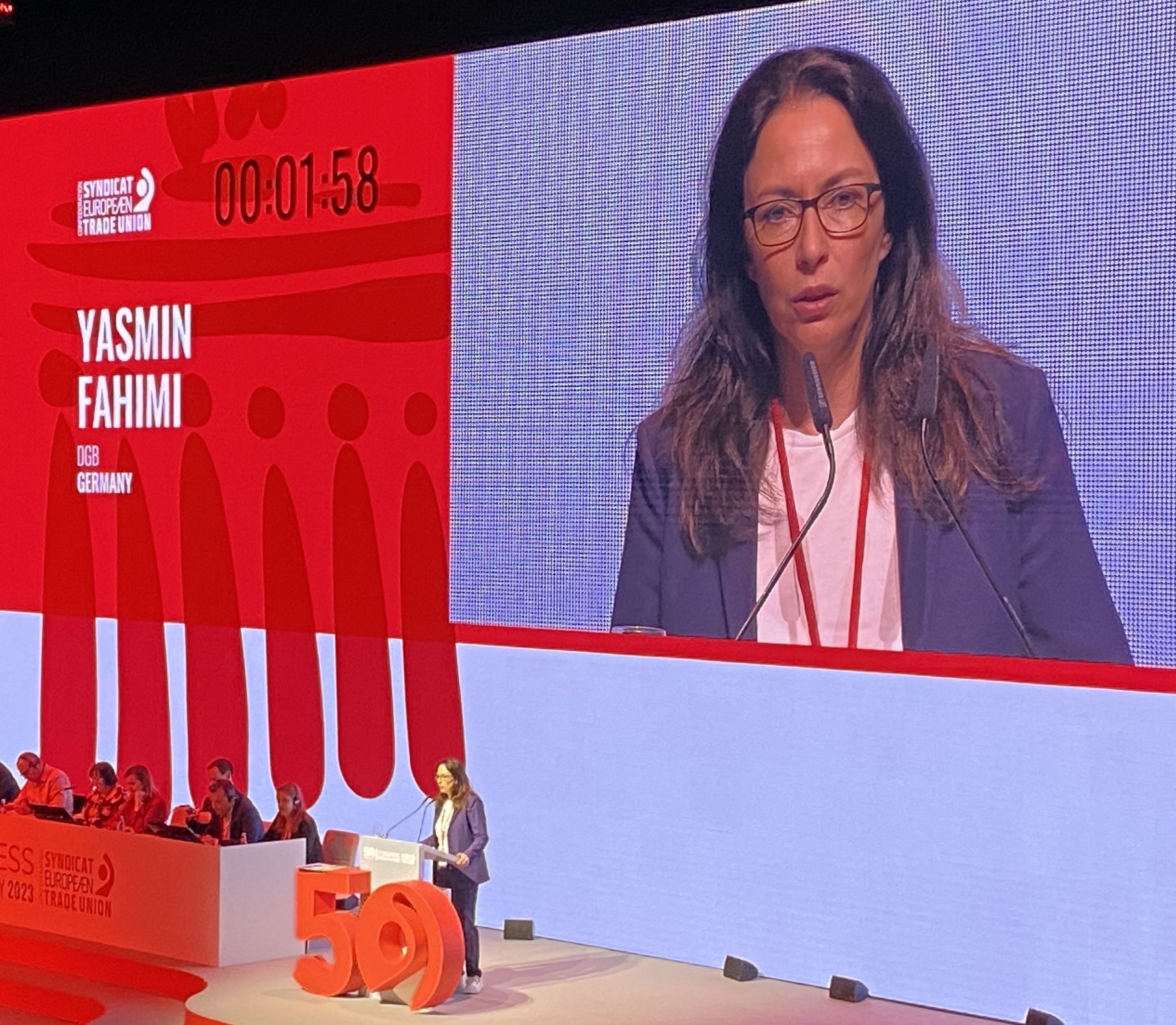
Seit der brutalen Tötung einer Frau im Iran gehen viele Iranerinnen und Iraner auf die Straße. Als Zeichen ihres Protests rufen sie: Frau, Leben, Freiheit! Das ist und bleibt eine kurze Zusammenfassung für die Forderungen der Frauen, die trotz massiver Unterdrückung unablässig demonstrieren. Viele Hinrichtungen und Misshandlungen von Frauen werden wir weiter anprangern und fordern den internationalen Druck auf das Regime im Iran zu erhöhen. Wir dürfen nicht wegschauen, sondern werden weiterhin die Öffentlichkeit wachhalten. Diese aktiv für Menschenrechte eintretende Stellungnahme wurde von Yasmin Fahimi (DGB-Vorsitzende) eindrücklich auf dem EGB-Kongress vorgetragen. Mit überwältigender Mehrheit wurde diese Resolution vom Kongress befürwortet. Die italienischen Gewerkschaften stimmten gleich ein in den Ruf: Donna, Vita, Liberta!
Bravi! So rufen viele sonst eher in den Opernsälen. Hier passt es zu der Stimmung auf dem EGB-Kongress. Mit großer Einigkeit und ausgeprägter Solidarität wurde eindrücklich Stärke bewiesen, die auch über Europa hinweg Strahlkraft besitzt. Bravi! Kurzvideo EGB-Iran-Resolution Yasmin Fahimi und italienischer Support. EGB-Iran-Akklamation-IT.