Surrealism Networks

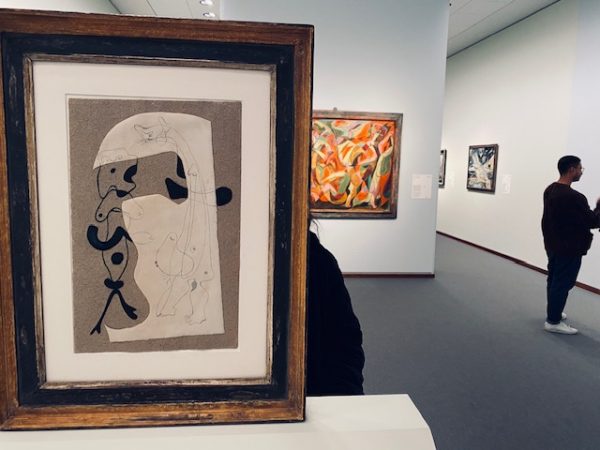
The research project on the networks of artists in the group of surrealism ranges from the male proponents Breton, Ernst, Magritte, Miró to female painters like Lenora Carrington and Dorothea Tanning. The collection of Ulla und Heiner Pietzsch, donated to the Neue Nationalgalerie in Berlin, excels not only in the depth and breadth of the collection of surrealism, but also in the way it contributes to our understanding of artistic movements and network dynamics. For those familiar with the theoretical and literary underpinnings of surrealism by André Breton, the collection allows to follow the traces of ideas into artworks. Interdependent inspiration in multiple ways becomes visible in this exceptional exhibition. The special concern and concept to honor provenance of the artworks makes the trajectories of each artwork explicit. Thereby, the geographic dimension, importance of collectors, galleries and personal relationships to gallerists become tangible. Additionally, the seizure of the 2WW heightened the need to have contacts to survive Nazi-terror. You find it all condensed into just one room at the Neue Nationalgalerie Berlin thanks also go to the Zentralarchiv to facilitate and participate in the research and documentation. (Image: Miró Collage, Berlin Neue Nationalgalerie 2025)
Narrative Object

Objects tell stories. Stories get condensed into narratives. Narratives become objects. Yes, we are going round in circles here. Artists have transformed an old splendid atelier and factory building into a new gallery space for “Objects with narratives” in Brussels. We construct, reconstruct and deconstruct narratives almost continuously. However, if narratives are transformed into an object or objects they will become something tangible or a fixed expression of the moment or process. The concept of art objects with narratives invites us to look for the narrative linked to the object. Just like in other disciplines like economics we have ample dominant and heterodox narratives. It is important to reflect on narratives and empirical evidence in their support. When we look at the mountains of plastics and garbage on our planet we see how an economic narrative has been turned into nasty objects. Objects with narratives is also how future generations will confront us with the pollution and waste objects we left and still leave behind us. (Image Bussels Gallery Objects with narratives 2024-7-13 Exhibition Marius Ritiu.)

Deutsch Deutscher

In English grammer we use comparative adjectives to express that something or someone has changed or undergoing change. Germany might have become more German. The second usage is to make comparisons not only between two points in time, but between two statuses or of two artefacts more generally. The statement “Deutschland wird deutscher”, therefore, intends to describe an ongoing process or the transition process from one state to the other. This statement as such does not offer any explanation or definition of the original state, nor of the second point of reference. It might just describe the dynamics or the direction of the dynamics. In this example it deals with social dynamics. Germany in the 21st century is posing more questions about its identity and future directions than some time ago. The artist Katharina Sieverding has put up this reflection as a poster on walls to provoke discussions about the way to identify and deal with German identities in the early 1990s, shortly after re-unification of the 2 parts of Germany (Image below from “Nationalgalerie für Gegenwartskunst, Hamburger Bahnhof, Berlin” 2024-5).
30 years later we are scared by a ruthless right-wing extremist and brutal movement that takes to the streets and commits crimes.
It is no surprise that the Higher Administrative Court in Cologne has confirmed that the “BfV’s classification of the party AfD and of its youth organisation as a “Verdachtsfall” (subject of extended investigation to verify a suspicion) as well as the publicising of this classification to be lawful“.
It is a step ahead to become “deutscher” if we battle out such decisions in courts rather than by force on the streets, although this has failed once in German history already. The poster action by Katharina Sieverding is a reminder to monitor and deal with these topics continuously, albeit the knifes may be coming in closer than before. Being frightened is no option in order to defend democratic values. 

Infinite Landscapes

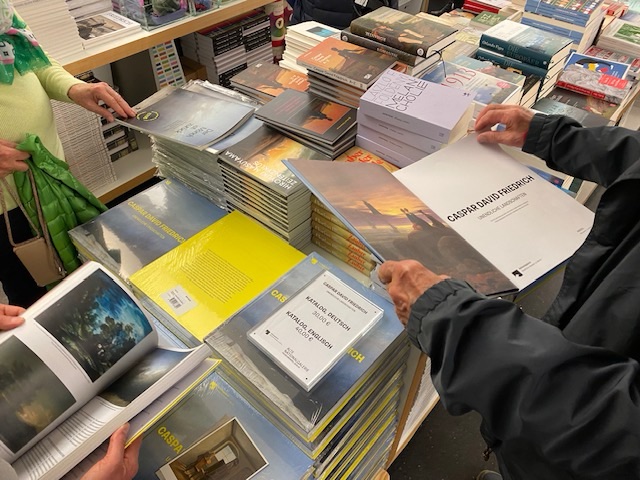
The “Alte Nationalgalerie” celebrates the 250th birthday of Caspar David Friedrich in Berlin. With a considerable effort to unite in one exhibition many paintings and drawings that stem from other collections of public and private origins. This particularly remarkable as a section of the exhibition is devoted to paintings that were intended originally to be seen next to each other (compare catalogue p. 233). Comparing 2 images from the same painter evolve into a narrative. This raises curiosity as in some instances the 2 paintings do not treat the same subject. Your very own interpretations and associations will make for an individual journey through the sheer endless spaces. The exhibition allows to grasp some of the many questions posed by the period of enlightenment not only in Germany. After “God is dead” what will happen? How is mankind defined? What is its relationship to nature? Are we just left alone or what comes after individualism? Even for painters, much like scientists, it is just as important to pose the right questions. Leaving the exhibition with more questions than answers will put you in the “Berlin state of mind” of 200 years ago. Greiswald, Dresden, Rügen and Copenhagen as well as nearby mountains were influential locations and landscapes for Caspar David Friedrich. Berlin 1906 „Jahrhundert Ausstellung“ made him famous again, despite decades of being forgotten. Yet another question to ponder and wonder about. An additional merit of the exhibition is the section on painting techniques and the use of his sketches and drawings for the preparation of the oil paintings. The final riddle to be solved is the price differential between the German and English version of the catalog in the bookshop next to the usual merchandising props.

Richter

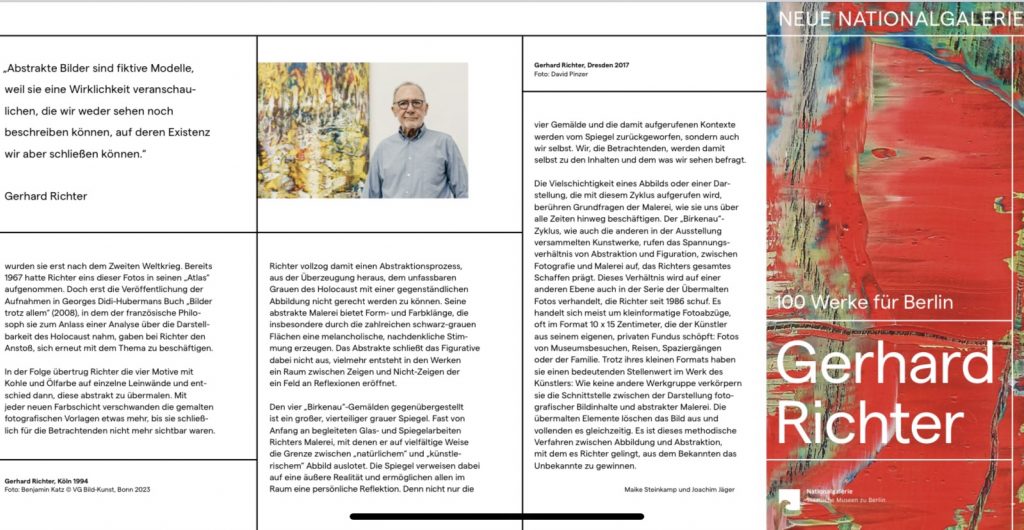
Gerhard Richter ist kein Richter. The painter Gerhard Richter is of cause not a judge. But somehow he is. In the representation of his 100 works for Berlin in the Neue Nationalgalerie he judges the horror beyond imagination of the Nazi concentration camps, reflects on the role of his own family in this and finds his own way to deal with it. Colors cover the black and white documentary fotos as if a new imaginary has to grow again to overcome the painful memories. He deals with the most difficult kind of confrontation with evil in an astonishing way. The horror as underlying fact remains present in our mind and at the same time we open up to light at the end of the tunnel and abundance of colors. Color is the way forward. Underneath, we tend to or like to forget about the many killing fields. Scratch a bit on the surface and you’ll find lots of unresolved issues again. All those fancy colors might just cover up the demons of the past and present. Maybe this is a grossly biased interpretation of his Auschwitz Buchenwald series of paintings, but only time will tell if we are successful in 2024+ to stem the tide of right wing extremism (again).

Neue Nationalgalerie Berlin 2024-1

Black and White

Nothing is just black and white. Some animals have a representation or vision of images in black and white. Just like in computing full color modes or high resolutions use more power of chips and memory. In short colors are computationally costly. For our brains this is unfortunately just as important. Therefore black and white images have a certain advantage. On the one hand they reduce an image to its essential elements, on the other hand they allow a faster grasp of the message or content at sight.

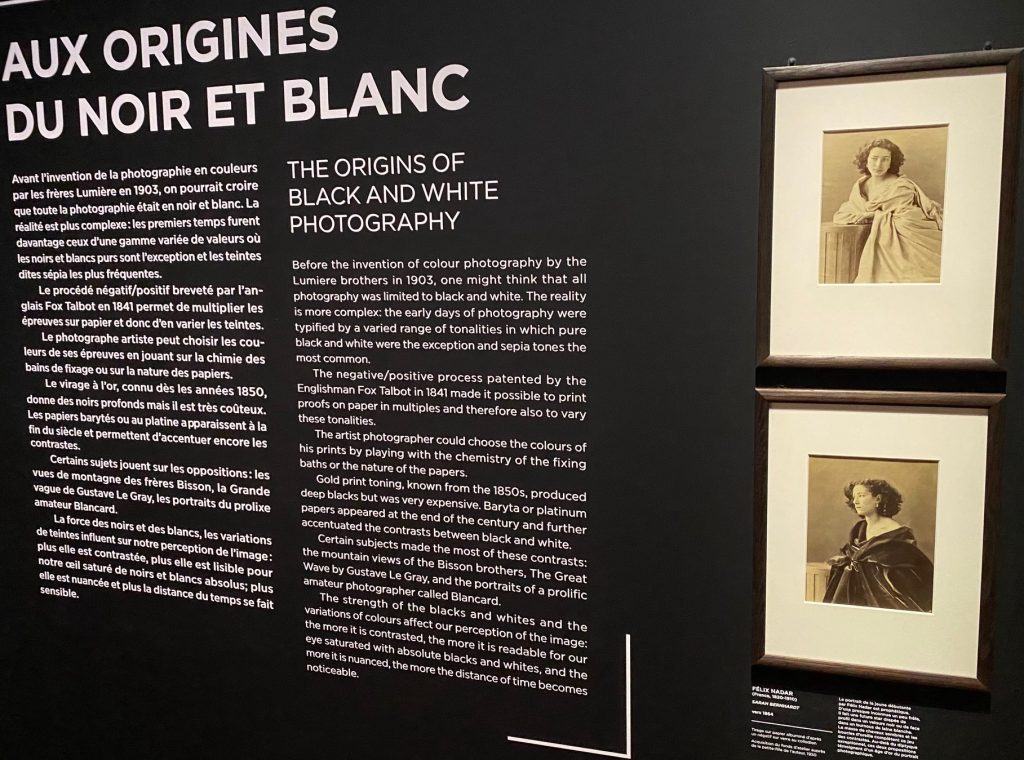
The BNF presents a wide range of images in black and white from the time that color photography has been available, but photographers consciously chose to represent their image in black and white (1907-). Obviously with black and white photography we maximize contrasts. An image can be converted into a graphical representation like a black and white pencil sketch or drawing. A few more nuances are introduced in applying perspectives to capture or to produce by use of lighting forefronts and shadows.

Using different materials as support of photography allows us additional creativity and stunning effects. Lighting from behind the image is popular in advertisements on our high-streets. Last but not least using techniques of color photography gave rise in modern black and white photography to allow for chromatic transitions and contrasts within images.

All this is well documented in the exposition and ample examples make it a formidable visual learning experience. From the origins of just black and white we have come around to the fabulous and magical in black and white. In reducing to black and white the essential becomes more visible. The superfluous is blackened or whitened out. It is a skill of importance nowadays to focus on essentials and to find new ways to go beyond the obvious shot.

BnF 2023-11-10 B/W

Dramen

Jon Fosse hat bereits viel Erfolg mit seinen Dramen gehabt. Wahrscheinlich können wir sein umfangreiches Werk mit der Kenntnis von Ibsens Dramen und Becketts Dramen besser verstehen, falls Verstehen überhaupt eine relevante Kategorie ist Fosses Werk. Durchaus vergleichbar mit Beckett hat Jon Fosse früh schon erfolgreiche Aufführungen seiner Theaterstücke neben seiner norwegischen und skandinavischen Heimat in Frankreich. In Deutschland hat der Regisseur Thomas Ostermeier seine Werke in Salzburg und Berlin vor ca 20 Jahren bekannt gemacht.
Suzanne Bordemann beschreibt in ihrem Buch zu der Rezeption von Jon Fosse, wie der schriftstellerische Werdegang des Kunstschaffenden verlaufen ist. Interessant ist dabei die weniger bekannte Ausgangsbasis Fosses als Herausgeber der Literaturzeitschrift Bok oder seine literaturtheoretischen wissenschaftlichen Aufsätze. Selbst seine Tätigkeit als Übersetzer von Dramen aus dem Deutschen und dem Englischen hat sicherlich zu einer Ausprägung von Sprachfertigkeit geführt, die uns heute noch einzigartig erscheint. Schreiben hat enorm viel mit Lesen und stetigem Arbeiten an Texten vielfältigster Art zu tun. Dieses literarische Gesamtkunstwerk ist sicherlich Grund für die höchste Auszeichnung des Gesamtwerks mit dem Nobelpreis für Literatur.
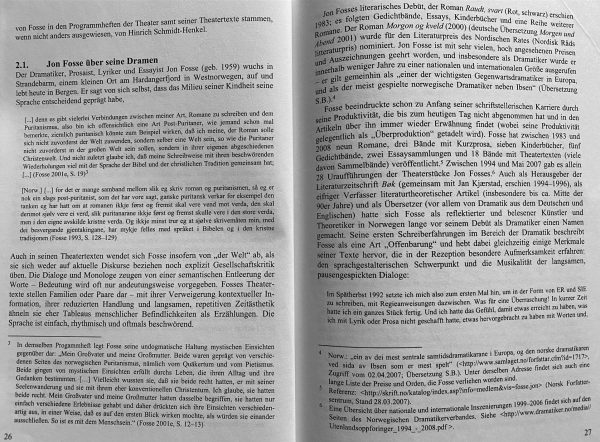
Aus Stille lernen heißt dann für mich, Jon Fosse selbst zu Wort kommen zu lassen. Das hat Suzanne Bordemann in ihrem 2. Kapitel vorgemacht. Als Auszug möchte ich 2 Seiten (S. 26-27) zitieren, die für mich besonders aufschlussreich waren. Sicherlich Grund genug für eine intensivere Befassung mit diesem umfassenden Werk.

Kunstsammlung

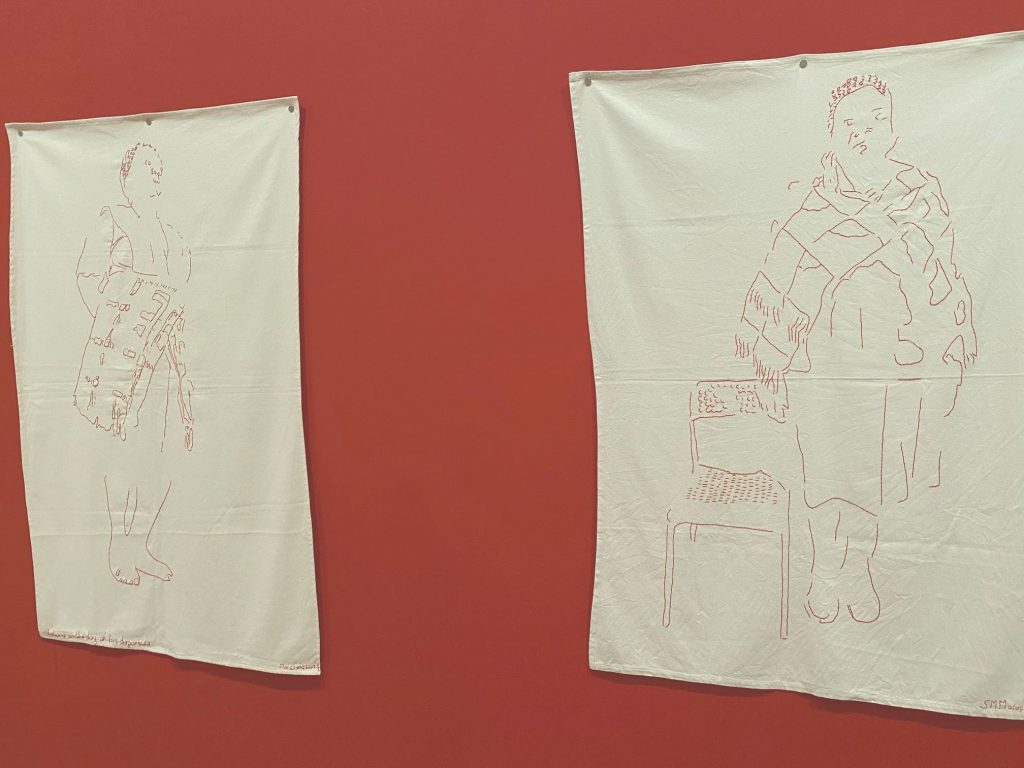
Viele Kunstsammlungen in der westlich dominierten Kunstwelt haben nicht nur ein Übermaß an Beständen von Männern gegenüber von Frauen, sondern ein noch größeres Gefälle zwischen westlichen Kunstschaffenden und Kunstschaffende globaleren Ursprungs. Die Kunstsammlung Nordrhein-Westfalen versucht in 2023, diesem Bias zu begegnen. Die Preisträgein des K21 Global Art Award an die Südafrikanerin Senzeni Mthwakazi Marasela (Image unten aus der Ausstellung K21) steht für starke Frauen, die mittels der Kunst, Geschichte und Geschichten erzählen und damit dokumentieren. Wir brauchen viele dieser Stimmen.
Der Kunstkalender 2023 bringt zudem über den Jahreswechsel hinaus „Isaac Julien“ in die Kunsthallen in Düsseldorf mit seinen beeindruckenden Filminstallationen. Immer unter dem Thema der Gleichberechtigung sind seine Werke eine unablässige Hinterfragung der von uns, der Gesellschaft, produzierten und sich ständig reproduzierenden feinen Unterschiede. „What freedom is for me”, so der Untertitel der Ausstellung, erlaubt den Perspektivenwechsel und, sich die Bedeutung des Freiheitsstrebens der „People of Colour“ zu vergegenwärtigen. Jenseits der Freiheit, als Abwesenheit von Unterdrückung, Angst und Ausbeutung ist Freiheit etwas zu tun, zu denken, sich auszudrücken die Nagelprobe auch der Gleichberechtigung. Unsere großen Ausstellungshäuser und Sammlungen sind sich ihrer Verantwortung bewusst geworden. Manche Museen erwachen gerade erst aus den Schrecken, die sie in ihren Sammlungen vorfinden. Im Interesse der Freiheit und Gleichberechtigung erwächst den öffentlichen Institutionen dabei eine Verantwortung, die immer schon da war, aber erst in den letzten Jahren intensiver angegangen wird.
Jede Sammlung ist selektiv, sonst wäre es wohl keine Sammlung. Den Waffen- und Trophäensammlungen der letzten Jahrhunderte müssen wir heutzutage Sammlungen hinzufügen, die neue Möglichkeitsräume erschließen und Empowerment befördern. Los, sammeln wir. Senzeni Mthwakazi Marasela 2023 K21clipvideo

Berlin Grün

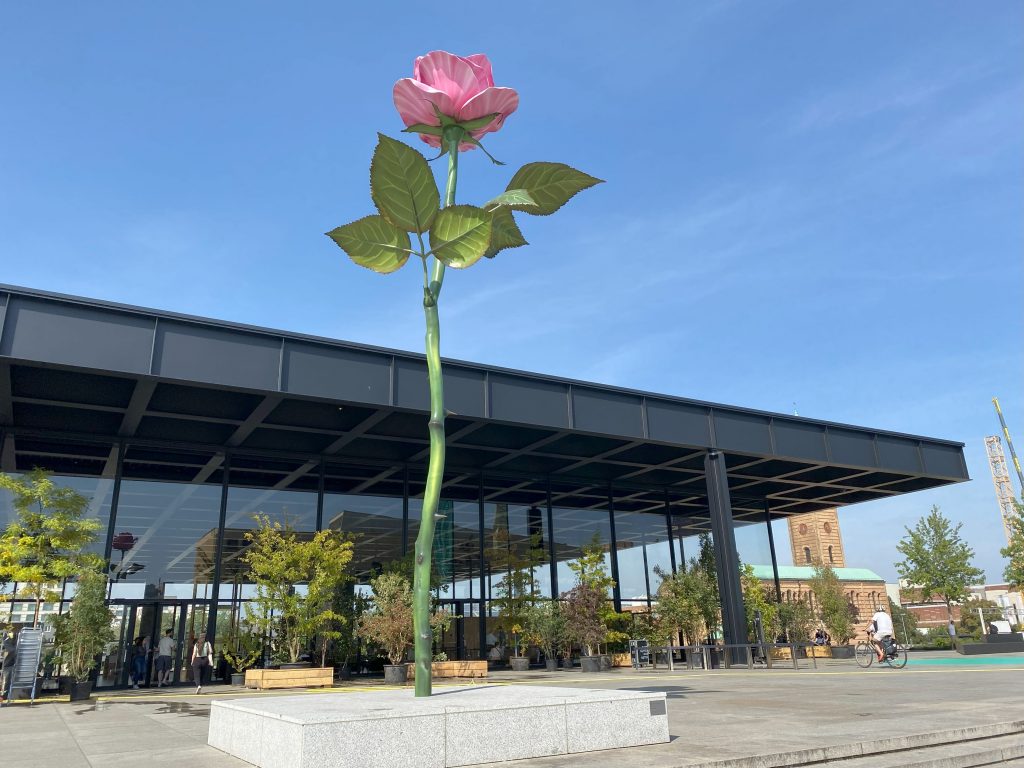
Zur Berlin Art Week BAW 2023 wurden der Neuen Nationalgalerie ein paar Blumen und Baumkästen spendiert. Alles nur vorübergehend. So erblühte die Rose von Isa Genzken schon vorher und sicherlich noch etwas länger vor der Neuen Nationalgalerie. Steht der Galerie gar nicht schlecht. Vielleicht etwas sehr figürlich und wenig auf die Schätze der Moderne hinweisend. Das ist schon eher post-modern. Rückbesinnen auf die Werte der Natur, dass Stahl und Glas eben nicht umsonst zu haben sind, sondern erhebliche Umweltkosten mitsichbringen. Das regt zum Nachdenken an. Solarzellen, quasi unsichtbar auf dem großzügigen Flachdach der Galerie und für die geplante Scheune nebenan? Kunsträume stehen ebenfalls in der Verantwortung für die Überlebensbedingungen unseres Planeten. Denkmalschutz kann weitgehend eine Bremse sein, aber die energetische Verantwortlichkeit der immer gut gekühlten und beheizten Räume sollten auch wegweisend in dieser Richtung sein. Da gibt es noch viele Potenziale, die es auszuschöpfen gilt. Damit kann dann auch mehr Kunst gezeigt werden, da die laufenden Kosten gesenkt werden können für mehr als eine Wahlperiode oder Amtsperiode einer Hausleitung. Also Kunst kann einen schon auf unangenehme Gedanken bringen, die die Kunstschaffenden und Kuratierenden selbst betreffen. Isa Genzken und die BAW setzen Zeichen, die vielleicht so gar nicht unbedingt geplant waren. Nice.

Participative Art

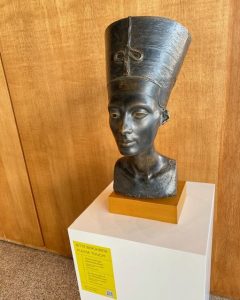
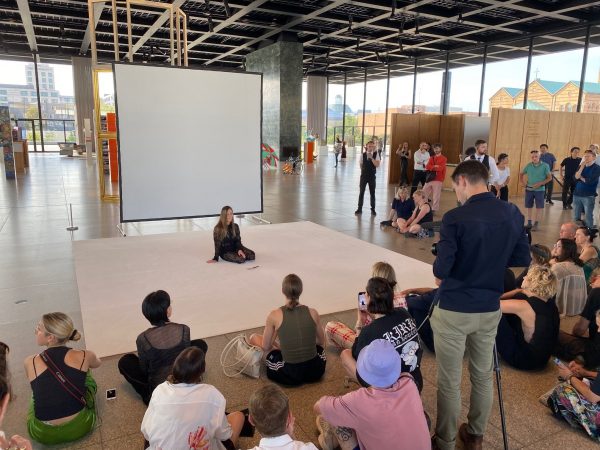
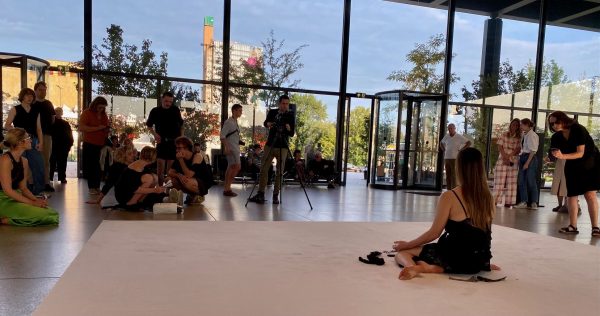
Beyond participation in the performance based on Yoko Ono’s Cut piece 1964, you had the possibility to imagine yourself as a sculptor by touching a sculpture of art attached to the Genzken exposition, nothing less than the head and bust of Nefertete, also a piece transformed by Genzken and exposed, untouchable, in the exposition. You can hardly get more involved and incited to participate with hands-on experience, so to speak.
Additionally, there is the perspective from the performing artist in “Yoko Ono’s Cut Piece” to confront the spectators with a silent, stoic expression hardly moving during the more than 90 minutes performance. Imagine, what kind of vulnerability you are risking. Artists give a lot from themselves to the public. Imagination is even going beyond the act performed. Mastering your own fear of mutilation or being exposed to views, touching and multiple other forms of sensation.
This surely is an exercise of mental strength. Spectators also interact with other participants as, for example, spontaneously another spectator too the scissors to cut his own shirt in front of the performing artist and covered the shoulder of the performer. The personal interaction assures a more intense experience of art.
After all, this is a well-known principle to enhance learning experiences as well. Imagine all the people, each taking just a tiny little piece and remember their experience that they, as well, can be actively contributing to art. Reviving this participatory experience is leading beyond imagining only your participation. Democracy is built on this stimulating experience as well. It is ever so necessary to foster participation and to overcome indifference or abstention. Learning  by doing, or experiencing through touching, offer many additional insights.
(Images and videos taken on 2023-9-12, Berlin)

Yoko Ono Cut Piece 2023 Berlin