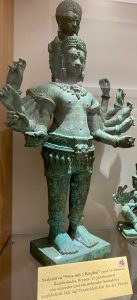
To reach a balance, to keep the balance or one’s balance, this highlights the process nature of balancing. Even the old tool of a balance (scale for weights) very much reflects the evening-out of the balancing process. It seems like a temporary balance most of the time. We might evolve from one level to another one. Especially imagining ourselves on a (body weight) balance in the morning and then throughout the year or years, this appears like a dynamic trajectory. The nature and/or nurture connection is evident. Beware to search for synonyms of “balance” on the internet. You get more than 3000 synonym (Link) meanings and 30 suggestions for definitions (Link) to contemplate on. I like the nice physical experience of balance and the simple (a bit nerdy) explanation of it. Economist get very excited about balance of payments and the ways to achieve equilibrium or equilibria. Balancing personal accounts can be a bit painful at times, but balancing in the arts gets our imagination going. Dancing is about balance most of the time. Playing with your own balance, the balance when 2 or more persons are in action, how not to be absorbed by such experiences. In music, the balance is a primary issue since Bach’s “wohltemperiertes Klavier” and balance and tension are the origin of much jazz. An image or photo might be balanced, certainly architecture is playing with or restricted by balancing acts. Herta Müller’s “Atemschaukel” has thrown us off balance for a while. History we study often with a concern for a balance of power. In peace and war times, the balance of power within and between countries or superpowers are a long-lasting research issue. At times when this balance is at risk or completely out-of-balance we are deeply concerned about the return of a balanced situation. Babies and children draw comfort from being balanced. Adults as well. Let’s try again (chanson). (balance22-venice -video). 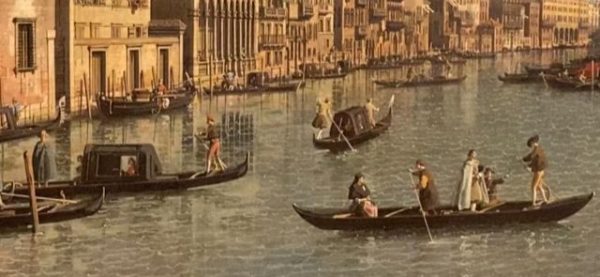
A for Action
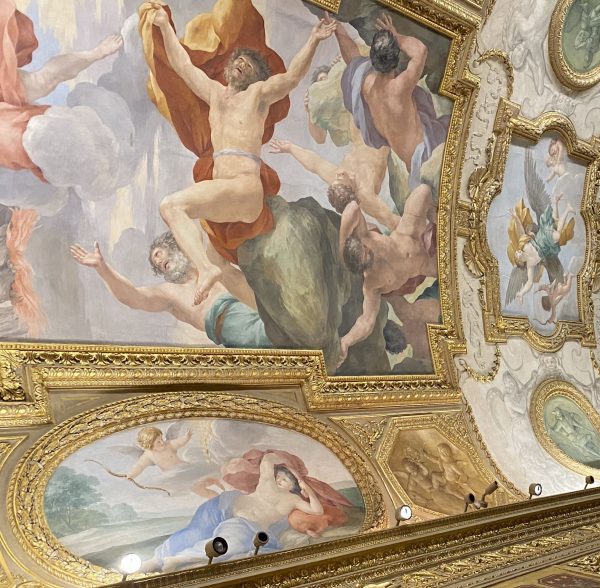
The A is everywhere. A is the beginning of the Alphabet, Google is our new Alphabet, we just have not realised it. A simple A-rating in investment is not good enough, AA or AAA is the goal. All this calls for ACTION. Do not be stopped in your action by reading on “Action theory” by Parsons, Rational action is the basis of most economic reasoning before the behavioural turn of economics. It is commonly acknowledged now, that rational action might not always be as rational as we want to believe it is. “Frame selection” as theory to explain our choice of action is fashionable in the social sciences. Transforming values and intentions into actions is a big challenge. Many jokes turn around this issue, like intentions to get up early in the morning. Find out whether you are an actionable leader. You should have at least a few “actionable items” on your to-do-list. Of course, Microsoft recommends actionable items to improve our productivity while spending hours on emails.
Well, early philosophers already distinguished between “vita contemplativa” and “vita activa“. A lot is about finding the right balance here and Hannah Arendt’s differentiation of active life in labor, work and action. She puts emphasis on action as a way to distinguish ourselves from others. The same thought might lead to very different actions. Hence, acting on one’s belief or values could lead to very different policies for just 2 persons. Action Artists perform even in inaction. We are back to basic questions of democratic procedures as a form to moderate between different opinions or possible actions. Lots of other A-words come up now: ambiguity, anxiety, alienation, affirmation, affect, affection. In Greek, A might be associated with Apollo, In German with the famous “Angst”, but French is overriding all this with “Amour”.
Y for YinYang
Y in maths stands for the phenomenon that is to be explained. If you are lucky, it is just one single Y. To explain this phenomenon, we usually have a multitude of different X-es and some random chance element. To complicate things a bit, we have X running over time. Example: Happiness at retirement age (66) might be explained by your earnings over years and marital unions/separations over time plus health over time and other random, not specified elements.
In my understanding of the YinYang philosophy of balancing the complementary of Yin and Yang, I probably should have thrived for a balance of earnings and health throughout my working life, to arrive at a happy retirement. Balancing not only among the X-es, but also between X and Y might even out the excitement about retirement. Additionally, this reasoning leads us to the more complicated case of multiple Y-s and multiple X-es. We can image the optimisation issue of y for 2 persons rather than just 1. Now, the maths starts to get more complicated without being complex in the mathematical sense. If you can solve such equations in statistics using different forms of random and not- so-random error terms, yr doomed for a Nobel medal in economics. What the heck, man this has to do with Yin and Yang? Beware of your work-life balance, be selective, I suppose. Breathe carefully, repair (YoYi) and read up on Chinese philosophy and maybe TCM, short for Traditional Chinese Medicine. Let’s try to re-balance in a lot of life-domains. We know our Western way of life (CO2) is not sustainable. Imagine 1 billion Europeans driving a diesel car on this planet and you have an idea about what hell might be like. An open mind to the Yin and Yang philosophy could be helpful for us, just as much as it would be for the leading Chinese politicians and their policies. Yes, Y in French is much more common than in other languages “Y avait …” is the beginning of chansons (ex 1 Aufray, ex 2 Kaas, portrait). Drawing YinYang using formulas is a bit like drawing or painting mandalas. It helps your inner balance. I am not quite there yet. 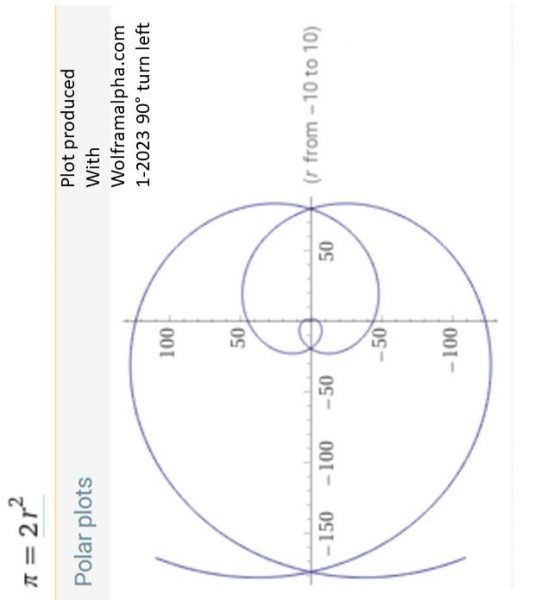
U for Union
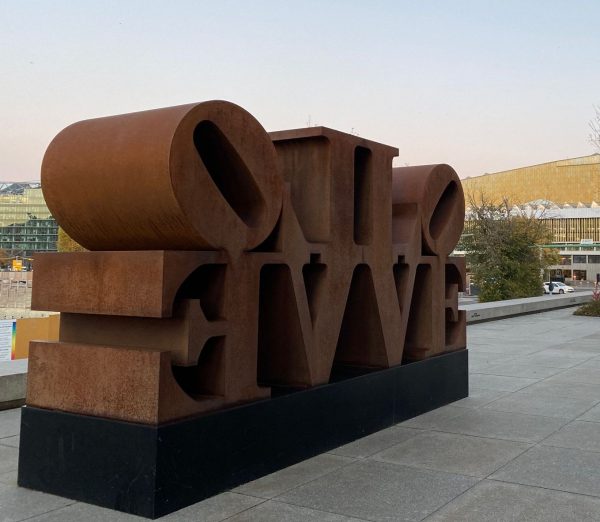
Union, understanding, undo, unknown, uncertainty, universe, urbanization, use, u-turn. All those u-words spark imagination. Additionally, the short forms of u as abbreviation for you, ur = your, youth and smartphone typing are creating for us abbreviations to communicate even faster and shorter via social media. Union is my favourite of this list for several reasons: (1) Marital union, passionate topic not only for family sociologists, (2) trade unions, as collective form to organize solidarity in and across societies, (3) European Union, the formidable tool to create, conserve and ensure peaceful developments in Europe. We have to prolong this list with the union jack, the united states, the united nations and …, please continue the list.
For me, in union I see a whole film running, a process proceeding, or persons uniting. Unionization, just like two persons deciding to pass more time together, has some magic in it. Match making is the modern term for it. No Union without reunion, dissolving a union might be part of the process as well, as painful it can turn out to be. Most of the times we grow throughout the process. Forming a union, in all senses of the word and of all sorts of forms, is a kind of teleological urge of us as a species. We share this with many animals but have also developed strategies and weapons to force others into union. Unfortunately, no u-word without its potential to be used in the sense of abuse. Unite to defend the union of fans of unions. (Evolution of Union of Tweets own Video 12-2022). IMG_4611
Q for Question
Quality and quantity or queer and query could have made valuable entries here as well. Common to all is the underlying process of questions. Questions put to oneself, to others, society or supra natural or supra national instances. Can quantity turn into quality? Is a queer perspective a new one? Is a query in a programming language the beginning of each algorithm? Questioning is a child’s “natural” approach to understanding the world. This does not stop soon after childhood, but it is occupying, if not haunting, us until the end of our life. When is this exactly happening – the end thing? Are we free to chose this? Just try to answer one of these questions and you’ll find out how one question leads to the next. We are all the same in this behaviour. However, we all find different stopping rules to the query algorithm. Religion is a fast shortcut to stop further questions. Sciences are the never, ever, ending type of questioning. Mathematics solved part of the problem. For a lot of series we are able to calculated the limit value towards which the series evolves circumventing the lack of a stopping rule. Fundamental human rights are such a far-reaching stopping rule. Just like after the French revolution, the question was, how to quickly spread the message of human rights. Didactic and paedagogics evolved in parallel. From “cogito ergo sum” to “rogatio ergo sum”. 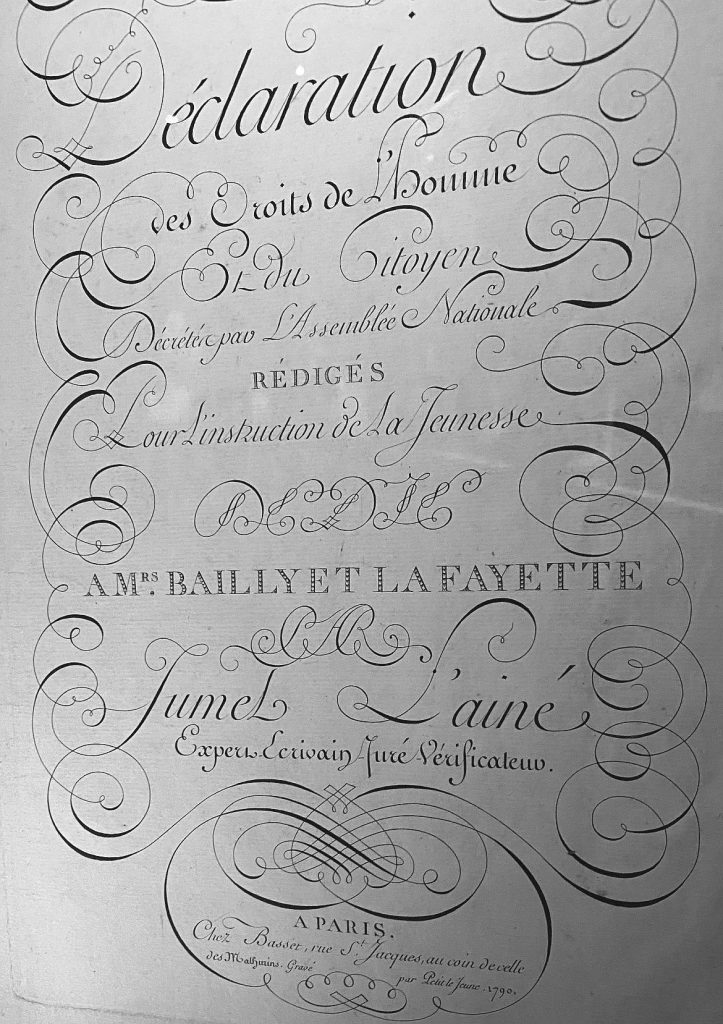
N for Nature
The first association with nature for me is the nature surrounding my childhood. Rivers, forests, vineyards, mountains. Maybe a little bit of German romanticism surrounds this. I still enjoy occasionally listening to some nature romantic songs (Lieder) from Schubert, Schumann, Flotow or Mahler. Beginning with adolescence natural sciences took over, but what does natural really mean in the natural sciences. In the “Encyclopedia Britannica” the term natural has already been dropped. What has been referred to as natural sciences is just found under the term sciences. The social sciences or psychology are not included under entry of sciences. One of the high reputation scientific journals is still named “nature”. Only a small fraction of the papers deal with what ordinary people would associate with nature. The nuclear fusion or nuclear energy research and applications in practice figures still prominently in there. Ever since Tschernobyl, Fukushima or Hiroshima, horrific dangers are associated with nuclear energy. The power plant of Saporischschja in Putin’s war, dominates public concerns in 2022. The natural sciences frequently are certainly not researching in the interest of nature. Hence, the social sciences need to deal with the social consequences of (natural) scientific advances. Science and technology have an intrinsic link to each other.
The loss of biodiversity is the most obvious demonstration of how cruel our own species is towards any other form of live. Not only is demography reminding us that with 8 billion of us we might further contribute to our own overpopulation, we might sooner or later destroy the whole planet either slowly with polution or through weapons of mass destruction. Poor nature, instead of pure nature is our destiny. Our western lifestyle is not sustainable and we have no right to impinge on the rights and resources of future generations of us or those who have not poluted the planet like us in other parts of the world. So, when did it all start to go wrong? Probably our creed for more of everything has been nurtured for far too long. Less is more has to replace it somehow. This is also part of our nature. 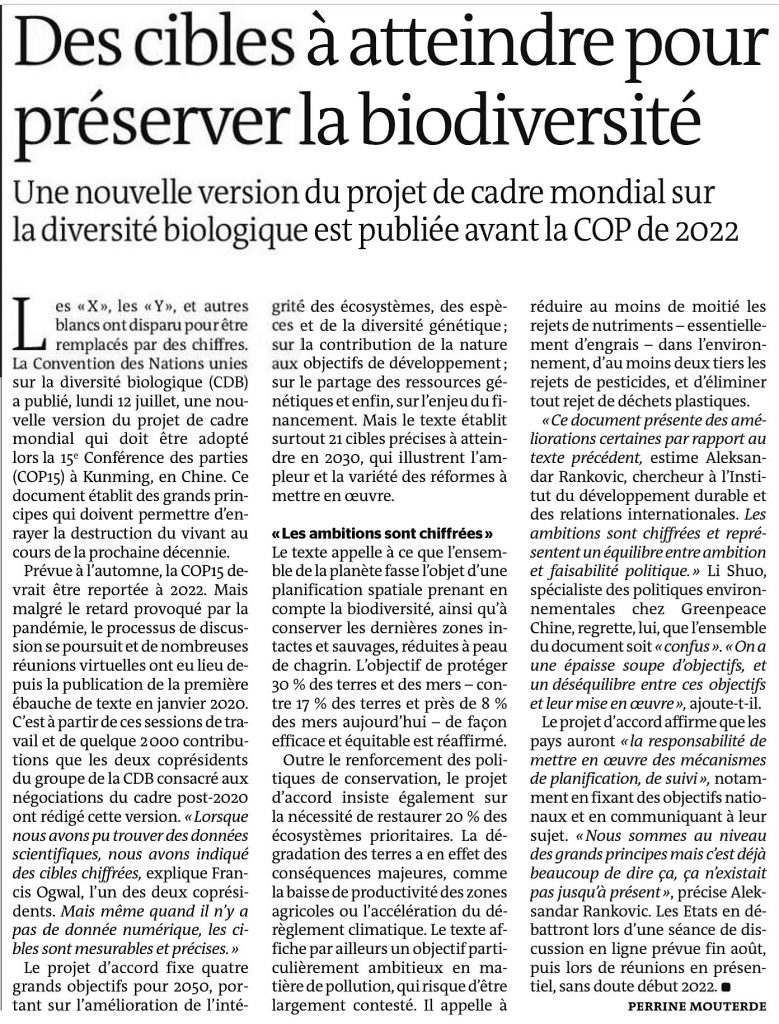
M for Memory
Besides the English term memory, which refers to a huge scientific literature starting with cognitive psychology, I like the French version of “mémoire”, because it is more comprehensive with additional meanings, nicely represented by Wikipedia.org. On the German Wikipedia-page you find first the reference to the children’s game memory, turning around images and memorising where the counterpart is/was (play pairs). This diversity hints towards a cultural element in memory. There is a person’s memory or mental capacity to recall and ways to remember. The latter term refers a lot more to collective memories and becomes a more debated issue. Danny Trom uses the term “split memory” in a chapter on France and the “myths of nations” (p.129-151). In David Brook’s reader on “the social animal” he states that grandmasters in chess (p.88) were long believed to have superior memory. This is actually not true as memory experiments showed, but they rather saw formations and “internal connections forming networked chunks of information”.
“Mémoire”, on the contrary, refers also to the writing of a person’s own biography. Nowadays, book shops contain whole sections of autobiographies, the most sold appears to be the one by Michele Obama recently, if I recall correctly. Among the most scandalous is the publication of the “Journal pour Anne (Pingeot) 1964-1970” by Francois Mitterand. All the autobiographical documents make explicit major parts of what might form collective memory later on.
Memory has found its way into engineering and computing. The memory effect in batteries or being “out of memory” frightens users in computing or programming. In short, I wish you the best of memories reading this page and stimulation by visiting memorials (image: Jewish Museum in Berlin 2022, Ullmann exhibition). 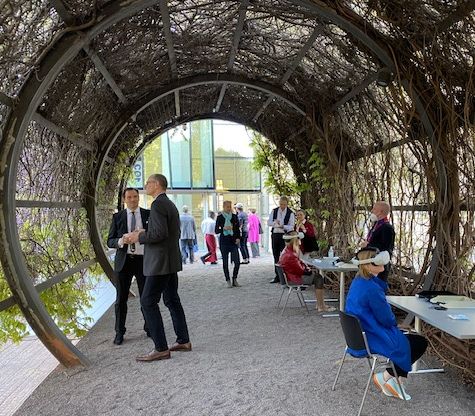
L for Law
Contrary to a popular misunderstanding. Law is not boring. The history of ideas is full of exiting projects based on laws. Starting with the foundation of empiricism, i.e. the comparison of laws governing the different Greek city states pioneered by Aristotle. Considering law from the perspective of legislation gives it an actionable touch and makes it more exciting to many persons. Contrary to a static perception of law, laws can be changed and are subject to interpretation continuously by courts and judges. The fascination with law might start with the philosophers of the French enlightenment like Montesquieu. “De l’esprit des lois” – explains already the need to look behind the literal text of law. What is the spirit of law, becomes the driving question. Not only the categories of countries like republic, monarchy and despotism were argued by him, but also the separation of powers into an executive, legislative and judicial power is his original contribution. These principles govern the German “Grundgesetz” and are a common understanding of the founding states of the European Union as well as a potential breaking point.
A sociological perspective on law is formulated by Niklas Luhmann (short intro in D) and highlights the danger of laws as a self-referential system. This dominated by experts who develop the system further independent of the concerns and understandings of wider society. In order to understand this concern, it is probably useful to think of climate change as an urgent problem. Bio-diversity has for much too long not been of much relevance for legal founding principles of our constitutions. In the same vein, women judges or diversity in the legal profession is a point of concern. Majorities versus minority rights create intrinsic tensions in law, legislation, execution and interpretation. Analysing the half-life of laws is interesting, i.e. how fast do they really change or get abandoned altogether. Equality in front of the law remains a thorny issue. It is a huge issue when moving from law to justice as primary concern. The most interesting point is the view of law as a changing matter, hopefully for the better, but this is another question altogether. Reveillons-nous l’esprit des lois ! (pas seulement au Reveillon). 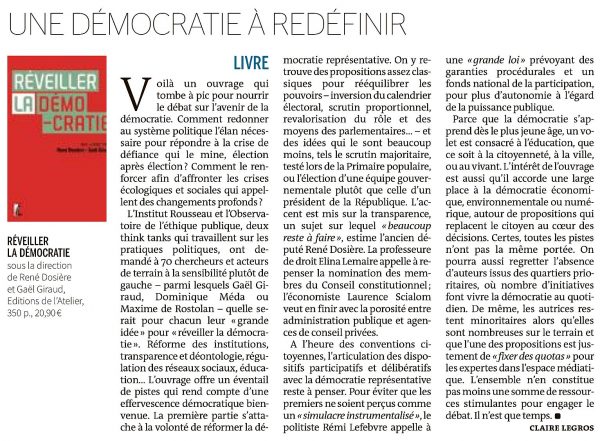
J for Joy
Talking about joy is fun. Its feels better than just cracking a few jokes, and this is not bad at all. The starting point of much joy can be a simple joke, because of the simplicity of emotions and the bonding between persons. However, laughing about jokes is often abused in the form of laughing at the expense of someone or a specific group of persons (serious publication “L’empire du rire” CNRS, 998 pages). This explains to me the difference between a joke and joy. Joy is the emotion resulting of a joke, but also of many other experiences. The simple joy to meet another person, an animal, the sun, rain, wind, music, art or just less pain is more probably more intrinsic. To receive or to give a present is often associated with a joyful moment, sometimes lasting quite a bit. For some psychologists, emotions can be problematic, if a person can no longer regulate them effectively. Many persons tend towards excessive use of alcohol or other drugs to experience positive emotions like joy. Negative emotions of another person, strangely enough, may also contribute to the joy of another person (“Schadenfreude”), e.g., if a dictator is finally overthrown.
Much more inspiring is joy in connection with religion. As a critic of religious ideas, the attempts of religion to define joy for individuals and society probably explains the success of religions. Representations of Buddha, show the happy or joyful monk, Christians define joy with the advent and the birth of an unconceived child, fighting fiercely any modern forms of contraception and science advances for birth assistance. Restricting jokes and joy to the “carnival” period reflects the Christian doctrine to control and monopolise the definition of joy. Therefore, it is no surprise to witness that many persons feel more inspired by Asian traditions like “Ikigai” or “yoga” in their daily routines to experience joyful moments. I always found it very odd that Christian fundamentalists would not say Merry Christmas before the 25th of December after they have been to church at midnight. The priest or pope as the master of joy is a very strange idea. Affect inhibition or deferral is a powerful psychological tool. As in this blog entry I deferred my joy and laughter until the last line. So now, please join me in a wholehearted JOYFUL LAUGHTER, so the people around you may believe you’ve gone completely mad. It might be the beginning of more lasting joy, just keep practicing. Joy is within us not depending on outside stimuli, joyful1 although they might help. 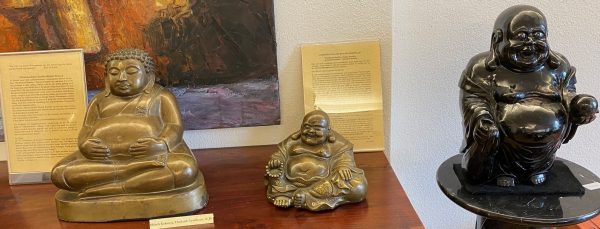
E for Enterprise
There is a new start-up scene in development in Germany. Interesting to witness the new entrepreneurial spirit. Many of the youngsters grow out of their peer community, wanting to try new ways of working and living together. The new bottom-up or grassroots form of growing a business out of a subculture seems to be an adequate response to the growing diversity of societies and easier ways of community building through online social media. Name it “reach” today, it is similar to what you previously called having a customer base. The new element refers to a blending of cultures. Learning through being online connected to the world, yes, the whole world, allows wide-spread influences from other sub-cultures, be they American, Asian or African. The young are open-minded to new stimuli like “Ikigai” from Japan and, of course, the life histories of founders and individual biographies from entrepreneurs like the legend of Steve Jobs, Apple’s legendary founder. Imagineering has become part of the movie-influenced influencers. Short clips out of a longer story build communities. The witty comment, like at school, gets more attention than the long boring story of the preacher, teacher or the mansplainer. The experience of “flow” is all around these communities and this creates the specific magic of the start-up scene. They take each other to new levels, mutually, reinforcing their preferences and life-styles. They are well aware of the risks they are taking. “Keinhorn” German short for “not an Einhorn”, the one billion value threshold for super successful enterprises taught them crucial lessons. The “ecology of organisations” which I referred to in my courses at the now renamed “Constructor University” previously “International University Bremen”, then “Jacobs University”, (let’s see what comes next?) is an important complementary research tradition to assess the “survival” of enterprises. I still recommend this University, which I quit to start new endeavors. It carries in its several 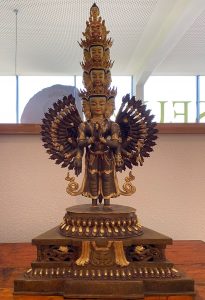 “names” the important message:
start, fail, change, (repeat).