In cultural performances it is always interesting to refer back to titles given or attributed for example to music pieces. Dumky is the title of Antonin Dvořák’s 4. Klavier-Trio opus 90. In the late 19th century Antonin Dvořák found inspiration in the notion of Dumky. Rather than just composing a “Trauergesang with few joyful intermezzi” he creates a new form for this Trio containing, quite unusual, 6 parts. Dvořák plays around with structure and sharp swings from “piano to forte” parts, “moll to dur” intonations reflecting sorrow and joy in frequent and refreshing short sequences. It feels sometimes like fireworks, but at times the sorrow of soldiers and their families becomes evident as well. However, the music proves resilient. Knowing that Dumky is a Ukrainian word and notion, the choice of one of the masterpieces of Antonin Dvořák close to the 24.2.2023, the day of the anniversary of the Russian attack on Ukraine is a commemoration of the sorrow caused by war and ways to overcome it. The “Concerts de Midi” of the Musée des Instruments de Musique” allowed us to travel through Ukraine a bit and experience the longing for better times. Joy will eventually prevail there again just listen to Dvořák’s version of the Dumky. Superb and effectful presentation of the work by the “Trio Impression” made for a memorable lunch break in the city centre of Brussels. The (virtual) visit of the Museum should be one of the attractions of visitors to Brussels as well, not just for the Art Nouveau architecture, but for the inclusive “global music” collection. 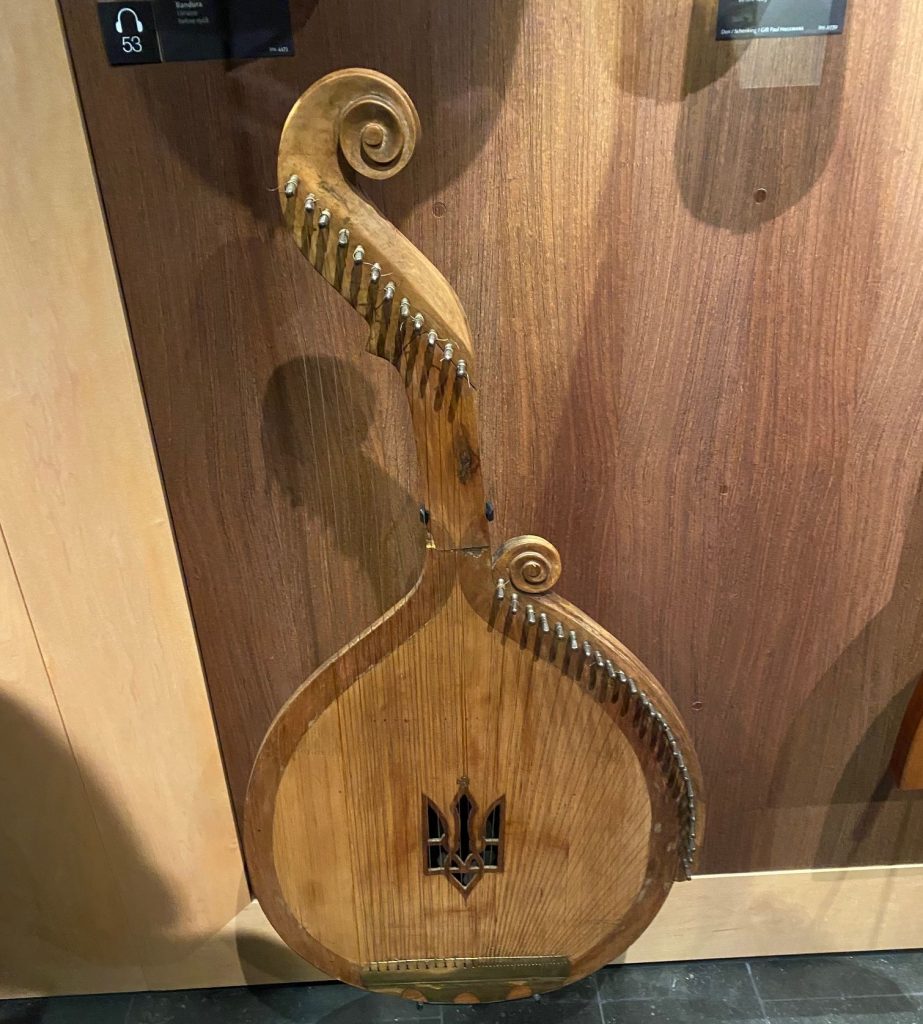
Photo K
The self portrait is a timely topic for an exhibition of photography. As part of the European month of photography (EMOP), the PhotoBrusselsFestival offers a good overview of what photography deals with in the 21 century. The Korean cultural centre (KCC) in Brussels has a long tradition to serve as an exposition in the centre of Brussels (Sablon) and is joining this year’s photo festival. The 2023 photography festival has the “Self-Portrait” as a guiding theme. Rather than entering the debate about “portrait chosen or portrait endured” (Photographica 5,2022) the self-portrait has more degrees of freedom in it. Even if it is apparently a choice to portrait oneself, there are ample examples, where the urge to produce a self-portrait is part of a wider concern for fundamental issues.
The exhibition of 5 artists from Korea at the KCC invites us to reflect on the pervasive self-portrait practice all around us. The self-portrait is not only a tool of self-reflection, which has a long tradition in art (just think of a famous drawing by Albrecht Dürer of himself), but self-portraits are also pervasive on media and social media today. Additionally, the self-portrait is a powerful tool of thinking and imagining yourself at various stages of the life-course. For centuries it had been a social or political privilege to have your portrait taken. It still is to some extent, but only if the person taking the photograph, has a special reputation. In a market difference to the selfie, the exhibition of artists in the KCC highlights the process of self-reflection that is part of creating the portrait as well as the ensuing reflection by the spectator. In looking at the self-portrait of the photographer, we might involuntarily deal first with our own perception of the image. Danger, dreams, fantasy, sorrow, pain, self-assertion and reconstruction of the self, all these themes come to mind when confronted with the self-portraits of the 5 artists (Bae Chan-hyo, Jeong Yun-soon, Lee Jee-young, Ahn Jun, Choi Young-kwi).
KCC director Kim Jae-hwan names this collection, curated by Seok Jae-hyun, “An odyssey of images leading to self-re-flection”. In referring back to the protagonists in novels from Hermann Hesse, he points our attention to the “unique journey through images as they find themselves”. To embark on the journey visit KCC in Brussels, ask for a copy of the catalogue or start by reading the title of the exposition: “Who Am I” – it is apparently no longer a question after the journey. Is it for you? More reflection on images and photos here. 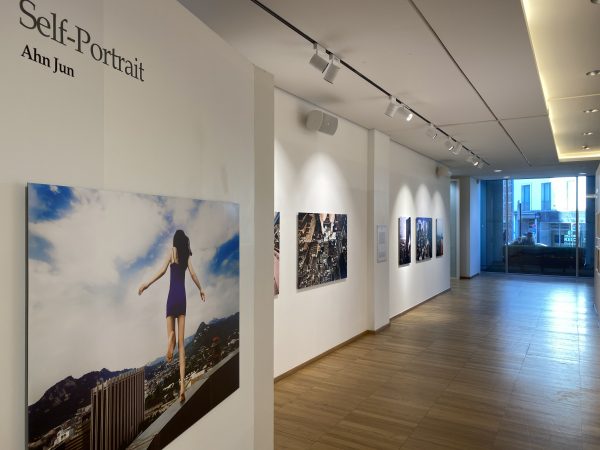
Affordable Art
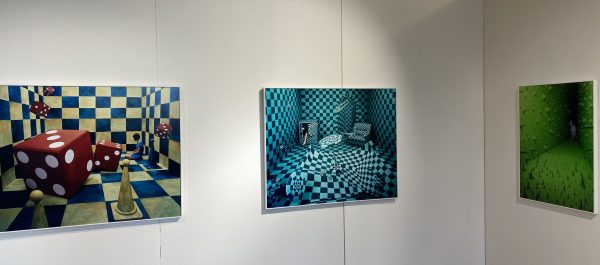
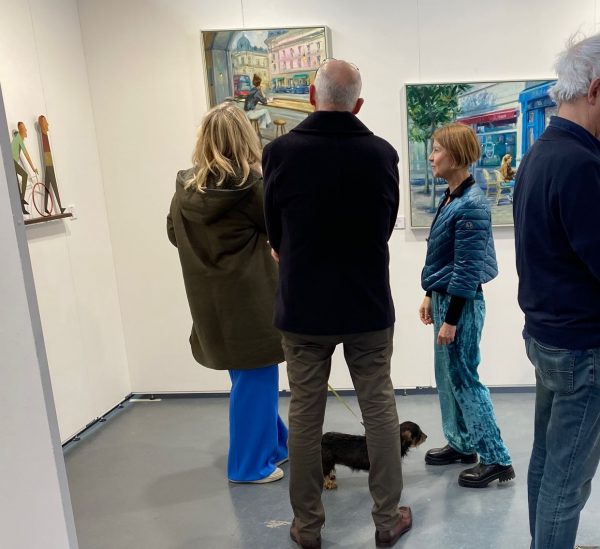
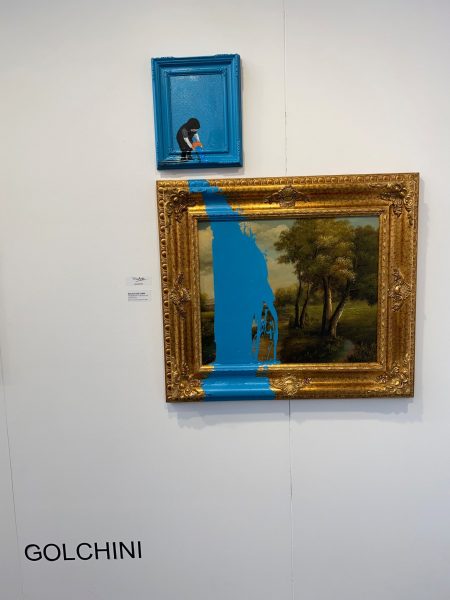
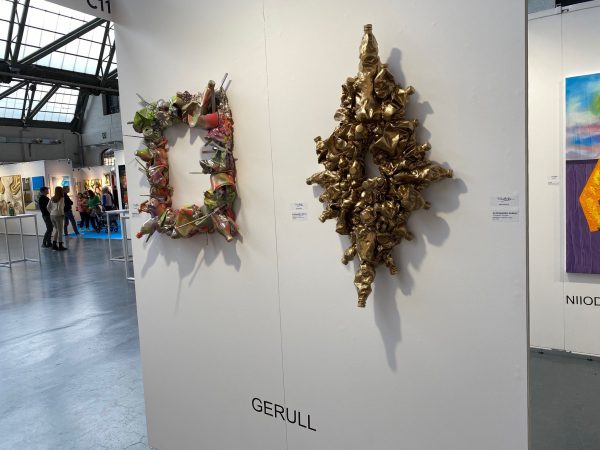
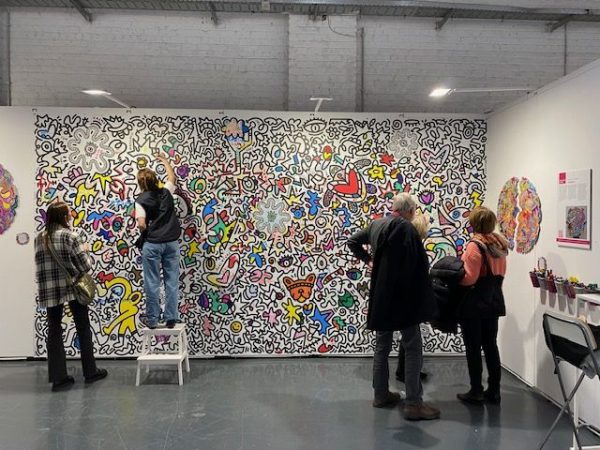
The affordable art fair in Brussels 2023 has different rules than other art fairs. First of all, well behaved dogs are allowed to visit. Underdogs might have a problem. The entry fee is an astonishing 20€, only 5€ less than “Brafa”. Inflation hits affordable art apparently more than the prestigious fair, at least at first impression. It remains questionable, whether artists represented as affordable art can actually afford to make a decent living from their art, now and at retirement. Taking into account the cost of rent, material and working time of artist, gallerist and transportation, art is frequently the art of minimalist approaches. The “garbage cycle N18” by Alessandro Gerull presented by WinArts challenges our habits of endless production of garbage by use of recycled material for making art. Not an entirely new idea, but still intriguing at affordable prices. Similarly, from the same gallery the work from Golsa Golchini invites us to “Remember to water the plants” as we might have asked somebody to help us out.
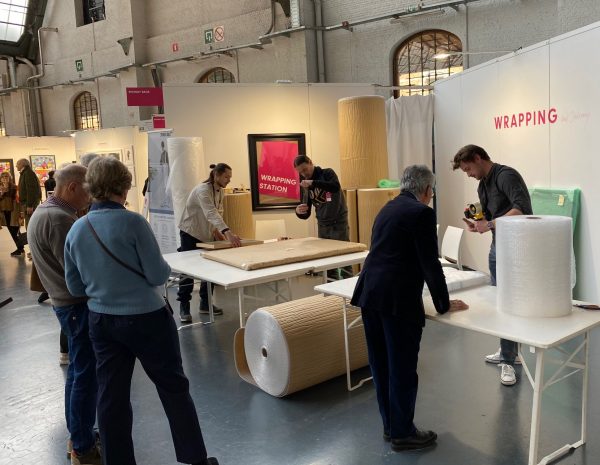
Re-use of material or innovation in photography are present at many places. Discovering new talents at affordable prices is a feasible feature of affordable art around the globe. The thresholds of entry are considerably lower than at Brafa. The surroundings of the old Tour & Taxis Logistics Centre in Brussels are an interesting excursion in modern renovation of old industrial sites as well. Not many skill-shortages in arts, except the more critical and provocative artists probably have still a hard time to find their way into galleries and art fairs. Other cities dare more daring art, be it affordable or not. The concept is a bit like coffee or “art to go”, quite many people walk away with a nice, little parcel in their hands. Even participatory art is represented, a kind of do-it-yourself, or finish it yourself drawing. It is fun to experience and to be part of affordable art of that kind to leave with some positive vibes (Roxehga). Enjoy!
Protest
In studying the 60s we still come up with a number of remarkable ideas. Not only concerts moved the masses but also new ideas flourished. Many subcultures developed specific forms of protest. To implement new ideas, new forms of protest were applied to advance civil rights, to overcome established routines and to raise awareness for inequalities and injustices. New forms of participatory democracy were tested and some reached public attention and/or approval. Burner (1996, p.162) even goes as far as defining freedom as “continuing exercise in decision-making” which hinges on the taking-in of all voices across society. The coming together of freedom and community constitutes the cross-roads of politics. Besides terrible effects of violent abuses, peaceful forms originated in Gandhi’s peaceful resistance in 1930. Martin Luther King and later Nelson Mandela reached historical milestones through peaceful forms of protest. In 1967 in Oakland, California, the form of “action protest” took place. The basis of protest was civil disobedience going beyond sit-ins as the civil rights movement had applied. “They involved blocking roads and entrances to buildings, peacefully inasmuch as the demonstrators used no force beyond the presence of their own bodies or other obstacles to passage.” (p.163). The new feature was, that protesting persons take the risk of being a victim of violence without a violent response from themselves. The intention is to “convert temporary antagonists into permanent friends”. Through the repercussions in mass media protesting persons can reach larger audiences and touch “uninvolved or possibly sympathetic bystanders” (p.163). Such new forms of participatory democracy, acting in the public arena, are stretching the idea of peaceful protest to its limit, where the freedom of others might be impinged. Participatory democracy, therefore, is a balancing act. Some recent forms of protest, in fact, have their origins in the 1960s or the year 1968 a focal point. They continue to be influential 55 years later in many countries and at all instances where basic freedoms or minority rights are violated or threatened.
Protest has also moved online. Internet sites are not only used for simple communication, but they serve as port of entry to prepare and organise protest. High-jacking of company or political adverts in the public arena can be taken online as well. Challenges to conventional politics and media representation is enacted through webpages like www.adbusters.org or www.indymedia.org the latter page comprises a whole network of local activist groups. Brian D. Loader (2003, p.1320) has added activist approaches against particular corporations to the list of online protest forms. Through public shaming of brands these activists attempt to raise awareness of the public for abusive employment practices, cruelty towards animals, environmental disasters or fake information using online channels like social media, email-lists or chatgroups via mobile phone numbers. The funding of protesting persons is another relatively new form which ranges from crowd-funding initiatives through platforms as well as forms of corruptive practices applied by states or corporate interests. Protest against protest is online and offline the next round of activist forms of protest. Democracy, law and the police have to balance out these new forms of protest. Learning about the way democracy functions is a continuous task, some would say a continuous struggle. Evaluations of the short-term or long-term effectiveness of protests yields important insights about the functioning of democracies and autocratic regimes. New forms of protest need new forms of measuring impact as well. 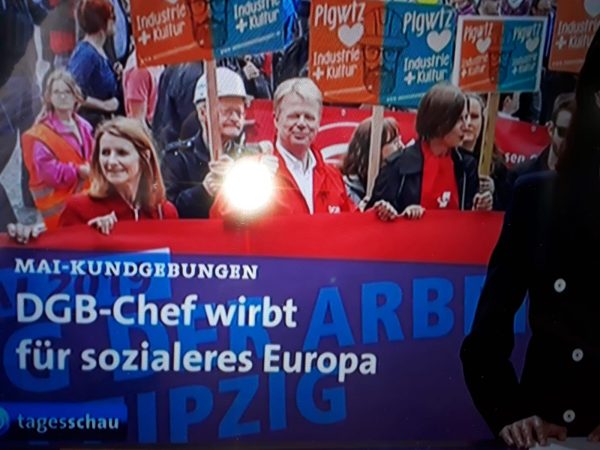
80s
The colourful 80s. That could be a summary of the years from 1980 to 1989. Certainly in fashion and design a multitude of colours dominated the 80s. Mariel Marohn (2010, Ed.) published 20 years later a visual summary of the 80s. Often thought as less spectacular than other decades, the 80s had seen some defeats to start with. John Lennon shot dead in New York December 1980. The NASA space shuttle Challenger explodes 2 minutes after the launch in 1986. Nuclear accidents (after three mile island 1979, Tschernobyl 1986,or the finding of the Titanic demonstrated not only the “limits to growth” (1972), but reminded us of deadly consequences of technological ambitions wanting to move too fast in time. Ghettoblaster, Walkman, first cell phones, facilitated a more mobile life style to more people. Overcoming the oil crises of the 70s, mobility roared ahead again. Cars, bikes, planes, CDs, windsurfing and aerobics become part of the lifestyle in these years.
Mass culture in music reached all levels of society. Music was no longer perceived as a protest movement, but a normal part of the freedom of expression. Fusion of music and dance, but also music and street art like in hip-hop music and graffiti art become part of day-to-day experiences of commuters. In the anthology of poems of the 80s we find on page 141 “Commuters” by Edward Hirsch 1983 who singles out the commuting practice as the way of life, he does not want to identify with. “Malgré lui”, in spite of himself, he finds himself in cars, trains travelling distances every day. More, faster and with more colours, time moved on. The fall of the Berlin wall 1989 was thought of as a “Zeitenwende” already. Royalty in the press with the marriage of Diana & Charles, was replaced by Madonna as the Queen of Pop and Michael Jackson as the King of Pop. The digital age entered into a new era with the Apple Macintosh desktop computer with an accessible visual interface to computing. Reaganomics and Thatcherism pushed for a revival of liberal market economies ploughing the fields for digital multinationals (GAFAM) to thrive ever since. These lasting technological changes define this period as colourful, grabbing all our senses and attention. Want to breathe a bit of the air of the 80s – visit MAD Paris. 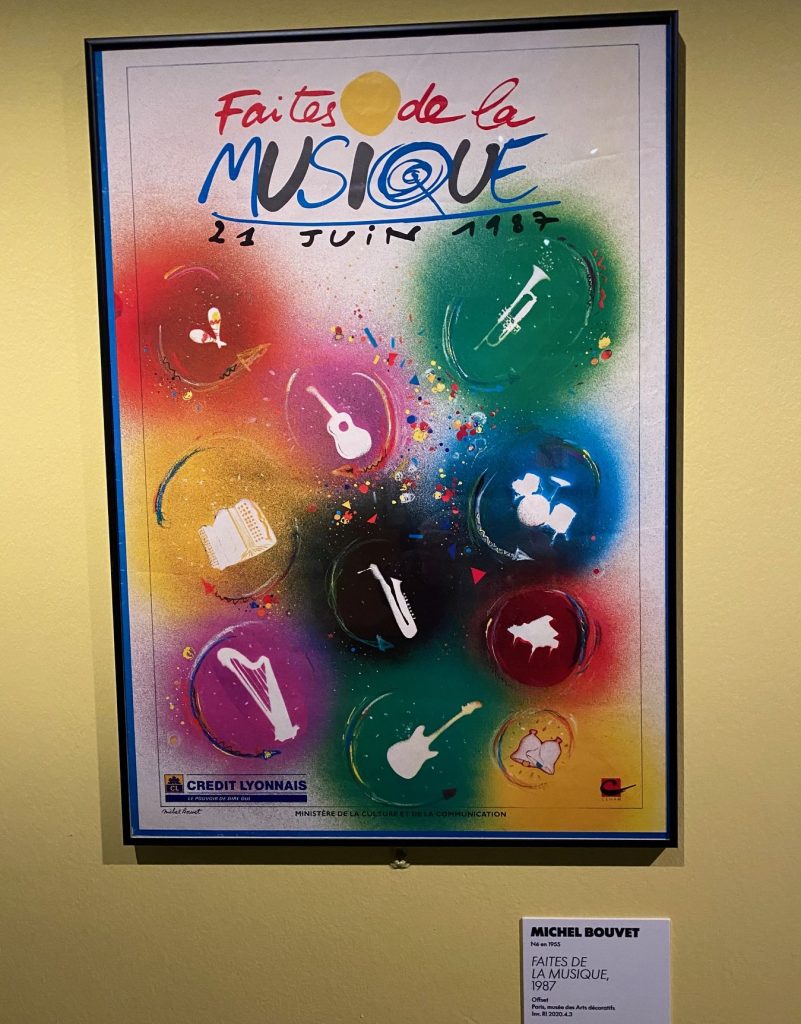
Romanatik2
Zur romantischen Periode gehören die bekannten Lieder von Schumann und Schubert. Meine Auswahl dazu liebäugelt besonders mit den Liedern zum Lindenbaum. Die Linde mit ihrem süßlichen Duft an warmen Tagen hat Malende der Romantik sowie die Dichtenden und Komponierenden betört. “Am Brunnen vor dem Tore da steht ein Lindenbaum …” kannte vor 50 Jahren jedes Kind. Etwas weniger bekannt sind die fabelhaften Rückert-Lieder von Gustav Mahler: “Ich atmet’ einen linden Duft …”. Für mich steht dabei die Atmosphäre in der Nähe der Linde im Vordergrund. “Unter den Linden” assoziieren viele nur noch mit der Verkehr in der Hauptstadt auf dem Weg zum Brandenburger Tor. Zum Reinhören und Reinversetzen in die Romantik sind die Lieder ein idealer Weg. Der Frühlingsglaube (Schubert Op.20.2) besingt die linden Lüfte und das Aufblühen der Natur. Es keimt die Hoffnung auf, dass sich alles zum Besseren wendet. Doch etwas Skepsis ist schon angebracht. Im Lied “Die abgeblühte Linde“, ebenfalls von Schubert vertont, ist dann das Altern und die Treue thematisiert. Der Zyklus der Natur und Jahreszeiten nimmt scheinbar unaufhaltsam seinen Lauf. “Nur der Gärtner bleibt ihr treu, denn er liebt in ihr den Baum”. Das weise Herz will Gärtnern und erhalten, was so viele Emotionen und Optimismus hervorgebracht hat. Wir müssen die Bäume retten, aus Pflicht die Romantik inklusiv und erlebbar zu erhalten. Dazu können wir mit den Linden ja schon einmal anfangen. 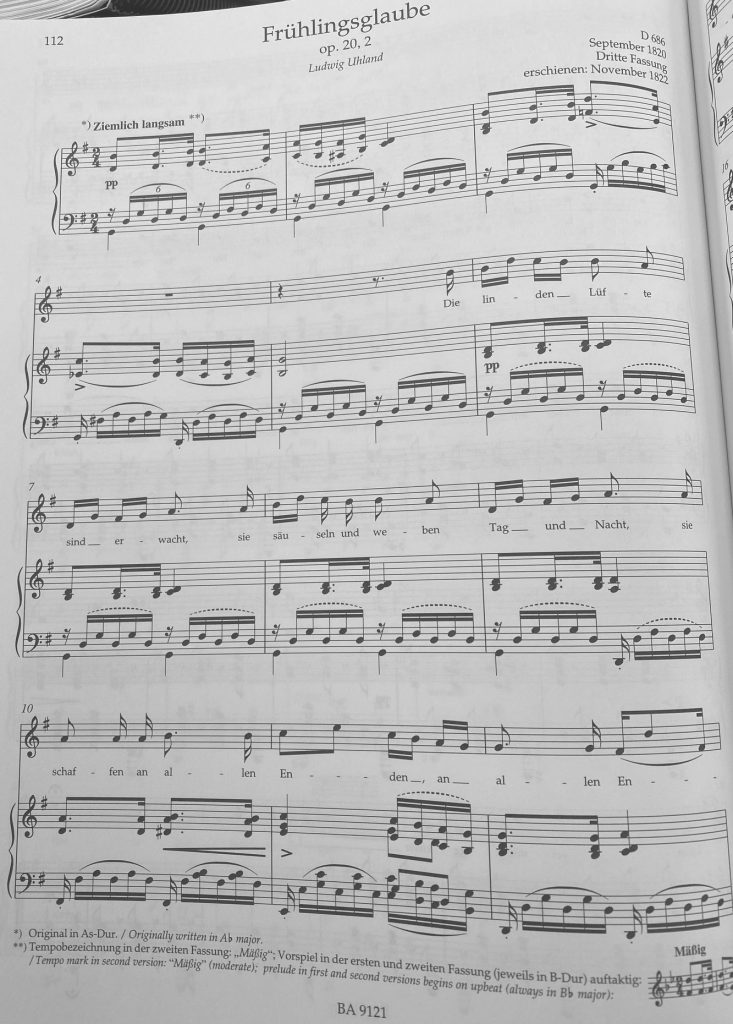
Flotow Analyse
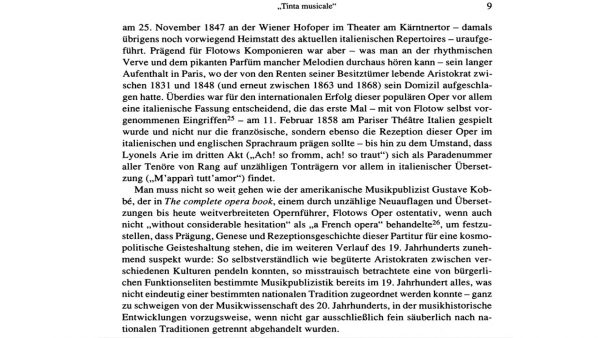
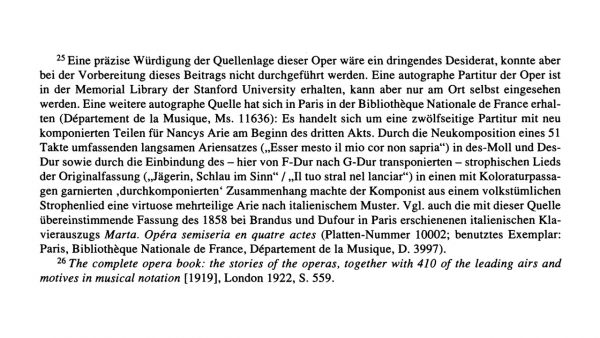
Interessant ist der Aufsatz über Flotows’ Martha, der vor einigen Jahren in einer musikwissenschaftlichen Zeitschrift erschienen ist. Anselm Gerhard ordnet die Oper unter Berücksichtigung des Werdegangs des Aristokraten Flotow dem französischen Stil der Oper zu. Das Schicksal des von Flotow war es wohl, mit seiner aristokratischen Herkunft aus Preußen, Deutschland, ein Uraufführung in Österreich, dann mit Bel Canto assoziert überwiegend auf italienisch aufgeführt zu werden (Metropolitan Opera 1914? mit Caruso), aber ein französisches Opernschema basierend auf einer irischen Volksmusik mit einer Story in England zu verbinden. Kosmopolitisch nennen wir das im 21.-ten Jahrhundert, nicht oder schwer nationalistisch verwertbar im 19. und 20.-ten Jahrhundert. Für die Handschriften ist es wohl am besten, gleich in die Bibliothèque nationale de France (BnF) zu fahren. Im Saal Richelieu ist das dazu passende kunstgeschichtliche Ambiente noch nachvollziehbar. Quelle:
Gerhard, A. (2004). „Tinta musicale“ Flotows „Martha“ und die Frage nach Möglichkeiten und Grenzen Musikalischer Analyse in Opern des 19. Jahrhunderts. Archiv für Musikwissenschaft, 61(1), 1–18. 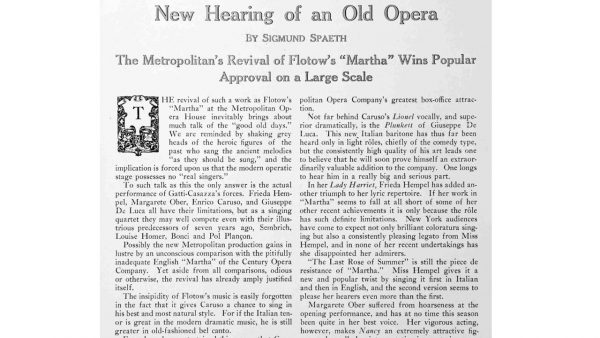
Giselle
Once upon a time, not at the Opera de la Bastille, but next it, in a small theatre called Théâtre de la Bastille, the fairy tale of “Giselle…” was performed. The world-famous ballet Giselle (Karlsruhe Programmheft) is still amongst the most frequently performed magic piece of classical ballet. What is it about? In short: sex and crime. Yes, and it sells well.
Francois Gremaud tells the classic story of excitement, love, deception, death, regret, haunting and memory in a concise and witty fashion. The exemplary dancer is at the same time the narrator of the story as well as the critic and art historian accompanied by a 4 musicians strong orchestra. The educational piece with a “womanxplainer” on stage is great entertainment, full of references, why it is still okay to like the piece in spite of its fantasy-loaded content. Modern dance (Cunningham, De Keersmaeker) has decoupled or emancipated movement from music. In classical ballet, at least, you still know what comes next and this is aesthetically appealing for most people. Besides Wilfried, no he is not part of the “Wilis” (could be an interesting variant), but in the ballet there figures “Hilarion”. He is not hilarious at all. Splendid entries are from Myrtha (close to Martha, but not quite the same) and, of course, Giselle, when she leaves her tomb and turned into a “Wili”. Then there is Albrecht in a pas de deux with Giselle, swirling between earth and space. Aldi dances like mad on impulse from Myrtha, but Giselle vanishes nevertheless. End of story, or is it? Giselle is a Wili and Aldi is the wally. Maybe the story could be retold like in the film “Billy Elliot – I will dance”, which is an emancipatory tale where dance is the liberation rather than part of the dooming fate.
Francois Gremaud with the astonishing performer and choreographer Samantha van Wissen have created a version of Giselle that is musical, aesthetic, funny and critic. For those who enjoy an epic theatre version of Giselle including its “alienation effects”, referring back to Berthold Brecht, will want to read the script as well, kindly distributed as a gift after the show. 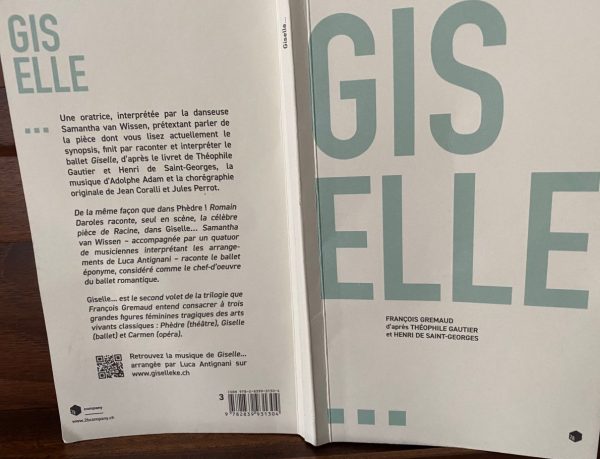
Employment
Employment is back on top of the agenda. Not as we used to think, though. Previously unemployment had dominated societal concerns. Now it is the lack of persons seeking or available for employment. What has happened? The Covid-19 crisis has demonstrated the need of persons qualified to work in the health sector. From health care and urgency care, we are short of personnel in all these fields, everywhere. 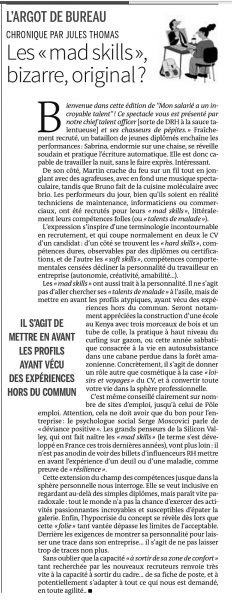 Then we discovered the role of essential services and the need to equip crucial infrastructures like ports, transport, shops, schools and ambulances with service persons resisting despite work overload. Larger cohorts leave employment to retire, some even early due to illness or burn-out. Additionally, war is back in Europe. Military personnel is in high demand again, drawing largely from younger cohorts. The need for conventional weapons. long thought to be oblivious, is forcefully back on the agenda.
Growth potentials are everywhere. However, these pre-modern facts encounter a population in the western democracies that insists on new approaches to employment. Beyond hard and soft skills, recruiters seek atypical skills, competences and trajectories. A parachute jump from an airplane, cooking and dining experiences, caring spells, periods in self-employment, all are directly or indirectly relevant for employment and teamwork. So, what is your specialty? Collecting stamps? Surely you are able to spot tiny differences in images with specific content. Fake news and fake image detection or video surveillance is in high demand, just try an application and discover the employment potential of your MAD skills. Sounds crazy? No joke. Skill needs are everywhere, just give it a start again and again. Read a serious newspaper regularly (here LeMonde 19.1.2023) for inspiration.
Sound
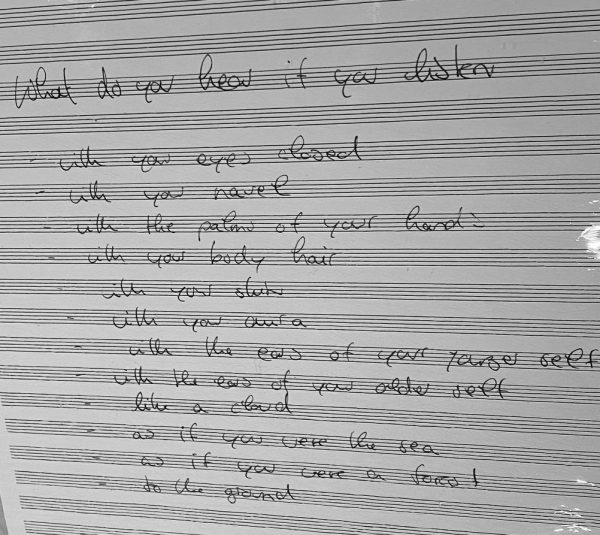
Each society has its sound. Each person lives in her/his sound cloud or bubble. Cities are generally noisy places, Lots of traffic, mobility and moves leave sound bytes all over the place. Each city though has its own sound and spectrum of frequencies. Libraries, museums, places of worship, all build their special atmosphere due to specific sound design. The Singing Project by Ayumi Paul (Gropiusbau Berlin) created its own sound environment. Reminding us to consciously design our exposure to and experience of sound is welcome. John Cage started to build his very own language of music, similar to Schoenberg, from scratch. His writings Empty Mind explain his view and techniques a bit. Starting with silence and the time between sounds we recreate our own sound experience. Notation of it comes second in place. only for the potential to repeat the experience notation is useful. But it is only one form of conservation for posterity. Noise canceling is the amazing tool from sound physics which allows you to neutralize noise by adding specific frequencies to noise which cancel out each other. Design your personal sound experience beyond noise if you like. Nature recordings or familiar person voices allow you immersive experiences when and where we want. your home sound can be everywhere nowadays.