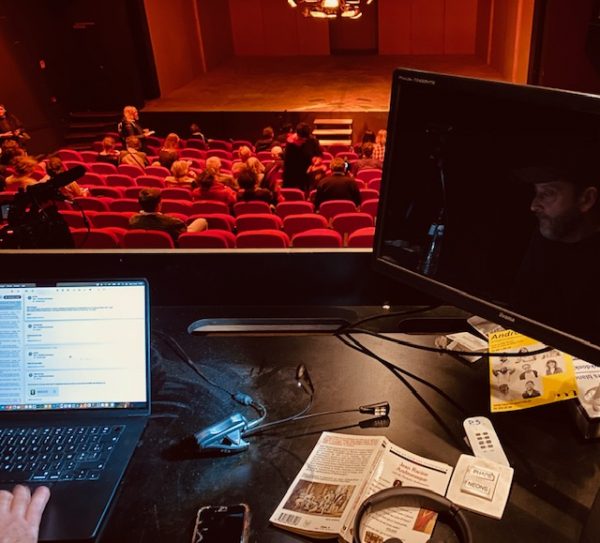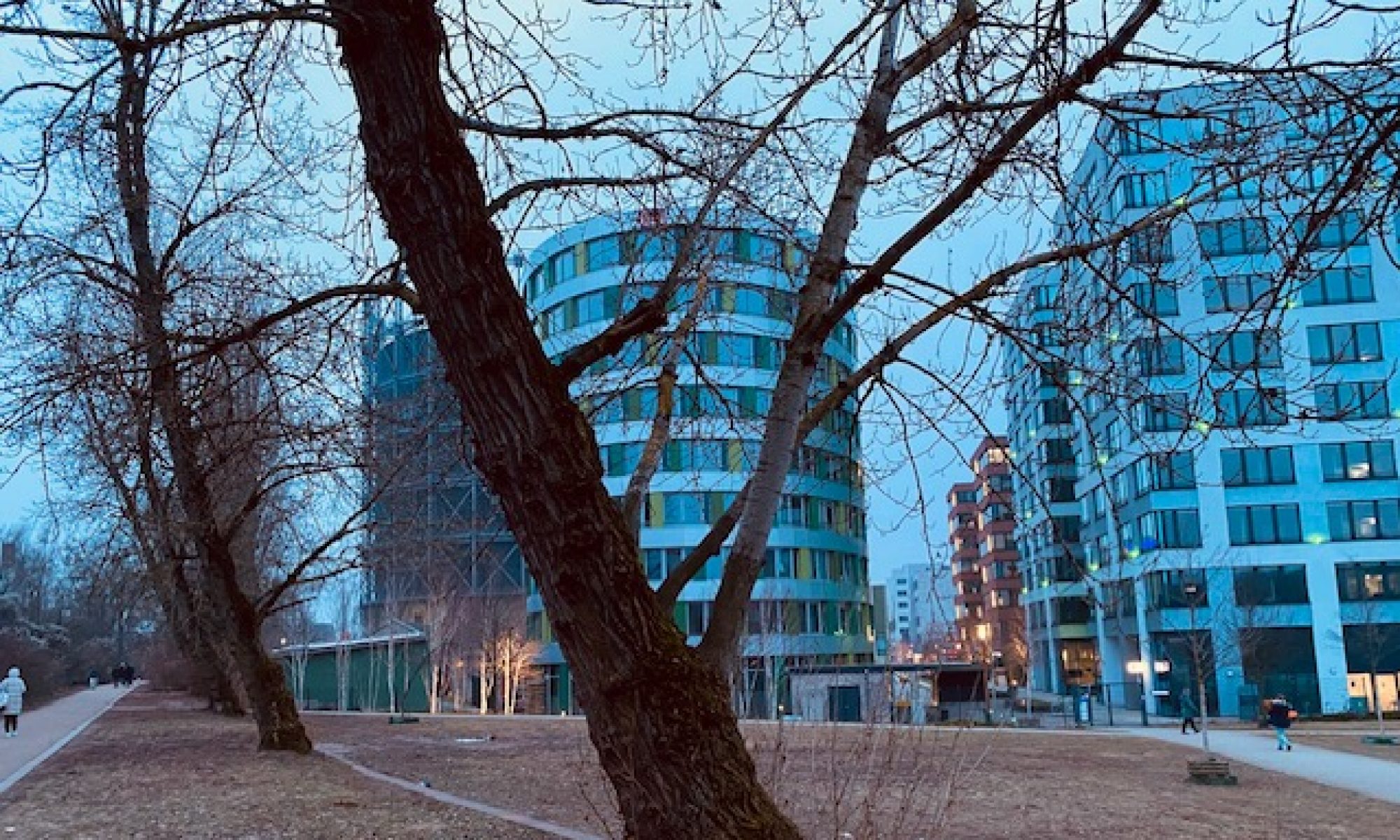

Disaster tourism

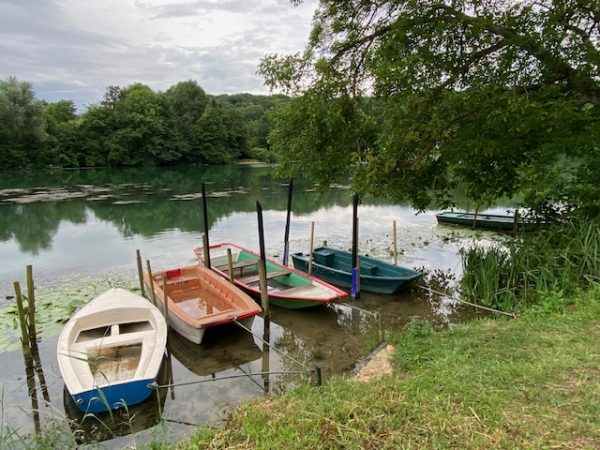
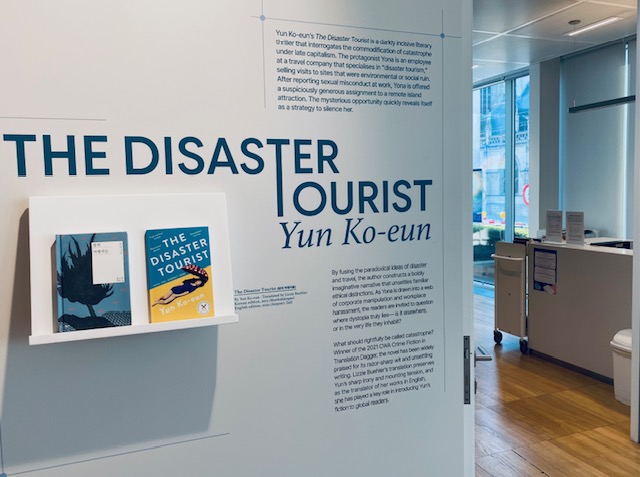
My personal background gave me lots of personal experience with almost annual next to a small river bed. Since I left the region for studies, the flooding has increased and several times have reached the scale of disasters. Therefore, I am very sensitive and have mixed feeling to the issue of disaster tourism. Such tourism is a nuisance at the time of the disaster, but cash through tourism helps the hard hit region and residents to overcome the losses faster. Would I travel to Tschernobyl or Fukushima for that reason? Probably not, but the intentional war disasters and crimes caused by Nazi-terror.  The Korean novelist Yun Ko-eun did not shun away from writing about a guide who takes tourists to places of environmental disasters until being sent involuntarily to such a site herself. This is not about the “K-Chicken belt”, a series of places with famous chicken dishes, nor about the potential consequences of repeated K-pop events of the famous BTS-boy group in Seoul in 2026. So glad to see that Korean youth has a chance to thrive under democratic rule. (Image: Exhibition in Korean cultural center Brussels 2026-3) 
Book as Entry

Libraries are full of books. But there is much more to a library than just books. However, many users of libraries focus on the “classic” origin of libraries as large and more or less exquisite collections of books. Therefore, it is a decent tradition to think of libraries and most of all books as a kind of “memory of the world”. Judith Schalansky writes texts and conceives books. Authors are used to choose typescripts from a huge potential choice. Going through the history of book production, can inform about the diversity of appearances of texts in book form. The panel discussion at the Stabi West in the presence of Schalansky and about Schalansky raised awareness to the point that there can be many more than just one entry into a book. However, we are so used to read front to back, that it is even hard to think about more entries. Images, typescripts and typesetting or the kind of binding, all may serve as facilitators for more ways of handling a book. 

Time reference

Times serves as a point of reference. We often refer to precise points in time, like dates 1st of May Labour Day, or a specific hour as a reference point. If we talk about 5 minutes before 12 o’clock, we convey a kind of urgency – before it is, presumably – too late. In the arts, particularly poetry, prose or drama, and even beyond the romantic period, the reference to seasons as “emotionally loaded” terms is widely used. Subsequently, there are many compositions in music, which make use of such references as programmatic titles. Through the reference to a specific duration, the scene appears to be set and the reader or listener prepared for a less surprising experience. You might even go full circle like in Vivaldi’s composition of “The 4 seasons”.
The writer, poet and Shakespeare translator Thomas Brasch (Link to publications) has written the poem “Der schöne 27. September” (1980) with an exact reference to a point in time, but reporting in 10 lines, what he didn’t do on that date (own translation).
“I didn’t read a newspaper.
…
I didn’t write a single line of text.
I didn’t set something in motion.”
(Extract from Thomas Brasch poem see above;
image below, Global stones project)

Time and Emotions

In psychology, time and emotions are a matter of milli- or even nanoseconds. Showing emotions, intrinsic ones or controlled ones is passing rapidly through our brain and, for example, facial muscles. Hence, time plays a role in how we react emotionally to an image or any event. The author Rüdiger Safranski starts his history of the concept of time with the emotional experience that time appears lengthy or tedious. In his view the emotional understanding of the concept of time is key to a better grasp of the philosophical roots of the concept of time. Starting with Greek philosophers, the Stoic tradition, Augustinus, the history of ideas is full of reflections on time, what it does to us, and how we best deal with the effects time has on us. In famous literature from Marcel Proust or Samuel Becket, we were reminded of the creative power of lengthy periods of time and the importance or futility to ask fundamental questions about time and our destiny. Beyond the rational thinking about time, the emotional experience of time makes up much of the spice of life. 

Vaim and the sea

Vaim is not a person, it is an imaginary place, somewhere next to the sea, rather small in size, and in conventional terms nothing much is happening there, aging persons go about their daily routines in their more or less splendid isolation, speaking to someone is a rare act of achievement, most of the talk is speaking to yourself not even really thinking aloud, just ruminating on and on for days, sometimes weeks or maybe years in a person’s life 

Okay, my exercise in “slow writing”, a wee bit attempting to copy Jon Fosse, kept me going for 10 lines before the end of my paragraph. Jon Fosse keeps going without the end of a sentence  punctuation for 66 pages in the German translation by Hinrich Schmidt-Henkel. Reading the three phrases of Vaim, each as an extended poem and an “homage” to life from three intertwined perspectives, resembles a cubist painting and, maybe, at least for me, each one like the novella “The old man and the sea” by Ernest Hemingway. It is also a triptych in the religious tradition of paintings, just as much as “Vaim” follows in the footsteps of “Waiting for Godot” by Samuel Beckett. For all those who don’t care about any previous literature just read Jon Fosse as an endless love story of platonic relationships, silence and romance,  next to the sea. Please, don’t pass on your copy of Vaim to school-aged children as they might become very creative about punctuation. The only allowed end of a sentence are occasional question marks, which is a nice philosophical twist in Jon Fosse‘s literal exploration of time and love. 


Rilke’s Advice

One of the poems by Rainer Maria Rilke is entitled “You don’t have to understand life”.
And the first line of the first paragraph just repeats the programmatic sentence of the quite revolutionary romantic movement. Following a century of the enlightenment, which narrowly developed and focused on rationality and Kant’s “Critic of pure reasoning”, the authors of the romantic movement were eager to explore the world beyond reasoning again.
“Du mußt das Leben nicht verstehen,
dann wird es werden wie ein Fest.”
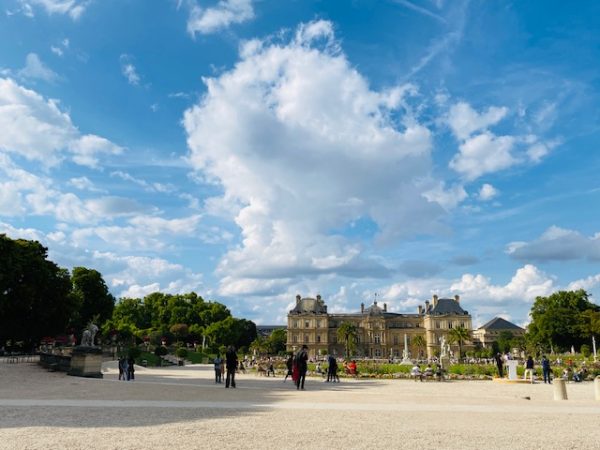
Rilke brings back the exuberant, Dionysian element into literature and captured the new spirit of his time. After a period of fast innovation in the sciences and applications of them in day-to-day life, Rilke revels in the innocent days and years during childhood, where youth is simply asking for more without hindsight. In doing so: “Life will be a like a feast”. So be it, we should like to add. (Rilke wrote a poem « Das Karussell » with subtitle Jardin du Luxembourg, Image below)

Minds alike

Great minds, think alike. In the „propositions on happiness“, the author Alain mentions as inspiration for his thought process: Aristotle (XLVII) via Marc Aurel (LXIII) to George Sand (LXVI). This is an interesting perspective and abbreviation of the history of ideas. The impact of stoicism in his thinking of happiness becomes evident. Although originally he was described by another person as a relentless optimist, he was happy to accept this summarizing label of his personality. In his writings, that also may work as recommendations he stresses the importance to “know yourself”. That’s not an easy to achieve objective, as self-deceit is all to common.
However, in desperate moments or just on a rainy day (both are entries from Alain), you will need to know how to console yourself. Friendships and knowing how to please others become virtues, which contribute to your own happiness.
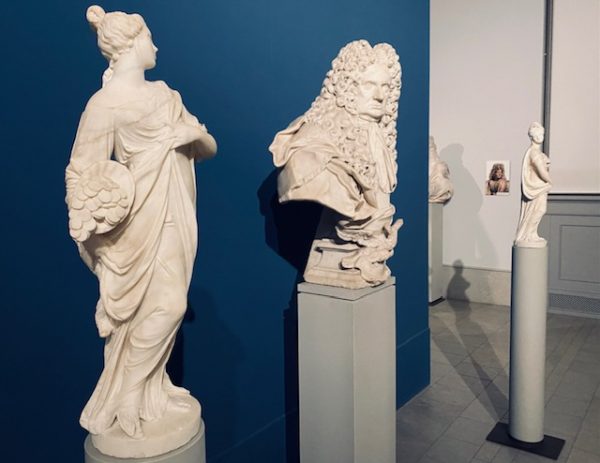
Perhaps the best summary of the history of ideas with respect to happiness is his last sentence in the paragraph “victories” (LXXXVII): “Le bonheur est une récompense qui vient à ceux qui ne l’ont pas cherchée.” In my own translation: Happiness is a reward for those who did not search for it. (Image: Bode Museum Berlin, Allegorie wealth in front, facing allegorie honour in background; middle duke Montecuccoli.) 

Cut it short

The “Revue des sciences humaines” (Demanze and Gleizes, Nr. 355, 2024 pp. 7-16) provides an interesting reflection on the widespread practice to find (new) ways to cut long stories or insights short. Short by itself, this introduction to a longer special issue on the topic “Faire court” stresses 4 elements of the contemporary impetus to cut it short:
(1) The creative process may be subject to condensation of content, similar to the process of a “reduction” in the culinary vocabulary. The speed of creativity, inspiration, freedom of expression are exemplified by the twitterization of and aphorisms in literature. Roland Barthes, in his analysis of the “haiku”, raises awareness to the different associations of the short text forms in different societies.
(2) The observed shortening of time spans of attention and the competition and economy of attention have raised the stakes for longer formats and explain to a large extent the success of shorts in the digital age.
(3) The short format works to increase the intensity of the literary experience.
(4) In deconstructing the associations of long formats as “monumental” versus short formats as ephemeral, the “cut it short“ tendency serves to “demonumentalize” the big shots of literature, science and the humanities. Well, about time to cut it short, “hic et nunc”, here and now!

Classic Farces

Molière’s theatre pieces were popular pieces. Born with the name Jean-Baptiste Poquelin and son of a rich “tapissier” of the rue Saint-Honoré in Paris, he made a tough choice to devote his life to touring as a ”farceur” and comedian, having studied also law in Orléans before. Only after his first successful performances, farces and theatre plays, he could afford to buy the theâtre du Palais Royal, despite a bankruptcy about 20 years earlier with his own theatre. The much later title “Troupe du Roi” (of Louis XIV) and a pension by the King assured a financial and political independence rarely found in this period of classic theatre.
Molière’s “Les fourberies de Scapin” was written towards the end of his life and as a classic farce in the 17th century. The story is full of funny scenes and witty dialogues, which make it a great “intergenerational” theatre play even today. The plot about the institution of marriage addresses a cleaving social and legal construct “marriage”, which continues to excite all generations and across centuries.
(Source: Histoire de la littérature française XVII siècle. Robert Horville  in (Georges Décote series editor)

Racine Andromaque

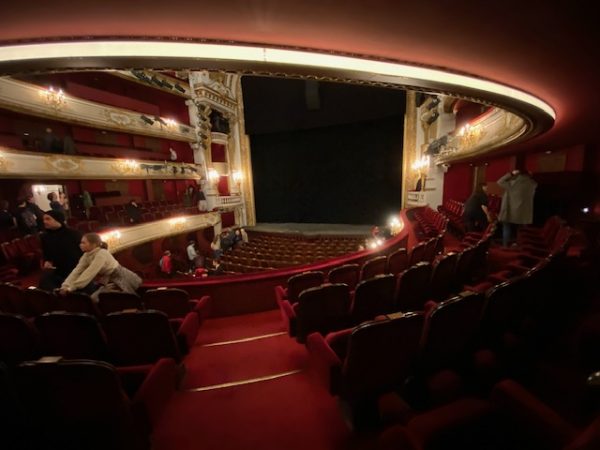
The representation of Jean Racine’s “Andromaque” in Brussels at the Theâtre des Martyrs in 2025 has been an interesting choice, because the revival of a 17th century tragedy dealing with the intricacies of the Greek and Trojan war (mostly remembered for the Trojan horse). Jean Racine turned French theatre back to tragedies with his Andromaque (Résumé and analysis in French!), rather than the comedies or tragi-comedies of previous great authors like Molière.
The literary analysis of Andromaque by Roland Barthes (“Sur Racine”, 1963) identified 3 separate locations: chamber, anti-chamber and exteriors. The real power seems to live in the chamber as the place of respect, but also terror. (Compare also Mithridate). The anti-chamber is the place of diplomacy and the place of exchange of ideas, information and strategies. The exterior world is mostly closed off through walls or balconies as views from above. For Barthes this “symbolizes” even the prison inside or the pure heroic life inside the walls.
Besides this 21th century interpretation of 17th century theatre, Racine is remembered for his tragic love stories where A loves B, but B loves C and, maybe C falls in love with A. (Compare Robert Horville, 1991) The Condorcet paradox (Science of it) described only formally in the 18th century enlightenment, many decades later, had proven mathematically that such combinations of personal preferences are impossible to resolve. Hence, these confusions are great stuff for tragedies to evolve live on stage.