Co-authorship Kafka

In science Co-authorship is a tricky issue. Therefore, many higher reputation journals list precisely who has contributed what to the paper. In the teaching and supervision of bachelor, master or doctoral dissertations it is imperative to scrutinize the original contributions of authors to the subject. There are huge differences between universities to the amount of innovation or originality that is required to award degrees or the publication of the research and results. Rüdiger Safranski published with Hanser 2024 an essay on Kafka which has 224 pages, but a 16 page long list of the sources of the copy-paste citations used from the orignal Kafka writings. By scientific co-authorship practice Kafka should claim co-authorship of the book and the costs of the „Process“ should be paid by the publishing house. However, I enjoyed the many links between comments and the originals next to each other. It is like a data analysis that sticks plausibly to the original data. AI still has a hard time to rival with these skills, although AI is catching up faster than many of us might believe or want to believe. From a social science perspective we might say the original work of maybe only 180 pages is inflated to make for a longer text of 240 pages. This justifies, probably, the publisher’s price (€26) and the marketing costs. On the other hand it becomes evident that Kafka has an enormous impact on writers and seems to take possession of them in an encompassing fashion. You move with him, but rarely beyond him. Tough lessons indeed from the publishing world.

Kafka Kafkaesque

The last 4 years in the life of Franz Kafka had been challenging due to his tuberculosis. Despite these challenges he realized additional, lesser known pieces of literature from 1920-1924 including a collection of aphorisms. The interpretation of these pieces is quite controversial and making your own judgement about these pieces should be left to each person. The most debated elements are his level of abstraction. Additional examples of animals enter into the arena. Mice received his attention in his last work. Whereas Josef was the name of principal characters before, Josefine was his last character. Continuation, discontinuity or dialect dialogue between the characters, up for interpretation and debate. The role of artists or writers in society was also a recurrent theme in his work and life. Great to have an easy access in the Leselounge at Stabi Potsdamer Straße as an extension of the exhibition of the family photographs in the Stabi Unter den Linden.

Mangel Armut

Herta Müller hat bereits 2012 in „Das Chinesische Glasauge“ sehr treffend die Funktion von Mangel und Armut in Diktaturen beschrieben. Sowohl der ständige Mangel als auch die Armut dienen als Instrumente der Macht. Sie sind quasi die Fortsetzung von Ideologie zur Beherrschung der Massen. Zusammen bilden sie die Umgebung, den Kontext in dem dort gelebt wird. Die Herrschenden jedoch haben Privilegien, die sie von der Allgemeinheit absetzen. Diese knappe Beschreibung und Einleitung zur Kurzgeschichte haben eine große Portion Allgemeingültigkeit. In Mangel und Armut können kleine Vergünstigungen eine viel größere Wirkung entfachen. Sehnsüchte nach mehr werden nahezu zwingend hervorgebracht. Allein die Aussicht auf ein teilweises Stillen der Erwartungen oder nach mehr entfachen weiteres „höriges“ Verlangen. In Diktaturen werden die Personen, die unaufhörlich auf die Armut und den Mangel hinweisen meist geächtet oder sogar ins Exil gezwungen. Solche Störenfriede sind nicht gern gesehen. Das Russland unter Putin braucht Leute der herrschenden politischen Klasse zujubeln und bereitwillig in den Krieg ziehen oder an der Kriegsmaschinerie mitwirken. Wir sind mehr als eine Dekade weiter, aber diese Zusammenhänge bestehen ebenfalls weiter. Schmuck in der Mangelwirtschaft ist bereits eine Provokation. Das offene Tragen der Provokation kann im schlimmsten Fall das Leben kosten.
(Image: Herta Müller, 2023, Eine Fliege kommt durch einen halbern Wald, Carl Hanser Verlag, “Das Chinesische Glasauge”, S.50-61)

Competence Handwriting

The acquisition of handwriting as a competence has been important for centuries. In primary schools this technique is exercised as a foundation for the performance in other cultural techniques like language writing and even calculus. Therefore, it has been beneficial to make sure children acquire basic competences in handwriting. This has not changed much, although the time devoted to perfection of the technique has been reduced over generations. We still have some memories of people who have made the handwriting or the pencils used a case of distinction. At the enlightenment period a lot of authors drafted their thoughts and manuscripts in handwriting and our museums or biographies are proud to show off handwriting of authors, artists or composers. In some of those we are able to retrieve the thought process behind the writing. The editing, crossing out, adding sentences or correcting words are traces to dive deeper into these creative processes.
Currently, we are less sure, whether in the age of AI we should still rely much on this old technique of handwriting. If we just treat it as one of many competences to be or become creative yourself, we are on the right track. The PISA studies by OECD include problem-solving as a crucial competence. Handwriting or drafting first steps of a solution might still be useful. A handwritten sketch of a solution might guide the elaboration of the more encompassing solution.
Another interesting feature of handwriting is the cross-cultural element of it. We feel easily compassion for a handwritten document. The psychomotor competence of handwriting is fascinating across continents. It has distinguished us from other species as well. The evolutionary steps are important elements of a learning process. Nostalgic feelings about handwriting do not help anybody, but children are well-advised to still keep an eye on their handwriting competence as part of or first step in problem solving, even if it is just to formulate the question they are interested in.

Dietrich Gabin

In French cinema Jean Gabin is a much adored person. Equally, Marlene Dietrich had, probably an even more far reaching international career. Both were accomplished and successful actors long before the 2nd world war broke out. In the U.S both fell in love and had a long lasting romance together. Their war time activities and “engagement” in fighting Nazi-Germany were extraordinary. It meant that both took active roles to use their charisma to mobilize people and soldiers to fight for freedom.
Shortly after the war then, both made a last attempt to work together in a movie production, but it could not unite the couple again. The “Deutsche Kinemathek” displays currently a page from the Diary of the “Diva” to underscore to what extent “Dietrich” was depressed about the break-up of their longer lasting love affair. Some say Gabin was the only person who quit her, all (most?) other relationships were terminated by the Diva. The junctions of biographies are hard to predict. The circumstances of the 2nd world war and internalized civic obligations to fight for freedom and democracy were wholeheartedly shared by both, but eventually they grew apart nevertheless. Tough experiences even for the much adored persons on the forefront of the stages worldwide. There seem to be many instances of repetition of the same story not only in movies, but also in real life.
Image: Deutsche Kinemathek Museum 2024-5

Family Kafka

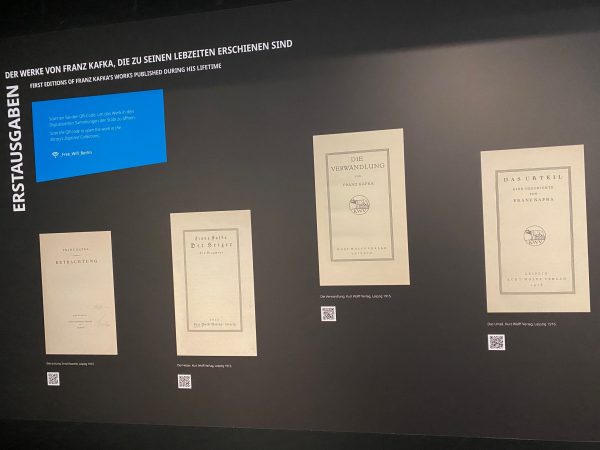
100 years after Franz Kafka’s death nearly all facets of his life and writings have been analyzed. The archives of the editor Wagenbach and the publishing house have now opened an exhibition at the “Stabi Ost” in Berlin adding a family picture book description of Kafka’s life (Curator Hans-Gerd Koch). This is of interest because Kafka himself had written an extensive letter to his father (Brief an den Vater) in which he tries to understand his intricate relationship with his father and other family members.
Nowadays, some people would try to analyze Kafka’s life through the parapsychological technique of family constellations. The far-reaching and pan-European family networks of the Kafka (father) and Löwy (mother) families were more than just an excellent source of inspiration. 2 younger brothers died in their first year. 3 younger sisters followed more traditional evolutionary patterns within families. The television series on Kafka’s life add to the understanding of his sources of inspiration and “parallel worlds” he created and lived in. The exceptional “fictionalization” of his own life and existence in the spirit of André Breton’s surrealism remains a milestone in the history of literature.
Kafka himself thought he was not really “instagrammable”at the time, but his image has reached and still reaches millions of people (Link to Picture archive). He himself would probably have defended the thesis that the most powerful images are within us. … and they are hard to escape from.
(Image from Exposition in Staatsbibliothek Berlin 2024-4, QR-code links to reading in originals!)

Das Meer

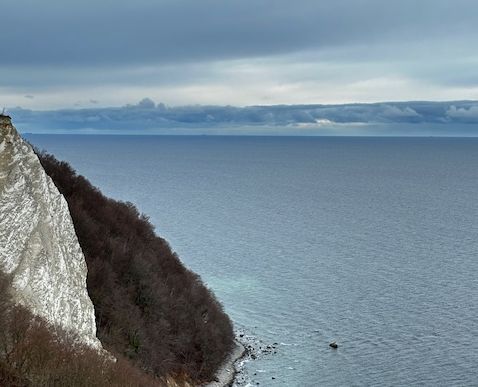
Wir haben vielfältige Beziehungen zum Meer. Diese reichen von romantisch geprägten Gefühlen zum Meer, den Wellen und den Fischen bis zur wissenschaftlichen Befassung mit den Meeren, Mangroven und dem Klimawandel. 71% der Erdoberfläche besteht aus Meeren. Das sollte den Festlandbewohnenden eigentlich klar machen, wie wichtig Meere für unseren Planeten sind. „Ocean Literacy“ nennt die UNESCO das. Neben Lesen, Schreiben und Rechnen sollte die Literalität auf unsere Ozeane ausgedehnt werden bevor es zu spät ist. Verschmutzung der Meere passiert hauptsächlich im Verborgenen. Lediglich Beobachtung aus dem Weltraum kann die weitläufigen Routen der Verschmutzenden zumindest teilweise nachverfolgen. Vielleicht hilft die Rückkehr zu der romantischen Sicht auf die Meere eines „William Turner“ zu einer höheren Wertschätzung der Meere, dem Licht und den Wellen.
Die kleine Sammlung von Gedichten „Das Meer“, erschienen im Reclam Verlag, ist eine gute Reisebegleitung für Begeisterte des Meeres. Darin findet sich eine Vielzahl von renommierten Schreibenden, die ihre Faszination des Meeres zum Ausdruck bringen. Mein momentaner Favorit ist Wolfgang Borchert darin (S.41-42) „Muscheln, Muscheln“.
Muscheln, Muscheln, blank und bunt,
findet man als Kind.
…
Muscheln, Muscheln, bunt und blank,
fand man einst als Kind!

L’échiquier

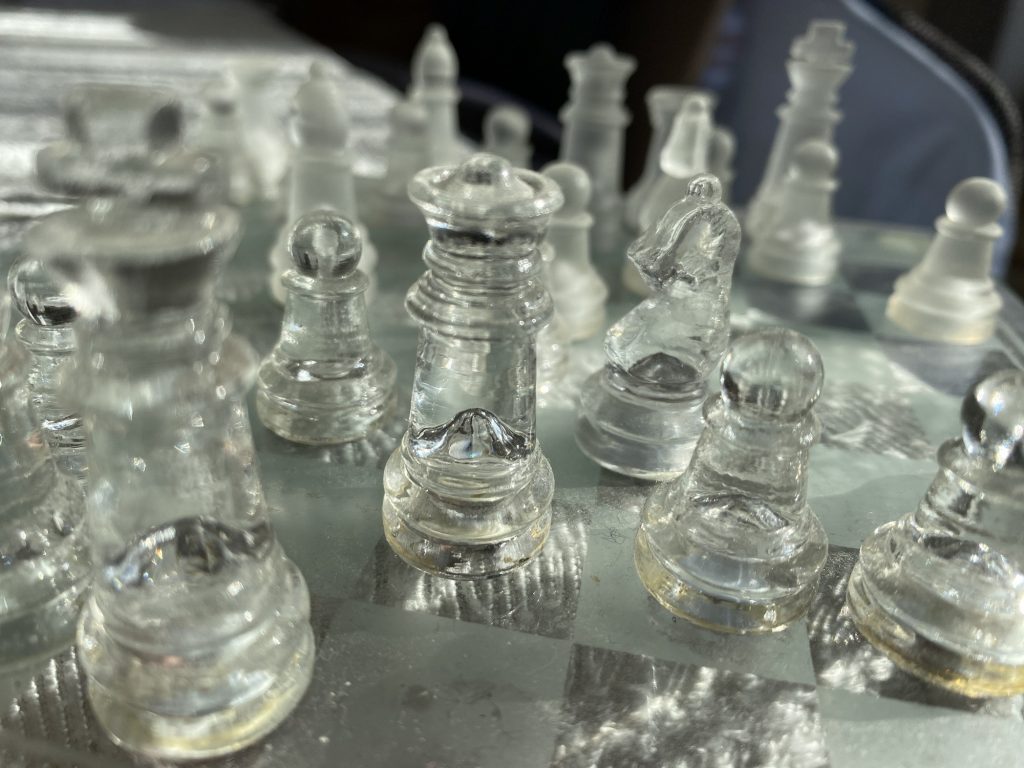
The game of chess has been subject of an ever increasing amount of literature. Not only historically the game, where two kings fight against each other, but the queens are the most powerful figures on the chessboard attracted a great deal of attention. We studied chess in books and watched live tournaments between the best players of the world. Most of this has successfully moved online and we have gotten used to losing against computers for almost all human beings some time ago. The internal federation of chess FIDE lists the top players male and female. The calendar of face to face events is still impressive. The federation operates somehow like a platform of players, as well as for players, to organize their lives as chess players. Anther kind of chess literature is the one that is constructed around the lives of chess players. Some characters get really absorbed into the mental or virtual world of the dialogue between 2 or more characters or players. The real world experience and the game on the board become intertwined or entangled. Losing or winning, to win or not to win, may unbalance whole personalities. Beyond the “Schachnovelle” von Stefan Zweig we have a new addition of fictional writing with autobiographical traits by Jean-Philippe Toussaint (2023) on our desks. « L’échiquier » is a story unfolding in 64 chapters just like the 8 x 8 spots on the chessboard. Of course, the story does not unfold in a linear fashion. It seems as if the players or opponents even change as the game unfolds. Maybe there are more than one game in action. Simultaneously as in some chess tournaments. Some games are blitz games taking just a few minutes, others go on beyond a lifetime. The experience of playing chess even against yourself has a psychological and sociological dimension. You can go round in circles for some or you are like “bowling alone” in the individualized society. About time to shed an additional light on the mystery of the chessboard. Self isolation with a chessboard was also a way of coping with the Covid pandemic. Some still suffer from long Covid and cures are not always easy to find.

L’échiquier, chessboard, Schachbrett

Only for Kids

We all have, hopefully, fond memories of children books. Sometimes authors are not so keen to tell that they are just writing books for children. This is often present in many biographies of authors of books for children. This is grossly unfair. Not only is the book market for children’s books one of the best- selling part of literature, but there are lots of interesting collaborations between authors and illustrators. Most books are expensive to produce, particularly if, additionally, translations are needed to reach more children and their parents. For small countries this might be a barrier. The Scandinavian countries have a tradition to translate and publish some selected children’s books in multiple Scandinavian languages and beyond. Therefore, it is no surprise to find a children’s book entitled “Kant” by Norwegian author Jon Fosse, illustrator Roj Friberg with the text translated into Swedish and published by the Danish Editor Carlsen, all in 1990.
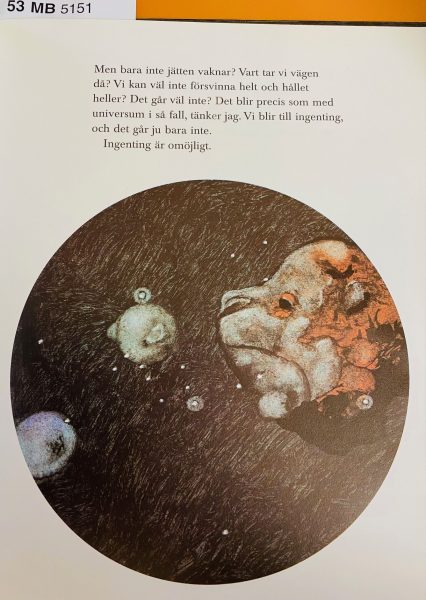
The illustrations allow to understand the “bilderbok med text av Jon Fosse” using an enlightening imaginative visual language. From the cover already It is clear we deal with the universe and endless open space. There are black holes in it as well. Jon Fosse deals with “möjliga och omöjliga”, possibilities and impossibilities. Tackling such philosophical questions with children needs the best authors to address these issues. How to speak of the unspeakable, things we have hardly any words for remains a challenge. Relating to the world of dreams, appealing to children and their parents, does the trick. After all, you just need to close your eyes and you start to travel the universe and make lots of exciting encounters. The book has no page numbers, interesting. The image below is from page 25, just as an appetizer.
For more insights of how to deal with “nothingness” I refer to Friedrich C. Heller (2020) “Towards nothingness. Ideen der Reduktion in zeitgenössischen Bilderbüchern” (in Benner et al. editors 2020). Susan Sontag (2005) „die Ästhetik der Stille” (in Eugen Blume 2005, editor) will also help us along on the subject of stillness and minimalism. Maybe it is these essentials we should talk more about especially with our kids.
To continue the exploration of space and stillness just go to the webpage of the hubble telescope or the James Webb Space Telescope. The journey of your dreams will be hard to stop.

Tears mastered

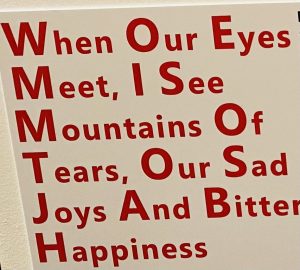
Not many authors find decent ways to write about sad moments and the mastering of tears. Can we master tears? Should we even try to? For authors the question poses itself of a different kind. How do I write about emotions in which a person bursts in tears or sheds a single tear. Even mastering tears or the delayed unmastered tears give rise to ample drama. Have you found a poet or author to whom you relate through the sorrows s/he expresses? Reading itself is a process of mastering tears due to the possibility to go through a wide spread of negative and positive emotions.
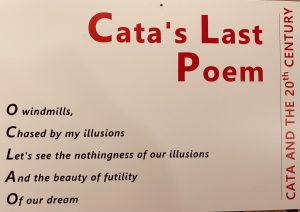
Towards the end of her life Cata Dujšin – Ribar wrote a poem that links to the imagery of the Norwegian poet Jon Fosse. Thanks to the exposition of her paintings and writing in the Zagreb City Museum Cata can become known to a wider audience. Hardly any traces in the internet of her writings in English make her even more of a local hero and an early female role model. The windmills are powered by the nothingness of our illusions.  The beauty of futility is revealed in our dream. She puts it so much better. The biography and work of Cata Dujšin – Ribar summarises to some extent the whole history and misery of the 20th century beyond the Balkan region in a few words.