Traveling with-in books

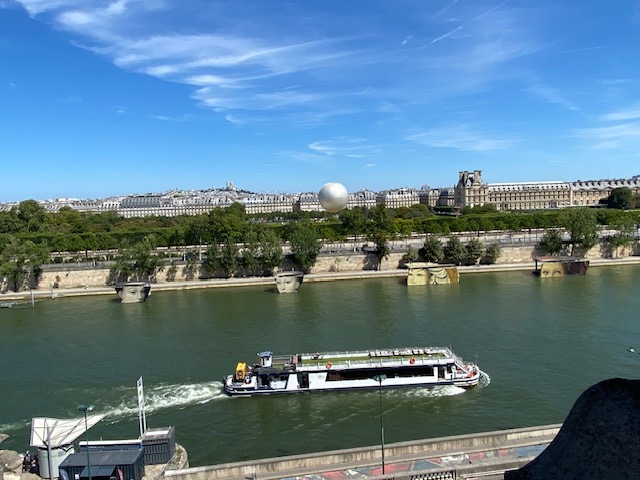
Of course we like to travel or move it. Why not Madagascar? Most people would start to prepare such a journey online for a starting point. On the Frankfurt book fair, the publisher MairDumont reported that very quickly after we zoomed in on a destination, we ask ourselves: what info to trust. For publishers and authors the issue a crucial one as to build a reputation as a trustworthy brand is longer term investment. Holding up trust and to communicate about it, are the next on the agenda. Books or ebooks have this image as most of them are edited in a careful way with cross-checks by several persons. The not-social-media complement rather than replace a trusted source. People navigate between these forms. Authors who have insight knowledge and evidence that links and information have been validated are necessary conditions for success. We still travel with advice from books. Probably even more of us “travel in books”, where the reading of a travel guide becomes a fantasy journey. Traveling with or in books has a great ecologically-minded future, too. 
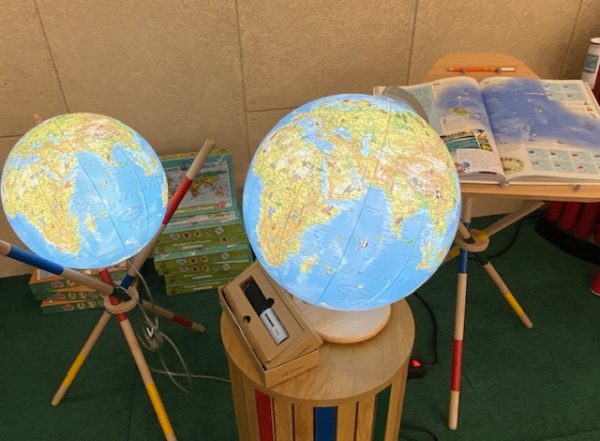
globe travel book imagination

Gone Home

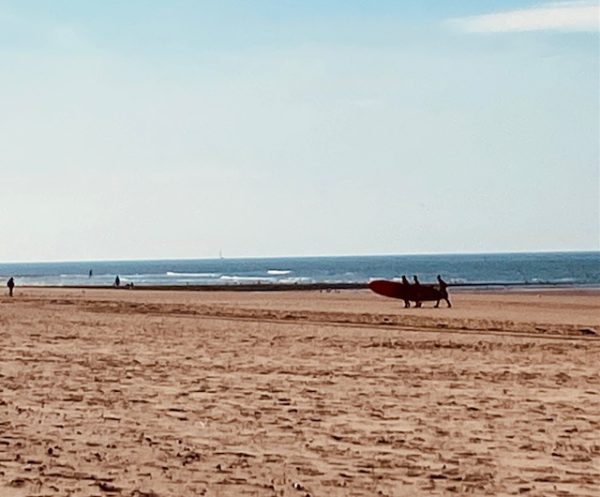
There are at least 2 perspectives on going home. For the person away from home, it could be understood in the sense of returning home. For the community still living at a place associated or idealised as home, it is often interpreted as a home coming. In view of the powerful global social trend of urbanization, many people associate with “going home” as if migrated persons from rural areas would return home to the countryside, maybe just for a short visit. However, a home is to be interpreted much larger than just being a place, a location or a regional idiosyncratic feature, like the sea, the river, the banks or mountains. You might go home to a familiar sounding dialect or language. For some it is the idea of freedom or liberal values which they have moved to, that became their home. For others it might just be the possibility to practice a rather unique sport, which determines where they would feel at home. Home could just be a “state of mind” rather than a location.

Ostend-SUP-paddle-board-on-beach-2026-9 e persons walking with board after practice

70s revival

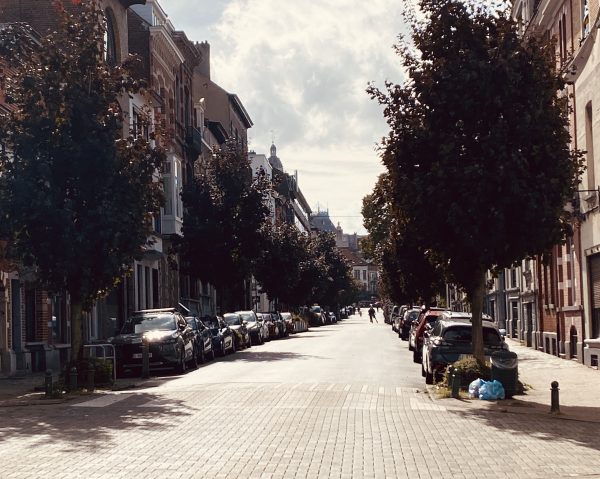
Brussels celebrates each year the “Car free Sunday” as final part of the mobility week. On 2026-9-20 this event coincides with the very high oil prices again. Just like in the oil crises of the 70s in 1973 and 1979 saving energy for mobility and transport is high on the political agenda in many countries. Just think of the benefits of such events. Less consumption will reduce “greed-flation” and upward pressure on prices. Pollution levels of fine particles and noise are drastically reduced. Children feel safe while riding their bicycles, scooters or skateboards. Parents are no longer on permanent alert due to the risk of accidents. For those who remember or lived during the 70s, they might have a “déjà vu” experience and enjoy a revival of the 70s. The roller skates are up for a revival as well. 

Brussels Car free day 2026-9-20

Activity and dementia

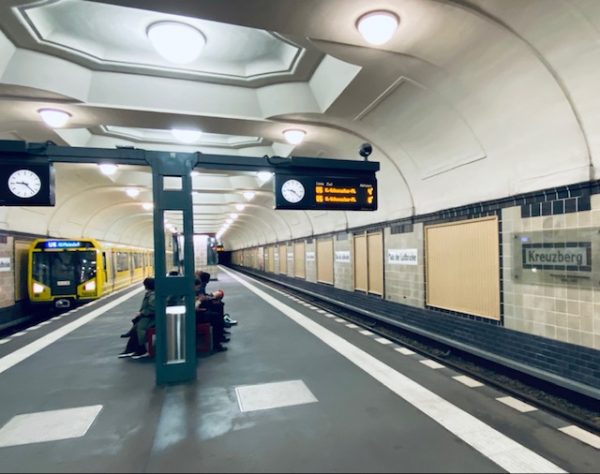
In view of the huge challenge of dementia to people and the public health systems, it is primordial to test potential remedies with high precision. So far general measures of just any physical activity like walking were considered beneficial. Recent and more comprehensive data on domain-specific physical activities by Feter et al. (2026) emphasize the importance to differentiate between walking for leisure or walking rather stressed to work. The former contributes to a delay of the onset of dementia, whereas the latter bears higher risks of dementia due to the “negative” stress involved. However, as Kivimäki and Hamer (2026) point out dementia itself has a long gestation period in which persons might reduce physical activities because a “silent” onset of dementia is not yet diagnosed but inhibits already more activities. Commuting to work or leisure might already be a challenge in early dementia particularly if public transport has to be organized independently. 

Commute in Berlin by underground U-Bahn

Road injuries

Road injuries are a serious matter. The lives lost and people suffering from lasting injuries continue to be a major health hazard on a global scale despite significant reductions over the last 3 decades, mainly in wealthier countries . The Global Burden of Disease study (Ng et al. 2026) shows that between the ages of 10-39 fatal road injuries are the main cause of death for young men. The study has no data to speak to causal effects, but the basic statistics show a clear pattern according to gender. Several factors need further exploration:
1. Men are known to have a much larger share of the total amount of road traffic in most countries, which leads to a higher risk exposure.
2. Men seem to take higher risks when driving, which puts them at higher overall risks as well.
3. Responsibilities for road incidents are not investigated, which leaves other causes or contributions to road injuries (like alcohol or drug abuse) unaccounted. (Source: Ng et al 2026. Global, regional, and national burden of road injuries 1990–2023, p.7)

Brussels relaxes

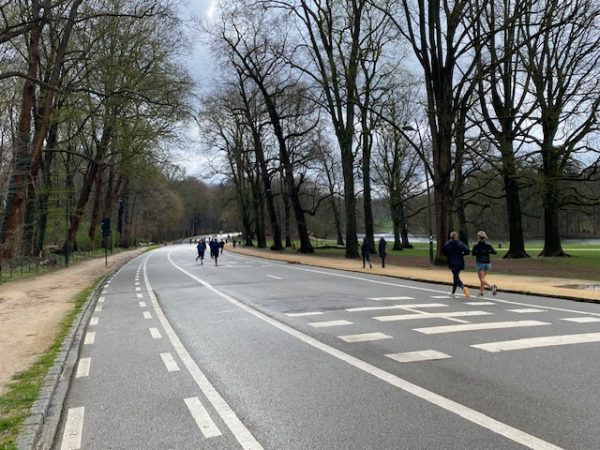
Especially during the weekends and the summer activities some roads can be blocked for other uses. The obese societies of the 21 century need to make room for more exercise wherever possible. Brussels has done so for more than 5 years already. The “Bois de la Cambre” offers an amazing space to all those seeking respite from the busy and warm urban surroundings (Image below). Children and families exercise all sorts of activities and sports. The closed roads are perfect for cycling and jogging as well as the learning of both. Levels of air pollution drop and the running sport is no health hazard as in inner cities. Each and everybody advances at her/his own rhythm (Video Weekend jogging in Bois de la Cambre on Road 2026) or just watches others passing by. Ways to relax in cities are manifold, in a matter of choice and commitment. Commit to relax and detox, at least on weekends. This can be quite a behavioral change with serious health benefits.

Berlin moves it

Yes, we like to move it. Investment in infrastructure follows a long-term economic rationale. In urban areas space is a scarce and, therefore, an expensive resource. In order to use the current space for mobility more efficiently, the use of a longer tram or train is an effective way to increase capacities. Rather than to increase the frequency, which is no longer possible without safety risks, a longer vehicle allows to bring more, and more diverse, passengers on board (kinderwagen and wheelchairs included).
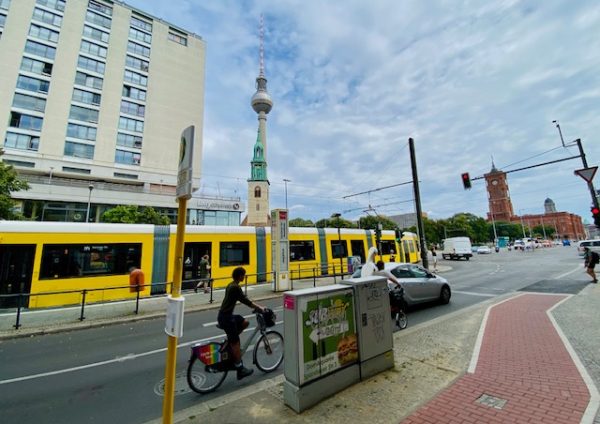
It is a long-term objective to make urban areas liveable for all ages. Tramways which allow a low or, better, no barrier to entry is a necessary condition in this respect. The new “Urbanliner” in Berlin (image below) offers such essentials of access and urban mobility. A single tram is 50m long with 88 seats and 215 standing persons in larger corridors. 300 tram passengers can be compared to about 12 average length cars with at best 15-20 passengers.
A consensus of “how best to move it” in cities pays off in the long-term. Planning has to start about a decade before delivery and needs to survive political cycles going back and forth.

Berlin Futures

The city of Berlin is projecting itself into the future. Two long-term goals, Olympic Games 2036 or an Expo organization 2035, are potentially looming and all actors have to project themselves as to what role they want to play in such processes. Trades and industries have an essential role to play to realize any vision of the future, at the same time, local trades and industries ask for amenable conditions to do business in the necessarily restricted city space.
There is competition between housing projects and business parks across each metropolitan area as any form of growth needs space to grow in. The “1. Berlin Future Day of business parks” highlighted this potential source of conflict and business leaders exchanged their experiences and strategies how to arrive at manageable comprises.
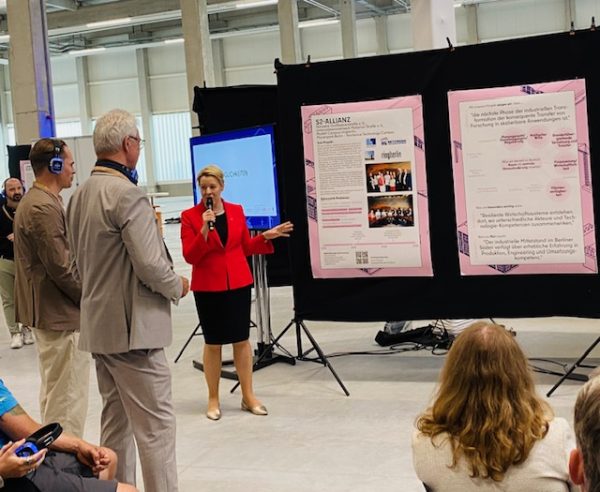
There are several Win-Win constellations in which for example an additional stop on a metropolitan “S-Bahn” line benefits the business area and all those (future) employees going to and back from work. Infrastructure like transport, mobility, energy, internet speed and security, all play key roles in such visions of future. If networks of organizations address policy makers with well-defined requirements, politicians can act as facilitators to ease sometimes lengthy bureaucratic impediments. The call for public infrastructure investments by private business initiatives is a reminder of the need for public-private partnerships to create promising Berlin Futures. (Image: 1. Future Day of Business areas in Berlin, Senator Franziska Giffey 2026-7-15)

Electric ships

The transformation of mobility to an all electric mobility has been discussed mainly with regard to a narrow vision of the automotive sector. Beyond land based vehicles like lorries, buses, cars and bicycles or electrification of trains, shipping has been a niche market of the all electric society. The amateurs of silent shipping, sailing and surfing have explored and adopted the electric alternatives for quite some time. The professional ferry boats and river crossings have also opportunities to join the all electric society with a range of ships available for orders like from “Ampereship”. The increasing share of electric fun on water and electricity-propelled ships gives additional drive to the “All-electric-society”. 

Dual Task Processing

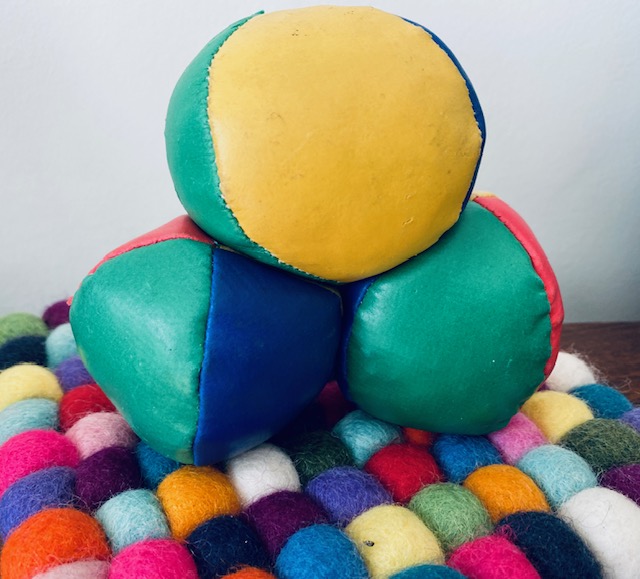
Extensive research into dual task performance shows that training of 2 tasks simultaneously can indeed enhance performance. New research by Schubert et al. (2025) indicates that there latent and persistent bottlenecks to the brain’s processing of such dual tasks, let alone multi-tasking. Out of own anecdotal exercise with “object tracking and touch” (gaming on tablet) a learning effect arises. However, it is unclear, whether this exercise translates to normal traffic situations in inner city situations for pedestrians or cyclists. The experiment of a dual task, combining a visual-manual and an auditory-verbal task, indicates also training effects, but the brain appears to return to sequential processing rather than simultaneous processing as much as it can. Such a dual task test may consist in juggling while singing a song or even leading a conversation with somebody. Quite a challenge or exhausting mental training even for those with a history of juggling objects.