Metabolic harm

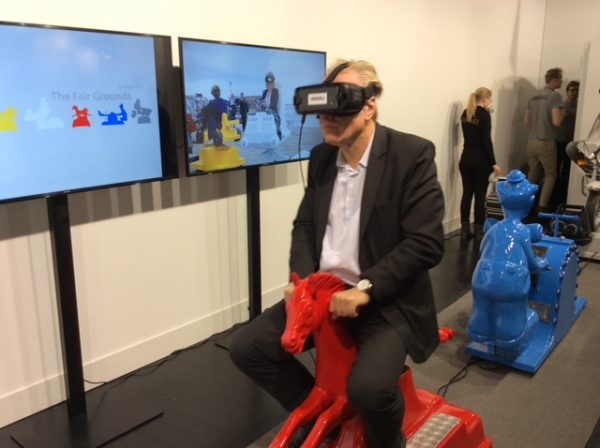
At the beginning of the 21st century the lack of physical activity for large parts of society has become a major risk of and cause of metabolic harm. We have become used to a sedentary lifestyle and the digital access to distractions and information have encouraged further immobility. Alex Broom et al. (2025) stress the importance to include social and governmental interventions into the many existing medical, pharmacological and technological interventions. The authors advocate a rather holistic approach to really make a difference. The obesity trends cause metabolic harm of an  unprecedented size. We have to rethink mobility patterns and other behavioral changes into our daily routines to bring back more stimulation to our metabolic system.

Utopian Mobility

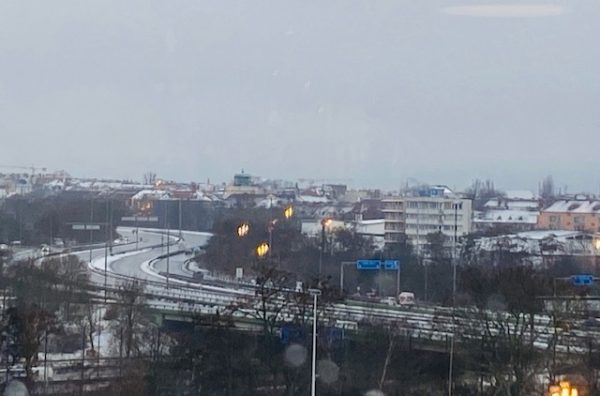
From time to time we have to reconsider our investments in mobility infrastructure. What seemed to make sense in the 50s,60s or 70s often makes no sense 60 years later. Highways, which separate city districts like walls belong to rather utopian visions about City life and mobility, progress and living conditions. These utopian individualized mobility solutions don’t seem to serve us as well as we believed, or were made to believe, more than half a century ago. Empty highways midday at the turn of 2025/26 tell their own story about liabilities from the past and outdated ideas of technical and social progress. Sharing solutions have become very popular and the younger generations adopt already different mobility patterns than older generations. Each generation adheres to its own more or less utopian mobility model, adjustments are likely to be made accordingly. 

Telework Challenge

There is a seminal trend that many employees prefer to have a choice to work on the premises of the employer or remote from home. This flexibility has become a major element of collective bargaining on work and time in larger companies in order to clarify rights and obligations.
In France it is about 1 in 5 of employees who do telework one day per month (1 in 6 in Nouvelle Aquitaine). The higher up in the hierarchy a person is, the more likely s/he is to do telework. Higher levels of educational attainment and seniority in a company also improve the access to and use of telework. There are still many employees who would like to do telework in their jobs, which technically could be done remotely, but who cannot do it (1 in 3). Most of those are denied the possibility by their employers.
Data from a survey in Germany from 2014 showed that before Covid-19 men were worked more often remotely than did women (Lott & Abendroth, 2019). The latest figures from France 2024 show that women have overtaken men as remote workers (Askenazy et al. 2025). As working from home has become more a part of the “standard employment relationship” today, the fears of loosing out on career opportunities due working from home seems to play less of a role nowadays, probably for both gender. Compared to 2014 the costs of equipment and availability and ease of installation of fast internet have become more affordable and might push the spread of telework even further.
The data from France show a strong positive correlation of remote work and commuting distance to work. Hence, long commuting distances “drive” more people into telework, which makes a lot of ecological sense, too.

Popular Sociology

Sociology, like other social science disciplines, has often difficulties in reaching bigger audiences. However, in combination with a museum which specializes in the history of a big city like Paris, the insights can suddenly become very popular. The “Musée Carnavalet of the history of Paris” has mounted an exhibition, which builds on the population censuses of 1926,1931 and 1936. The access to the complete original records of 3x about 2 millions of people has become a national treasure for social scientists and the public at large.
People flock to the exhibition. Some do it to learn about the past of their districts or streets. Others to learn about historical facts, which are sometimes linked to the family anecdotes and broader historical narratives. Out of this interest grows an understanding of macro- and micro-level social processes, which makes use of basic statistics.
People ask themselves: Is your (family) story unique or is it part of a more general pattern or social process like urbanization or social mobility.
(Image: original census recording sheet – Paris)

Better infrastructure

It doesn’t need much explanation to advocate better infrastructure. Even if we rarely agree on what constitutes better infrastructure, the lack of infrastructure is felt quickly. Almost everything we use on a daily basis like water, food or transportation rely on large scale infrastructure to facilitate individual uses. Companies settle where they spot good locations, most of them are related to infrastructure as well. The basics about infrastructure is the public versus private provision of such infrastructure and related services. Even a country’s defense hinges on good infrastructure to be able to respond quickly at the place where the defense is most needed. Telecommunication and satellites have been recent innovations in the field of infrastructure. Security and cybersecurity in particular are a critical component of infrastructure. The topic is huge. The means to address these issues are likewise of daunting scale. Therefore, it is all the more important to address these challenges.

Global warming

The annual update of the global warming indicators (source: Earth system science data 2025-6) gives more reasons to worry about the future of our climate. The objective to limit global warming to +1.5°C, established at the Paris climate agreement in 2015, is no longer achievable. This is the hard evidence based on the global network of scientific data collections and their projections. Fossil fuels are a major cause, deforestation and greenhouse gas emissions as well (Forster et al. 2025). As a consequence, human-induced warming of average surface temperatures and flows of heat into oceans continue. The first consequences, we witness in many parts of the world already. France is particularly affected (Le Monde 2025-6-20, p.7). What used to be called “natural disasters” is better described as long-term consequences of human-induced global changes like global warming. About time to take our CO2 footprint even more seriously. The “All electric society” can reduce reliance on fossil fuels considerably, as of now.

Paris Gare

Train stations in metropolitan inner cities are hot spots of traffic and mobility. The number of people passing through these exchanges are impressive. Public transport systems are continuously put to the test of their capacity to handle passengers who want to get from A to B the fastest way possible. In Paris the RER lines, metro and buses to a great job in handling the affluence of passengers. The comparatively small number of passengers arriving and departing nyy taxi, however, still take a disproportionate amount of space. That’s part of the differentiation or inequality of mobility in Paris. Person‘s in need of assistance should have special access to central points of mobility like train stations. Everybody else could rely on shared modes of transportation otherwise the millions of inhabitants will not be able to get around in a comfortable way.


Retirement Recruitment

The debate that later retirement of seniors reduces the hiring of youth has received new attention. Paul Mohnen published a paper on the “retirement slowdown on the US youth labor market” , which demonstrates this “crowding out effect”. Moreover, the recruitment of middle aged workers is also affected, as job changes slowed down for these age groups. The surprising finding is that higher skilled youth suffers the largest reduction in employment opportunities and become “pulled” into lower skilled jobs as jo offers for lower skilled persons remained high during the observation periods (until 2017!). This evidence suggests that the well-documented firm-level effect of fewer retirement means less recruitment holds also for society as a whole. Knowing that recruitment during a recession affects young workers more than persons already in employment, the macro level effects in 2025 will be rather unfavorable for young labor market entrants. (Image Frans Hals 1625, Odessa Museum in Berlin exhibition 2025).

Non-autonomous driving

The more engineers will invest in developing autonomous driving vehicles, the more the value of the few completely non-autonomous cars will rise. A 60 years old car with manual gear changing on the steering wheel like the Peugeot 404 from 1965 (image below) demands a strong effort to steer the car around a city. Apparently, some car producers reintroduce buttons to press or switch on devices since customers seem to prefer some manual activity in addition to the touchscreen technology. Voice guidance and gestures can be helpful for some, but there are also the advantages of manual activities that keep you awake and maybe with better focus. Choice is key to suit diverse user and customer preferences.

United by travel

The economic rationale of profit maximization privileges the construction and management of profitable connections. For train transportation this has spurred over decades the construction of new train lines between metropolitan cities or regions. Whereas connections between Paris and Brussels are abundant and expensive from central stations those living somewhere in between the 2 cities, for example in Mons, have had little chance of access to reasonably priced and fast train connections. This neglect of the in between cities is slowly changing. Sufficiently fast and reasonably priced connections allow Europe to grow together also at the margins. Public transport as alternative to car traffic across borders for „in-between cities“ will bridge the gap between the ease of travel between metropolitan an more remote areas. There is economic growth to be reaped as connected infrastructures allow for economic as well as social mobility and joint development. This is the real European challenge ahead of us and not the numerous summits without tangible results for rural and urban populations beyond metropolitan regions. For regions spanning countries, some will be finally reunited by better public transport a kind of ecological unification.