
Time and Emotions

In psychology, time and emotions are a matter of milli- or even nanoseconds. Showing emotions, intrinsic ones or controlled ones is passing rapidly through our brain and, for example, facial muscles. Hence, time plays a role in how we react emotionally to an image or any event. The author Rüdiger Safranski starts his history of the concept of time with the emotional experience that time appears lengthy or tedious. In his view the emotional understanding of the concept of time is key to a better grasp of the philosophical roots of the concept of time. Starting with Greek philosophers, the Stoic tradition, Augustinus, the history of ideas is full of reflections on time, what it does to us, and how we best deal with the effects time has on us. In famous literature from Marcel Proust or Samuel Becket, we were reminded of the creative power of lengthy periods of time and the importance or futility to ask fundamental questions about time and our destiny. Beyond the rational thinking about time, the emotional experience of time makes up much of the spice of life. 
Social time

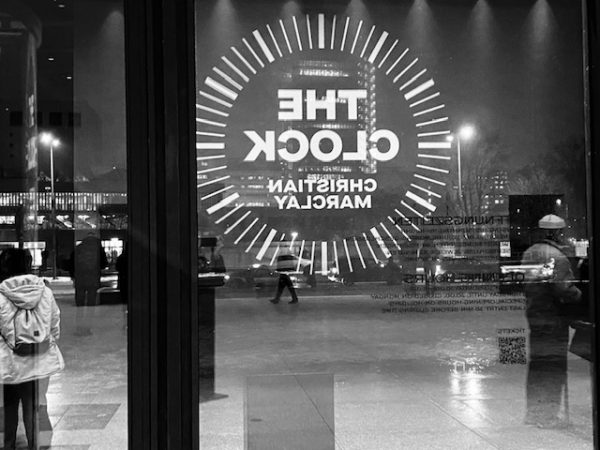
What does the „social“ have to do with time. Well, time is a perfect case of a social construction or a fundamentally social construct. The definition of time as „Greenwich mean time“ is nothing but a useful socio-political statement to synchronize time across the world, or previously an imperium. Points in time, as shown on a clock(s), can be helpful to synchronize human behavior. We might want to show up on the same point in time to start or end work. Of course there are thousands of ways in which such synchronization might go awfully wrong. This makes for splendid drama and movies have a long history to capture our attention on this matter. Social expectations, a social, psychological, and even a biological concept in extreme cases (Pavlov effect) make many of us to get a bit itchy, if time is getting short to meet other persons or an expected event is going to happen. A lot of social pressure is transmitted through the ticking away of time. The mechanism to internalize social patterns (for example prayer), via time and the clock, is quite powerful and has been used in movies throughout the history of the cinema. Even the individual endpoint in time is in almost all cases a shared social experience and turns into a kind of socially relevant time. (Take your time to watch The Clock by Christian Marclay).

Reverse causality

Reverse causality is a beast, which empirically minded scientist fear almost like death. However, many processes we study are running not only in one direction. In most cases, causality is tested with, or assuming, a unidirectional model of causality in mind. But some processes have not only a set of multiple causes to take into consideration, but some processes might be reversible or run in a rather complex manner, which are difficult to quantify. Mind captioning is a technique in neuroscience, where easy language is used to describe an image perceived in a person’s mind. Such thinking aloud data is based on thousands of brain scans, where people watched videos or images (study link).
In my own journey into the working of my mind I play around with different directions of causality. Sometimes the text is the origin and the image follows in a selection of a telling illustrations, but occasionally the reverse causality is at work. The image is the starting point and gets the mental process going. It is a rather complex process which is not easy to approximate with the help of algorithmic thinking. Reverse causality has many surprises to offer. As scientists we have a hard time to come to grips with it. (Inspiration Link) 

Foul-smelling dictatorship

The animal world is full of interesting strategies of how to turn over a foul-smelling ruler or dictatorship. The ant queen of “lasius orientalis” infiltrates a colony of “lavius flavus” to spray the incumbent queen with a foul-smelling substance which turns the worker ants against their own queen and eventually kills the queen. This is a rather intelligent strategy to trick the defense system of rival colonies and prepare a takeover of a whole colony to install your own reign.
This may constitute a stark warning for democracies just as much as a threat to persistent dictatorships. In the age of the not so social media there is a lot of foul-smells produced. Beware of the risks to democracy as open societies are much easier to infiltrate than closed societies or dictatorships. (Link)

Memory design

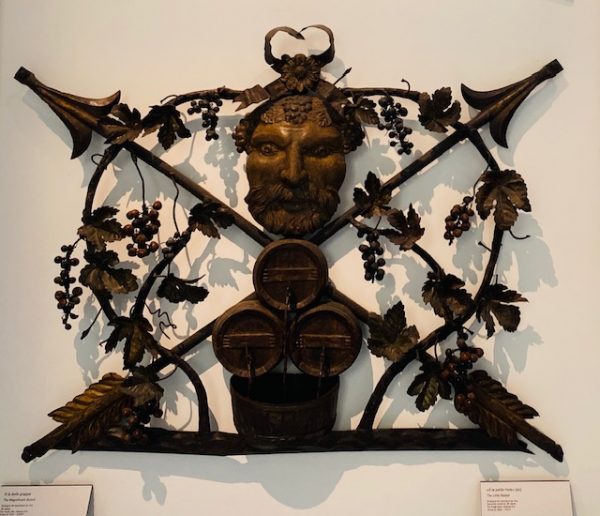
The progress in the field of genetic editing and design is astonishing. The research group of Johannes Graeff tested the “behavioral consequences of epigenetically editing the Arc promoter within engram cells”. Plasticity is a key feature of memory formation and the experimental evidence shows that this plasticity can also be interrupted. Moreover, the scientists were able to demonstrate a reversibility of retention or un unlearning of manifestations in memory of mice. The bidirectional reversibility of memory expression has potentially therapeutic value for traumatized humans eventually. However, if memory becomes part of a design feature of human species, the risks involved are just as important as the potentials. In totalitarian political systems techniques of “memory design” might be able to adapt such influences on memory, which used to be called brainwashing. Ethics commissions could get ready already to define safeguarding of human memory.  (Image: The fountain of Bacchus, Museum of Paris, 18th century wine merchant entry)


Racine Andromaque

The representation of Jean Racine’s “Andromaque” in Brussels at the Theâtre des Martyrs in 2025 has been an interesting choice, because the revival of a 17th century tragedy dealing with the intricacies of the Greek and Trojan war (mostly remembered for the Trojan horse). Jean Racine turned French theatre back to tragedies with his Andromaque (Résumé and analysis in French!), rather than the comedies or tragi-comedies of previous great authors like Molière.
The literary analysis of Andromaque by Roland Barthes (“Sur Racine”, 1963) identified 3 separate locations: chamber, anti-chamber and exteriors. The real power seems to live in the chamber as the place of respect, but also terror. (Compare also Mithridate). The anti-chamber is the place of diplomacy and the place of exchange of ideas, information and strategies. The exterior world is mostly closed off through walls or balconies as views from above. For Barthes this “symbolizes” even the prison inside or the pure heroic life inside the walls.
Besides this 21th century interpretation of 17th century theatre, Racine is remembered for his tragic love stories where A loves B, but B loves C and, maybe C falls in love with A. (Compare Robert Horville, 1991) The Condorcet paradox (Science of it) described only formally in the 18th century enlightenment, many decades later, had proven mathematically that such combinations of personal preferences are impossible to resolve. Hence, these confusions are great stuff for tragedies to evolve live on stage.  


Digital Social Networks

Social networks have become the place to be. The need to distinguish the digital social networks from the social networks of people in the analog or “real” world is important, as we realize that many young persons seem to suffer from loneliness despite a hundred personal links in the digital social networks. This paradox of digital and non-digital social networks needs careful attention of researchers because of the opportunities and risks involved in the transferability of contacts from one network to another.
There is s a kind of “conversion rate” of digital contacts into face-to-face contacts and even purchases for marketing purposes in the world of business. The sociology of the virtual has to deal with these paradoxical social relationships and study the increasing phenomenon of being «alone together». Increasingly we are alone, but together. Over the life course this phenomenon and the digital social network paradox change as well.
To research such a topic we need rather intrusive, personal data and access to the digital traces of people as they construct and deconstruct either form of social networks. 

Age of maturity

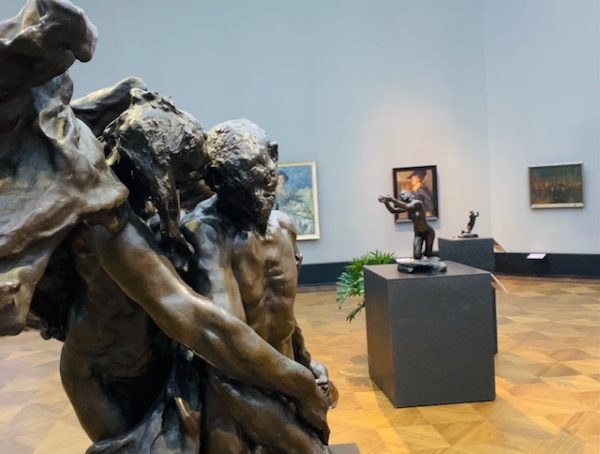
The bronze statue by Camille Claudel „L‘âge mûr“ is her most famous works. It is part of the exhibition Claudel & Hoetger in the “Alte Nationalgalerie“ in Berlin. Usually the statue is part of the permanent exhibition in the „Musée d‘Orsay“. With the depiction of different stages of the life course and somehow revealing the emotional trajectories of the persons the scene of human joy and tragedy becomes tangible beyond her personal fate. The scenario and arrangement in the Alte Nationalgalerie allows to focus on this particular work with an emphasis on the trajectory and the evolutionary path. A unique arrangement does better justice to the particular message of the artist than being surrounded by too many other works of art. (Image: extract of Camille Claudel‘s „L‘âge mûr“ in showroom Alte Nationalgalerie, 2025-8)

Photographe engagée

Marie-Laure de Decker is featured in the “Musée européenne de la photographie” (MEP) as a photographer committed to capture truth in situations of conflict. She started her career with documentary photos from the Vietnam war. Rather than searching for spectacular scenes, she succeeded in her attempt to capture the more emotional and, therefore, relatable moments for her various audiences. With a firm commitment to the human in her work, the photos by Marie-Laure de Decker reach a level of extraordinary sensitivity to what it means to stay human in violent situations and even military conflict. The portraits of politicians, workers, professions and famous actors applied the same approach. Rather than days or weeks Marie-Laure de Decker spent months or years in the regions of her documentary photo series ranging from Vietnam, South Africa throughout the apartheid regime, Pinochet years of dictatorship in Chile, the 2 parts of Yemen to a prolonged stay in Chad.

The exhibition in the MEP in Paris curated by Victoria Aresheva  raises awareness to the additional fact that photo journalism became an affordable profession only after specialized agencies were created that granted authorship rights to photographers, which ensured later use of their work in edited volumes as well as working for several newspapers or magazines. (Image: Marie-Laure de Decker, self-portraits, MEP Paris exhibits 2025-8). 

Emotional history

The making of emotional memories of a city is an art in itself. Many cities have professional photographers who accompany all major events in a city over years. Paris has had the chance that artist photographers and film makers have contributed greatly to the emotional history of the city. Agnès Varda was such a formidable person whose images and movies moved people and allowed to share emotions about the city’s busy and diverse neighborhoods. The « Musée Histoire de Paris Carnavalet » combines an autobiographic perspective with the emotional depiction of live in Paris from the 1950s onwards into the late 20th century. (Image: Agnès Varda, 1950 self-portrait, MEP Paris).