It has become a common starting point to use electronic devices and online encyclopedias to search for definitions. Let us just do this for artificial intelligence. The open platform of Wikipedia returns on the query of “artificial intelligence” the following statement as a definition: “AI … is intelligence exhibited by machines, particularly computer systems …“. It is not like human intelligence, but tries to emulate it or even tries to improve on it. Part of any definition is also the range of applications of it in a broad range of scientific fields, economic sectors or public and private spheres of life. This shows the enormous scope of applications that keeps rapidly growing with the ease of access to software and applications of AI.
How does AI define itself? How is AI defined by AI? Putting the question to ChatGPT 3.5 in April 2024 I got the following fast return.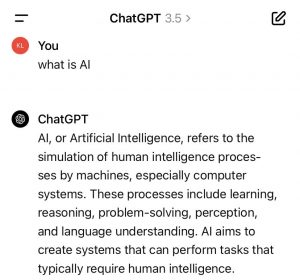 (See image). ChatGPT provides a more careful definition as the “crowd” or networked intelligence of Wikipedia. AI only “refers to the simulation” of HI processes by machines”. Examples of such HI processes include the solving of problems and understanding of language. In doing this AI creates systems and performs tasks that usually or until now required HI. There seems to be a technological openness embedded in the definition of AI by AI that is not bound to legal restrictions of its use. The learning systems approach might or might not allow to respect the restrictions set to the systems by HI. Or, do such systems also learn how to circumvent the restrictions set by HI systems to limit AI systems? For the time being we test the boundaries of such systems in multiple fields of application from autonomous driving systems, video surveillance, marketing tools or public services. Potentials as well as risks will be defined in more detail in this process of technological development. Society has to accompany this process with high priority since fundamental human rights are at issue. Potentials for assistance of humans are equally large. The balance will be crucial.
Mehr vom Meer
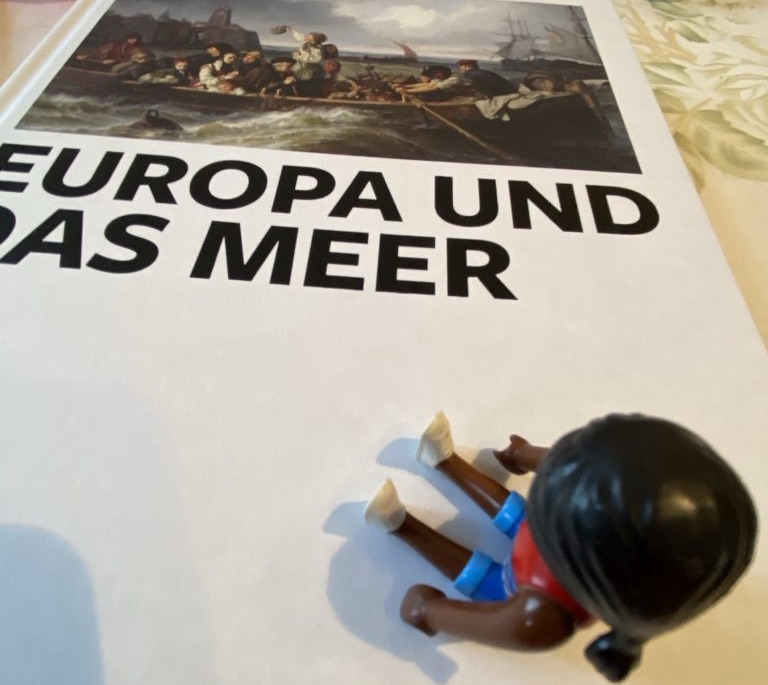
Wir sollten uns mehr um das Meer kümmern. Länder ohne Küsten finden meistens wenig Gründe, warum sie sich um das Meer bemühen sollten. Es ist doch so weit weg. Weit gefehlt. Erderwärmung erhöht die Meerestemperaturen und das wiederum beeinflusst massgeblich die Regenfälle im Inneren der Kontinente. Wir sitzen buchstäblich alle zusammen in einem Boot. Historisch betrachtet war das Meer mindestens seit der Antike Teil des machtpolitischen Kalküls der Beherrschung der Welt und der sie Bewohnenden. Wirtschaftliche Interessen waren ebenfalls Bestandteil der Erkundung und Eroberung des Meeresraums. Die Hansestädte in Europa bieten dazu noch heute gute Beispiele. Nach dem Sklavenhandel sind heute die Überseekabel und Rohstoffe des Meeres die begehrten Schätze des Meeres. Der Artenreichtum der Tiefsee wird erst seit kurzer Zeit intensiver erforscht. Externalisieren von Kosten des Umweltschutzes zu Lasten unserer Meere hat noch wenig Berücksichtigung in Wirtschaft und Gesellschaft gefunden. Tourismus- und Migrationsströme zum Meer, auf dem Meer und über das Meer stellen uns vor große Herausforderungen. Wir werden sicherlich mehr über das Meer reden müssen, und das ist keine Mär. Image aus „Europa und das Meer“ (DHM).
Sandbox Games
Children from a very early age onwards play strategic games. Even in the sandbox we can learn from surprising talents of how to get the shovel from the other player(s). Having grown up a bit the repertoire of strategies becomes a bit more sophisticated, but most children tend to apply the same ones now and then. For example, to obtain one of the always scarce places on the swing or the balance, you may reach your goal in attracting the occupant(s) to a supposed even more exciting object on the playground or outside of it. Once the occupants leave the swing to join you somewhere else, you rush back to the swing and hope that the other child(ren)/parents are not more powerful to take back the swing. Strategies on the playground are abundant. Most children run, or get run, through the full set of tricky strategies during their youth. If you still want to learn more, study economics (typical economist’s joke). Alternatively, if you like strategies claiming that other children are not following the rules or want to know how best to fix the rules so you’re going to win anyway, study law (lawyer’s jokes). If you believe fairness is your real best argument study sociology, philosophy or theology. Make sure most other people in the playground have a similar set of strategies otherwise fists and tears will be gaining the upper hand. 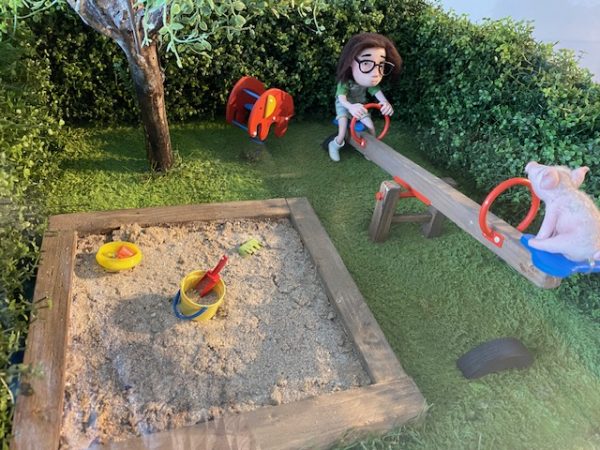
AI Sorting
Algorithms do the work behind AI systems. Therefore a basic understanding of how algorithms work is helpful to gauge the potential, risks and performance of such systems. The speed of computers determines the for example the amount of data you can sort at a reasonable time. Efficiency of the algorithm is an other factor. Here we go, we are already a bit absorbed into the the sorting as purely intellectual exercise. The website of Darryl Nester shows a playful programming exercise to sort numbers from 1 to 15 in a fast way (Link to play sorting). If you watch the sorting as it runs you realize that programs are much faster than us in such simple numeric tasks. Now think of applying this sorting routine or algorithm to a process of social sorting. The machine will sort social desirability scores of people’s behavior in the same simple fashion even for thousands of people. Whether proposed AI systems in human interaction or of human resource departments make use of such sorting algorithms we do not know. Sorting applicants is a computational task, but the data input of personal characteristics is derived from another more or less reliable source. Hence, the use of existing and newly available databases will create or eliminate bias. Watching sorting algorithms perform is an important learning experience to be able to critically assess what is likely to happen behind the curtains of AI.
Sleeping BPS-SPB
Sleeping is a good example of the co-determination of the biological, psychological and societal spheres of life. The environment with the daily cycles of light and dark as well as the social norms of work and rest determine the circadian cycles of hormones. Shift work or otherwise disrupted sleep patterns depend on social norms like regulation of noise or light in cities. Healthy sleep patterns, therefore, depend to a large amount on regulation and implementation of those social norms. Birthday parties are tolerated, but much less the irregular partying in shared housing with lots of neighbours. Reducing social contacts during Covid-19 led to the changes in sleep patterns as well.
The psychological determinants of sleep go well beyond the world of dreams as theorized by Freud. Nowadays, we investigate all sorts of behavioural patterns that have an impact on sleeping like “bedtime technology use” of smartphones or the ability to switch off thinking of problems. Sleeping is a particular functional state of our mind. A lot of sorting of daily impressions into memory occurs during the different phases while sleeping. Persistent disrupted or impeded sleep is recognized as torture in severe cases. Stress at work or working overtime is also a major cause of sleep disorders.
The biological indicators used to investigate sleep have revealed a lot of links of sleep and the hormones of melatonin as well as cortisol. Testing has become more accessible and provides good indicators of how the biological clocks tick within our bodies.
However, we are only at the beginning of the analysis of more complex interactions of the multiple forms of interaction of the bio->psycho->social (BPS) as well as the social->psycho->bio (SPB) co-determination of sleeping. Scientific research is faced with a steep challenge as the direction of causality is not uniform except in very controlled experimental settings. Maybe the arts have coined and popularized a useful term in this respect. “I am in a New York state of mind”.
(Image: extrait of Magritte. La clairvoyance, 1936 and The cultural context of aging, Jay Sokolovsky) 
AI and S/he
There was hope that artificial intelligence (AI) would be a better version of us. Well, so far that seems to have failed. Let us take gender bias as a pervasive feature even in modern societies, let alone the societies in medieval or industrial age. AI tends to uphold gender biases and might even reinforce them. Why? A recent paper by Kotek, Dockum, Sun (2023) explains the sources for this bias in straightforward terms. AI is based on Large Language Models. These LLMs are trained using big detailed data sets. Through the training on true observed data like detailed data on occupation by gender as observed in the U.S. in 2023, the models tend to have a status quo bias.
This means they abstract from a dynamic evolution of occupations and the potential evolution of gender stereotypes over years. Even deriving growing or decreasing trends of gender dominance in a specific occupation the models have little ground for reasonable or adequate assessment of these trends. Just like thousands of social scientists before them. Projections into the future or assuming a legal obligation of equal representation of gender might still not be in line with human perception of such trends.
Representing women in equal shares among soldiers, 50% of men as secretaries in offices appears rather utopian in 2024, but any share in-between is probably arbitrary and differs widely between countries. Even bigger data sets may account for this in some future day. For the time being these models based on “true” data sets will have a bias towards the status quo, however unsatisfactory this might be.
Now let us just develop on this research finding. Gender bias is only one source of bias among many other forms of bias or discriminatory practices. Ethnicity, age or various abilities complicate the underlying “ground truth” (term used in paper) represented in occupation data sets. The authors identify 4 major shortcoming concerning gender bias in AI based on LLMs: (1) The pronouns s/he were picked even more often than in Bureau of Labor Statistics occupational gender representations; (2) female stereotypes were more amplified than male ones; (3) ambiguity of gender attribution was not flagged as an issue; (4) when found out to be inaccurate LLMs returned “authoritative” responses, which were “often inaccurate”.
These findings have the merit to provide a testing framework for gender bias of AI. Many other biases or potential biases have to be investigated in a similarly rigorous fashion before AI will give us an authoritarian answer, no I am free of any bias in responding to your request. Full stop. 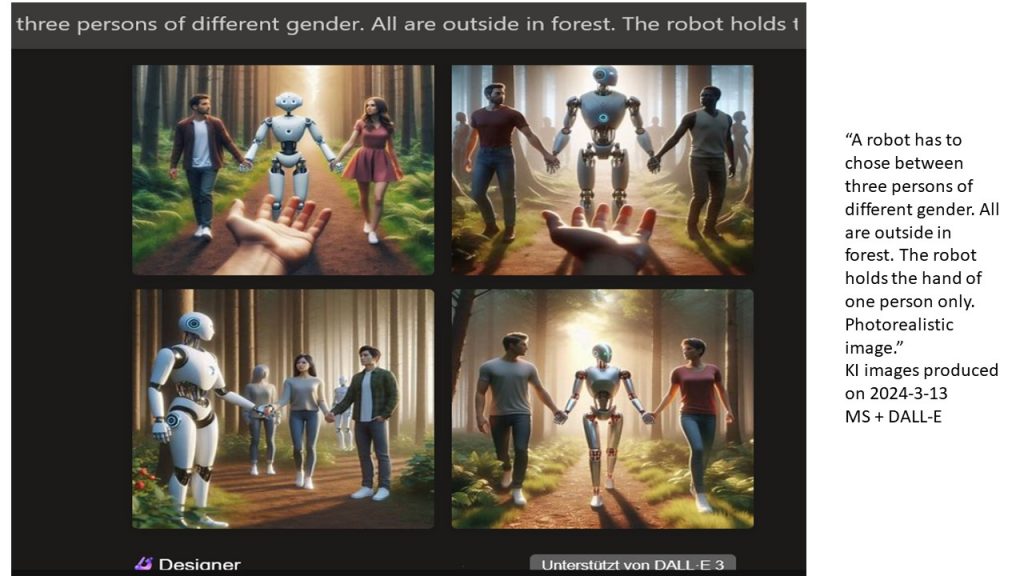
Error 444
The error message 444 is a not so rare encounter while surfing on the web. The error code 444 stands for the message that from the side of the server the connection is closed without any additional message. The occurrence leaves you without further indication of what exactly went wrong in building a connection to a web service or website. You just simply get shut out and that’s it. It may be tough on you if concerns your online banking or other access to vital services delivered through the internet.
In organization science and social science there are many new studies dealing with the finding, dealing, coping or handling errors. It has become much more acceptable to deal openly with errors, blunders or failures. From an individual as well as organizational perspective the cultures that deal openly with these events seem to have a certain advantage to overcome the consequences of errors at all or faster than others.
In some biographies failures are part of the lessons learned throughout life. It is deemed important to acknowledge failures or paths not taken for better or worse. Organizations just like individuals seem to learn more intensively from their failures or omissions than from everything seemingly running smoothly. Learning curves are faster also for “machine learning” if you have access to a huge data set which contains ample data on failures rather than encountering failures after release. Hence, the compilation of errors is an important part or early stage of a learning process. Failed today? Fail again tomorrow. You’ll be really strong the days after although it might hurt. 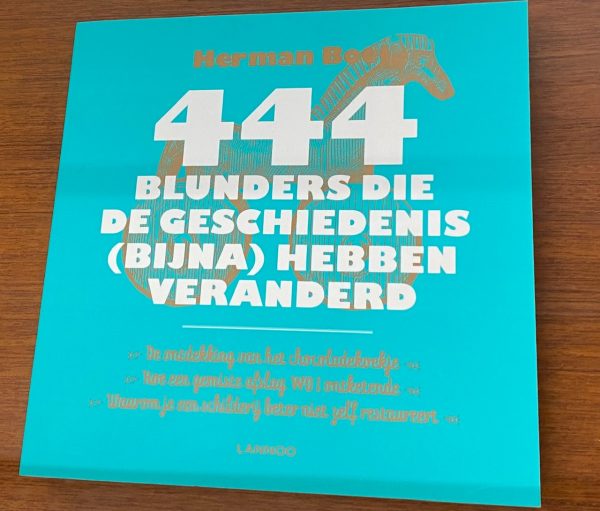
AI Collusion
In most applications of AI there is one system of AI, for example a specialized service, that performs in isolation from other services. More powerful systems, however, allow for the combination of AI services. This may be useful in case of integrating services focusing on specialized sensors to gain a more complete impression of the performance of a system. As soon as two and more AI systems become integrated the risk of unwanted or illegal collusion may occur.
Collusion is defined in the realm of economic theory as the secret, undocumented, often illegal, restriction of competition originating from at least two otherwise rival competitors. In the realm of AI collusion has been defined by Motwani et al. (2024) as “teams of communicating generative AI agents solve joint tasks”. The cooperation of agents as well as the sharing of of previously exclusive information increase the risks of violation of rights of privacy or security. The AI related risks consist also in the dilution of responsibility. It becomes more difficult to identify the origin of fraudulent use of data like personal information or contacts. Just imagine using Alexa and Siri talking to each other to develop another integrated service as a simplified example.
The use of steganography techniques, i.e. the secret embedding of code into an AI system or image distribution, can protect authorship as well as open doors for fraudulent applications. The collusion of AI systems will blur legal borders and create multiple new issues to resolve in the construction and implementation of AI agents. New issues of trust in technologies will arise if no common standards and regulations will be defined. We seem to be just at the entry of the new brave world or 1984 in 2024.
(Image: KI MS-Copilot: Three smartphones in form of different robots stand upright on a desk in a circle. Each displays text on a computer image.)

Sepsis
Sepsis is a major cause of mortality. Therefore, early detection of sepsis is of high importance. Antibiotics constitute a powerful antidote. However, the application of antibiotics without need, i.e. for purely risk reduction in general, has side effects in antibiotics losing their effectiveness later on.
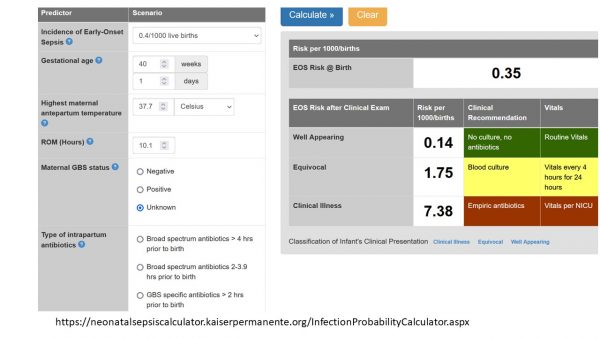
The paper published in The Lancet Digital Health by van der Weijden et al. (2024) reports on the effort to provide an open source access to a calculator of early onset of sepsis (Link). The Neonatal early-onset sepsis calculator developed by Kaiser Permanente builds on the use on the risk carried by mothers like time since membrane rupture, regional infection risks of mothers per 1000 population and the infants presentation at birth. It is important to point out the combination of risks put into the calculator. New systems of artificial intelligence might equally make predictions or recommendations about the application of antibiotics implicitly making use of such a calculator without disclosure.
From a sociological point of view it is interesting to scrutinize the indicators used in the calculation. The approximation of mothers carrying a sepsis risk relies on national, regional or better local indicators. This information is rarely accessible to the public. The choice of a hospital, speed of access to it in case of membrane rupture as well as staffing come into the calculation of an overall risk of sepsis.
It is great to follow the progress of digital health and the increased transparency of critical health decisions at the earliest stages of the life course. Inflammation as a precursor of sepsis should be taken serious at all stages of the life course. (Image calculation based on Kaiser Permanente digital tool Link)
Opportunity Costs
Skiing in winter is a pleasure that has become more elitist. The downhill skiing has always been an expensive sport, but affordable school holidays gave the sport a more accessible touch. The cheaper version of long distance skiing or skating on larger trails involves much more endurance. The report of the French Cour des Comptes in 2024 questions the sense of the huge investment that is still devoted to save the pleasure of the few. I
nstead of investment to the benefit of relatively few persons, these funds could put the money into a more sustainable, socially and ecological productive purpose. Installations could be used all year round rather than in the few weeks at best months with snow. It is remarkable that the court has highlighted this kind of opportunity costs of such installations. Instead of investing in soon to be obsolete infrastructure at lower altitudes like water reservoirs and water canons, this money could already start the eventually necessary transition process. Each € spent is not only lost for the transition, but might create additional environmental liabilities and damage.
From economists it is to be expected that they mention competition in their arguments. Not all stations of skiing will survive. Put more dramatically, in the process of closing skiing at lower and middle level altitude, competition intensifies between stations and of who can survive. Public funds should not be misused in this endeavour. Lobbying is strong and political incumbents tend to favour the merit and legacy of digging for the white gold. Changes of mind sets, investment narratives and decisions are tough. From much downhill skiing we might soon remember only the downward slope before the healthy aspects of climbing a slope takes the upper hand.