With new channels of publishing online the publishing world continues to change. Scientific research moves also online and the reach of audiences has become a much more important factor in evaluation of success. Elite circles of in-groups publishing and quoting each other have a harder time to survive. It is a form of democratising the world of research which is by very large amounts financed by public budgets. Public radio and television now start to feel the heat as so-called influencers, some working independently, challenge the world of traditional journalism. The good news is that there are many more people active to produce news and entertainment and the two separate worlds become more and more integrated. Young people who have left the “official” media world, engage with their own peer groups and make their voices heard and more influential. The quality of the provision of information is, however, a matter of concern. Audiences will have to check even more carefully than before which sources can be trusted. This is not an easy task. Speed of spreading information becomes an additional factor. It has always been like that, but the rhythm of a daily or weekly newspaper was very different from the publishing and consumption of news and information today.
The second factor that has drastically changed is the influence of “external” influences and information as well as disinformation campaigns that have an impact on “internal” reporting and commenting. What used to be the world of professional journalists has become an accessible possibility for many more than journalists. Publishing has become a very different world from the printing days and yet printing remains one important channel of publishing. (Link to own edited volumes of blog post for printing here).
Previously, we prepared the manuscript in paper, nowadays this seems to move online and the edited and sometimes corrected versions will be published in print later on. The challenge to science and journalism is ticking. Not accepting that there is a serious challenge is no solution either. (Image from Exposition “Books that made Europe”, 2016)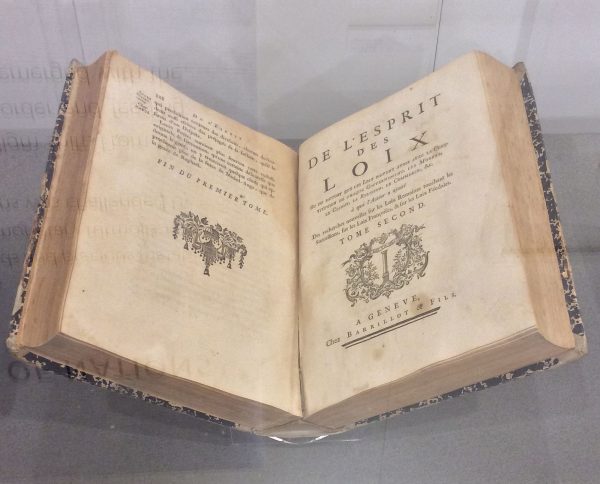
Stock taking
From time to time it is necessary to take stock of production and to review the material that has accumulated. As I have been working in archives, official book depositories and libraries for years, it comes almost naturally to deal with questions of how to keep track of all that content. Digital solutions are excellent devices in this regard. I do not have to deal with digitalisation, a huge issue for all historic archives and many recent small museums as well. I have to deal with backups at regular instances. To be sure, each engineer will assure you, better make a backup of your backup … . Yes, I do this as well. Now the ultimate backup of digital work is ? Got it, a printed copy of your digital work. The best advice I received on this comes from a computer magazine “ct” gadget mug with imprint advocating “No backup, no mercy“. To facilitate my printed archive I start with monthly collections of blog entries (Link to pdf-file December 2023 ->Brainstorming 23-12). The simple conversion yields 63 pages, a printer friendly version 56. Hence the expected yearly volume (60*12) will be somewhere near 720 pages. That is for the archive only or in case my eyes do no longer support online reading on screens for too long.
Digital archives have, of course, many other advantages. It is possible to reassemble my collection of entries by subject through a more thorough editing. Specific edited volumes will surface from this, which I have in my mind but only careful long-term followers of the entries might see already. Political economy and sociology are obvious candidates. Public health, labour, the world of arts and music could constitute other edited volumes. Lots of branches grow out of the trunk of content. 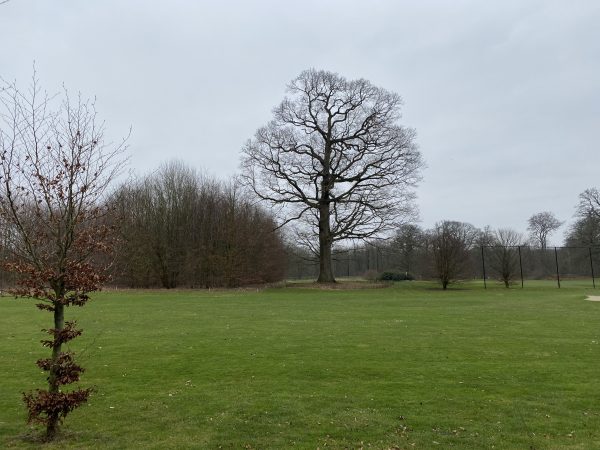
Nachhaltigkeitskonzept
Ein Nachhaltigkeitskonzept gehört zum Bauen mittlerweile wie das Gelbe zum Ei. Die Einreichungen zum Realisierungswettbewerb eines Portals für das Deutsche Technik Museum Berlin hatten entsprechende Anforderungen zu erfüllen. Für ein Technik Museum können dazu die Anforderungen schon etwas höher sein und die oft geforderte „Technologieoffenheit“ oder die Diskussion darüber zumindest andeuten. Der Anerkennungspreis ging an ein Konsortium für die Einreichung 1110, die eine klare Übersicht ihres Nachhaltigkeitskonzepts vorstellten (siehe Auszug Image unten, Foto aus der Ausstellung 2023-12). Nachwachsende Baustoffe gehören zum Repertoire. Gleichzeitig sollte die Erhaltung oder gar Förderung der Biodiversität Teil der nachhaltigen Konzeption sein. Innerstädtisch ist die Rückumwandlung der Versiegelung der Böden eine wichtige gesundheitsfördernde Bauweise. Kühlung in den aufgeheizten Städten ist durch Grünflächen und Beschattung zu erreichen. Tolle Architekten sind das, die den Mut aufbringen den Stachel in die Wunde zu legen. Die Anwohnenden und Besuchenden würden es den Verantwortlichen jahrzehntelang danken.
Das sind längst keine abgefahrenen grünen Ideen oder Träumereien mehr. Paris hat es schon längst vor gemacht. Ganz nah beim Eiffelturm ist das „Musée du Quai Branly – Jacques Chirac“ das als Neubau mit Garten vom konservativen Präsidenten Jacques Chirac eine grüne Naturoase mitten im Herzen Paris hat bauen lassen. Es ist immer noch eine Art Geheimtipp für Pariser in den zu warmen Sommermonaten. Berlin könnte wie mit der vom Pyramiden-Architekten Pei geplanten Eingangshalle vom Deutschen Historischen Museum mal wieder mit einem Nachhaltigkeitskonzept mit Paris gleichziehen. Gemeinsam können wir auch nachhaltig. Mit der vom Menschen und seiner Technik verursachten Erderwärmung haben die nachfolgenden Generationen noch lange genug zu kämpfen. Mehr Nachhaltigkeitskonzepte braucht die Technik. Das ist die wirkliche Herausforderung des 21. Jahrhunderts. 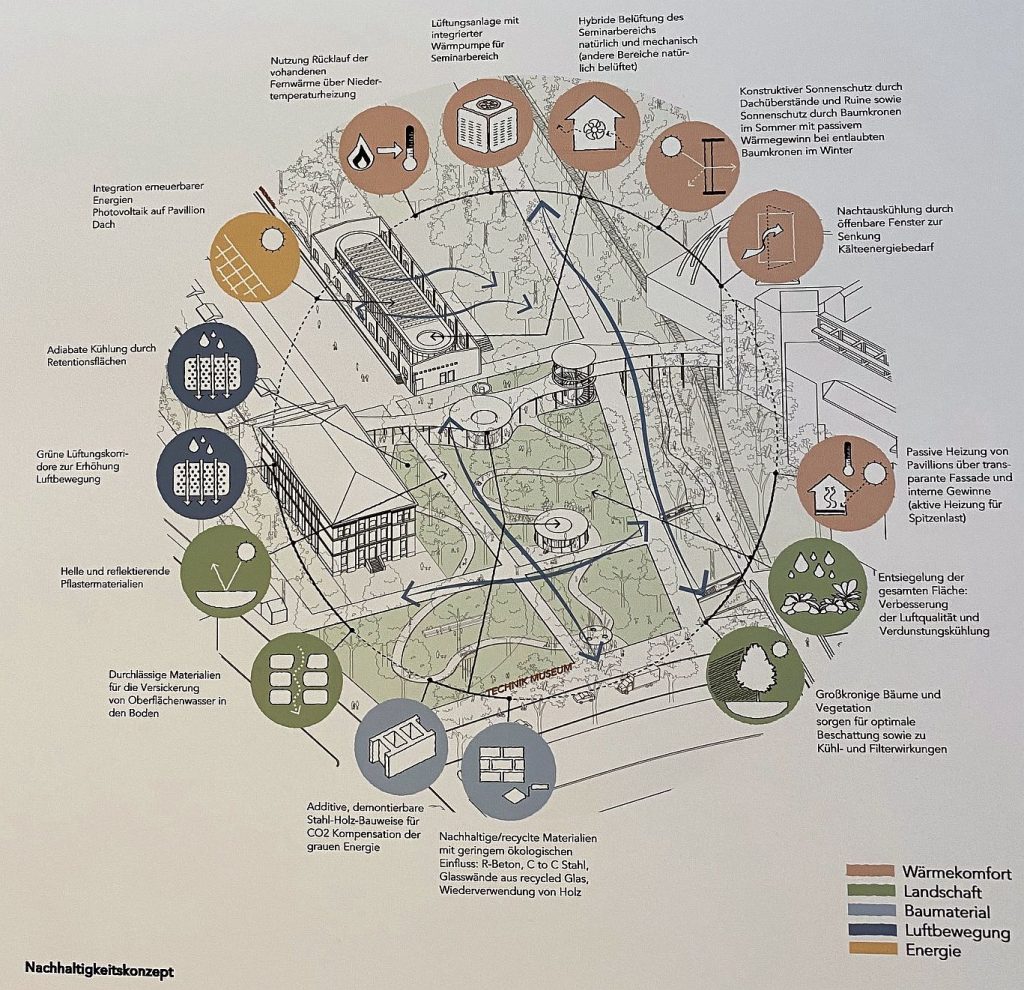
CO2 Footprint of Books
In view of the worldwide size of book publishing we should also keep an eye on the CO2 footprint of book publishing. The Italian association of publishers gave a brief overview of the likely CO2 footprint the printing of a book causes. Their best guess is at ½ a kilo of CO2 on average. For simplicity of calculation and assuming that an editors’ association is unlikely to overstate the amount, let us assume it is 1 Kg CO2 per book. The most CO2 is consumed not in the book production but in the transport of the items, machinery and personnel involved in producing, editing, selling etc. Of course, paper is recycled to a large amount. Certified sustainability of paper from trees has become a standard in most countries.
Nice twist to the issue: your own library at home has become a CO2 storage, if you keep them or lend them or pass them on to others. Reading can be a little bit addictive and buying books as well. Reading online or electronic books reduces your CO2 footprint. The best way to imagine the reduction of your CO2 footprint, however, is to buy or to borrow a book on travelling which replaces the actual journal by reading on the couch. Yes, being a couch potato is good for the planet, and if you want to buy a book, walk to the book shop or the library if possible. If you enjoyed flying previously shift over to buying books on planes, airports, clouds in images or stories that involve extensive travelling instead for the sake of your own CO2 footprint and future generations.
Even a book will need somehow wood as input, many alternative ways of leisure time or professional activities are worse in terms of CO2 footprint. Any e-book, e-journal or e-newspaper is even better for the planet, especially if we think of the millions of paper copies across the world that are printed but never sold. Knowing your market is crucial to reduce misallocation of ressources. E-books are so much easier to store as well using regenerative energy for the content servers around the world. 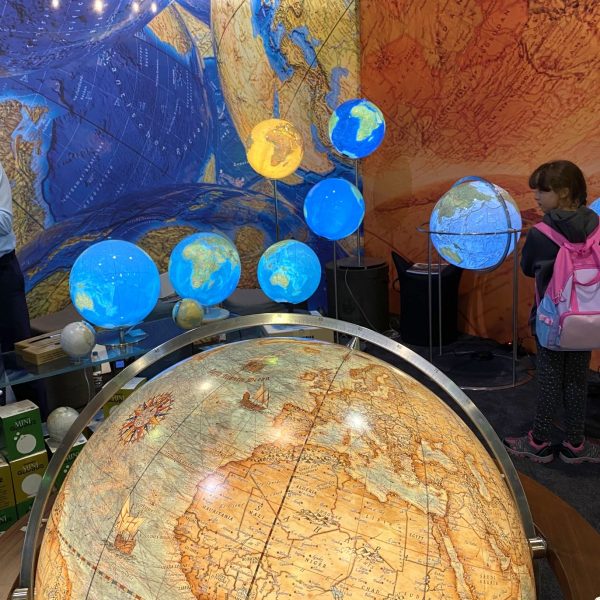
Wissensdialog
Universitäten und Forschungsinstitute leben weitgehend von öffentlichen Geldern. Das bringt eine Verpflichtung mit sich, das Wissen auch einer breiteren Öffentlichkeit zugänglich zu machen. Das Zeiss Großplanetarium in Berlin ist ein Ort, der diese Aufgabe in den Gründungsstatuten trägt. In Kooperation mit beispielsweise dem Campus Berlin-Buch mit seinen vielfältigen Forschungsinstituten werden in einer Vortragsreihe wichtige Erkenntnisse für eine breite Öffentlichkeit vorgestellt. Nur so kann die politische Zustimmung und ethische Abwägung gewährleistet werden, warum Tierversuche (meistens an Mäusen) in einigen Bereichen schwer verzichtbar sind. Damit wir den Alterungsprozess auch beim Menschen besser verstehen, braucht es immer feinere Darstellungsweisen wo und wie sich Eiweiße an den unterschiedlichsten Stellen im Körper anlagern. Bei Alzheimer finden wir die Ablagerungen in bestimmten Arealen im Gehirn. Dr. Johannes Broichhagen hat im Auftakt zu der Reihe „Neue Wege in der Biomedizin“ Arbeiten aus seinem Labor vorgestellt. Wenn wir Alzheimer eindämmen wollen, müssen wir den Proteintransport im Körper besser verstehen und abbilden können. Das verlangt verbesserte Methoden, um die Proteine darstellen zu können. Die Ablagerung im Gehirn kann vielleicht nicht komplett verhindert werden, aber eventuell hilft bereits eine „Umlenkung“ der schädlichen Proteine. Dazu müssen wir die Transportwege besser verstehen. Wir brauchen dazu 4D Beobachtungen, anstelle der bekannten 2D- oder 3D-Bilder von Gehirnscans. Die Fortschritte sind rasant. Der Wissensdialog nimmt uns mit auf die Wissenschaftsreise. Ein Motivation für viele Jugendliche und Studierende ergab sich aus der anschließenden Diskussion mit beeindruckendem biologischem und chemischem Wissen der Fragenden. So gelingt Wissensdialog für alle Beteiligte. (Image Clip from preprint) 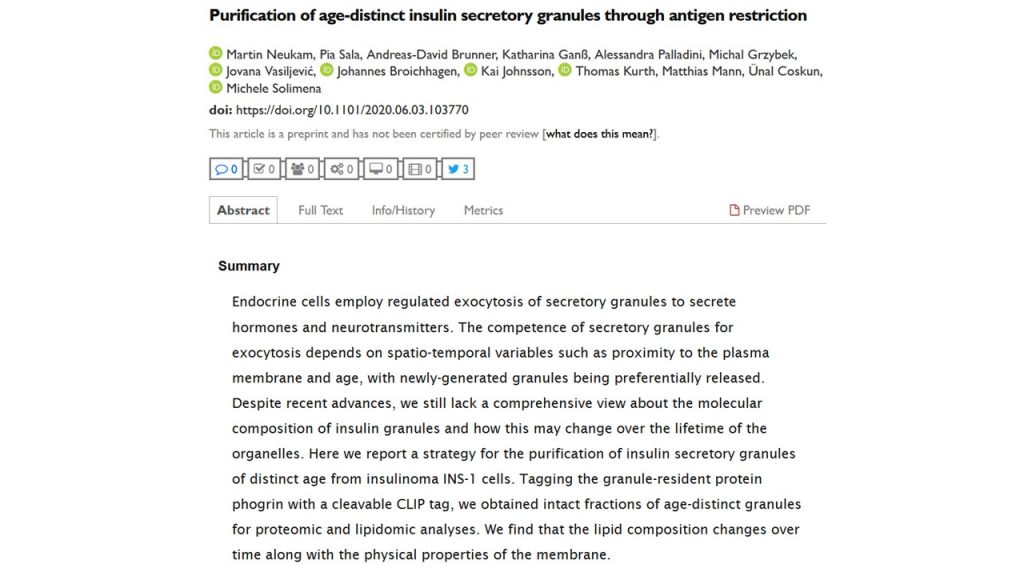
Heritage Day
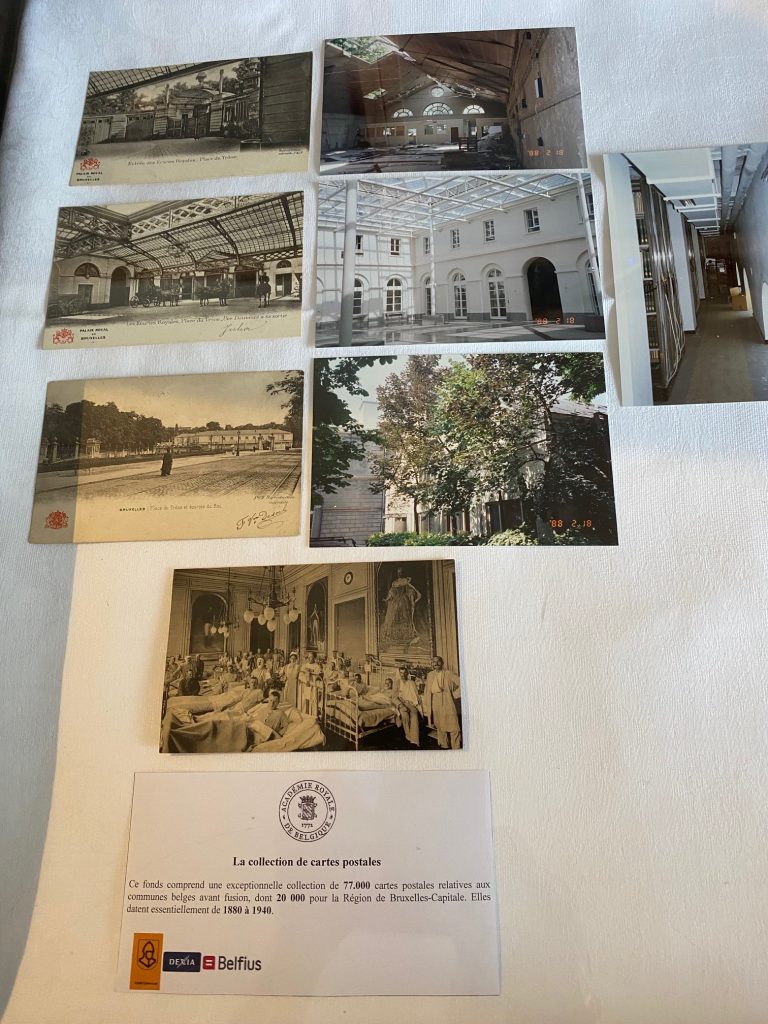
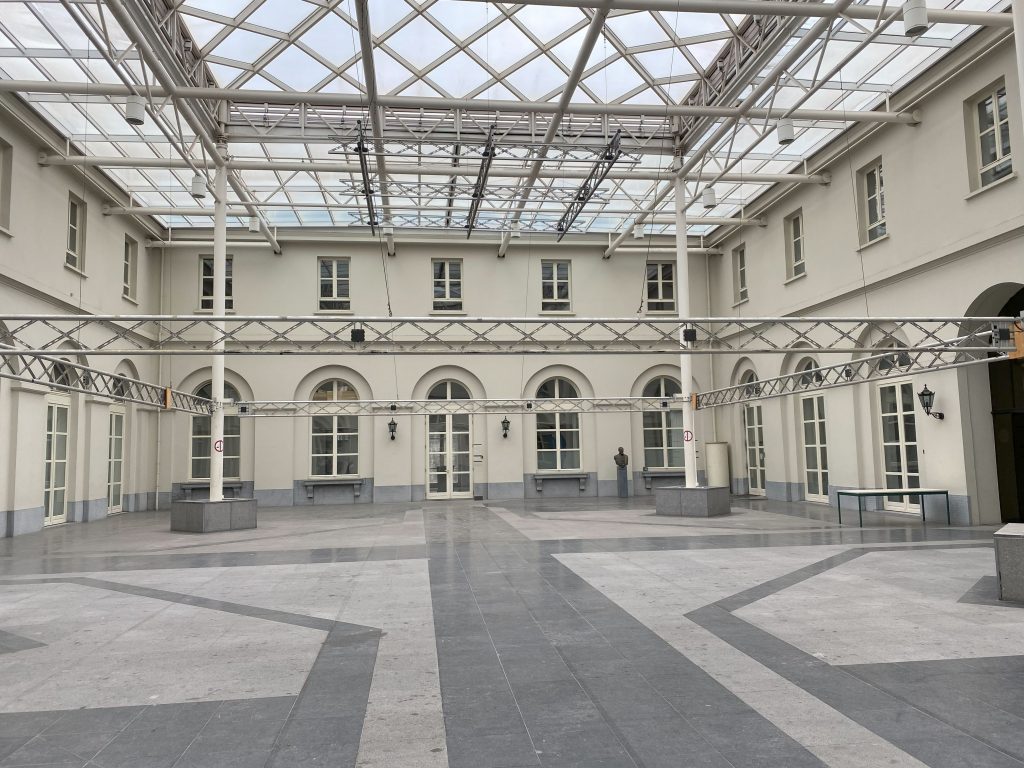
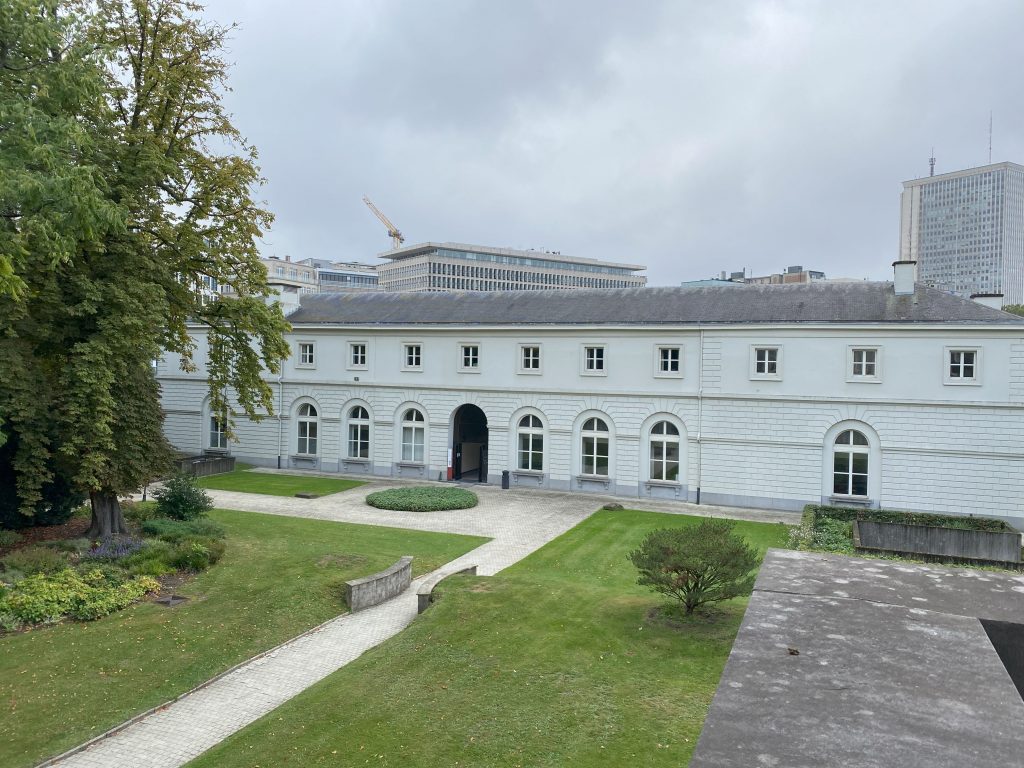
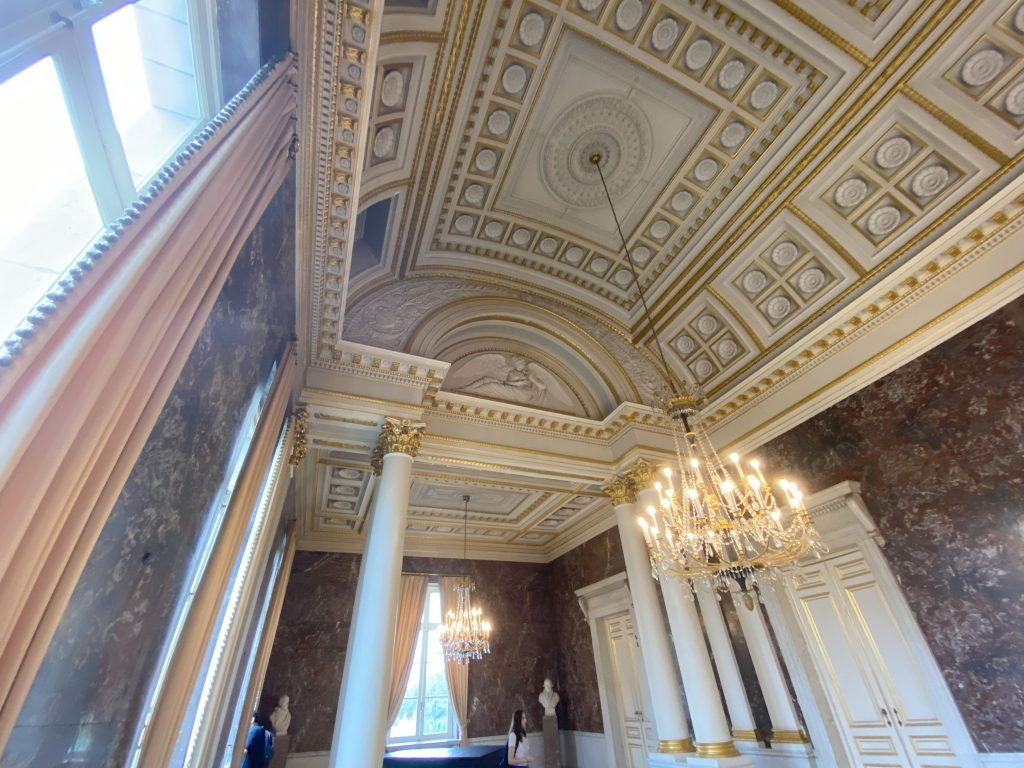
A heritage is something you might carry with you, no matter whether you like it or not. In architecture this is most vivid and visible. On the 2023 heritage day i Brussels many monuments and institutions open their prestigious buildings to the public and show off their “silver” or gold plated walls and ceilings. Just next to Royal Palace is the home of princesses and princes now inhabited by the Royal Academy. Even the stables have been packed with books now, all in all 19 km of shelves packed with papers of all sorts. Great that many academics and academies have shifted to electronic publishing so that the CO2 footprint of science and art can finally be reduced as well.
Of course, we adore the old postcards to learn about historical trajectories of architecture and specific buildings. The collection is a great collective memory.
More Design
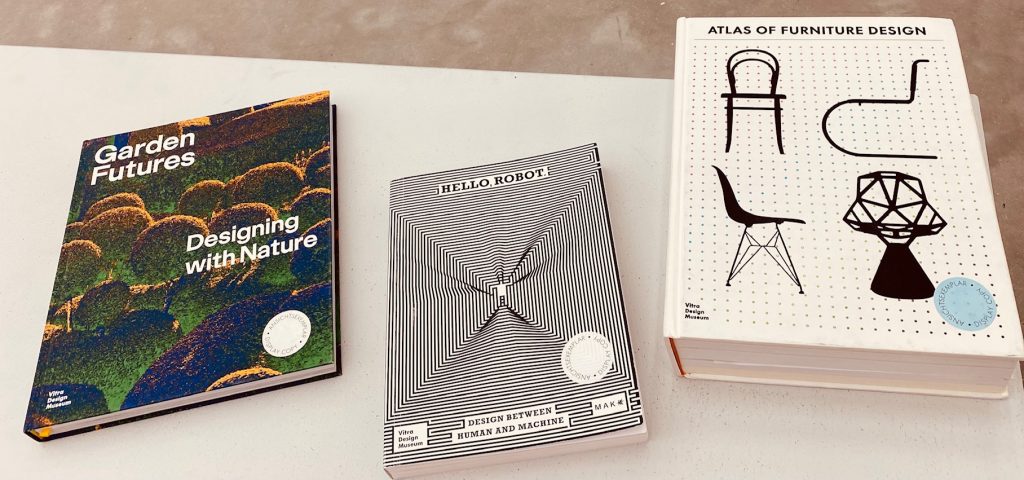
How about a subject like Design in school. Rather than the same old boring teaching manuals in art, music, economics or social science, young learners have always been attracted to making things by themselves. The theoretical context is then coming to the subjects and objects more naturally. Economics as market design, design social security for platform workers, sound or furniture design could bring in the creative potential of the learners. Lessons learned through subsequent applications or realizations of prototypes allows the link of theory and practice. A school garden would even be a fantastic cross-discipline learning opportunity.
The most difficult part is probably to find competent coaches to guide the learners exploring and designing. The world is not perfect, so why should learners not be confronted with imperfections in learning set-ups. The most fun part in science is when experiments go wrong, hopefully not too badly though. Catching learners by their curiosity is very likely to get them hooked on more thorny scientific questions as well. Across Europe holidays are coming to an end and millions of pupils go back to their benches and rigid curricula. We should really care more about the next generation.
Wessen Wetter
Wessen Wetter ist es denn? Mitten in einem Gewitter deklamieren Leute heute noch, “Um Gottes Willen“! Selbst in 2023 vereinen sich Leute und beten für Regen. Dabei wissen wir längst, wie der Regen entsteht, Feuchtigkeit in Wolken über weite Strecken zieht und schlußendlich als Regen über uns kommt. Dafür haben wir Dächer vorgesehen, mehr oder weniger solide und dicht. Regenwasser sammeln, sickern lassen, Rückhaltebecken erweitern; das sind alles Vorkehrungen gegen größer werdende Unwetter des menschengemachten Klimawandels. Beten sowie Meditieren kann dem Einzelnen helfen, sich zu fokusieren und Kräfte zu sammeln. Gemeinschaftserlebnisse stärken Resilienz.
Wetter ist in der Tat eine tägliche Art von Gemeinschaftserlebnis, oft lokal begrenzt, aber meist regionenspezifisch und manchmal ein landes- oder gar europaweites Phänomen. Neben den staatlichen Meteorologischen Instituten gibt es bereits immer mehr “citizen science” Projekte zum Wetter. Das belgische Beispiel (s.u.) zeigt eine Vernetzung von Bürgerinnen, die Spaß und Interesse am Wetter und am Teilen sowie Partizipieren haben, kann das Messstationsnetzwerk der staatlichen Wetterdienste erweitern und eine alternative Vorhersagemöglichkeit bieten. PollenAPPs nutzen ebenfalls die Leidensstärke von allergischen Personen, um ihre Pollenbelastung spezifischer zu erfassen und Prognosen zu verbessern.
Ciitzen Science ist ebenso ein wechselseitiger Lernprozess, der das Wissen und Methoden einzelner Wissenschaffenden quasi basisdemokratische “bottom up” Wissenschaft gegenüberstellt. Stärken und Schwächen der jeweiligen Vorgehensweisen müssen untersucht werden, besonders mit Blick auf “fake news” oder “fake data”. Nicht nur erschreckend viele Forschende in der Wissenschaft produzieren “fake data and science” (Sabel et al. 2023) für fragwürdige Reputation und Karrieren. Bürgerinnen, die Daten sammeln und eigene Analysen, Vermutungen oder Hypothesen vornehmen, können Wissenschaft erweitern, andere ermuntern und wertvolle, viele, kleine Beiträge leisten.
Schwarmintelligenz beim Wetter praktizieren bereits die Schwalben. Das könnten wir vielleicht von diesen lernen. Bei Vervier in Belgien sowie an der Ahr in Rheinland-Pfalz sind mehr als 100 Menschen gestorben, wegen unpräziser Vorhersagen und Verzögerungen bei der Übermittlung der akuten Gefahrensituation.
Citizen Science kann Leben schützen, genauso wie es andere dringend nötige Freiwilligendienste bereits bewiesen haben. Das sind mal ganz andere vielfältige, bunte Wetteraussichten. 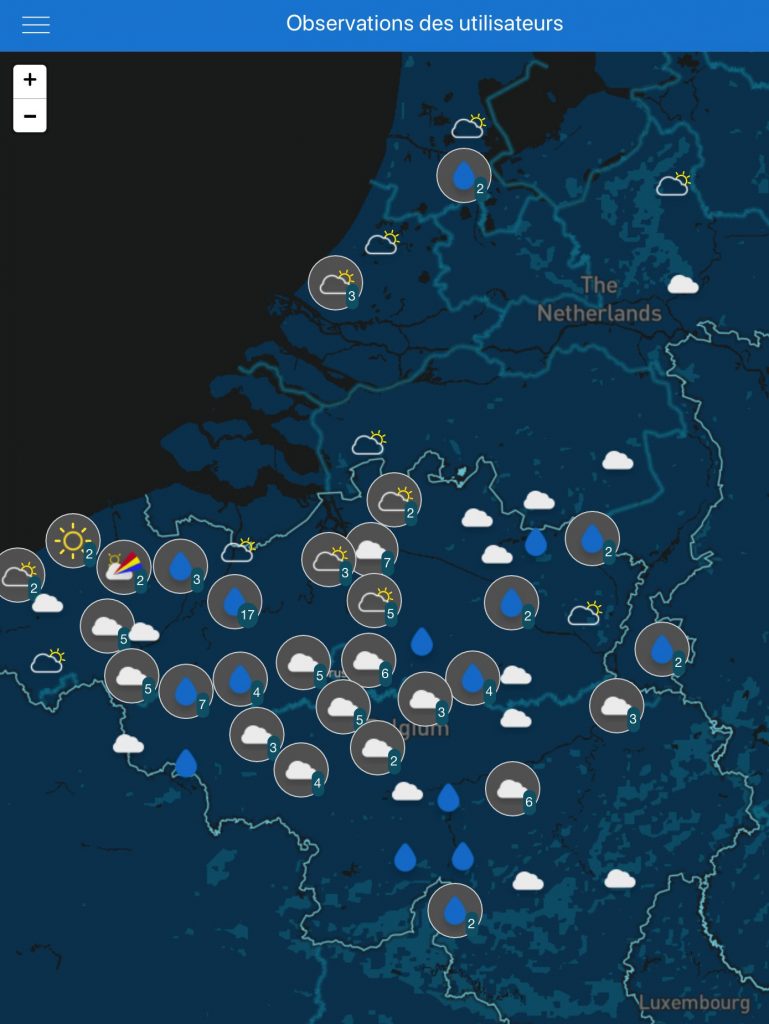
Wetter
Heute ist jede/r ein Hobby Meteorologe/in. Vor länger Zeit scherzten wir noch: Kräht der Hahn auf dem Mist, ändert sich’s Wetter oder es bleibt wie’s ist. Das zwar heute immer noch richtig, aber die Wettervorhersagen für den Hobby-Wissenschaffenden sind komplizierter geworden. Der niederländische Wetterdienst berichtet, täglich fallen 500 Gigabyte an Meteo-Daten an. Damit wäre unser Mobiltelefon dann schon mal längst voll, jeden Tag von Neuem. Wir nutzen meistens nicht nur eine App, sondern eine mit Regenradar („Rain today?“), stündliche Windvorhersage („Windfinder“), fürs Drachenfliegen oder Kiten, Pollenflug („Pollen“) nicht vergessen, sortiert nach persönlichen Allergenen.
Wer es dann noch etwas wissenschaftlicher möchte, der benutzt die aufbereiteten Daten in Frankreich, die gleich die 25-jährigen Durchschnitte mit Tagesverläufen der Temperaturen samt Höchst- und Tiefstwerten. Damit lässt sich dann vorzüglich fachsimpeln zu Erderwärmung, Klimawandel und Traumreisen nach Cannes (Nizza) mit seinen viel zu hohen Durchschnittstemperaturen im Sommer 2023. „Homo faber“ von Max Frisch lässt grüßen, nur ist es kein Fotoapparat, sondern das gleich mehrmals tägliche Ablesen der Außen- und Innentemperaturen, samt Luftfeuchtigkeitswerten und Informationen diverser Apps. Nach diesen Akten, Fakten und Datenstudium lässt sich die tägliche Ankleidungsentscheidung treffen. Kurze oder lange Hose, Regenjacke, T-Shirt oder Pullover. Vielleicht gehen wir auch einfach zur Arbeit oder nach draußen und genießen die Abwechslung. Das Wetter ändert sich, meist ohne unser Zutun oder Abschätzung. Genug gekräht und wieder runter vom Mist. 
AI and I
Currently we are eager to run experiments using AI. As in normal life, humans tend to compare themselves with peers or other persons. Social comparisons, “can we still keep up with the Joneses” as in comparing spending patterns across households or neighbours, were for a long time the spice of novels and drama. Nowadays we tend to compare our own intelligence to the artificial intelligence. Here we go.
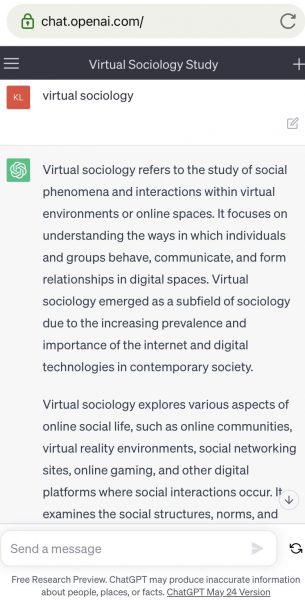
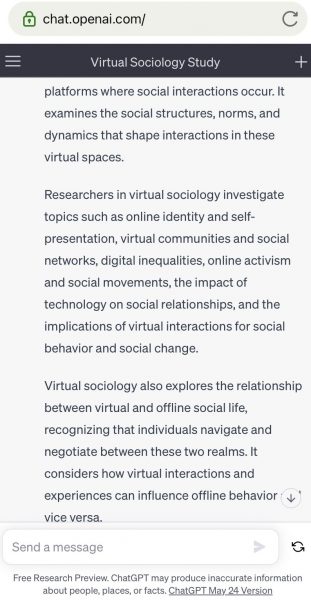
After I had drafted a blog entry on “Virtual sociology” I amused myself by checking what ChatGPT using OPENAI.COM would deliver as text on this combination of concepts and scientific fields. My own entry focused on the use of the virtual world to run experiments to test social theory. In the virtual world we might be able to test social behaviour which has severe ethical boundaries in the real world. Computer Games may even be constructed to live in a world or race a car irrespective of real-world regulations. The text drafted by ChatGPT on “Virtual sociology” reads like a timid attempt of a student to answer an exam question without having attended any of the classroom discussion on the topic. In future versions of AI, the entry will be found as well as several criticisms of the new concept. ChatGPT would reach a pass grade in test, but the reply lacks innovation or making an effort to broaden the conventional boundaries of sociology. Hence, we will be happy that students will apply the newest technology in their studies and research. In terms of innovation, they will have to try harder. The mastering of the support by ChatGPT consists in attempting new combinations of concepts which yield more “risky” returns. Then you need to check the validity of the innovation and how far off the normal you are going to tolerate. Turning “noisy” outcomes of AI into a useful tool might build on normal statistical tools like “standard deviations” from an expected mean value. Legal norms will set additional boundaries. There is just an awful lot still to do. The good news is, ChatGDP assists us in this joint learning process.
The AI text from OPENAI.COM based on ChatGPT to compare:
“Virtual sociology refers to the study of social phenomena and interactions within virtual environments or online spaces. It focuses on understanding the ways in which individuals and groups behave, communicate, and form relationships in digital spaces. Virtual sociology emerged as a subfield of sociology due to the increasing prevalence and importance of the internet and digital technologies in contemporary society.
Virtual sociology explores various aspects of online social life, such as online communities, virtual reality environments, social networking sites, online gaming, and other digital platforms where social interactions occur. It examines the social structures, norms, and dynamics that shape interactions in these virtual spaces.
Researchers in virtual sociology investigate topics such as online identity and self-presentation, virtual communities and social networks, digital inequalities, online activism and social movements, the impact of technology on social relationships, and the implications of virtual interactions for social behavior and social change.
Virtual sociology also explores the relationship between virtual and offline social life, recognizing that individuals navigate and negotiate between these two realms. It considers how virtual interactions and experiences can influence offline behavior and vice versa.
Studying virtual sociology provides insights into the ways in which technology shapes and is shaped by society. It helps us understand the social implications of digital communication and provides a foundation for addressing the challenges and opportunities presented by virtual environments”