Most analysts of international conflicts deal with winning or losing a war. At best they deal with short-term versus long-term versions of winning and losing. However, the question of how to win or achieve a lasting peace is rarely researched. Research on the 2nd World War reveal as soon as the turning point of the war was achieved the preparation of what will come after defeat. Organising humanitarian relief is part of warfare. The U.S. has set a good example of how to organise humanitarian aid as well as ensuring a lasting peace in Europe after the 2nd World War. Lots of books have been written on the Marshall Plan to get the economies in Europe (Western Europe) back to producing. Much less attention has been devoted to the important element of “de-nazification” of whole societies.
To win peace after the monstruous crimes of the Nazi-regime and the millions of followers and ruthless fighters was a challenge without precedents. The U.S. gave a good example of how to handle the process of winning peace in the regions under its military authority. In the following I shall refer to work published by Christa Horn (1992) “Die Internierungs- und Arbeitslager in Bayern 1945-1952”. The Allies had agreed upon to pursue war criminals. In April 1944 the Supreme Headquarters Allied Expeditionary Forces published the “Handbook for Military Government in Germany”. It was deemed important to detain “certain government and party officials and members of police and para-military formations” (p.17).
Common to demilitarisation efforts after a war, it is the primordial function to reduce the risks of a renewed uptake of guerilla-like attacks due to the amount of arms still widely available or hidden on the enemy’s territory. The document specified further that the continued presence of Nazis in government and other exposed positions “might be a threat to the security of the Allied Forces or an impediment to the attainment of the objectives of Military Government in Germany” (Arrest Categories Handbook, P.2). Denazification was a means to an end. The size of the task was, however, underestimated at several instances. For example, the organisation of the arrest and detention of more than 100.000 persons was a difficult task. After the end of fighting the transition to peace is not instantaneous. Hierarchical military and party structures had to be dismantled. The so-called “automatic arrest” issued on 13.4.1945 included all grades from the NSDAP down to the “Kreisleiter” or even “Ortgruppenleiter” as well as SS members and their “Helferinnen” (Horn, 1992 p.21). These arrests without judicial procedures came under critic as not-American in the U.S., but it took until 10.10.1948 to abandon this procedure. The literature on the issue refers more to the lack of adequate judicial procedures to handle such so many legal procedures with qualified persons as well as the difficulty to organise detention camps for more than a hundred thousand persons that should deserve to be prosecuted. Handing over to the national or regional judicial instances was, therefore, an important step. The risk to abandon the process of “denazification” was evident, but it was equally important to counter the expansion of the Russian-domination in Eastern Europe with the help of a strengthened Western Europe. Winning peace is a delicate balance of prosecution through the winners of the war and the subsequent prosecution of criminal actions through the indigenous population and its new institutional and judicial setup.
Social Sciences have a lot of solid insights to offer to win peace. With careful consideration they are helpful to learn from even for current international affairs and raging wars. Demilitarisation is only a small part of winning peace. Changing mind sets to internalise humanitarian values remains the biggest challenge and involves more than one generation. 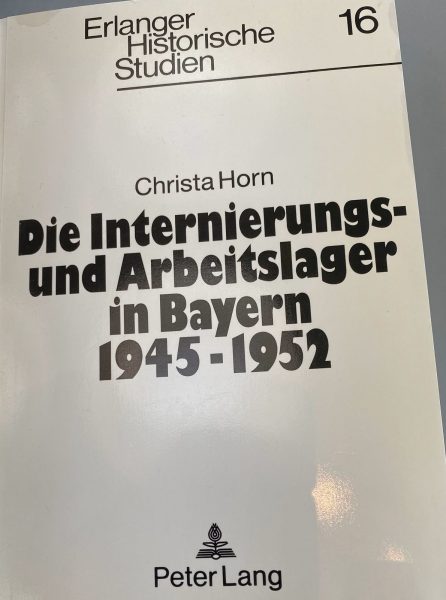
Arms trade
The sustainability of war depends a lot on the availability of arms. The Stockholm International Peace Research Institute (SIPRI) publishes regularly updated data on arms trade. The report ranks countries who are the most important exporters as well as importers of arms (from 2018-2022). The lists show for exporters that the U.S has been at the top of exporters with 40% of the global export share followed by Russia with 16%. France 11%, China 5.2, Germany 4.2 come next on the list. Taken together Italy, Spain and the U.K. reach another 10% jointly of global exports. South Korea and Israel come in with shares of 2.4 and 2.3 respectively. The top ten serve allies but also more broadly the world arms trade and race. New dynamics have started to come into force. The Russian aggression and war on Ukraine territory will have an impact to the extent that Russia is probably exporting less and shift to a more importing state.
Among the importing countries India is leading the ranking followed by Saudi Arabia and Qatar. More generally Asia and the Middle East were the most important buying countries. Importing arms might be interpreted as an indicator of perceived threat to a country. Long cycles of arms renewal may also drive statistics of arms trade, but new threats like cybersecurity and space technology have created new fields of potential attack and defence.
All in all, yet another rationale attributed to Clausewitz seems to play a role in driving the arms trade. “If you are perceived to be weak, an enemy will use this to attack”. Well, this also means that buying arms, producing or importing them, could deter a military aggression. That form of deterrence of aggression is known from the nuclear arms race as well. In the realm of conventional weapons, we have thought, it would no longer apply. We were mistaken in this respect. The dividend of peace has come to an end for many countries. The SIPRI report (2003, summary p.9) shows the continued rise on the global level of the arms trade. Why are we so scared of each other? Russia has reverted to imperial politics using conventional weapons. Containing such disrespect of internal law needs our full attention to avoid a spreading to other areas. The link of diplomacy and trade needs close scrutiny. 
Youth Reserve
As the Russian aggression in Ukraine continues its war in Ukraine, it is important to analyse the impact of the prolonged war. Certainly, Russia underestimated the length of the war in the first place. We shall be soon in the 20th months of the aggression. It is not only an aggression on Ukraine territory and Ukrainians, but also a disaster for all those fighting on Russia’s side. Many young recruits to the army did not expect to be drawn up and be compelled to fight on front lines of a war. Most of these young people will not even really why they are risking their life. Russian imperialistic behaviour is not what they imagined to be their future role.
Putin has changed the story book of millions of youth, for those of the soldiers and those who left the country in time to evade been pulled into the horrors of war. With so many months passing while at war, each birth cohort of Russians completing their schooling and serving in the military will face existential threats to their very survival. It is likely to be a lost generation that cannot think of other opportunities rather than passing through the hierarchies of the military ranks. It was not their war at the beginning, but Putin and the old military commanders who are responsible for the mess, but youth pays the highest price in terms of foregone other professional careers and development rather than death or mutilation.
The defence by Ukrainians with better equipment arriving day by day is likely to increase the losses of the Russians, where many still do not know why they are sent to fight. The price for Russia to pay for the aggression is rising every day Ukraine manages to defend itself. Other countries in the neighbourhood of Russia were very surprised of the ruthless imperialist approach by Russia. They stepped up their defences considerably to guard against another extension of the conflict. The toll is on youth even beyond Russia and Ukraine. 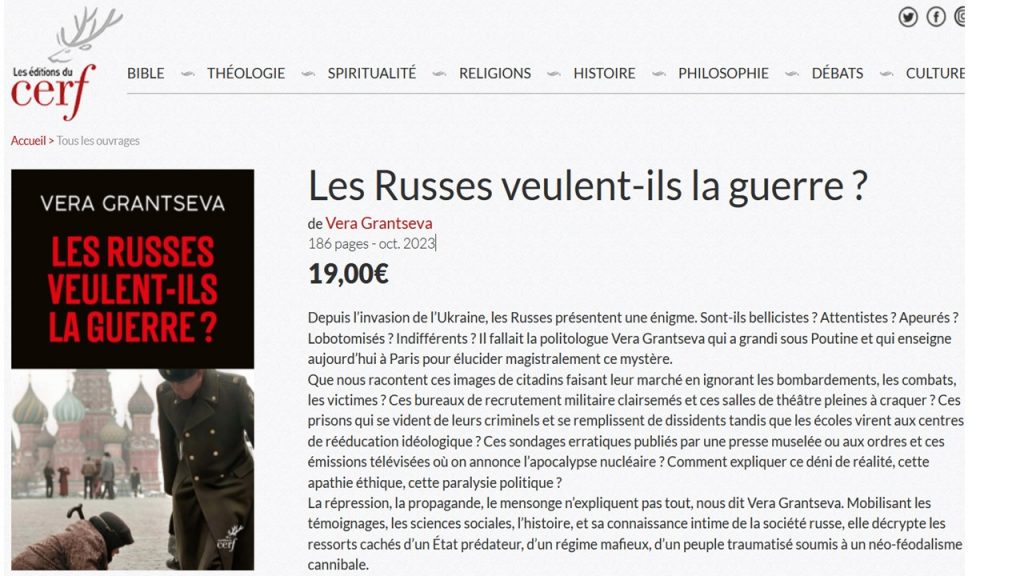
Ukraine@Book Fair
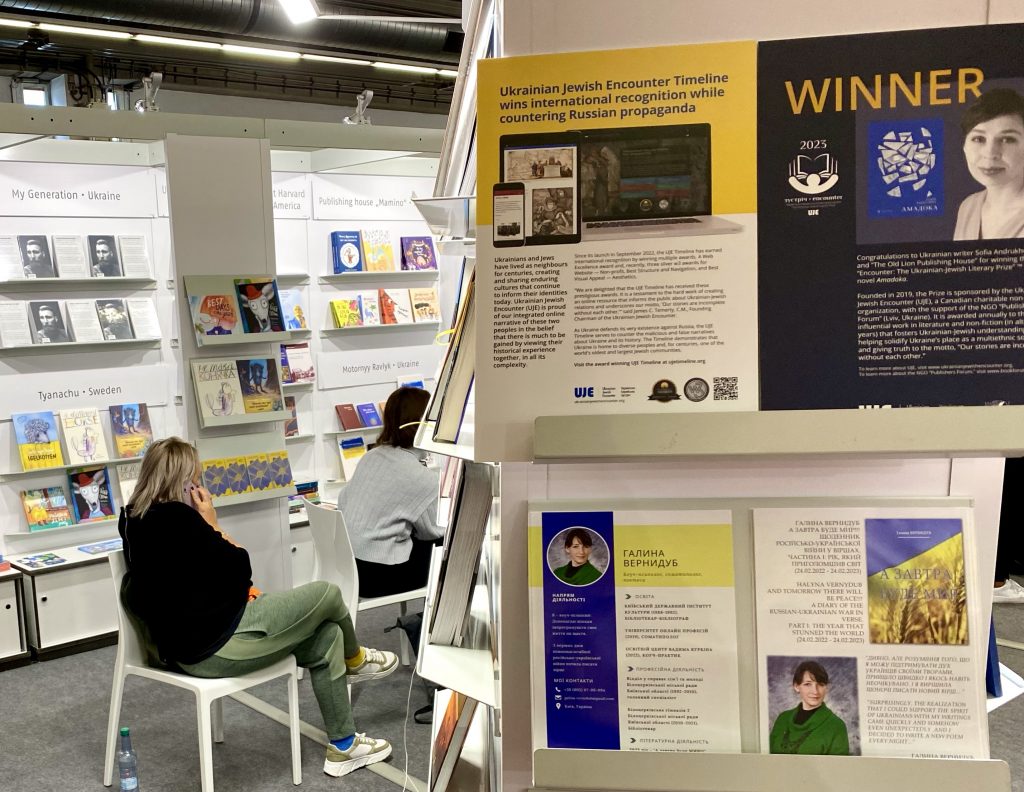
It is great to see so many publishers and authors at the Frankfurt book fair 2023. Because of the massive Russian misinformation not restricted to Russia, but in Western countries, too. Awarding a prize to those activists that sort truth from fake news is very important in this respect. 200 square meters of exhibition space reflects the size and quality of publishing. Lots of translations are underway as well. freedom of publishing and the press is something we usually take for granted until it is gone.
Geo-politics
In the middle of October 2023 we witness the unexpected and unwanted rise of the geo-political importance of the European Union. First, after the aggression of Russia to realise a huge land grab on Ukrainian territory, the European Union managed to define its new geo-political role in supporting the Ukrainian struggle of independence and freedom versus Russian oppression. This means continuous support of several forms: humanitarian, supporting infrastructure like energy and food supplies as well as military equipment for defensive purposes. Achieving our own strategic autonomy means decoupling from energy supply from Russia despite huge investments to build interdependence particularly by Germany or Finland. Additionally, strategic autonomy means relying on international partners that share our values and quest for sovereignty. Supply chains for production systems have to be re-organised to ensure independence even in military conflicts.
A new role has become evident also in the attack from Hamas on the state of Israel. Historic links and responsibilities to the creation of the state of Israel have led the European Union to make its voice heard in the Middle East to limit escalating confrontations.
These changes in the geo-political role of the European Union have far-reaching implications internally as well as in its external relations. Some have been spelt out by Luuk van Middelaar (2022, adviser to Herman van Rompuy) in his lectures “Le réveil géopolitique de l’Europe”. In the introduction he makes clear what are the 3 major elements of the geo-political wake-up for Europe: (1) power, (2) territory and (3) narrative. Europe has shunned away from its geo-political role as a powerful player. (1) Believing more in a peaceful role, a moderator, deviating from its colonial past, upholding the primary role of international law and justice, the European Union has been forced by external powers disrespecting these premises to enter into various international border conflicts as a power in its own right. (2) Questions of territory matter most, if they are challenged by powerful neighbours who are not inclined to respect international law. Even uncontrolled migration is part of this disrespect of territorial integrity. (3) Speaking in the name of a whole community of countries who share the same values, gives a convincing force to be able to overcome national particularities and predilections.
However, the European Union’s new geo-political role has to be carefully communicated not only to the outside world (it is in no way thought to be offensive), but also internally. For example, the budgetary implications of the geo-political role need to be communicated to the electorate and public opinion(s) in Europe. Do not forget to carefully prepare the whole population on this new role.
Donald Tusk held steady to counter claims from the PIS-leaders in Poland to reduce the geo-political role of the European Union. Many countries and people sharing our values are eager to see the European Union to accept this new geo-political role to defend human rights, internal law and justice. (Background reading: Middelaar, L. v. 2022. Le réveil géopolitique de l’Europe. Paris : Collège de France. doi :10.4000/books.cdf.12770 ). Image: Extrait LeMonde diplomatique 2019-11) for discussion. 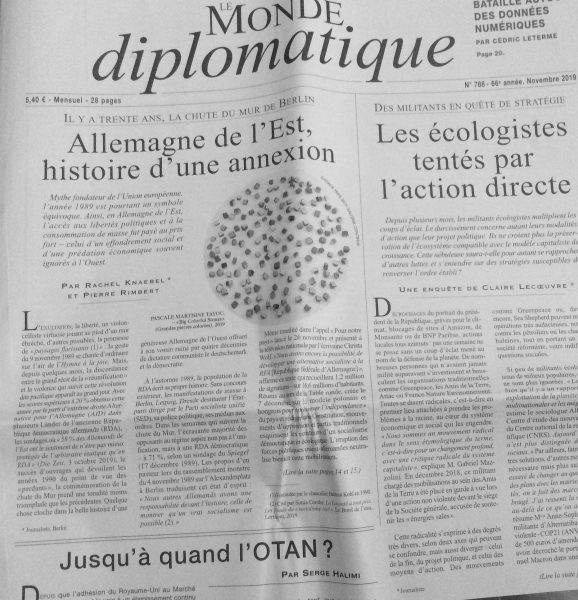
Publishing in War
The right to publish without censorship is one of the first rights that suffers during wars. This has been the case since warfare has used communication as a strategic weapon. Therefore, it is important to research the often, subtle forms of control and censorship applied before and particularly during each war. The printed press was the prime target due to the scope of readers that can be reached timely and repetitively. From the history of how to silence critical voices we can learn about the proceedings, which even today find lots of authoritarian regimes copying these methods.
Using many illustrations from the 1st and 2nd world war in Belgium, 3 major forms of resistance to censorship become apparent. (1) The most obvious is closing down a newspaper rather than endure censorship and thereby being forced to contribute to war propaganda. (2) With risk to their own life, many people in the resistance movements relied on information to actively counter the worsening conditions of life and oppression of opinions or criticisms. (3) The third way at these times consisted in quitting the active contributions, but it incurred the danger that in fact the newspaper continued to appear as before, although with lenient journalists and editors. Today we would frame the latter form of continued appearance of a journal as “continued as fake news”. However, the issue is more complicated than that. Apparently, the readership needed still access to vital information of how to get access to food stamps or other day-to-day necessities including distraction from the horrors of war as it became an enduring feature of life.
This is my short summary of the inspection of some of the historical newspapers that are available with online access and the most valuable summaries provided by Emmanuel Debruyne and Fabrice Maerten in their blog entries on the overview pages linked to the “Belgian War Press” project. These are also valuable sources that hint at war crimes committed at these times as the collaborating press did not shun away from bragging about crimes. The clandestine press was also important to coordinate the various resistance movements and spread ideas of how contributions could be made to weaken the occupying criminal forces.
At times of communication via internet, in addition to the printing press, the war of communication needs much more resources above all digital-savvy resistance movements. A huge task to train people time to enable them to identify fake news and careful exercise of spreading correct and verified information nowadays.
Image Source: Extrait du « Bulletin Intérieur du Front de l’Indépendance », daté 15-11-1942, CEGESOMA BG85, Brussel. 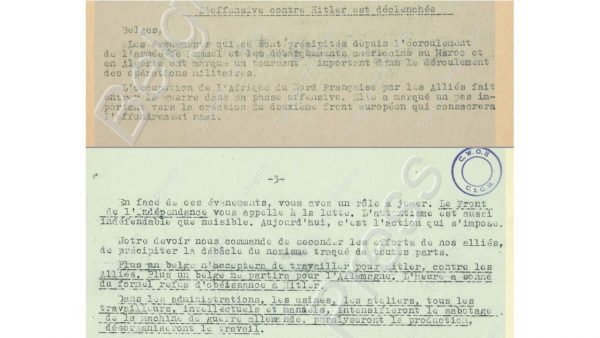
Human Rights
At times of war it is even more important to highlight the importance of respect of human rights. Russia continues to bombard civilians and destroys infrastructure that heats and feeds millions of people. Hamas in the Middle-East has killed more than a thousand civilians in Israel. Pushing violence beyond limits without respect of basic human rights is a very dangerous path for all human beings. Structures within each society need to take care of respect of these limits. The rule of law is fragile in authoritarian states or outright discarded. This makes human rights violations especially in wars or warlike conflict even more likely. The Human Rights Film Festival Berlin attempts to raise awareness to the facts of human rights violation wherever they occur across the globe. Following the link you have a chance to view some of the films online. The online flipbook allows to turn the pages of the magazine, which accompanies the film festival and provides a lot of additional information on the various categories. The section on the deep fakes is demonstrating how the use of fake news and fake images have an influence on us. The intensity of such fake news usually rises when elections approach in democracies. European elections will be seriously endangered through this kind of interference by Russian computerized disinformation networks and China is catching up on such misuse and systematic blocking of free information to its citizens. We shall have to be even more attentive to details in information and misinformation campaigns. Trusted websites and information channels of mass media have to step up their cybersecurity defences. Even small sites like this one have a responsibility to guard against abuses. In opening up the comments on the blog entries only for some time had the consequences of deleting “hundreds” of spam entries and undercover advertisements offering links to malicious sites. 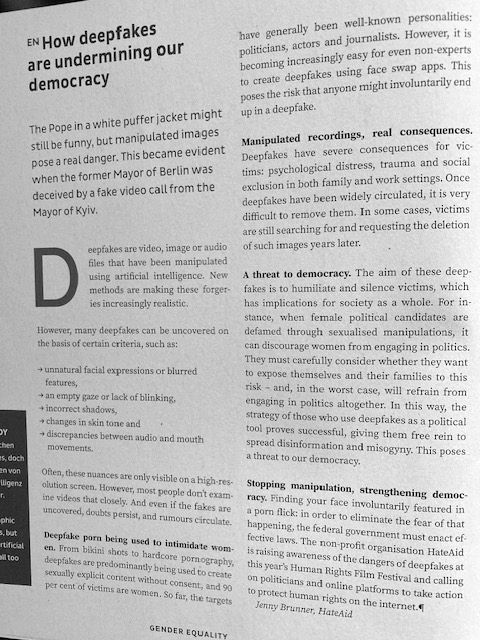 Filtering such spam is a professional task and has relatively high costs involved. A potential threat to the freedom of opinion and freedom of speech. Support for film makers and documentalists is important to strengthen the support of human rights.(Image: Human Rights Festival Magizine p.18 by Jenny Brunner, HateAid)
Nations Fail
Ever since Adam Smith wrote on the “Wealth of Nations” the topic concerns social scientists. The discourse around the wealth of nations has become even more fundamental these days. Beyond wealth calculated in economic terms we are convinced to add well-being of the population as well as the state of the environment into the accounting procedures like national accounts. But wait a second. Similar to the term wealth we have to widen our perspective in what is considered to be a nation. Shifting borders through wars (Russia aggression on Ukraine) or separatist tendencies of regions, (re-)unification of Germany or Korea (eventually) show that the nation is a concept in flux. Considering migrants from former colonies still as having residential rights in the colonising country shows, there is more to nations than a one size fits all nation concept.
Daron Acemoglu and James A. Robinson had published the book on “Why nations fail. The origins of power, prosperity and poverty” already in 2012. On the 3rd of October Germany celebrates its re-unification only because the Russian dominated German Democratic Republic (and the other Eastern European satellite states under Russian control) can be considered as a failed state. These Russian dominated states crushed private initiatives and build corrupt systems where party allegiance and hierarchical structures were overemphasised. Following Acemoglu and Robinson (chapter 10) the lack of diffusion of prosperity is likely to be the root cause. Even similar to the French revolution, which brought about tough measures of redistribution, the external threats to the post-revolution France demanded subscription of masses into armies to defend the young republic against aristocratic rulers in the surroundings. If monarchy in France is a failed state, the post-revolution France survives due to high identification with the republican idea. The Soviet dominated Ukraine is a failed state, but the Ukraine of today resists due to its willingness to defend its own republican ideals. To get virtuous circles of development started, inclusiveness across the board is necessary. Leave nobody behind, seems to be a shortcut summary. It is much easier said than done. Loosing younger generations in the sense that they no longer subscribe or feel part of an inclusive wealth of the nation is a highly dangerous path. Failed states have a history in failed inclusive social and economic practices. Democracies are at risks just as much as authoritarian nations. However, democracies have better institutional settings to address the lack of inclusion and in multiple ways.
When I celebrate the 3rd of October in the Federal Republic of Germany I celebrate (1) the accomplished failure of the GDR, its undemocratically elected elites, corrupt institutions and the failure of the thousands of willing collaborators of the Russia-backed regime; (2) the peaceful resistance movement, (3) the relatively short-lived humanitarian focus of the Russian leadership at the time to not send in the tanks and (4) the willingness of the FRG to support 20 million new citizens for many years to come (5) the allies of the FRG to accept the potential security threat of a strengthened Federal Republic of Germany, which might entail a shift in the balance of power in Europe.
And yet, even in 2023 we pose questions on what is the concept of failure, when authoritarian regime can still survive for sooo long and some still accomplish extensions. We keep questioning the sense of the term “nation” in modern times and across the globe. Too many wars are still fought in the name of a “nation” even if only a handful of military-supported leaders and single autocrats try to impose wars in the name of some rather vague or plainly mistaken claim of nationhood.
On the 3rd of October we celebrate that “nations can fail” opening a path into a more prosperous and inclusive society. Some nations fail, just because they were no nation in the first place. The GDR was such an artefact of international compromise as part of the overall “balance of power” and the Cold War. The result of this process gives so much hope to other divided nations (Korea) or nations under authoritarian oppressive rule. 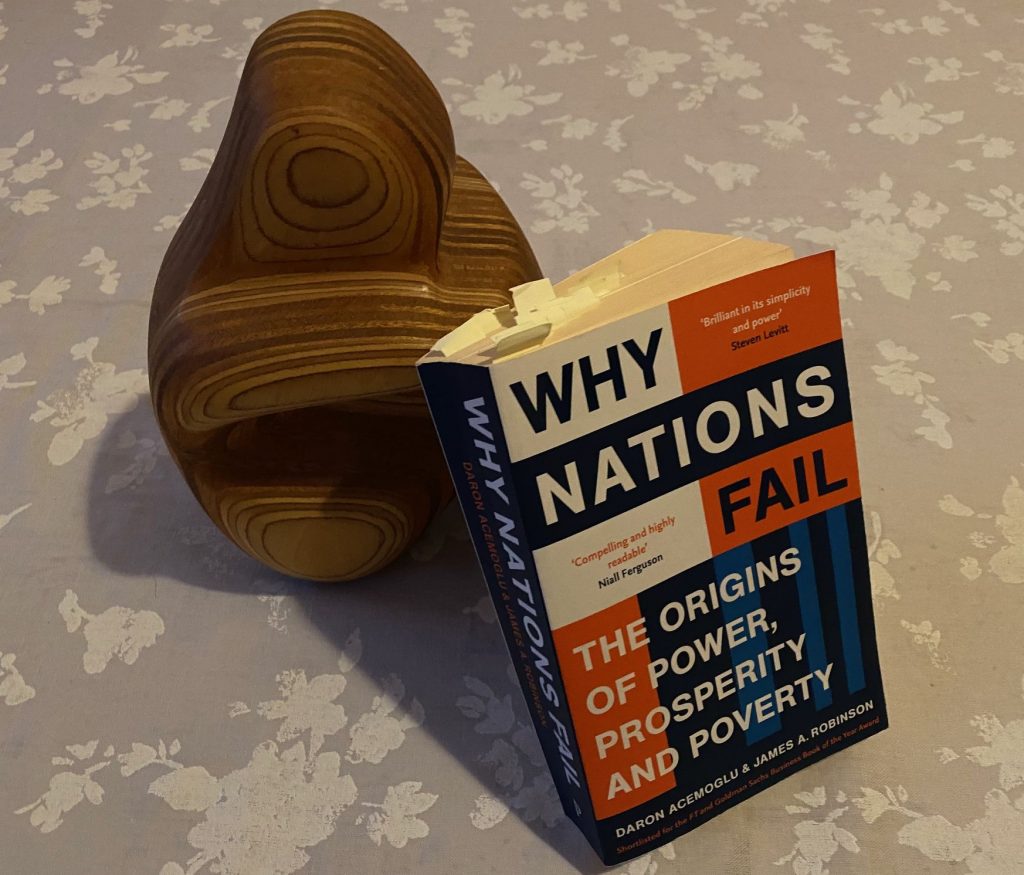
Nuclear War
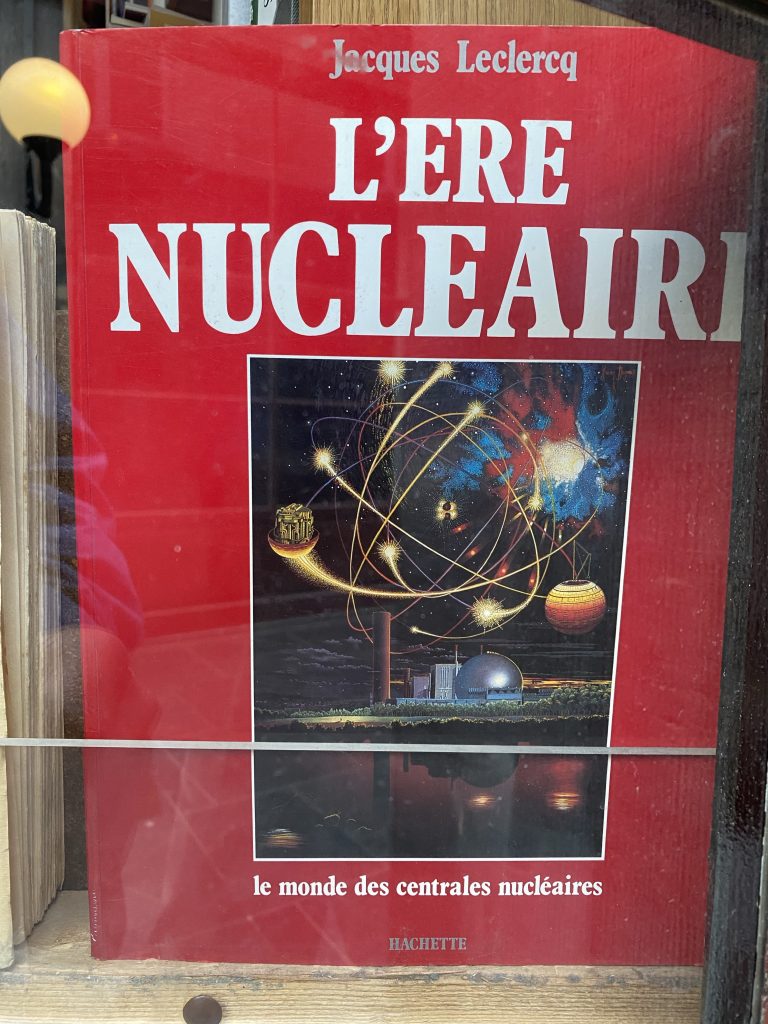
In the last few years we have witnessed a new surge in the investment in nuclear energy on the global level (IEA). Ever since the foundation of the initiative “International physicians for the prevention of nuclear war” in the 1980s, there have been relentless reminders of the devastating effects of such a war. In 2023 we are all aware of the real risk of attacks on the biggest nuclear power plant located in Ukraine. Nevertheless we continue to invest heavily in power plants that constitute a massive risk at times of war between irresponsible nations. Besides the publication of many high quality papers in The Lancet there is regularly space to keep the awareness of the dangers of nuclear war at a high level. Too many politicians shield themselves from dealing with such realistic dangers in the interest of supposed cheap and save energy for all. Both is no longer the case. Nuclear energy is expensive and unsafe in peace and horrible in war times. We cannot afford to abstract from these rising risks. The hype about anything nuclear like in the 1980s is grossly displaced (image of book below).
Hunger
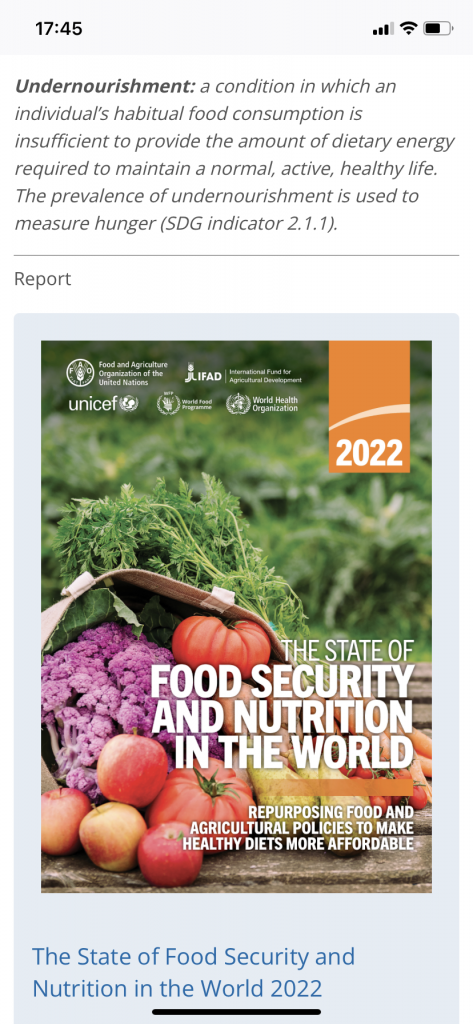
The UN strategic development goals (SDGs) list after the eradication of hunger as number 2 no hunger by the year 2030. Following the report of FAO, the UN 🇺🇳 organization in charge of nutrition in a larger sense, the world is moving further away from reaching this goal in the 4 last years. The Covid-19 pandemic had disrupted supply chains and caused higher prices for basic ingredients. The poorest countries were most vulnerable to such price increases when even in the rich world government deficits were rising sharply. Before sufficient relief arrived Russia’s war in Ukraine destroyed crops, interrupted again supply chains from Ukraine to many of the poorest nations. Energy prices are a substantial part in the production of fertilizers for agricultural products. Same story Russia disrupted the whole supply chains for food production at affordable prices for the poorest parts of the world. Additionally, Indian food production was lower due to the drought, Pakistan had extreme flooding. Both countries are important export nations for feeding the world. Continuing climate change is likely to put global food production under additional pressure. Price rises will hit the poorest again and again. Feeding animals with crops that could otherwise alleviate hunger in other parts of the world puts the rich world’s consumption patterns also into the spotlight. Fighting global hunger is largely a question of how wealthy nations deal with nutrition. The struggle to fight obesity and hunger under the joint concern of malnutrition unites all parts of the world. Time to act together on both topics.