Shrinkflation is a hybrid term that combines “to shrink” with “inflation”. The trick is to keep prices at the same level for a product, but to reduce the weight or amount sold at a constant price. The intention of producers is to indirectly increase prices without touching at price tickets on products. As consumer you are likely to remember the price tag of a product, but much less the unit costs. However, the unit price is the basis for fair comparisons. In supermarkets there is an obligation to print also unit prices (€/kg or €/L) next to price labels. Comparisons allow information irrespective of package size. In shrinkflation the higher unit costs of a product will drive the official measure of inflation (Destatis, 2024). In Germany inflation for food had the top inflation rate in 2023, surpassing even price rises for energy.
On the one hand, shrinkflation is cheating on consumers to sell them less for the same price. On the other hand, oversized products that solicit higher consumption are part of the health and environmental problems we face. The obesity pandemic is part of the XXL consumption hype the food industry and supermarkets have created. In this respect, more expensive food (Eurostat info) potentially may trigger the rethinking of consumption and nutrition. “Eating better instead of less” has always been more expensive.
Besides the profit-maximising logic of shrinkflation, there is at least a small hope that behavioural changes might be triggered to consume less, to use less detergent in washing, less sugar drinks, smaller size pizza and so on. Shrinking our food intake is part of the solution for many problems. In the end cutting out most convenience food will save you a lot of money. As a side effect of such behavioural changes, eventually prices are likely to come down some time later again. 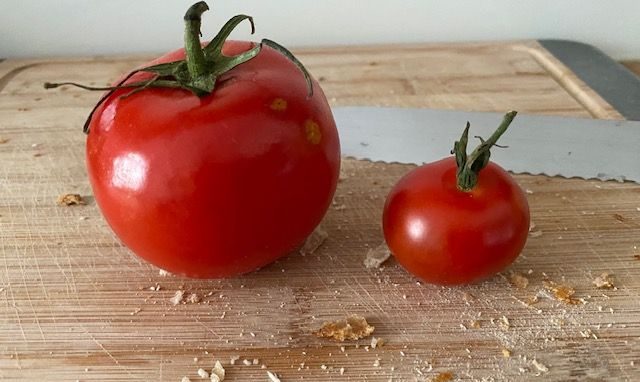
Tobacco
The documentation on tobacco slaves has already been told many times. It is astonishing that the medical journal The Lancet just published another short article on the tobacco industry and slave trade. In fact it is the enslaving practice of only buying tobacco leaves from farmers who previously had taken out a loan from the tobacco company. The control of the tobacco supply chain creates a slavish type of relationship between buyers and sellers. The dependency created leaves most tobacco farmers with no choice but to accept the conditions of the big multinational companies.
Taking the issue of slavery even further we might go as far as condemning the advertisement of tobacco and smoking in the neighborhood of schools as an attempt to enrol tobacco slaves. Only few young people manage to give up tobacco smoking later on with already acquired serious health conditions. Helping to break the vicious circle of dependency as a form of slavery to a drug is hard to accomplish. Specialized medical centers are rare and expensive. Pathologising smoking would be worthwhile rather than other diagnoses where easy to perform physical exercise could do a lot for prevention. Helping people to quit smoking or never start with it would be such a big step ahead.
Finding Peace
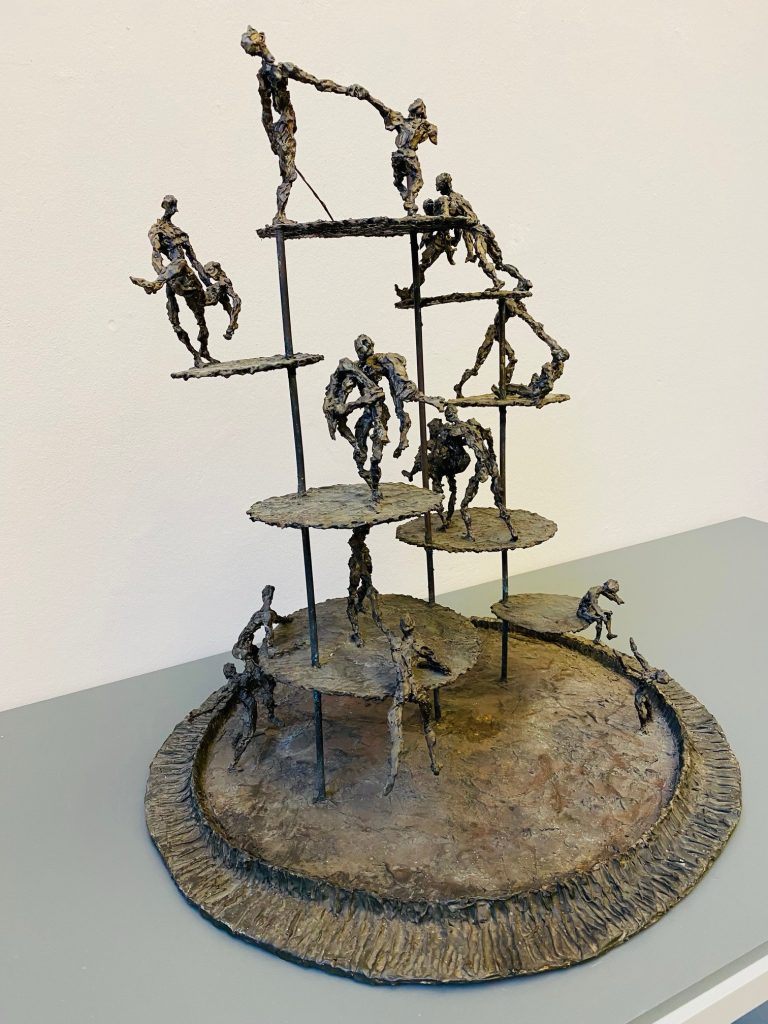
In international conflicts it the task of diplomacy to find or negotiate peace agreements. Monitoring of the evolution and progress is part of the deal. For societies internally it is equally important to find peace again. Totalitarian regimes are characterized by terror and intimidation of its own citizens. This holds true today as much as in the past. Finding peace, however, necessitates to prosecute criminals and this irrespective of their previous or current status in society. The American authorities after the 2nd world war have held more than ten thousand prisoners due to their commanding functions in the NS-time. After 3 years of imprisonment and attempts of so-called re-education the evaluation of the results were of very modest success. Most prisoners would find excuses rather than admit to their participation in the killing machine of the Nazi throughout Europe and over more than a decade.
The study by Christa Horn (1992) “Die Internierungs- und Arbeitslager in Bayern 1945-1952” comes to the same sobering conclusion (p. 127 extract below). This bears the danger that the totalitarian ideology continues to have supporters and even the transmission to other generations might be attempted. This highlights the importance of reconciliation in the lengthy process of finding peace. It far from easy to resolve who is guilty and of what. The Americans started the process before handing over responsibility to the regional judicial system. More than 75 years after 1945 we still have to name and insist on the criminal behavior of the totalitarian regime with millions of party officials and even more followers. Finding peace is a protracted process if not a struggle that involves 3 and maybe 4 generations by now. 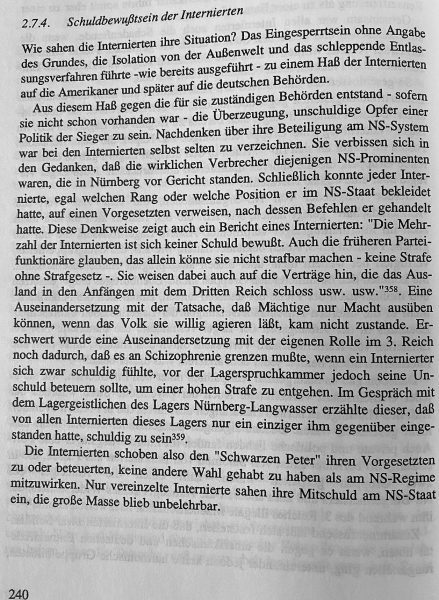
Strafbar
Wir alle wissen, dass in Deutschland die Verwendung von Symbolen der Nationalsozialisten zum Beispiel in Fotos strafrechtlich verfolgt werden kann. Das trifft auch auf vermeintlich nur private Verwendung zu. Dazu hat das Bundesverfassungsgericht eine hilfreiche Erläuterung und Auflistung erstellt (Link dazu hier).
Das Oberverwaltungsgericht von Rheinland-Pfalz hat bereits klargestellt, dass eine Unterstützung der Reichsbürger für Beamte zum Verlust des Ruhegehalts führt. (Pressemitteilung OVG RF) Die Demokratie hat sich Mittel für ihre aktive Verteidigung geschaffen. Diese rechtsstaatlichen Mittel müssen wir noch entschiedener einsetzen.
Hilfreich kann das Weiterlesen auf der Konrad Adenauer Stiftung dazu sein. Dort wird in allgemeinverständlicher Art beschrieben, dass die zur Schau Stellung von Teilen der Uniform und Symbolen seit Gründung der Bundesrepublik verboten ist.
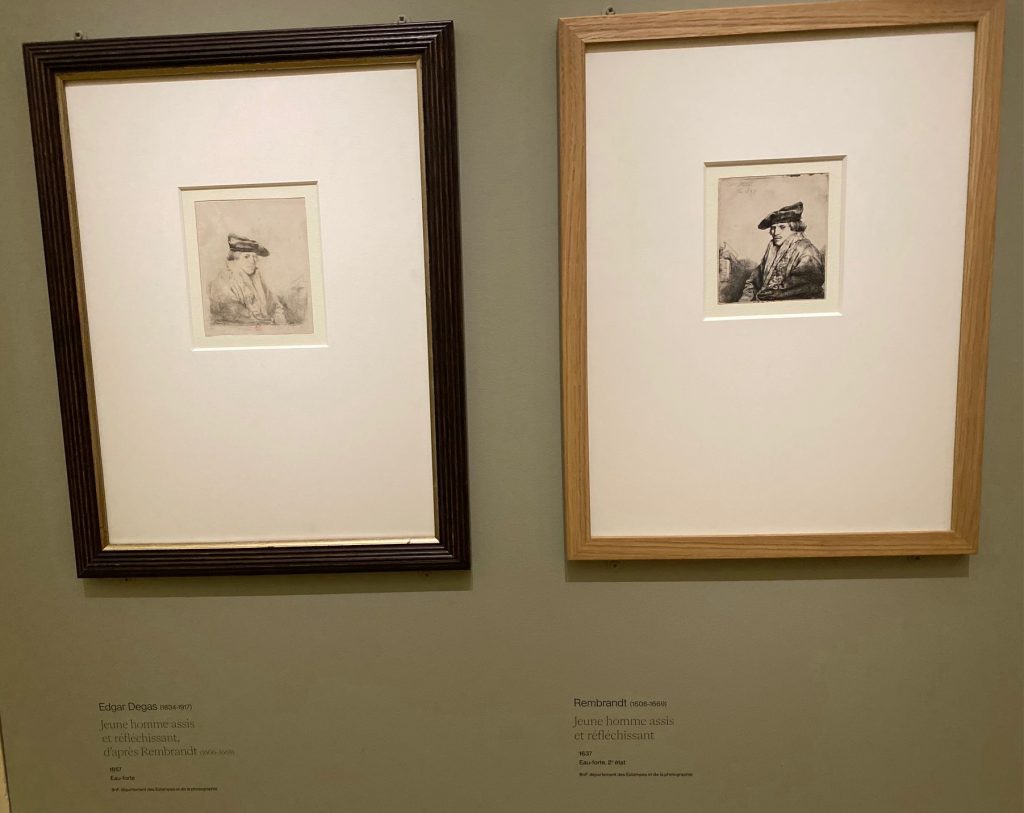
Meist steht hinter der Verwendung dieser Symbole keine Dummheit, sondern eine bewusste Aggression oder gar Boshaftigkeit gegenüber anderen Menschen. Menschenverachtung der Nationalsozialisten lässt sich nicht entschuldigen, damals nicht und heute nicht. Image: Edgar Degas d’après Rembrandt 2023 BnF.
Narratives
In psychology it is a long-established field to study narratives of persons as they age. To make sense of individual narratives might even be considered as one of the foundations of psychological research since its starting times. “The Cambridge handbook of cognitive aging : a life course perspective” has 2 entries that enlighten the issue of personal life stories or narratives. We have to consider the importance of our personal past to the construction and reconstruction of our personal narratives. As persons age reconstruction of narratives becomes a more frequent exercise as life experiences and new evidence continue to accumulate. The chapter on “narratives and identity” supports the view of plasticity in old age, which means that narratives and identity are an adaptive process. “Processes of evaluation and reinterpretation of personal memories enable people to maintain a sense of self”. The importance of recalling personal life events and positive self-regard is a well-established link in this research tradition. The self-memory system consists of the autobiographical memory, the self-concept and the working self as its components. It is evolving in most persons as part of the construction and reconstruction of the self, as well as narratives of it.
As persons age our brain and memory functions age as well. This starts earlier than most people expect. “Many studies in gerontology have shown that being able to remember, evaluate, and integrate personal memories and thereby dynamically maintain identity is related to mental health and well-being in later life (Westerhof et al., 2010).” (p.392). Reconstruction of narratives is a process that is hard work for our brain, therefore as people age many seem to shun away from these tasks. It is easier to clinch on to the old narratives of the self.
The chapter on emotion recognition and aging of the social brain summarises the research (p.369) by Ruffman et al. (2012, 2016) which shows that older persons were not as good as young persons to detect lies due to difficulties with emotion recognition. “Finally, we examined right-wing authoritarianism (Ruffman et al., 2016), that is, the tendency to hold conservative social attitudes (e.g., believing that women should have to promise to obey their husbands when they get married). Older adults had more pronounced right-wing attitudes than young adults, and even within the older adult group, these attitudes were entirely explained by their worse emotion recognition”.
The causal link, however, is less clear. The positivity bias in old age might be a major factor. The positivity bias describes the fact that older persons prefer to look at positive stimuli and avoid negative stimuli. The evidence is rather inconclusive about this effect. Probably persons have a positivity bias all along their life course as part of their personality traits. The other explanations of brain region decline and activation seem to receive a bit more empirical support (p.375). In any case, men seem to be even at higher risks.
Archives of personal diaries, letters, correspondence of persons are a valid additional source to study the process of the construction and reconstruction of the self. Biographical accounts of life histories serve as empirical material to analyse narratives and historical validity of narratives. The better the story, the more scepticism should be applied. 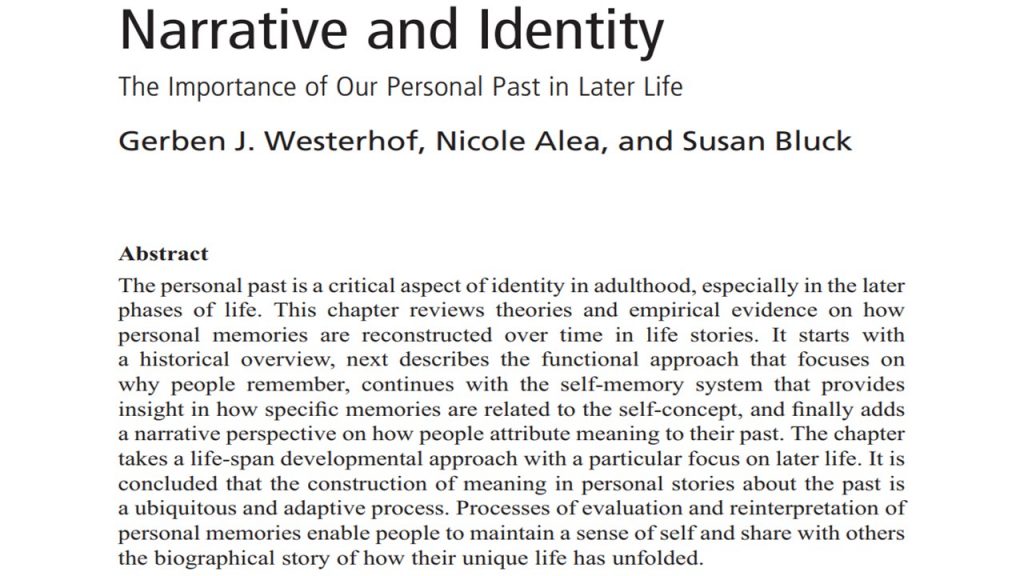
Verbannte Worte
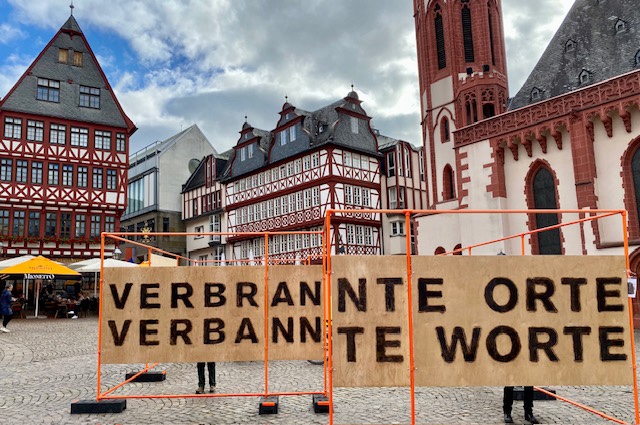
Die Ausstellung Verbannte Worte im historischen Zentrum von Frankfurt trifft auf viele Besuchende der Messe aus der ganzen Welt, die oft nur ein bisschen Rathaus, Marktplatz oder Paulskirche sehen wollen. Aber unbefangen kann keiner an der Geschichte dort vorbeigehen. Neben den Millionen an gedruckten Worten muss es eben einen würdigen Ort geben, der den
verbannten Worten gewidmet ist. Viele Kunstschaffende und Schreibenden konnten bestenfalls im Exil überleben. Das ist heute in großen Teilen der Welt weiterhin so. Der PEN International listet erschreckende Zahlen dazu. Das erneute Post-COVID Wachstum der Frankfurter Buchmesse erfreut alle, die sich unermüdlich für das freie Wort einsetzen. Jedoch auch klare Worte finden denen gegenüber, die das freie Wort menschenverachtend missbrauchen. Dazu leistet die kleine Ausstellung ein sehr wichtigen Beitrag, der über die Buchmesse kraftvoll in die Welt getragen wird.
Luftschloss
Im K21 der Kunstsammlung Nordrhein-Westfalen ist ein Luftschloss eingebaut worden. Es ist das einzige mir bekannte Luftschloss, das für alle Besuchenden begehbar und fühlbar ist. In wahrhaft luftiger Höhe von 25+ Metern über der Eingangshalle der Kunsthalle K21 und zentral unter der gläsernen Dachkuppel platziert, lässt sich mal so richtig abhängen. Nahezu schwebend kann die weiträumige Installation von Tomás Saraceno erklommen werden. Die Schritte und wippenden Bewegungen der anderen BesucherInnen lassen sich unvermittelt ebenfalls erspüren. Du bist nicht allein, im originären Sinne des Wortes. Die buchstäbliche Vernetzung mit allen anderen Personen werden durch Schwingungen des Netzes zu anderen Kletternden oder Chillenden übertragen. Eine unmittelbar erlebbare Erfahrung der Verbundenheit mit unbekannten, anderen Menschen stellt sich ein. Die Verbundenheit innerhalb einer Gesellschaft wird eindringlich verdeutlicht. Die Angst, durch die Höhe verursacht, weicht rasch der freudigen Erfahrung der Schwebung und der kindlichen Erfahrung der Suspension. Nahezu freischwebend in der Luft, im Orbit erlebt jede/r sein eigenes Luftschloss inmitten von transparenten Kugeln, die wie Planeten wirken. Gleichsam real, aber dennoch imaginär durchwandern wir die Installation immer im Bewusstsein, dass andere um uns sind, die unsere Schritte, Möglichkeiten und Haltungen mit beeinflussen. Vom Luftschloss träumen oder im Luftschloss träumen, beides ist dort machbar.
CO2 freundlich lässt sich die Erfahrung in der APP Aerocene fortsetzen. Der für unser Wetter so bedeutsame Jetstream wird zur imaginären Flugerfahrung genutzt und mit recht aktuellen Daten gespeist. Die Verbindung zu „Earth and Space Sciences“ ermöglicht die Einbettung der sozialen Erfahrung in einen noch weiteren Kontext.
Die eigenen 4 Wände sind die Grenze. Das galt schon früher nicht. Weit darüber hinaus lassen sich neue Möglichkeiten erschließen, die nicht umweltbelastend sind. Selbst die Reichstagskuppel in Berlin sehe ich plötzlich mit ganz anderen Augen. Mehr als Möglichkeitsraum, statt der traurigen Vergangenheit und der zerstrittenen Gegenwart. Was wäre die Kunst, wenn sie nicht zum Träumen anregen würde. 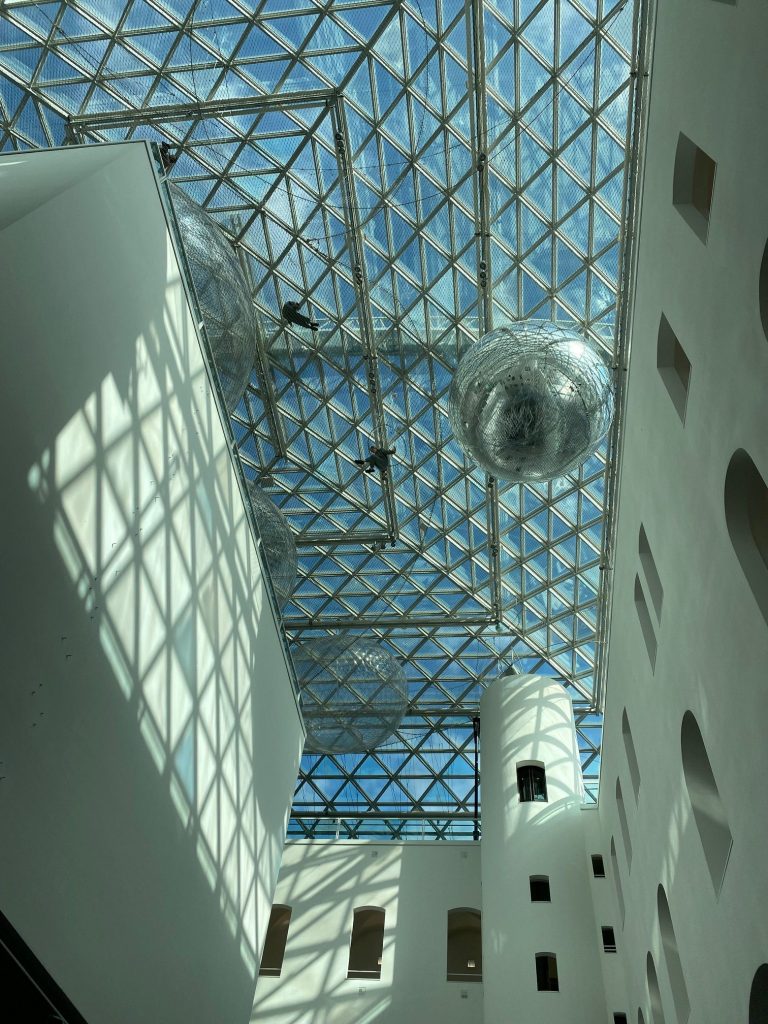
Corrupt-2
New scientific evidence on corruption and stereotypes about corruption reveals surprising behavioural responses. Social psychologist classified corruption as a behavioural trait of a person. The new evidence of a study that includes country-specific stereotypes into a corruption experiment shows there are always two sides to consider: the corrupted as well as the corrupting person. Both hold stereotypes about the likelihood another person (from a specific country background) is likely to accept a bribe.
Using a widely accepted index from Transparency International on corruption in countries the experiment uses real payouts to test the probability that a person from country X is trying to bribe a person from country Y. Rather than a personal trait, the study finds that many persons become “conditionally corrupt”. This describes the behaviour to offer a bribe to a person occurs more often if you believe the probability that the person accepts corruption is high. Dorrough, Köbis et al. (Link publication) is cited in “nautilus” explaining this by, quote, “when in Rome, do as the Romans do”. Additionally, the stereotypes on corruption prevalence leads people to act more on what they believe is common practice rather than what is the basic legal or ethical standard.
From behavioural ethics we know the urge of people to find justifications for their unethical behaviour to themselves or to others. This is called “justified ethicality”.
Following this rationale, it will be easier to accept a bribe, if the person originates from a high reputation of corruption. In order to correct for such bias due to stereotypes it is important to pursue corruption vigorously and, just as important, communicate a lot about this behavioural change so that stereotypes begin to change in the mindsets of other persons as well. There are many ways to Rome and some turn out to be quite long. 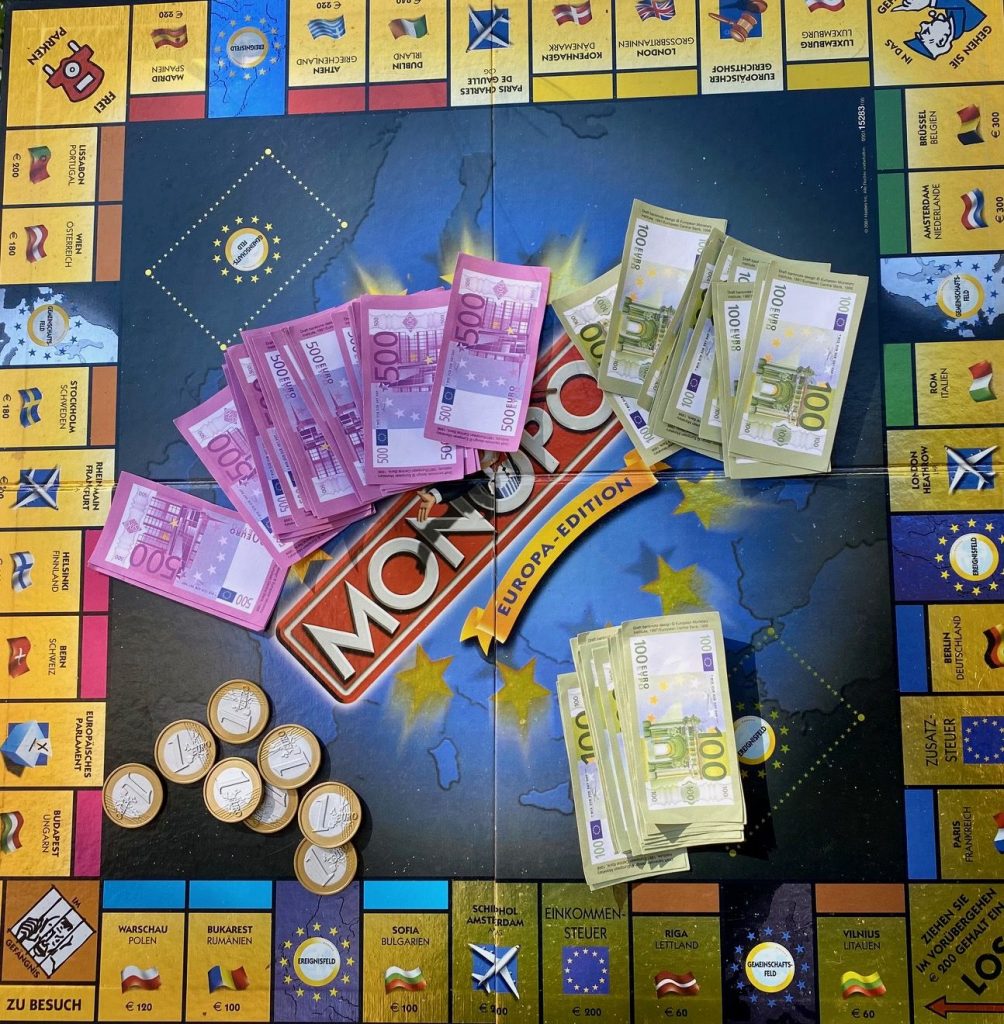
Barbie explore
The film on Barbie after more than 60 years of the first puppets to arrive on the market is a huge money spinning exercise. Hitting more than 1 billion $ is really a huge box office success. More interesting even is the banning of the film in some countries like Algeria. This gives the film an interesting subversive touch to it, which we in the Western countries no longer see as something special. Emancipated women pose a threat to authoritarian regimes.
However, we see in the stereotypes of beauty-driven dolls not that much of an emancipatory chance. To view emancipation independent of the looks of a person is another interesting twist to the role in stereotypes of beauty. It is not only fun to play around with stereotypes, that is mostly, if you are not negatively affected by them (age, gender, ethnicity, extraordinary persons). A nice task for sociology and psychology to explain the working of stereotypes in society and possible remedies. Tolerance is a competence that needs to be learned and updated continuously, from early age onwards.
Therefore, the website created by the US Design Agency Rvnway offers an entertaining way to play around and learn about stereotypes. Perceived, generalized beauty or gender roles can be explored using the tool. Maybe some see themselves differently after such explorations. Everybody is a model. This is the message. www.bairbie.me will let you explore other formats of yourself. After 3-D rendering and printing your children or grandchildren will decide what role they would like you to play in their playfull, or virtual “real” life. I suppose many of us will be up for a big surprise. Go on and imagine in 4D. In the age of selfies all around us, all the time, we believe we are very modern, but the artists of the 19th and 20th century following all great painters before, frequently started their careers with an “autoportrait” or “Selbstbildnis” or series of those as they were aging. 




Diplomatin
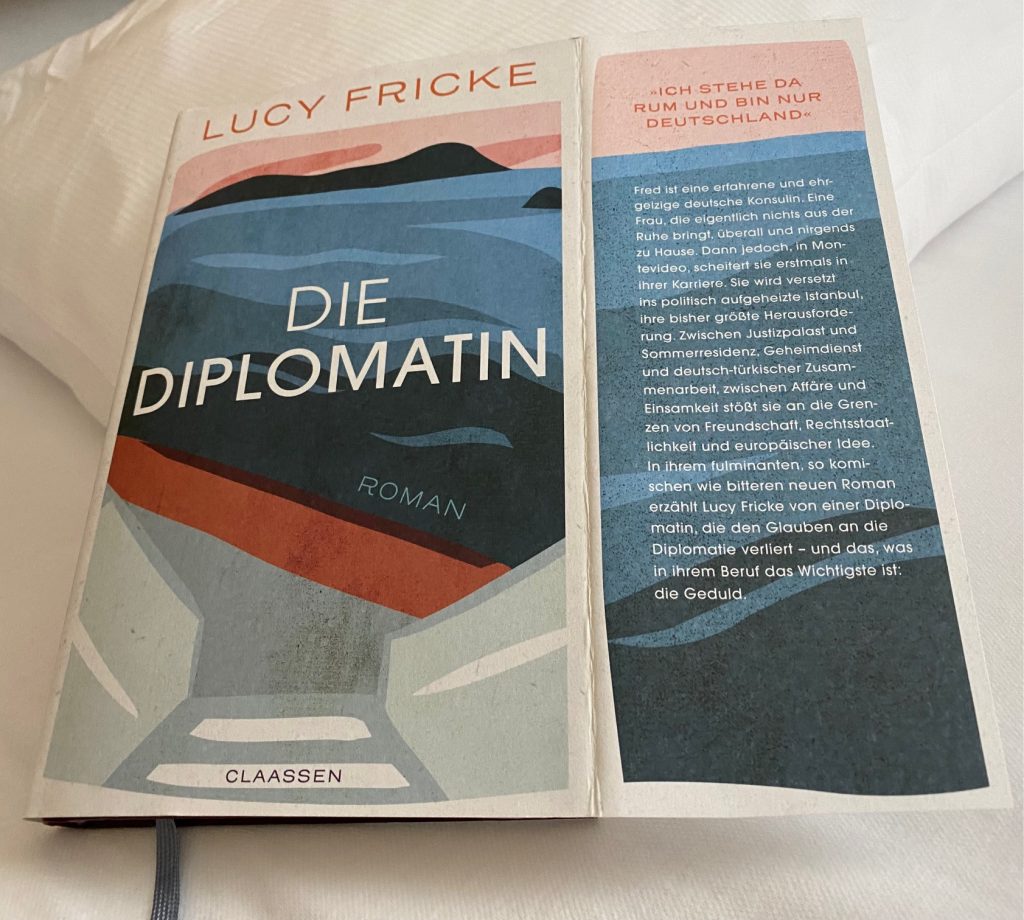
Der Roman von Lucy Fricke über Diplomatie und Diplomaten ergänzt in recht unterhaltsamer Weise die eher trockene und abstrakte Literatur zur internationalen Politik. Gute Bettlektüre für den politisch interessierten Menschen, der gerade im Urlaub ist. Diplomatie schläft nicht und macht wenig Urlaub. Urlauber dagegen machen den Diplomaten oft ganz schön zu schaffen. Die geduldigen Mittel und Wege der Diplomatie sind nun wirklich nicht jeder Frau oder Manns Sache. Wenn sich Emotionen einmischen wird die diplomatische Herausforderung zu einem nahezu unauflöslichen Konflikt. Diskretion und Verschwiegenheit sind elementar in diesem Beruf. Geduldsproben an der Tagesordnung, ständig und bei allen Dienstgeschäften. Ein nachvollziehbarer Einstieg in diese Berufswelt in Form eines Romans sollte Pflichtlektüre für alle sein, die sich diesem Berufsfeld oder der Aufgabe annehmen wollen. Gut, dass es eine Diplomatin beschreibt. Das gibt eine erfrischende neue Perspektive. Vielleicht auch Anregung über eine feministische Aussenpolitik nachzudenken.
Wenig beleuchtet werden die politischen Umstände, die nur als Staffagen für die Erzählungen herhalten müssen. Taksim Platz samt Wasserwerfer interessiert wohl nur am Rande. Das ist schade, weil es verpasste Gelegenheiten sind, Menschenrechtsverletzungen zumindest kurz anzusprechen. So kratzt die Erzählung nur an der Oberfläche von Personen und dem wirklichen Geschäft der Diplomatie. Aktion in den Vordergrund zustellen ist gut für die Story und Verfilmungen, aber der Kern der Diplomatie muss anders aussehen. Etwas Heimaturlaub konfrontiert die Diplomatin dann erneut mit der weitreichenden Gleichgültigkeit gegenüber der diplomatischen Arbeit. Leben organisieren und Aufräumen bleiben auch im Privatleben der Diplomatin eine Herausforderung der Work-life balance.