30s

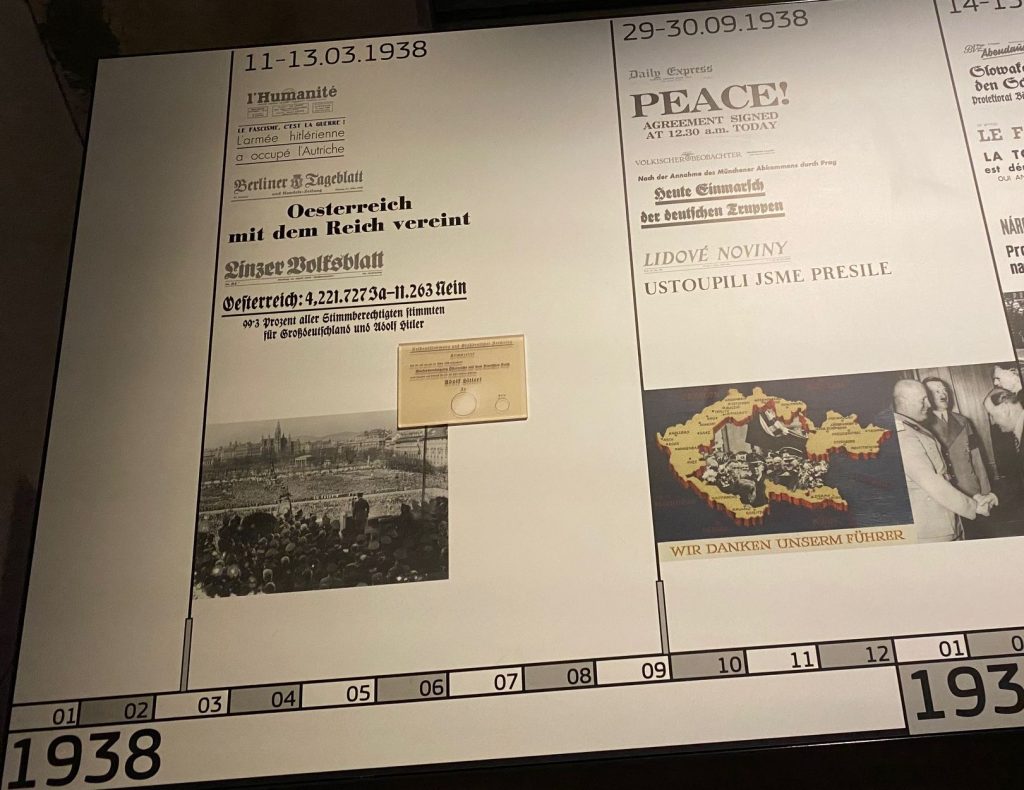
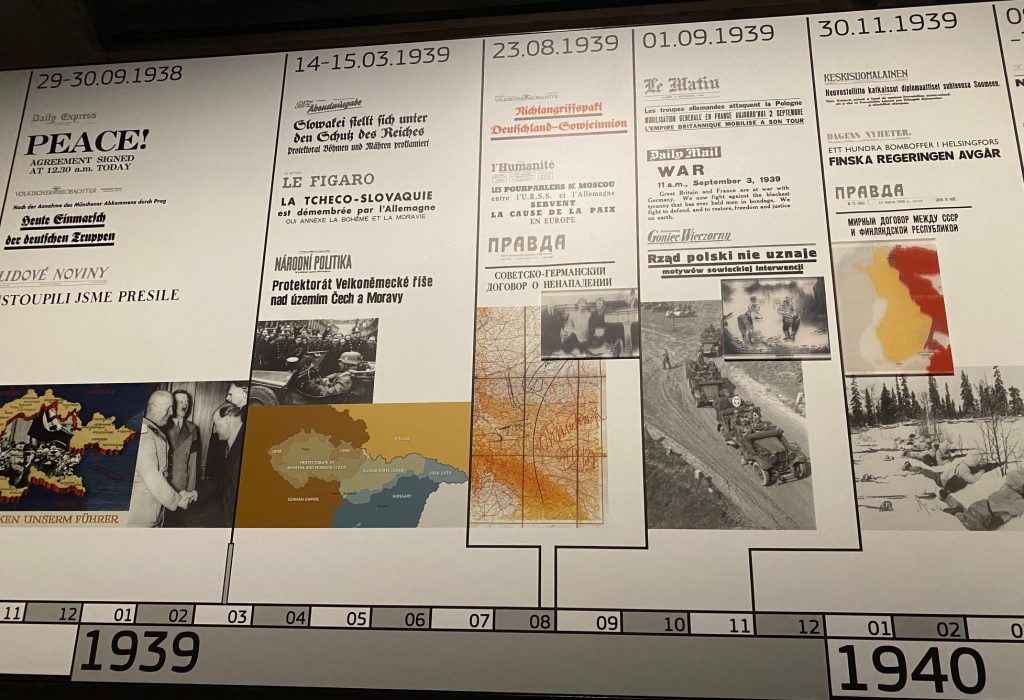
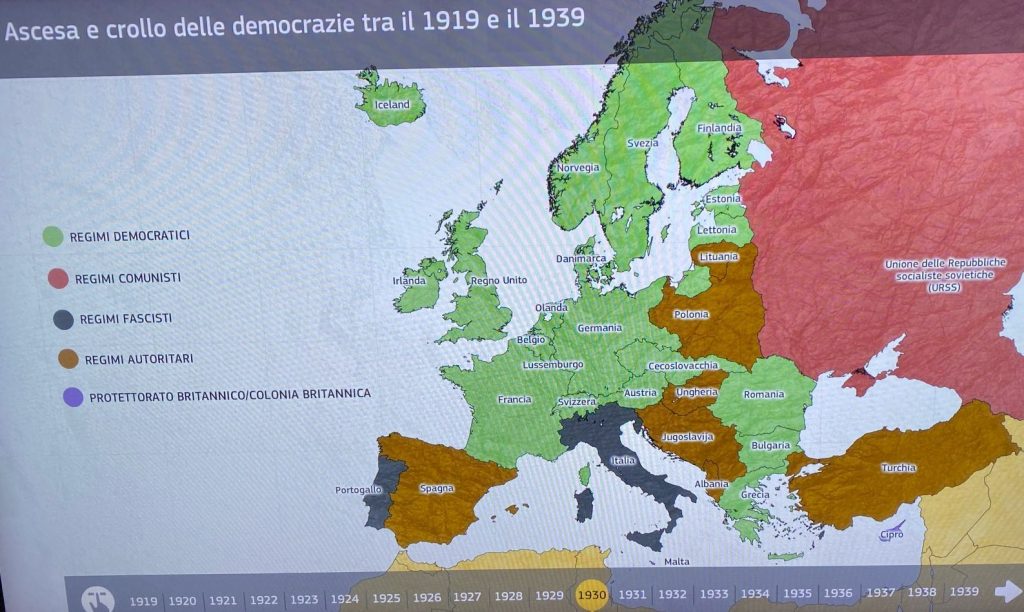
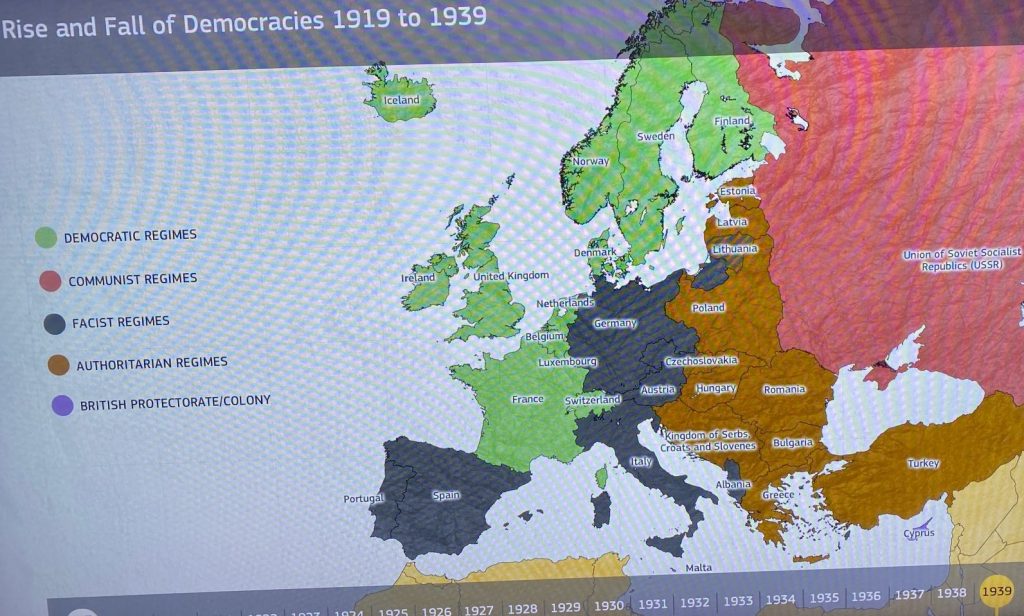
In retrospect the 1930s would deserve well the label of the disastrous 30s. In terms of human tragedy the 40s were worse, but the foundations for the millions of deaths through the Shoah and the second world war were enacted throughout the 1930s. My reading of the decade is dominated by the rising tide of hate throughout the 30s. The fascist movements in Italy and Germany were growing rapidly. From the entry number 185.729 (later committed war crimes in Ukraine) at the 1st of January 1930 the German NSDAP membership grew to 7.352.197 (Reichsakademie für Leibesübungen) on the 1.1.1940. This is still about 3 million persons less than at around the peak in 1944/45 of for example entry number 10.123.636 (later Foreign Secretary of Germany). The House of European History of the European Parliament in Brussels provides a good depiction of the spread of Fascism and dictatorships in Europe in the 1930s. Whereas Italy had turned Fascist already before 1930. Hungary was also under dictatorship already at the beginning of 1930. The rise of the German Nazi political party NSDAP turned out to be the most disastrous and devastating fascist movement and dictatorship throughout the 30s. The maps with timelines represented in the permanent exhibition in the House of European History reflect the spreading disaster for millions of persons. Many writers and social scientist had the correct apprehension and “apocalyptic imagination” (Pearce, 1971) to seek refuge early. But this turned out to be a not generalisable exit option for most persons concerned. Only few countries managed through early decisive action against the spread of fascism to escape from, better shield themselves, or fight against the rising tide. In the late 60s and the 70s youth at the time started to question the role of their parents in the rise of nationalist movements in Europe. An interesting reference for Canada is the teaching reform that materialised in the “box of the 30s” (Weinland and Roberts, 1972). The 1930s Multi Media Kit for teaching history contained photos (Guernica), radio clips, extracts from novels, but also recipes or recorded interviews. Make history speak and start with a “personal touch” to it. Avoiding the economic failures of the 1930s and the rising tide of fascists throughout the 30s are high on the political agenda 90 years later in the 2020s again.
Aphorismen L3

“Was für Aussichten würden wir bekommen, wenn wir unser Kapital von Wahrheiten einmal von demjenigen entblößen könnten, was ihnen nicht sowohl wesentlich ist, als vielmehr aus der öfteren Wiederholung zuwächst.“ (Lichtenberg S. 50). Die Wiederholung ist eine starke Lernmethode. Sie wird seit Jahrtausenden erfolgreich eingesetzt. Alle Religionen bedienen sich am liebsten täglich dieser Methode, um sich der Treue der Anbetenden zu vergewissern. Der Glaube im Glauben ist: Oft genug wiederholt ist gut verinnerlicht. Dabei bleibt ein Glaube ein Glaube, selbst bei ständiger Wiederholung. Lediglich so manchem Mensch erscheint durch regelmäßiges Wiederholen die Botschaft als verinnerlichte Selbstverständlichkeit. Wahrscheinlich ist es beruhigender, sich nicht täglich zu fragen, ob das 1x,2x,3x mal tägliche Einmassieren von Chemikalien auf Zähne und Zahnfleisch wirklich nachhaltig gesundheitsfördernd ist. Alleine dem Markt wollen wir das Thema nun auch nicht überantworten. Warten wir weiterhin auf die nächste entblößende, hoffentlich wirklich unabhängige, wissenschaftliche Studie dazu. Mit den Pestiziden in der Ernährung hat das bekanntlich nur sehr bedingt funktioniert. Wie schön, dass alle Jahre wieder Frühling kommt und die finsteren Tage hinter uns lässt. Wiederholungen lassen Routinen entstehen, die uns das ständige Hinterfragen ersparen. Rasch gehen wir über Fragen von Kindern hinweg: Muss ich heute in die Schule gehen? Dabei ist Hinterfragen von Wiederholungen ein wichtiges Lernen, dem Mitläufertum entgegen zu wirken.

Alkoholismus

Alkohol ist eine Droge, da Alkohol abhängig machen kann. Die Bewusstseinsveränderungen können beachtliche bis extreme Ausmaße erreichen. Das wissen wir alle und zwar seit Jahrhunderten. Mäßigung bei Rauschmitteln ist nötig, aber schwer erlernbar. Etwas Genuss ist gesellschaftlich nicht nur toleriert, sondern gewollt zur Förderung der Geselligkeit. Zu viel Genuss beeinträchtigt meistens andere und wird dann zu einer schwierigen Problematik. Ärztinnen, Psychologinnen und andere Heilberufe stehen oft hilflos, wie auch das nahe familiäre Umfeld, vor dieser Situation. Selbst neuere Studien weisen darauf hin, dass die Versorgung dieser Patienten (UK), bestenfalls in der Hälfte der Fälle als gut einzustufen ist. Die Studie zu Großbritannien beschreibt gleichfalls die Krankheitsgeschichte und -versorgung als „eskalierende Tragödie“. Für die meisten anderen Länder liegen keine wirklich guten Daten vor, die weder einen Handlungsbedarf noch auf einen gesellschaftlichen Gestaltungswillen hindeuten würden.
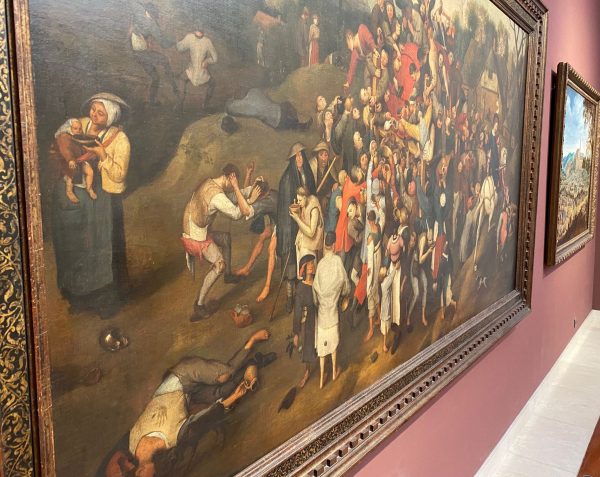
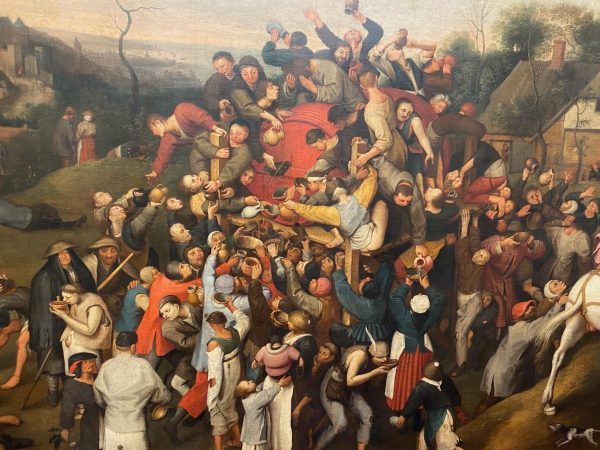
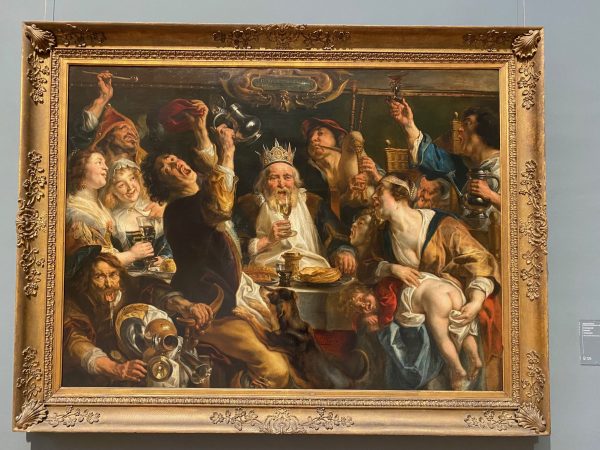
Die Radiosendung zum Thema „Umgang mit Alkoholkranken“ und die Initiative von Sänger Max Mutzke, „Kindern suchtkranker Eltern eine Stimme geben“ beschreibt eindrücklich die generationsübergreifende Bedeutung von Alkoholkrankheit. Alkohol ist eben nicht nur das Problem der betroffenen Person. Ein ganzes Umfeld ist betroffen. Das Problem wächst sich meistens aus zu einer Problematik für das weitere familiäre Umfeld, Freundeskreise und ArbeitskollegInnen. Es ist erstaunlich, dass wir seit Jahrhunderten keinen anderen Umgang mit alkoholbasierten Rauschmitteln gefunden haben, als alles erlaubt oder alles verboten, außer der Altersbegrenzung für Kinder und beim Autofahren. Der Maler Bruegel sah das wohl ähnlich. Den St. Martinswein kann sich heute jeder im Laden um die Ecke selbst kaufen. Mäßigung im Umgang mit Drogen ist nach wie vor ein schwieriger Lernprozess, für Einzelne (Jordaens – Der König drinkt!), wie für die Gesellschaft. ( fast betrunkenes Video Alko VLC Bruegel MRBA Bruxelles.jpg zur Bildexploration).

Aphorismen L2

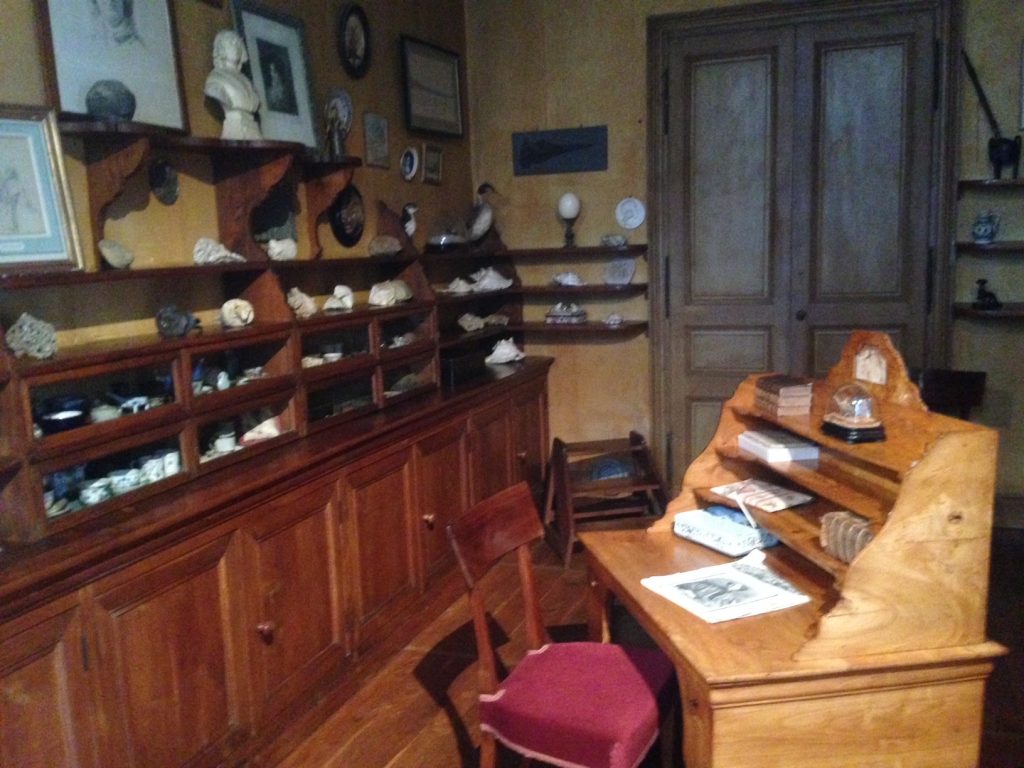
“Man soll öfters dasjenige untersuchen, was von den Menschen meist vergessen wird, wo sie nicht hinsehen und was so sehr als bekannt angenommen wird, dass es keiner Untersuchung mehr wert geachtet wird.“ (Lichtenberg S. 50). Eine eindrückliche Warnung sich nicht nur den großen Wellen und Wogen der Öffentlichkeit oder der Wissenschaften hinzugeben. Wo viele nicht hinschauen oder bewusst wegsehen, da gibt es meist einiges zu ergründen. Die Soziologie der kleinen Dinge, der Alltagsgegenstände bringt faszinierende Erkenntnisse hervor. Nehmen wir nur einmal die Bekleidung beim Kochen. Von der Kittelschürze zum gestylten Outfit für die Kochshow zum Gesellschafts-cooking“ haben sich Kleidungsstücke und Berufe in ihrer Funktionalität gewandelt. Dem Anlass entsprechend wird sich gekleidet. Kochen ist von den Hinterzimmern mancherorts ins Zentrum der Gesellschaft mutiert. Wertschätzung von Handwerk und delikate Zubereitung sollten Rekrutierung erleichtern. Bleibt nur noch die Arbeit drumherum. Einkaufen, Einräumen, Einweichen, Abtrocknen, Aufräumen. Die Arbeit geht uns nicht aus, sie verändert sich nur. Wertschätzung der kleinen Aktivitäten, desjenigen, „was von den Menschen meist vergessen wird, wo sie nicht hinsehen“ kann so aufschlussreich sein. Hinschauen und Verstehen lernen bleibt angesagt. Lichtenberg weiter: „Man frage sich selbst, ob man sich die kleinsten Sachen erklären kann; dieses ist das einzige Mittel, sich ein rechtes System zu formieren, seine Kräfte zu erforschen und seine Lektüre sich nützlich zu machen.“ Aphorismen können ein ganzes Forschungsprogramm auf den Punkt bringen und so die kleinsten Beiträge noch als nützlich erweisen. (Foto: Schreibatelier von George Sand in Nohant).

Narrative economics

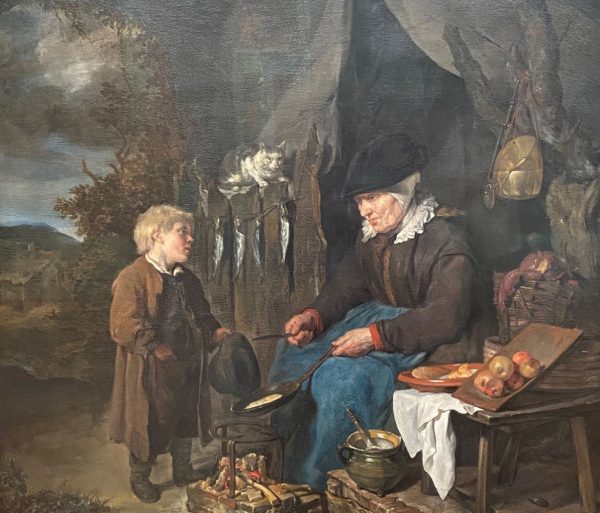
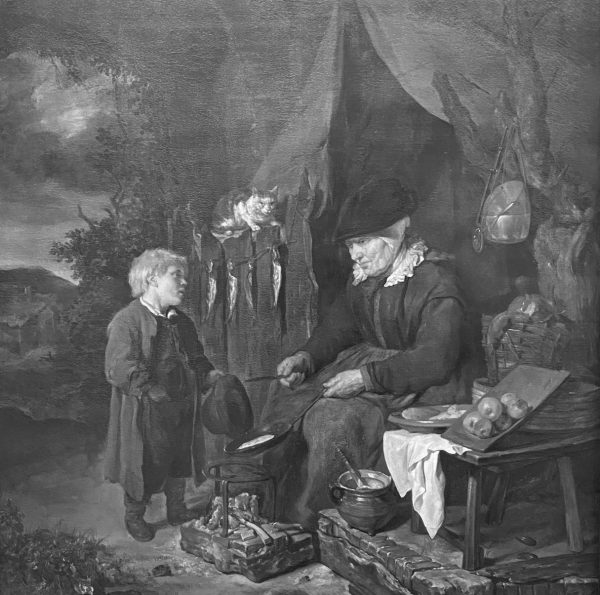
Narratives have been with us as long as mankind exists. They just take different forms and content nowadays. Whereby narratives have first spread orally, then much later through written words, images and movies, they are forceful ways of communicating. Robert Shiller wrote a good story about narratives related to the field of economics. Referring to the writing of the polymath David Hume (1742), main proponent with Adam Smith of the Scottish enlightenment, contagion like in pandemics is mentioned for the first time to explain that “the multitude will certainly be seized by the common affection and be governed by it in all their actions”. (Shiller 2019, p. 58). In order to understand narratives going viral Shiller mentions the importance for narratives to be embedded in “narrative constellations”. Holding truth against spreading false narratives might not be enough in itself. Strong, catching narratives seem to bypass or override even truthful information. Additionally, narratives never die, but rather offer opportunities for repetition. On content of economic narratives Shiller exemplifies stock market panic, consumerism, financial stability, automation and AI fears, speculation bubbles, evil business and labour unions. Topics like lazy unemployed persons, too early entry into retirement, too late entry into the labour market for youth, women or migrants, all have endured stigmatising narratives across time and/or across countries. With emotional and powerful economic narratives all around us, trust and authenticity become a very important meta-currency. The instantly printing camera now serves as proof. Beware of the scenery, actors and action chosen. Medieval painter Gabriel Metsu (1629-1667 Leiden-Amsterdam) had chosen the economic narrative of the “women baking pan cakes and the child as beggar”.  Ending up in a museum instead of the White House is probably the opposite of going viral. The same Photo in black and white might have more of a trustworthy documentary character than the suggestive colours.

Time5

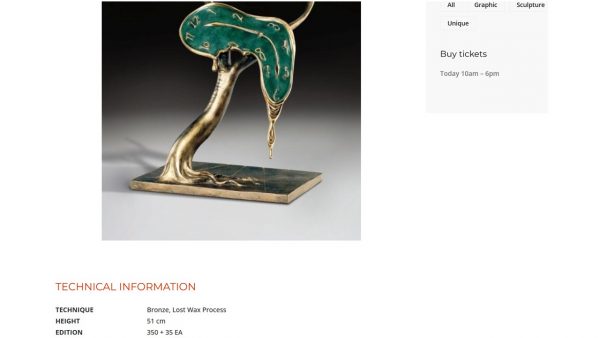
The social sciences deal with time either as part of social theory and as part of social measurement in the broadest sense. The entry of time in “The encyclopedia of social theory” (Ritzer, 2006, p.837-41) reminds us that since the age of Augustinus, believing that time is a God-given concept, we have evolved with Kant’s notion of the “Ding an sich” that time exists within our experience, but also beyond our experience of it. It is Durkheim who sees time as a social institution and raises the issue of a social construction of the concept(s) of time. In the process of civilisation, Nobert Elias leads us to think of time as an evolving social process which allows us to reach higher levels of civilisations. Despite wars and other backlashes, the basic premise remains an eventual improvement on previous situations (Time 3). The phenomenological method applied by Husserl points at the “inner time consciousness” of persons, which finds its literary expression for example in Proust’s writings.
In addition to time as the object of social theories, we find frequent implicit use of concepts of time as a component of social theories. Life courses, social change, social mobility, social integration, learning, all these concepts are conceived with “time stamps” attached to the them. Their temporality, i.e. location in time and space, durations, sequential orders and interlinkages form huge fields of research. Whole societies have attempted to define when is the “normal”, “right” or “best” time to do something for the individual or the society as a whole. Social desirability is linked to time and space and varies accordingly. The 1960s probably were a decade where the questioning of social desirability was most obvious.
Social measurement of time and the location of social phenomena in time leads us to the empirical field of studying time or the treatment of time as a basic dimension in and of social processes. “The encyclopedia of social measurement” (Kempf-Leonard, 2005) list the sampling of time as a basic entry to the topic. Frequency of sampling, (yearly, quarterly), level of sampling (person, household, region, country), repeated surveys (prospective, retrospective) of same person or rotating samples of persons have their specific strengths and weaknesses. Analytical methods rely on the concepts of the measurement of time. It seems to be a fair observation that (Clarke and Granato, 2005, p.836) the future of time series analysis lies in the linkages to theory. After all, the 2 worlds of theory and empirical measurement are linked through the concept of time, despite the tendency to abstract from it or assuming a large overlap in the concept of time (and space) referred to. Clocks seems to be ticking differently in different places.
Image: Dali Paris. R. & N. Descharnes Salvador Dali Sculptures & Objects. Eccart. Ref. 615, page 238.

Time4

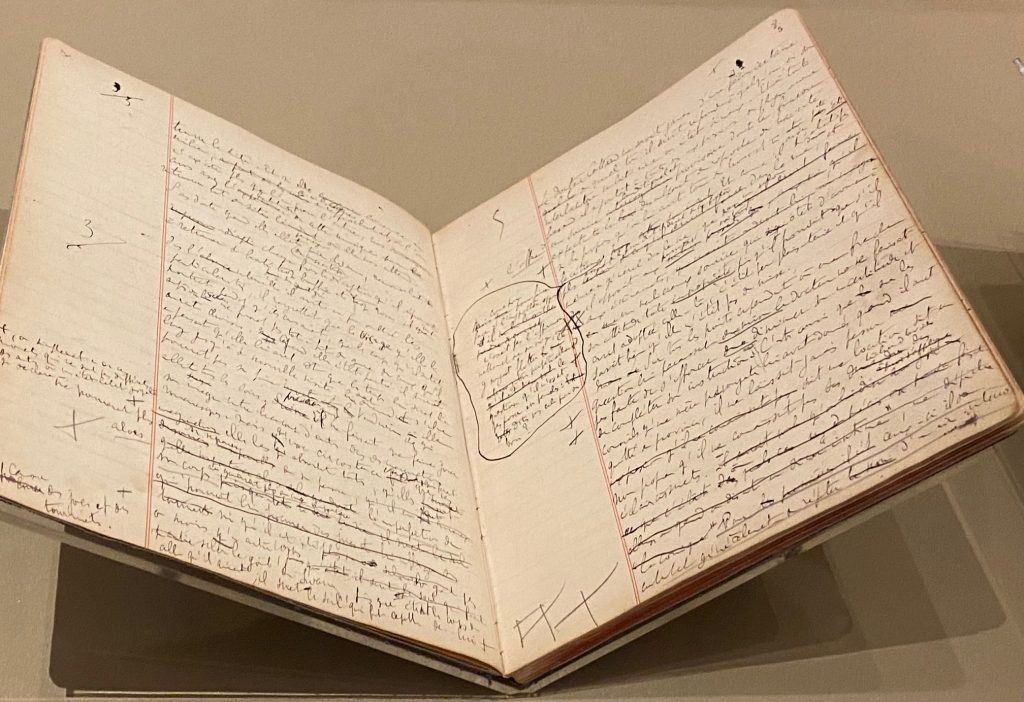
»Tempus fugit» (Latin proverb) time is flying, or time is escaping us. This is a classical quote. Students of Latin come across it in language acquisition.  “Carpe diem” make the most of the day, others responded. Some even raise it to a dogma of their existence. Whereas in classical times, time was more likely to be perceived as a linear concept (v = s x t), modern concepts discuss time as “acceleration” a nonlinear concept (a = v x t = s x t²)  or higher order non-linearities even (time³). Social time is embedded in such concepts of time. At some moments we perceive time as running very slowly, at other instances as running fast or accelerating. The synchronisation of time for friends, a couple, a family, lives, within a society or between societies is the big challenge. We tend to use calendars to synchronize our time acknowledging that time might be running at different speed for different persons. We have invented rituals of synchronisation like celebrating birthdays, departures at work, retirements or relative to seasons, with corresponding seasonal greetings. In between these events time fluctuates with different speed for different persons. Commonly in a kind of superficial objectivity, time is running in the same second-, minute-, hour-, day-like fashion, but considering activities or experiences, the same time span is widely different across persons. A lot of intergenerational conflicts have their origins in this non-synchronicity of time across generations. Bernard Guy (2018) reminds us of the link of time and space, as in the equations above, common in classical physics, where we could replace s with the change of coordinates of 2 GPS-signals. This space – time relationship complicates our simple reference to time. We have become used to think in time zones across the planet or within continents, however, our imagination is a bit stretched by imagining others sleeping while we are terribly busy on the other side of the globe. Global production and logistic processes have integrated the time and space framework for just-in-time delivery and optimisation of processes. As mankind we are still having a hard time to think about time and spend years “à la recherche du temps perdu” (Proust manuscript image below, BnF Paris2023).
Guy, B. (2018). Parler d’accélération, c’est aussi dire comment nous comprenons le temps. Dans : Nicole Aubert éd., @ la recherche du temps: Individus hyperconnectés, société accélérée : tensions et transformations (pp. 111-123). Toulouse: Érès.

Flotow Kontroversen

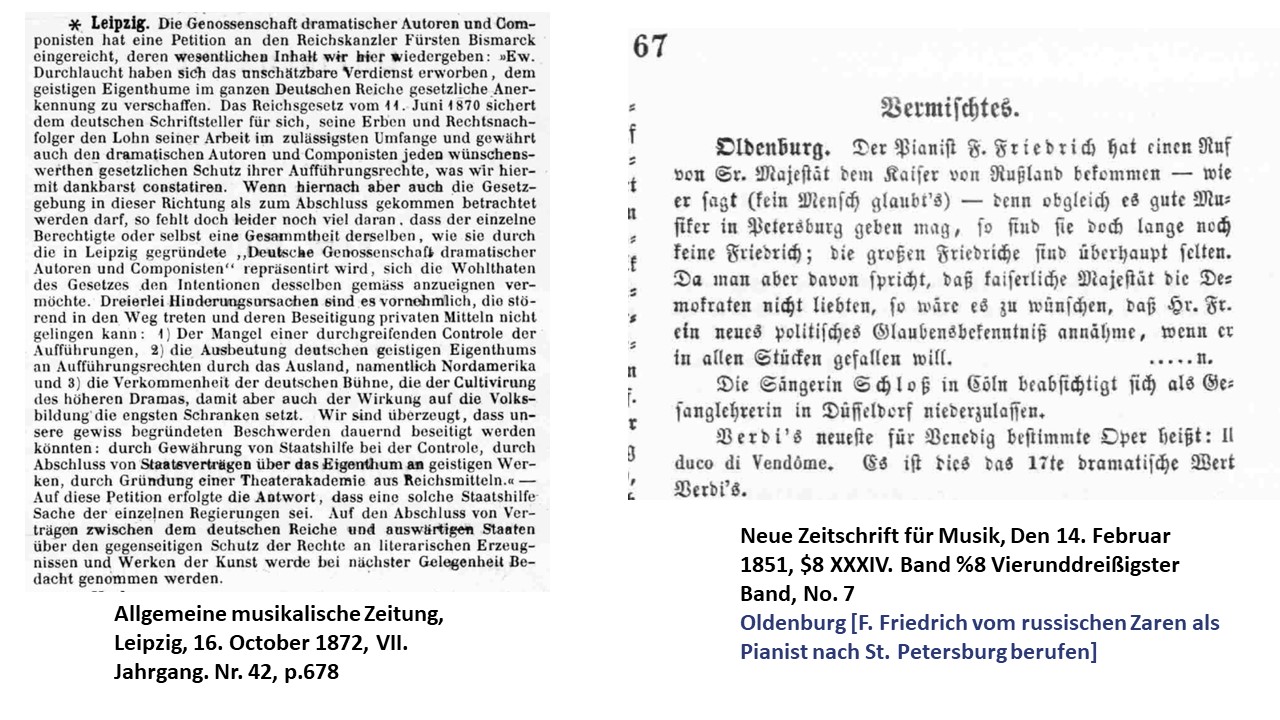
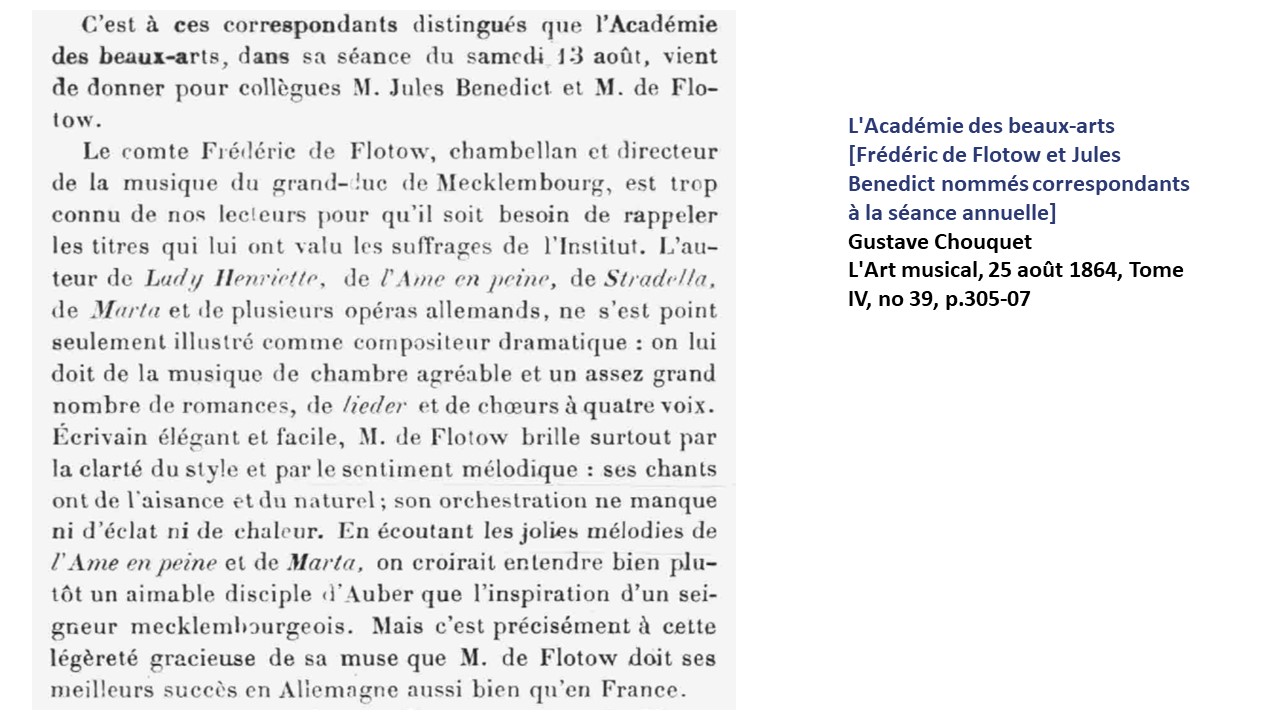
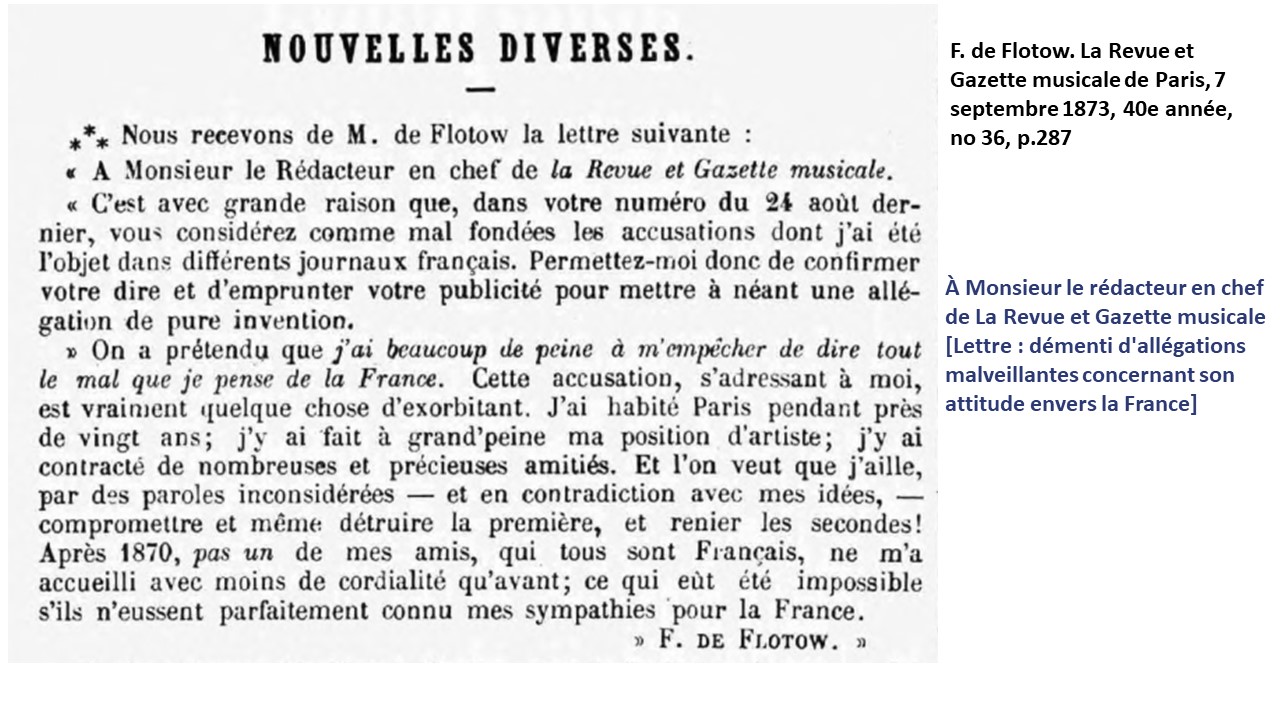
Während Flotows Lehrjahren in Paris ereigneten sich historische Ereignisse, wie zum Beispiel die Pariser Juli-Revolution 1830, Commune oder die 1848er Revolutionen in Paris und Deutschland. Später sollte der dt-frz. Krieg 1870 ein weiters einschneidendes Erlebnis darstellen. Über all diese historischen Verwerfungen hinweg sind Kunstschaffende ständig den nationalen Vereinnahmungen und Verwertungen ausgesetzt. Bei Flotow äußerst sich das in den Intrigen von unterschiedlichen Seiten, die gegen ihn gefahren werden. Von deutscher Seite mal als Demokrat verunglimpft (s.u.), wird er in Frankreich als frankreichfeindlich bezichtigt. Aktiv dagegenhalten, gehörte schon damals zum Geschäft im europäischen Raum. Mit dem Eintreten für Autorenrechte an Werken und deren Aufführungen schaffte er sich sicherlich nicht nur begeisterte Freunde in der Theaterwelt. Vergleichbar dem Disput über Patentrechte zu Hörnern, Trompeten und dem Saxophon, musste die Lebensgrundlage für viele Komponierende erst noch geschaffen werden. Eine Nominierung als Korrespondent der „Akadémie des Beaux-Arts“ ist da eine tolle Anerkennung. Die Probleme von höchst prekären Lebensverhältnissen von Kunstschaffenden im weitesten Sinne bleiben eine ständige Aufgabe und Herausforderung (Mäzene). Der kleine Fritz von Flotow hatte in seiner Kindheit mit genau diesen Einstellungen gegenüber dem oft brotlosen Beruf des Kunst– und/oder Musikschaffenden zu kämpfen. Als streitbarer Aristokrat mit demokratischen Zügen fiel er mitten in die soziale Zerrissenheit und politischen Wechselbäder des 19. Jahrhunderts.

Dumky

In cultural performances it is always interesting to refer back to titles given or attributed for example to music pieces. Dumky is the title of Antonin Dvořák’s 4. Klavier-Trio opus 90. In the late 19th century Antonin Dvořák found inspiration in the notion of Dumky. Rather than just composing a “Trauergesang with few joyful intermezzi” he creates a new form for this Trio containing, quite unusual, 6 parts. Dvořák plays around with structure and sharp swings from “piano to forte” parts, “moll to dur” intonations reflecting sorrow and joy in frequent and refreshing short sequences. It feels sometimes like fireworks, but at times the sorrow of soldiers and their families becomes evident as well. However, the music proves resilient. Knowing that Dumky is a Ukrainian word and notion, the choice of one of the masterpieces of Antonin Dvořák  close to the 24.2.2023, the day of the anniversary of the Russian attack on Ukraine is a commemoration of the sorrow caused by war and ways to overcome it. The “Concerts de Midi” of the Musée des Instruments de Musique” allowed us to travel through Ukraine a bit and experience the longing for better times. Joy will eventually prevail there again just listen to Dvořák’s version of the Dumky. Superb and effectful presentation of the work by the “Trio Impression” made for a memorable lunch break in the city centre of Brussels. The (virtual) visit of the Museum should be one of the attractions of visitors to Brussels as well, not just for the Art Nouveau architecture, but for the inclusive “global music” collection.