Berlin moves it

Yes, we like to move it. Investment in infrastructure follows a long-term economic rationale. In urban areas space is a scarce and, therefore, an expensive resource. In order to use the current space for mobility more efficiently, the use of a longer tram or train is an effective way to increase capacities. Rather than to increase the frequency, which is no longer possible without safety risks, a longer vehicle allows to bring more, and more diverse, passengers on board (kinderwagen and wheelchairs included).
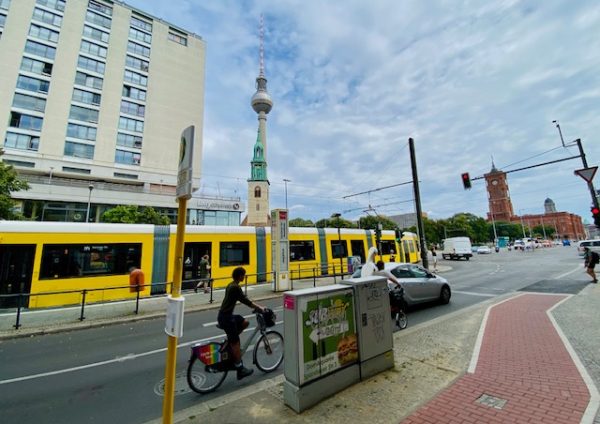
It is a long-term objective to make urban areas liveable for all ages. Tramways which allow a low or, better, no barrier to entry is a necessary condition in this respect. The new “Urbanliner” in Berlin (image below) offers such essentials of access and urban mobility. A single tram is 50m long with 88 seats and 215 standing persons in larger corridors. 300 tram passengers can be compared to about 12 average length cars with at best 15-20 passengers.
A consensus of “how best to move it” in cities pays off in the long-term. Planning has to start about a decade before delivery and needs to survive political cycles going back and forth.
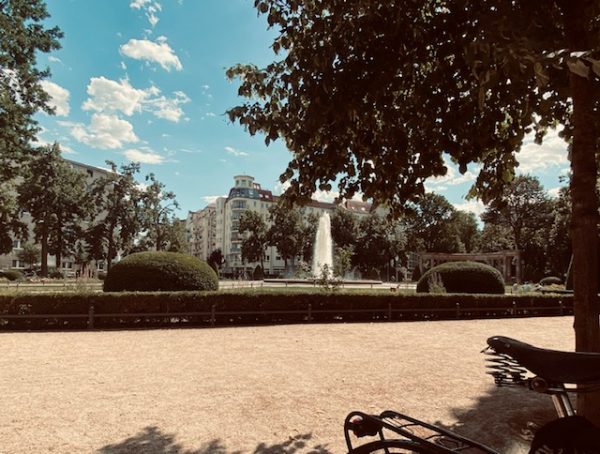
Water in Parks

In 2026-7 and a 3rd hear wave approaching, the real luxury consists in water in inner cities. As a source of refreshment and cooling when temperatures rise, water provides a natural source to cool down nearby people, buildings as well as any trees. The wisdom of a hundred years ago appears again as a major solution as global warming progresses. Evaporation of water is cooling. Some simple facts deserve to be repeated over and over again as urban planning seems to have forgotten such simple physics. We have think about a lot of green and blue spots again in our cities to achieve the much needed cooling effects. (Image: Viktoria-Luise Platz, Berlin 2026-7)

War came to us

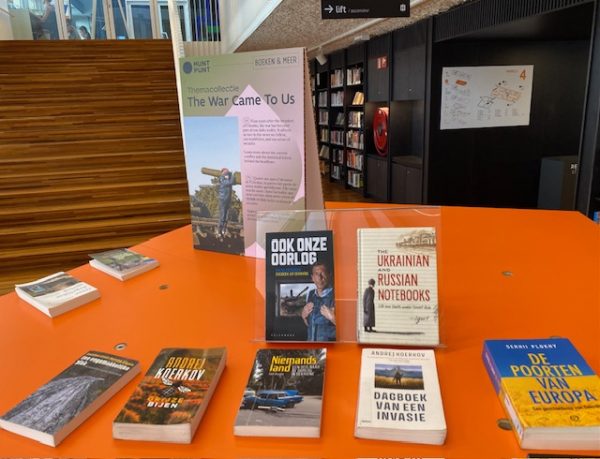
Ukrainian people had to make the horrific experience that « the war came to us ». Even if the Ukrainians were much better prepared than in 2014 with the illegal annexation of Crimea, the horrors of war to not seem to come to an end soon even in 2026. Putin’s war leading Russia into a miserable war experience has made other European nations face the rationale that war might come to them as well. Alliances are formed and reformed to be better prepared for escalations and more realistic threats as well. Huge budgets are vastes again for military purposes in view of a possible need for defense. CO2 emissions skyrocket at the same time, all due to Putin’s illusion of a greater Russian empire. We keep reading and learning our lessons from the brave Ukrainian defense.

Cooling-Heating Renovation

The public and scientific debate about the added value of investments in renovation of buildings has been ignited by the recent heat wave in Europe. Some renovations that were primarily concerned to safe energy in winter through better isolation of walls, doors and windows found themselves less well prepared with isolation against heat and sunlight. Hence, it makes sense to consider both topics, cooling and heating of buildings, jointly.
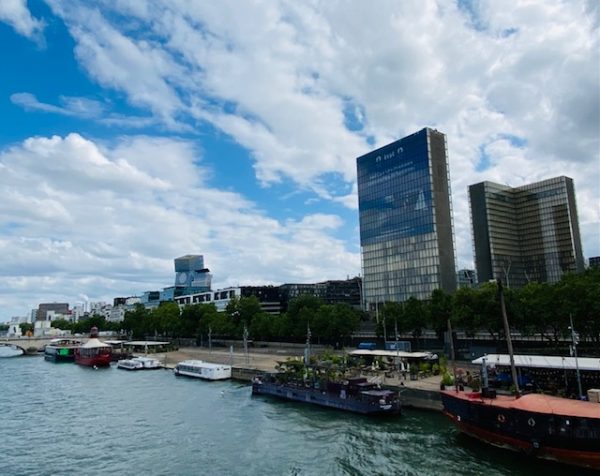
Reversible heat pumps can do this trick, if isolation has been installed or applied during renovation already. Additionally, materials used for isolation of buildings should show 2 measures for isolation: thermal conductivity and thermal resistance (R-value). Comparing both gives a fair idea about isolation quality in periods of heating and cooling needs. Albedo values are interesting as well as heat input during a sunny day is welcome in winter, but not during summer heat waves. The commonly used Energy Performance Certificate (EPC) for a building needs to be checked whether it is sensitive to excessive heat as well. (Image: BNF in Paris 2026)

Autonomy as Happiness

The French philosopher Émile-Auguste Chartier, better known as Alain, is a proponent of a rational approach towards fundamental issues. Therefore, we should expect from the reading of “Propos sur le bonheur” a thought-based conception of happiness. In his propositions on happiness, autonomous decision-making and autonomous actions play a decisive role. Rather than writing a voluminous “treatise” on happiness, he had chosen in the 1920s, the form of 93 about 2-page long propositions about happiness. These propositions are a bit more explicit than, for example, Nietzsche’s aphorisms, but they remain short without much literary context to the kind of rational analysis based on observations and anecdotal supporting evidence.
In propositions 42 “Agir” and 44 “Diogène” he deals with autonomy as subject. “on veut agir, on ne veut pas subir” (in short, “act, not endure”, own translation), that is his quintessence. “Tous les métiers plaisent autant que l’on y gouverne, et déplaisent autant que l’on y obéit.” (44). (All professions are pleasant if you govern, and are unpleasant if you have to obey). More than 100 years later, empirical studies on job quality, job satisfaction and happiness still build on this rationale.

Press in the 1970s

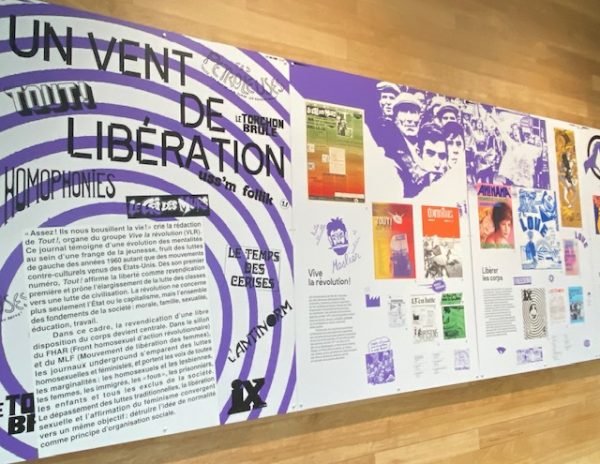
In the 70s there were many so-called underground or alternative papers printed. For people in bigger cities or in cities with universities, the 70s flourished with independent journalism which addressed small audiences. Each access to printing materials and paper allowed to go it alone for groups of society that did not feel they were adequately represented by established media. Some of these “underground” papers published texts that could be considered going against the dominant legal principles. Topics like feminism, birth control, abortion or more left wing political statements against private property had to fight to reach their audiences. The cold war period created another overarching threat to the representation of all opinions. Hence some groups we t underground to function as they wanted and how they interpreted the freedom of expression and being published. (Image: BNF Exhibition Underground 2026-6). 

Considerations about Space

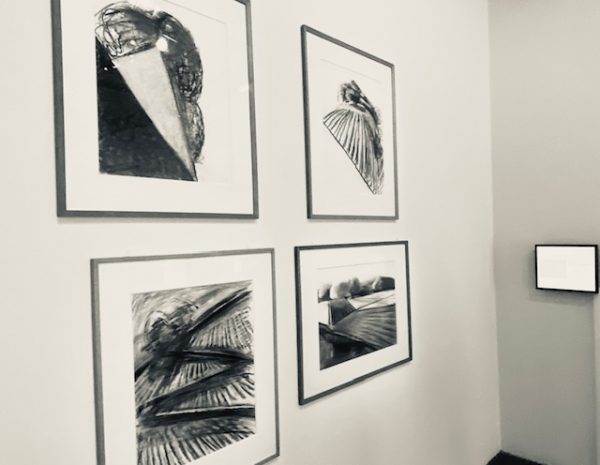
As is true for most architects, for example Le Corbusier, they are mostly remembered for their actual realizations (Scharoun, Mies van der Rohe), rather than the grand designs prepared for an architecture competition. Henri Gaudin has not only left concrete implementations of his ideas, but also several books on his perception and ideas about “concepts of space” (“Considérations  sur l’espace”), which comprises architectural ideas about “empty spaces“. Additional sources of inspiration were a relentless pursuit of drawing and designing what he saw, for example while travelling.  The BNF has received the extraordinary donation of the journals of Henri Gaudin, which allow to trace his continuous search for innovative representations of what creates a space, the impression of space and the relationship between spaces.
His travels with the TGV in France filled a complete “carnet” (booklet). Architecture is surely not about concrete. In the best cases there is a lot of research happening “backstage”, sometimes in small spontaneous sketches that can have a very lasting impact on many people’s perception of space later on. His own landscape drawings were an interesting inspiration for his architectural work as well. “Image: Landscape drawings by Henri Gaudin, BNF Paris 2026-6, Galérie des Donateurs).

No mow May

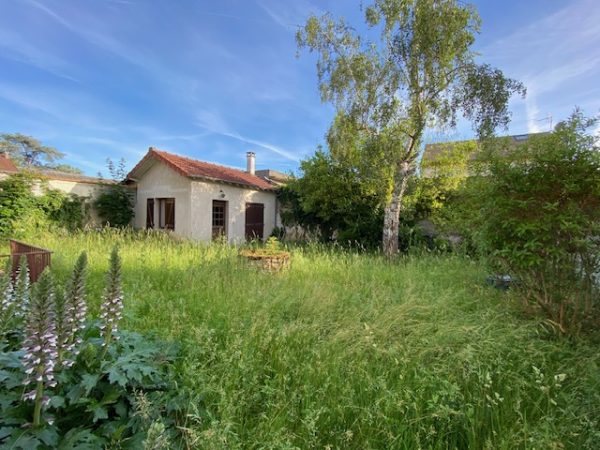
For the sake of biodiversity we have learned how important it is to allow our gardens to grow during the month of May. Lots of insects shall benefit from the larger diversity of our greens. Equally, it is the perfect time to “collect” “pollen” from lots of neighbors’ gardens and fields, which will eventually show up in another garden. It is a bit similar to sharing flowers and plants in your local environment.
We just have to be careful about invasive species that have been quite successful to “surf” on the “No mow May” gardening wave.
In May 2026 the effects of global warming have been particularly felt in France. “Meteo France” has reported the very warm French month of May in 2026. Similarly, for most parts of Germany, particularly in the South West, the average temperatures were well above the 2° target already (Deutscher Wetterdienst).
With quite some rain before, the climate throughout May 2026 has favored rapid growth and advances in the blooming of the whole vegetation. You might have seen gardens in your neighborhood that looked very different from previous years for those who tried a “No mow May” in 2026.

Dry January

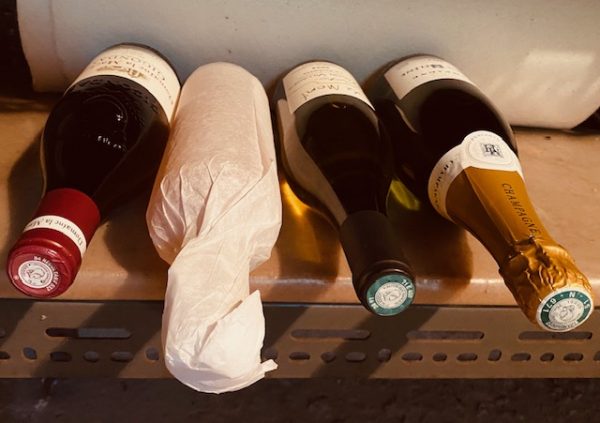
There is a health trend to pass a sober, “dry January” after the X-mas and New Year festivities. It seems to be rather popular, so that the French wineries have started a marketing campaign of a “French January“. We shall see what the battle of marketing campaigns means in the end for the health of our liver (Study Link). It might lead to changes in consumer behavior of the following kind. Take advantage of good price offers for French wine and champagne in January and drink it as of February.
For addicts of the “carneval season” this should not be too difficult, jointly with a couple of friends. Alternatively, you might not be bothered and continue a moderate consumption across seasons. Moderate consumption, however, is the tricky part of alcohol consumption. Medical guidelines (health of liver) have evolved recently to count each drop of alcohol into your total consumption in either fluid litres of pure alcohol or the equivalent measured in grams. 

History as Science

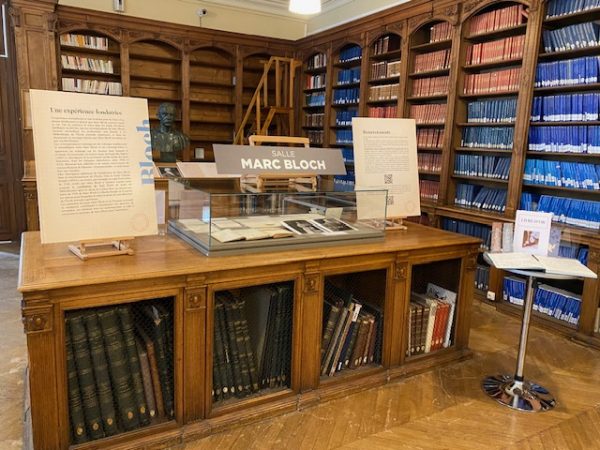
There are persons entering history and there is the science of history. Whereas the former persons may sometimes enter for very dubious reasons into history, responsible for killing people, the science of history draws on a whole lot of evidence, social, economic or demographic, to evaluate a person’s legacy or the merits of an epochal change. In the development of this scientific approach towards history, rather than a purely chronological, family structure or narrative-oriented approach, Marc Bloch has been a central figure. His research and exemplary own biography as student of history at the ENS in Paris, teacher and later Member of “La Résistance” is honored by an exhibition on his life and time at this formidable French institution of teacher training. In an exhibition in the ENS library you can even inspect a list of the books taken out by Marc Bloch as a student as well as his experiences as a student in London or Berlin before the 1st World War. A strictly science-based approach to history made him an influential historian and social scientist beyond his lifetime. (Image: Salle Marc Bloch at ENS Library Paris 2026-5)