Polypharmacy issues

As we age, we become more likely to confront polypharmacy issues. Polypharmacy is defined as taking 5 or more medications per day. The study reported in The Lancet healthy longevity by Payne et al. 2025 had participants with a median of 4 health conditions and a median of 8 prescriptions. Even a comprehensive set up which involved several experts from medical doctors and pharmacists did not manage to achieve a significant improvement in polypharmacy outcomes in this experimental study with otherwise carefully matched intervention and control group. However, the mental health (measured in patients as “health-care-related quality of life”) slightly increased and the “treatment burden” experienced by patients was slightly reduced.
In combination with a previous study the probability of errors in nurses, who are the prime persons responsible for the administration of medications in institutionalized settings, the reduction of potentials for errors like they are to be found in polypharmacy should continue to be a prime target of this research in future. Together with the knowledge about the prevalence of functional illiteracy at older ages, polypharmacy remains a critical issue on the public health agenda beyond the experimental settings in this study.


Tether thy liver

There are few of us who take our liver seriously. Yet, this big organ plays a central role in our body to regulate metabolism. The obesity pandemic in western countries increases health risks, just as excessive alcohol consumption increases risks of liver dysfunction. Additionally, viruses increase the risk of failure of this organ.
Each of these risks as well as any combination of one of the risks with another one have led to rising public health risks. Several studies since 2020 have highlighted these increased risks for populations in general. The risks, however, have an unequal spread across subgroups of society. A recent comment based on the research of the INSERM U955 team in “The Lancet Regional Health” by Brustia et al. “Liver-related mortality strikes hardest where deprivation is greatest.” Health inequities consist in the lack of income available to buy healthy food or in untreated alcohol addiction, both more common in poor people.
In order to tackle the inequity, the team of medical doctors call for a shift in awareness. Structural reasons like diagnostic delay, remoteness or health literacy are just as important as individual predilections like nutrition or lifestyles. Inequality in access to health and ability to afford a healthy lifestyle have become serious drivers of social inequality in the 21st century.

Unexpected effects

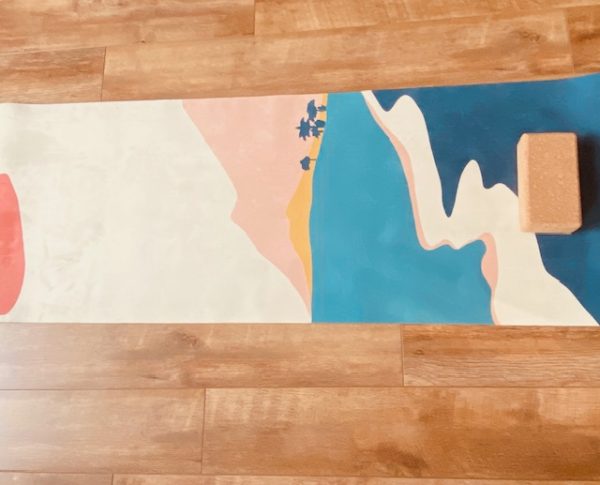
It is, unfortunately, a rare event in science to publish unexpected effects of an experiment. Sometimes, results even turn out to be the opposite of what to tried to show with the use of an experimental setting. The learning for the science community, however, is bigger in such cases. Why? A carefully designed experiment (Oliveira et al. 2025) to measure the effects of 2 different 12 month long yoga trainings to prevent falls in 60+ persons (mean age 67) revealed that the less challenging “seated yoga” was better in preventing seniors from falls.
Participants in the more challenging Iyengar yoga-based sessions reported more falls in the 12 months follow-up period. Due to Covid-19 the trainings took place as an online course, which might have reduced the influence of a coach in correcting positions and observe other physiological or psychological issues with participants.
However, the insights are a great lesson for experiments to produce opposite results of expectations with the lesson that human beings can be rather complex. From a health psychology perspective, it might be the case that participants in the more challenging yoga classed became also more daring in balance as well as other exercises.
Just being overly confident compared to their positive improvements, which might turn around an initially positive effect on balance and falls. From a socio-economic perspective, we would question the implicit assumption of the study that participants have a random distribution or underlying tendency towards risky behaviour. The longer the observation window (post-intervention) is, the more intervening socio-economic factors enter into the physiological-behavioural equation. Hence, expect unexpected effects.

Age of maturity

The bronze statue by Camille Claudel „L‘âge mûr“ is her most famous works. It is part of the exhibition Claudel & Hoetger in the “Alte Nationalgalerie“ in Berlin. Usually the statue is part of the permanent exhibition in the „Musée d‘Orsay“. With the depiction of different stages of the life course and somehow revealing the emotional trajectories of the persons the scene of human joy and tragedy becomes tangible beyond her personal fate. The scenario and arrangement in the Alte Nationalgalerie allows to focus on this particular work with an emphasis on the trajectory and the evolutionary path. A unique arrangement does better justice to the particular message of the artist than being surrounded by too many other works of art. (Image: extract of Camille Claudel‘s „L‘âge mûr“ in showroom Alte Nationalgalerie, 2025-8)

Fontainebleau walks

In the Fontainebleau gardens it is easy to reach your daily walking goals of 7000 a 10000 steps/day. Upon entry into the park you walk around the small lake. Towards the far end of the lake you’ll discover a long waterway which takes you beyond your usual walking distance due to the calm and great surroundings. The forests around the Fontainebleau gardens are another great walking or hiking exercise. You might find companions all along the trails. Just take enough water and food with you as there are no shops around, just you and nature. A bit of advance planning is necessary to make it a great experience. 

Air pollution dementia

A comprehensive review and update of evidence that indicates a link between air pollution and dementia has been published in “The Lancet” open access on 2025-7-25. Besides a genetic predisposition the environmental impact of our worsening air quality caused by fine dust particles and PM 2,5 and nitrogen dioxide NO2 has been found in several studies. This updated meta study should be an additional warning to take efforts to clean up our air more seriously. The diesel engines amongst other sources of air pollution have contributed a great deal to this evolution. Inner city inhabitants are at greater risks to suffer the consequences as they are more exposed to these pollutants and for longer durations. Clean air is a matter of brain health in advanced age and biodiversity as well.  

Genetic diversity

Part of genetic diversity is the apparent fact that some partnerships have only girls or only women as descendants. This is the message of a study published in Science Advances by Wang et al. on 2025-7-18. The commonly assumed binomial distribution where each event has an equal chance of occurrence at each new point in time does not necessarily hold for this particular events. Therefore, the search for a genetic explanation has been going on for some years. Therefore, there might be a potential for an epigenetic explanation as well, as environmental conditions might co-determine the expression of genes in both parents. The research will surely continue and the sex and gender diversity offers still a lot of surprises. A sociologist’s perspective would tend to focus on later gender attributes and choices rather than sex at birth. The bio-psycho-social research agenda remains wide open.  

Just walk

The benefits of walking for several health outcomes is well known. The evidence is in favor of 7000 steps per day as a reasonable baseline. Some outcomes improve further if we walk even more steps, but not all. Probably, the effects of being accompanied while walking will enhance outcomes as well. Every summer the step threshold may be pushed a little bit further. Goal setting can help along to overcome eventual barriers to leave the home later in the evening. Nature rewards us with changing daylight and seasonal changes. We just have to get started to reap those health benefits.

Work time reduction

One of the major elements of social progress in the 20th century consisted in the reduction of work time. Reductions from 48 hours per week in the first half of the century were largely reduced to 40 hours per week or less in some industries with strong trade union representation. State regulations also pushed in this direction with positive implications for physical and mental health as well as wellbeing. Advances in longevity of employees may be attributable to this social progress agenda of the 20th century. In the 21st century we witness a new thrust of enterprises and employees striving to implement a 4 day work schedule by at the same time organizing a further reduction of work hours. The scientific evidence which is based on pre- and post trial assessments of workers satisfaction shows rather positive results (Fan, Schor, Kelly, Gu 2025). More studies are due to accompany this potential of further health and wellbeing effects of reduced work time and the reorganization of work time in enterprises. 

Scienceploitation

Science can be exploited to make unjustified profits from referring incorrectly to it. Social sciences, like economics may be used by banks to sell you products that refer to science only as part of their arguments if the science based inference fits their purpose. Scienceploitation is very common in the field of para-medicine and para-pharmaceutical products. Health promises sell. The time until an ineffective treatment reveals the unrealistic promise to be unachievable considerable profits have accumulated on the side of the selling company. Science has a hard time to counter the perils of scienceploitation. Advanced knowledge can be used and abused as any other method of convincing people to buy or subscribe to a product. The responsibility of the scientific community consists also in finding ever new ways to counter scienceploitation. AI will pose additional challenges as well as opportunities.