Research is beginning to provide empirical evidence and experimental modelling results on the widespread use of generative AI. First results by Doshi and Hauser point at the individual benefits of using artificial intelligence but the widespread use of it is likely to narrow the scope of novel content. This research is particularly interesting because it deals with the micro level to macro level aggregation effects. It is fine for me to use AI. If it becomes a mass phenomenon, we expect in sum a negative outcome for society as a whole.
The example at hand deals with the capability to innovate or to come up with novel content. As more and more texts or newspapers are published with extensive use of genAI, the real element of creation will remain the domain of humans for quite some time.
In my opinion this is due to the difficulties for algorithms to differentiate between the positive and too risky negative aspects of innovative solutions. A query for AI might ask to come up with an innovative solution for auto-mobility of short distances. A human being might propose walking due to the additional health effects the AI might propose helicopter lifts. The not so stupid machine would need a lot of additional information about circumstances to generate useful solutions. Therefore it is not surprising that sometimes public transport apps propose to walk short distances rather than waiting for “delayed or unreliable services“ they provide themselves. Personal circumstances like mobility with children, other dependents or luggage are usually beyond the scope of the information base of the algorithms.
On the other hand, if the AI knows that 50.000 persons after an event want to take public transport at the same time the indication to walk or wait solves an aggregation problem of individual preferences to adapt to available capacities. Lots of issues to solve for AI and us or better yet, us and AI.
(Image creation: AI using Microsoft Dall-E Image creator: Prompt: a person with notebook in profile and in front of 5 other persons in Office with windows 26.1.2024, 8:24 PM) 
Shrinkflation
Shrinkflation is a hybrid term that combines “to shrink” with “inflation”. The trick is to keep prices at the same level for a product, but to reduce the weight or amount sold at a constant price. The intention of producers is to indirectly increase prices without touching at price tickets on products. As consumer you are likely to remember the price tag of a product, but much less the unit costs. However, the unit price is the basis for fair comparisons. In supermarkets there is an obligation to print also unit prices (€/kg or €/L) next to price labels. Comparisons allow information irrespective of package size. In shrinkflation the higher unit costs of a product will drive the official measure of inflation (Destatis, 2024). In Germany inflation for food had the top inflation rate in 2023, surpassing even price rises for energy.
On the one hand, shrinkflation is cheating on consumers to sell them less for the same price. On the other hand, oversized products that solicit higher consumption are part of the health and environmental problems we face. The obesity pandemic is part of the XXL consumption hype the food industry and supermarkets have created. In this respect, more expensive food (Eurostat info) potentially may trigger the rethinking of consumption and nutrition. “Eating better instead of less” has always been more expensive.
Besides the profit-maximising logic of shrinkflation, there is at least a small hope that behavioural changes might be triggered to consume less, to use less detergent in washing, less sugar drinks, smaller size pizza and so on. Shrinking our food intake is part of the solution for many problems. In the end cutting out most convenience food will save you a lot of money. As a side effect of such behavioural changes, eventually prices are likely to come down some time later again. 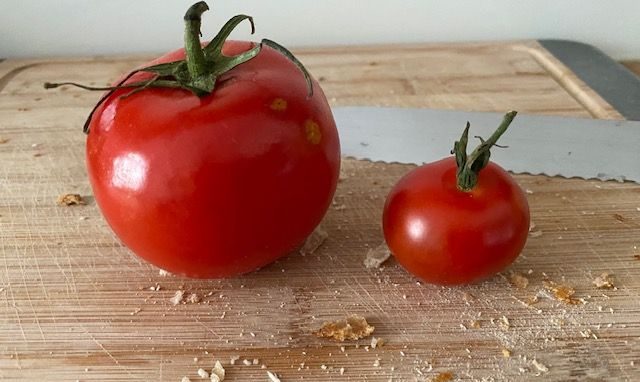
Helplessness
Learned helplessness is another which we have to be aware of as social scientists. It is far from surprising that for example giving birth has been transferred from the professional care and exercise of midwives to medical doctors and hospitals. This creates a kind of maximal security around the most natural of events that of child birth. Over the last few decades we have witnessed a pathologising of birth as high risk event. Additionally an emergencification has pushed costs upwards for social security systems as well. In numerous other domains like breast feeding industrial interests have pushed for replacement solutions which are worse than second best solutions.
In other domains like shopping we tend to believe that we need a car to assist us in the endeavor. It is mostly a choice of the least effort to use a personally owned vehicle to replace other solutions which demand more effort of organization like car or bike sharing options. The frequent result is “learned helplessness”. After years of getting used to the debilitating ease of use of navigation systems in cars and bikes we find it hard to put effort into a little self-organization. Learned helplessness will be a substantial burden on our health and social systems if we do not manage to reverse this trend. At times of increased skill shortages we shall no longer have the many helping hands needed to stem the powerful trend of learned helplessness.

Pathology
The definition of disease, illness or disability are a matter of details of definitions. Mostly it is left entirely to medical professionals to define the limits of what shall be considered a disease or not. Pathology is the scientific discipline dealing with this difficult task. As in the scientific endeavor it is honorable to crown your research by finding or defining a new disease not necessarily finding a treatment for it, we have learned about new diseases at regular intervals. Attention deficit syndrome also known as hyperactivity is such an example. Many pupils have received treatments and some made splendid progress in their education due to early recognition of their condition as well as abilities. However, some children have received treatment with questionable diagnostic evidence or just to be able to fit into our modern ways of organizing our schools. We might frame this as a process of “to pathologise” persons or whole groups in society.
The American definition of what constitutes a higher than normal blood pressure or colesterol deviates from the one applied in many European countries so that sometimes the double amount of people should receive medical attention and treatment. From this it becomes more evident that even within the field of pathology there is a societal dimension to it. The “dry january” addresses the pathology of alcohol addiction. Smoking falls into a similar category but no smoke free month has been suggested yet. While it has become normal to overuse antibiotics we shouldn’t reproduce the same mistakes with other medications. We simply need a broader discourse about pathology and the societal origins and implications of it. From the Roman times we have amphitheaters and sacred buildings that we value today. Few sanatoria have survived but a few Roman baths as a preventative approach have survived in the British city of Bath or in the German city of Trier, both quite far from Rome. We should sometimes think more carefully before defining a disease. Not all are pathological. If it seems difficult to stem against the trend of “pathologising”. The ensuing overload of the medical system in consequence is a serious issue. The medical system will degenerate into a system to manage waiting queues with absurd, unequal and unnecessary adverse outcomes. Therefore, sociologists consider the pathologising of societies as just another kind of pathology.

Selfie Museum
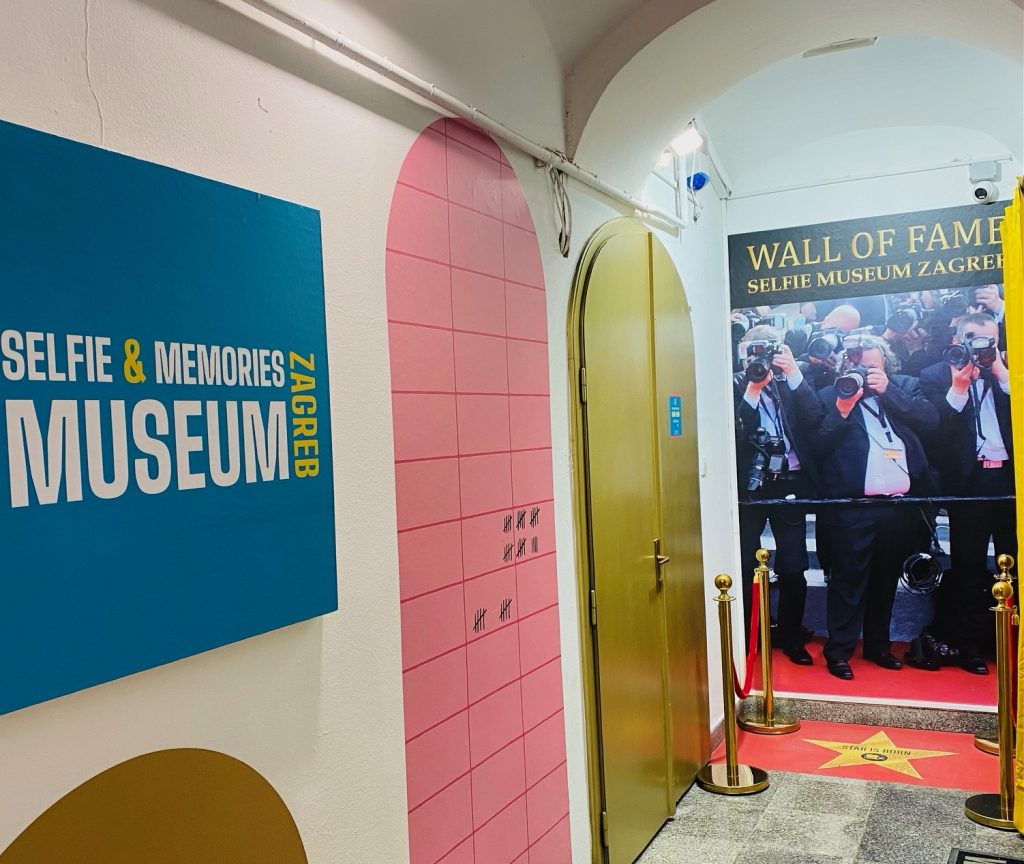
We have learned that games are not only played for fun. So-called serious games have found their way into health applications where we might learn while playing a game of how to integrate more walking into our life in the city. While walking after work I happened to pass the Selfie Museum in Zagreb. In fact despite carrying the name of museum it is more an assembly of scenarios in which you can realize many selfies in different settings that have been prepared for that purpose. Hence your production of photo shooting with yourself as the major character is facilitated and you no longer have to spend a lot of time on the setups. Call it a museum and you’ll have more visibility and visitors.
Styles of selfies have changed and shooting very short videos to post on tiktok is of course easy there. A real threat to huge and expensive cinema studios considering the enormous reach some of these selfies can reach. It is a bit like a theatre with multiple stages for everybody to use at moderate costs. Before long we shall come to realize the potential for many more interested in theatre to become actors and directors themselves. Democratize the world of theatre is the new social dimension here. Test yourself in another profession through playful interaction. Test and learn about other competencies. We are in the middle of the next wave of “gameification” previously reserved to people ready to accept higher risks of likely failure. The young can now take their parents to the museum and show off their culture and skills. Intergenerational learning has a new aspect as well. The sociology of the virtual has another phenomenon to evaluate.
Sectoral Change
The long-term view of sectoral change in France, for example, from 1800-2022 (Cagé and Piketty, 2023 p. 128) allows us to zoom out of our narrow focus of the last few years of economic change. The decline of agriculture is the most remarkable. The reduction of employment in industry and construction has been an ongoing trend as well. Banking, insurances, property and consulting have seen remarkable expansion over these years. Public services, security and legal affairs are still on a moderate rise. Other sectors like education, health, commerce and transport manage to grow equally.
The merit of the comprehensive volume by Cagé and Piketty (2023) is that it is thoroughly data driven and based on quite unique long data series. The data on structural change and just the employment trends depicted below refocus our attention on likely consequences of these changes.
For the 2 authors we should redirect our attention much more to the implications of these trends (like rising inequality) on political conflicts and power struggles. Democracies are at risk, if we continue to ignore these seminal changes of industrial structures and shifts in employment. The traditional strongholds of trade unions and progressive forces in the manufacturing and construction industries as well as in public transport seem to have unaccounted implications for our political systems as well. The volume by Cagé and Piketty (2023) will soon be available in English and reach broader audiences just-in-time for the European Parliament elections in June 2024. Particularly the spatial implications and how the neglect to take into account the fundamental differences between the rural development and structural change needs urgent reconsideration. After the time for reading and working with the data (LINK) is the time for action to preserve our European Dream of peace and social development. 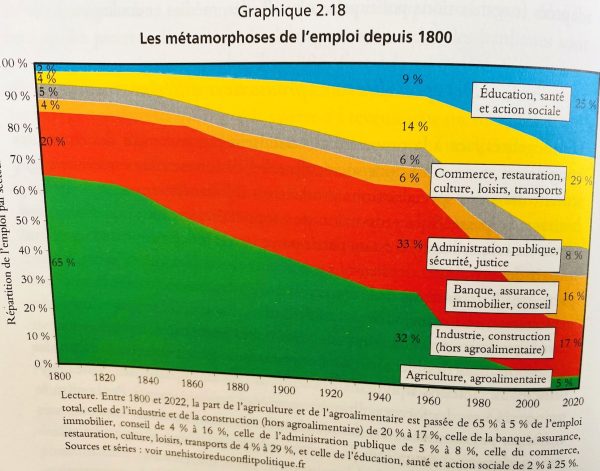
Preference
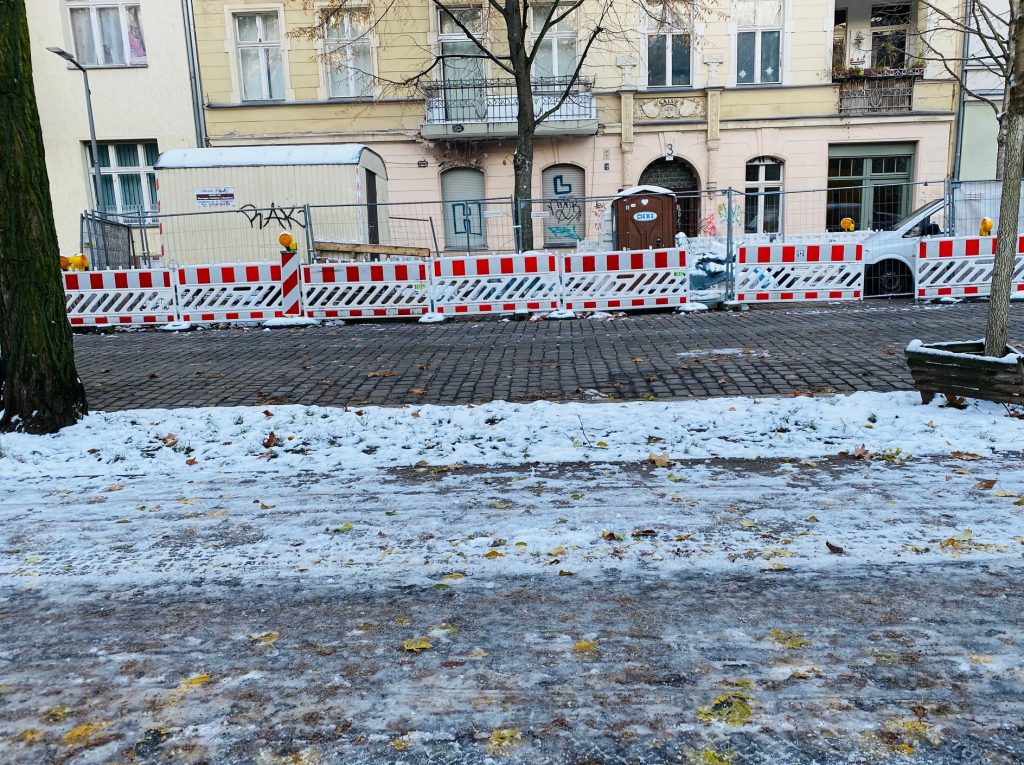
In societies it is not easy to derive collective preferences of citizens. Elections every 4 years tell sometimes nothing on specific issues which were not debated or of sufficient relevance at the time of the election. Dealing with snow and slippery sidewalks is hardly an issue at all. However, the preference to clear roads meticulously rather than bicycle and pedestrian paths in a dead end road reveals preferences for „s‘heilig Blechle“ the holy tin box (car) in many cities. Our orthopedic units in hospitals are crowded at such times and those costs are hardly attributed to the source of human negligence for fellow humans. We would expect that aging societies start to address such topics but little change has occurred so far. Hence we claim airbags for pedestrians and cyclists😂. Preferences probably have changed already but implementation is slow and faces strong opposition as well. It’s always easier to lock frail persons into their apartments at such snowy times. It feels a bit like corona where it was also easier to restrict mobility for pedestrians and children than to deal properly with the virus. Aggregation of preferences in societies remains a challenge and sociology has a lot to offer in this regard.
Beckett and philosophy
Beckett and philosophy is the title of challenging read of usually unconnected literatures. Richard Lane embarks on the challenge “theorising Beckett and Philosophy” in Part 1 of the book. This is followed by 2 other parts on “Beckett and French thought” and “Beckett and German thought”. The whole book constitutes an attempt to identify the links between seemingly unrelated work. Sometimes spurred by tiny citations, the importance of influences becomes apparent.
Beckett like Rousseau favours speech over writing. Speech giving access to nature. This, Beckett has taken from French thought traditions. Redefining philosophy after the 2nd world war links Beckett to the thoughts of Adorno and Habermas (early writings). Posing Nietzsche’s thoughts as a post-modern project of endless questioning, Beckett himself enters into a kind of Socratic dialogue with Nietzsche. Spoken words become writing, the written word resembles an unspeakable void. The borders between void and silence, between spoken and written, become blurred. The essence is the world in-between.
It appears like irony and yet it is our very existence. We probably need somebody to translate Beckett for us in order to better understand his philosophical stance. “Beckett translates Beckett” is such a book title. It invites us to study Beckett’s own efforts to translate himself, at least from one language to the other. 
Nachkriegseltern
Die Recherchen zu den Nachkriegseltern von Miriam Gebhardt haben eine persönliche und geschichtsschreibende Funktion. Die Zusammenfassung der Erfahrungen der Nachkriegseltern aus Biografien und Tagebüchern aus dem Literaturarchiv Marbach haben ein interessantes Psychogramm einer Generation von Eltern entstehen lassen, die sich meistens überhaupt nicht der Prägung durch die menschenverachtende, nationalsozialistische Ideologie bewusst waren und viele immer noch auch sind. Gut recherchiert und mit zahlreichen Originalquellen unterlegt beschreibt sie die Schweigsamkeit und Fokussierung auf wirtschaftlichen Erfolg dieser Generation von Eltern. Familienorientierung und Fixierung auf beruflichen Erfolg war gepaart mit traditionellen Rollenbildern von Frauen in sekundären Funktionen.
Spannend sind darüber hinaus die Anspielungen, wie die Erfahrungen unserer Väter und Mütter uns, die Babyboomer, bis heute prägen. Statusdenken überall, oben und unten in den Hierarchien klar bestimmt. Das christlich-konservative Menschenbild prägt vielfach neben den Eltern eben noch die Kindergeneration der Nachkriegseltern.
Wichtig bleibt es daher, sich dieser überkommenen pädagogischen Methoden bewusst zu werden, damit es keinen Automatismus des Weitertragens geben wird. Die Angst der Nachkriegseltern, die Akten und Beweise der Gerichtsprozesse oder Entnazifizierung einzusehen oder anzuerkennen, bezeichnet den meist verdrängten Gewissenskonflikt dieser Generation der Nachkriegseltern. Auf den Seiten 64-67 wird die Auswirkung der Gewaltgeschichte Deutschlands in der ersten Hälfte des 20.-ten Jahrhunderts, auf die Fähigkeit mit Emotionen umzugehen, bezogen.
Empathielosigkeit und mangelnde Fähigkeit zum Gefühlsausdruck begründet die erstaunliche Sprachlosigkeit einer Generation, wenn es um die Verbrechen der Nazizeit geht. Als geradezu tragisch bezeichnet Gebhardt die Empathielosigkeit gegenüber den eigenen Kindern und oft noch den Enkelkindern. Wegducken, Verschweigen und Wegdrücken scheint weiterhin die Prämisse. Miriam Gebhardt gelingt es vielleicht, eine Gesprächsbasis zu legen, die die Generationen zum besseren Verständnis aufnehmen könnten. Wahrscheinlich werden sich darüber aber lediglich die Kinder und Enkelkinder der Nachkriegseltern austauschen und versuchen, mehr emotionale Wärme in die Familienstuben zu bringen. (DLF-Interview, BR-Video Interview)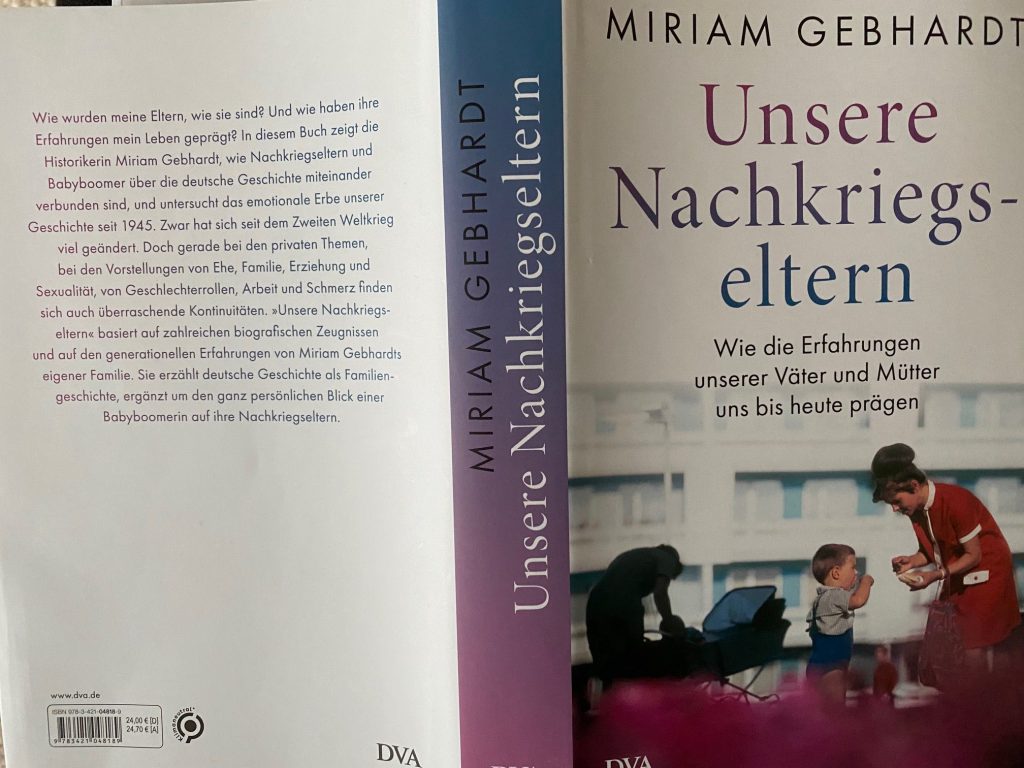
Marathon Prep
Most people, including many sociologists, believe preparation for a marathon is a rather lonely exercise. During hot summers you get up early and run alone across the streets in your neighbourhood or in a green area. Even on weekends you tend to put on your running gear at least once to chip in a few extra miles or once or twice before the marathon a longer distance test run of 20, 25 or 30 kilometers. Just for the sake of testing to withstand more pain, like in the real event. Running guides in form of books, apps reach “cult status”. In sociology we teach students about the social trends of individualisation ever since the book by Putnam “Bowling alone”, which depicted the new kind of lonesome person going alone to the bowling hall for exercise, as social life seems to evolve towards “individualised” leisure time and social life. Social capital seems to get lost on the way.
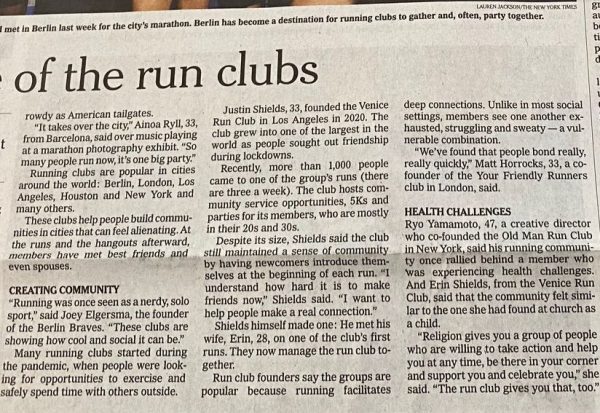
“The New York Times International” published an article and photo by Lauren Jackson on September, 27 (2023) page 17 in the sports section, which states the not so new phenomenon of “run clubs” (see extract on image below). These clubs bring runners from all walks of life together on a regular basis to train jointly and add a social function to the club as well. Just like previous sport clubs or socialising bowling groups did before, they meet and greet as well as party and celebrate together. Even travelling thousands of miles to distant events occurs in groups. Berlin seems to be a very attractive location for such clubs to go to. For some the sport stays in front of the activities, but for quite a few the social and party-like atmosphere is just as important. Even a local Berlin newspaper portrayed an older runner who stops in-between to have a small glass of alcohol-free beer on a terrace 2 steps from the official track with friends and family. Most people take their time record rather seriously, but the event is to enjoy community and celebration. Lauren Jackson even equates this to some forms of religious practice. I’s rather call this the other side of the same coin. Lone practice and meditation like running prepares a person to enjoy community (again). Extremes in both directions are part of the bell-shaped probability distribution of runners across the lonely-crowded spectrum of running experiences. The Marathon 42km 195m certainly has some historical even mystical connotation. While watching the finishing line at 42 km, just after the hypothetical run from Marathon to Athens in ancient Greece, you see many worn out persons, but also the many happy faces. After the run you meet your peers to exchange on stories and anecdotes around the track. Success and failure, just as in other team sports become a topic of conversation and shared experiences. These are community building events as wheel chairs and hand-driven bikes are part of the Berlin event as well as the in-line skaters the day before. In Berlin you get a feeling that running world records (women 2023, men 2022) can go hand in hand with the running fun for many. From “bowling alone” to “running together”. Sounds good to me.