Generative AI receives a lot of attention. One of the main issues is, to study how AI interacts with humans. The hiring decision by managers or an AI algorithm is an interesting application. According to Marie-Pierre Dargnies et al. (2022) the preference for human decisions remains strong despite reasonably unbiased performance of an algorithm. The main issue is with the transparency of the algorithmic decision-making. As a worker or as a hiring manager the preferences continue to sit with the person rather than the AI. It is a worrying outcome, however, that if the rule of gender equality is removed from the algorithm both workers and managers tend to prefer the algorithmic outcome. I interpret this as a latent preference of study participants for gender bias, which could lead them to expect a more favoured outcome in case the AI makes the decision. Knowing what decision-making rules have gone into the hiring algorithm has an impact on all persons involved.
A new managerial competence is to be able to assess tasks carefully, whether you should perform the task yourself or delegate to AI. In this sense the old question: to do the task yourself or to delegate has simply been enlarged by an additional delegation option. The decision-tree goes from (1) To delegate or not to delegate, and (2) if I want/need to delegate, should I delegate to AI or somebody in person (not allowed to use AI).
I opted to use AI for image creation rather than to take a photo myself or by one from a professional photographer. (Image creation: NEUROFLASH AI – Image-Flash 2024-1-26) 
AI and We
Research is beginning to provide empirical evidence and experimental modelling results on the widespread use of generative AI. First results by Doshi and Hauser point at the individual benefits of using artificial intelligence but the widespread use of it is likely to narrow the scope of novel content. This research is particularly interesting because it deals with the micro level to macro level aggregation effects. It is fine for me to use AI. If it becomes a mass phenomenon, we expect in sum a negative outcome for society as a whole.
The example at hand deals with the capability to innovate or to come up with novel content. As more and more texts or newspapers are published with extensive use of genAI, the real element of creation will remain the domain of humans for quite some time.
In my opinion this is due to the difficulties for algorithms to differentiate between the positive and too risky negative aspects of innovative solutions. A query for AI might ask to come up with an innovative solution for auto-mobility of short distances. A human being might propose walking due to the additional health effects the AI might propose helicopter lifts. The not so stupid machine would need a lot of additional information about circumstances to generate useful solutions. Therefore it is not surprising that sometimes public transport apps propose to walk short distances rather than waiting for “delayed or unreliable services“ they provide themselves. Personal circumstances like mobility with children, other dependents or luggage are usually beyond the scope of the information base of the algorithms.
On the other hand, if the AI knows that 50.000 persons after an event want to take public transport at the same time the indication to walk or wait solves an aggregation problem of individual preferences to adapt to available capacities. Lots of issues to solve for AI and us or better yet, us and AI.
(Image creation: AI using Microsoft Dall-E Image creator: Prompt: a person with notebook in profile and in front of 5 other persons in Office with windows 26.1.2024, 8:24 PM) 
Ideal City
Ideal City
Even beyond humans the issue of what constitutes the ideal city is a matter of historical as well as experimental significance. Science has recently uncovered a city like organization of habitats in the Amazon region (Link Science.org). The organization of the Greek city states has been the model for the development of democratic ideation. The Roman imperialism has thrived through the splendor of its cities and city lifestyle. No surprise that this continues to be a constant concern for humanity.
Rapid urbanization continues in Africa and Asia. Europe also struggles to keep pace with infrastructure development in every growing cities. Whereas the ideal city in the early Italian Renaissance was imagined without trees, we witness a renewed interest to bring back nature-like environments and architecture back into cities. Combining the best of 2 worlds seems possible. Redesigning inner cities remains a continuous challenge. It is much more than thinking about bricks and mortar. It is mostly about how we want to live, work and communicate together. Therefore, it concerns all of us. Paintings help us along in our ideation about where and how we want to live together. The linear views of the Renaissance appear hardly convenient after the experience of the 20th century.
(Image Gemäldegalerie Berlin, 2024-1, Raum XVIII, Ident Nr. 1615 “Ideal city” from ca 1490 attributed to Francesco di Giogio Martini and next to well-known ideal “Venus” painting by Sandro Botticelli 1490). 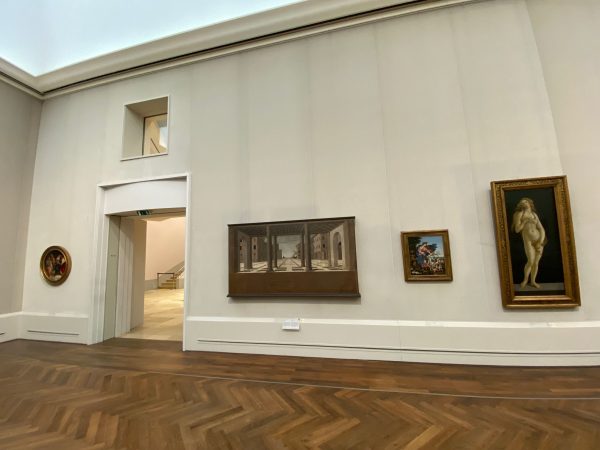
Stock taking
From time to time it is necessary to take stock of production and to review the material that has accumulated. As I have been working in archives, official book depositories and libraries for years, it comes almost naturally to deal with questions of how to keep track of all that content. Digital solutions are excellent devices in this regard. I do not have to deal with digitalisation, a huge issue for all historic archives and many recent small museums as well. I have to deal with backups at regular instances. To be sure, each engineer will assure you, better make a backup of your backup … . Yes, I do this as well. Now the ultimate backup of digital work is ? Got it, a printed copy of your digital work. The best advice I received on this comes from a computer magazine “ct” gadget mug with imprint advocating “No backup, no mercy“. To facilitate my printed archive I start with monthly collections of blog entries (Link to pdf-file December 2023 ->Brainstorming 23-12). The simple conversion yields 63 pages, a printer friendly version 56. Hence the expected yearly volume (60*12) will be somewhere near 720 pages. That is for the archive only or in case my eyes do no longer support online reading on screens for too long.
Digital archives have, of course, many other advantages. It is possible to reassemble my collection of entries by subject through a more thorough editing. Specific edited volumes will surface from this, which I have in my mind but only careful long-term followers of the entries might see already. Political economy and sociology are obvious candidates. Public health, labour, the world of arts and music could constitute other edited volumes. Lots of branches grow out of the trunk of content. 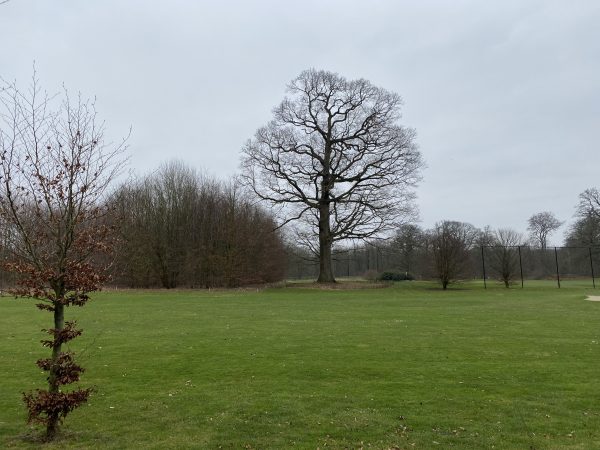
Poster Design
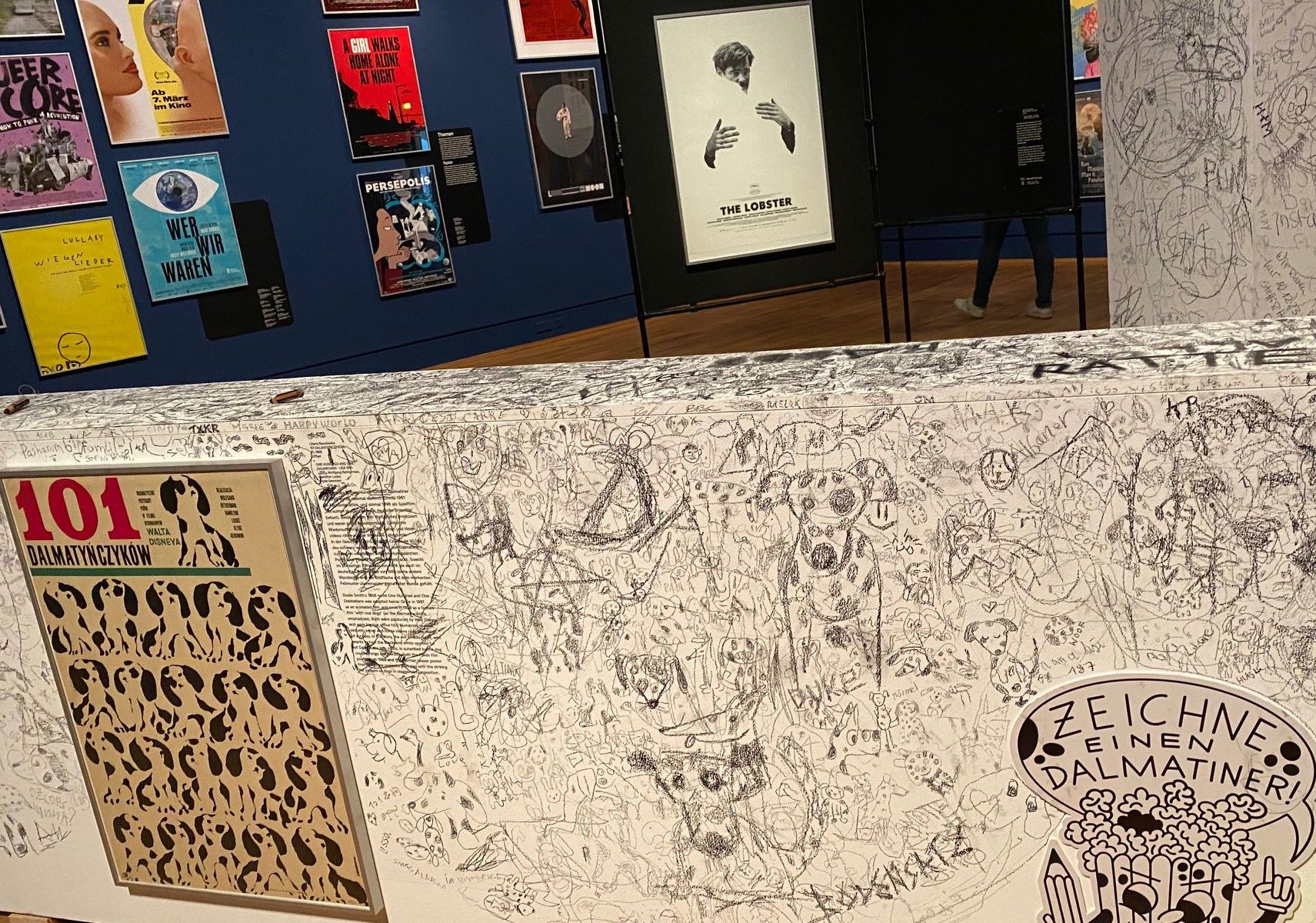
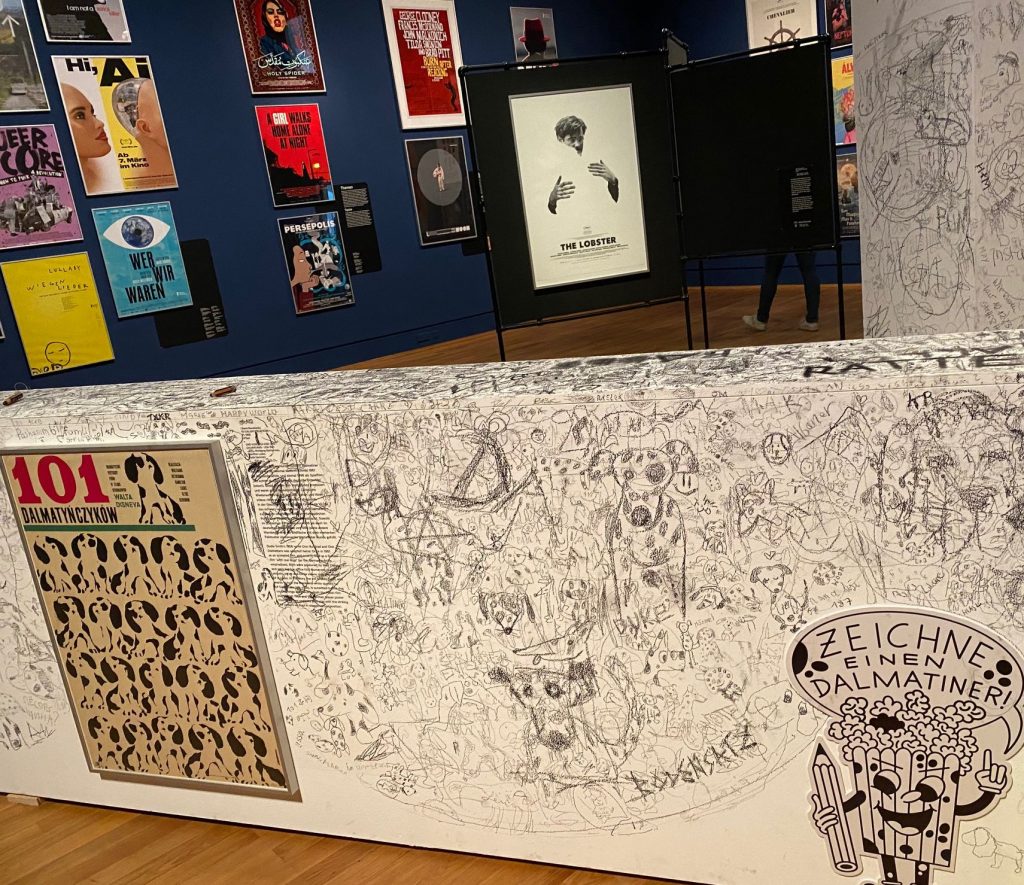
The effective use of posters in visual communication is a specific craft. Artists have been associated with poster design for more than a century. Cinemas continue this practice. For each movie produced there is an announcement posted in print or digital form. In combination with the Berlinale 2024 film festival the Kunstbibliothek in Berlin shows milestones of the history of movies and their representations in form of posters. Besides the historical approach there are many hints how to interpret the design language of posters throughout the 20th century. The encouragement to try to produce one yourself not only reserved to children is an additional activating feature of the exhibition (Link here). Cats and dogs will always catch attention and the playful approach chosen might be a start into a graphic design interest. Overall the exhibition offers a low threshold entry into the world of art and design. Instagramable image on posters evolved into short preview clips, just like instagram paved the way to tiktok video clips. In retrospect posters also provide shortcuts for our memories to recall whole movies that have accompanied us growing up and growing older.
Flooding
Flooding after abundant rain fall is an almost worldwide phenomenon. This is why research has taken up the issue for some time now. 2 recently published papers hint at direct and indirect consequences of excessive rain and flooding which usually are not taken into account. The Lancet respiratory medicine has highlighted the second round effects of flooding which consists in the latent danger of mould creeping into buildings even after the immediate effect of the flood has vanished. It is the mould with its longer duration that causes major respiratory health and safety hazards on top of the instantaneous casualties and epidemic health risks (Link to study 2024).
The second study focuses on “the need for more systematic understanding of how societal structures and vulnerabilities moderate disaster risk” (Link to study). In wealthy countries the flood mortality is substantially lower than in comparatively poor countries. More sophisticated anticipation systems play a major role in reducing casualties. Flood-induced displacements remain hard to predict despite a reasonable explanatory power of the statistical model as the authors point out. Additionally it remains an important question to estimate the share of people who (want to) return after being displaced due to flooding. The frequency of flooding plays a role in combination with the severity of flooding. Climate change might be an additional hazard in the sense that more frequent flooding will change the propensity of people to permanently relocate rather than returning after displacement. Social networks, support and solidarity with the victims of flooding as well as reconstruction efforts will play a crucial role in dealing with these environmental hazards.
Building higher dikes is a worthwhile solution in regions that can afford them (Rotterdam example). It is hardly a solution for countries with little resources to invest in protection in face of an already suffering and displaced population. Dealing with mould after the flooding only adds yet another health hazard to an already difficult situation. 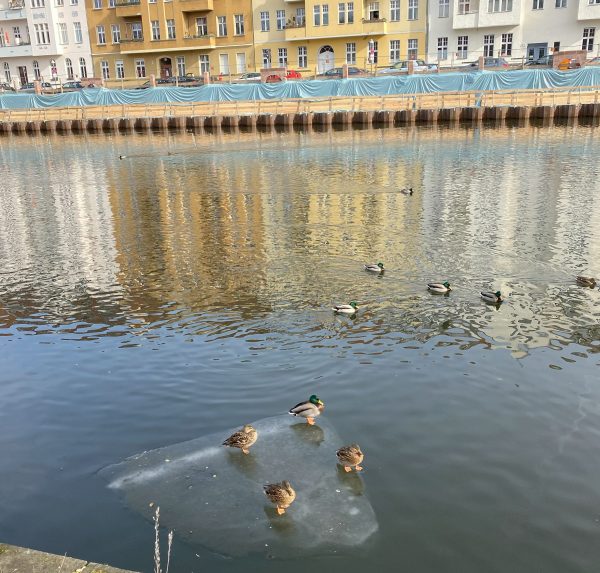
Water fountain
We are lucky that in Berlin not all water fountains have disappeared from the public space. Some might remember that in schools it was usual to have a source of water free of charge for refreshments during breaks. Others cherish public places where there was a water fountain nearby.
Rather than looking where to buy refreshments, usually in plastic bottles nowadays, it was easy to hydrate yourself or the whole family from such a public source. Of course, these sources became the enemies of private companies cashing in extra profit margins the higher your urgency for water is. Hygiene is manageable, if a little bit of care is exercised. In periods of droughts such sources become an asset beyond the benefits for human beings (see image below, bees refreshing). In France, a law which prescribes that public institutions who receive visitors have to offer a point of access to fresh, drinkable water, is badly respected (Link to study). The result is more water in plastic bottles and the transport of those to inner cities. Plastic bottles contain thousands of micro- as well as nanoparticles of plastic which we are likely to digest (LINK to PNAS study). Having your own device ready to be refilled from a public source in inner cities is a healthy alternative.
Sustainability science has studied the issues and delivers solutions. It is societies and policies that have to (re-) implement these solutions. Here again we are back to political science and public health coordinators to raise awareness for these “blue solutions”. 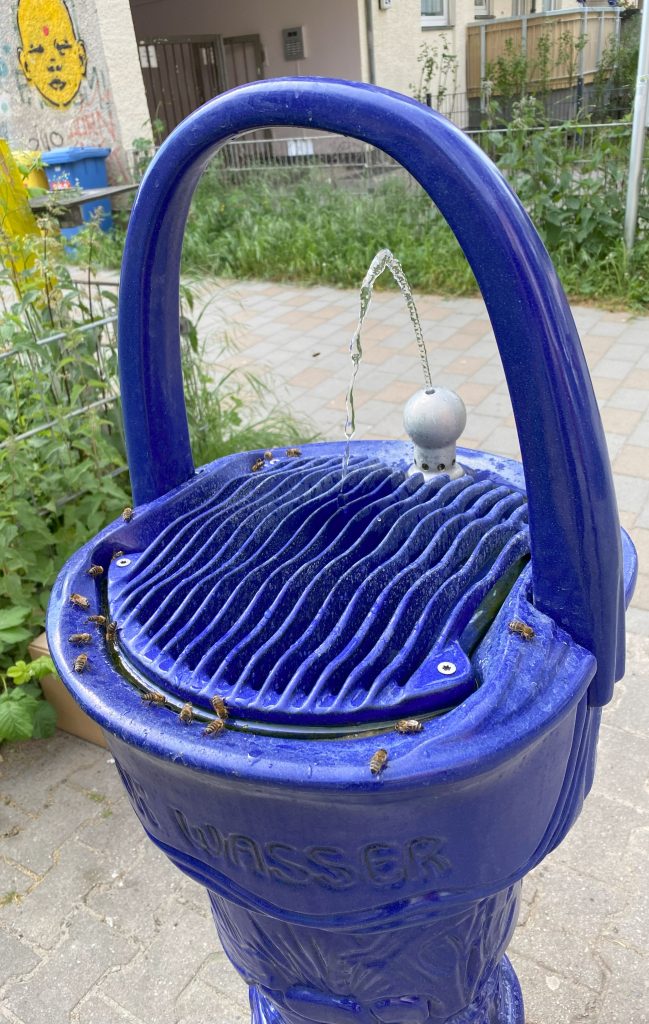
Ethics of posterity
We have not inherited the earth from our ancestors; we are borrowing it from our descendants. (native American saying). Adeline Johns-Putra (2019) states this early in her book on “Climate change and the novel.” Her concern is how to think and write about the ethics of posterity. Approaches of ethics in the sense of parental care (for the planet) or motherhood environmentalism do not suffice in view of overpopulation of our planet. Shifting our identity away from toxic production and consumption is advocated in many novels. Science and science fiction offer many dystopian examples.
De Shalit (1995) wrote early on why posterity matters. It is not the standard of living of contemporaries that matters but we should consider ourselves as a part of a transgenerational community. The time horizon of our decisions matters. In pursuing arguments by John Rawls who re-established a contractionalist perspective on justice, we have to include future generations into our contractual obligations. Following this approach we might arrive at Brundtland’s perspective on the ethics of posterity which is called sufficientarianism in opposition to simple utilitarianism. In sufficientarianism we owe future generations a just and decent living or at least the possibility to have similar starting conditions. Shifting beyond the apocalyptic view of environmental disasters Adeline Johns-Putra (2019) brings to the forefront that we have to substantially lengthen our time horizon both for consequences of climate change and for dealing with it, albeit the fact that most destructive practices operate much faster than the re-establishing of greater biodiversity.
P.S.:Thanks to the curators of the Lese Lounge Staatsbibliothek Berlin for ease of access to the literature.
(Image: Natur & Kultur in “Extreme tension: Art between Politics and Society” Collection of the Nationalgalerie 1945-2000“. 2024-1) 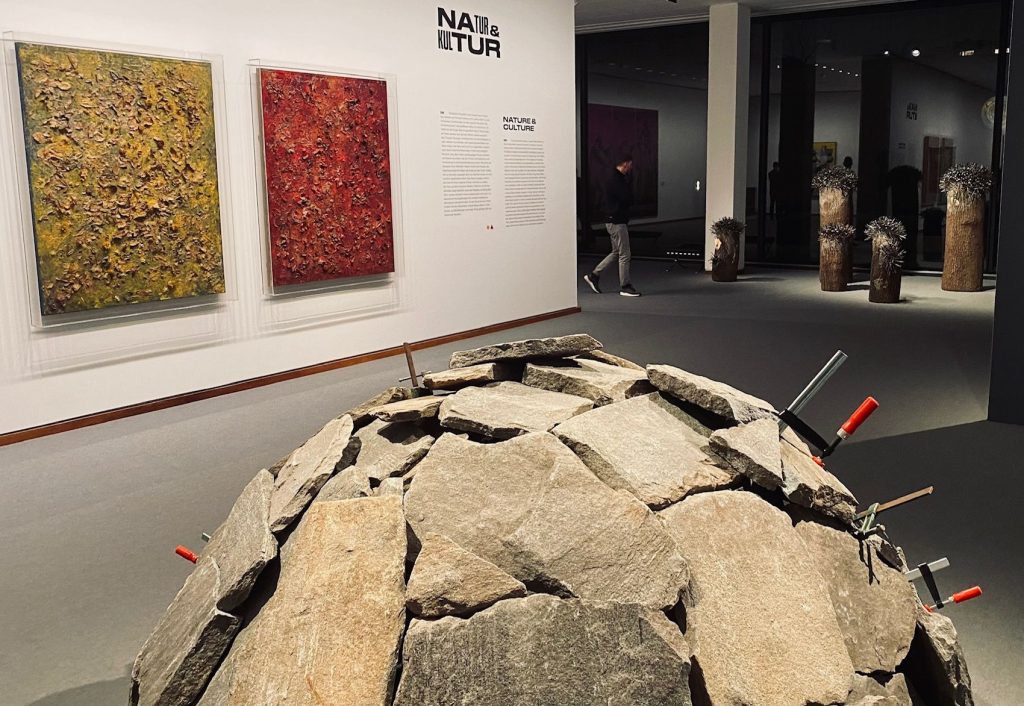
Air quality EU
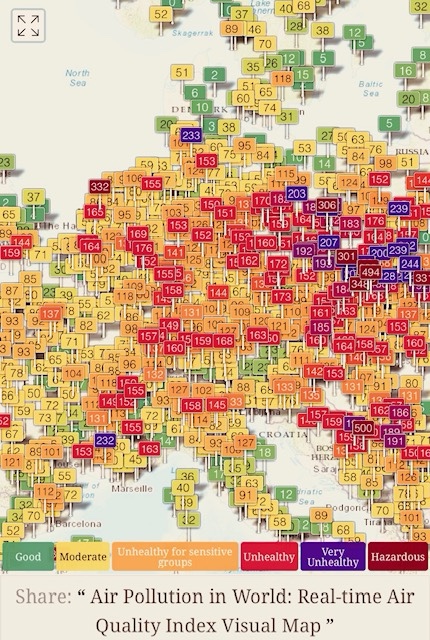
On some days of the year there is a cumulative effect of bad influences on air quality in Europe. Cold winter temperatures increase emissions from heating. Outdated heating with coal, still important in Eastern Europe, causes high amounts of extra particles in the atmosphere. In January 2024 a train conductor strike in Germany irrespective of the good reasons for it, makes people take their cars. Road blockades by opponents to reducing diesel subsidies to agri-business add to the pollution situation on a specific day. Overall the population suffers and breathes additional amounts of cancerous particles. Particles settle as dust on crop producing soil, of which we all feed ourselves. This is a vicious circle, which we need to break in the interest of all of us, particularly for the more fragile people and children. The latter start to crowd the medical doctors with sometimes lacking the delivery of crucial medicines for this target group. Where do we go from here? Compromises are key, security of supply chain and allowing, not too much, time for transition periods.
Throne
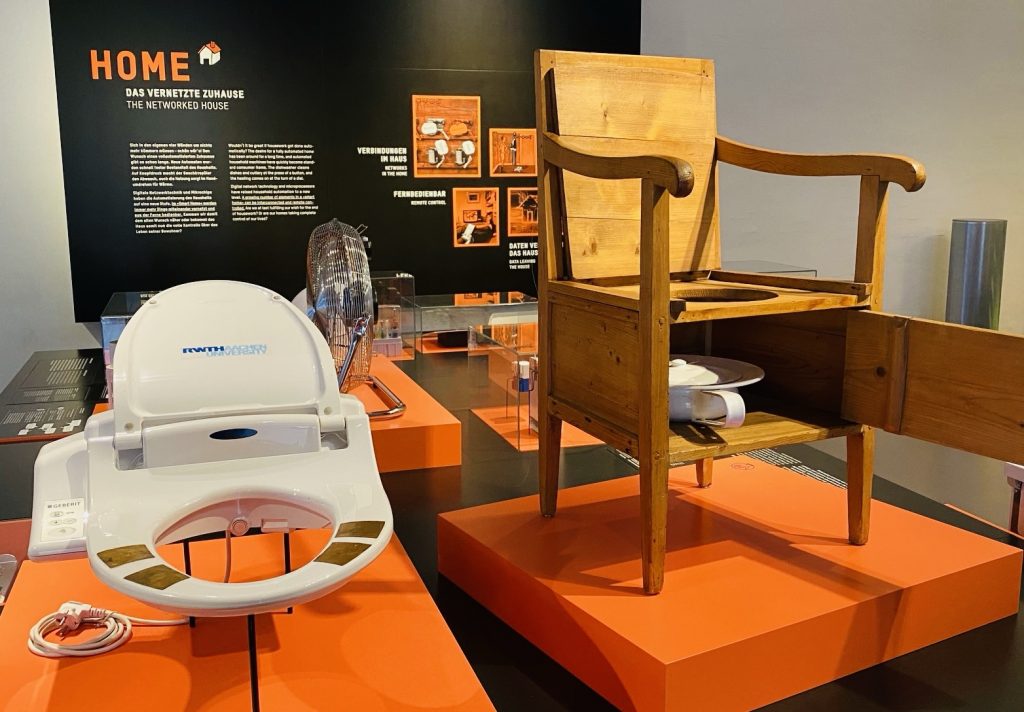
In continental Europe some people say they are going to sit on their throne for a while if they are going to the toilet. Previous furniture built for that purpose almost resembled a throne. Nowadays the comfort has increased and most households have an excellent WLAN connection in the tiny place, automatic ventilation and heating comfort. Linked to the throne, the issue of the smart home comes back into our mind. Besides the increased comfort we generate abundant amounts of data. Sensors of all kinds can track lots of information that may reveal quite intimate details which we did not intend to share. The movement pattern of mounting your throne might be easily identifiable by your smartphone. Such data could be added to assess your health status in your dedicated health app. Anonymized data could give early warnings about a local outbreak of diarrhea. Do we want this? Probably not. In countries where thousands die from diarrhea, probably yes. It is a matter of balancing the pros and cons. Health data are thought to be particularly sensitive information about us. It certainly is the new luxury to keep your health data private. Even if you measure and capture a lot of information in your smart home, make sure your smart home is sufficiently secure. For the benefit of all of us.
Renewables
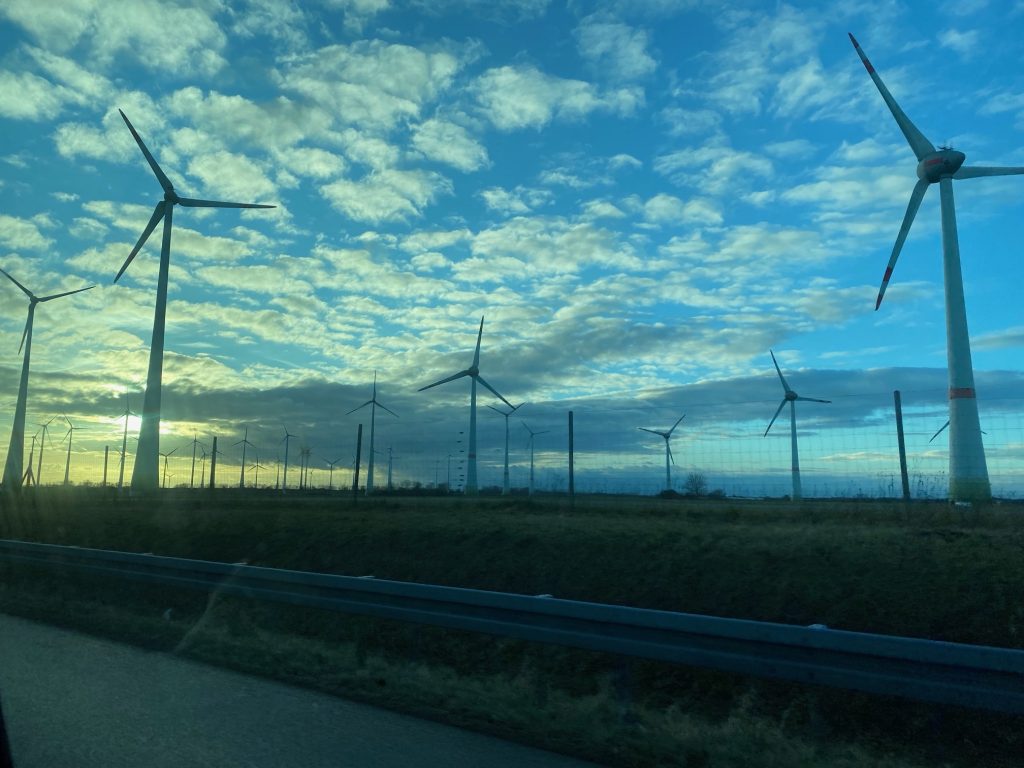
Renewable energy has reached for the 1sr time a share of more than 50% in Spain and Germany in 2023. This is an astonishing milestone in the energy transition of both countries. For Spain a report from Red Energy Espanola attributes the Spanish success story to the expansion of mainly wind energy (Link). The increase of renewable energy in Germany is due to a more rapid expansion of solar energy (Link). In any case a continued expansion of both forms of renewables allows to reduce the share of fossil fuel even more rapidly than previously estimated. Good news for the planet particularly to phase out energy from coal due to its highly polluting side effect. Countries with faster trajectories shall serve as examples that it is feasible to manage the energy transition also for large countries. Political instability might be a price worth paying considering the positive effects for future generations. Managing the transition in a just way which means to assist poorer households, ensures the respect of social policy targets at the same time. With this in mind the energy transition can be perceived by all as an opportunity rather than a threat to their welfare and wellbeing.
Sleeping
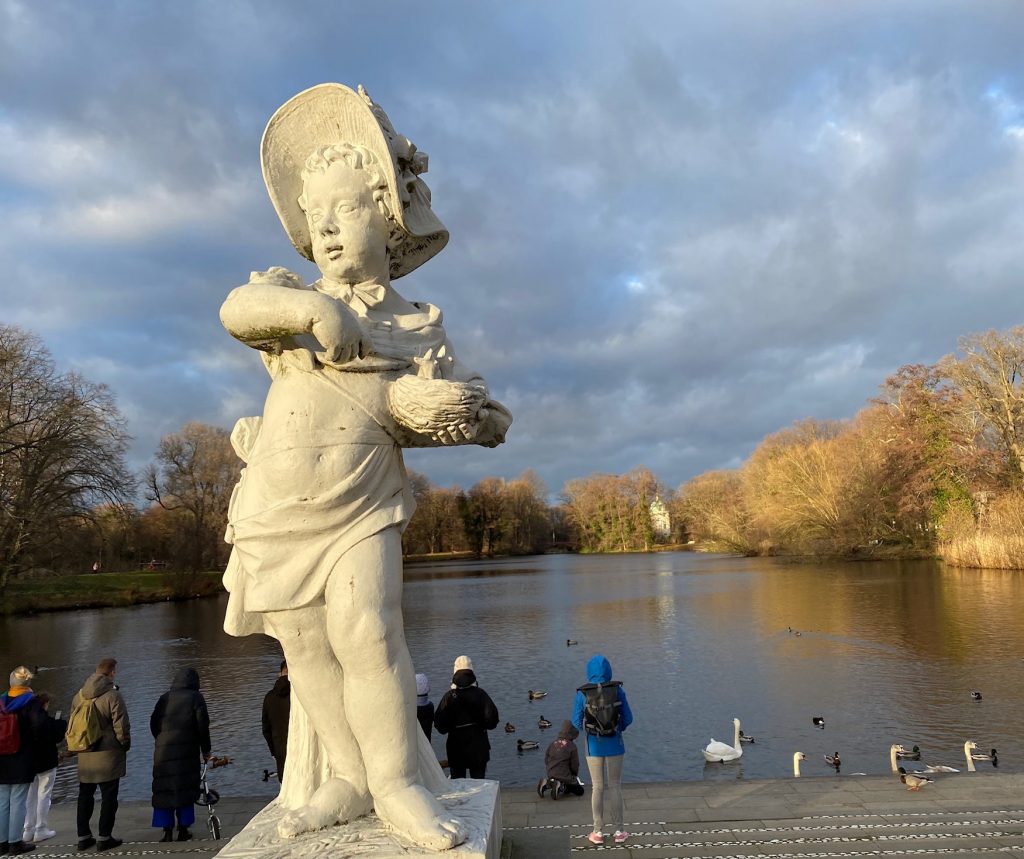
Sleep is a process. That is why it is best to talk of sleeping rather than sleep. There exists abundant research on sleep and more and more acknowledge the process-like characteristics of sleep. The medical literature deals a lot with sleep apnoea, which constitutes a serious health condition. Time use surveys establish links between daily activities and sleeping for example. The social context is another influence on sleeping. Friends and family co-determine sleeping patterns as well. The latest better understood impact on sleeping depends on the use of technological devices before and during sleeping. Smart phones reveal themselves as not so smart if it comes to the quality of your sleep. At least this the result of the study on „bedtime technology use on sleep quality and excessive daytime sleepiness“. It yet another field in which technology is slowly creeping under our skin and we have to learn how to handle negative side effects before they endanger our physical as well as mental health. Bedtime routines or reading without a screen before falling asleep appears to be a worthwhile way to improve sleeping. Worth trying out again and again.

POSSE
for a German speaking audience POSSE stands for a farsical popular drama of the 18th and 19th centuries. Nowadays POSSE has particularly in the English speaking world a completely different meaning. POSSE is short for Publish on your Own Site, Syndicate Everywhere. In other words publish your own creative work, text, tech or melody on your own website first before spreading the content on other platforms. By this strategy you make sure your content stays your content even if a platform like eXitTwitter disappears or the hype has passed like with facebook. And if at any point in time you decide the whole internet is a farce, you will be able to edit the content from your own webpage as a book or audio version as an edited volume. Do not make yourself a modern slave of tobacco, drugs, alcohol or platforms for whom you create (mostly unpaid) content they use to sell advertisements with huge untaxed profits. With POSSE you can make an end to this farce. We still rely on search engines like QWANT, Ecosia, duckduckgo or Mozilla’s Firefox, to name a few less well known web searching tools. They ensure that other people find your webpage beyond the elephant in the room called Google.

Helplessness
Learned helplessness is another which we have to be aware of as social scientists. It is far from surprising that for example giving birth has been transferred from the professional care and exercise of midwives to medical doctors and hospitals. This creates a kind of maximal security around the most natural of events that of child birth. Over the last few decades we have witnessed a pathologising of birth as high risk event. Additionally an emergencification has pushed costs upwards for social security systems as well. In numerous other domains like breast feeding industrial interests have pushed for replacement solutions which are worse than second best solutions.
In other domains like shopping we tend to believe that we need a car to assist us in the endeavor. It is mostly a choice of the least effort to use a personally owned vehicle to replace other solutions which demand more effort of organization like car or bike sharing options. The frequent result is “learned helplessness”. After years of getting used to the debilitating ease of use of navigation systems in cars and bikes we find it hard to put effort into a little self-organization. Learned helplessness will be a substantial burden on our health and social systems if we do not manage to reverse this trend. At times of increased skill shortages we shall no longer have the many helping hands needed to stem the powerful trend of learned helplessness.
Communicate Broadly
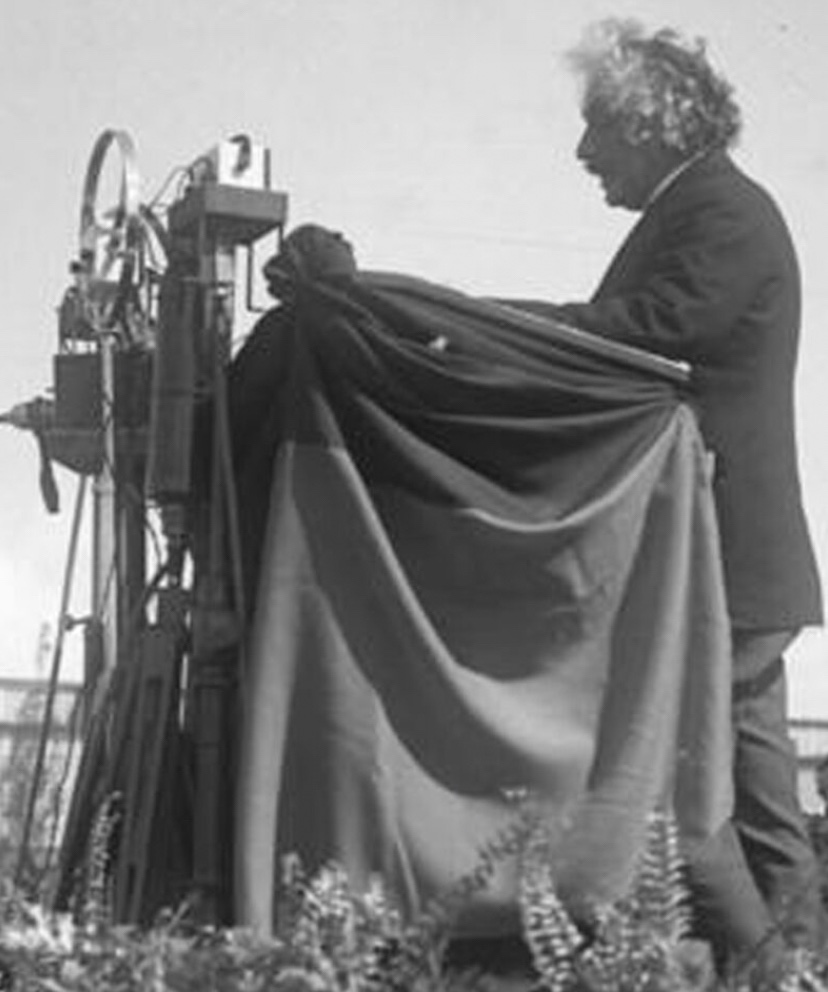
Broadcasting before podcasting has been a kind of revolution in communication technology. The potential of mass communication was promising at the beginning with cultural practices spreading to wider groups in society. Let us take the example of the Rundfunk-Sinfonieorchester Berlin (RSB). Suddenly the audiences grew enormously and it became a public duty to allow the participation of the masses in so-called high art. The foundation of the Rundfunk-Sinfonieorchester Berlin had and has again such a mission. In a memorable address to the foundation of the radio Albert Einstein gave an historic address (Link). He praised the scientific method of discovery and the engineering skills that allowed the new technology to serve all people. The fascists in Germany were early in abusing the technology to manipulate society. Albert Einstein was well aware of this danger to society. His speech is a historic testimony before the waves of emigration began fleeing Nazi-Germany. The best brains were the first to sense the power of the new communication technologies to influence the masses. Broadcasting is around with us in even more invasive ways and many praise themselves to be influencers.
Eco-trees
This time we thought to advance with our ecological version of Christmas. We use LED lighting and instead of advocating real horse riding we opted for the wooden replacement. We reduced the size of the tree by 27.5% to further cut down on the carbon footprint of our event. As we were all feeling pretty confident that we are on the right track now, we learned from the media reports in Germany that the trees usually grown specifically for Christmas are taking away precious land where otherwise food would be grown. Much worse is the fact that pesticides are very often applied to facilitate the production of trees. (Link to study and test results).
We know that there is a problem in Germany to be frank about environmental dangers of diesel and glyphosate, but we did not want to believe that we inhale glyphosate in our living rooms after the diesel disaster in cities. We thought trees were synonymous for nature. Far off the truth. Better check the ecological impact and risks incurred even for trees. Trust and good faith seems to be utterly misplaced when it comes to nature turned into a product.

Styles are a Changing
We all have our very own style. Even if you believe you have no style, then this will be your style. Of course, styles are changing continuously and fast fashion tries to make us believe we even ought to change as frequently as possible. Just find your style no matter of age and gender. Yes we can. Young designers test new materials and cuts to make new impressions. As science is progressing with new fibers that imitate the apparently light fur of polar bears, new designs will become feasible and enrich the list of potential fibers in clothing. In addition to seamless 3D knitting the new fiber allows to replace down with light fiber. Going out into the cold will be fun again. Want more of this, visit Fashion in Action! (Image from empty space designers webpage 2023-12-24 Berk and Julien).

Trending
Some cartoonists or scientists have a special capacity to sense and to explain upcoming trends. Put in a humoristic form the audience you are likely to reach will by far exceed the numbers you might reach otherwise. Loriot had a gift in this respect which is much acclaimed in Germany. Taking issue with the obsession of driving a car and all sorts of topics related he foresaw the trend to massive expansion of road traffic and what this trend, if extrapolated, will do to us. Mankind will change, men will no longer be kind. We return to animal-like behaviour and become slaves of the new technologies we create. Bad weather at least makes us rethink our mobility patterns. 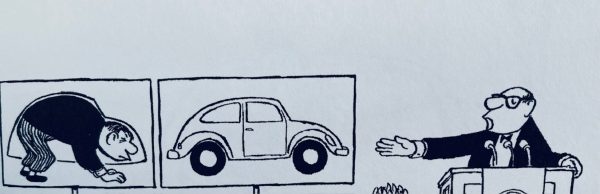
Pathology
The definition of disease, illness or disability are a matter of details of definitions. Mostly it is left entirely to medical professionals to define the limits of what shall be considered a disease or not. Pathology is the scientific discipline dealing with this difficult task. As in the scientific endeavor it is honorable to crown your research by finding or defining a new disease not necessarily finding a treatment for it, we have learned about new diseases at regular intervals. Attention deficit syndrome also known as hyperactivity is such an example. Many pupils have received treatments and some made splendid progress in their education due to early recognition of their condition as well as abilities. However, some children have received treatment with questionable diagnostic evidence or just to be able to fit into our modern ways of organizing our schools. We might frame this as a process of “to pathologise” persons or whole groups in society.
The American definition of what constitutes a higher than normal blood pressure or colesterol deviates from the one applied in many European countries so that sometimes the double amount of people should receive medical attention and treatment. From this it becomes more evident that even within the field of pathology there is a societal dimension to it. The “dry january” addresses the pathology of alcohol addiction. Smoking falls into a similar category but no smoke free month has been suggested yet. While it has become normal to overuse antibiotics we shouldn’t reproduce the same mistakes with other medications. We simply need a broader discourse about pathology and the societal origins and implications of it. From the Roman times we have amphitheaters and sacred buildings that we value today. Few sanatoria have survived but a few Roman baths as a preventative approach have survived in the British city of Bath or in the German city of Trier, both quite far from Rome. We should sometimes think more carefully before defining a disease. Not all are pathological. If it seems difficult to stem against the trend of “pathologising”. The ensuing overload of the medical system in consequence is a serious issue. The medical system will degenerate into a system to manage waiting queues with absurd, unequal and unnecessary adverse outcomes. Therefore, sociologists consider the pathologising of societies as just another kind of pathology.
Emergencification
Particularly around holiday seasons across the whole year we observe the “emergencification” in modern societies. This not so new trend consists in the strategy to artificially create emergency situations in which it is considered reasonable to ask for higher prices. It appears to be just another kind of a “greedflation”, whereby extra profits can be reaped due to shortages of food or particular forms of energy. Medical services have also pushed for an emergencification of their services due to ever longer waiting queues for appointments and treatments. The strategy here is easily disclosed. (1) You decline any appointment earlier for inspection of cars, heating systems, office equipment or medical check-ups and sooner or later a “planned” emergency will arise, which allows you to charge higher prices than the routine in time appointment or treatment. This makes prevention of more costly interventions far more difficult. In sum, the costs to society as a whole rise by the simple way of emergencification.
Even using a repair platform, we did not receive a single offer for a more lengthy and costly repair of my 10+ year old car. Hence, we just wait for a breakdown with more serious and costly consequences. Unfortunately, the same holds true for many medical services. If you no longer manage to assure a timely consultation you are more likely to go directly to the emergency services of a hospital. This is then the costly, but only alternative left to you. In the artificially created emergency you have little room for negotiation and a choice of different offers and conditions. It is a shift in negotiation powers to the service provider. The emergencification creates a price inflation of a specific kind. Worryingly, this kind of inflation is well beyond the normal statistical measurement of inflation national statistical offices observe. In addition to the much debated “greedflation” we should deal with the emergencification as an additional price mechanism. Just ask about examples among your friends or in the neighourhood whether they have lived through an example of emergencification. The stories are abundant and full of surprises. The example I heard: “birth and death, both come as a surprise or emergency, and yet we have the whole life to prepare the latter one”. Part of image taken from “Loriot “on the pleasures of driving (2022. Subtitle:” I suppose the screen wipers caused the trouble”.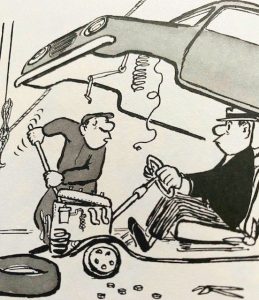
Testing
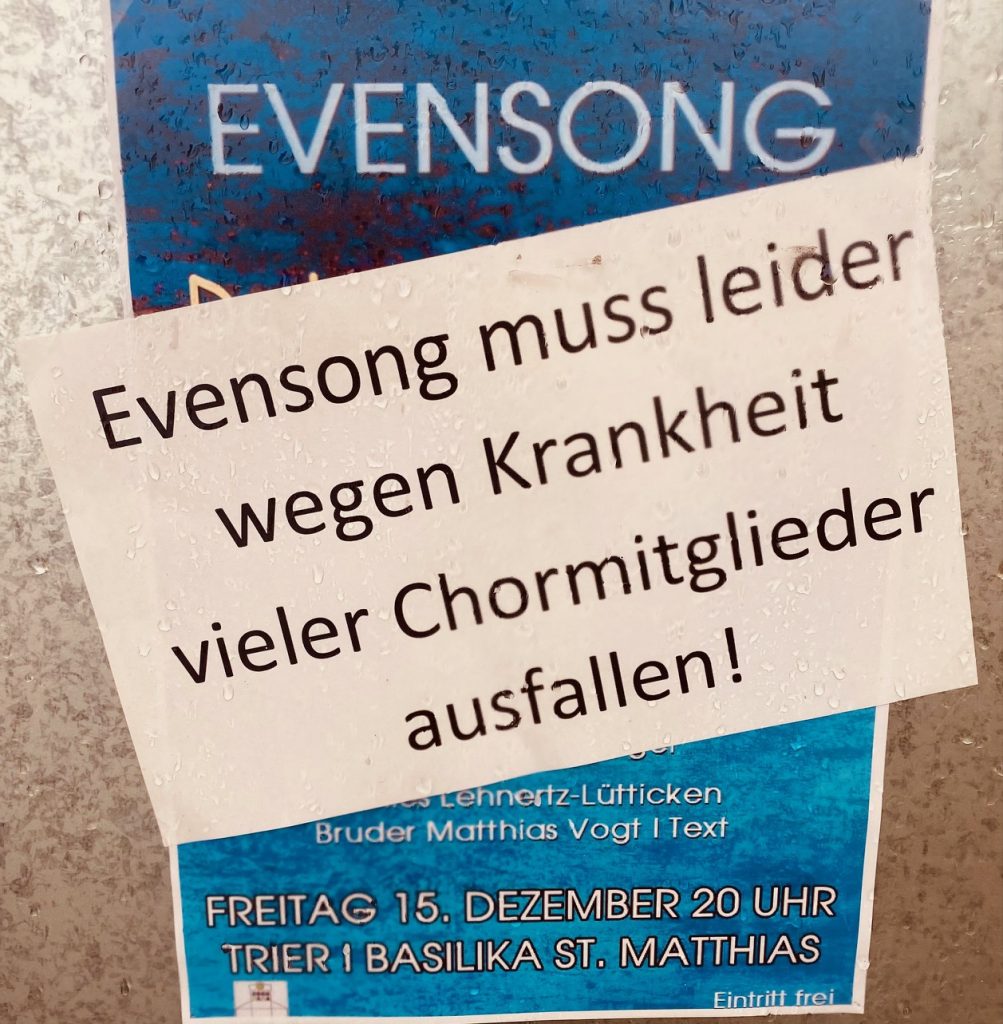
In winter times we rely more frequently on test to find out about sickness. Covid-19 testing has proven pretty effective in this respect. Often it is preferable to test more persons positive if at the risk of having many false positives. False negative tests can have many fatal consequences. Hence we have to weigh the risks of both kinds of false tests. This applies to many other diseases and diagnoses as well. There is no certainty but only a probability of each of the test results. The true result may deviate from the observed or tested result. FF FT TF TT are the possible outcomes of (1) the underlying true or false outcomes, which can have test scores of true or false as well. Not much new here the rest is statistics or probabilities to be more precise.
The overall outcome of testing or true sickness for some only God may know. Cancellations of events may be the result of one or the other reasoning.
Infrastructure
For some societies and cities it is a continuous question of how much resources we should invest in infrastructure. Access to funding is a major concern. The calculation of the viability of the project needs careful examination and evaluation. Societies have very different kinds of preferences and, interestingly, about time horizons for their deliberations.
There are examples that have been built to last a century and lasted 2000 years. Other worst scenario examples are built for just one World Expo and torn down afterwards. The Eiffel tower is such an example of the latter kind, but it lasted longer than 100 years by now. We should be thinking more about time horizons as it remains an often overlooked part of investment in infrastructure. The oldest city in Germany has many buildings from the Roman occupation that still characterize the city’s architecture. This remains an important economic factor for the city of Trier as an attractive location for tourists throughout the year. Only wars or negligence may cause severe deterioration if infrastructure has been built with an emphasis on its lasting value. The narrow-minded investment in downhill skiing like in the Swiss Alps is at best expected to last 20 years. For trees to grow there again it will take 50+ years. Sustainable investment will be viable and vital in many respects. High interest rates force us to recalibrate our societal and private s again. Taking into account a longer time frame for investment we indirectly build infrastructure that should last longer. Moving beyond short-termism is necessary, particularly in the field of investment in infrastructure.
Clearing Rubbish
Just next to the Circular Line “Ringbahn” and the Gasometer in Berlin there is yet another huge area in preparation for further construction. The “Berlin Südkreuz” train station connects by ICE directly to Leipzig, Nurnberg and Munich. New company headquarters have been built in the direct neighbourhood and several housing blocks. Clearing more areas that mainly stocked rubbish like broken cars over years had to move out and thousands of people will be able to find new homes soon. Demand for such projects is still high, although the financing with high interest rates has become a challenge for private persons. Interesting building concepts have been realized in the district of Berlin with some focus on social and inclusive housing in a broad sense. A process of gentrification is also observable, whereby the higher rent in the district pushes out people and families that no longer can afford the increases, most of them even above inflation rates in the past few years.
The urban planning advances in large strides. With the almost finished Gasometer the vision from the visitors’ platform on the top will soon allow to observe the next construction site. Clearing rubbish is already a good step ahead. Getting rid of the pollution and contaminated ground will take some time as well.
In the East of Germany, the sun rises early and so do construction workers. We expect to continue to be early birds in this area. Maybe we can have a few additional trees, schools and a kindergarden as well for the newcomers. The whole local infrastructure will be put to yet another test. You have to like change and embrace the continuing challenge of becoming more densely populated in Berlin. It is a social lab right in our neighbourhood. The “Rote Insel” is clearing out its rubbish, the number of buggies with babies is rising fast now. 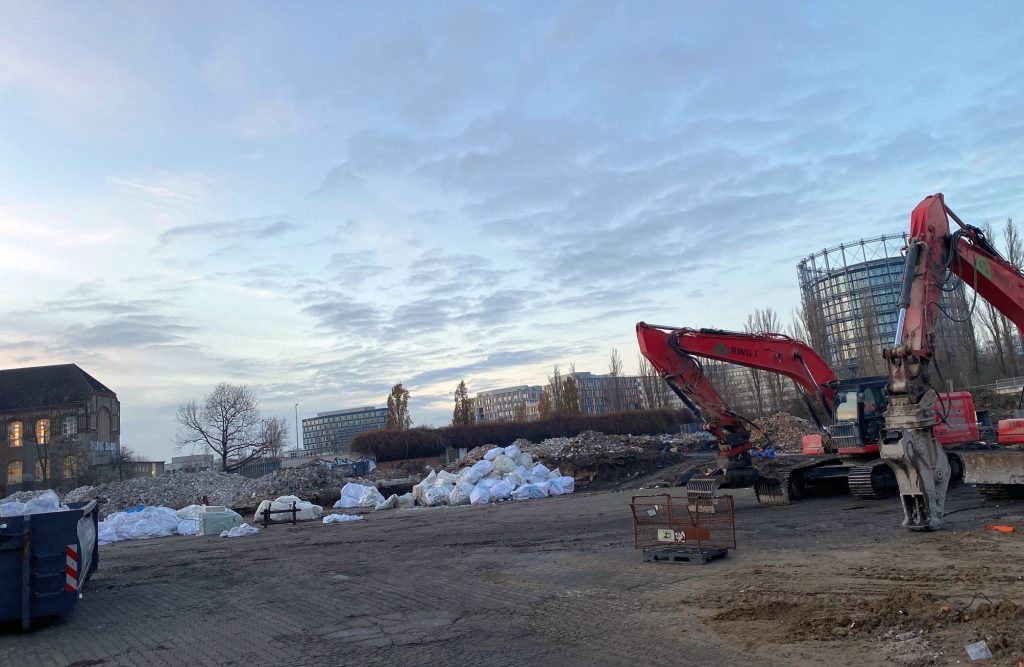
Nachhaltigkeitskonzept
Ein Nachhaltigkeitskonzept gehört zum Bauen mittlerweile wie das Gelbe zum Ei. Die Einreichungen zum Realisierungswettbewerb eines Portals für das Deutsche Technik Museum Berlin hatten entsprechende Anforderungen zu erfüllen. Für ein Technik Museum können dazu die Anforderungen schon etwas höher sein und die oft geforderte „Technologieoffenheit“ oder die Diskussion darüber zumindest andeuten. Der Anerkennungspreis ging an ein Konsortium für die Einreichung 1110, die eine klare Übersicht ihres Nachhaltigkeitskonzepts vorstellten (siehe Auszug Image unten, Foto aus der Ausstellung 2023-12). Nachwachsende Baustoffe gehören zum Repertoire. Gleichzeitig sollte die Erhaltung oder gar Förderung der Biodiversität Teil der nachhaltigen Konzeption sein. Innerstädtisch ist die Rückumwandlung der Versiegelung der Böden eine wichtige gesundheitsfördernde Bauweise. Kühlung in den aufgeheizten Städten ist durch Grünflächen und Beschattung zu erreichen. Tolle Architekten sind das, die den Mut aufbringen den Stachel in die Wunde zu legen. Die Anwohnenden und Besuchenden würden es den Verantwortlichen jahrzehntelang danken.
Das sind längst keine abgefahrenen grünen Ideen oder Träumereien mehr. Paris hat es schon längst vor gemacht. Ganz nah beim Eiffelturm ist das „Musée du Quai Branly – Jacques Chirac“ das als Neubau mit Garten vom konservativen Präsidenten Jacques Chirac eine grüne Naturoase mitten im Herzen Paris hat bauen lassen. Es ist immer noch eine Art Geheimtipp für Pariser in den zu warmen Sommermonaten. Berlin könnte wie mit der vom Pyramiden-Architekten Pei geplanten Eingangshalle vom Deutschen Historischen Museum mal wieder mit einem Nachhaltigkeitskonzept mit Paris gleichziehen. Gemeinsam können wir auch nachhaltig. Mit der vom Menschen und seiner Technik verursachten Erderwärmung haben die nachfolgenden Generationen noch lange genug zu kämpfen. Mehr Nachhaltigkeitskonzepte braucht die Technik. Das ist die wirkliche Herausforderung des 21. Jahrhunderts. 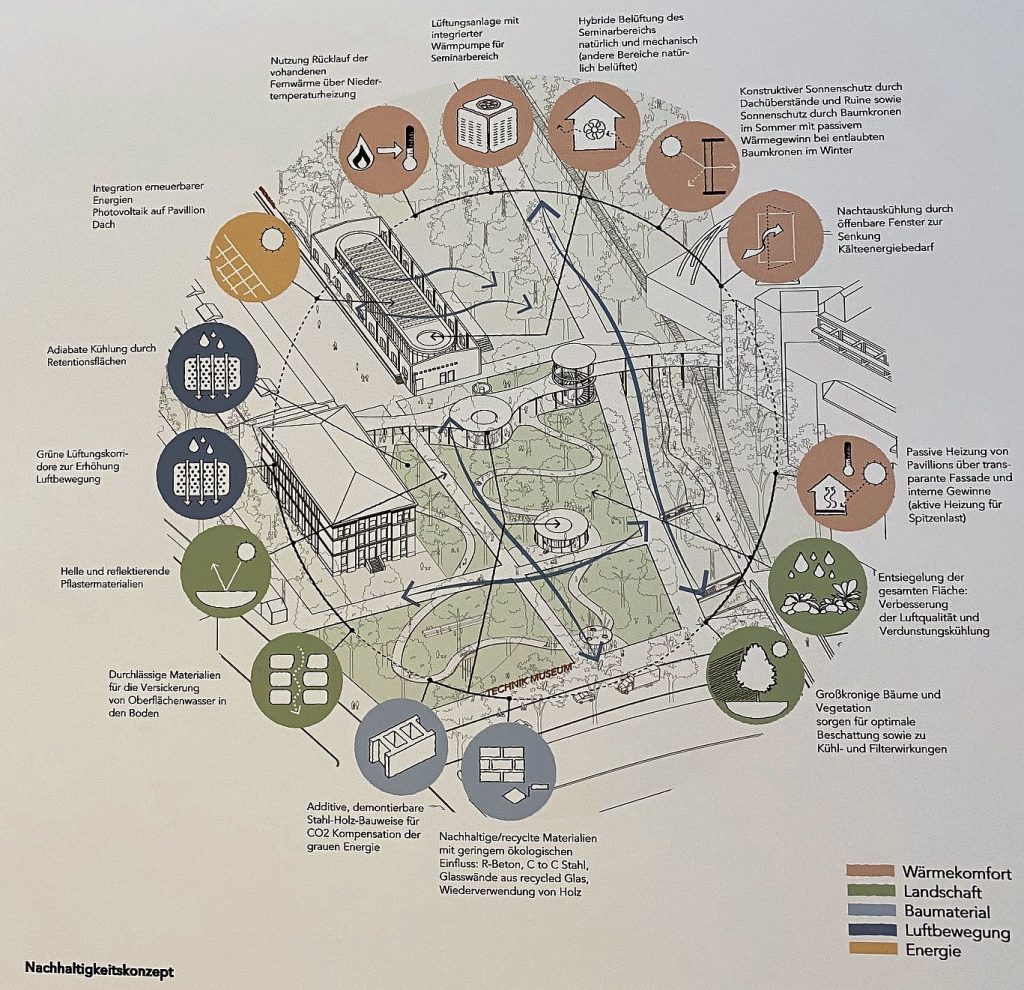
Technik Museum
Wir müssen die preisgekrönten Bauprojekte von Berlin nicht alle mögen. Die „schwangere Auster“ (Haus der Kulturen der Welt) war anfangs auch nicht beliebt, aber trotz Einsturz, haben wir sie lieben gelernt. Neben die Neue Nationalgalerie geplant von Mies van der Rohe und der Berliner Philharmonie von Hans Scharoun reiht sich bald die sogenannte „Scheune“. Ja ,eine multifunktionelle Verbindung der Museen ist im Bau. Nicht viel weiter werden wir vielleicht schon bald wieder eine kleine Erinnerung an die Berliner Mauer bestaunen können. Unweit vom Kulturforum stehen einige unverbundene Solitäre, die zusammen das Deutsche Technik Museum formen. Das ist bisher nur wenigen Touristen im Vorbeifahren auf der Ost-West-Achse in Berlin aufgefallen. Daher braucht es jetzt eine „instagram-able“, gemeinsame und verbindende Häuserfront, vielleicht so etwas wie die Pyramide (Pei-Bau) mitten im Louvre.
Die Einreichungen zum ausgeschriebene Realisierungswettbewerb (Link zu pdf-file) mit ziemlich konkreten (technischen) Vorgaben können noch in 2023-12 in einer kleinen Ausstellung eingesehen werden. Das gab es auch vorher schon anlässlich des Wettbewerbs für die Scheune. Wir hatten also keine großen Erwartungen, aber es hätte doch dieses Mal anders kommen können.
Der Blick auf die Pläne, Modelle und beschreibenden Texte hätte durchaus mit etwas Mut der Jury anders ausfallen können. So werden wir wohl mit dem 1. Preis des Realisierungsvorschlags leben lernen müssen. Mit etwas Abstand als virtueller Besucher im Modell kam mir direkt die Assoziation ich stehe vor einer Mauer. Diese ist aber im 21. Jahrhundert aus Holz und mit Solarzellen bestückt. Die „Deutschen Baumeister & Architekten“ erlauben auf ihrem Blog eine Vogelperspektive auf den prämierten Vorschlag. Die Pressemeldung der www.bim-berlin.de erläutert umfänglicher die Ausschreibung und die Begründung der Jury (Link).
Neben den 3 Preisen wurde noch 2 Anerkennungen mit Preisgeld ausgesprochen.  Die Nr. 1110 imaginierte eine naturbetonte Umsetzung, die die Technik visuell in den Hintergrund verschiebt. Sie setzt einen wichtigen Kontrapunkt zur Technikverliebtheit in den Nachbargebäuden. Worum geht es bei der Technik? Richtig, letztlich um den Menschen und seine Lebenswelten. „Bionik“ beispielsweise ist Technik, die die Natur zu Rate gezogen hat. Das ist in der Forschung und Entwicklung von Technik ein riesengroßes Thema. Aber wir können dafür doch wieder ein eigenes Museum bauen. Bisweilen können wir und alte Computer und Telefone im Technik Museum ansehen. Klar Autos gibt es auch. Die Spannung Natur und Technik wird uns sicherlich noch einige Generationen lang beschäftigen.
(Image: Auszug aus Unterlage und Würdigung des Anerkennungspreises BIM, 2023) 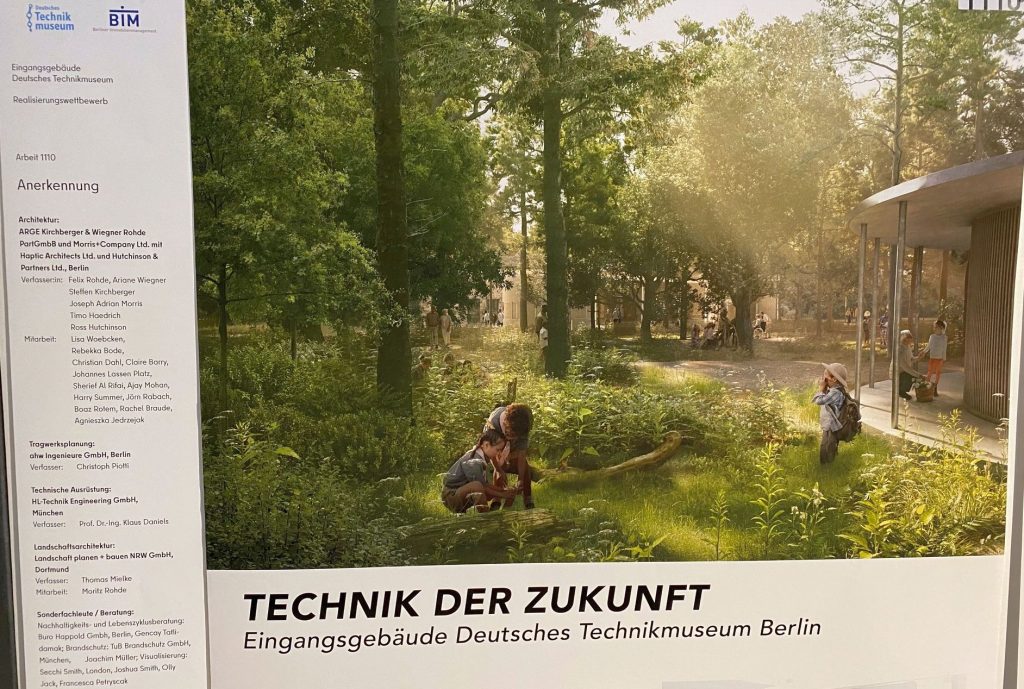
Mobility Concept
Berlin has an exceptional chance to rethink mobility in the city as new modes of transport arise. Just as the bicycle paths have been expanded over the last decade there more options to reach your destination. For the vast majority of moves in the city the “decision tree” has grown new branches. We start to change habits to consider (1) walking (2) bicycle (3) roller (4) public transport and (5) cars (electric and sharing or still owned). Multi-modality (Jelbi) in Berlin figures out the best combination for you getting from A to B. Other hybrid forms of transport start their entry in the big cities.
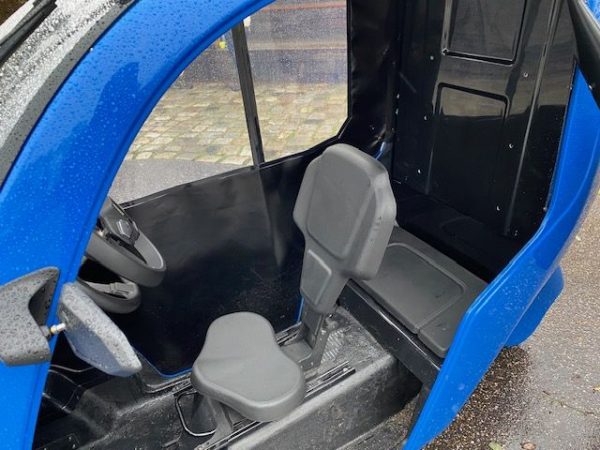
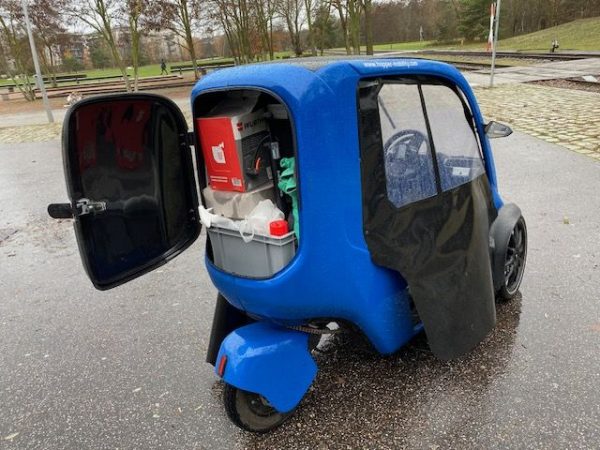
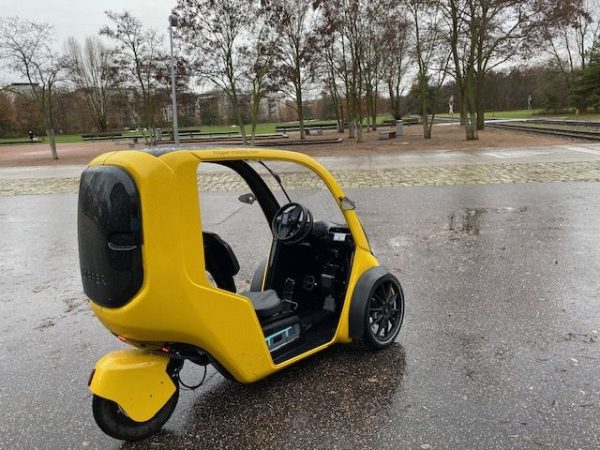
The last hybrid form that soon will claim an entry into the Deutsches Technikmuseum in Berlin is the hybrid version between a bicycle and a car. The Hopper has a permission as a bicycle. It is allowed to use bicycle tracks and therefore has an advantage on the “last mile”. At the same time, it feels more like sitting in a car and a 2nd person behind you, 2 children and/or luggage or shopping bags. These hybrid forms manage to combine advantages of both original modes of transport. You may feel more safe, dry and visible on the roads like in a car, but you are not travelling at more than 25km/h. Cyclist might not be to keen to have a big competitor on their limited cycle space.
Legally the Hopper would need to take the cycle path even if the road would be empty, but there are many cyclists on the cycle path. This is a good reminder of the societal and legal issues involved in new technological solutions. Acceptability of another competitor for space in the city has to be earned. Legality has to be tested and laws interpreted, whether the hybrid form falls in one or the other pre-existing category. Otherwise, the legislator has to establish a new category altogether, but this is the very lengthy procedure. Two bicycle wheels in front and one motorbike-like wheel in the back make 2/3 bicycle and 1/3 moped.
With a stronger electric support, the bicycle becomes a pedelec and can go faster, has to use roads and is insurable against accidents. The options grow. We are likely to witness more innovation and options in the world of mobility. The proof of concept has been achieved. Finding a market for the hybrid mode of transport is another challenge. Competition and lobbying are fierce in this world of mobility as well.
Urban Living
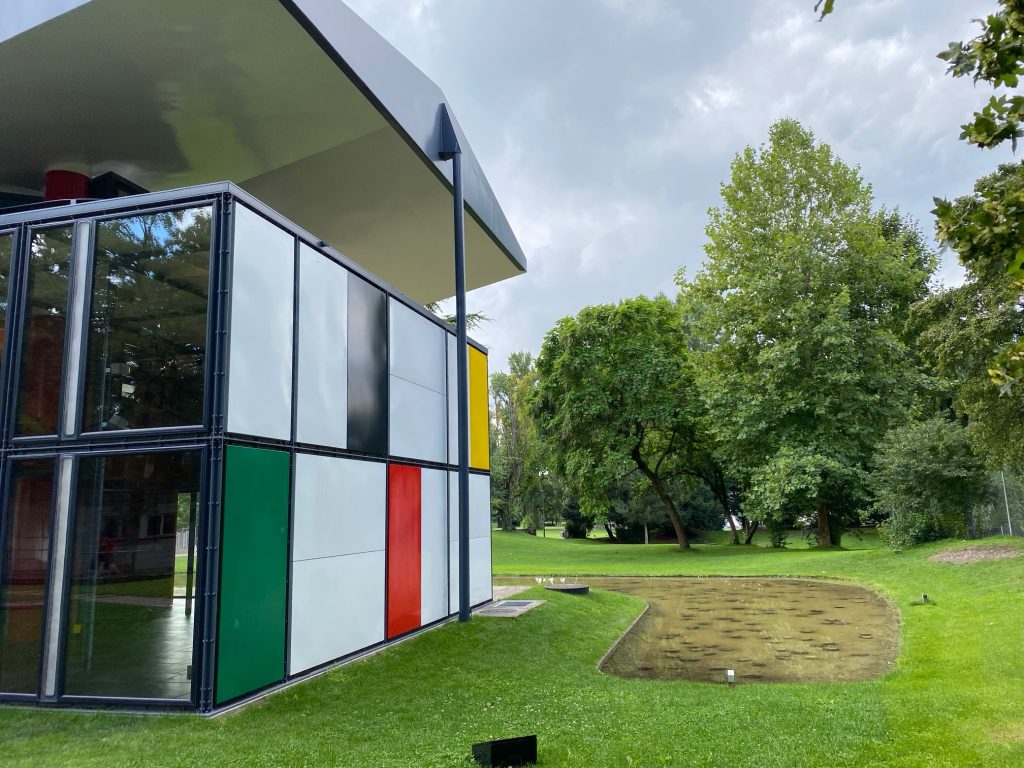
Each time I pass by the closed airport in the middle of Berlin I am amazed by the crazy idea to have built this and maintained throughout the 20th century. Paris is desperately trying to re-naturalize small areas and roads, while in Berlin there is now still the huge park to enjoy for all. Sports activities benefit the most. What an amazing asset in the neighborhoods for so many in need to walk, run or cycle a bit to keep their exercise level up throughout their life course. It has still a huge potential to activate people. It just needs a bit more organizations and volunteers to embrace the opportunities. Only in comparison to other cities you realize what an asset this is now. It will remain a challenge to preserve this centrally located treasure for the benefit of all. In Paris the deconstruction of concrete is taking shape and 300 new sites have been identified for re-naturalization, as reported in LeMonde. In Zurich green spaces in the center have been saved and renovated with a lot of money to allow more people to enjoy the benefits of a green environment near the city center. The house and park by architect Le Corbusier is a fine example of this. Image below. The garden around the house is publicly accessible. As air pollution is threatening more and more and heating in cities is a serious health threat we would really like to welcome more preservation and re-naturalization in inner cities.
Sectoral Change
The long-term view of sectoral change in France, for example, from 1800-2022 (Cagé and Piketty, 2023 p. 128) allows us to zoom out of our narrow focus of the last few years of economic change. The decline of agriculture is the most remarkable. The reduction of employment in industry and construction has been an ongoing trend as well. Banking, insurances, property and consulting have seen remarkable expansion over these years. Public services, security and legal affairs are still on a moderate rise. Other sectors like education, health, commerce and transport manage to grow equally.
The merit of the comprehensive volume by Cagé and Piketty (2023) is that it is thoroughly data driven and based on quite unique long data series. The data on structural change and just the employment trends depicted below refocus our attention on likely consequences of these changes.
For the 2 authors we should redirect our attention much more to the implications of these trends (like rising inequality) on political conflicts and power struggles. Democracies are at risk, if we continue to ignore these seminal changes of industrial structures and shifts in employment. The traditional strongholds of trade unions and progressive forces in the manufacturing and construction industries as well as in public transport seem to have unaccounted implications for our political systems as well. The volume by Cagé and Piketty (2023) will soon be available in English and reach broader audiences just-in-time for the European Parliament elections in June 2024. Particularly the spatial implications and how the neglect to take into account the fundamental differences between the rural development and structural change needs urgent reconsideration. After the time for reading and working with the data (LINK) is the time for action to preserve our European Dream of peace and social development. 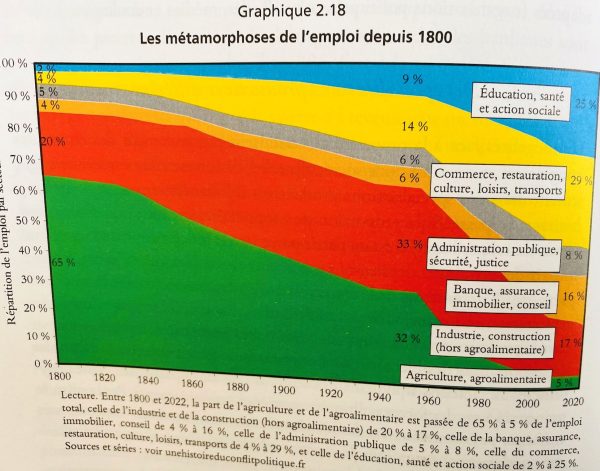
Arms trade
The sustainability of war depends a lot on the availability of arms. The Stockholm International Peace Research Institute (SIPRI) publishes regularly updated data on arms trade. The report ranks countries who are the most important exporters as well as importers of arms (from 2018-2022). The lists show for exporters that the U.S has been at the top of exporters with 40% of the global export share followed by Russia with 16%. France 11%, China 5.2, Germany 4.2 come next on the list. Taken together Italy, Spain and the U.K. reach another 10% jointly of global exports. South Korea and Israel come in with shares of 2.4 and 2.3 respectively. The top ten serve allies but also more broadly the world arms trade and race. New dynamics have started to come into force. The Russian aggression and war on Ukraine territory will have an impact to the extent that Russia is probably exporting less and shift to a more importing state.
Among the importing countries India is leading the ranking followed by Saudi Arabia and Qatar. More generally Asia and the Middle East were the most important buying countries. Importing arms might be interpreted as an indicator of perceived threat to a country. Long cycles of arms renewal may also drive statistics of arms trade, but new threats like cybersecurity and space technology have created new fields of potential attack and defence.
All in all, yet another rationale attributed to Clausewitz seems to play a role in driving the arms trade. “If you are perceived to be weak, an enemy will use this to attack”. Well, this also means that buying arms, producing or importing them, could deter a military aggression. That form of deterrence of aggression is known from the nuclear arms race as well. In the realm of conventional weapons, we have thought, it would no longer apply. We were mistaken in this respect. The dividend of peace has come to an end for many countries. The SIPRI report (2003, summary p.9) shows the continued rise on the global level of the arms trade. Why are we so scared of each other? Russia has reverted to imperial politics using conventional weapons. Containing such disrespect of internal law needs our full attention to avoid a spreading to other areas. The link of diplomacy and trade needs close scrutiny. 
Energy Storage
News agent Reuters has published an analysis of the setback for short peak coverage of electricity by power plants fueled with gas. Conclusion: economically no longer viable. Investors draw back even from contracts already signed. What is the game changer technology here. Batteries that store energy just like the batteries of millions of cats that have a storage capacity to supply energy for a whole household for more than 2 days. Other giant batteries cost only half the price compared to 5 years ago equal to $150 per kwh. In five years solar energy doubled its share of energy production to now reach the same amount as energy provision by gas.
Reaching a critical turning point in energy generation, investors flock to the more profitable medium or long-term investment. Good news for the planet. Wind and the sun are all around us. We have only started to cover roof tops of office buildings, car parks and other shelters. Start thinking about your energy storage as of now and reserve a suitable space for it. Costs are coming down rapidly in a few years or maybe only a few months.